Blooming and Booming: Japan’s Hydrangeas Enjoy Surge in Popularity
Guideto Japan
Travel Environment
Kawarada Kunihiko
Owner of Kakujitsuen, a historic horticultural garden in Ushiku, Ibaraki Prefecture. Born in 1958. Graduate of Tokyo University of Agriculture and member of the Japan Nurserymen’s Association, working across nursery production and landscape design projects in Japan and abroad. Expert in the cultivation and study of wisteria and hydrangeas.
- English
- 日本語
- 简体字
- 繁體字
- Français
- Español
- العربية
- Русский
A Bad Omen?
Ajisai (hydrangeas), glistening under soft June rains, brighten up the Japanese landscape at this time of year. Two poems about hydrangea species native to Japan can be found in the Man’yōshū, the country’s oldest poetry collection, demonstrating that this plant occurred naturally in the wild over a millennium ago. However, the flower took a surprisingly long time to attain its current popularity.
The Edo period (1603–1868) ushered in a long era of peace after the turmoil of civil war, and horticulture became a favorite pastime. Horticultural species were cultivated from wild specimens, and many people enjoyed raising lilies, camellias, chrysanthemums, morning glories and so forth. Over 100 books on horticulture were published over the years, from illustrated tomes introducing species and tips for flower growers to how-to books for creating cultivars. Even so, there are almost no references to hydrangeas.
Hydrangea expert Kawarada Kunihiko, head of Kakujitsuen, a 100-year-old horticultural center in Ushiku, Ibaraki Prefecture, explains why. “Hydrangea have four of what appear to be ‘petals’—although botanically, these are actually ‘sepals.’ The number four, pronounced shi in Japanese, is a homonym for ‘death,’ and in the past, people avoided the plant because of this unfortunate association. Furthermore, the fact that the flowers change colors was interpreted to hint at treachery, and thus samurai, for whom loyalty to their lord was paramount, also shunned them.”
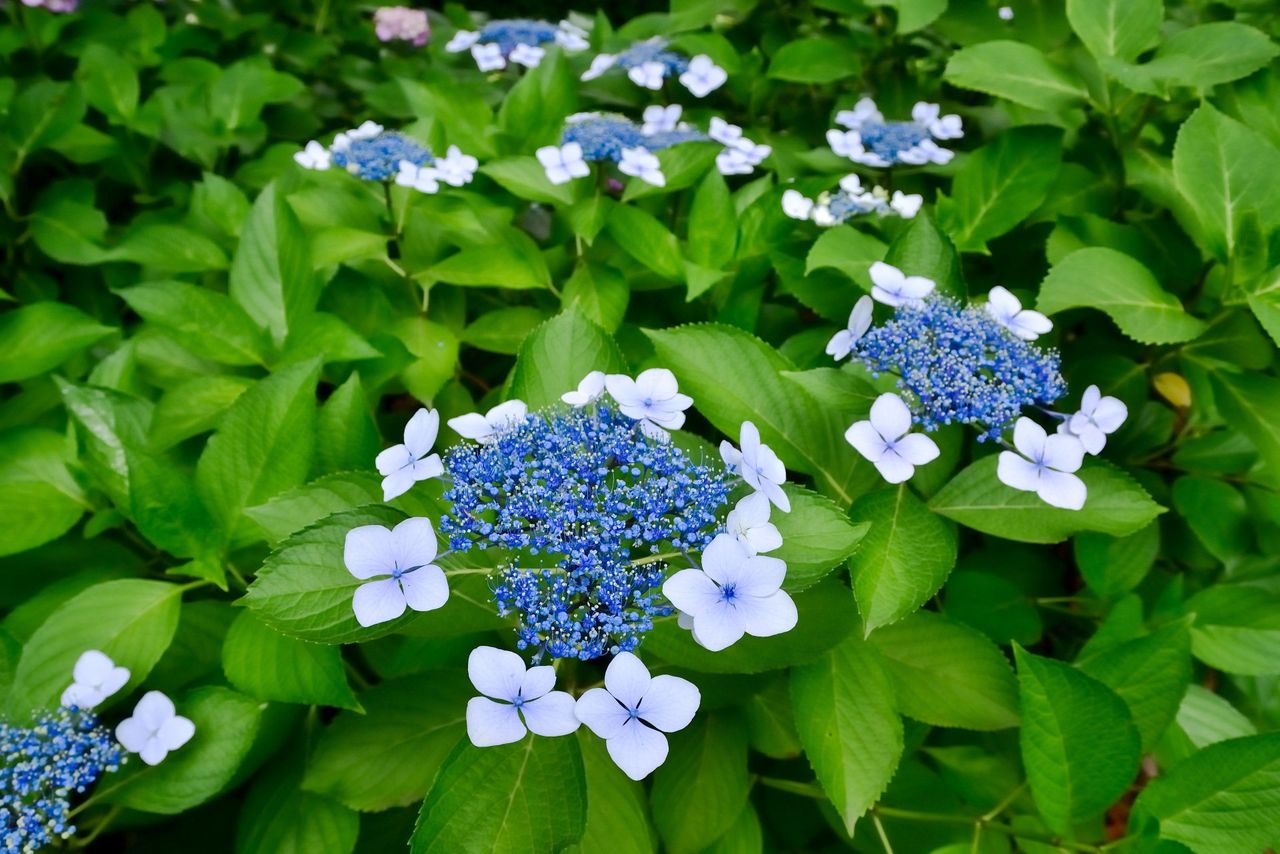
The four “petals” of hydrangea blooms were viewed as unlucky. (© Photo AC)
Purely Japanese
Hydrangeas grew in popularity toward the end of the Edo period, starting in Europe. The Bavarian-born physician and botanist Philipp Franz von Siebold (1796–1866) lived in Dejima, the Nagasaki trading post to which foreign merchants were confined during Japan’s isolationist period from the seventeenth to nineteenth centuries. During walks, he collected unusual flower specimens, which he planted in a garden he created on Dejima. Especially partial to wild hydrangeas, he carried 10 varieties back with him when he returned to Europe.
That sparked a craze for hydrangeas, sometimes known in Europe as “the rose of the Orient.” They were eventually transmitted to the United States as well, where several cultivars were developed. These plants, ironically named “Western” hydrangeas, then made their way back to Japan during the Meiji period (1868–1912). It may be that Japanese finally appreciated the beauty of hydrangeas after their blossoms had been so highly prized by Westerners.
In his Flora Japonica, von Siebold included several examples of hydrangeas, painstakingly illustrated by Japanese artists. An elegant pale purple variety, Hydrangea otaksa, named after von Siebold’s Japanese wife Otaki-san, is indicative of his attachment to the flowers.
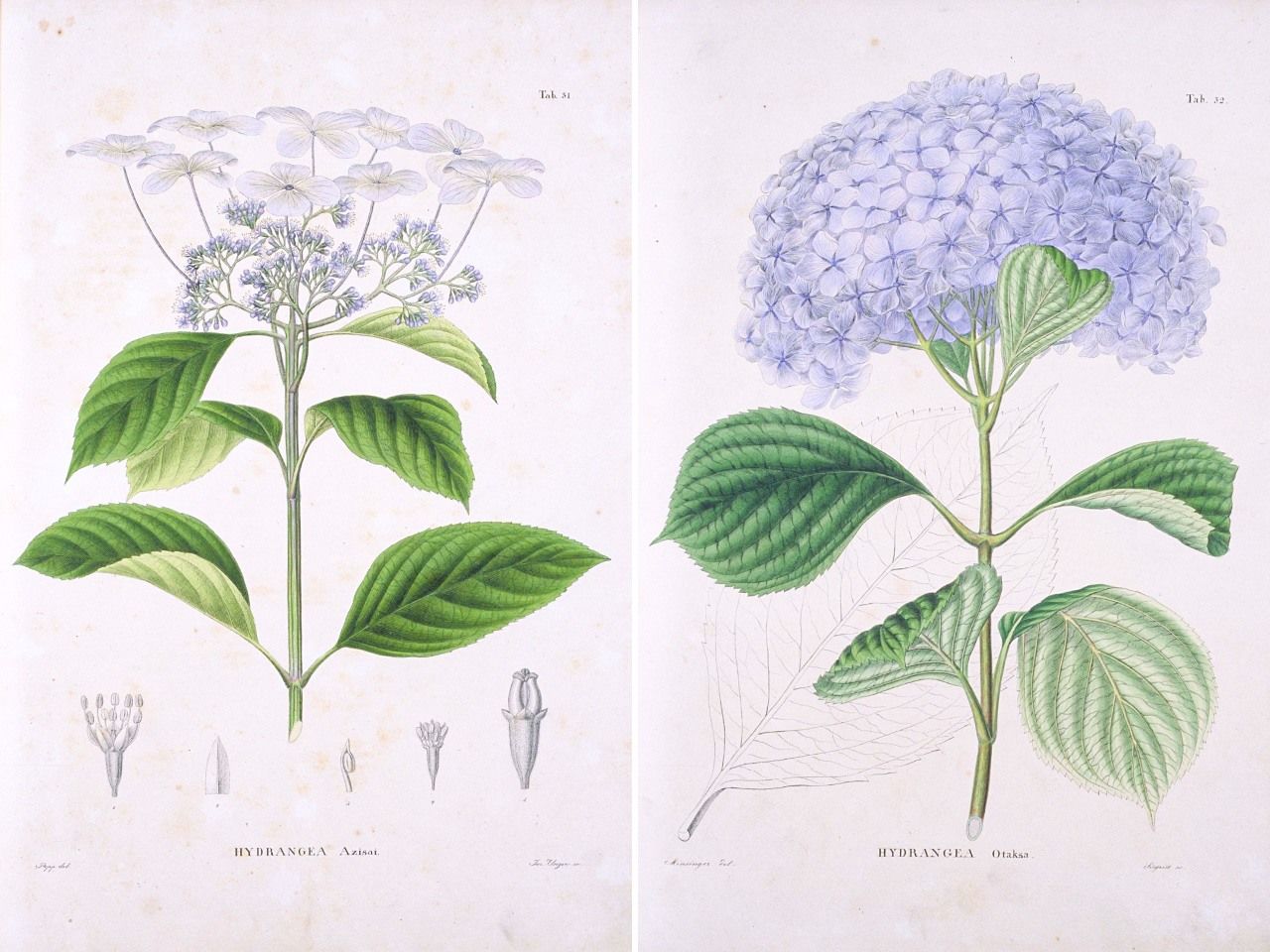
Hydrangea azisai (left) and Hydrangea otaksa, in von Siebold’s Flora Japonica. (© Library of Biological Sciences, Kyoto University)
“In 1985, when I began working in horticulture,” explains Kawarada, “hydrangeas grew mainly on shrine and temple grounds. They were just blooming quietly there and were not especially popular as garden shrubs. In addition, not much was known about our native root stocks and their variations.
“For example, there’s a variety named ‘Thomas Hogg.’ When it starts to bloom, the flowers are white, but gradually turn blue and pink toward the end of the flowering period. Judging from the name, one might think this is a Western variety, but in fact it’s a very old native species. It didn’t have a name in Japan, simply being called ‘white flower’ or ‘white hydrangea.’ Instead, it got its name from abroad, which just goes to show how little interest in hydrangeas there had been here previously.”
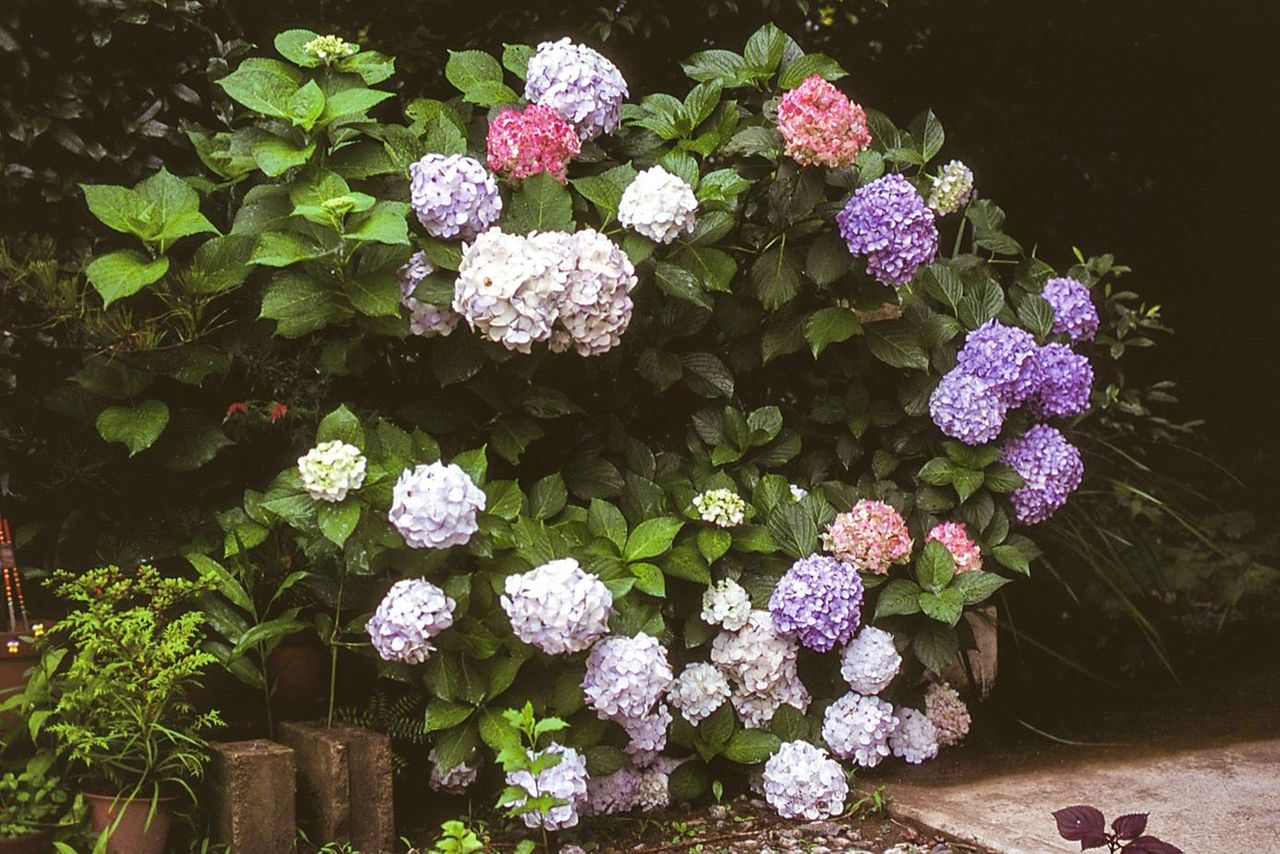
The Thomas Hogg hydrangea. (© Kakujitsuen)
Changing Colors
In Japan, amateur botanical researcher Yamamoto Takeomi (1920–2002) played a major role in popularizing hydrangeas. “Yamamoto was the first to realize that the Rosea hydrangea, which was taken to Britain at the end of the nineteenth century and bloomed pink in Europe, was in fact the same flower as the hime ajisai, or princess hydrangea, that sported brilliant blue flowers in Japan,” Kawarada says. “The color is affected by soil acidity, with flowers blue when the plant grows in acidic soil and often pink when the soil is more alkaline. He established that the plants were the same, even though they had developed different colors in faraway Europe.” Incidentally, explains Kawarada, Makino Tomitarō (1862–1957), the father of Japanese botanical science, was the discoverer of the hime ajisai, which he encountered on Mount Togakushi in Nagano Prefecture.
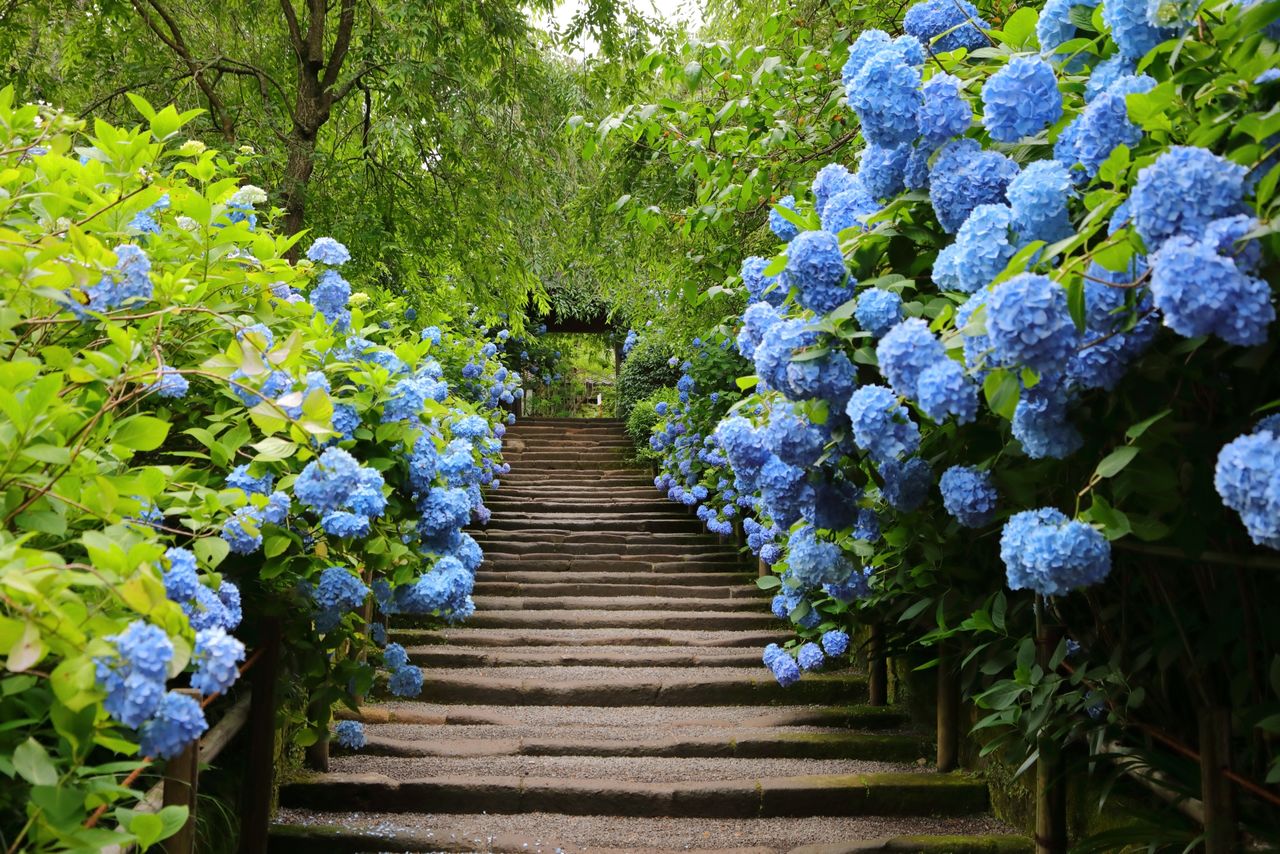
The famed blue hydrangeas at the Buddhist temple Meigetsuin in Kamakura. (© Photo AC)
Lacecaps and Mopheads
There are 15 hydrangea species native to Japan. A representative variety is the gaku ajisai, an indigenous species of lacecap hydrangea, characterized by a cluster with a showy, petallike sepals around an inner disc of smaller blooms.
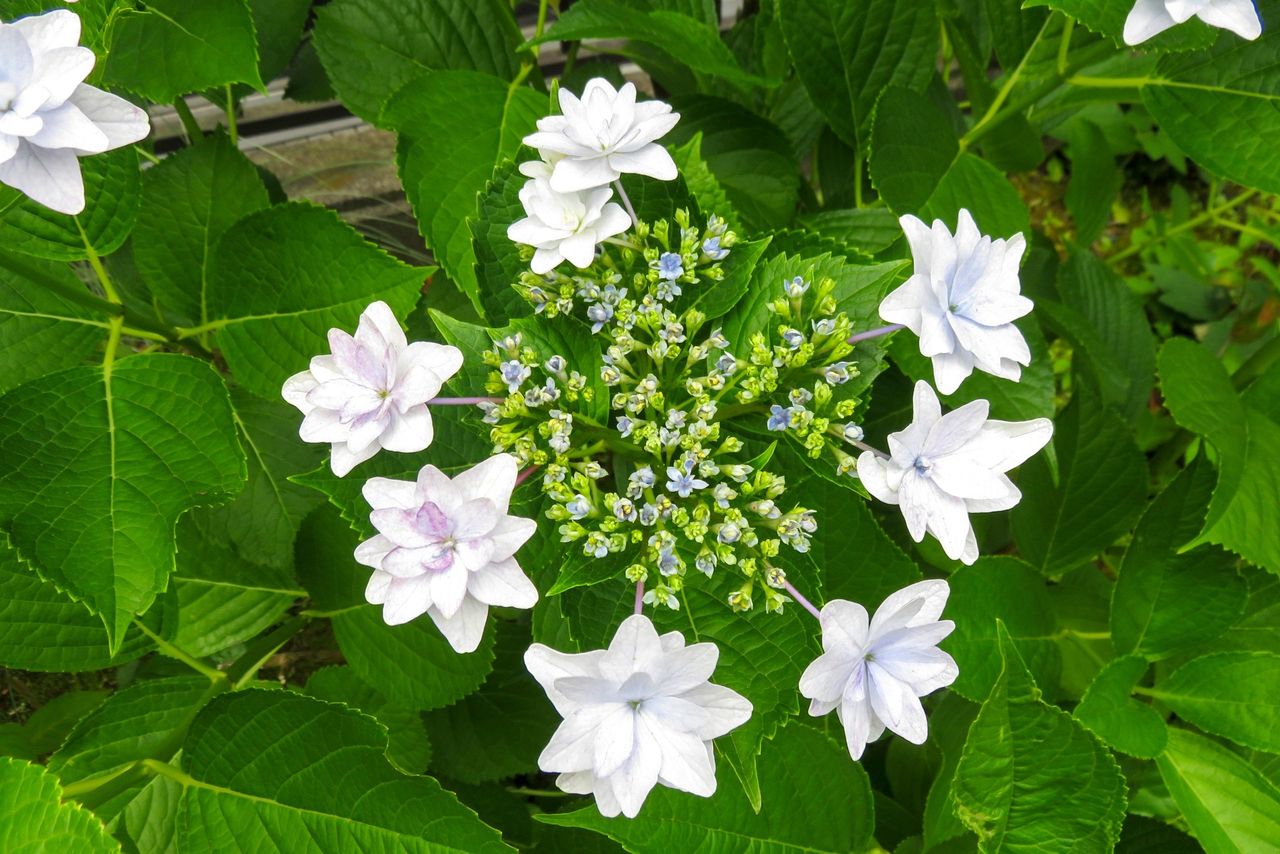
Sumida no Hanabi (Fireworks over the Sumida River) is a gaku ajisai discovered by Yamamoto Takeomi in a friend’s garden. (© Photo AC)
Today, when they hear the word “hydrangea” most people think of mophead hydrangeas, with their robust, ball-like clusters. These varieties are actually cultivars developed from lacecap hydrangeas.
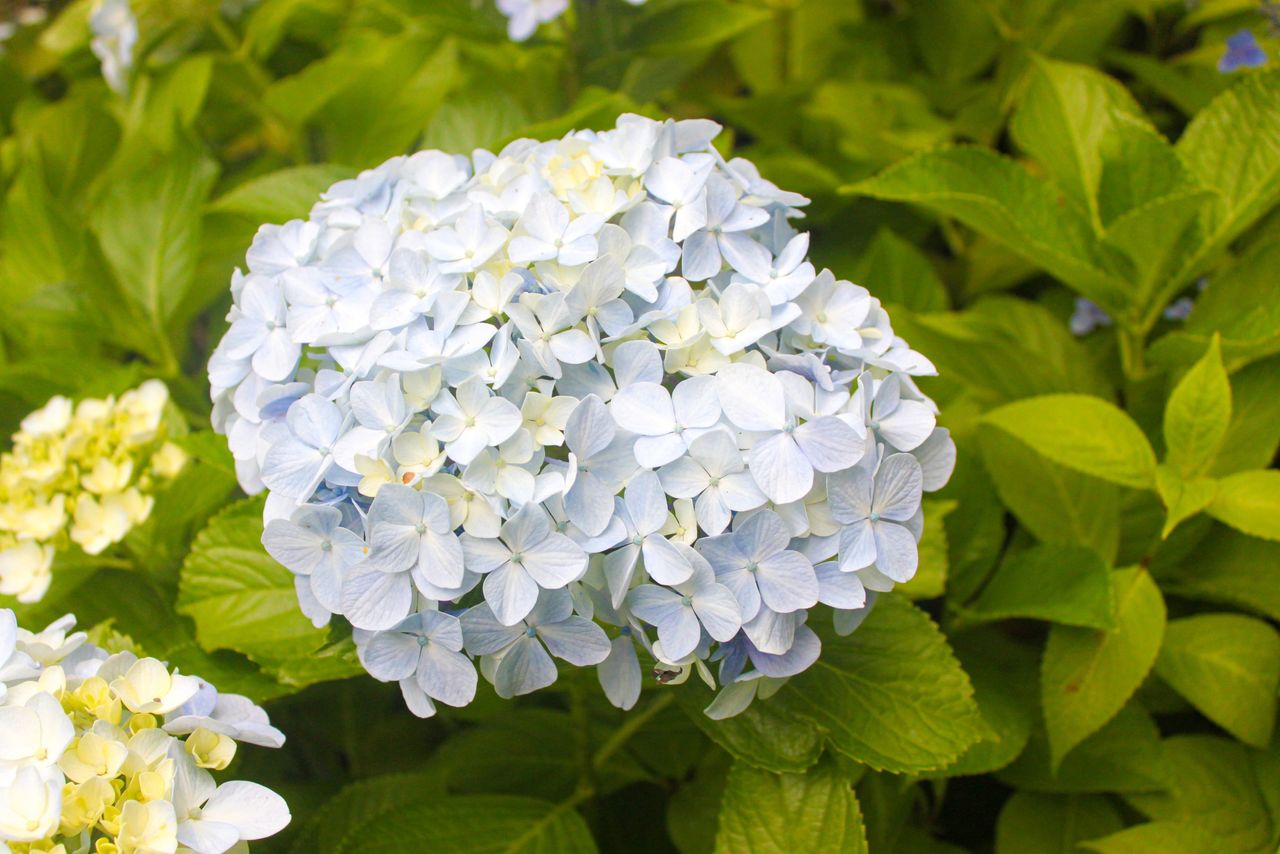
A mophead hydrangea. (© Kakujitsuen)
Yama ajisai (mountain hydrangea), with slightly smaller blooms than gaku ajisai, are distributed mainly along mountain valley slopes on the Pacific Ocean coast.
Many horticultural varieties of hydrangea have been developed by crossbreeding gaku ajisai and yama ajisai. Hydrangeas produce flowers three or four years after seeds have been planted, so as flowering shrubs go, they grow relatively quickly. This makes it easy to develop new varieties in quick succession; in Japan, breeding cultivars took off in the 1990s.
Kawarada comments: “A tremendous number of hydrangea cultivars have been developed over a short period. For around fifteen years, varieties of hydrangeas have been a standard flower gift on Mother’s Day in May, due to their coming into bloom before the rainy season.”
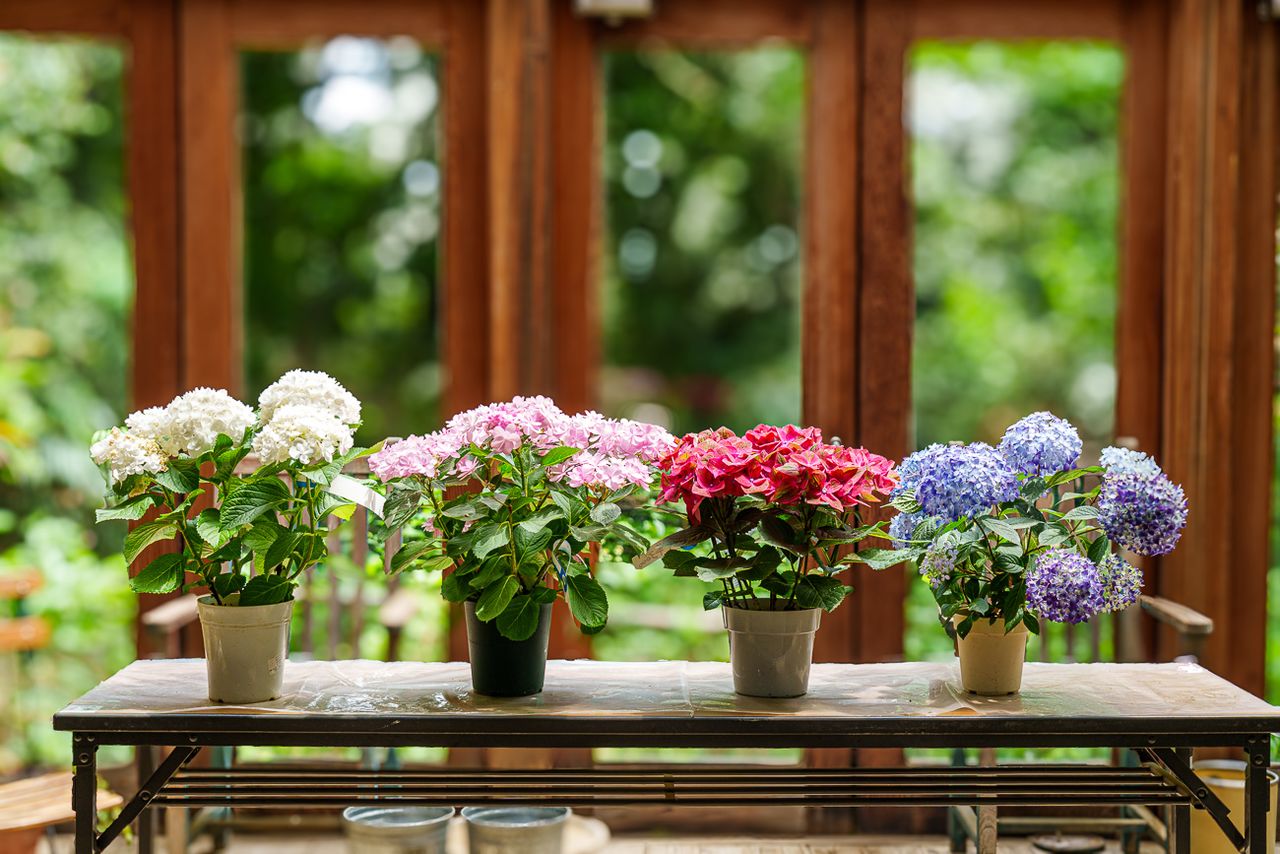
(© Ochiai Hoshifumi)
Hydrangeas come with sepals in an astounding variety of shapes and colors. There are an estimated 6,000 varieties around the world now, making them perhaps the most popular flowering shrub today.
“Hydrangeas are easy to grow, and their blooms are spectacular. They last about a month too, so they’re an ideal gift. I’ve heard that over 200 million of them are sold every year in the United States,” says Kawarada.
Hydrangeas give rainy weather a wonderfully atmospheric air. Many people assume that they are shade-loving shrubs, but that is a misconception. “It’s not that hydrangeas particularly like shade; it’s more a matter that the shrub can bloom even in low-light conditions. If you take care of your plant properly, it will last for many years. At Kakujitsuen, we even have some that are over sixty years old.”
If you have bought a hydrangea at a plant nursery, the knack to growing one that will last for a long time is to remove it from the pot and transfer it to well-drained soil. Deadhead any blooms that have dried out and you will get new blooms the next year. Hydrangeas are very affordable, starting at around ¥2,000 for a small specimen, and you can pick from a variety of colors.
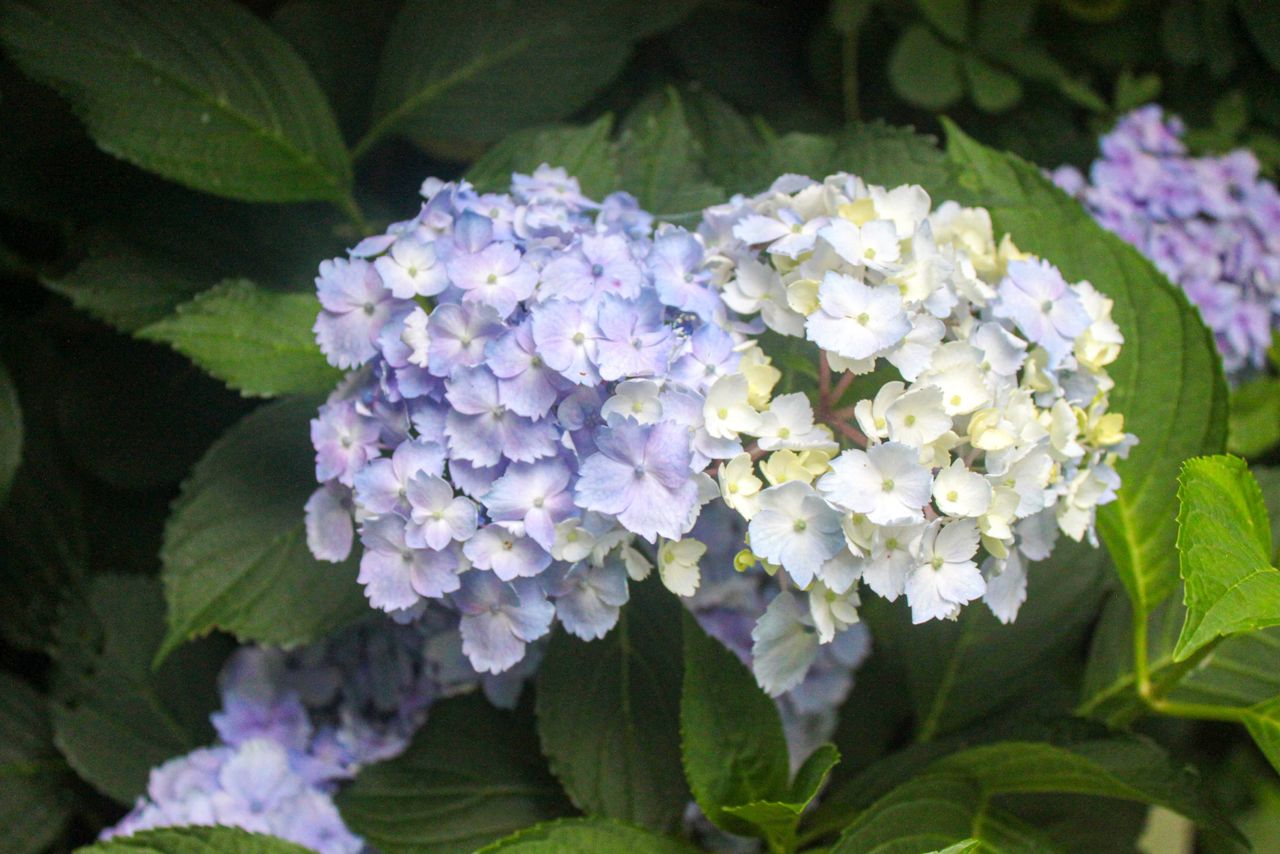
A gaku ajisai, Hydrangea macrophylla, estimated to be more than 60 years old. The sepals’ ragged edges are reminiscent of nadeshiko (Dianthus superbus). (© Kakujitsuen)
New Hydrangea Varieties
Izayoi
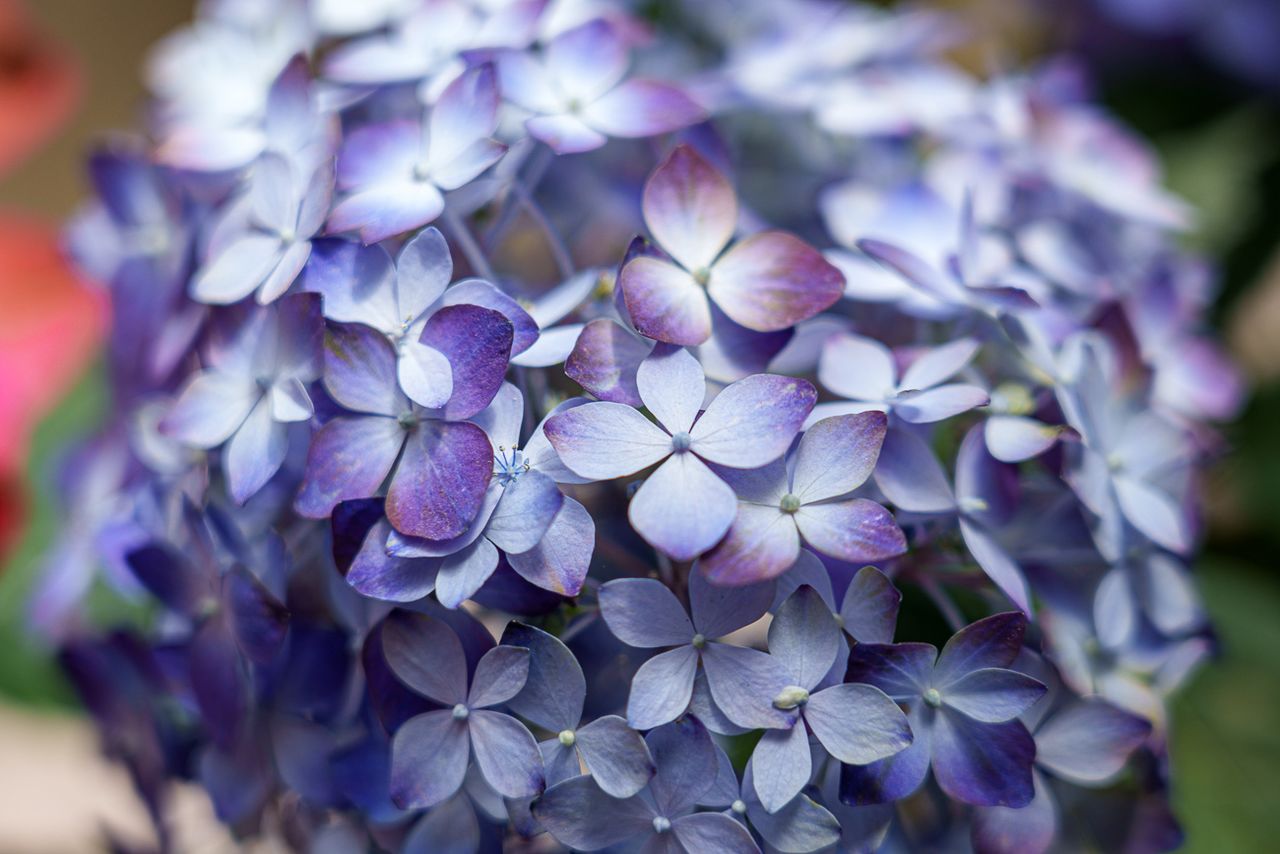
(© Ochiai Hoshifumi)
Florencia
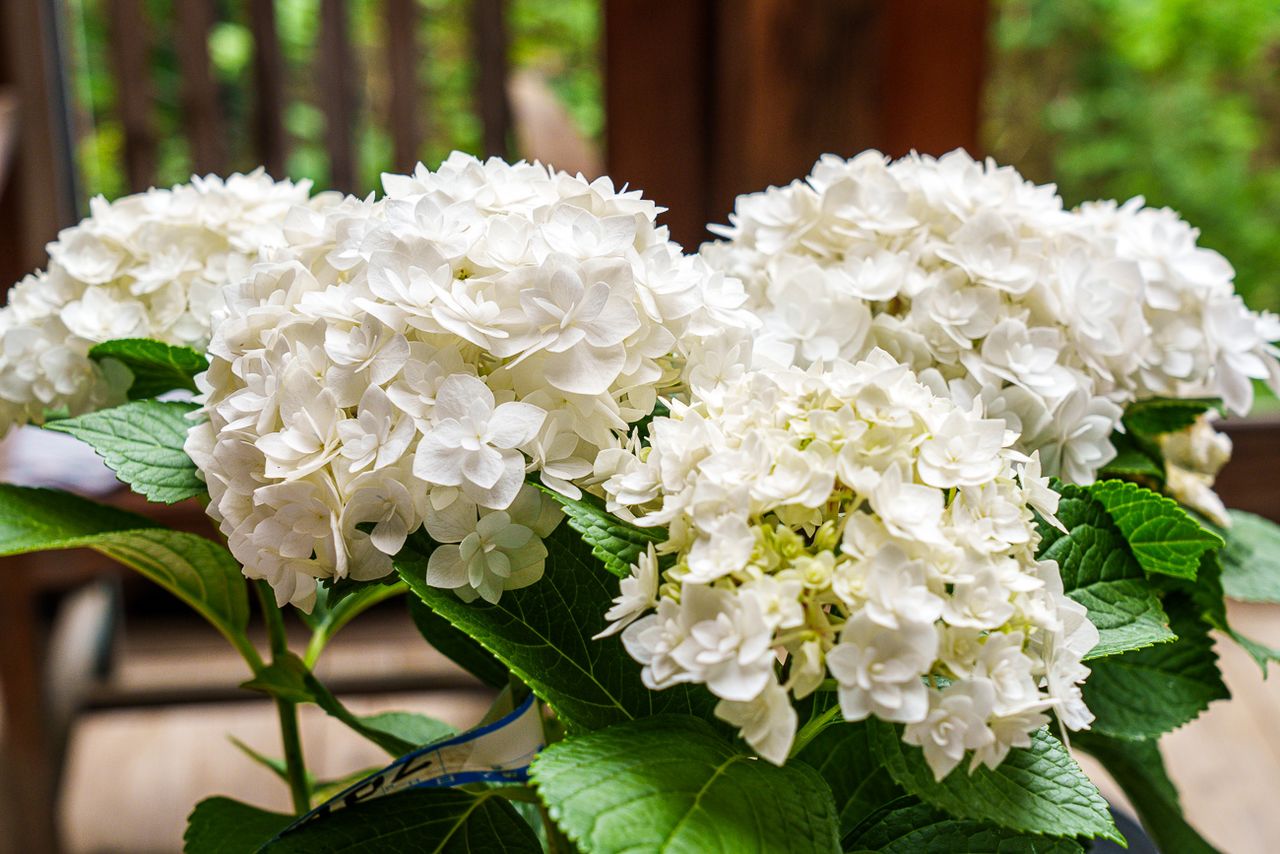
(© Ochiai Hoshifumi)
First Green
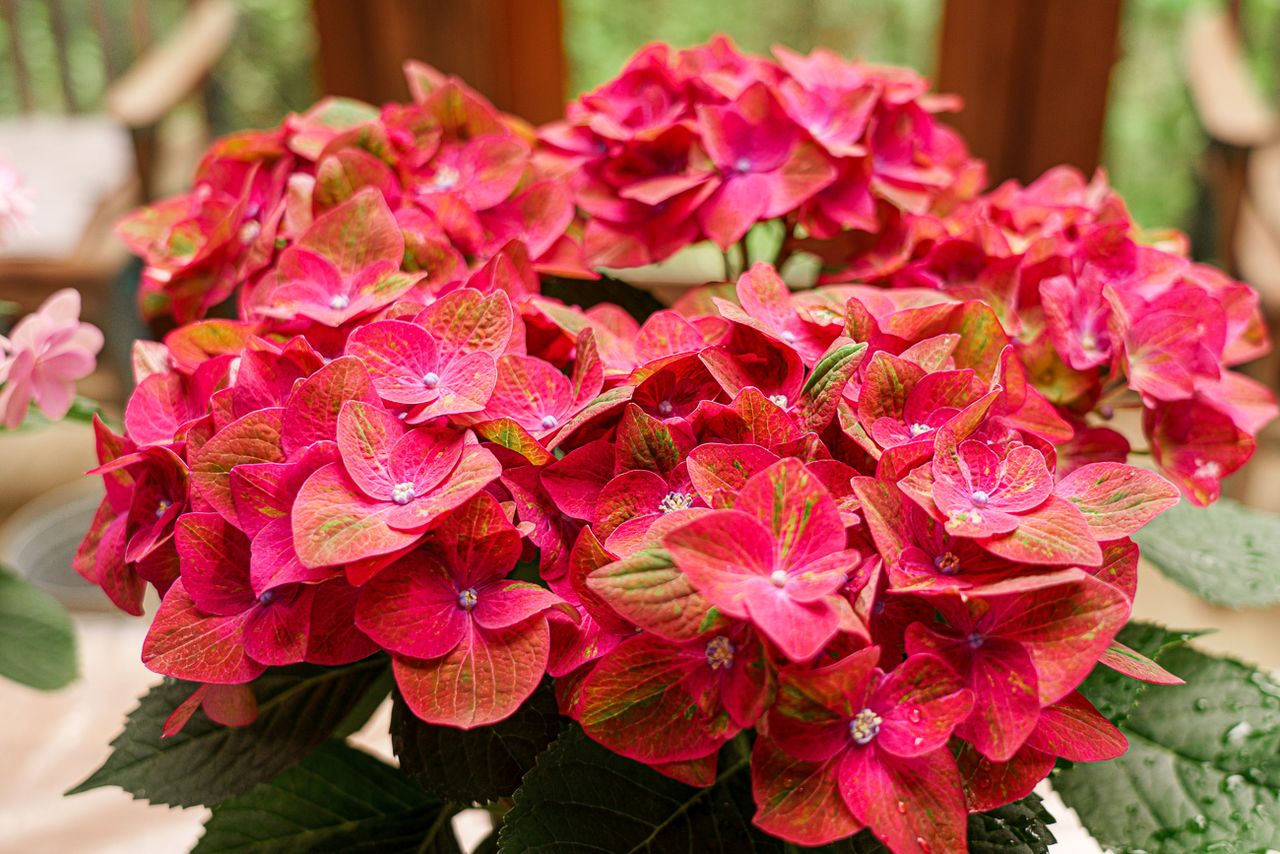
(© Ochiai Hoshifumi)
Popcorn
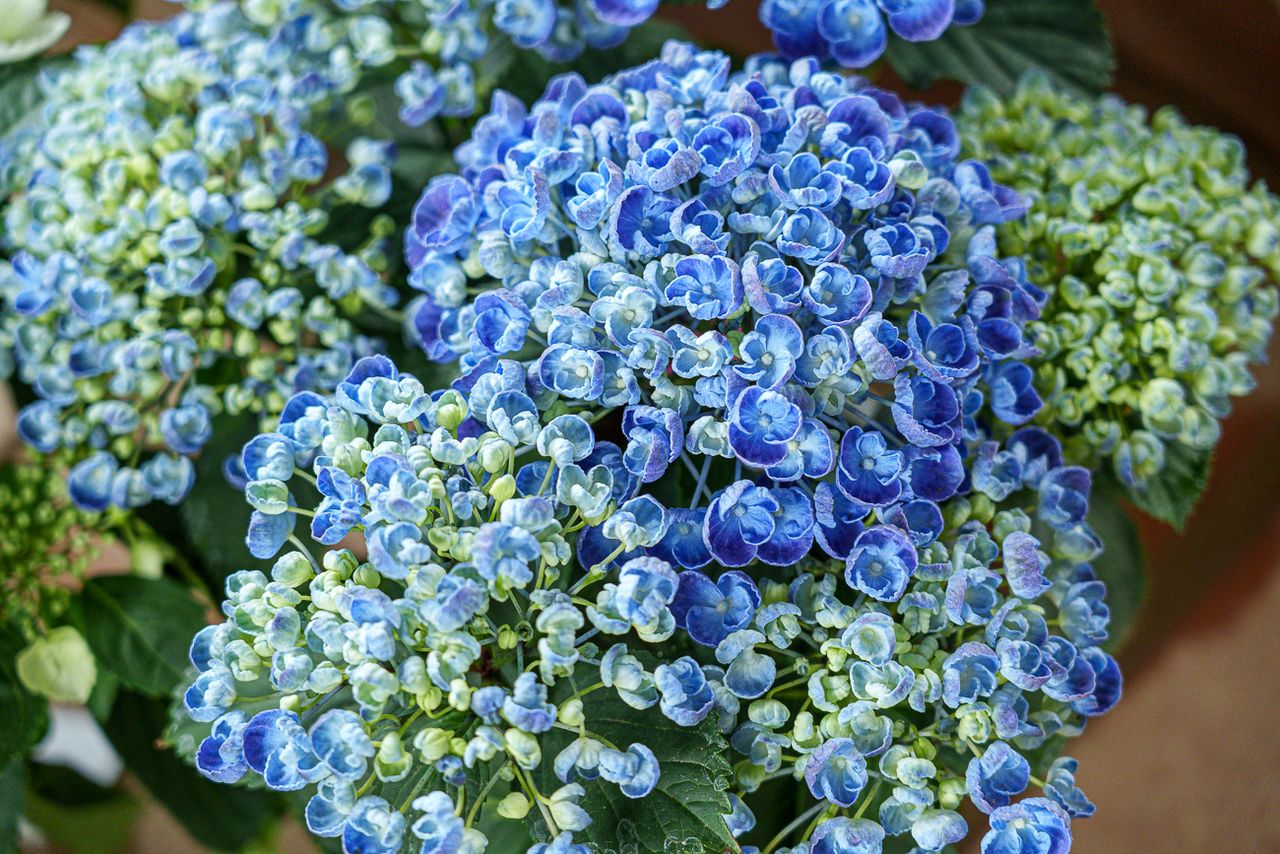
(© Ochiai Hoshifumi)
Saisai
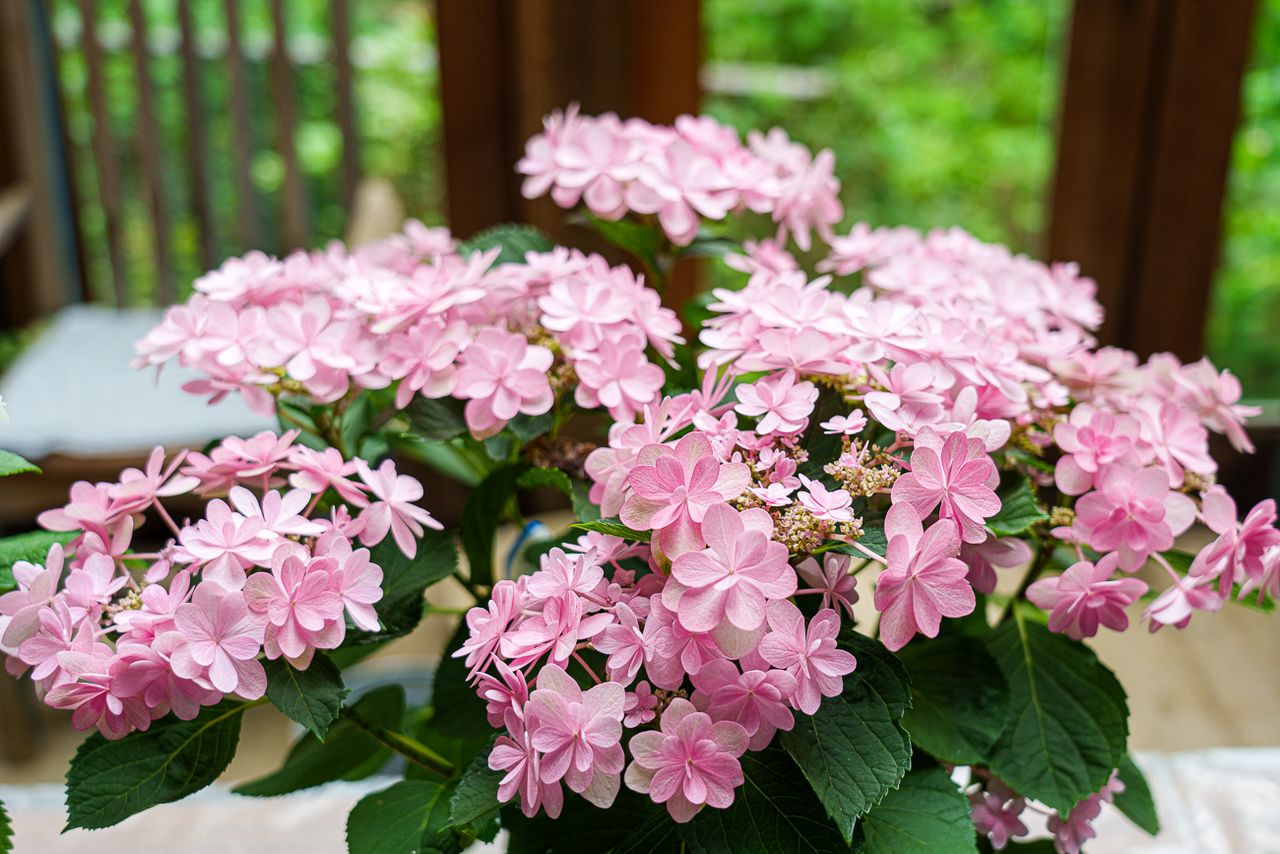
(© Ochiai Hoshifumi)
Other Well-Known Varieties
Hydrangea serrata Kurenai
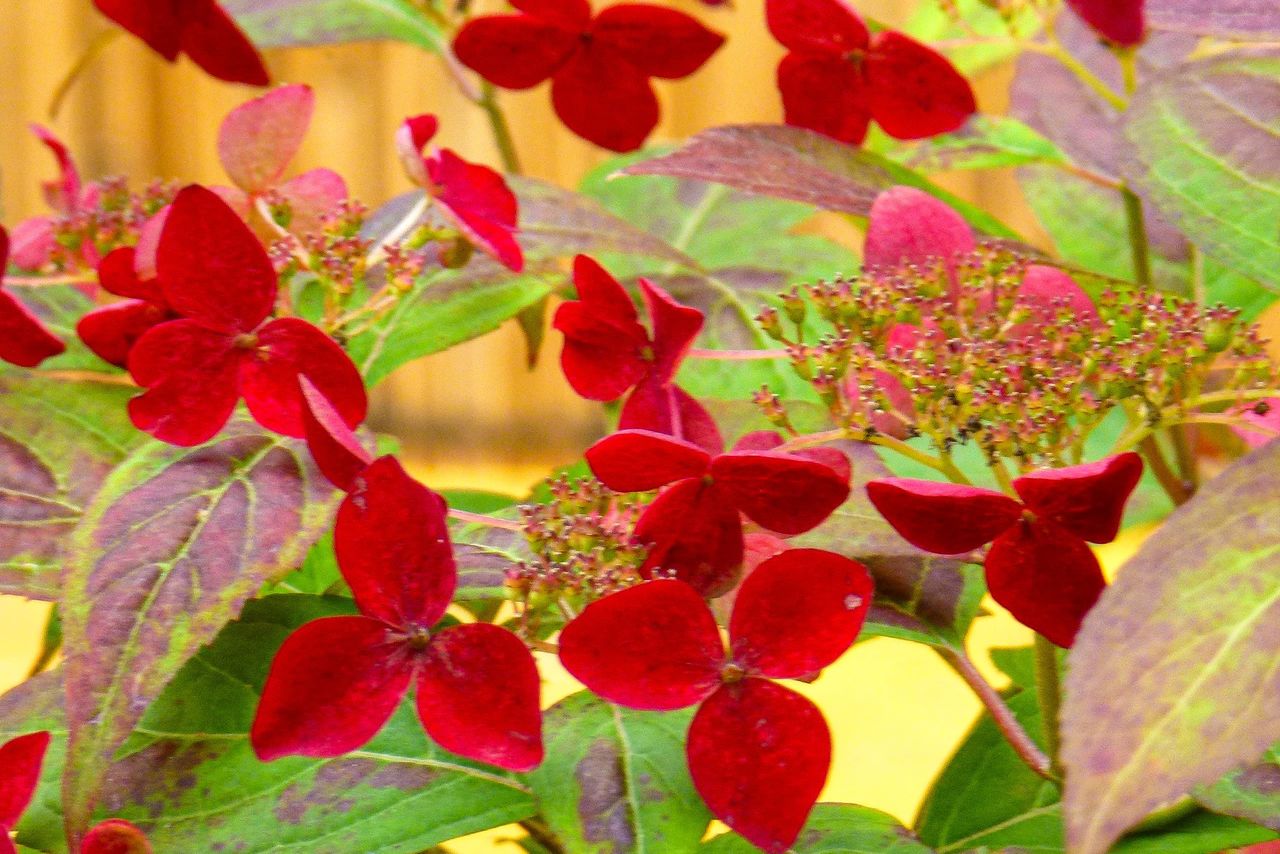
Probably the deepest red hydrangea. (Courtesy Kakujitsuen)
Ike no chō (Butterflies at the Pond)
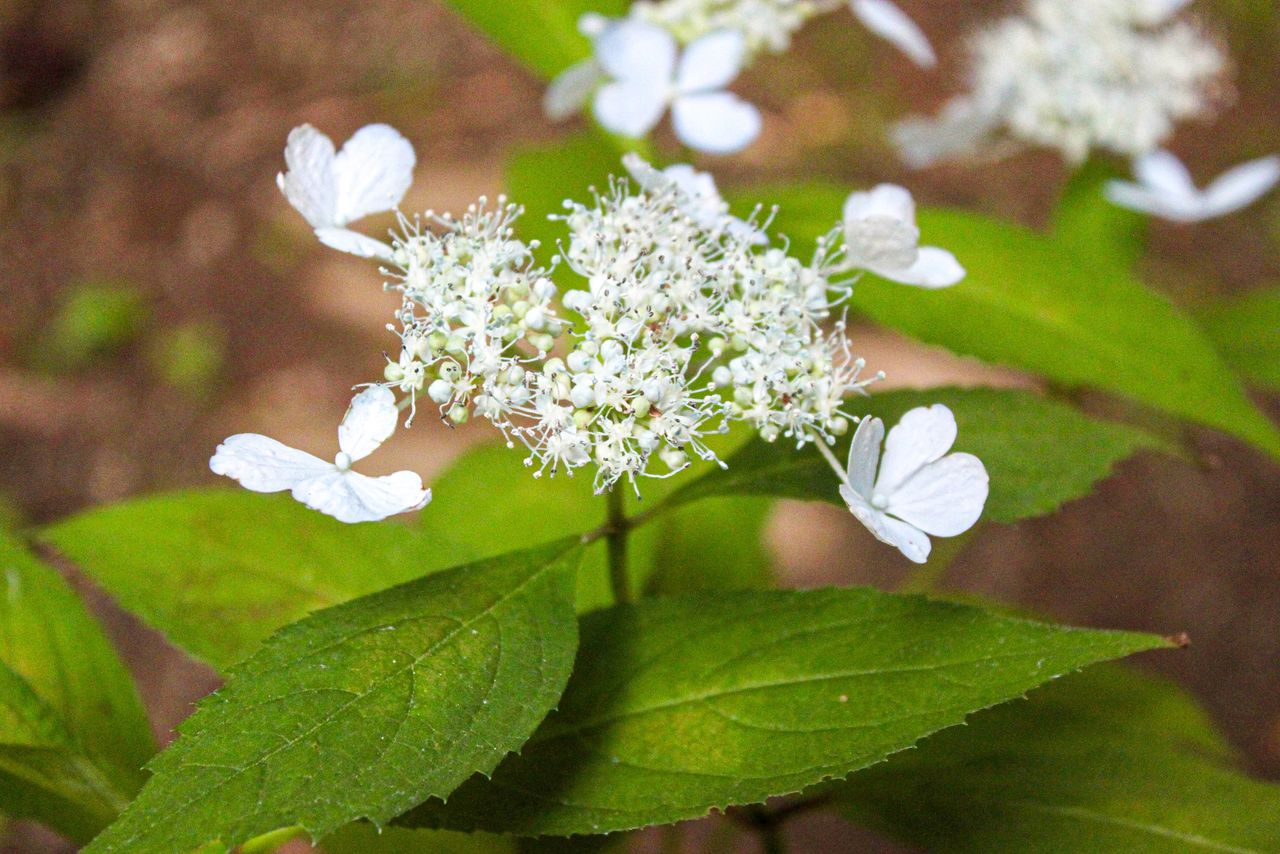
So named because the flowers look similar to butterflies flitting about. (Courtesy Kakujitsuen)
Shichidanka
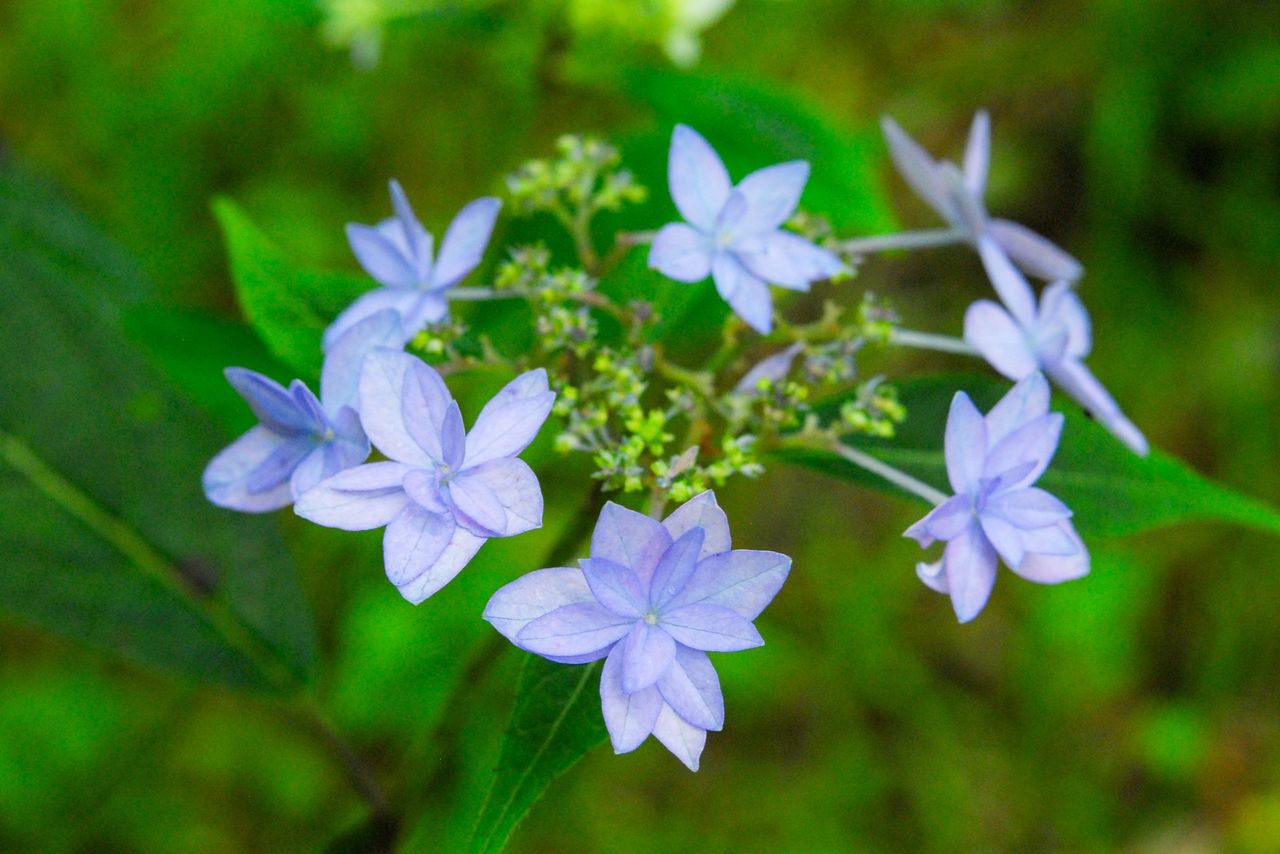
A variant of a yama ajisai, Hydrangea serrata, which was discovered by von Siebold. (© Photo AC)
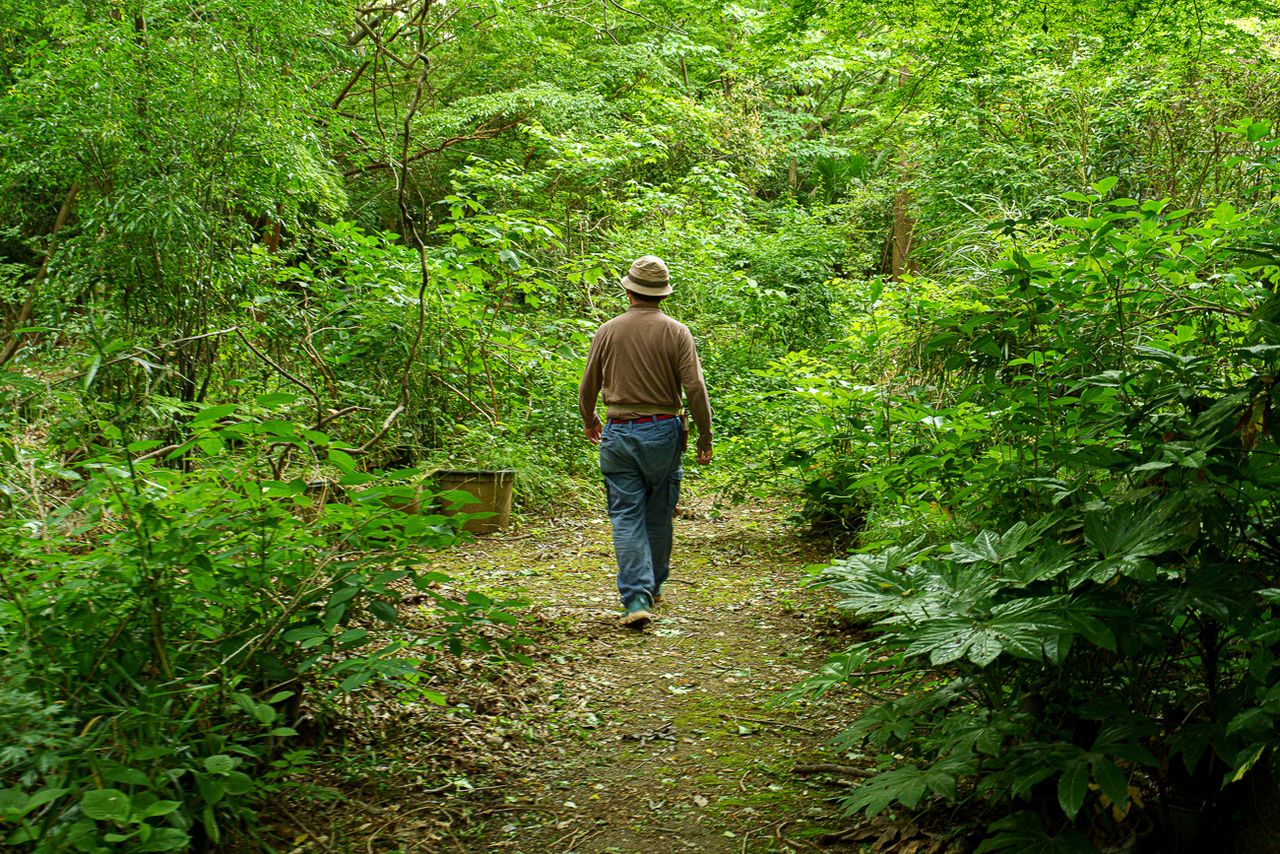
Kawarada Kunihiko heads off to admire more flowers. (© Ochiai Hoshifumi)
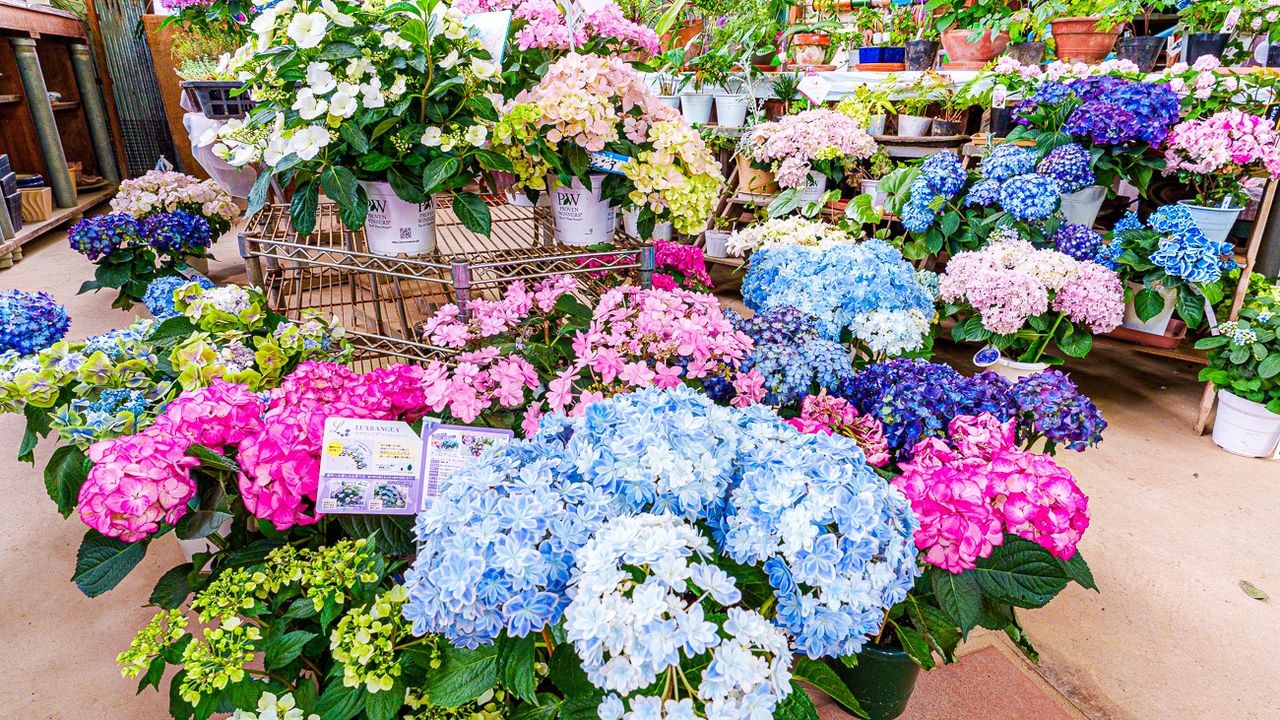
(Originally published in Japanese on May 26, 2026. Banner photo: Colorful potted hydrangeas at Kakujitsuen. © Ochiai Hoshifumi.)