Breakfast Around Japan: A Culinary Adventure
Chef Nakatani Akihito: Vegetarian Cuisine Honoring Gojō Culture
Guideto Japan
Food and Drink Lifestyle Travel- English
- 日本語
- 简体字
- 繁體字
- Français
- Español
- العربية
- Русский
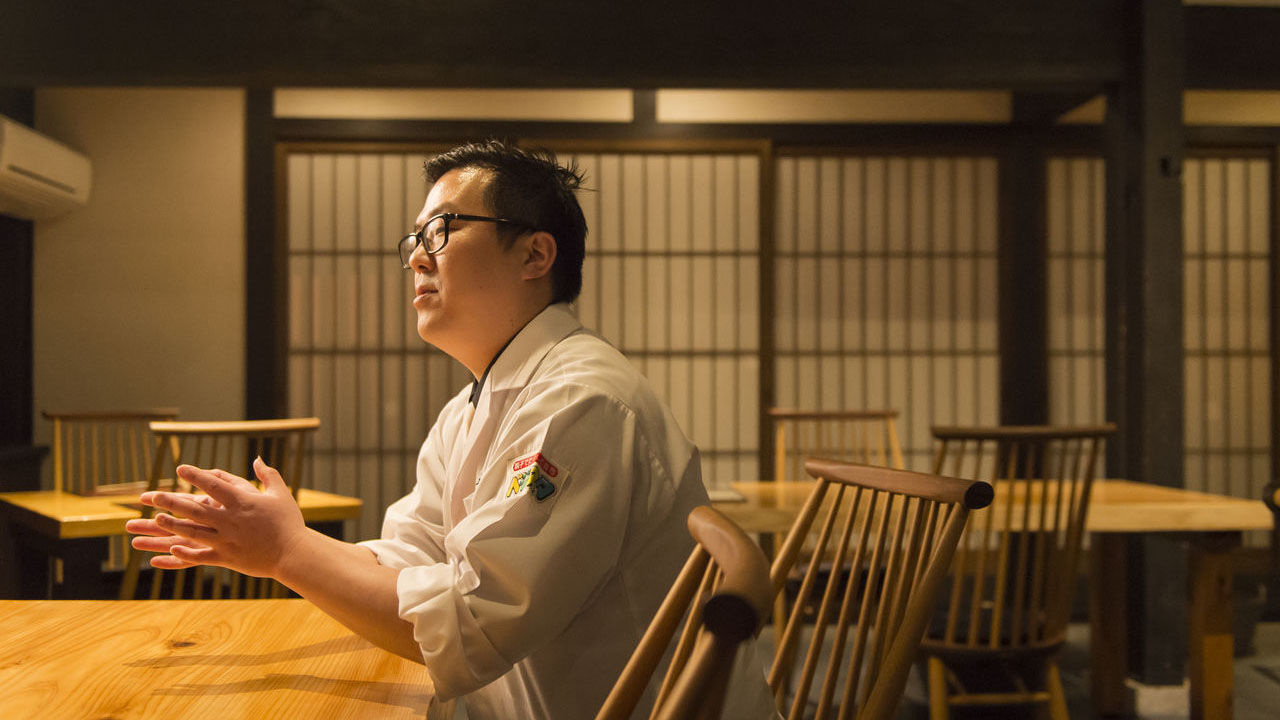
Nakatani Akihito
Head chef, Gojō Genbei. Born in 1980 in Hashimoto, Wakayama Prefecture. Graduated from Nara Cooking Junior College and trained at several fine-dining establishments in Nara Prefecture before assuming his current position as head chef at Gojō Genbei in 2010. Board member of community development company Asumo, which owns and operates Yanaseya, providing detached Japanese-style accommodations on historic Gojō Shinmachi-dōri.
A Different Concept of Time
Driving to Gojō Shinmachi felt a bit like time travel. After endless stretches of suburban wasteland, I exited the national highway and found myself in a townscape from a bygone era.
NAKATANI AKIHITO In the Edo period [1603–1868], Gojō was under the direct rule of the Tokugawa shogunate. The town’s main street, Shinmachi-dōri, was located along a key highway linking Osaka and the Kii Peninsula. From Gojō to the west, it was known as Kishū Kaidō, and to the east it was called Ise Kaidō. The shogunate wanted merchants to set up shop there, so it offered them an incentive by allowing them to run their businesses tax-free. That fostered even more trade and traffic.
The Yoshino River, which runs through the town, was used to transport lumber from the forests of Yoshino to the cities. Furthermore, there were copper deposits just to the south, near Totsukawa, so apparently the area was teeming with speculators. As a busy way station, Gojō developed its own pleasure quarters and entertainment district, which flourished as the local merchants prospered.
The building that houses Gojō Genbei, were I work as head chef, is one of the relics of that golden age. It’s a traditional wooden machiya [townhouse] built 250 years ago. People are usually impressed to hear that—but then, we also have Kuriyama-tei, whose ridgepole bears the date 1607, making it more than 400 years old. It’s the oldest datable house in Japan. So, you see, people here have a whole different concept of time.
From Kitchen Apprentice to Community Developer
Nakatani is also an executive of the community-development company Asumo, with the unusual title of “director and executive chef.” The position speaks to his pivotal role in the community’s economic revitalization.
NAKATANI I was actually born in Hashimoto, right across the border in Wakayama Prefecture. I’ve loved cooking ever since I was in elementary school; in fact, I was so impatient to begin my apprenticeship that I didn’t even want to bother with junior high school. The high school I went to was geared to college-bound kids, so I was the only one in my class who went to culinary school instead of a university, but I never had a moment’s doubt.
I trained at a ryōtei and other fine-dining establishments in Nara Prefecture, and then I got the chance to be head chef at a kappō(*1) restaurant in Gojō. I was thrilled to work in Gojō because, in addition to its wonderful architecture, it’s steeped in the Nara region’s rich dietary and culinary culture.
The neighborhood where I grew up in Hashimoto was a new residential development, and I’d had little opportunity for contact with buildings, shops, or wares passed down over generations. But just four train stops away, you have this town full of buildings from the Edo period. The whole ambience changes.
The kappō restaurant did a brisk business under Nakatani. Then one day, an official from the prefectural government walked in, sat down, and addressed Nakatani, saying, “They’re planning something interesting over at Shinmachi. We’d like you to open a restaurant there.”
NAKATANI This was coming from a customer I’d never even seen before! Anyway, he told me that some community leaders were starting up a development corporation with the aim of preserving the historic townscape and putting the buildings to use. The name of the company was Asumo, and this restaurant, Genbei was to be the project’s centerpiece.
The name Genbei is taken from Nakaya Genbei, the name bestowed on the town headmen during Edo period. The building originally belonged to an Edo-period tobacco merchant, and it was passed down from father to son until the last heir died fairly recently. It was in danger of being torn down, but Tanaka Shūji, who founded Gojō’s Kakinoha Sushi Honpo Tanaka [a specialty sushi shop], bought the house in the interests of preserving the historic townscape. And then the property was leased to Asumo on the understanding that it would use it to open a restaurant.
These days, community development projects are often headed by nonprofits, but the people who founded Asumo decided to make it a joint-stock corporation because they were committed to an economically viable plan. That approach appealed to me, so I said, “Count me in.”
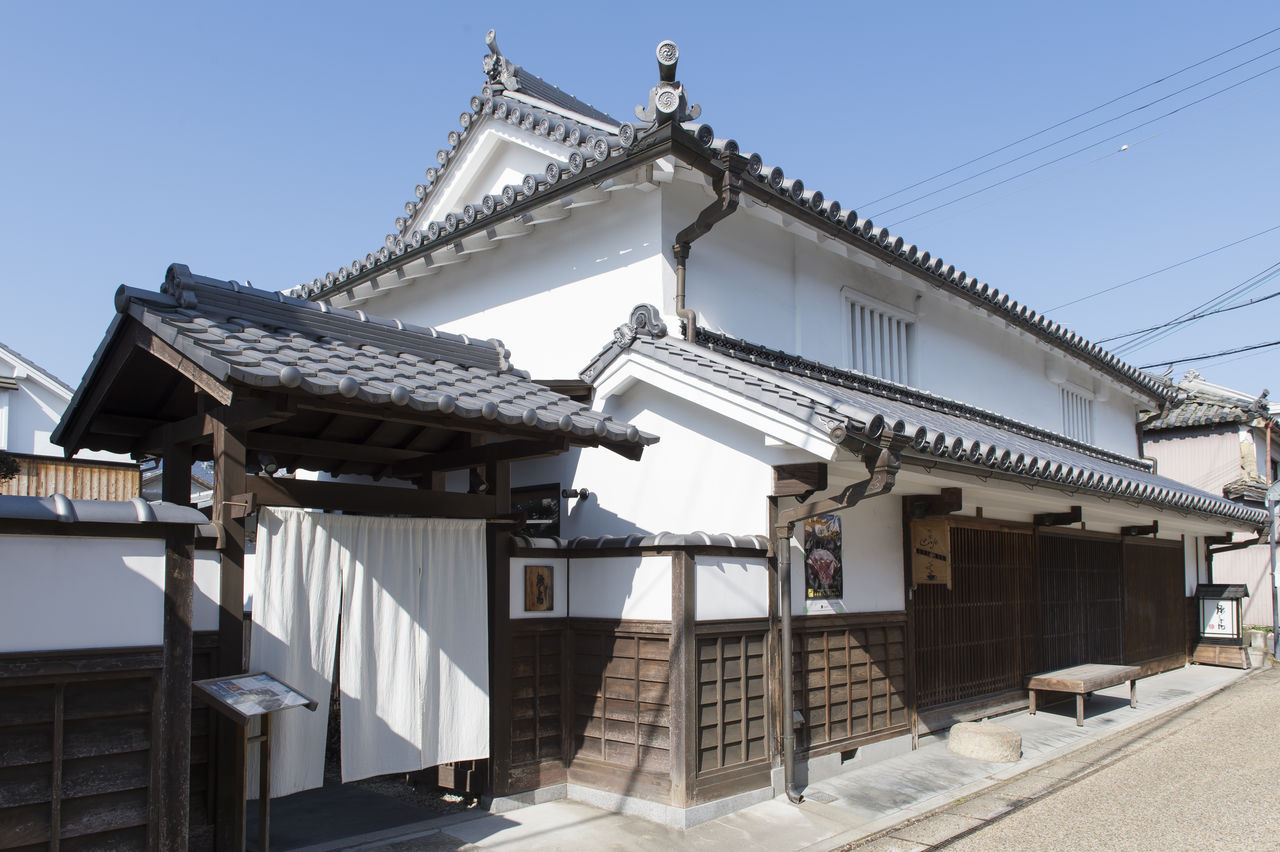 Gojō Genbei is housed in a beautifully restored 250-year-old machiya (traditional townhouse).
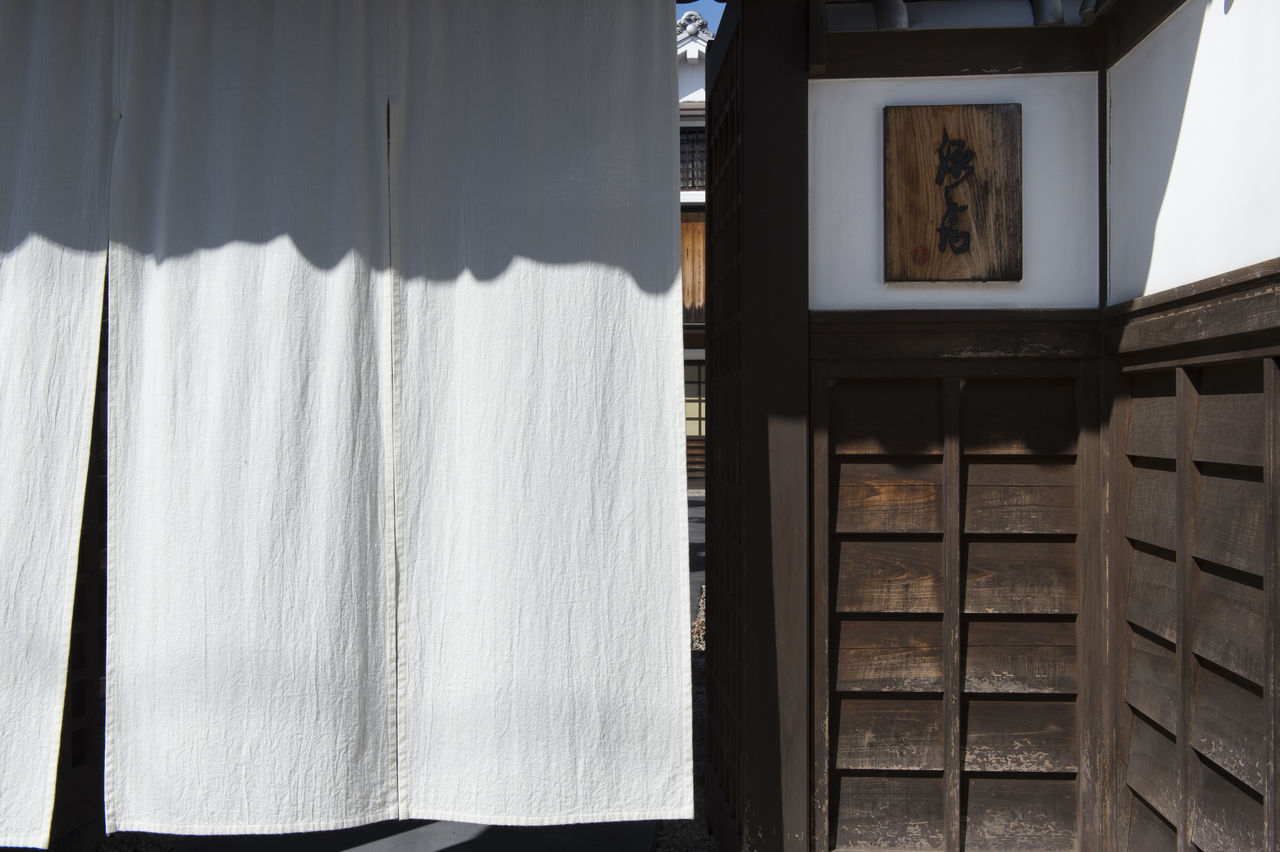 Sparkling white noren mark the entrance to Genbei. The restaurant’s logo at right is the signature of one of the town’s Edo-period headmen.
Thinking Outside the Big Box
As it turned out, Nakatani had his work cut out bridging the gap between his own vision for Gojō Genbei and local investors’ expectations.
NAKATANI In a town with a long unbroken tradition, the citizens tend to be fairly conservative in their habits and tastes. They have certain set expectations for a sumptuous meal: whole sea bream, tuna sashimi, and so forth. When it came time to open a flagship restaurant in the neighborhood, most people favored a 100-seat izakaya serving all the customary favorites.
I had other ideas. This isn’t the Shōwa era [1926–89] anymore. That was a time when everyone liked things to be big and lavish. Nowadays, when we’re inundated with goods and information from all over, the Japanese have come to appreciate the value of simple, unpretentious things. Gojō has a long agricultural tradition, and there are a lot of local farms producing specialties of the Nara region. I thought visitors would find it more of a treat to be served fresh-picked Nara vegetables delivered straight from the farm. From my own perspective as an outsider, I thought, “Why not do something that couldn’t be done anywhere but Gojō?” And I continued to make that argument.
Meanwhile, Asumo was also hatching plans for commercial use of the 100-year-old machiya across the street from Gojō Genbei. The idea was to lease the property from the city and turn it into a Japanese-style bed-and-breakfast featuring detached accommodations.
NAKATANI The property, which had been the home of a local physician, consisted of a Japanese-style house, a traditional storehouse, and a garden. The idea was to give each party of guests the keys to one of the buildings and let them make themselves at home there. We got a lot of good advice from Alex Kerr, who supervised Genbei’s interior design. He was very conscious of the need to strike a balance between the aesthetics of traditional domestic architecture and practical considerations, such as plumbing for separate bathrooms and kitchens.
He also offered some words of wisdom regarding the restaurant’s identity. He advised us to build on Gojō’s unique assets and local character instead of serving up the same kind of spread you could get anywhere in Japan. His advice and his general approach were an inspiration that kept me going when I was almost ready to give up the fight.
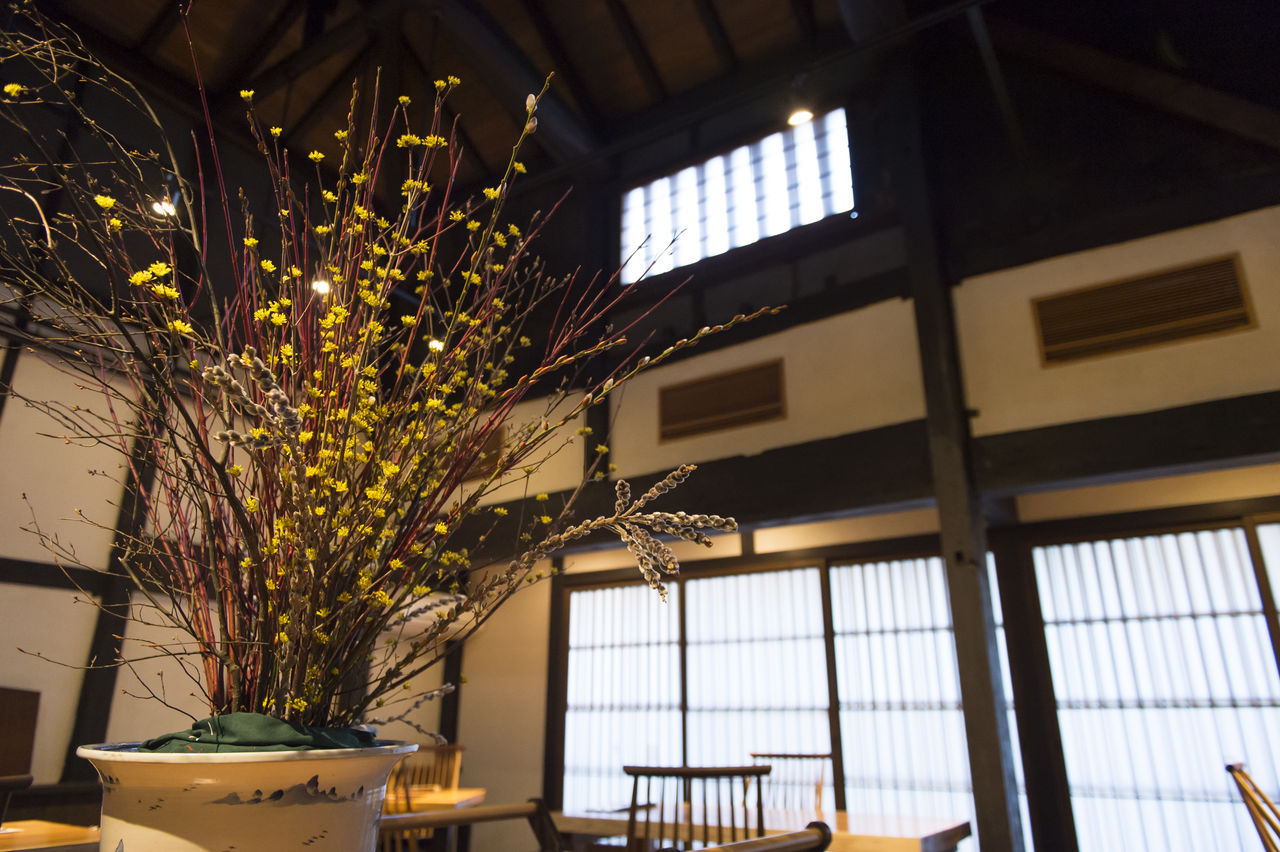 The dining room at Gojō Genbei.
Forty Vegetables Served Daily
Nakatani’s style of cooking honors the basic principles of Japanese cuisine and highlights the natural goodness of the ingredients, particularly fresh vegetables and preserved foods produced locally. It avoids clever tricks designed to display the chef’s technical wizardry or originality.
NAKATANI At Genbei, we serve lunch and dinner, and every single day we use at least forty different vegetables for our menu.
The Gojō area has mountains and rivers and fields and a long tradition of resource exchange between communities. In addition to the vegetables, there’s ayu and other fish from the river, as well as game, such as wild boar and deer. Rice is grown nearby as well. This is what I mean when I talk about a rich dietary culture.
But my main obsession was perfecting the Gojō Vegetarian Course, a full-course Japanese meal made entirely from local vegetables. It’s not that I don’t like fish and meat, but I was determined to push the limits of what one could do with a full-course menu featuring only vegetables. My basic inspiration is the bright, vibrant taste of a vegetable plucked right out of an open field [as opposed to a greenhouse]. The flavors are so much more intense.
The farmers I work with are a really interesting bunch. For example, Tanaka Kayoko was originally a kimono instructor. Now she grows about 400 varieties of vegetables on her farm. Then there’s Yoshida Tadao, who quit his white-collar job with a pharmaceutical company to cultivate native heirloom vegetables using all-natural farming techniques. There’s a farm devoted exclusively to asparagus and another that grows nothing but figs. One of my farmers specializes in sprouts and microgreens, laboriously cultivating and harvesting delicate crops like mitsuba [Japanese honewort], pea tendrils, and baby erba stella greens. It strikes me as the ultimate extravagance.
The Nara region also has quite a few soy sauce and sake brewers that have been in business for generations, stubbornly preserving the old brewing methods. One is Nakako Soy Sauce right here in Gojō Shinmachi. Another is 300-year-old Yamamoto Honke, a place I particularly admire for its diligent study of sake. Also, Fujita Cha-en, Gojō’s one and only tea producer, hand-roasts its own home-grown tea and supplies me with hōjicha. This is the essential “local content” that goes into my cooking.
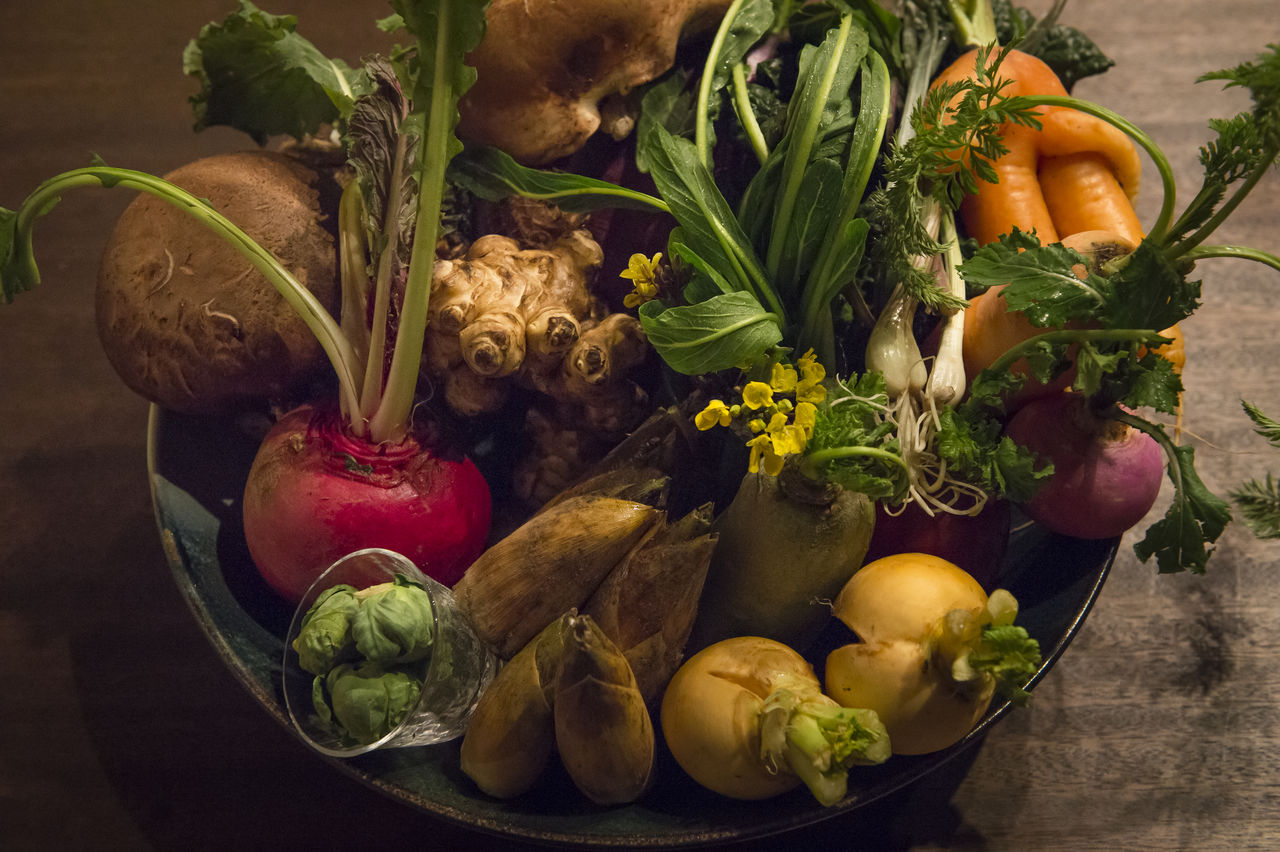 A cornucopia of fresh vegetables from nearby farms.
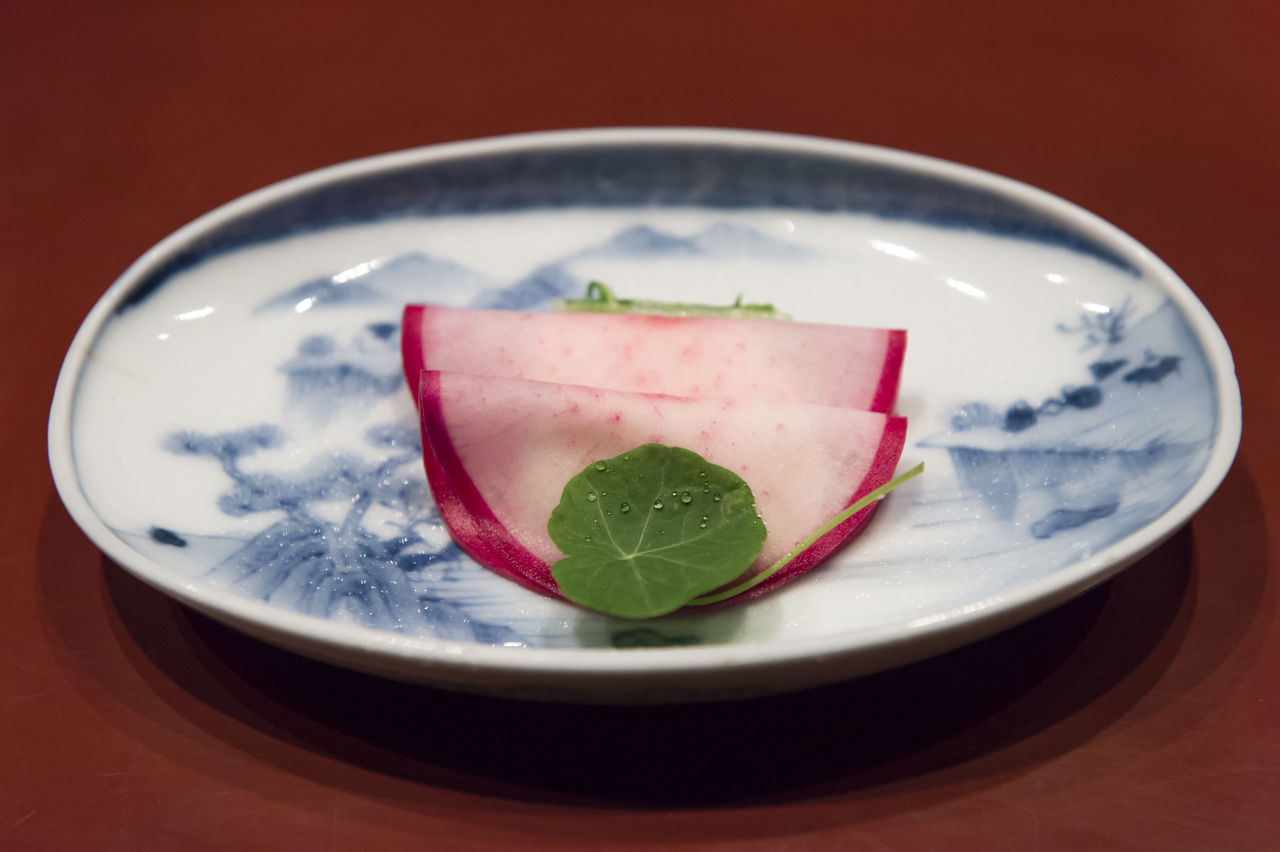 Thin slices of “Momonosuke” red turnip enfold a puree of yamato-imo yam in a visual play on hanabira-mochi, a traditional Japanese sweet.
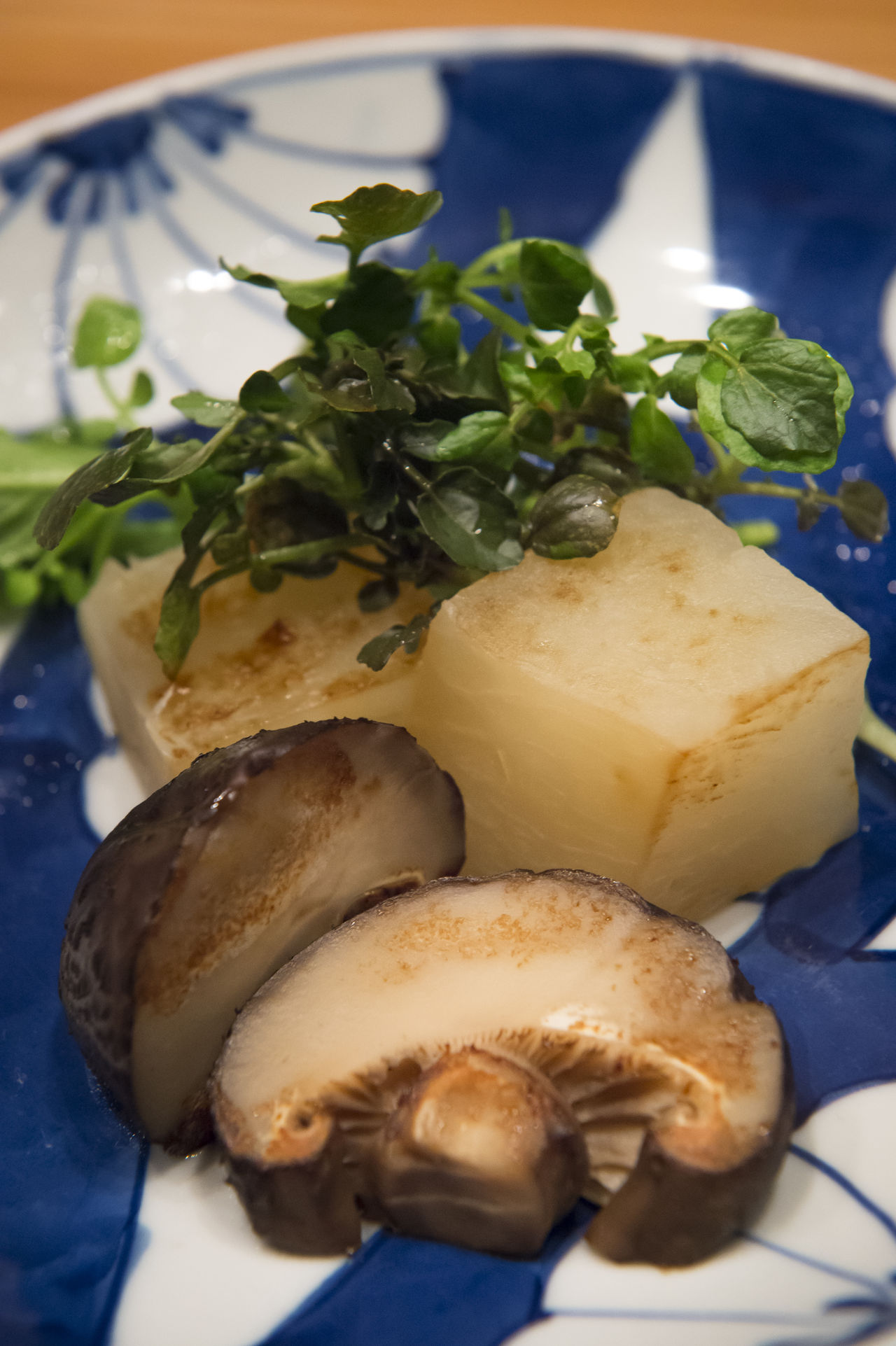 Field-grown daikon radish and baby daikon greens with extra thick shiitake mushrooms.
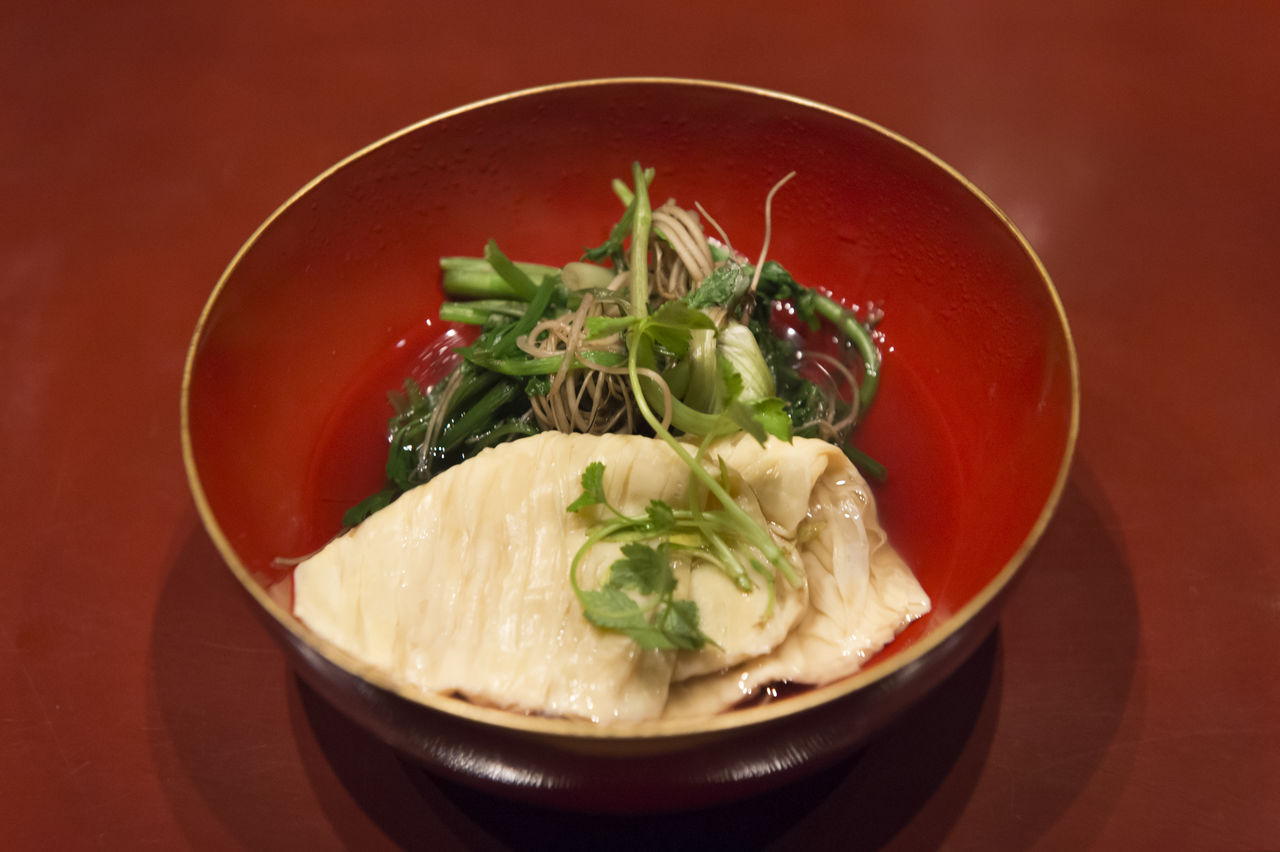 Hand-skimmed yuba (tofu skin) served with seri (water celery) with the roots attached, a delicacy.
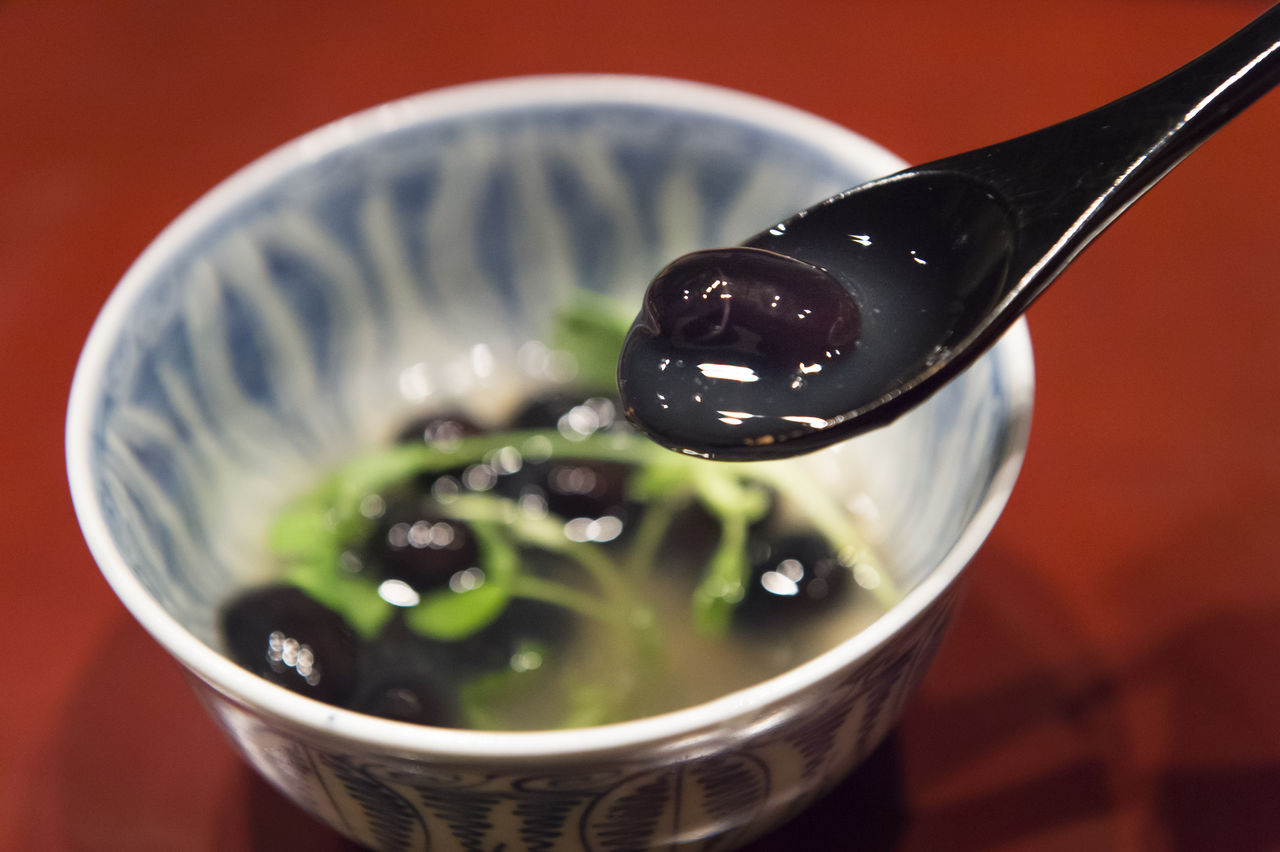 Braised black beans and pea tendrils in a sauce thickened with Yoshino arrowroot.
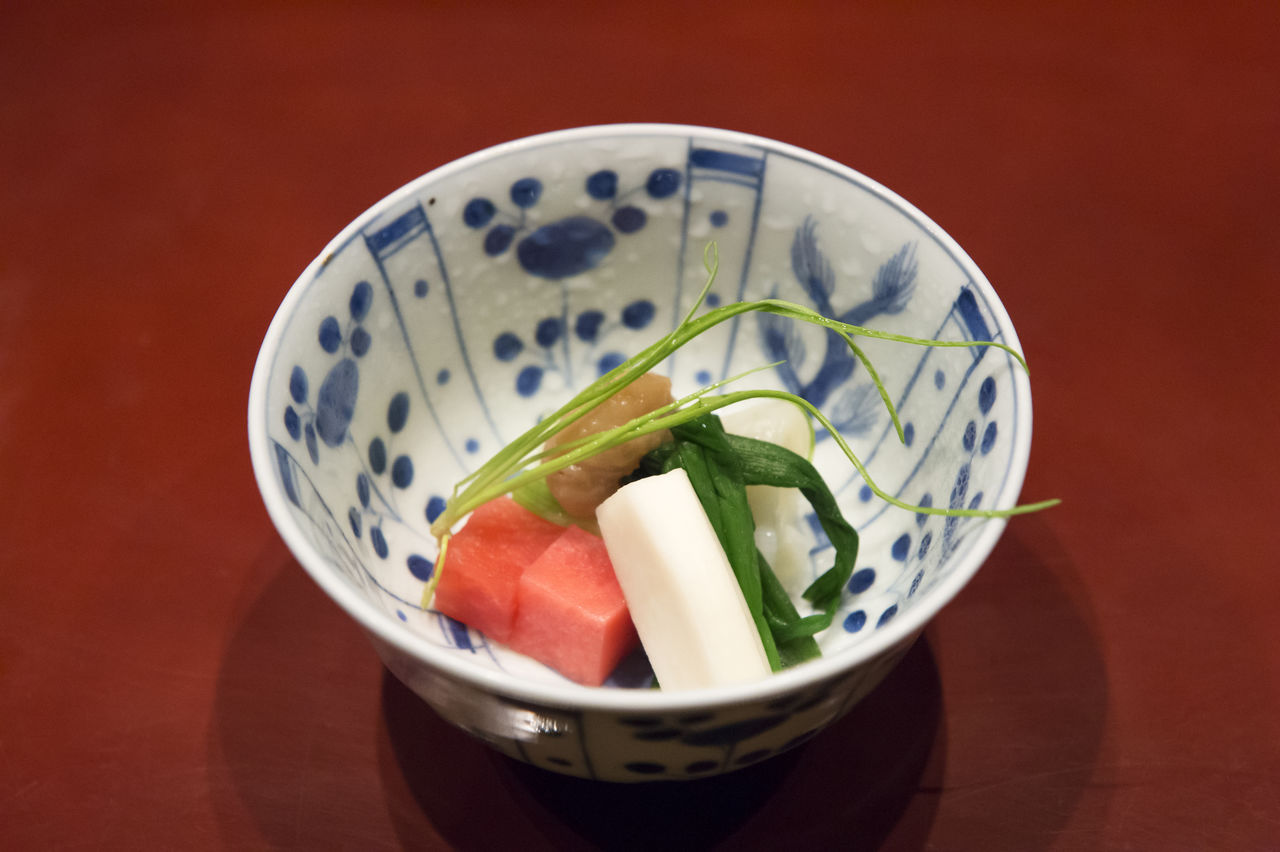 Simmered vegetables garnished with baby erba stella greens.
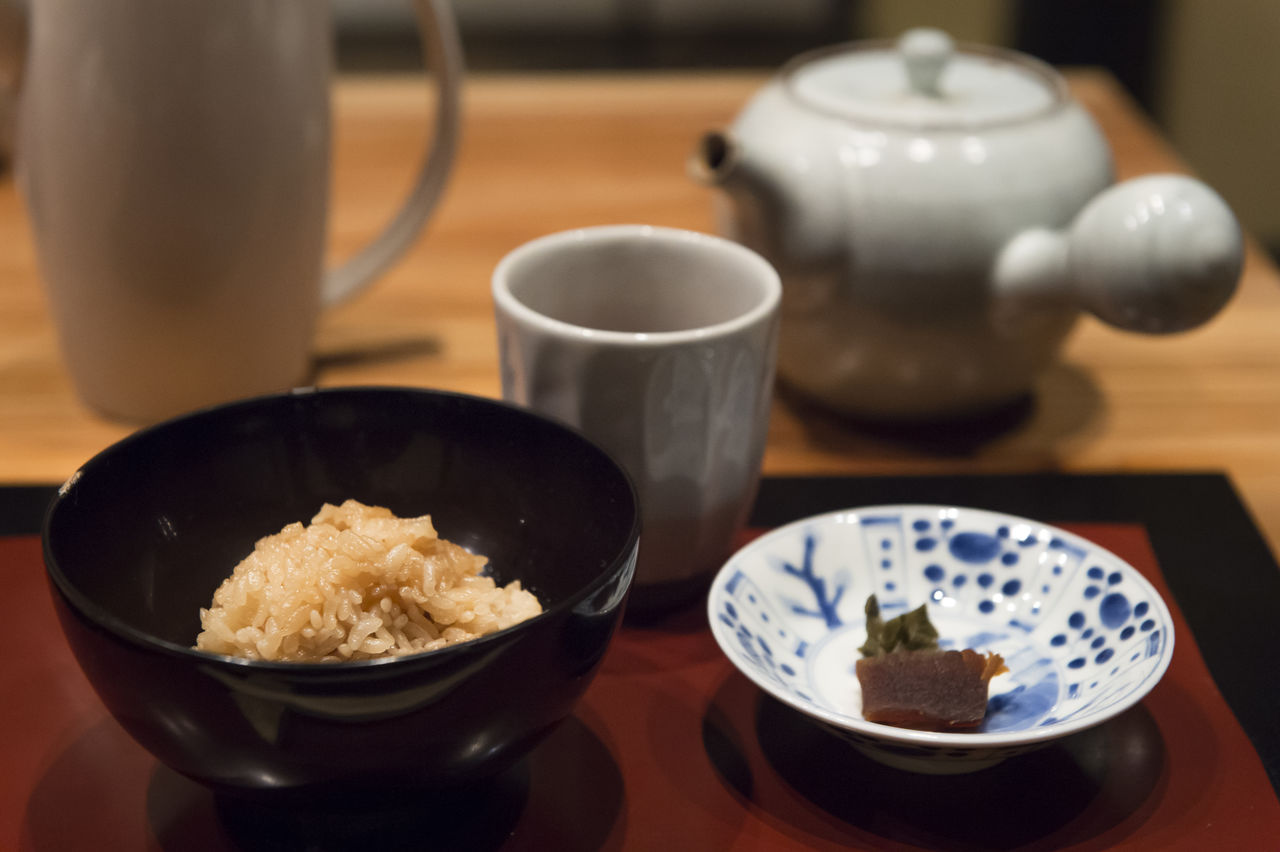 Meals are served in antique ceramics and lacquerware preserved in the storehouse of the historic building that houses the restaurant.
As evening fell, I took a stroll along the Yoshino River, which flows lazily past Shinmachi. An elderly woman from the neighborhood who was out for a walk stopped to let me pass. I thanked her, and she saw me off with a kindly “Don’t catch cold, now!”
NAKATANI Gojō is a really warm community. It’s a town with a distinguished history, so it’s not like people here are outgoing or demonstrative, but virtually everyone you meet on the street, whatever their age, will greet you, whether you live here or not. Perhaps “old school” is a better description than “conservative.” It’s the kind of place where I’d like to put down roots.
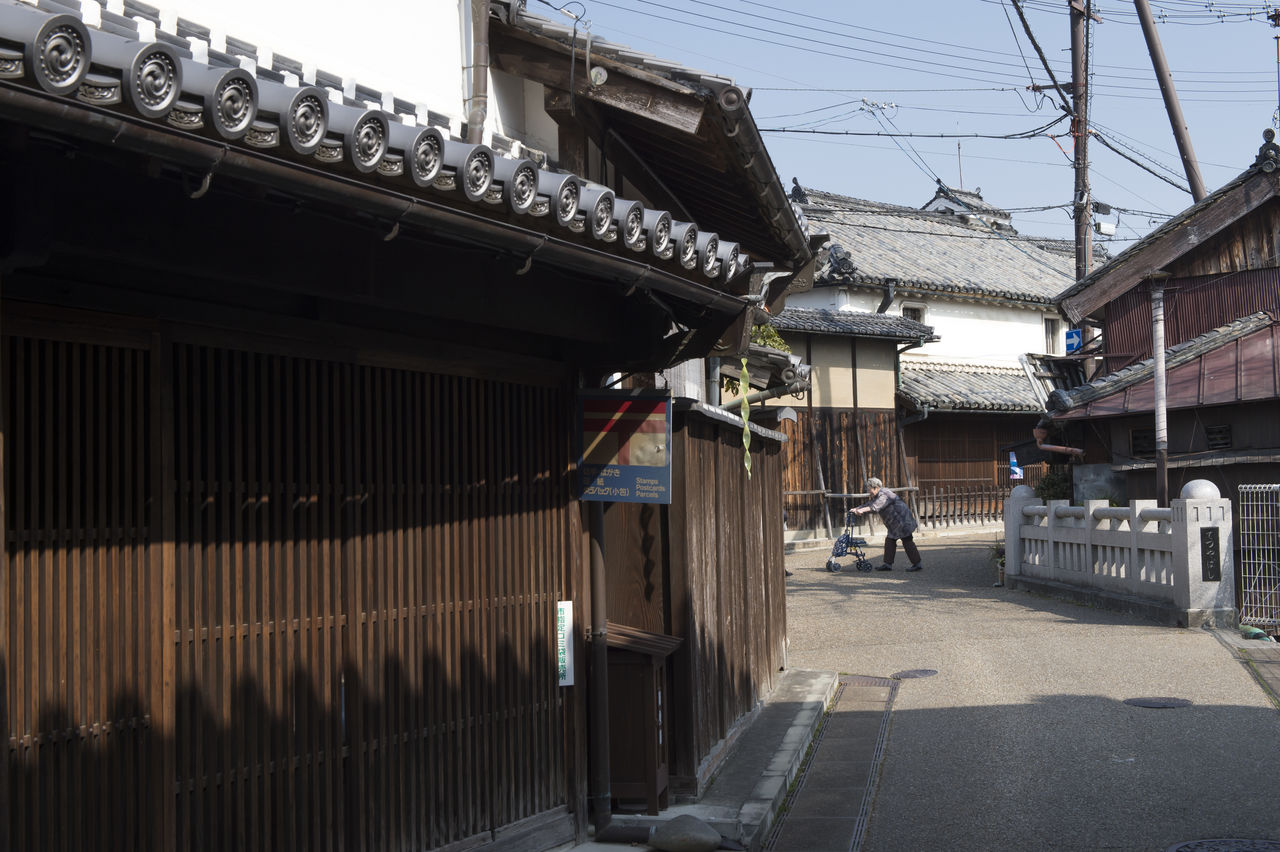 Gojō Shinmachi has been designated an Important Preservation District for Groups of Historic Buildings in Japan.
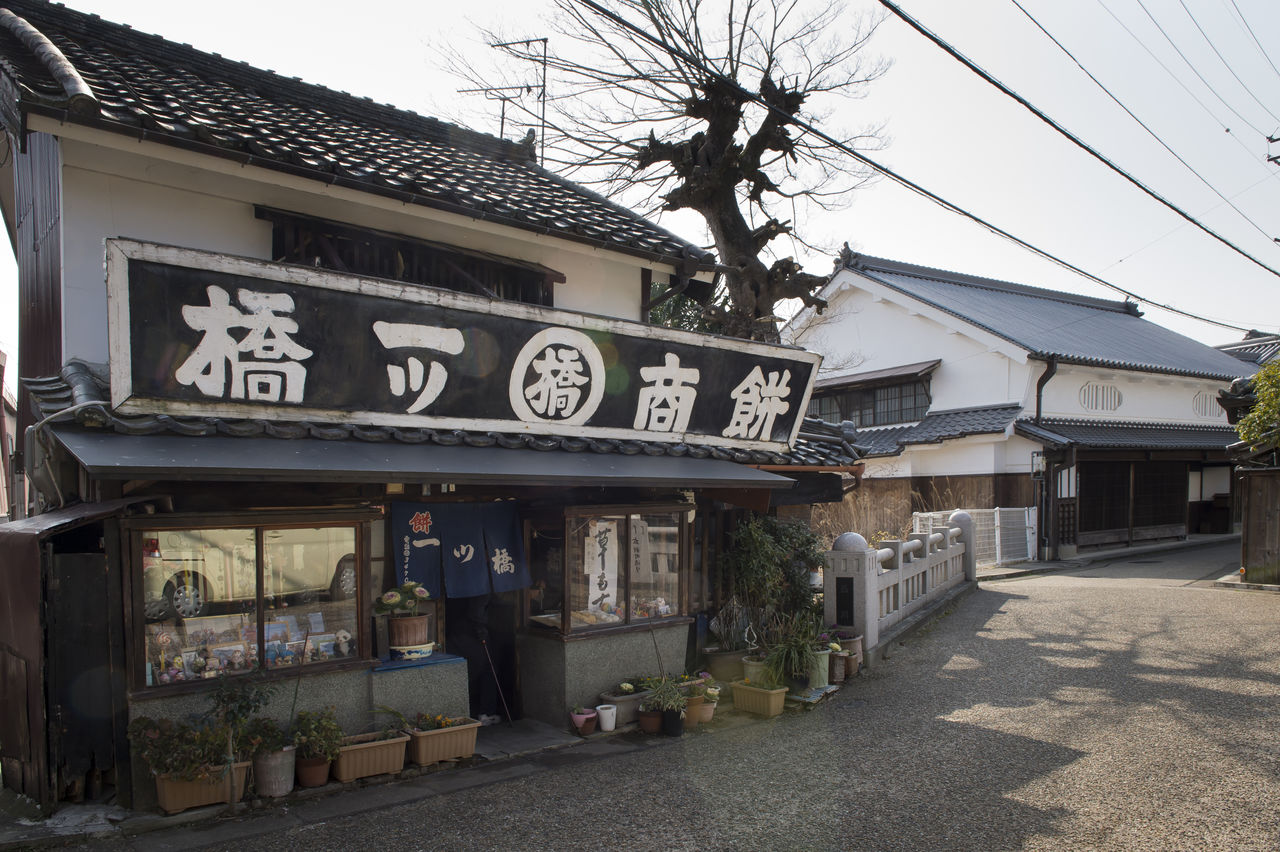 Mochishō Hitotsubashi is a favorite with photographers, not to mention fans of Japanese sweets.
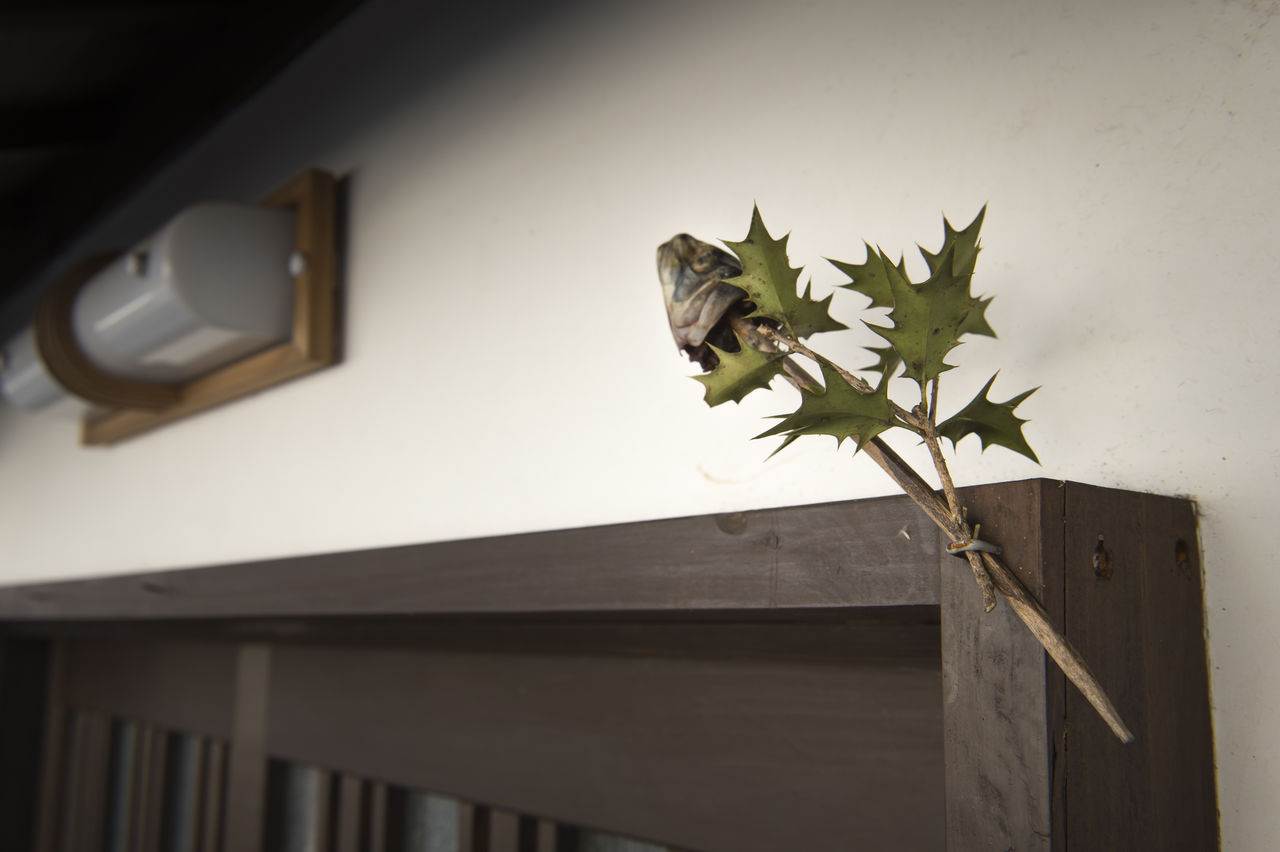 A hiiragi-iwashi ornament, made from holly and a sardine head, is placed above the entrance to homes to ward off evil spirits during the February Setsubun festival.
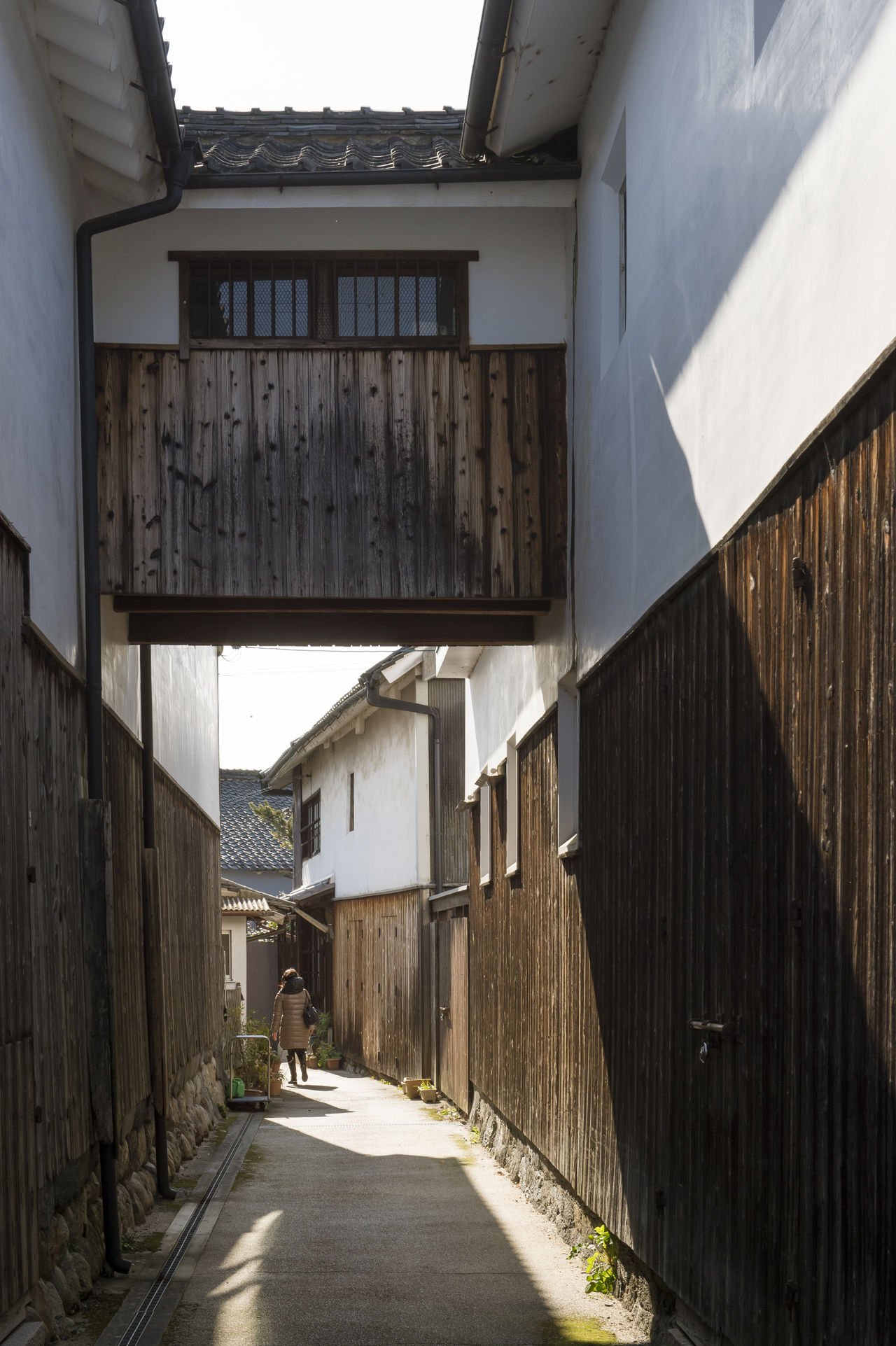 This narrow alley runs past an old brewery.
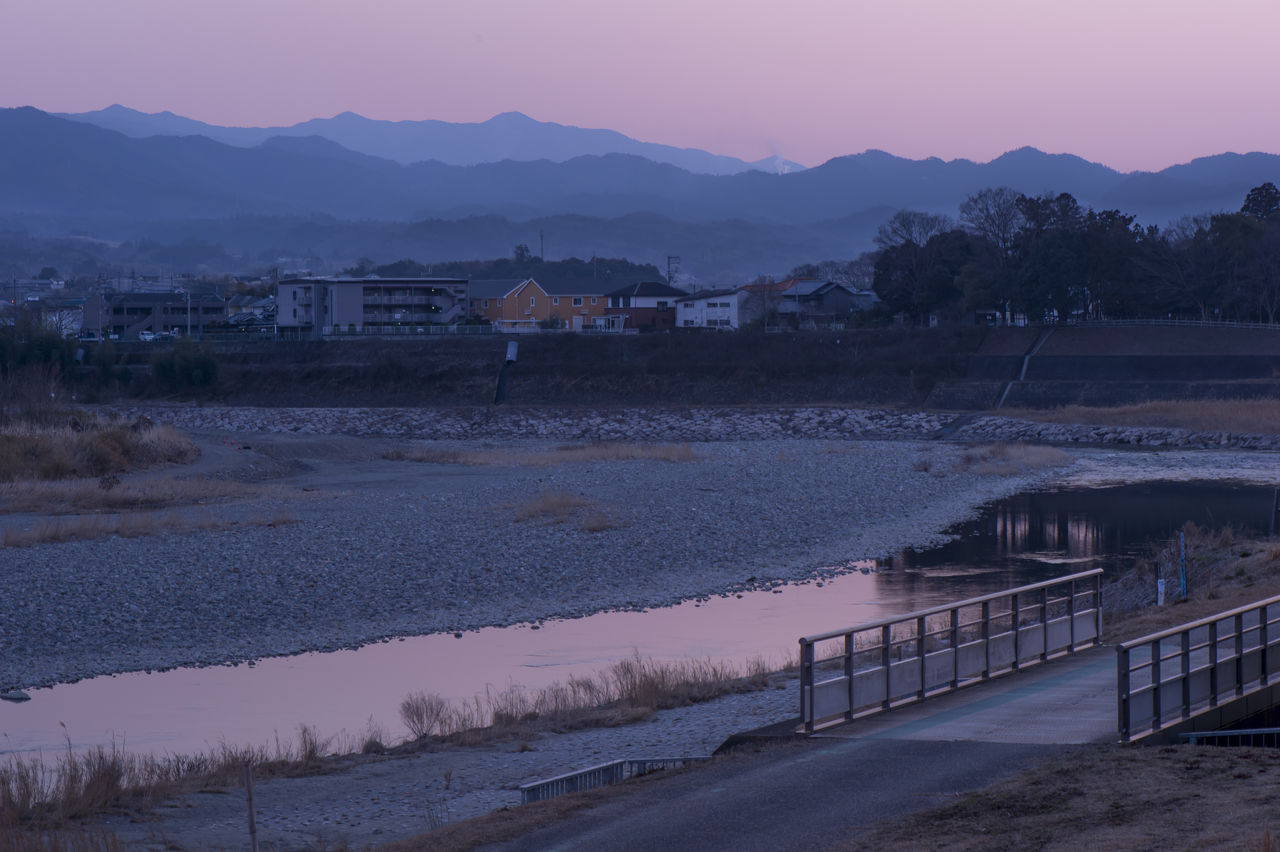 Night descends over the Yoshino River.
Gojō Genbei
Address: 2-5-17 Honchō, Gojō, 637-0041, Nara Prefecture
Phone: +81-(0)747-23-5566
Website (in English):http://genbei.info/english/
Yanaseya
Address: 2-7-3 Honchō, Gojō, 637-0041, Nara Prefecture
Phone: +81-(0)747-25-5800
Website (in Japanese and Korean): http://yanaseya.info/
Reservations by phone only.
(Originally written in Japanese. Photos by Kusumoto Ryō)
(*1) ^ Kappō is a style of Japanese cuisine centered on small, refined dishes prepared by a skilled chef behind a counter in full view of the diners.
Nara tourism food Washoku cuisine Breakfast Around Japan: A Culinary Adventure