A Pilgrimage in Black and White
Asumui: Northern Okinawa’s Sacred Mountains
Guideto Japan
Images Environment Culture- English
- 日本語
- 简体字
- 繁體字
- Français
- Español
- العربية
- Русский
Primeval Forest of Subtropical Trees and Mysterious Rock Formations
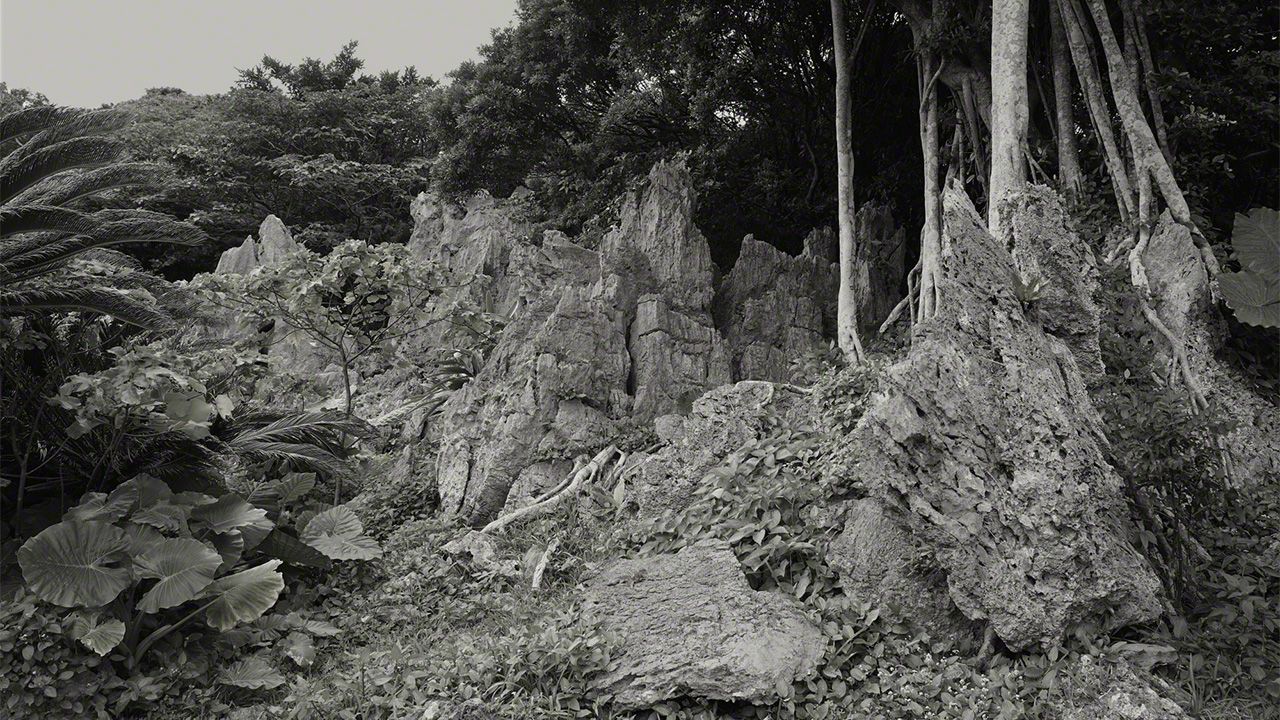
The northern part of the main island of Okinawa is known as Yanbaru. Still covered in expanses of primeval forest, the region is a treasure trove of biological diversity. At the northernmost tip, a line of four rocky peaks known as Asumui reaches out above the village of Kunigami. This has been revered as a holy location since ancient times, and more than 40 prayer sites remain there today. According to the official history of the Ryūkyū Kingdom (1429–1879), this was the first utaki, or sacred grove, consecrated by the ancestral goddess Amamiku, also known as Amamikiyo, when she descended to earth from heaven.
According to more prosaic accounts, Asumui is the result of tectonic plate movements, which pushed Paleozoic limestone formed in the seas 250 million years ago to the surface. Over long periods of geological time, the limestone was gradually eroded by wind and rain, resulting in a tropical karst plateau where numerous species of subtropical trees flourish. The Yanbaru National Park became a UNESCO Natural Heritage Site in 2021, along with other places of natural biodiversity in Okinawa and nearby Amami. In this special protected area, Okinawa’s rich heritage of natural diversity and beauty is protected for future generations.
Heading deeper into the forest, the visitor is soon surrounded by clusters of bizarre rock formations, intertwined with the knotted roots of tropical and subtropical trees like gajumaru banyans and akagi bishop wood trees. The unusual sight puts me in mind of ancestral, primeval forests and makes me reflect on the awe people in ancient times must have felt at the incomparable creative forces of nature. It is easy to understand why they would have felt the presence of the divine in this remarkable landscape.
As we proceed along a climbing path, the sky is covered by the branches and leaves of the surrounding canopy of trees, until suddenly the view opens up and from a platform we can see out beyond the deep forest to Cape Hedo. According to some accounts, Amamiku’s boat was guided to the peak of Asumui when she landed in Okinawa. The goddess would have purified herself and quenched her thirst with the waters of the natural springs that rise here, before setting off to the south to establish her demesne. During the period of the Ryūkyū Kingdom, water from the Hedo Ukkā river was presented as an offering to Shuri Castle at the end of every year to pray for the longevity of the monarch and his family.
Further along the path, we come across a succession of remarkable sights: trees that seem to twist themselves in dance, hills dominated by lines of boulders, and mysterious caves. I find myself imagining that phantom memories of the ancient past are coming back to life in my mind. The primeval forest is still able to create special places of numinous power and enchantment.
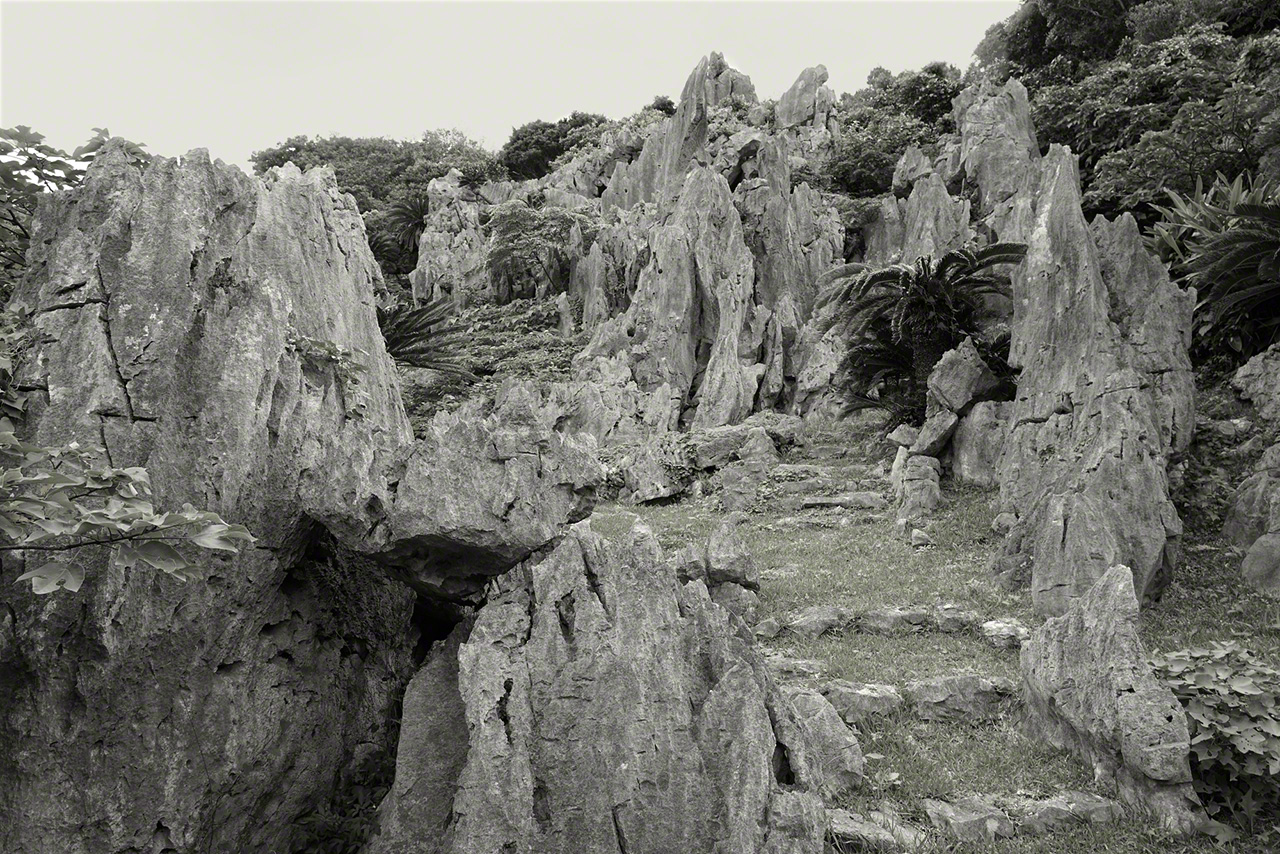
Clusters of limestone stand like forests of stone. (© Ōsaka Hiroshi)
Asumui
- Address: Ginama 1241, Kunigami, Kunigami, Okinawa
A craggy, elevated area around 248 meters above sea level at the northernmost tip of the main island of Okinawa. Part of the Yanbaru National Park, which holds the largest stretch of subtropical laurel forest in Japan, Asumui adjoins one of the areas registered by UNESCO in 2021 as a natural world heritage site together with Amami Ōshima, Tokunoshima, and Iriomote. Also known as Hedo Utaki, the site has long been revered as the first of the seven utaki (sacred groves) established in the islands by Amamiku, the ancestral goddess, at the dawn of the island’s mythological history.
This dynamic scenery, where subtropical trees wrap their roots around vast outcroppings of ancient limestone, evoked a sense of awe in ancient times and made the site revered as a sacred place. Today, it has also become a popular tourist destination. In 2002, a footpath was established to allow visitors to walk safely around the area, although access to the sacred side itself remained closed. The site was established as the tourist attraction Daisekirinzan (Great Stone Forest Mountain). In 2024, the name was changed to Asmui Spiritual Hikes, and the site’s managers are focusing on ecotourism and on making Asumui a place where visitors can enjoy the spiritual aura and religious importance of the site as well as its natural beauty. Tickets must be purchased from Asmui Spiritual Hikes before entering.
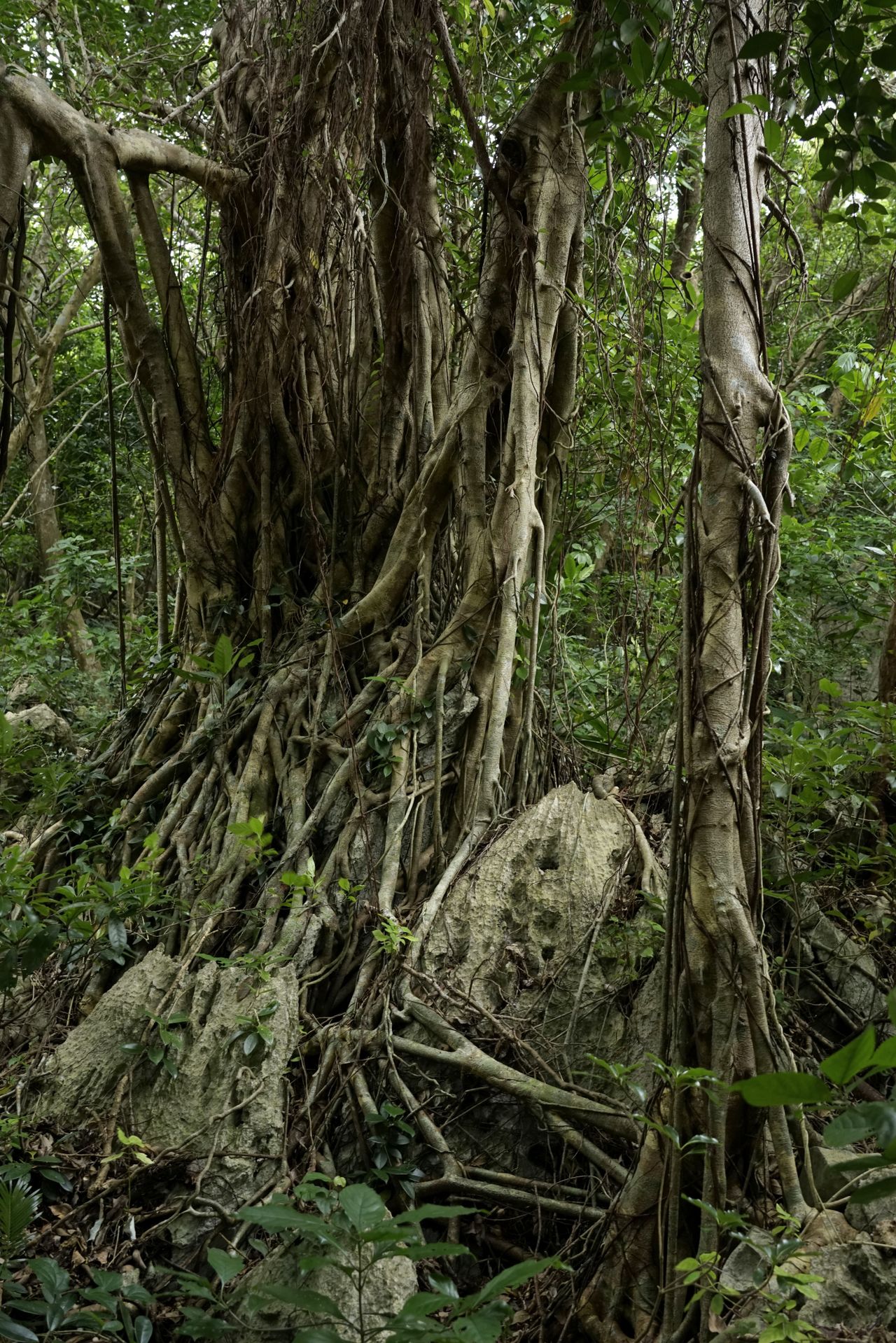
Moss on the stone collects moisture and makes the soil fertile. As a result, trees seem almost deliberately to wrap their roots around the limestone. (© Ōsaka Hiroshi)
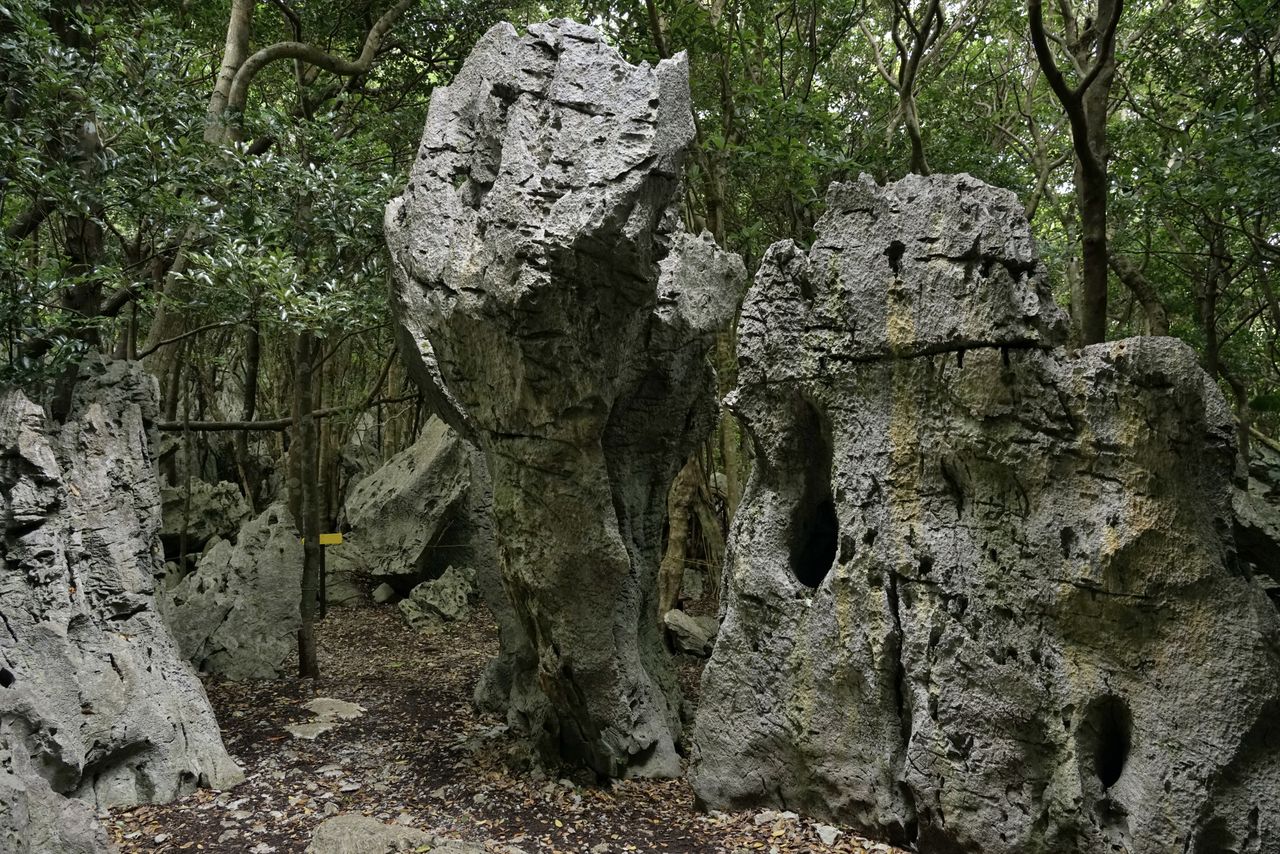
Many of the giant stones at the site are almost lifelike. (© Ōsaka Hiroshi)
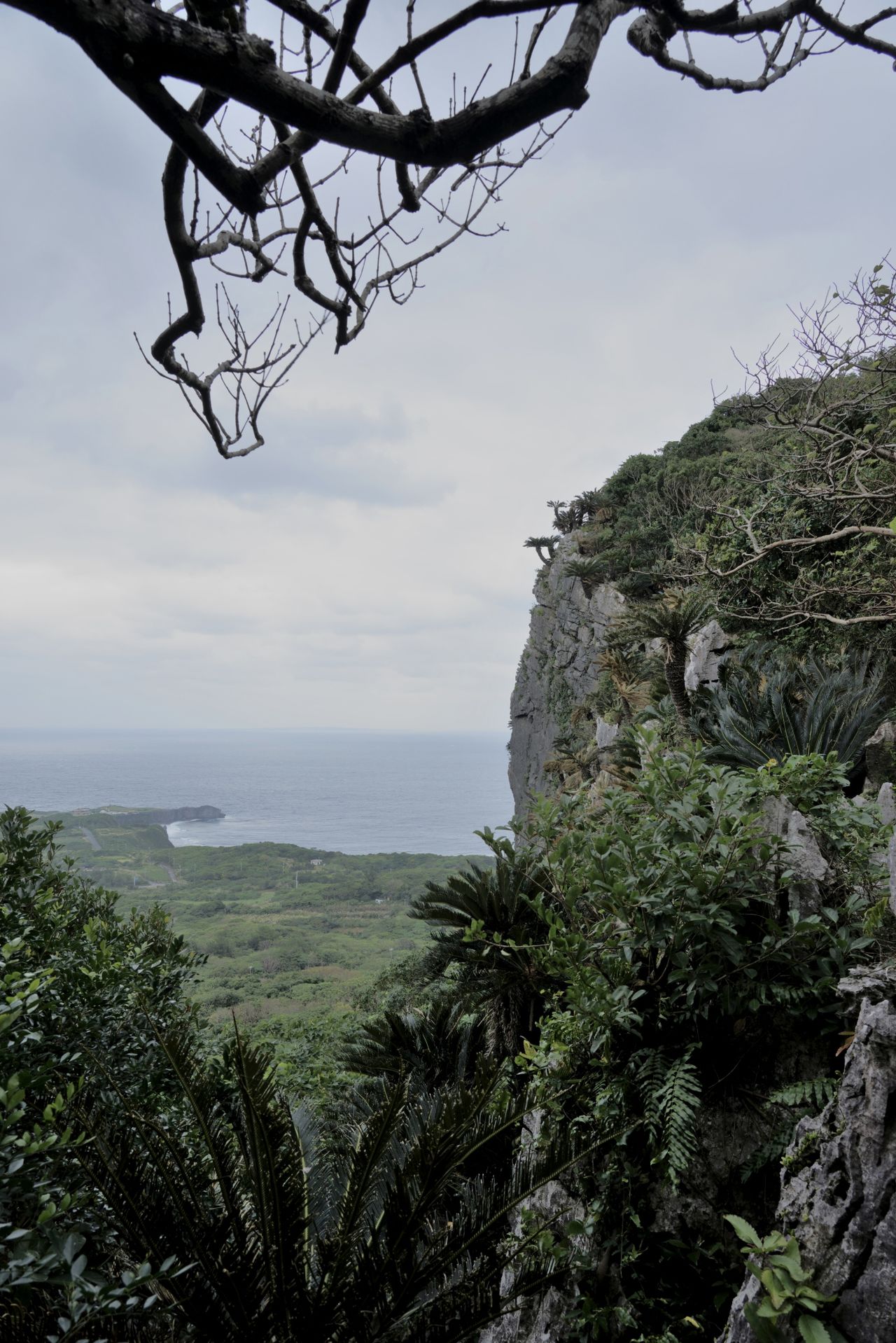
Beyond the lush green forest is Cape Hedo, the northernmost point on the main island of Okinawa. (© Ōsaka Hiroshi)
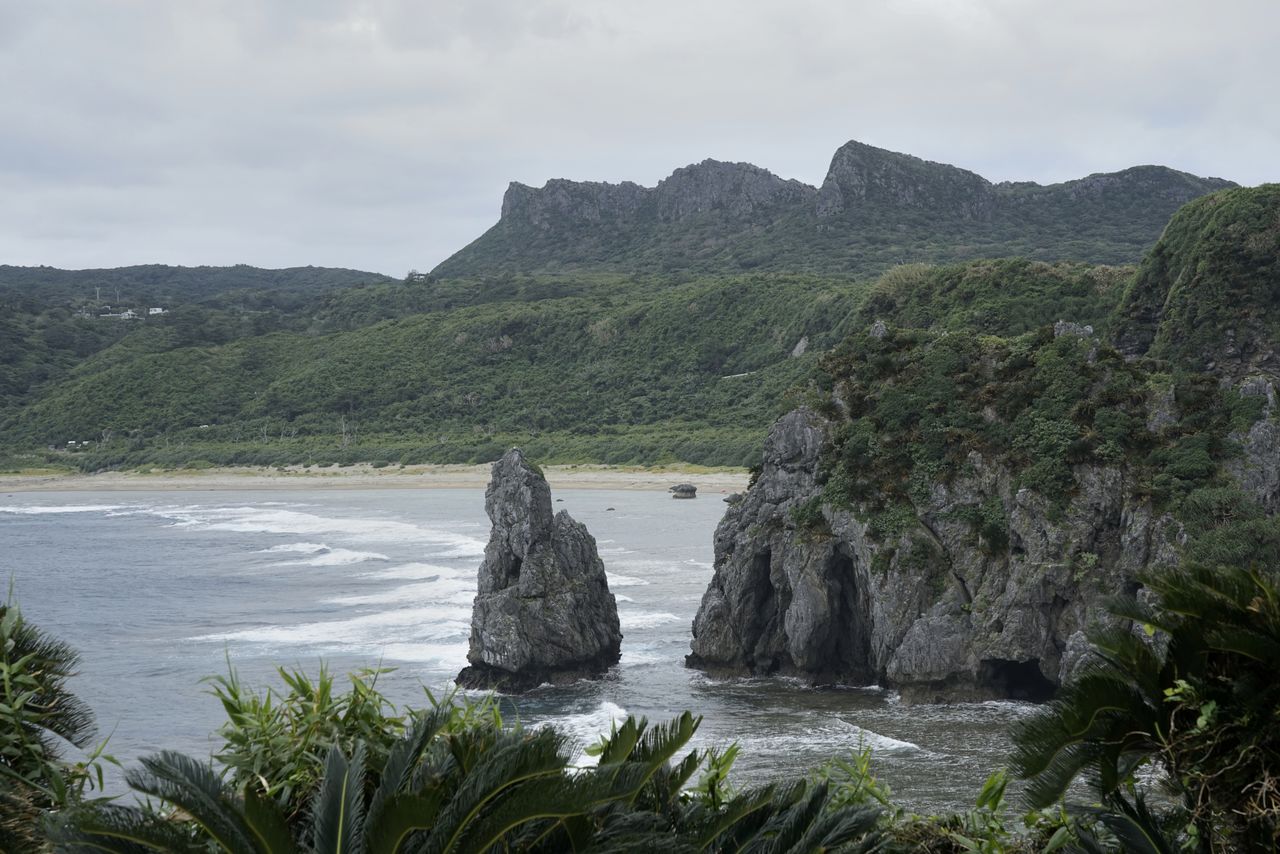
The view from Cape Hedo across to the four craggy rock formations traditionally regarded as a sacred site. (© Ōsaka Hiroshi)
(Originally published in Japanese on August 23, 2025. Text and editing by Kitazaki Jirō. Banner photo: Subtropical trees on craggy rock formations in Asumui. © Ōsaka Hiroshi.)