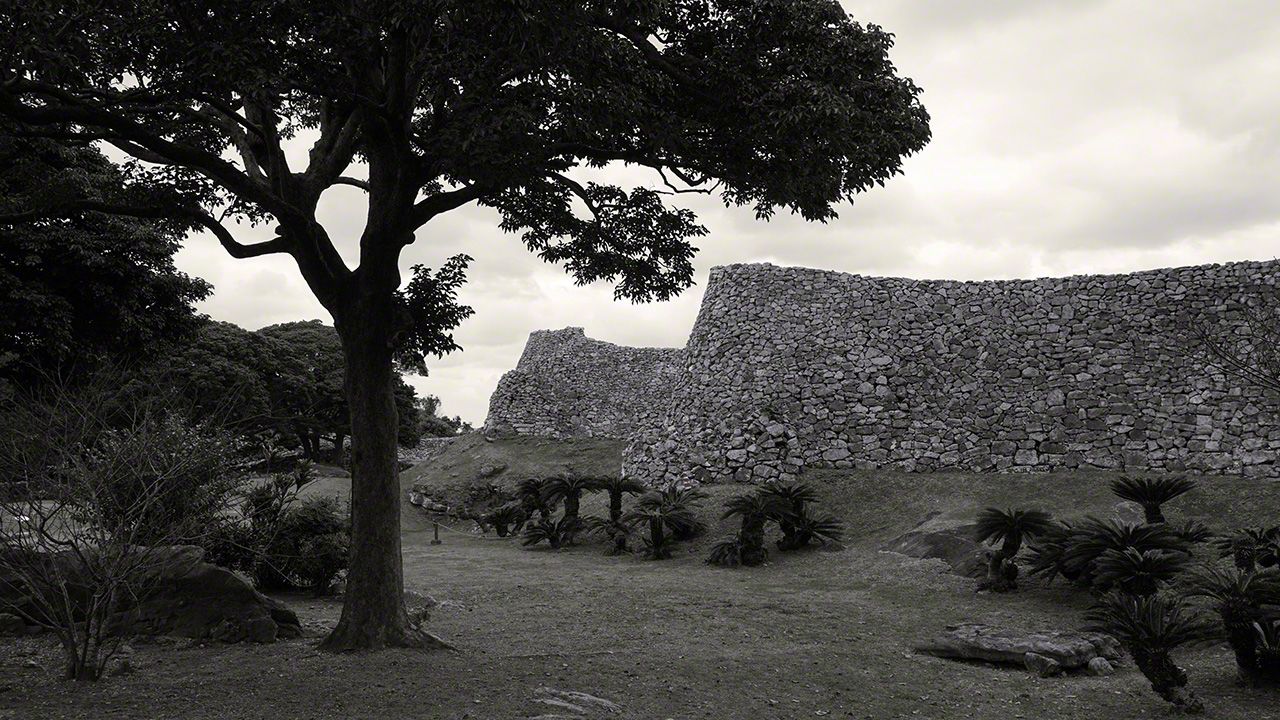
A Pilgrimage in Black and White
Nakijin Gusuku: A Sacred Site Protected by Ancient Castle Walls
Guideto Japan
Images Environment Culture- English
- 日本語
- 简体字
- 繁體字
- Français
- Español
- العربية
- Русский
Strategic Fortification and Home of the Gods
In the fourteenth century, the main island of Okinawa was ruled by three kingdoms, known from north to south as the Sanzan: Hokuzan, Chūzan, and Nanzan. Nakinjin Castle served as the residence and headquarters of the king of the northern Hokuzan kingdom, until it fell to an attack by forces from the central Chūzan kingdom in 1416. Chūzan formed a unified Ryūkyū kingdom, which it ruled from its castle at Shuri in modern Naha. Nakinjin became a peripheral outpost, extending the power of the court and protecting the north of the island from attack. In 1609, however, the castle fell again to forces from the Satsuma domain in southern Kyūshū. The castle was abandoned, and only the impressive stone walls remained. But local people continued to travel here come to visit what was now an empty site encircled by stout stone walls. For them, this remained a special place, an abode of the gods of the indigenous religion.
According to the Chūzan seikan, the official history of the Ryūkyū kingdom, these sacred places where the gods had their abodes were known as Ama-gusuku (heavenly gusuku). The word gusuku refers to a fortification surrounded by stone walls. Found in many places in Okinawa, these were believed to be places that the divinities had caused to appear on earth. Within them were sacred places known as utaki, where religious rites were held. One of the best known of all gusuku, Nakijin was revered as a holy site as well as a place of military and strategic importance. Rites and ceremonies were conducted within its imposing walls from ancient times.
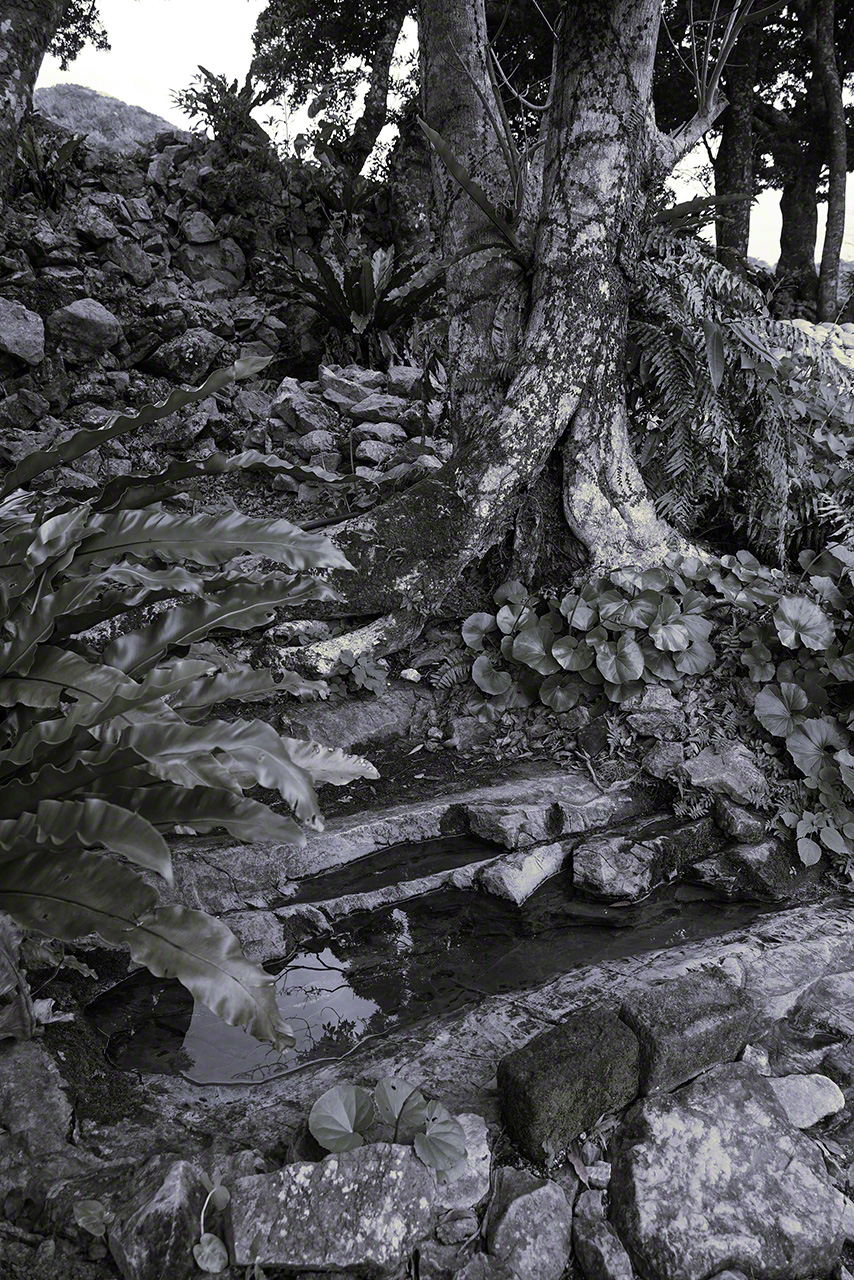
The Karaukā, a sacred source of natural water that supported the religious life of the court, in which women played a central role. (© Ōsaka Hiroshi)
Places of Prayer within Rugged Castle Walls
Around the same size as Shuri Castle, Nakinjin consists of seven enclosures. The stone walls twist and curl like a writhing dragon, a design that both strengthens the fortifications and reduces vulnerabilities for defenders. The walls are made of limestone that dates back 230 million years, piled in a nearly natural state with minimal processing. From the outer walls, the undulating course of the stonework stretches hundreds of meters into the distance, creating an impressive and beautiful sight.
Passing through Heirōmon, the main gate, and climbing the stone steps, visitors emerge into the Ūmya, a broad plaza-like space. In one corner is the Karaukā, a sacred site where water seeps from a hollow in the limestone. In the past, the noro priestesses who conducted religious ceremonies used this water to purify their faces and hair before performing sacred ceremonies.
Continuing deeper into the castle grounds, we come to the main keep, which once housed the central administrative buildings. Adjacent to this is the Ūchibaru, the most sacred site within the castle, where the noro offered prayers to the gods. The utaki here, Tenchiji Aamachiji, is recorded in the Chūzan seikan as the Nakijin no kanahi yabu, a second holy place created by the ancestral goddess Amamiku after the Asumui Utaki. Even today, more than four centuries after the castle was abandoned, the site continues to attract a steady stream of pilgrims and visitors.
From the clifftop summit of the castle site, the visitor is treated to an awe-inspiring view. The sky and the vast endless ocean seem to merge as one all-encompassing whole. It is truly a fitting abode for the gods.
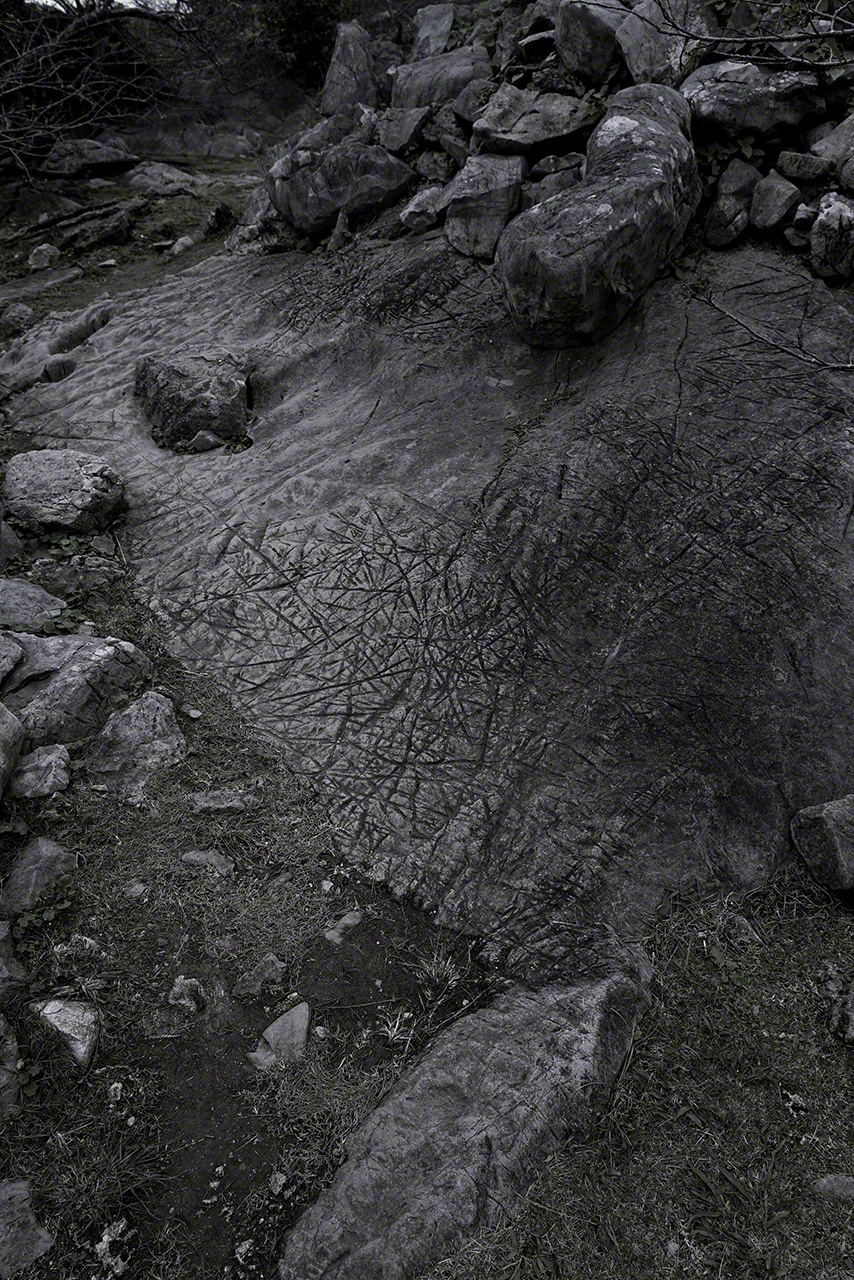
A large boulder inside the castle walls. (© Ōsaka Hiroshi)
Nakijin Gusuku Ruins
- Location: 5101 Imadomari, Nakijin, Kunigami-gun, Okinawa
(Visitors must purchase a ticket at the Nakijin Village Gusuku Visitor Center before entering the castle site)
Located in the north of the Motobu Peninsula, Nakijin is one of the largest gusuku in Okinawa and a national historic site. It is thought to have been constructed in the thirteenth century, and during the three kingdoms period, it served as the political and religious center of the Hokuzan kingdom. The castle walls, built using unprocessed natural Ryūkyū limestone, and the places of prayer inside them are still in good condition today. The site is testimony to a unique cultural heritage that fuses historical fortifications with nature worship.
In 2000, the site was included on UNESCO’s list of World Heritage together with Shuri Castle and Sēfa Utaki as the Gusuku Sites and Related Properties of the Kingdom of Ryūkyū. Today, the site is one of the most popular tourist destinations in the northern part of Okinawa, but continues to be a place of spiritual significance for local people.
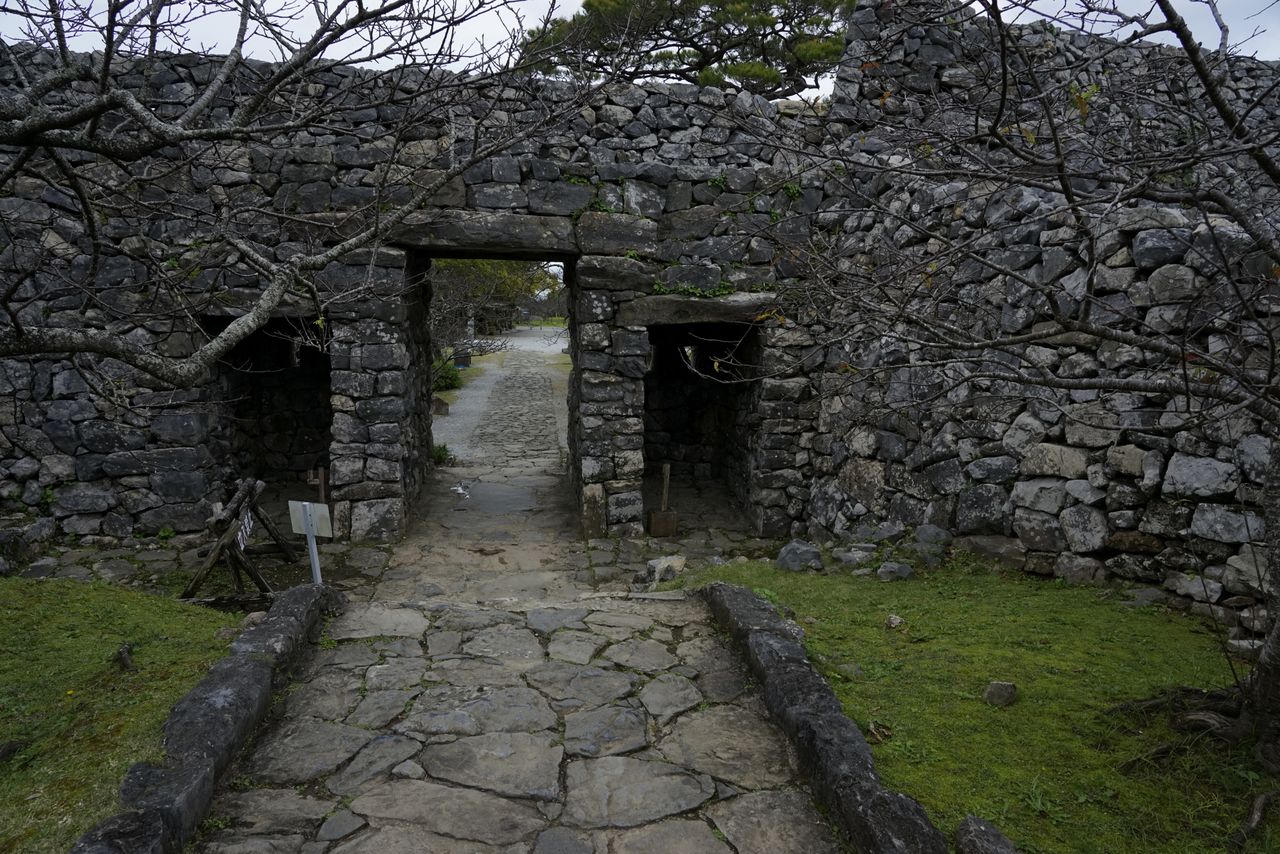
The current main entrance Heirōmon is a restoration dating from 1962. The roof is made from by placing a single slab of rock over the walls. (© Ōsaka Hiroshi)
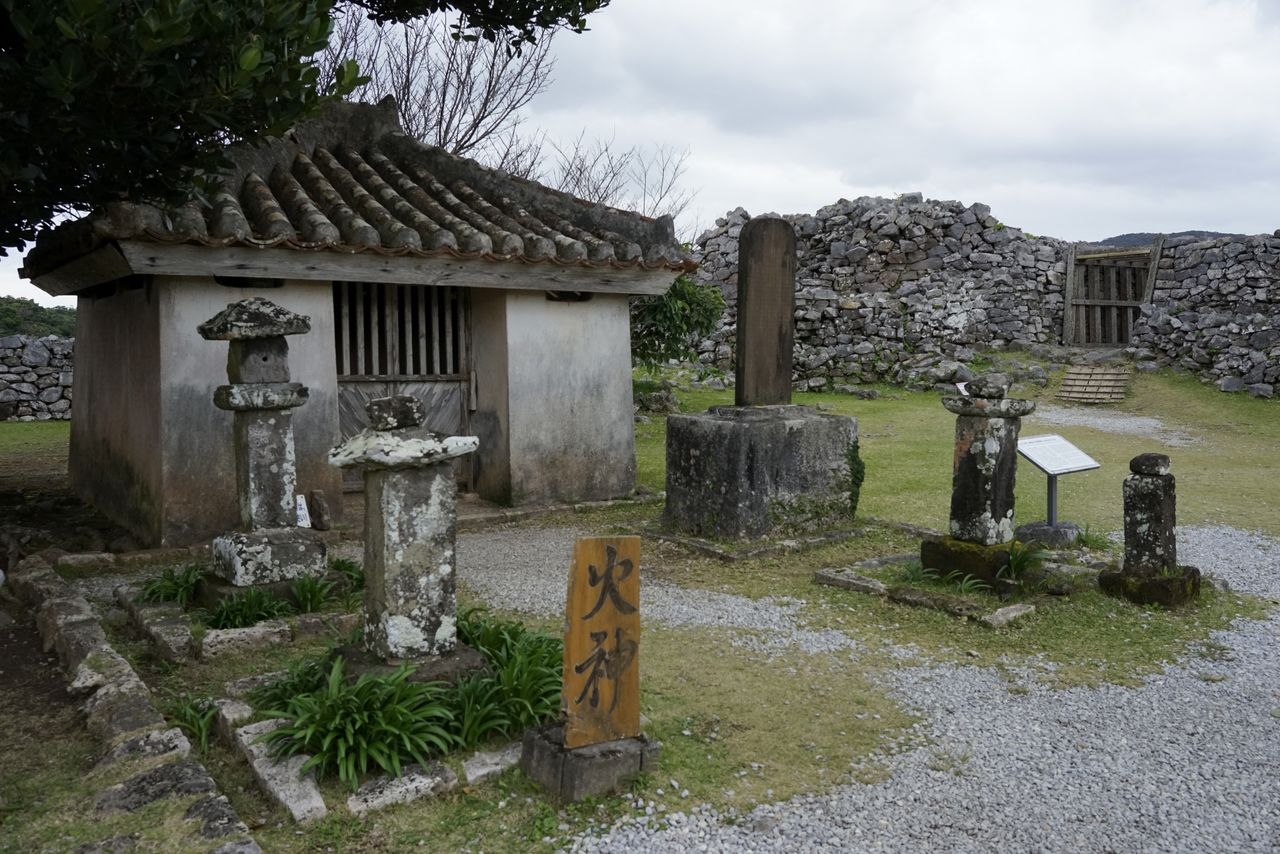
A small shrine to the god of fire, who was worshipped here inside the main keep after the castle fell into ruin. A steady stream of pilgrims still visits the site today. (© Ōsaka Hiroshi)
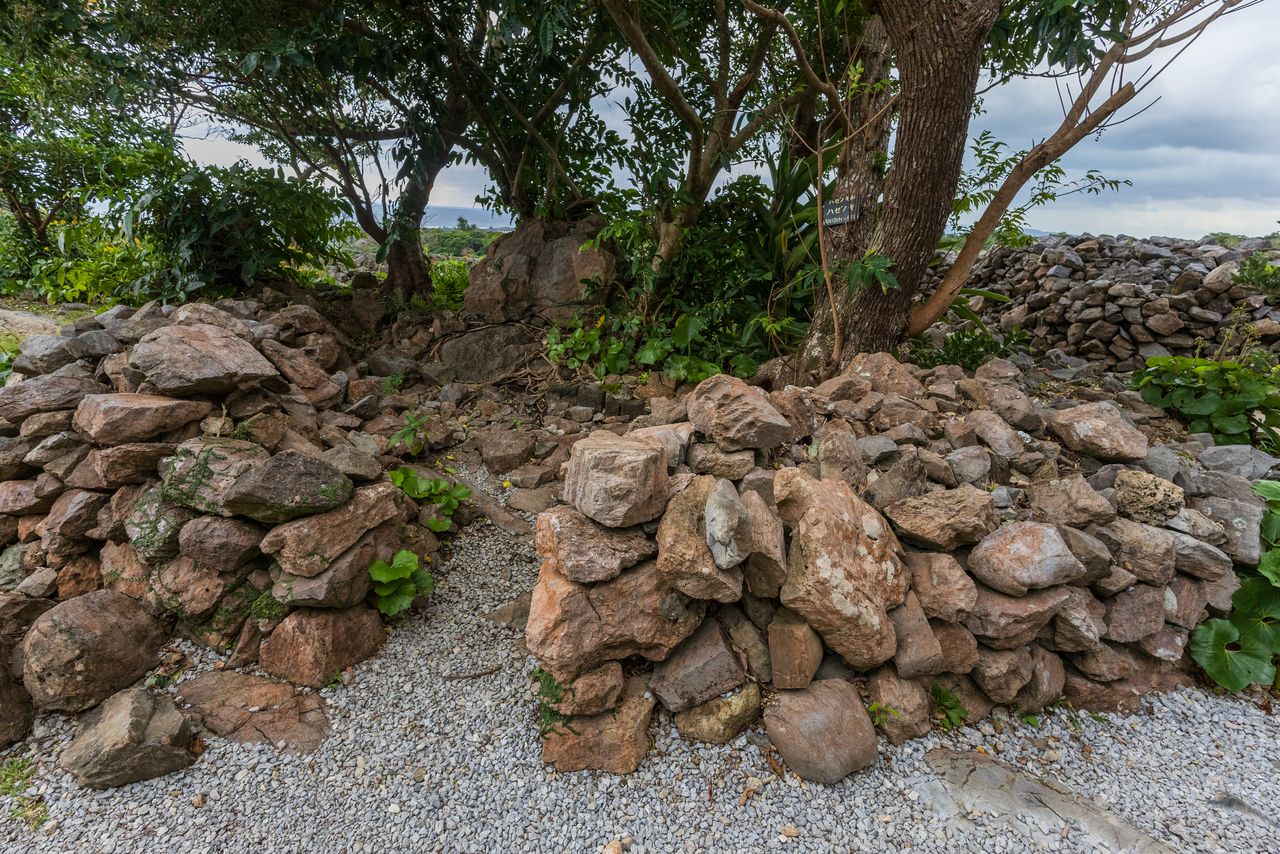
Tenchiji Amachiji Utaki is an utaki surrounded by a low stone wall, revered as the home of the guardian deity of Nakijin Castle. (© Nippon.com)
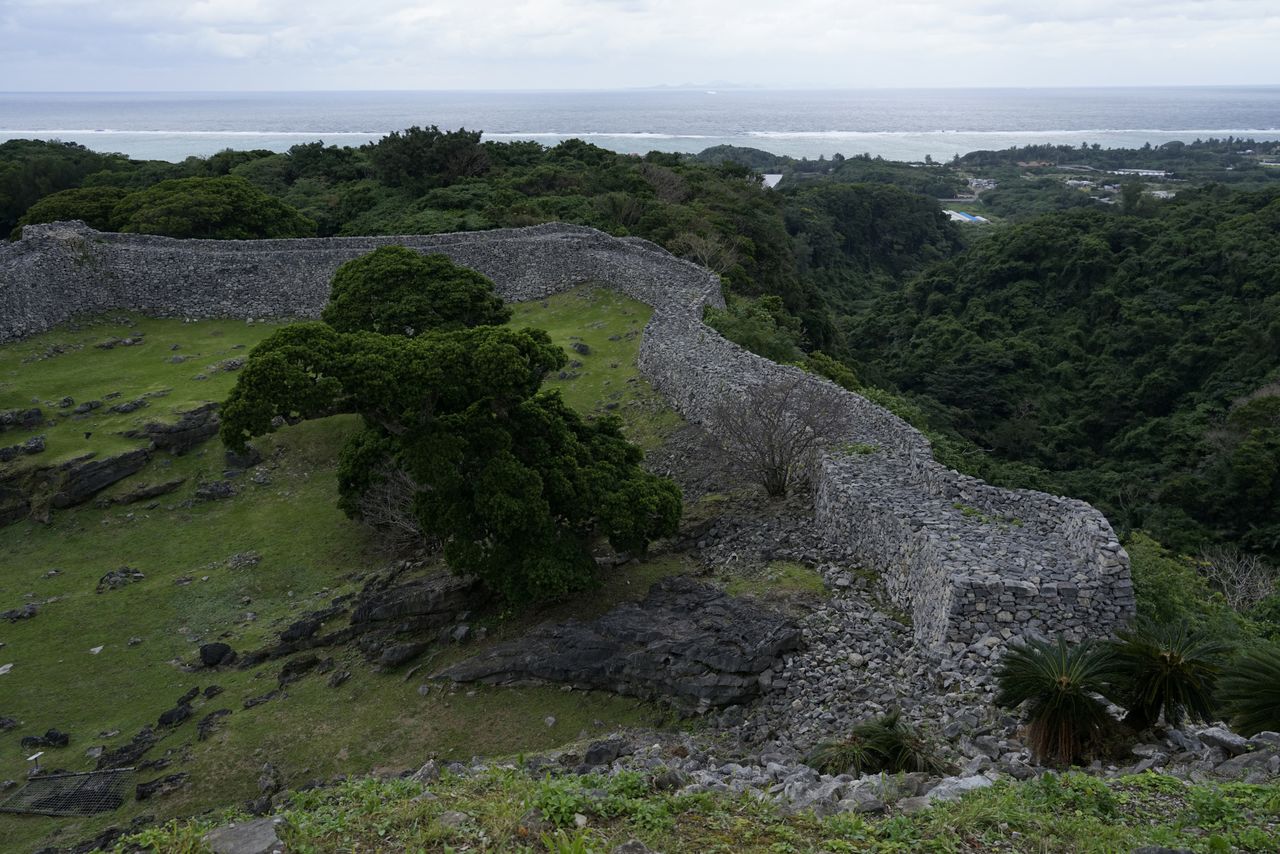
The view from the northernmost point within the inner part of the castle grounds. Small islands can be discerned in the sea beyond the stone walls. (© Ōsaka Hiroshi)
(Originally published in Japanese. Text and editing by Kitazaki Jirō. Banner photo: The outermost wall of Nakijin Castle. © Ōsaka Hiroshi. With thanks to Nakijin Village Board of Education.)