A Pilgrimage in Black and White
Gotobiki Rock: The Primordial Sacred Stone of Kumano
Guideto Japan
Images Culture- English
- 日本語
- 简体字
- 繁體字
- Français
- Español
- العربية
- Русский
Where the Kumano Deities First Landed
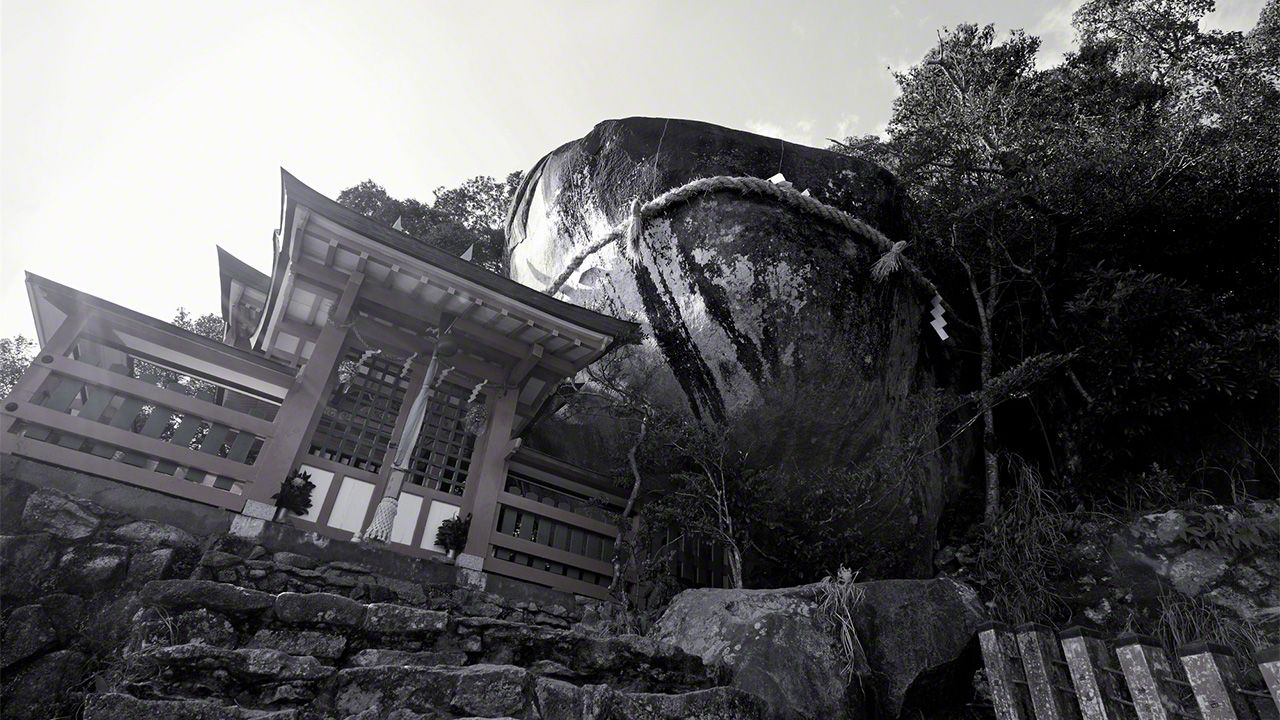
Kamikura Shrine stands midway up the slopes of Mount Gongen in Shingū, Wakayama Prefecture. Perched atop a cliff known as Ama no Iwatate, the shrine’s main object of worship is a colossal boulder called Gotobiki, believed to be the very rock upon which the deities of Kumano’s three grand shrines—Hongū, Hayatama, and Nachi—first descended to earth. This makes the site older than the shrines themselves and a primordial locus of worship.
According to legend, Japan’s first emperor Jinmu, guided by the divine three-legged raven yatagarasu, climbed this cliff during his journey toward Yamato to establish Japan’s imperial capital. Today, the pilgrimage routes connecting the Kumano shrines form part of the UNESCO World Heritage Site “Sacred Sites and Pilgrimage Routes in the Kii Mountain Range.”
The Gotobiki Rock sits atop a sheer, 100-meter cliff. To reach it, visitors must ascend a steep stone stairway—said to have been commissioned by Minamoto no Yoritomo, the founder of the Kamakura shogunate—from the great torii at the foot of the hill. The 538 steps are uneven, laid from natural stones, and lack handrails. Each step demands attention, as a single misstep could send one tumbling down the slope.
At the summit is a vermilion shrine, dwarfed by the immense boulder looming behind it. In the local dialect, gotobiki means “toad,” and indeed the rock resembles a giant amphibian squatting at the cliff’s edge, as if on the verge of tumbling into the abyss. Standing before this precariously thrusting monolith, one cannot help but feel awestruck. It is easy to imagine how ancient worshippers sensed the presence of the divine by gazing up at this stone.
Below the shrine spreads the cityscape of Shingū, and beyond it the deep blue expanse of the Pacific. The viewpoint is celebrated for its sweeping vistas. On the night of February 6 each year, the shrine hosts the spectacular Otō Matsuri, in which thousands of men race down the perilous stone steps carrying blazing torches. The fire festival’s dynamic energy preserves the ancient reverence once directed toward the Gotobiki Rock.
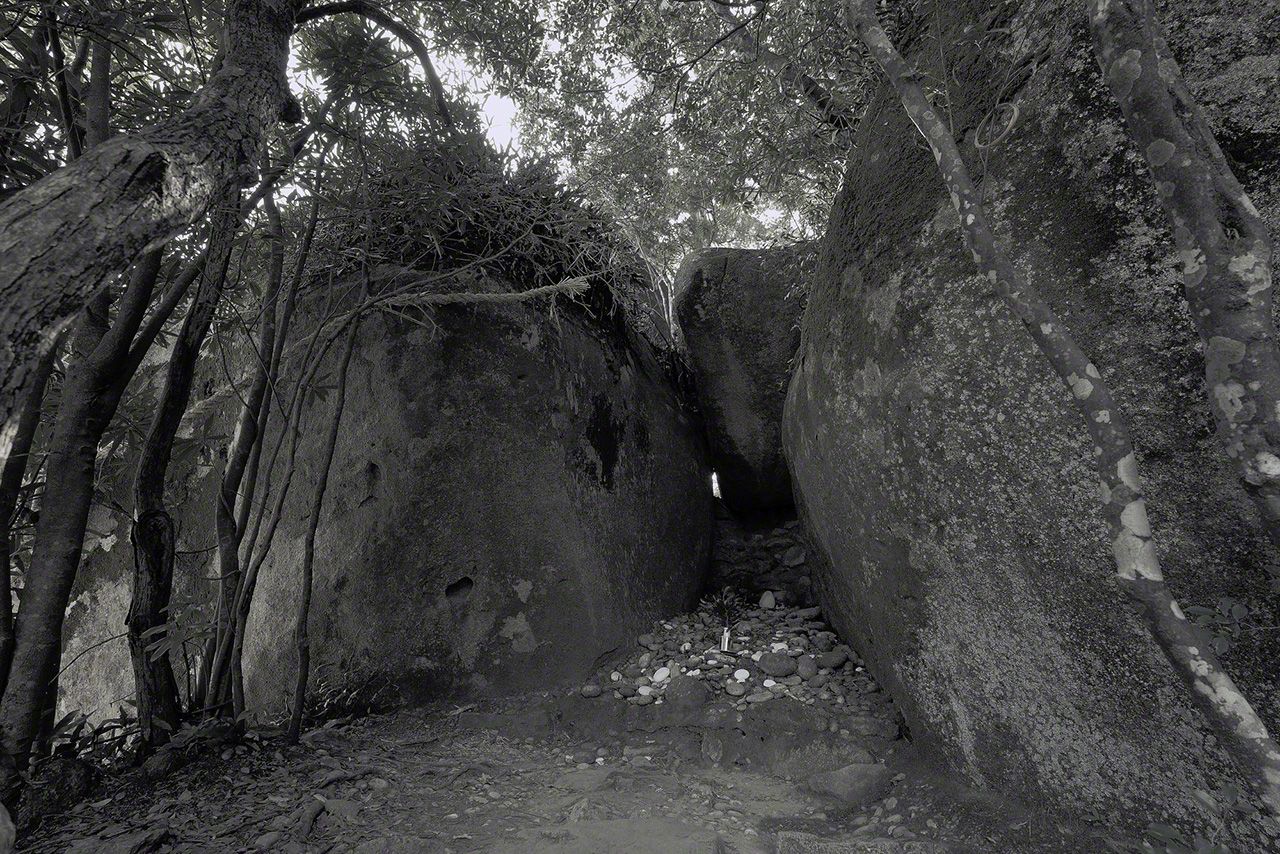
A narrow crevice beneath the boulder, believed to have served as a ritual space before the construction of the shrine. (© Ōsaka Hiroshi)
Kamikura Shrine
- Deities enshrined: Takakuraji no Mikoto, Amaterasu Ōmikami
- Address: 1-13-8 Kamikura, Shingū, Wakayama Prefecture
This ancient shrine stands midway up Mount Gongen near the mouth of the Kumano River. Now an auxiliary shrine of Kumano Hayatama Taisha, it is revered as the first landing place of the Kumano deities. The Gotobiki Rock, rising roughly 10 meters high beside the shrine, is the main object of worship. Ritual implements from the Yayoi period (ca. 300 BC–300 AD) have been excavated nearby, attesting to the site’s long history as a center of nature worship.
According to the Kojiki and Nihon Shoki, Kumano was where Emperor Jinmu landed on his eastward expedition to establish a new national capital. After receiving a divine sword from Takakuraji, he advanced to Yamato under the guidance of a yatagarasu. In the medieval period, the Kumano area became a major center for shugendō mountain ascetics. The origins of the Otō Matsuri are variously attributed to Takakuraji’s welcoming of Emperor Jinmu or to the fire rituals of shugendō practitioners.
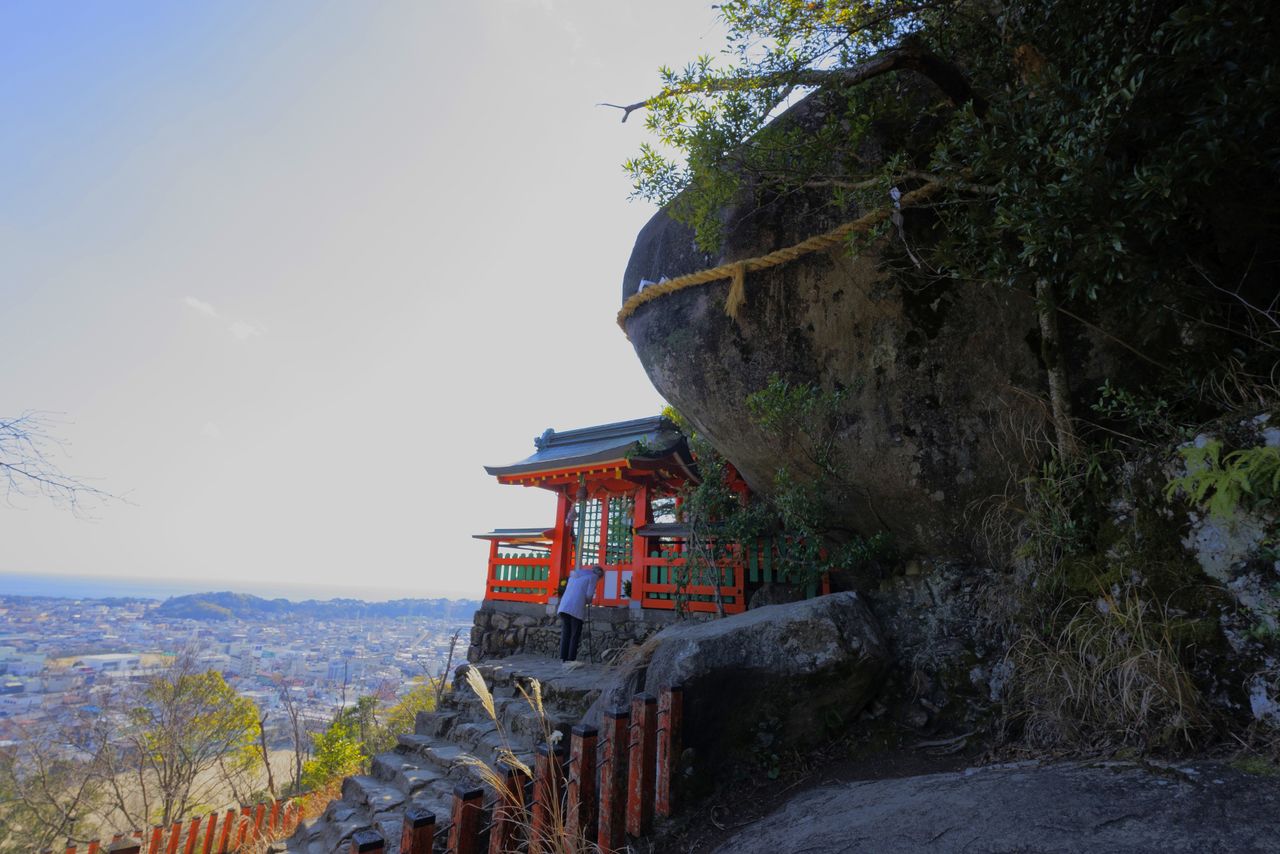
The massive stone overlooking the city of Shingū. (© Ōsaka Hiroshi)
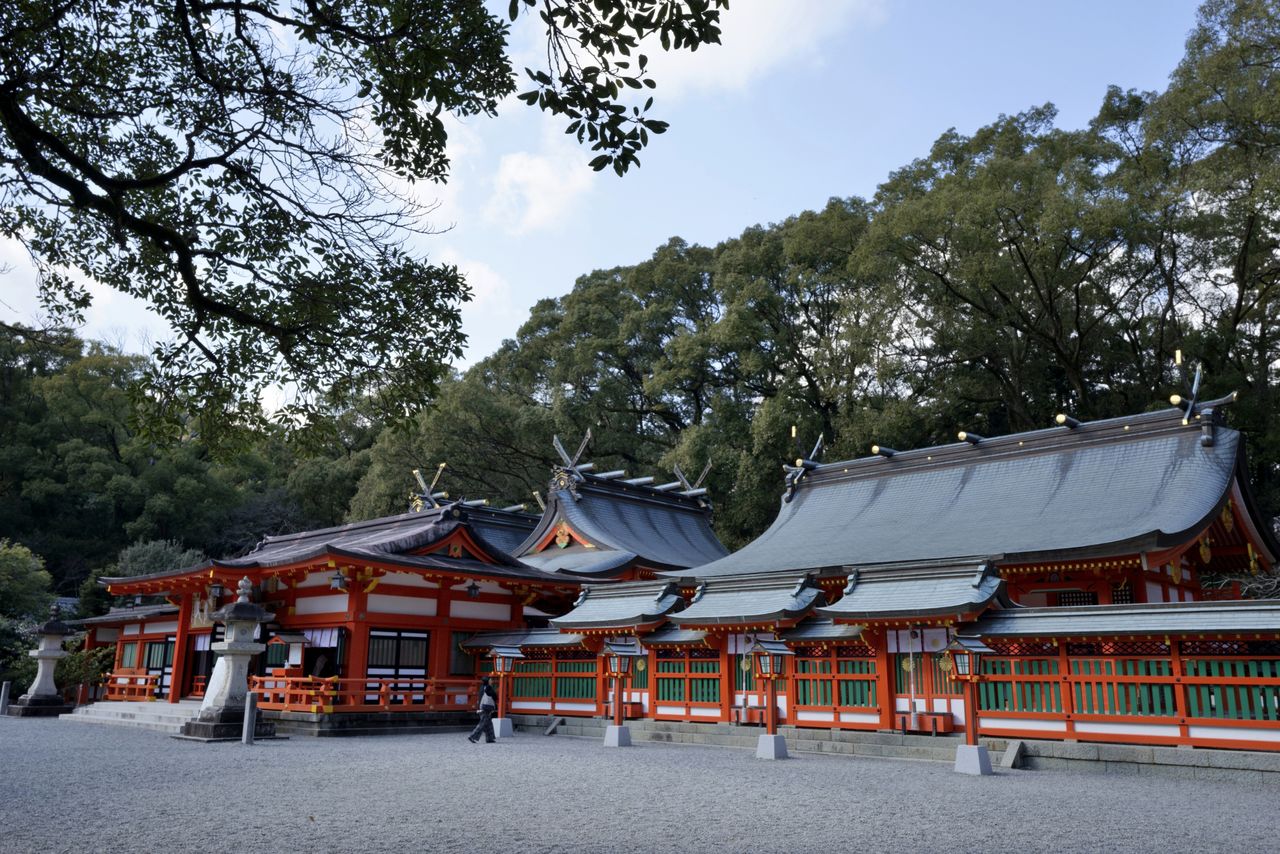
Kumano Hayatama Taisha is also known as shingū—or “new shrine”—because it was built after the original sacred site, Kamikura Shrine. (© Ōsaka Hiroshi)
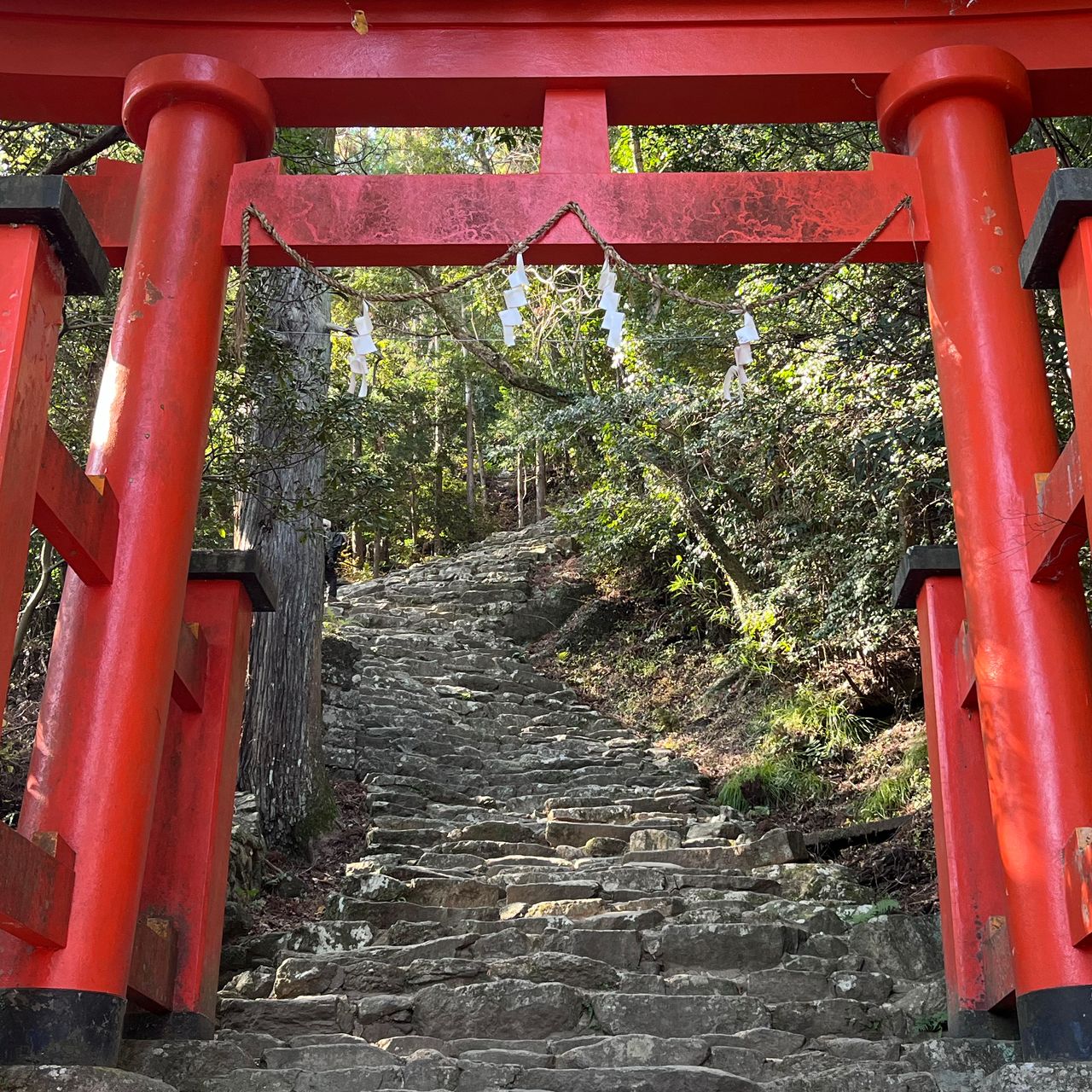
The stone steps rising from the torii at the trailhead. (© Kitazaki Jirō)
(Originally published in Japanese. Text and editing by Kitazaki Jirō. Banner photo: The Gotobiki Rock, the sacred object of Kamikura Shrine. © Ōsaka Hiroshi.)