Power and Realism: Kamakura’s Buddhist Sculptures
Guideto Japan
Culture- English
- 日本語
- 简体字
- 繁體字
- Français
- Español
- العربية
- Русский
National Treasure and Local Symbol
One of Japan’s former capitals, the coastal city of Kamakura is home to more than 100 temples clustered throughout the old city. The halls of these temples contain a wide range of diverse images depicting Buddhas, bodhisattvas, monks, and founders. More than 30 have been designated important national cultural properties, and many are open to the public.
Undoubtedly the best known of Buddhist sculptures in the city is the Great Buddha of Kamakura at Kōtokuin in the southern part of the city. Standing 13.35 meters high, this majestic image dates from the middle of the thirteenth century, and is the only Buddhist image in Kamakura to be designated a national treasure.
In many respects, the image borrows from elements of Buddhist art common in China under the Song dynasty (960–1279). The low ushnisha (the cranial protuberance rising from the head), for example, and the slightly rounded posture of the figure’s back, are typical of Buddhist sculpture on the continent during this period. But the elongated eyes and the powerful expression of the face, with its gentle but firmly closed mouth, suggest the influence of the Japanese master sculptor Unkei and his followers. Kamakura was a city built by and for the samurai, and the warrior virtues of austerity and strength had a powerful influence on the city’s artistic output. Many of the city’s Buddhist sculptures are marked by the same powerful realism that characterizes this iconic image.
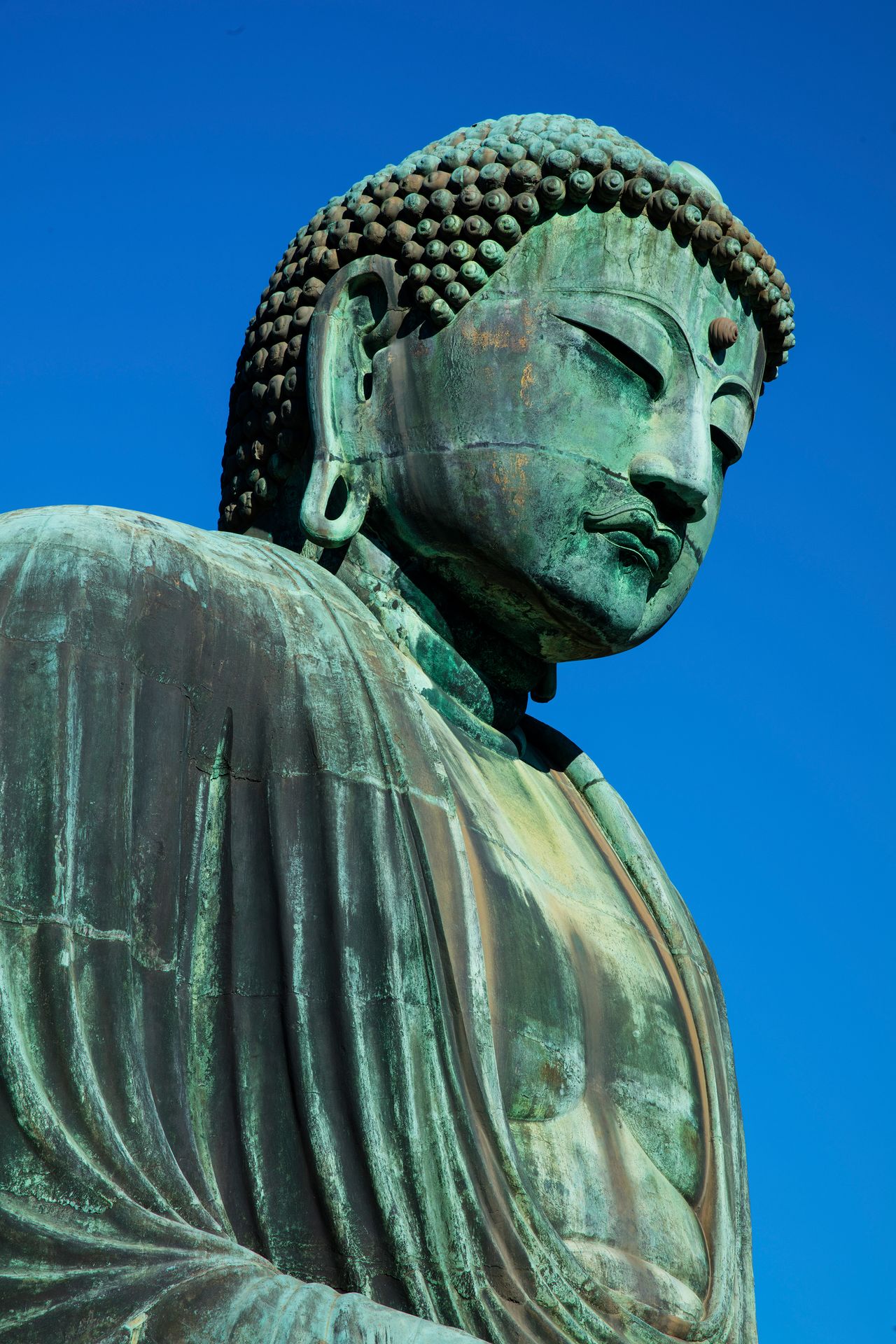
The Great Buddha (Daibutsu) is the undisputed symbol of Kamakura. (© Harada Hiroshi)
A Kannon that Journeyed by Sea
Another powerful image is the standing 11-Headed Kannon at Hasedera, an important temple a short distance from Kōtokuin. Some 9.18 meters tall, this is one of the largest wooden Buddhist images in Japan.
According to tradition, the temple has miraculous origins. Around 1,300 years ago, Tokudō Shōnin, the monk who founded Hasedera temple at Sakurai outside Nara, carved two Kannon images from the same sacred tree. One became the principal image at Hasedera in Sakurai, while the other was released into the sea in the hope that it would bring salvation to people wherever it came ashore. Over the years, the image drifted with the waves until it finally washed up on the Miura Peninsula southeast of Kamakura. It was venerated by the local people, and the temple built to enshrine the image eventually grew into the important place of worship we see today.
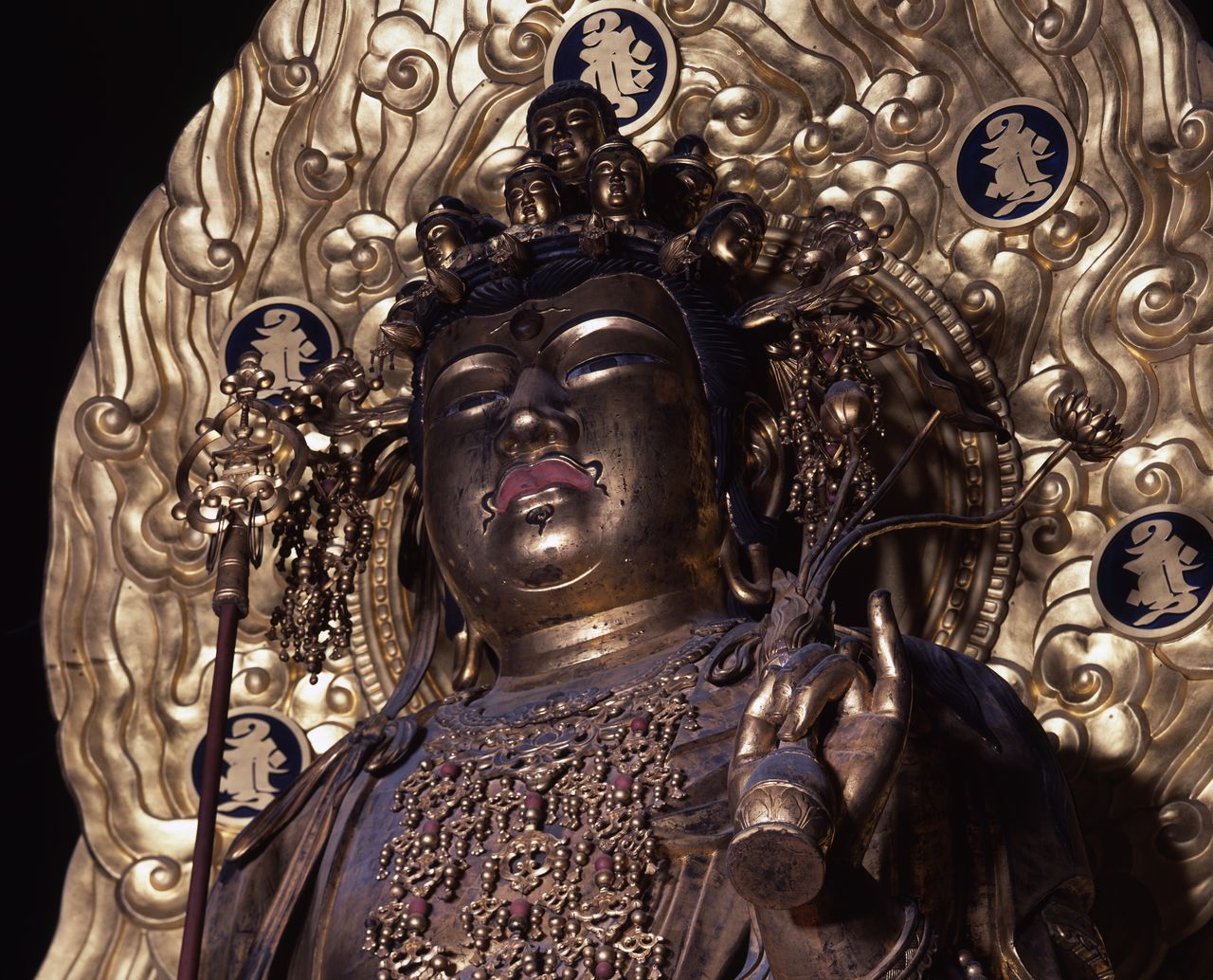
The 11-Headed Kannon (Avalokiteshvara) at Hasedera in Kamakura shares several features with the image at the temple of the same name in Nara Prefecture (© Harada Hiroshi)
The distinctive appearance of the image shares several characteristics with the principal image at Hasedera in Nara, and together they define what is known as the Hasedera-style 11-Headed Kannon. Normally, images of the 11-Headed Kannon hold a water jar containing a lotus in the left hand, symbolizing purity and compassion. The right hand is generally empty. The Hasedera images, however, are depicted holding a khakkara staff—an attribute normally associated with the bodhisattva Jizō (Kṣitigarbha). In Mahayana belief, Kannon saves beings from suffering in this present world, while Jizō brings salvation even to the depths of hell. These images attracted deep devotion as icons that could bestow the blessings of both these important figures.
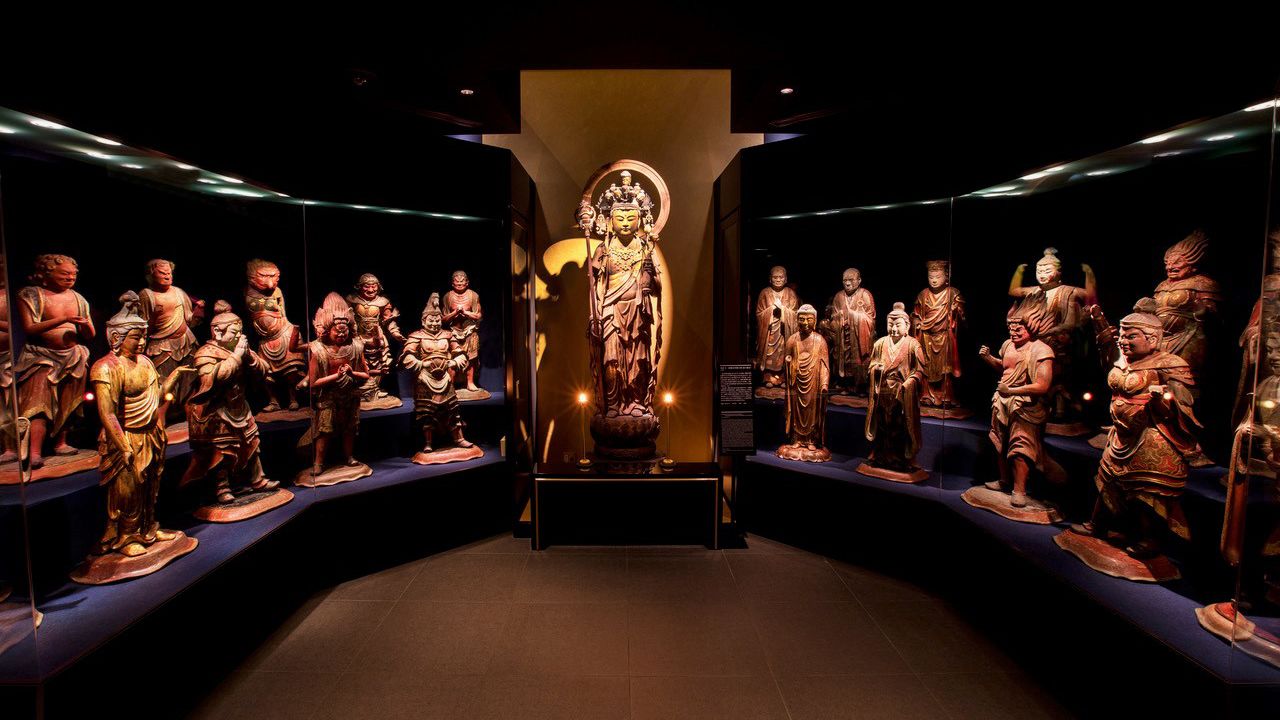
After paying your respects at the main hall and the principal image of Kannon, it is worth visiting the Kannon Museum, where a selection of the temple’s artistic treasures is on display. One highlight is a group of sculptures depicting the 33 manifestations of Kannon, who is believed to assume different forms according to the circumstances, in order to bring salvation to all beings.
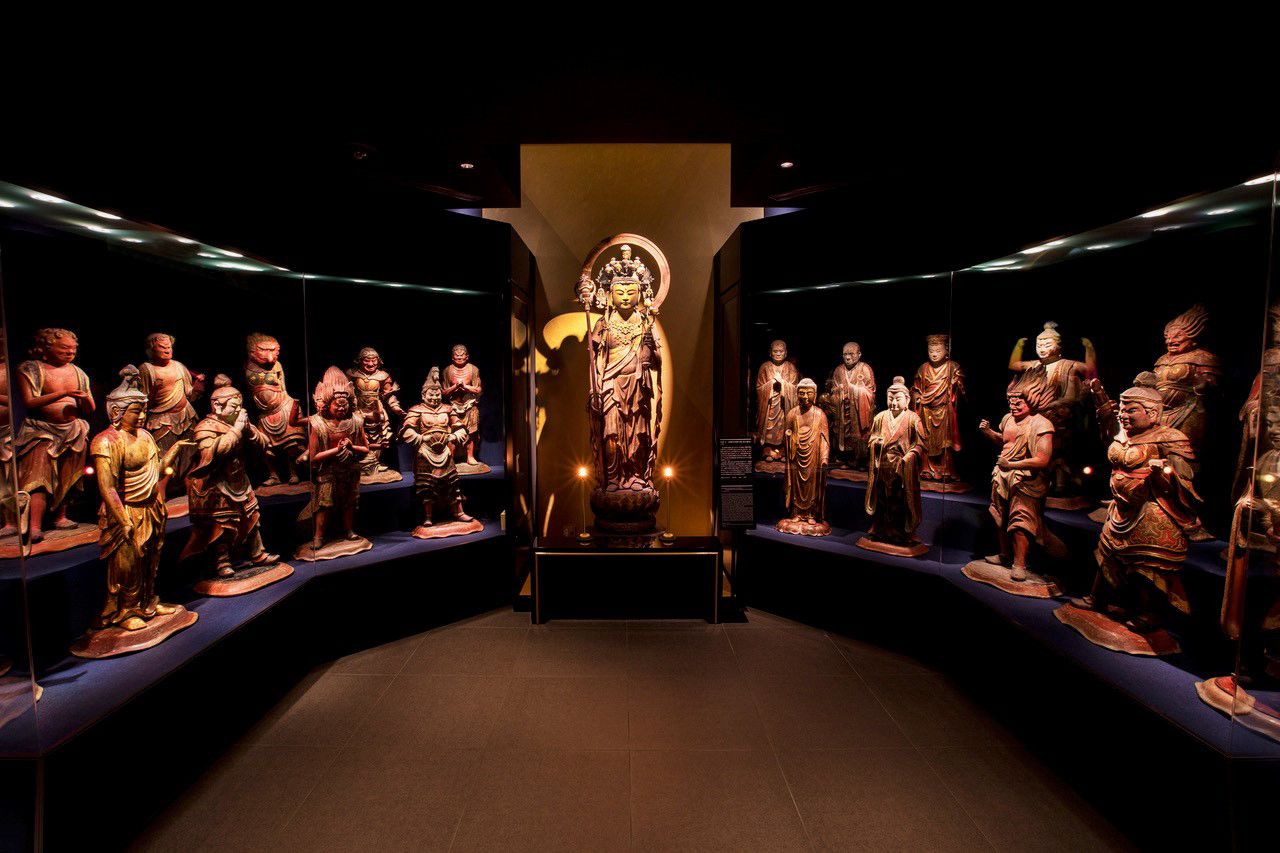
An image of Kannon that once stood in front of the principal image, surrounded by sculptures depicting the 33 manifestations of the bodhisattva. (© Harada Hiroshi)
Distinctive Buddha Images at Gokurakuji and Jōchiji
Around 500 meters to the southwest of Hasedera is Gokurakuji, whose treasure hall (Tenbōrinden) houses an unusual seated image of Shakyamuni, the historical Buddha. The image is thought to depict the Buddha preaching shortly after attaining enlightenment, with his hands forming the tenbōrin’in (“Turning the Wheel of the Dharma”) mudra. Only one other image in Japan is known in this pose: a seated Shakyamuni at Gankōji in Gifu Prefecture. The treasure hall is open during limited periods in spring and autumn, but is well worth a visit if the timing is right (Tuesdays, Thursdays, Saturdays, and Sundays: April 25–May 25 and October 25–November 25; closed in rainy weather).
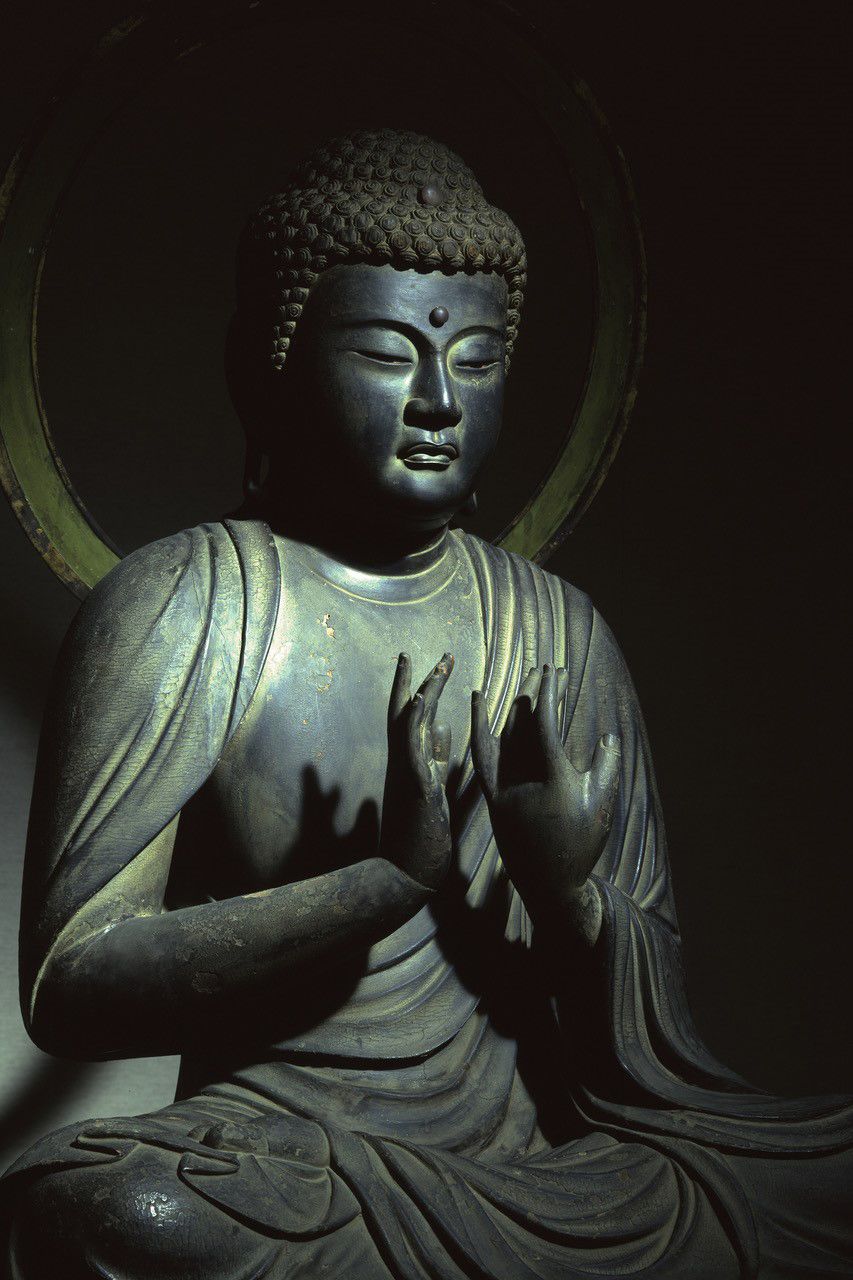
This statue of the historical Buddha at Gokurakuji is notable for the unusual mudra, with the left hand slightly twisted. (© Harada Hiroshi)
Another noteworthy example of an unusual style is the set of three seated Buddhas enshrined as the principal images at Jōchiji in northern Kamakura. Housed in the Dongeden Hall, the group comprises images of Shakyamuni, Amida, and Miroku (Maitreya), representing the present, past, and future. The vast majority of images of Miroku depict him as a bodhisattva still pursuing enlightenment, but here he appears as a fully enlightened Buddha, representing Maitreya some 5.6 billion years in the future.
One point of interest here is the way the hems of the figures’ robes drape down. Known as hōe-suika, this “hanging vestment” style is one of the characteristic features of Kamakura Buddhist sculpture of the fourteenth and fifteenth centuries. Sets of the three Buddhas in this form are quite rare.
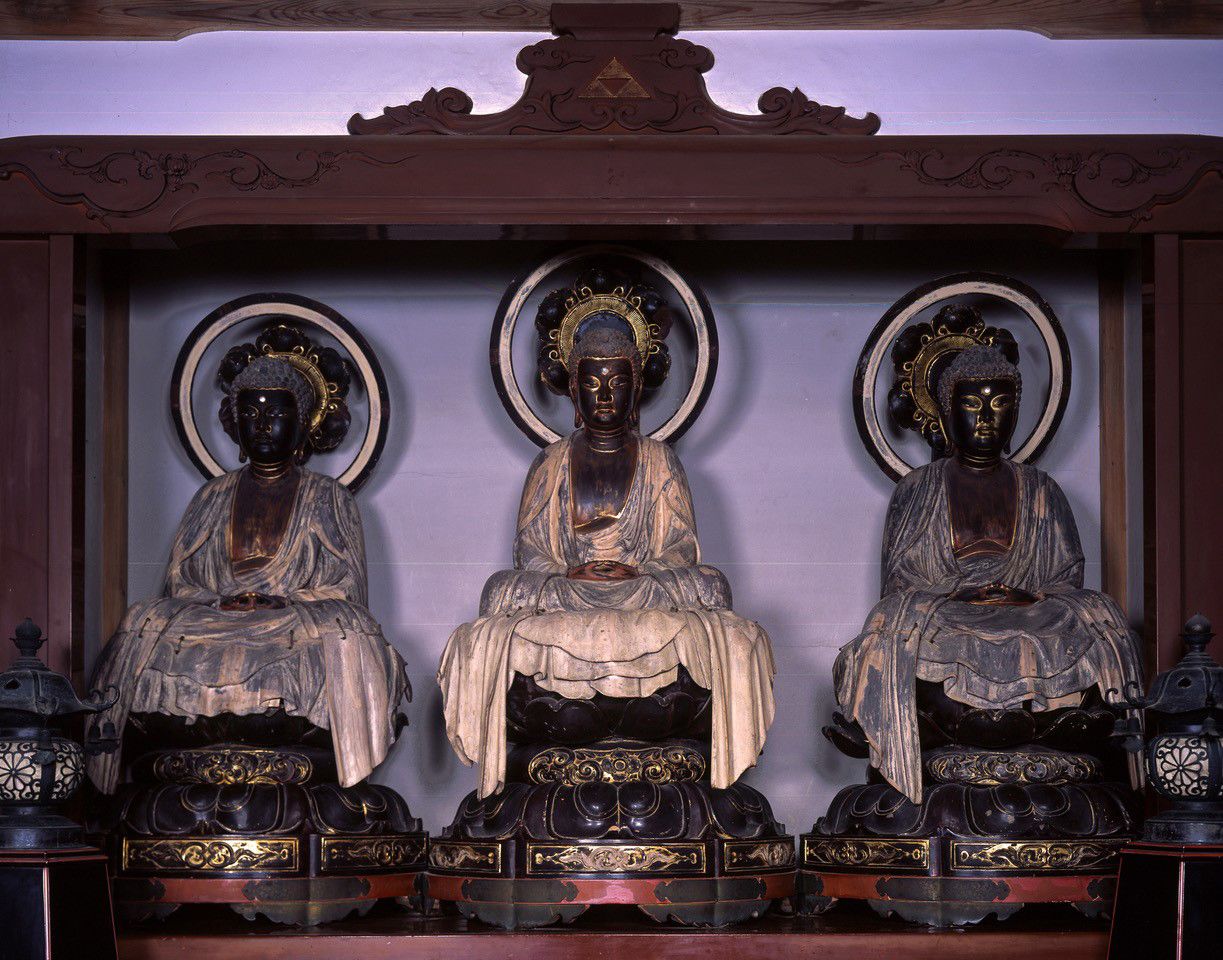
From left: Amida, Shaka, and Miroku at Jōchiji. (© Harada Hiroshi)
The Kamakura National Treasure Museum
It would be impossible to do justice to the artistic treasures of Kamakura in just a few days. For day-trippers and visitors with time for only a short stay, the Kamakura Museum of National Treasures makes an excellent introduction, bringing together many of the region’s finest religious art under one roof. The museum opened on the grounds of the Tsurugaoka Hachimangū shrine in 1928. Five years earlier, the massive Great Kantō Earthquake had seriously damaged many local temples and shrines and their artistic treasures. This museum was established to preserve and exhibit the region’s cultural heritage for future generations.
Among the most important works in the museum are two sculptures from nearby Ennōji. One is a seated image of Shokōō, one of the 10 Kings who judge the dead in the afterlife. The other is Nintōjō, the staff used by Enma, King of Hell, in passing judgment. Both illustrate the striking realism typical of the Unkei tradition.
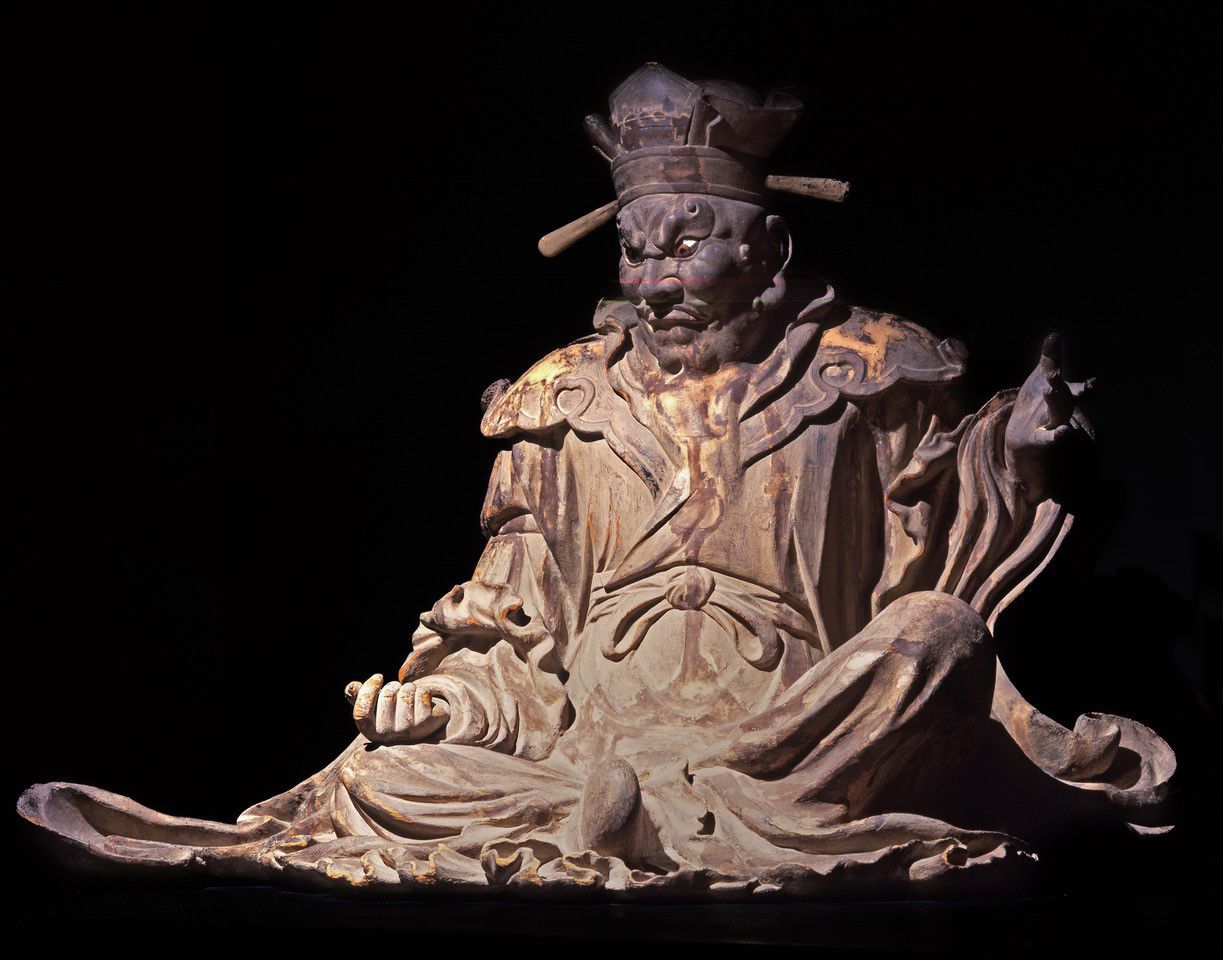
Seated Shokōō from Ennōji has been loaned to the Kamakura National Treasure Museum. The other 9 images of the 10 Kings, including Enma, are still enshrined in the main hall at nearby Ennōji. (© Harada Hiroshi)
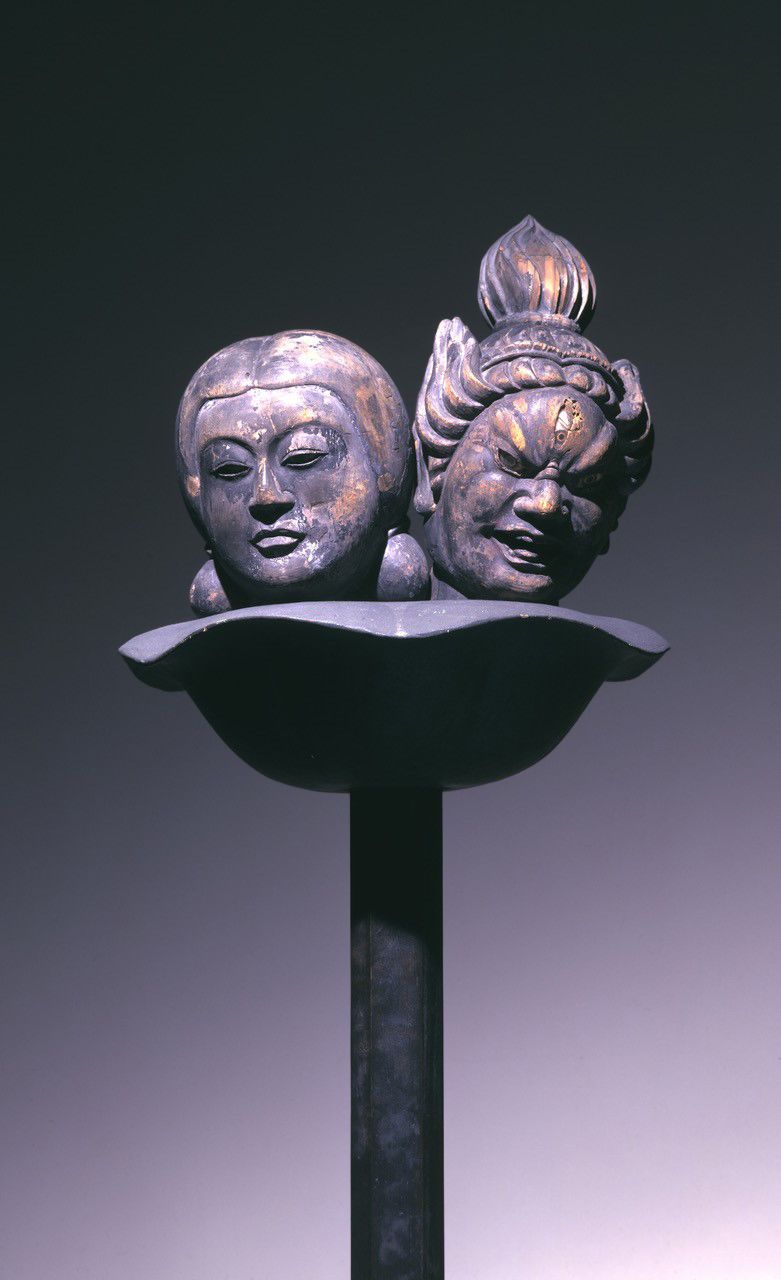
The Nintōjō (staff with human heads) has two faces that discern the good and evil deeds of the dead. Originally from Ennōji, it has also been loaned to the Kamakura National Treasure Museum. (© Harada Hiroshi)
Among the many other treasures on display is a crowned image of Shakayamuni from the temple of Kenchōji. The museum is an ideal place to encounter some of the finest examples of Kamakura Buddhist sculpture up close and get a sense for the distinctive style of eastern Japan, which developed separately from the earlier styles seen in the temples of Kyoto and Nara. The museum is closed for renovations until October 23, 2026, but is well worth a visit once it reopens.
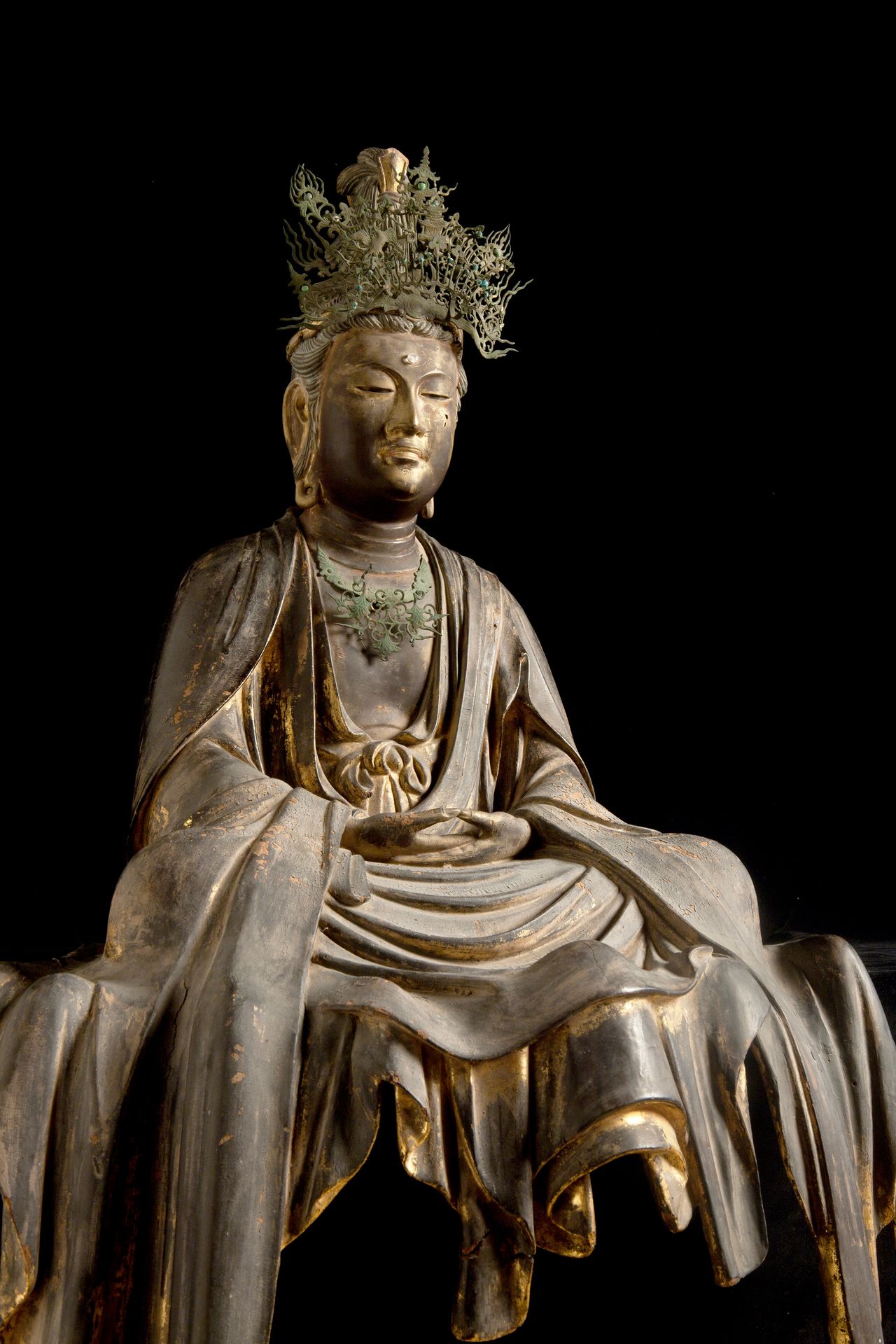
Crowned image of Shakyamuni, the historical Buddha. (© Harada Hiroshi)
(Originally published in Japanese. Banner photo: The Kannon Museum at Hasedera temple, Kamakura. © Harada Hiroshi.)