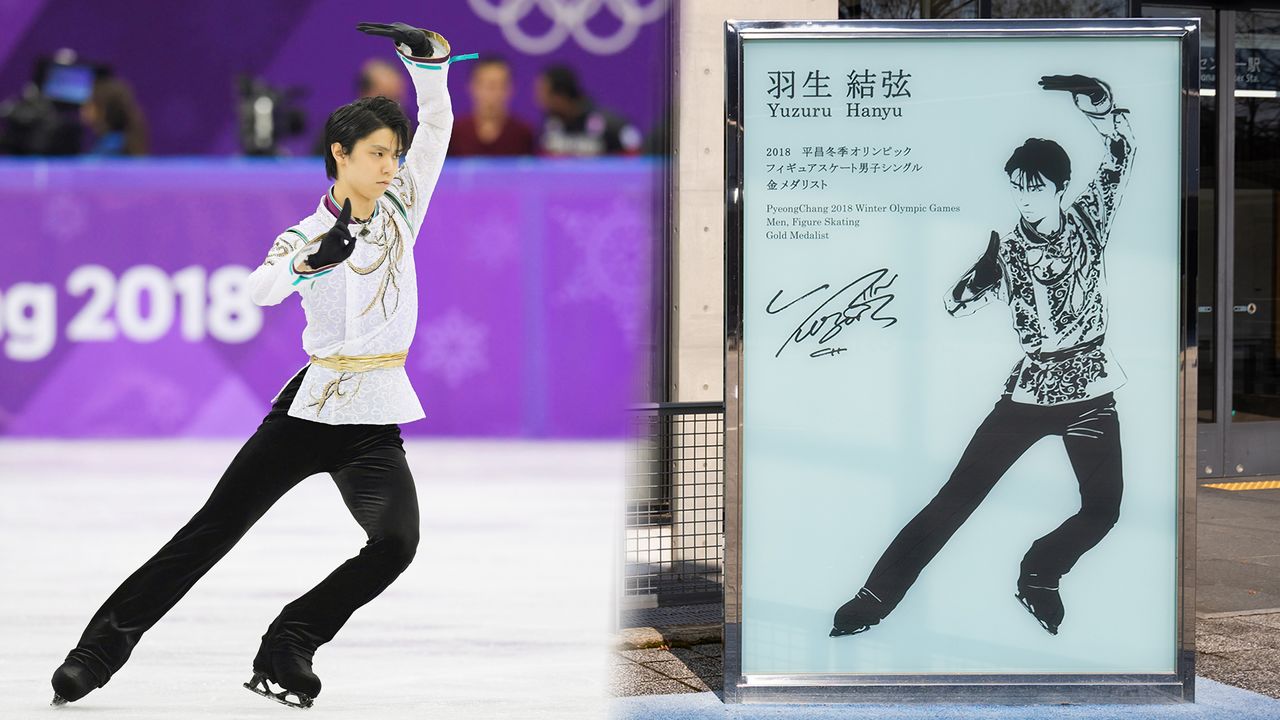
Tracing the Footsteps of Hanyū Yuzuru in a Sendai Pilgrimage
Guideto Japan
Travel Sports- English
- 日本語
- 简体字
- 繁體字
- Français
- Español
- العربية
- Русский
The Face of Sendai
Hanyū Yuzuru won back-to-back Olympic gold medals in the men’s figure skating at Sochi in 2014 and Pyeongchang in 2018. His powerful expressiveness, magnificent jumps, and manga-prince looks have earned him global fame. In 2022, he announced his decision to turn professional, and although he mostly performs in Japan, he still has a loyal following, particularly within Asia.
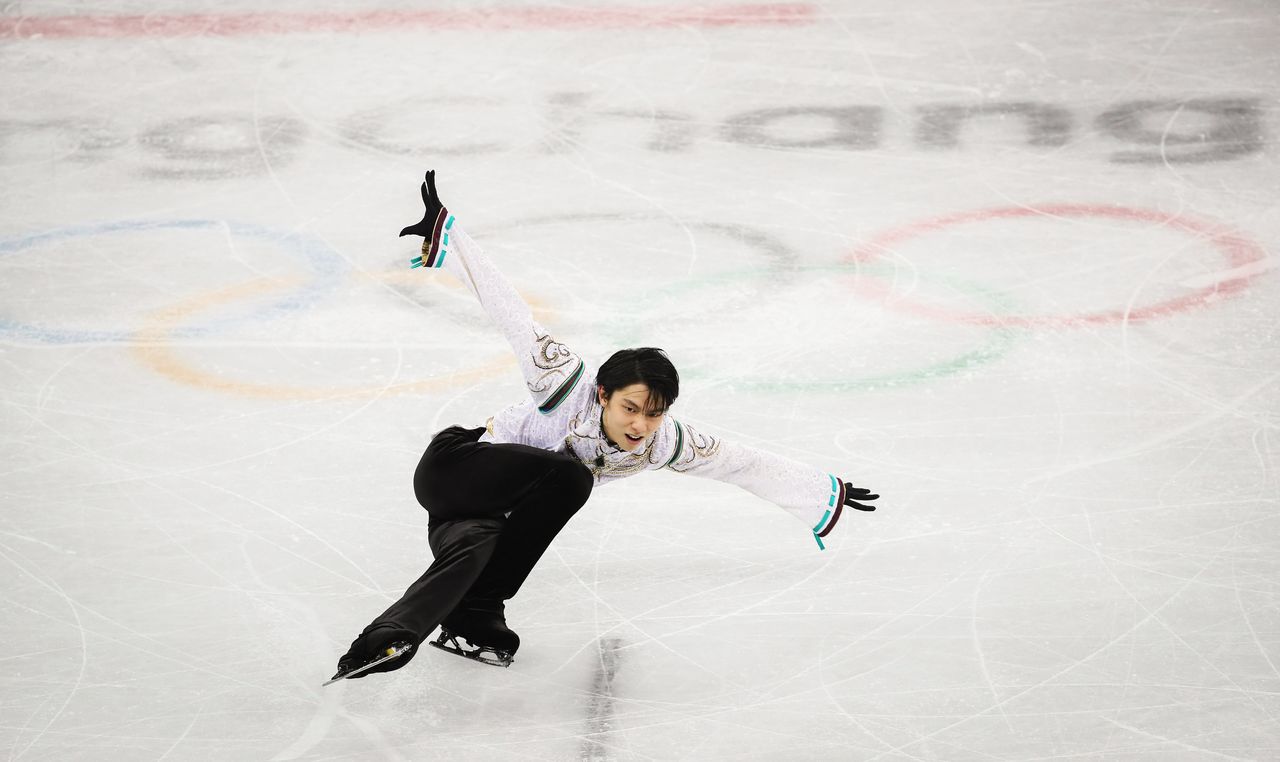
Hanyū gave a medal-winning performance at the Pyeongchang Olympics despite suffering from an injury to his right ankle. (© Jiji)
Photos and videos of Hanyū are displayed throughout his hometown of Sendai. Following the Sochi Olympics, he was appointed tourism ambassador for the city, and continues to represent it in various ways. In response to interest from Hanyū’s fans, the city designed sightseeing courses of different lengths that highlight spots associated with the skater. They are ideal for fans visiting Sendai to see his show, and also to other tourists who want to get to know “Yuzu” better.
The sightseeing courses begin at Sendai Station, serviced by the Tōhoku Shinkansen, JR local lines, Sendai subway, and Loople, the city loop bus. There is a tourist information desk on the station’s third floor, providing local maps in English and equipped with tablets to handle inquiries in other languages.
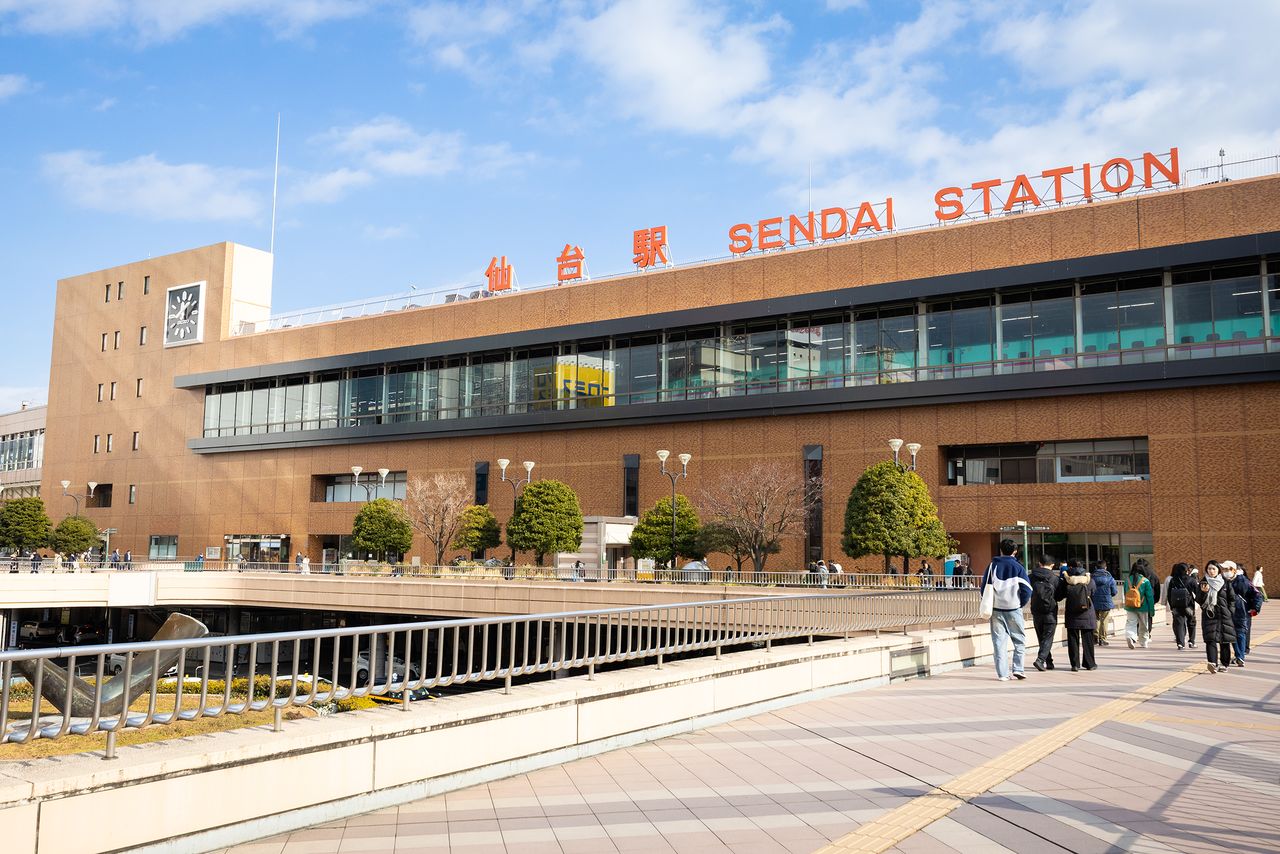
JR Sendai Station is about 90 minutes from Tokyo on the Tōhoku Shinkansen. (© Nippon.com)
Half-Day Course (The Figure Skating Monument at Sendai International Center Station)
The first Hanyū Yuzuru stop on the half-day course is the unmissable Figure Skating Monument in the plaza outside of International Center Station, a five-minute ride from Sendai Station on the underground Tōzai Line. A glass monument was first erected to celebrate another local skater, Arakawa Shizuka, after she won gold at the Torino Winter Olympics in 2006, and two panels dedicated to Hanyū were added after his Olympics successes.
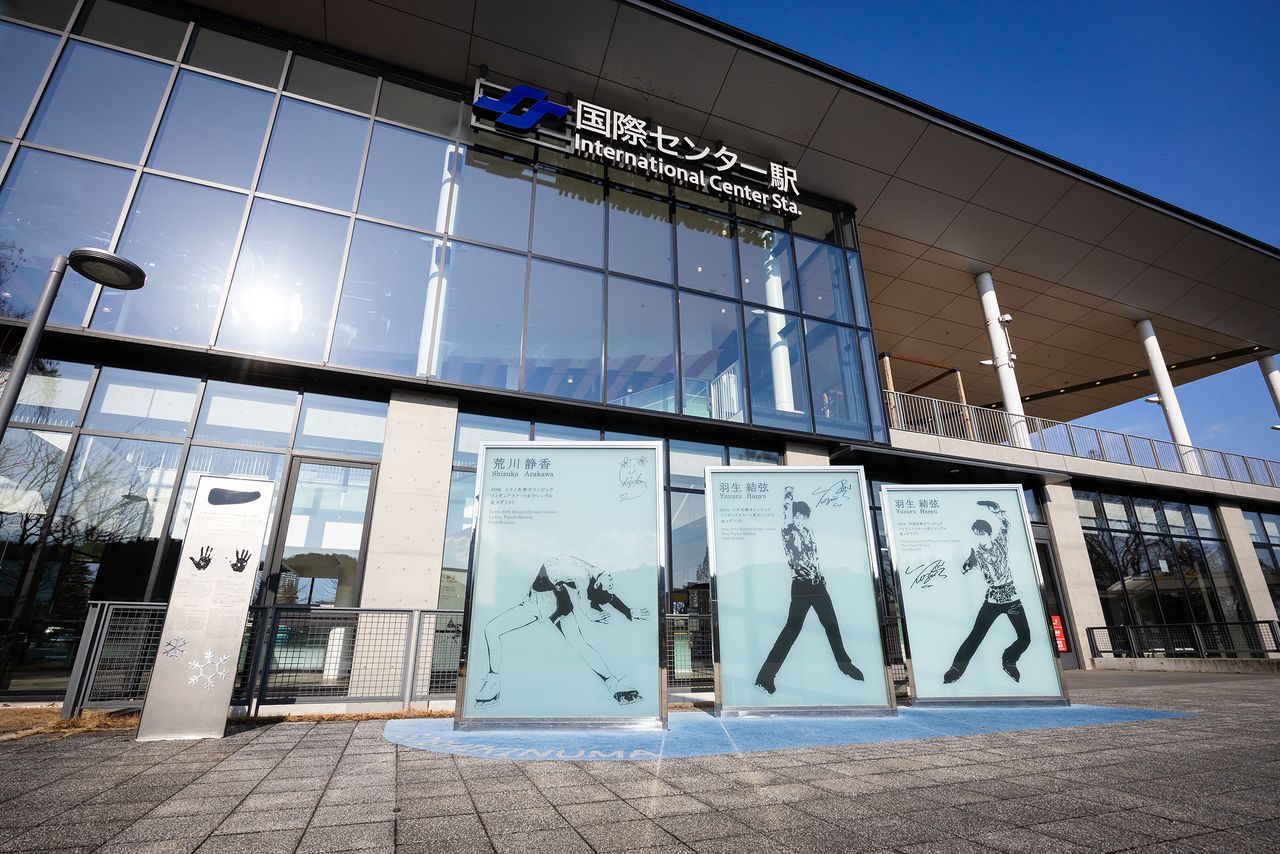
The Figure Skating Monument outside of Sendai International Center Station. (© Nippon.com)
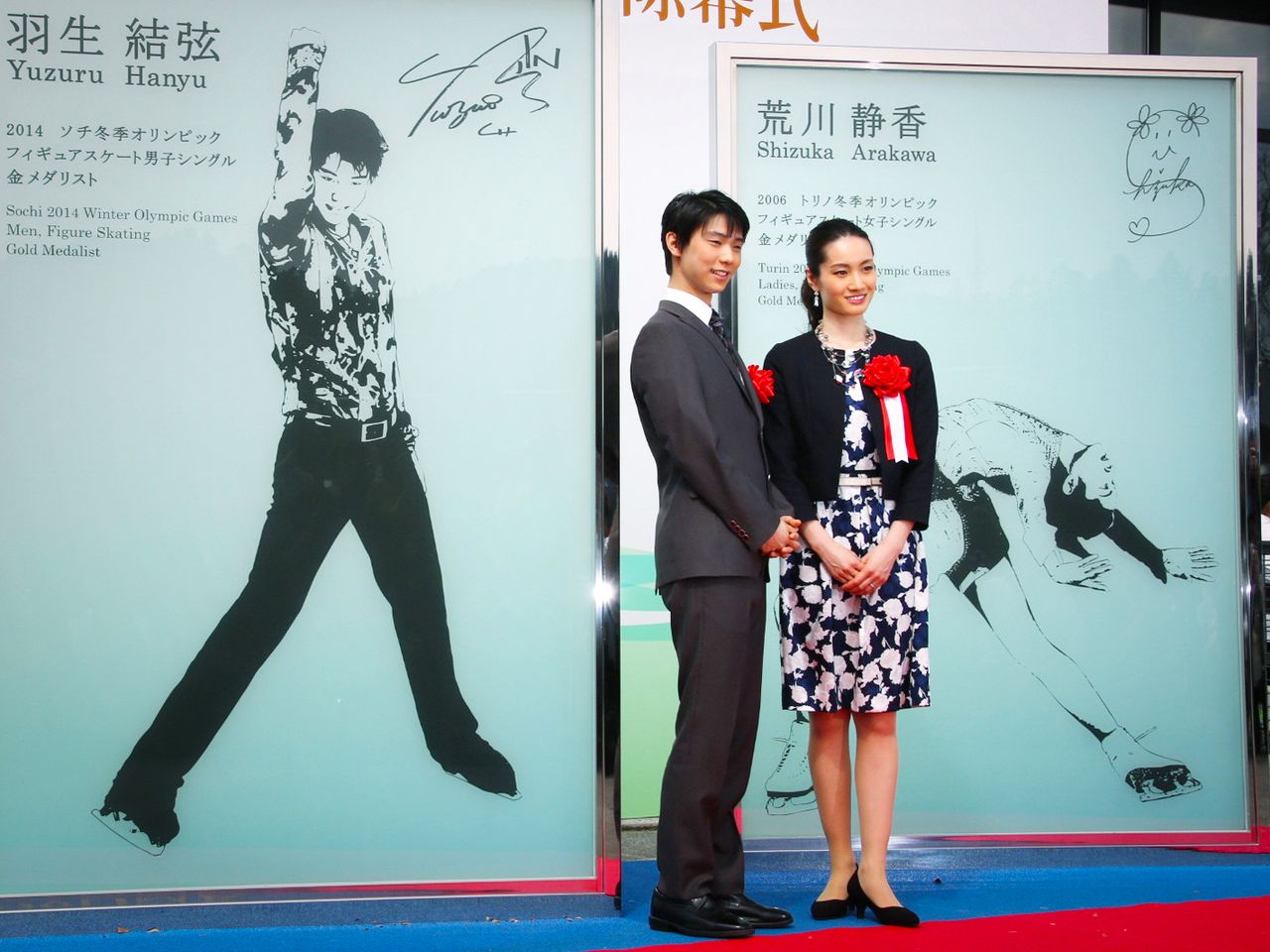
Hanyū, at left, and Arakawa appeared together at the April 2017 monument unveiling. (© Jiji)
Alongside Arakawa’s monument, in which she performs her signature Ina Bauer move, stand two monuments to Hanyū. One depicts his short program, set to Gary Moore’s “Parisienne Walkways,” at the Sochi Olympics, and the other a pose from his free skate at Pyeongchang, in which he represented the legendary mystic Abe no Seimei. When we visited the monument, a number of fans were striking the same poses for photos, and placing their own hands on the handprints of the two athletes.
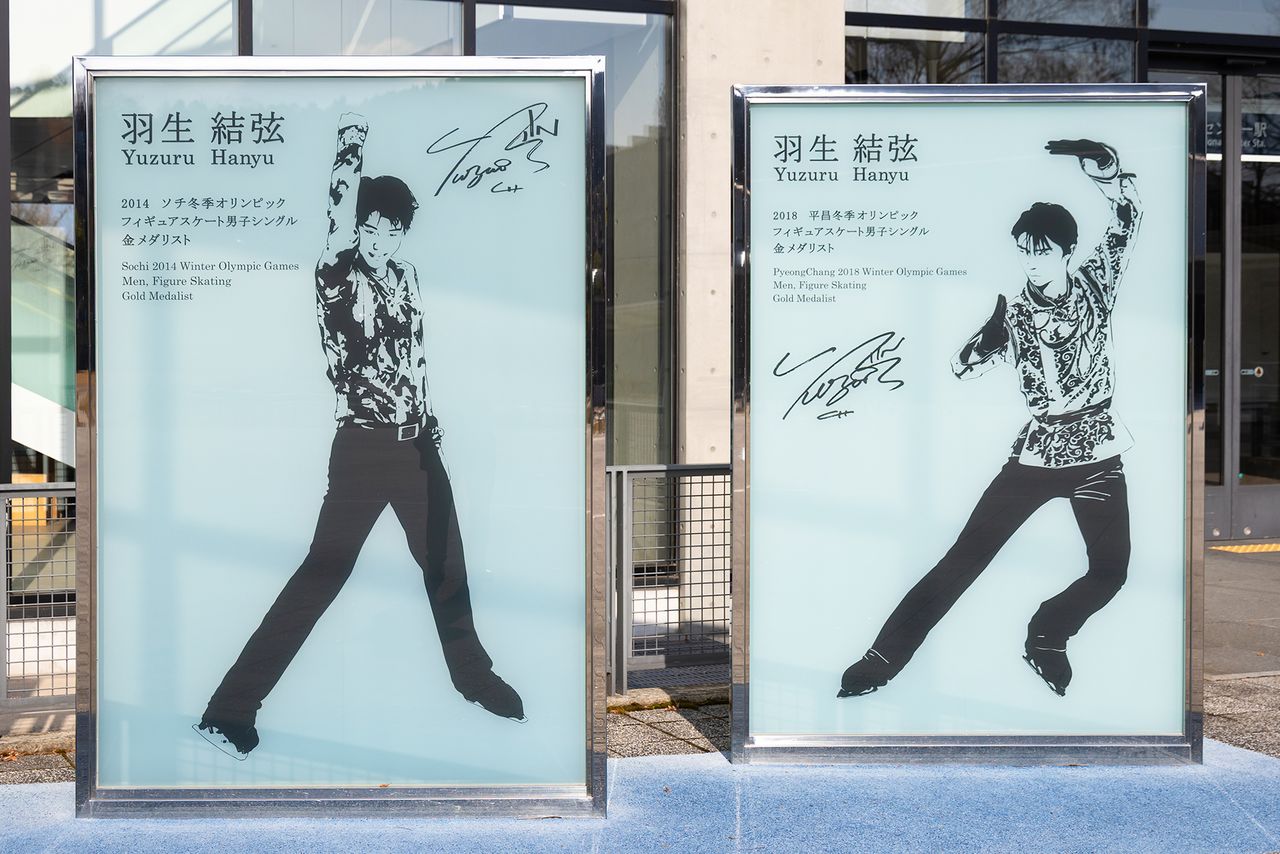
In 2019, a new monument was added to celebrate Hanyū’s second Olympic victory. (© Nippon.com)
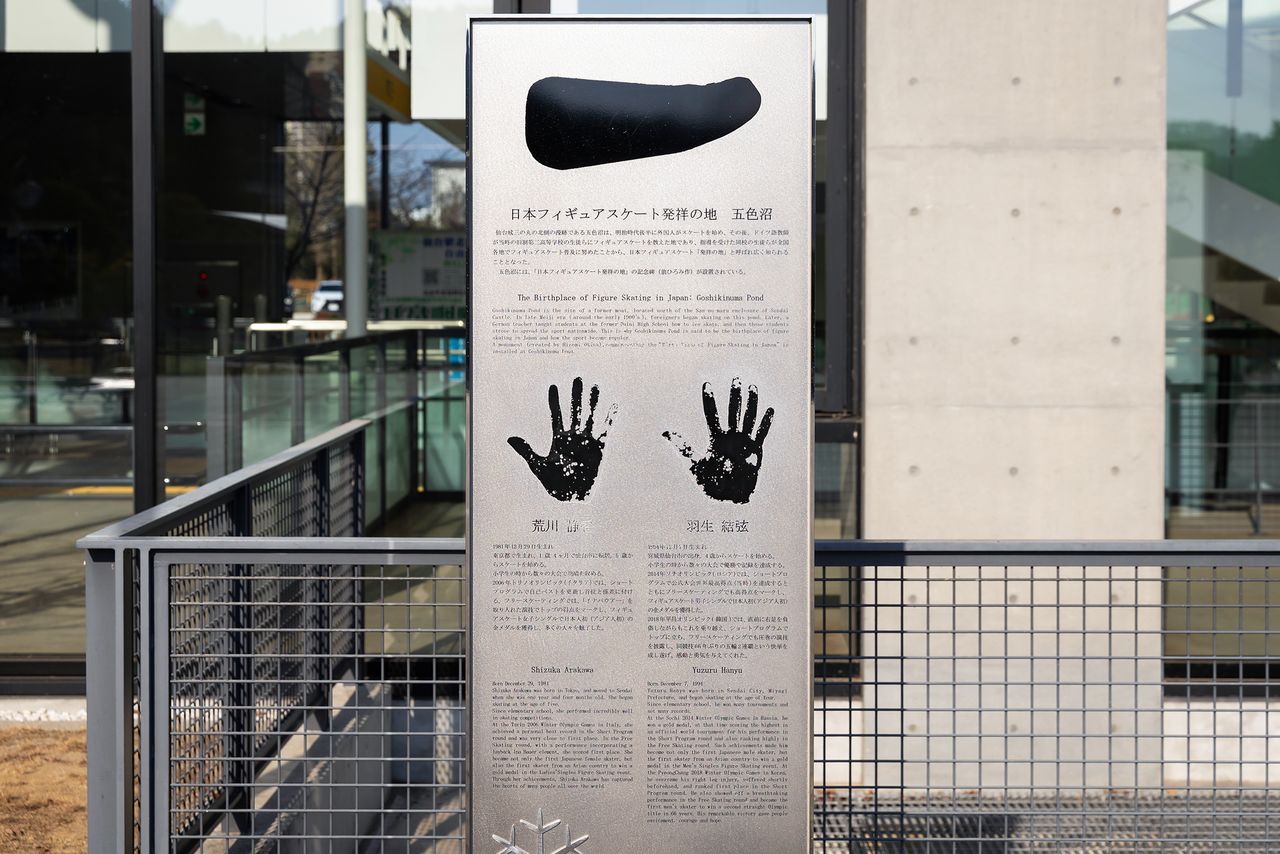
The handprints of the two athletes seem slightly worn, perhaps from fans placing their hands on the images. (© Nippon.com)
Half-Day Course (Goshiki-numa, Japan’s Birthplace of Figure Skating)
The monuments are located at International Center Station due to its proximity to Goshiki-numa, a pond considered the birthplace of figure skating in Japan. A five-minute walk south from the station, the pond once formed part of an outer moat for Sendai Castle.
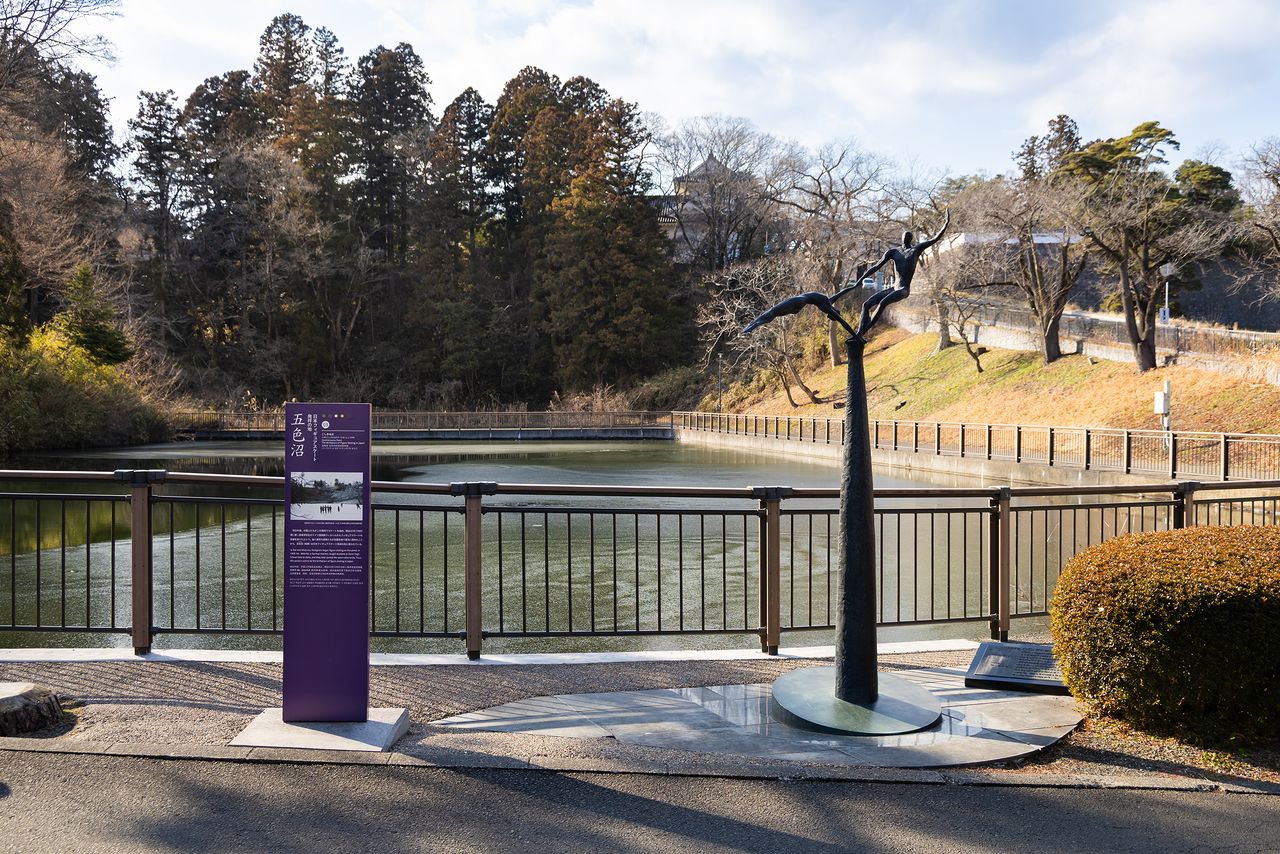
The pond Goshiki-numa is a 15-minute walk from the ruins of Sendai Castle. Alongside it stands a sculpture depicting a pair figure skating. (© Nippon.com)
During the Meiji era (1868–1912), foreign residents began skating on the frozen pond in the winter. Starting in 1909, a German instructor at the predecessor to Tōhoku University’s Institute of Liberal Arts and Sciences began teaching figure skating to students. After graduating, these students shared their skills across Japan, popularizing the sport.
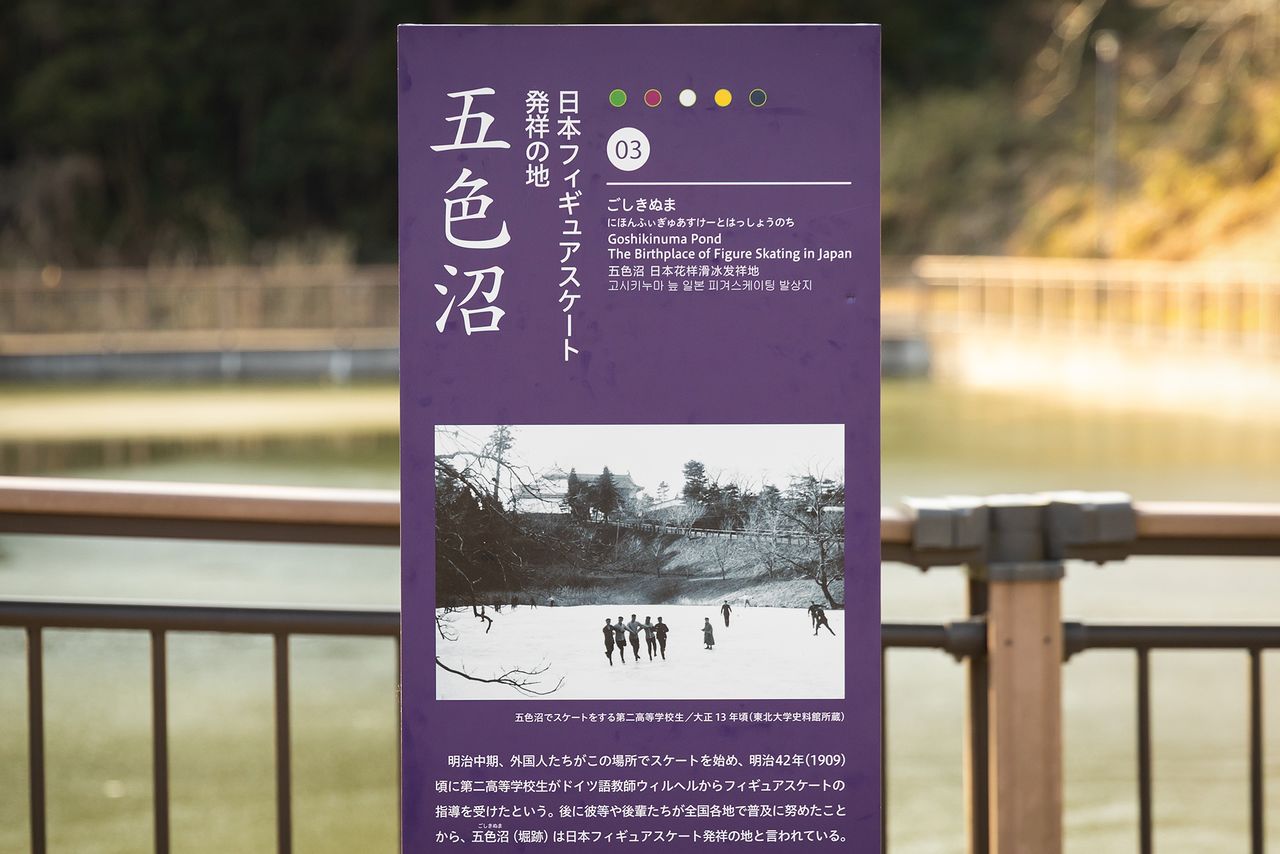
The information panel features a black and white photograph from the Taishō era (1912–26) of students practicing figure skating on the pond. (© Nippon.com)
Half-Day Course (Ōsaki Hachimangū Shrine)
Continuing the journey on the tourist loop bus, our next stop is Ōsaki Hachimangū, a shrine constructed by the first domain lord of the Sendai clan, Date Masamune, and the final stop on Sendai’s suggested historical half-day tour. The shrine’s main building, completed in 1607 in the ornate Momoyama style, is designated as a national treasure, while the shrine’s deity is reputed to ward off evil, bring good luck and provide protection against misfortune, as well as securing success and safe childbirth.
Hanyū’s fans visit the shrine to view a handwritten votive tablet he placed here in 2017 to pray for success in the Pyeongchang Olympics. This is on display at the shrine’s reception building. Photography of the shrine interior is prohibited, so we just had a quick look at the tablet to allow other visitors a chance.
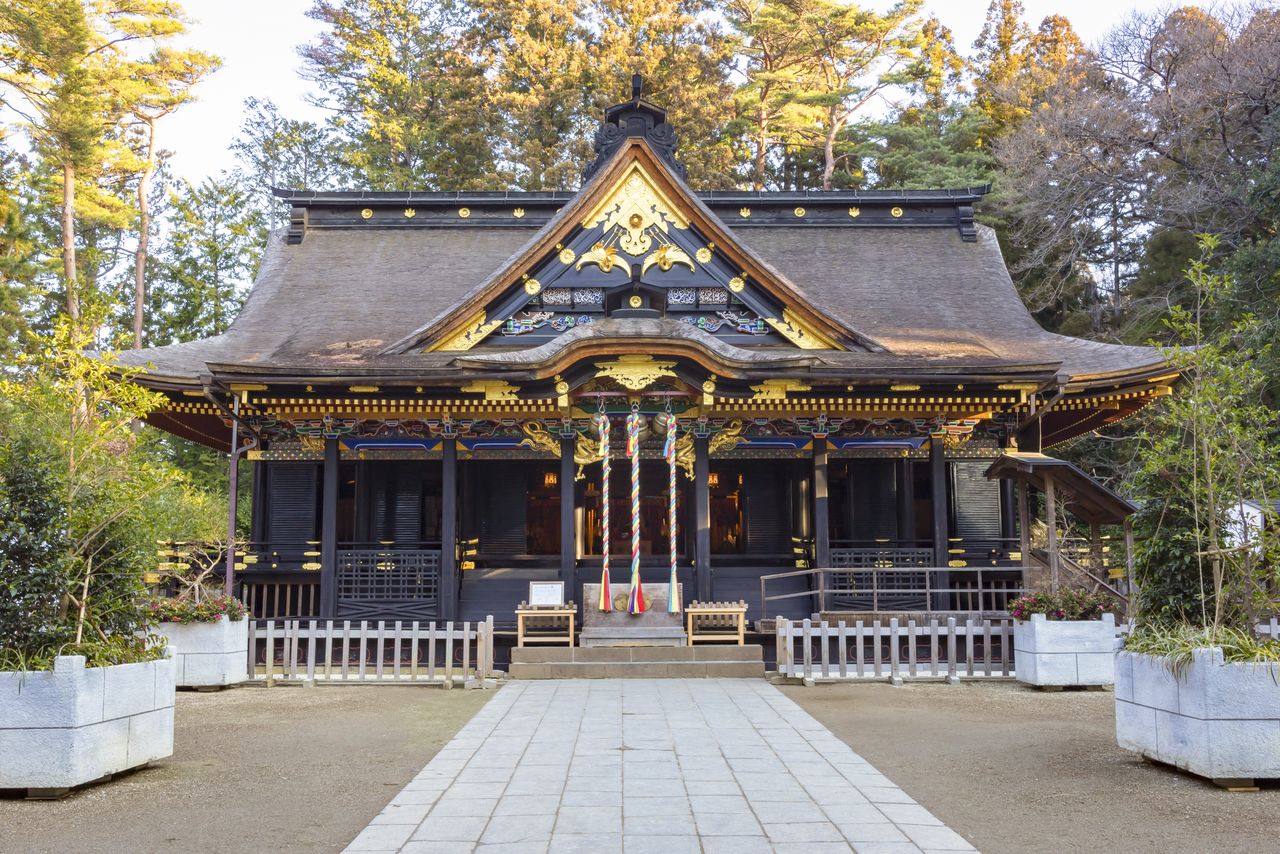
The main building of Ōsaki Hachimangū, a Momoyama-style shrine designated as a national treasure (© Sentia)
Full-Day Course (Jōzenji-dōri)
For visitors wanting more Hanyū Yuzuru spots, the half-day course can be extended into a full day with a trip to the Izumi area in the north of Sendai, accessible by the Nanboku Subway.
Alighting at Kōtōdai-kōen Station, head west along the zelkova-lined Jōzenji-dōri. In an interview with a local newspaper, Hanyū recommended visiting this avenue during December’s Sendai Pageant of Starlight, when illuminations adorn the way. The avenue passes through Kokubunchō, the Tōhoku region’s busiest shopping district, making it perfect for an after-dinner stroll.
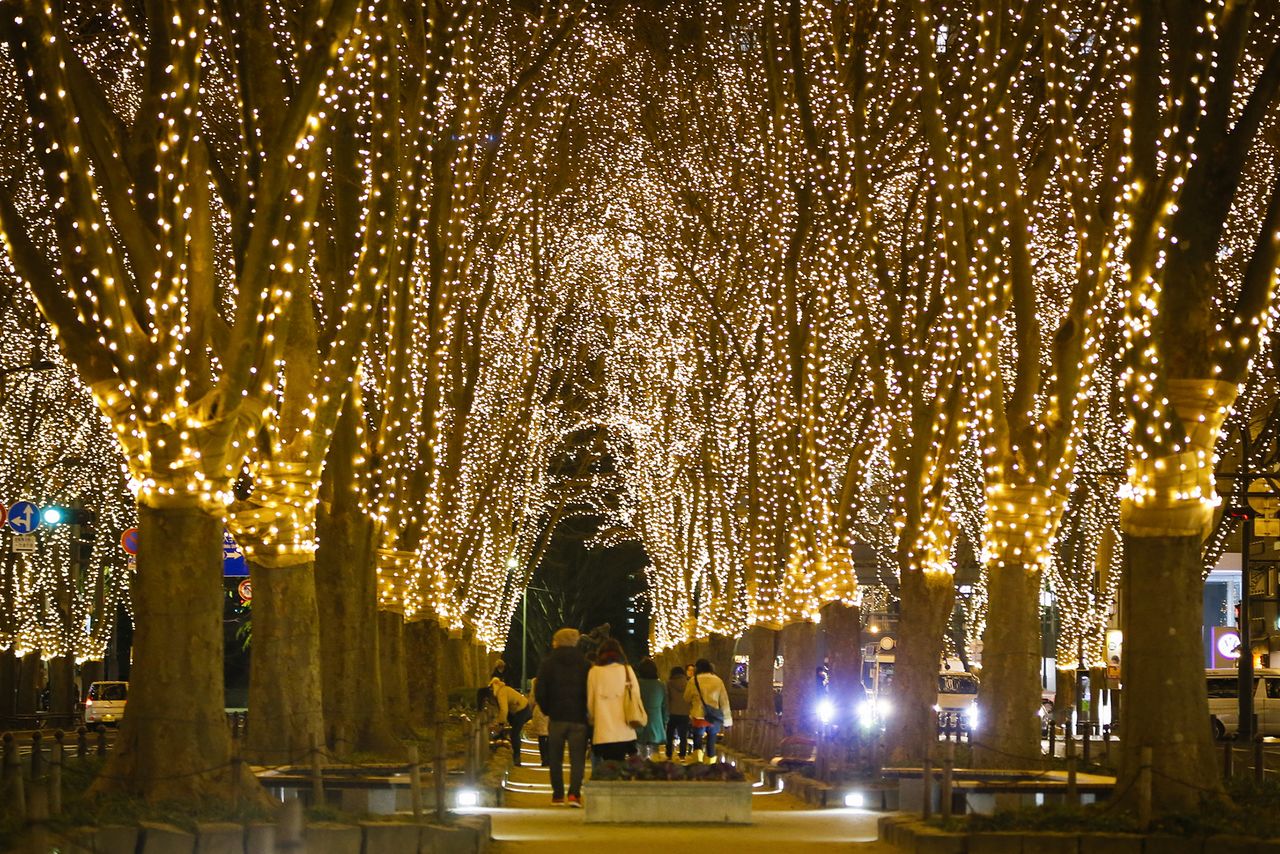
Sendai Pageant of Starlight has been a popular event since it began in 1986. (© Sentia)
Full-Day Course (Nanakita Park and the “Yuzu-Zakura” Tree)
Nanakita Park, where Hanyū trained as a boy, is further north on the Nanboku Line, five minutes’ walk from Izumi Chūō Station. Within the park, close to the Greenery Development Hall, is the so-called “Yuzu-Zakura,” a cherry blossom tree planted in 2018 to commemorate Hanyū’s second consecutive Olympic victory. The tree’s bright pink blossoms delight visitors in the spring, when the tree is also lit up at night.
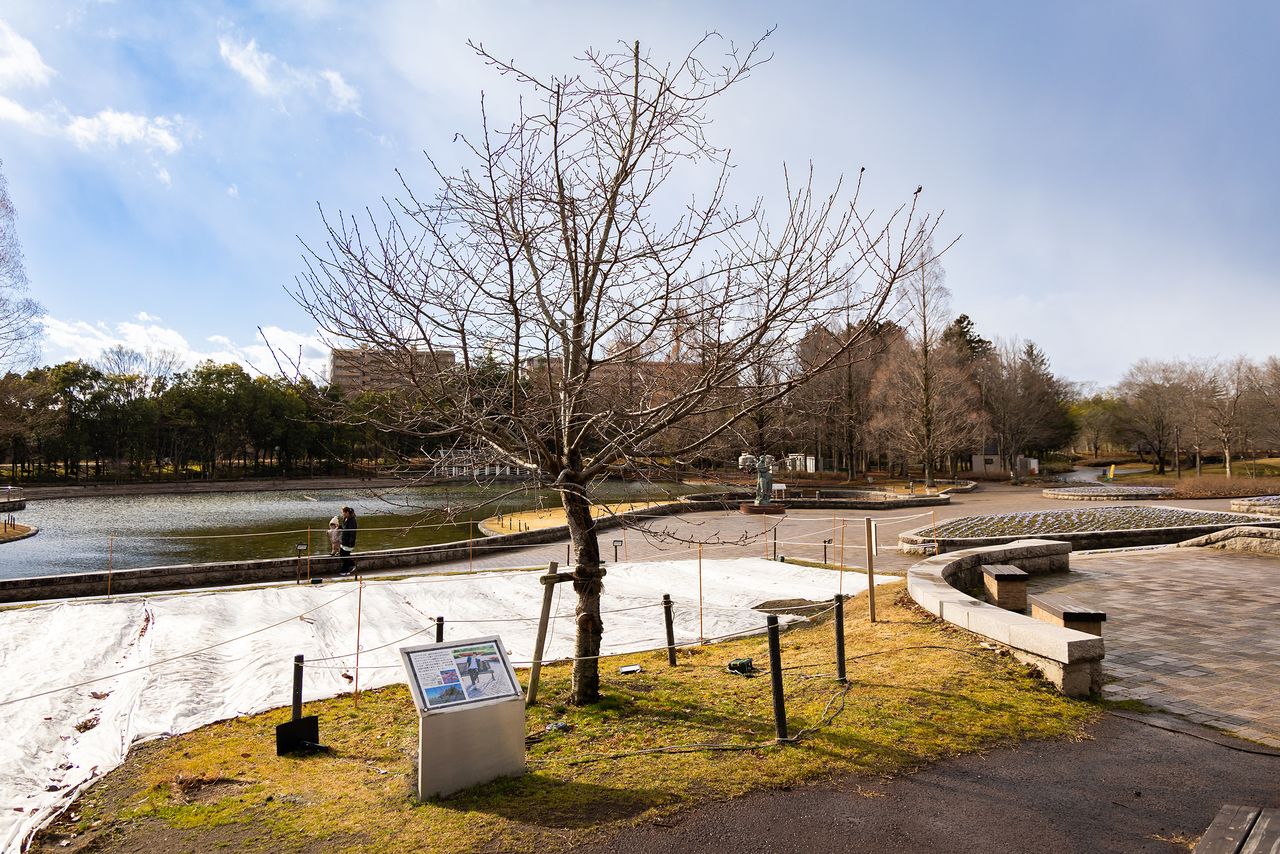
The “Yuzu-Zakura” tree in Nanakita Park. (© Nippon.com)
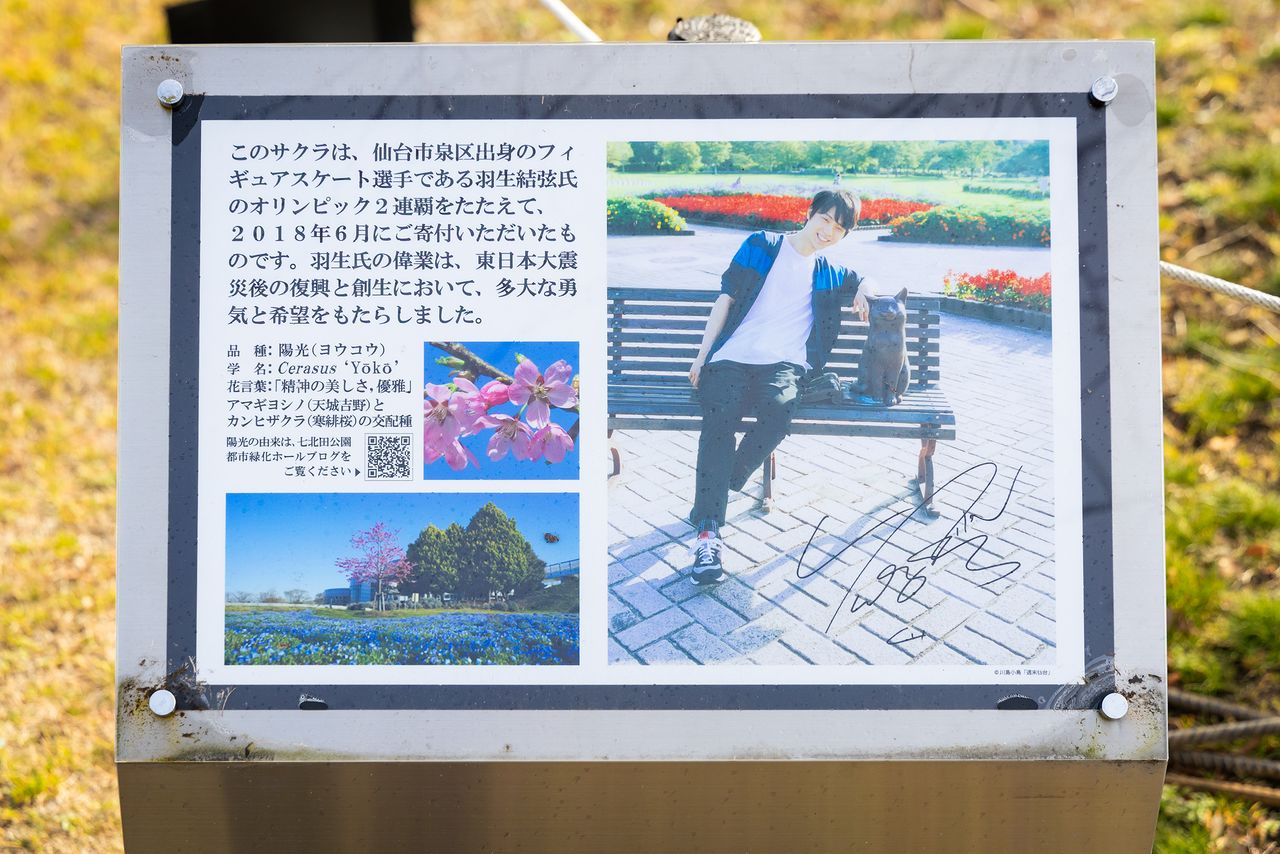
A plaque alongside the tree includes a photo of Hanyū in the park. (© Nippon.com)
A highlight of this full-day course is a visit to Ice Rink Sendai, 20 minutes’ walk from the park, or a 10-minute bus ride from the station. Hanyū started skating here at the age of 4, and was 16 years old at the time of the Great East Japan Earthquake on March 11, 2011. He was in the middle of practice when the rink started shaking violently and says that he crawled to safety while still wearing his skates.
For a time, Hanyū questioned whether he should continue to skate when so many people had suffered or died in the disaster. However, the following year, he went on to become Japan’s youngest ever medalist at the world figure skating championship, and three years later he won Olympic gold. By doing so, he gave hope to people in Tōhoku as they worked for the region’s recovery.
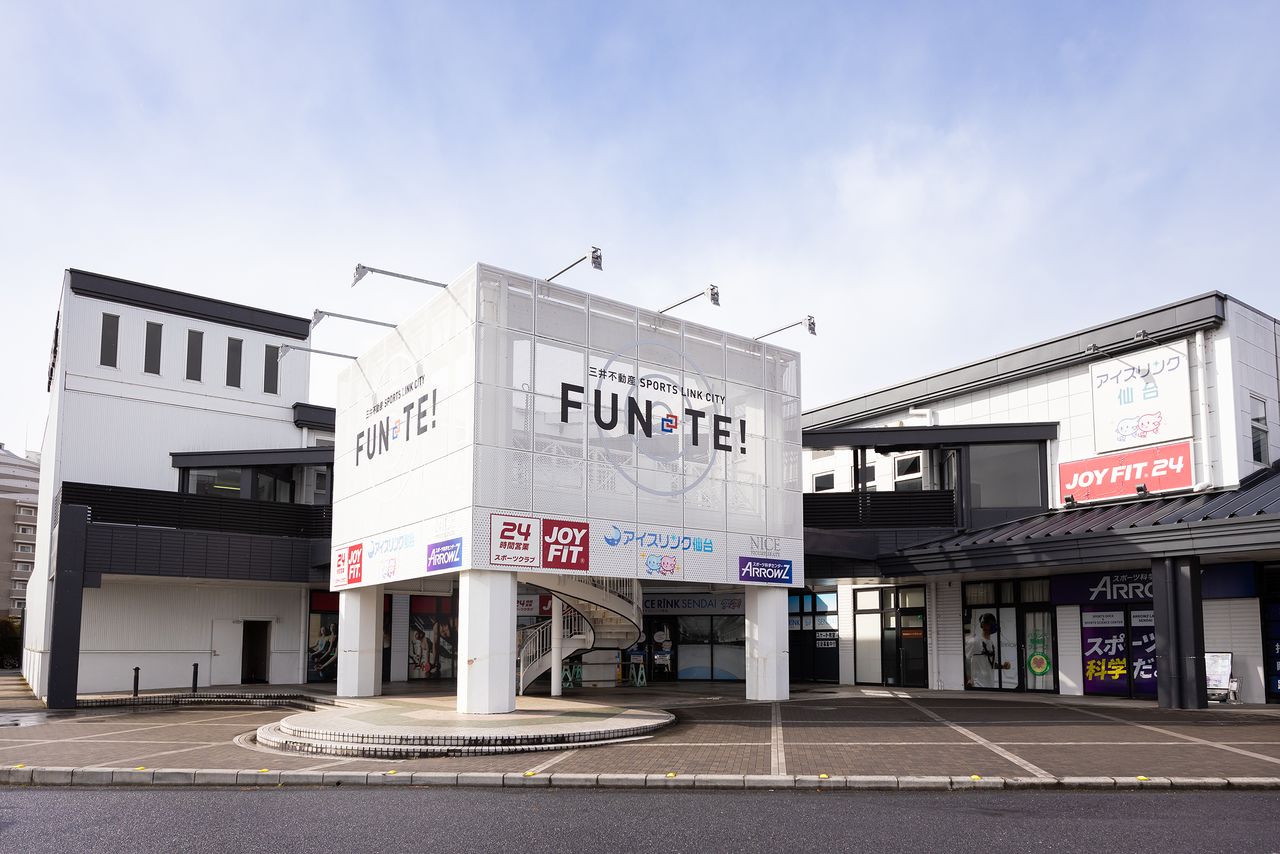
Ice Rink Sendai is open year-round. (© Nippon.com)
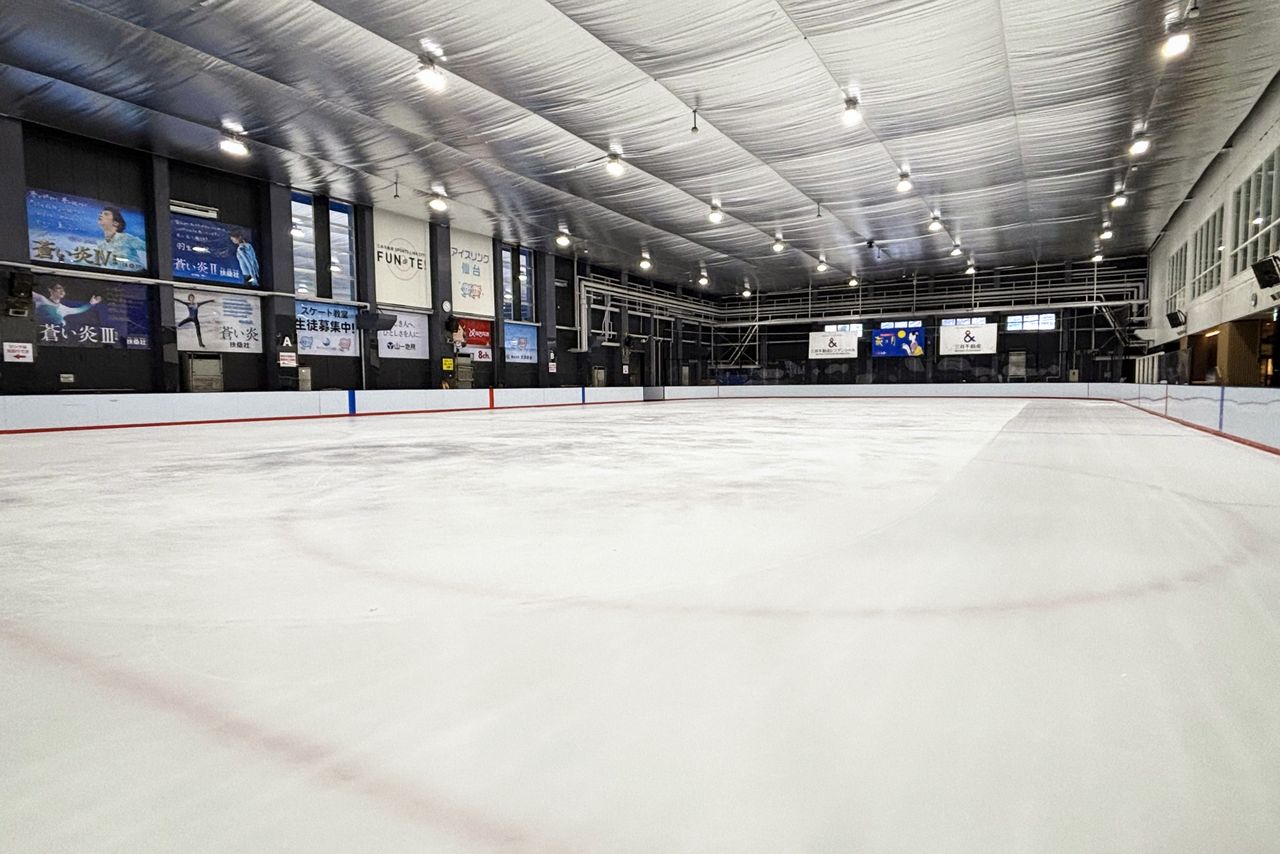
The rink where Hanyū and Arakawa spent countless hours training. (© Ice Rink Sendai)
Fans can enjoy the opportunity to skate at the rink where Hanyū once trained. Displays inside highlight the careers of Hanyū and Arakawa, and are viewable free of charge during public skating hours. However, be aware that this is not possible when there are training sessions or private events.
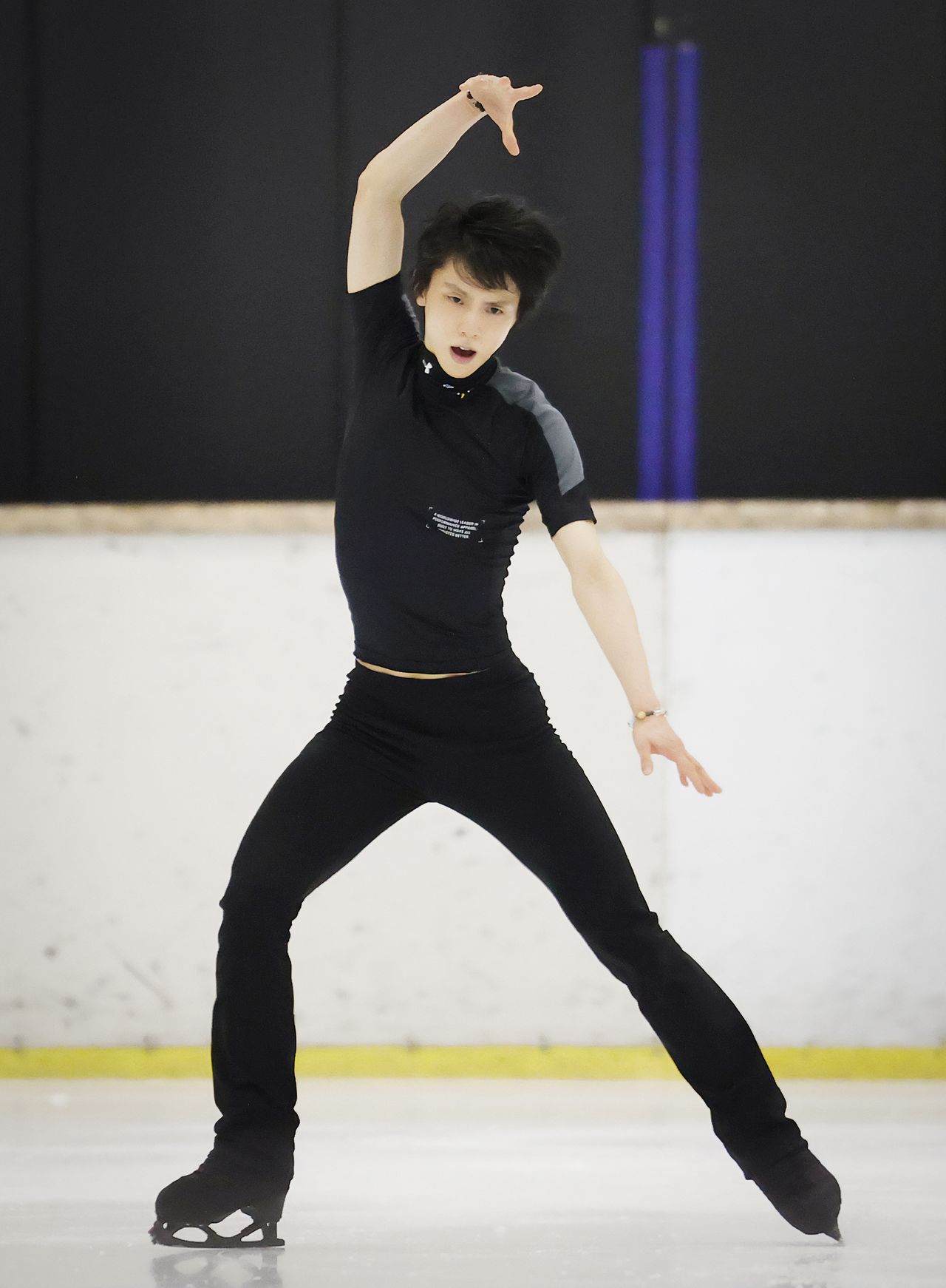
Hanyū’s first training session at Ice Rink Sendai after turning professional was open for public viewing on August 10, 2022. (© Jiji)
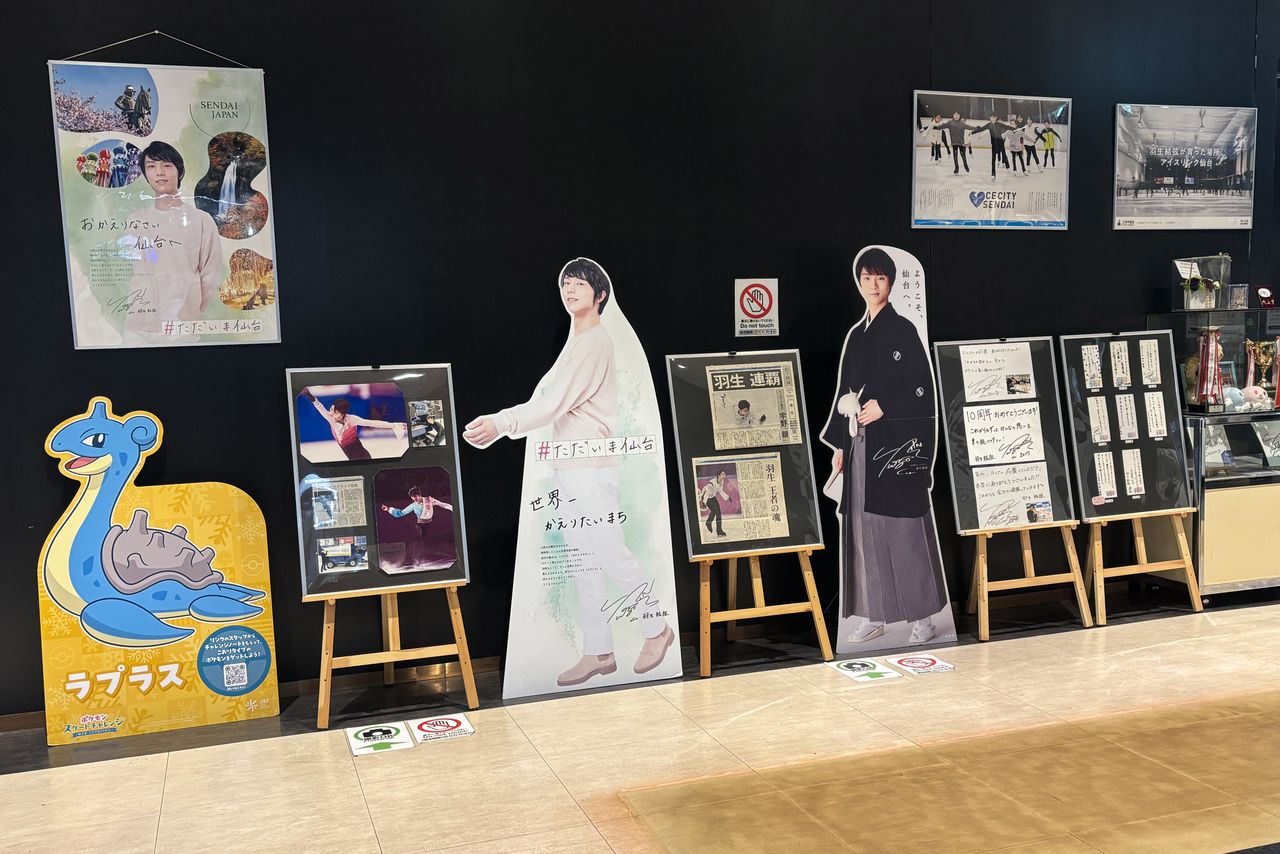
The display dedicated to Hanyū is a popular photo spot for fans. (© Ice Rink Sendai)
Two-Day Courses
Visitors can extend their courses further to two days with an overnight stay at either the Akiu or Sakunami hot springs in the west of Sendai, located 30 to 60 minutes from Sendai Station either by bus or rental car. Near the Akiu hot springs is Akiu Shrine, where Hanyū made a visit to express his thanks after his victory in Sochi. The grounds are lined with spectacular white banners.
Meanwhile, the renowned temple, Jōgi Nyorai Saihōji, is readily accessible from Sakunami hot springs. Hanyū and his family are known to have visited this 800-year-old Pure Land Buddhist temple on occasions.
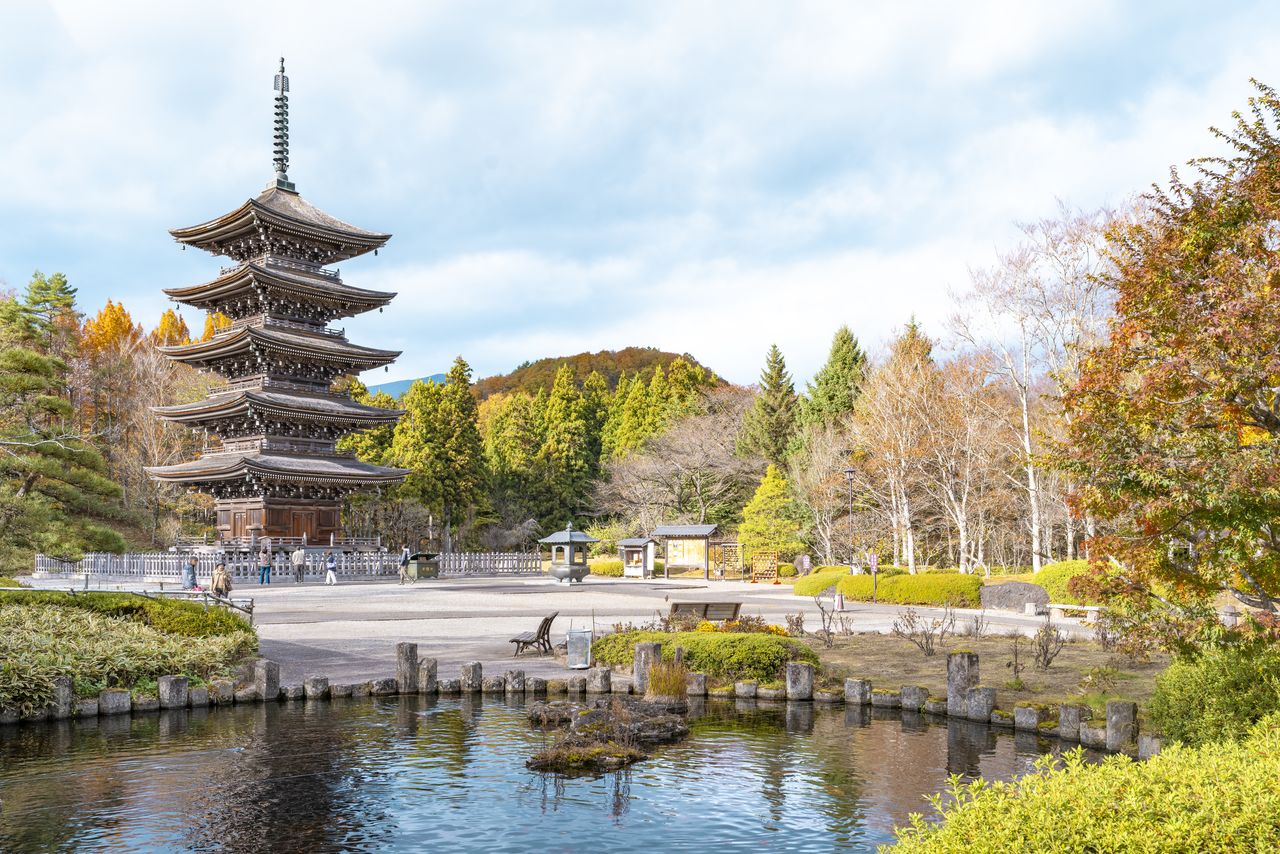
The five-storied pagoda that acts as a symbol of the temple. (© Sentia)
Jōgi Tōfu, a shop outside the temple’s main entrance, is known for its delicious triangular aburaage (deep-fried tōfu). No doubt many Hanyū fans have enjoyed this local treat while reminiscing about their memorable visit to his birthplace.
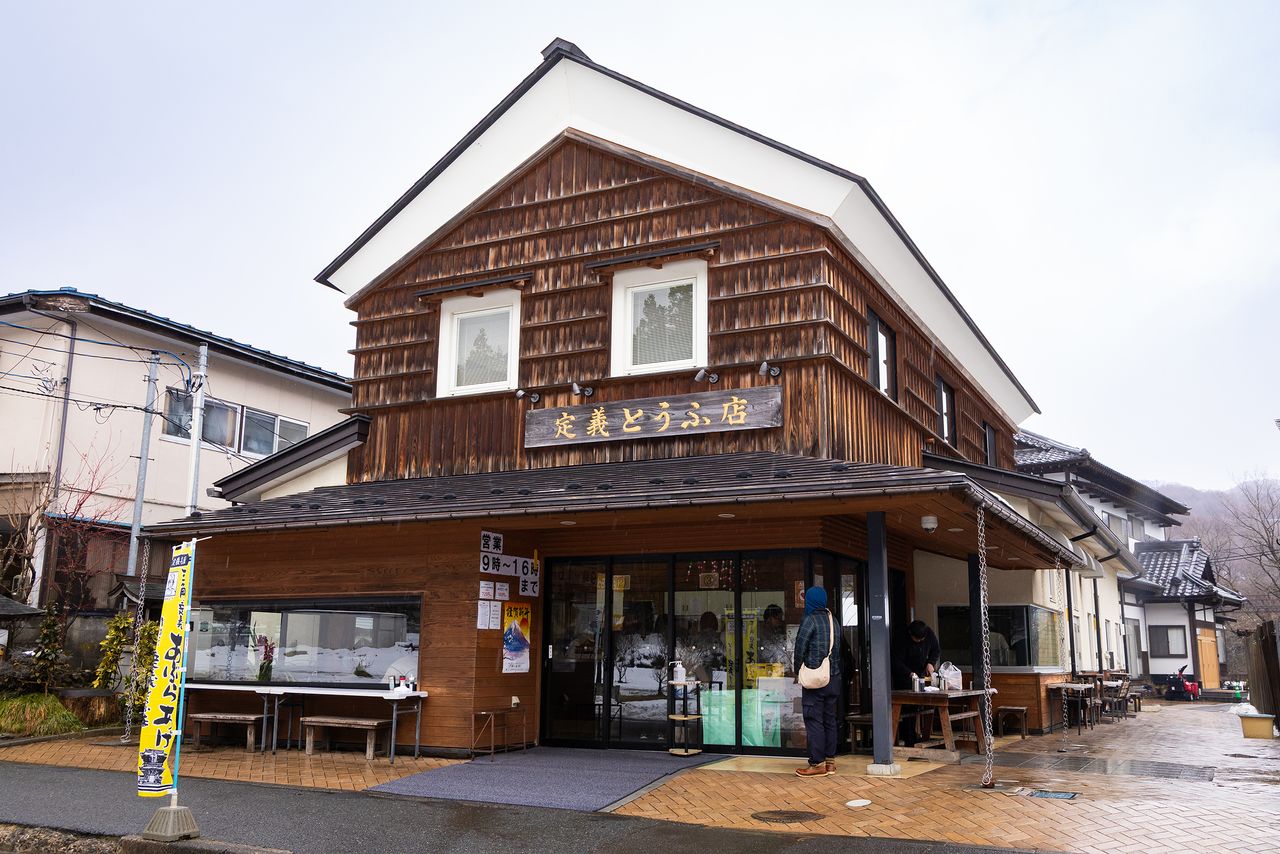
Jōgi Tōfu has outdoor tables to sit and savor the piping hot tōfu triangles. (© Nippon.com)
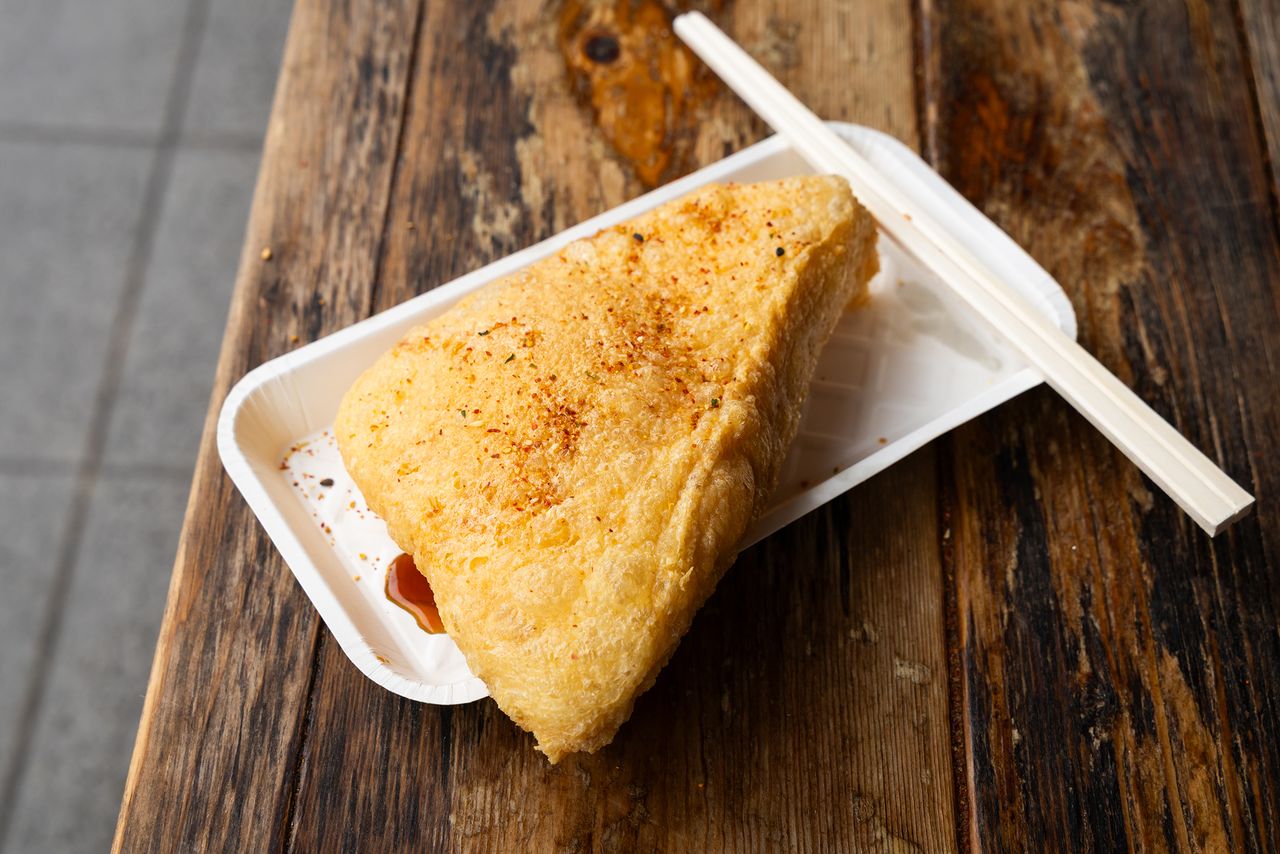
They taste great with soy sauce and a sprinkle of garlic shichimi seven spice powder. (© Nippon.com)
(Originally published in Japanese. Reporting, text, and photographs by Nippon.com, except where otherwise noted. Banner photo: Hanyū performing as Abe no Seimei in the Olympic free skate at Pyeongchang [© Jiji] and the Figure Skate Monument in Sendai commemorating this performance [© Nippon.com].)