From Folk Craft to “Kawaii” Star: Four Centuries of the Akabeko
Guideto Japan
Travel Culture- English
- 日本語
- 简体字
- 繁體字
- Français
- Español
- العربية
- Русский
A Red Cow Becomes a Region’s Mascot
With its stout red body and charming bobbing head, the akabeko cow has long been a familiar sight in the Aizu region of western Fukushima Prefecture. This traditional folk toy is cherished as a symbol of good luck and protection from evil. Its name comes from beko, a regional word meaning “cow,” with aka, “red,” adding description.
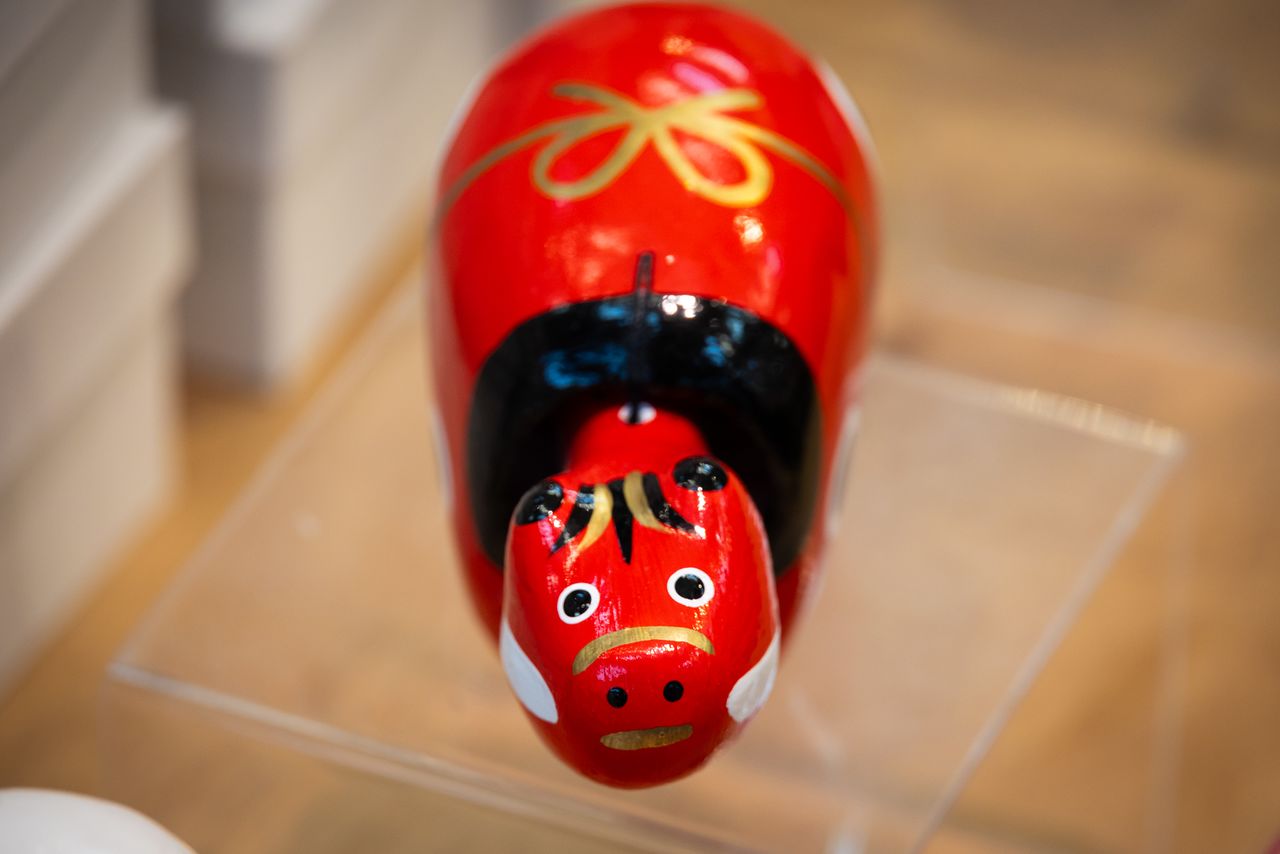
The head bobs back and forth and from side to side using a pendulum. (© Nippon.com)
The akabeko is said to have originated at the temple Enzōji in Yanaizu, in the Aizu region. In 1611, a major earthquake destroyed the temple complex. When the main hall was later rebuilt atop a cliff, workers struggled to haul timber up the steep slope after it had been transported there by river. According to legend, a herd of red cows suddenly appeared and helped carry the timber. Inspired by the strength and devotion of these mysterious animals, locals began making papier-mâché red cows as good-luck charms.
Another legend emerged during a smallpox outbreak in the 1710s, when children who owned akabeko were said to be spared from the disease. The toys subsequently came to be regarded as charms for protection from illness and misfortune. The black spots painted on their bodies represent the scars left by smallpox, symbolizing the akabeko taking on illness in a person’s place. In the castle town of Aizuwakamatsu, samurai were encouraged to make papier-mâché crafts as a side business, helping establish akabeko as one of the region’s signature products.
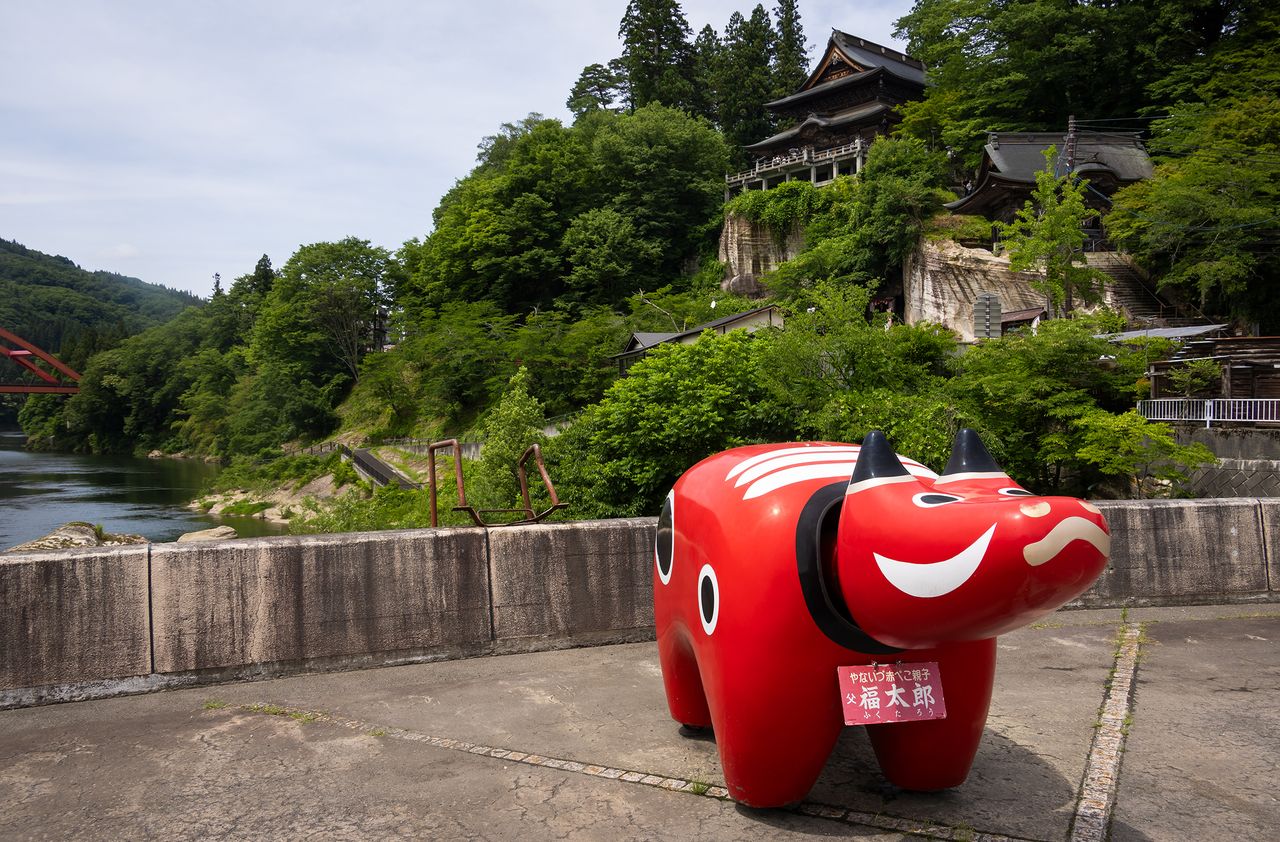
At Kiyohime Park in Yanaizu, visitors can pose with Fukutarō, a giant akabeko. Legend has it that red cows carried timber from the Tadami River, seen at left, up the cliff to the temple hall above. (© Nippon.com)
The akabeko remains a beloved symbol of Aizu today. In Aizuwakamatsu, its distinctive form can be found on everything from the designs of local buses and roadside barriers to manhole covers. Akabeko monuments also stand at JR Aizuwakamatsu Station and in the park areas spreading about before Tsurugajō Castle.
Yanaizu, the birthplace of the akabeko, has embraced the character as well, installing monuments at Enzōji and other locations around town. Besides entertaining visitors, these eye-catching displays have become popular photo spots, with images shared on social media helping to promote the town.
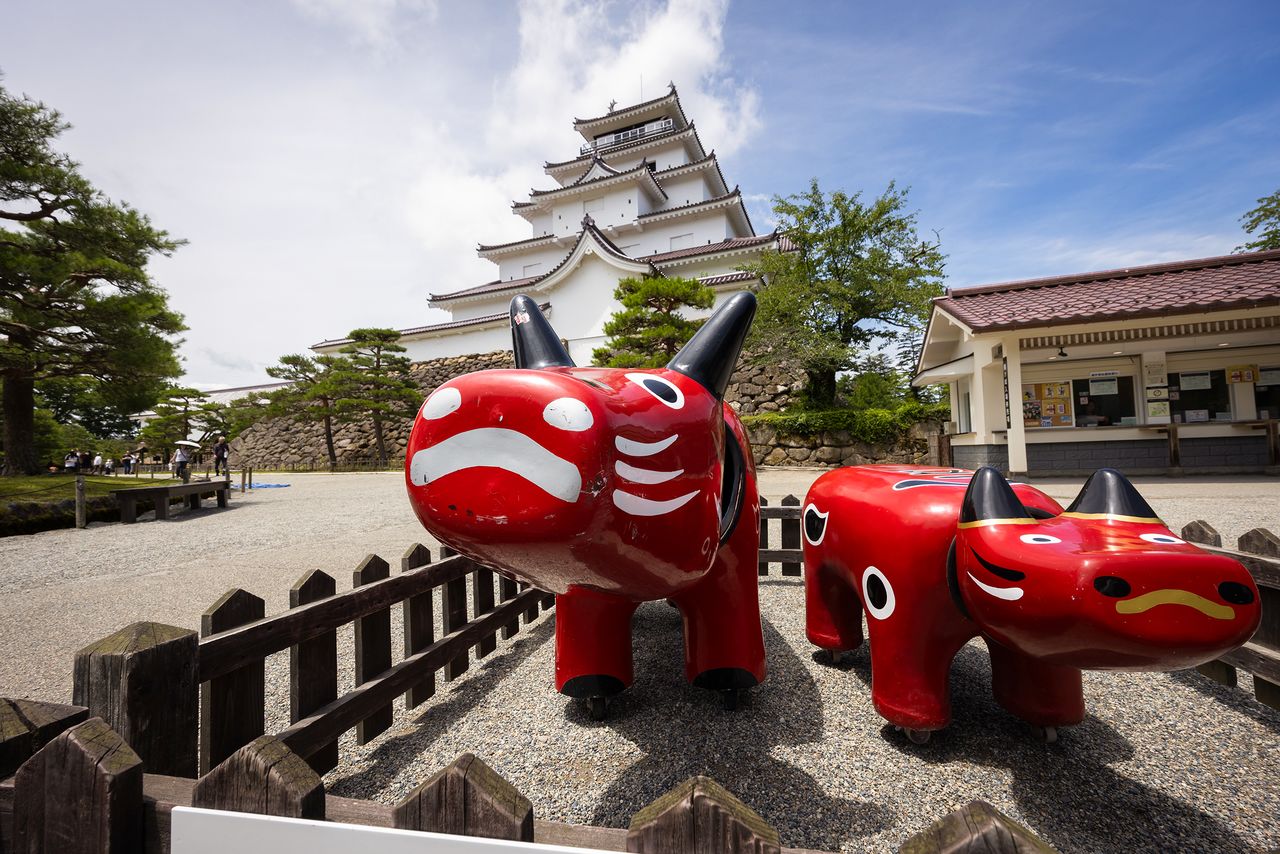
A photo spot in front of Tsuruga Castle. (© Nippon.com)
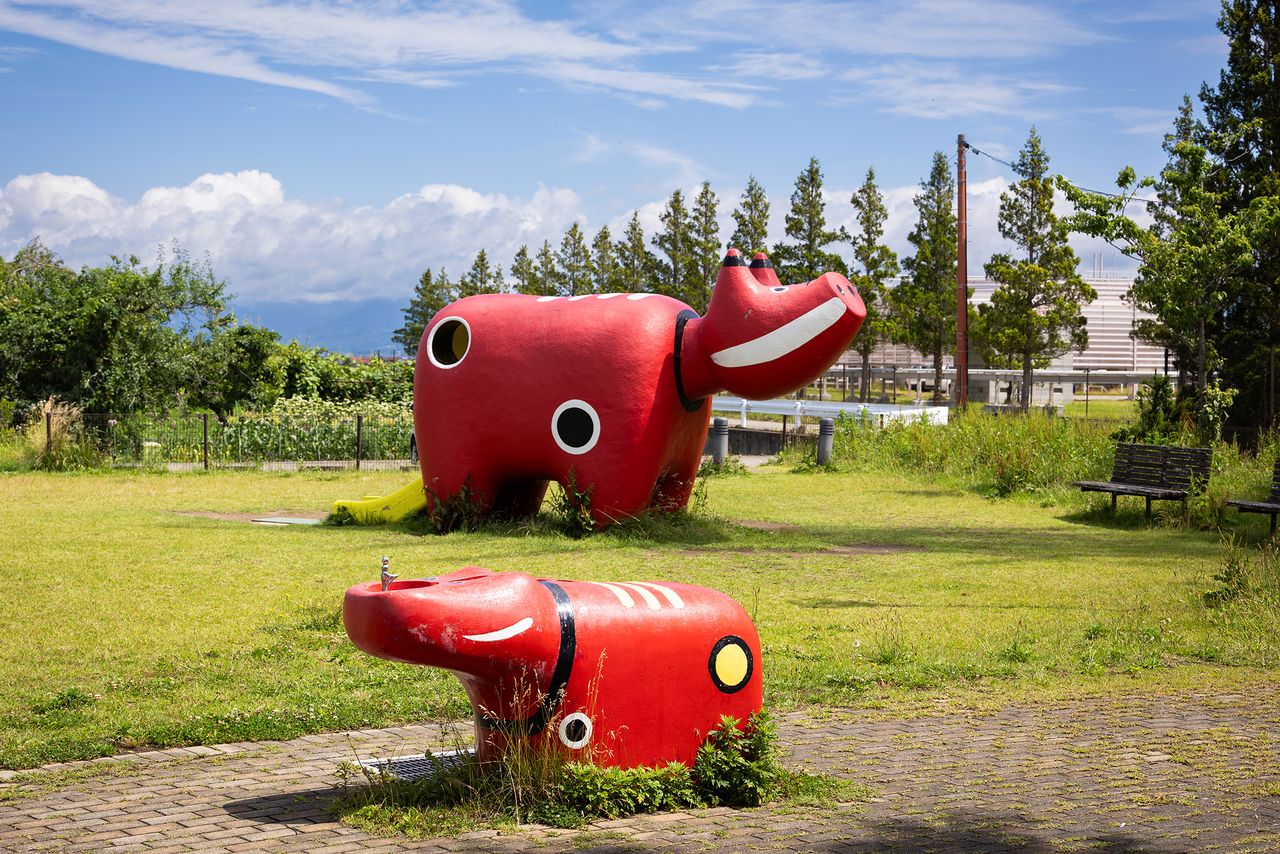
Akabeko Park on the outskirts of Aizuwakamatsu features akabeko-themed playground equipment, including a drinking fountain and slide. (© Nippon.com)
Winning Over a New Generation on Social Media
Once regarded as a rather conventional souvenir, akabeko has found a new following among younger generations as a cute, retro character. With its round eyes and bobbleheaded movement, its endearing appearance is tailor-made for social media. Its popularity has also been boosted by products that take akabeko beyond traditional crafts, reimagining it as a mascot in the form of plush toys, charms, and more.
The Aizuwakamatsu souvenir wholesaler Meisei Kikaku has embraced the trend with akabeko merchandise in a wide range of colors, not just the traditional red. A piggy bank sold as a local “capsule toy” in coin-operated vending machines became a major hit after its April 2023 launch, selling more than 100,000 units as fans sought to collect every color. A second series with new colors and a third featuring metallic finishes have also proved popular. In April 2026, the company launched three-dimensional resin stickers just as decorating and trading stickers was surging in popularity. The stickers, which can be used to decorate planners, smartphones, and other items, sold out all 36,000 units in just over two months.
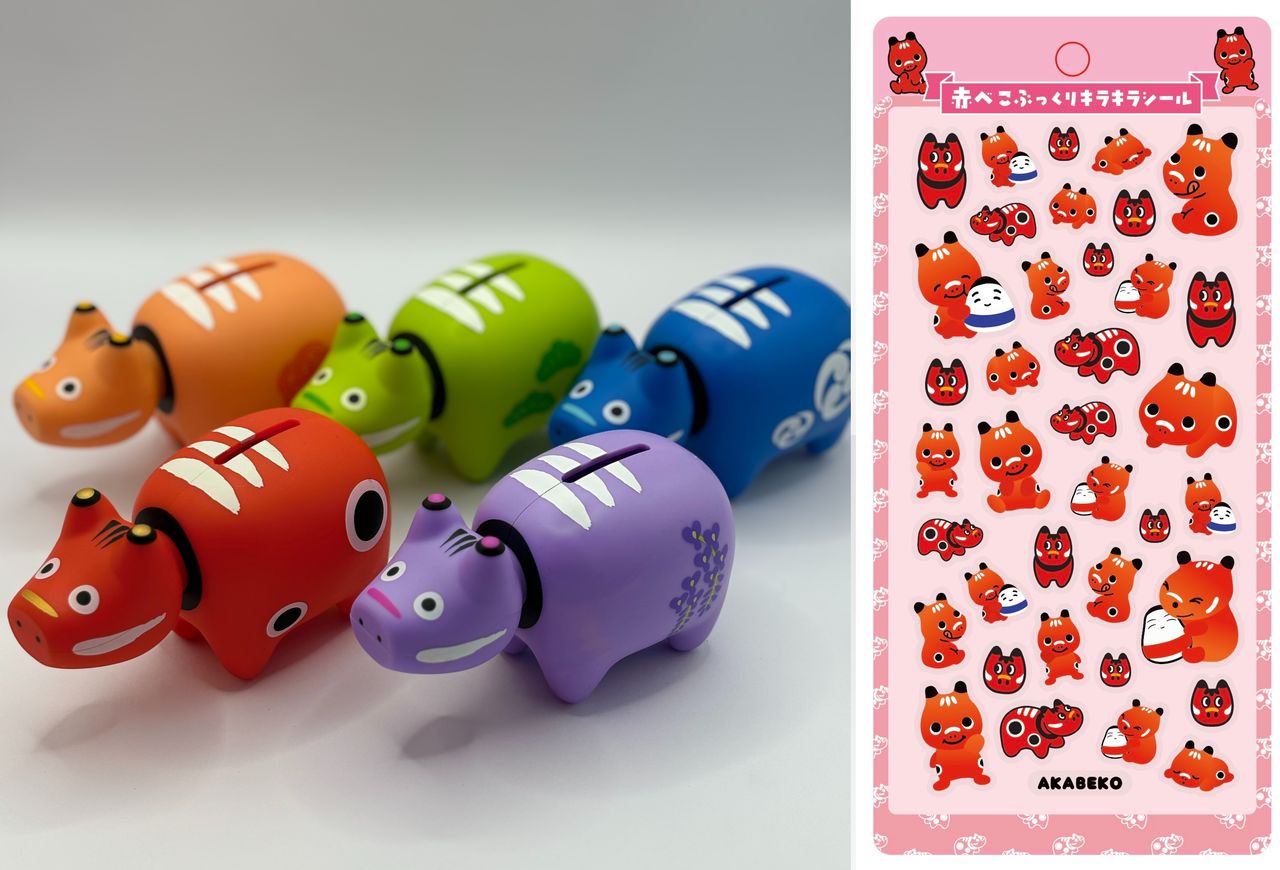
The colorful akabeko piggy banks (left) and 3D resin stickers that became bestsellers. (Courtesy Meisei Kikaku)
Akabeko Land, a tourist attraction in Aizuwakamatsu, is helping attract new fans with social media-friendly merchandise, exhibits demonstrating how the crafts are made, and hands-on painting workshops. The painting experience is especially popular with international tour groups and students on school trips. Visitors can decorate a traditional red akabeko or start with a white one and paint it in any colors they like, creating a one-of-a-kind “My Beko” of their own. Finished creations can be carried home on the spot, making it easy to snap photos with a personalized akabeko during the remainder of a Japan tour.
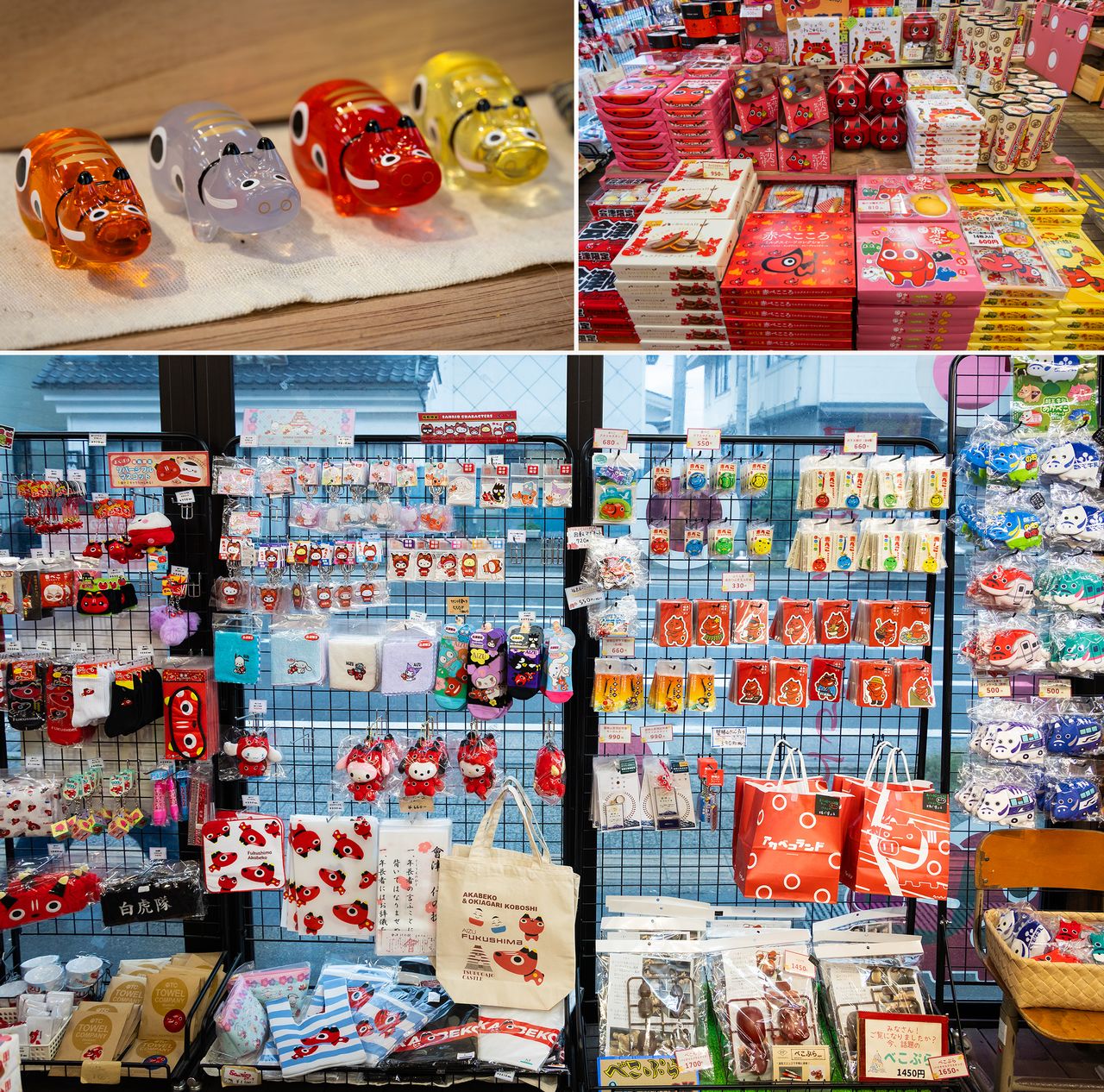
Akabeko Land Iimoriyama offers a wide variety of akabeko-themed items. (© Nippon.com)
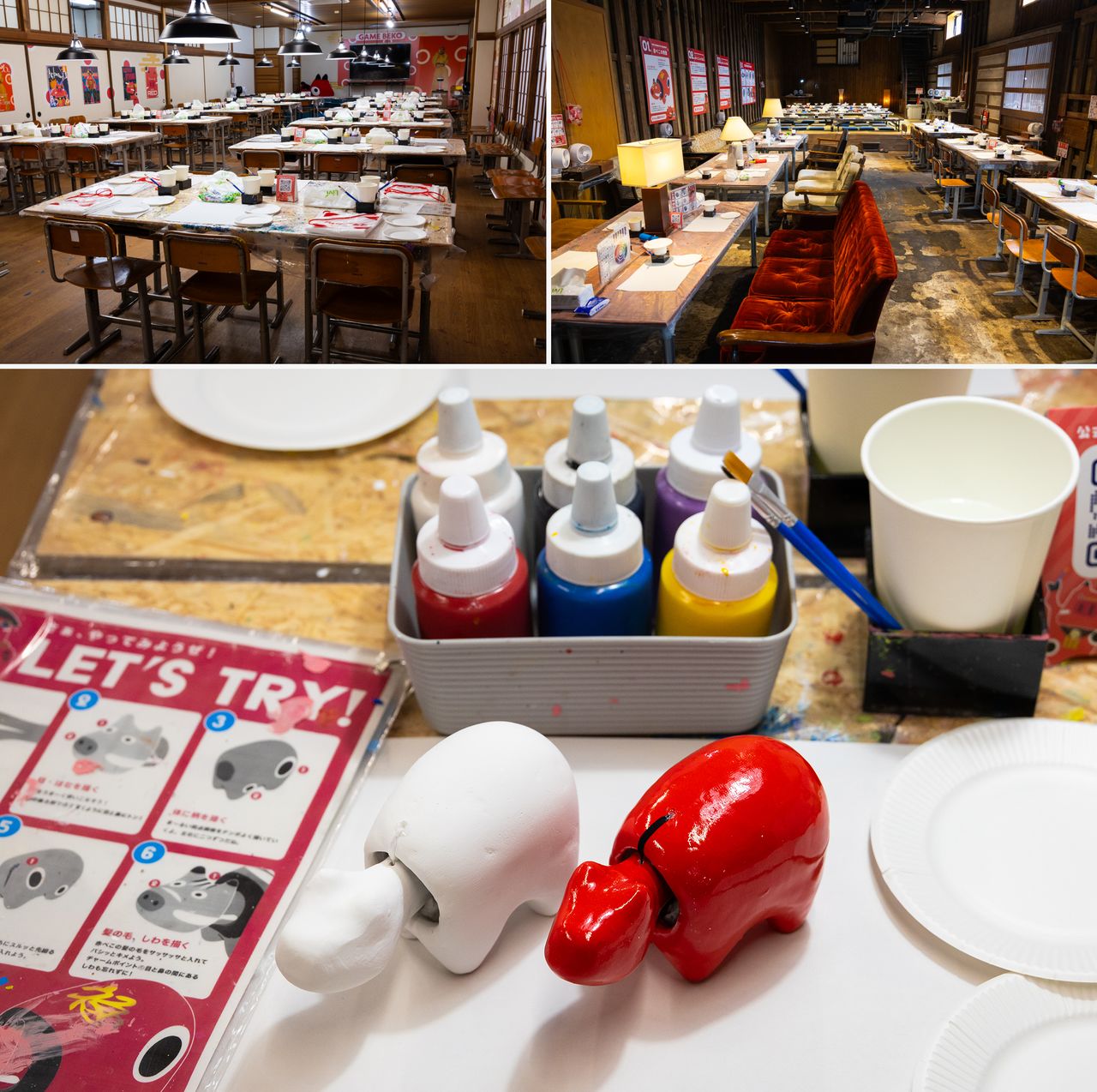
Akabeko painting workshops at the Iimoriyama and Nanokamachi locations (upper right). The white version, which visitors can decorate in any colors they like, is more popular than the traditional red. (© Nippon.com)
The firm’s colorful, playful products have proven popular with younger visitors, but Akabeko Land has deep roots in traditional craftsmanship. Its parent company, Shirakawa Daruma Sōhonpo, has been in business for around 300 years and has applied generations of craftsmanship and manufacturing expertise to making akabeko as well as Japan’s famous daruma figures. The facility also displays its own traditionally crafted akabeko, offering visitors a glimpse into the rich heritage behind this folk craft.
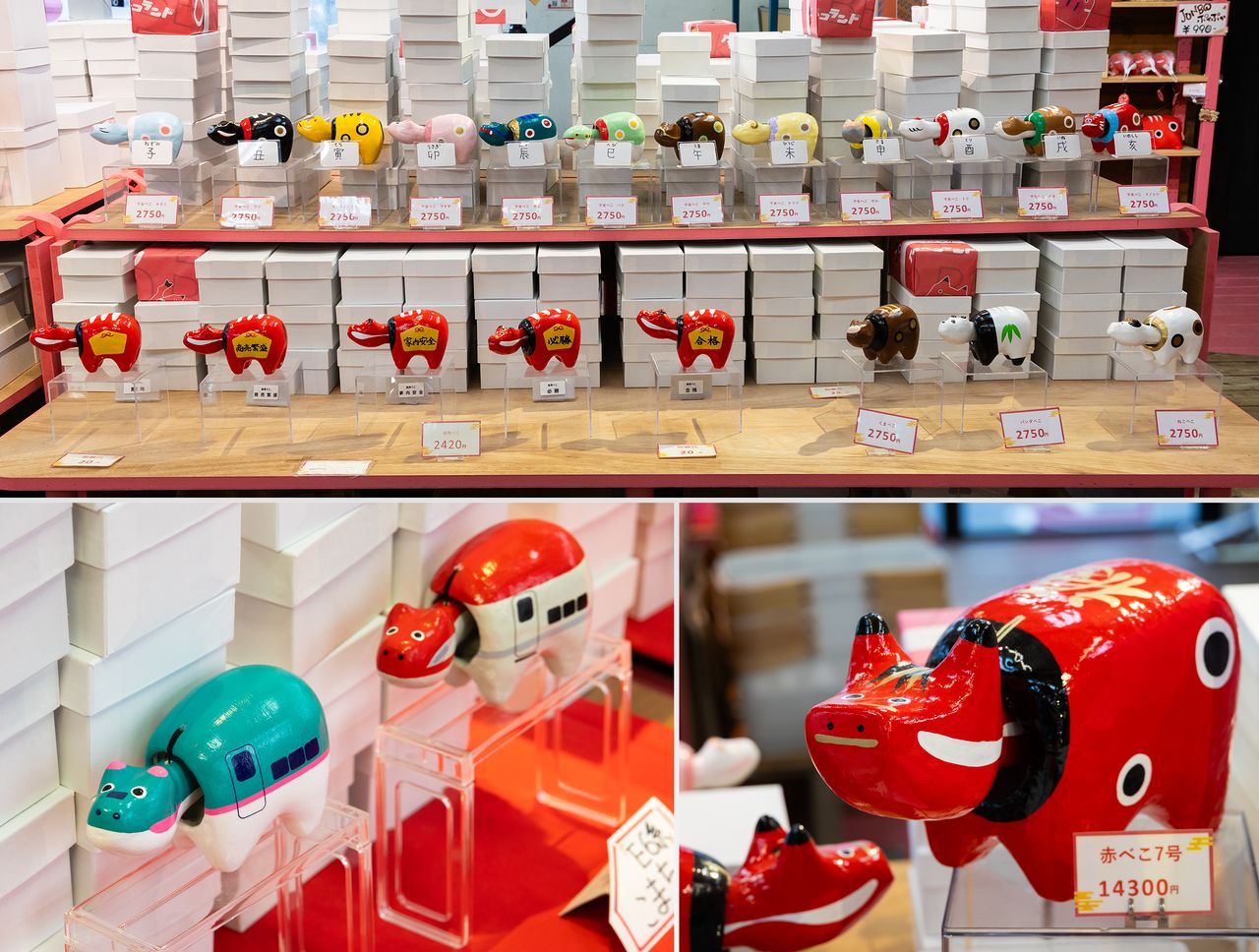
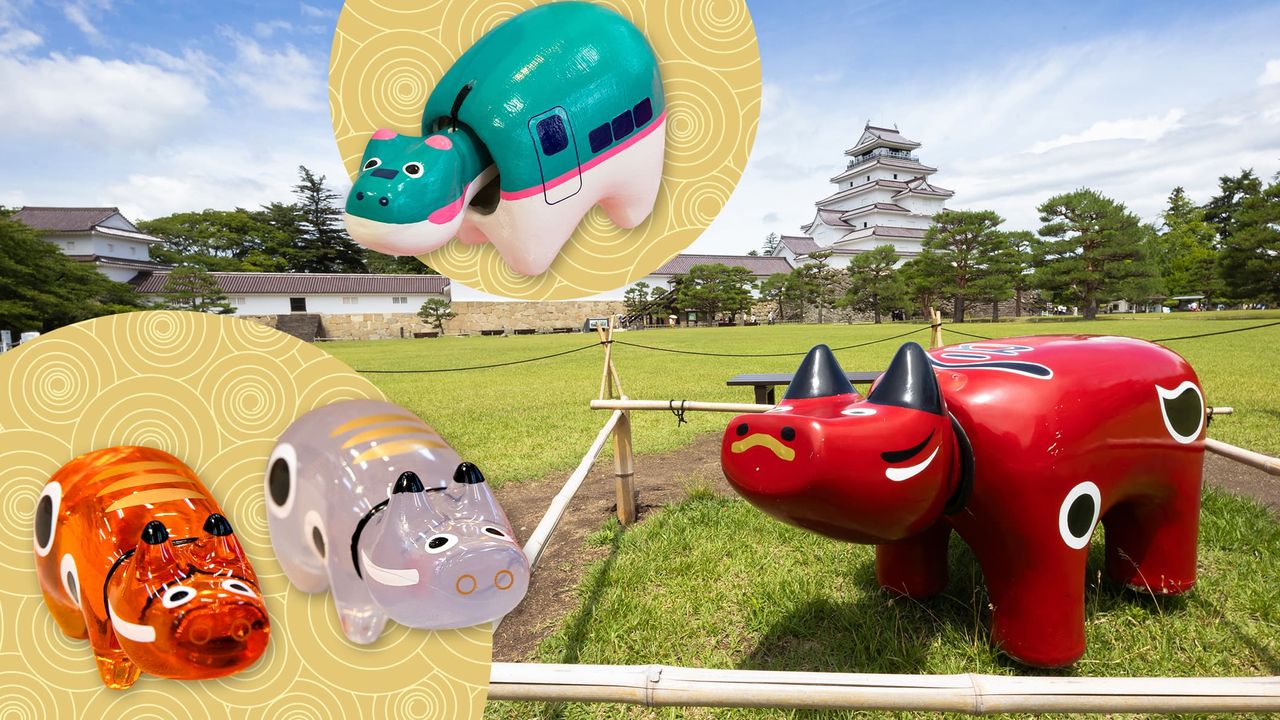
Visitors can also pick up eto-beko, modeled after the animals of the Chinese zodiac (top), as well as Shinkansen-themed akabeko created in collaboration with JR East (lower left). The shops attract many international visitors, particularly from Taiwan, who frequently select the traditional red-and-gold design for its auspicious colors. (© Nippon.com)
Tradition with a Modern Twist
This summer, major printing company Dai Nippon Printing launched its new AN-Ippon brand and began selling akabeko in North America in collaboration with the globally popular anime Naruto. The project aims to introduce crafts from all across Japan to overseas audiences through partnerships with popular anime franchises, with akabeko chosen as the first product line.
The akabeko continues to evolve while staying true to its traditional roots. As a comforting and endearing symbol of Aizu, it now brings smiles not only to locals and visitors to the region, but also to anime and character fans around the world.
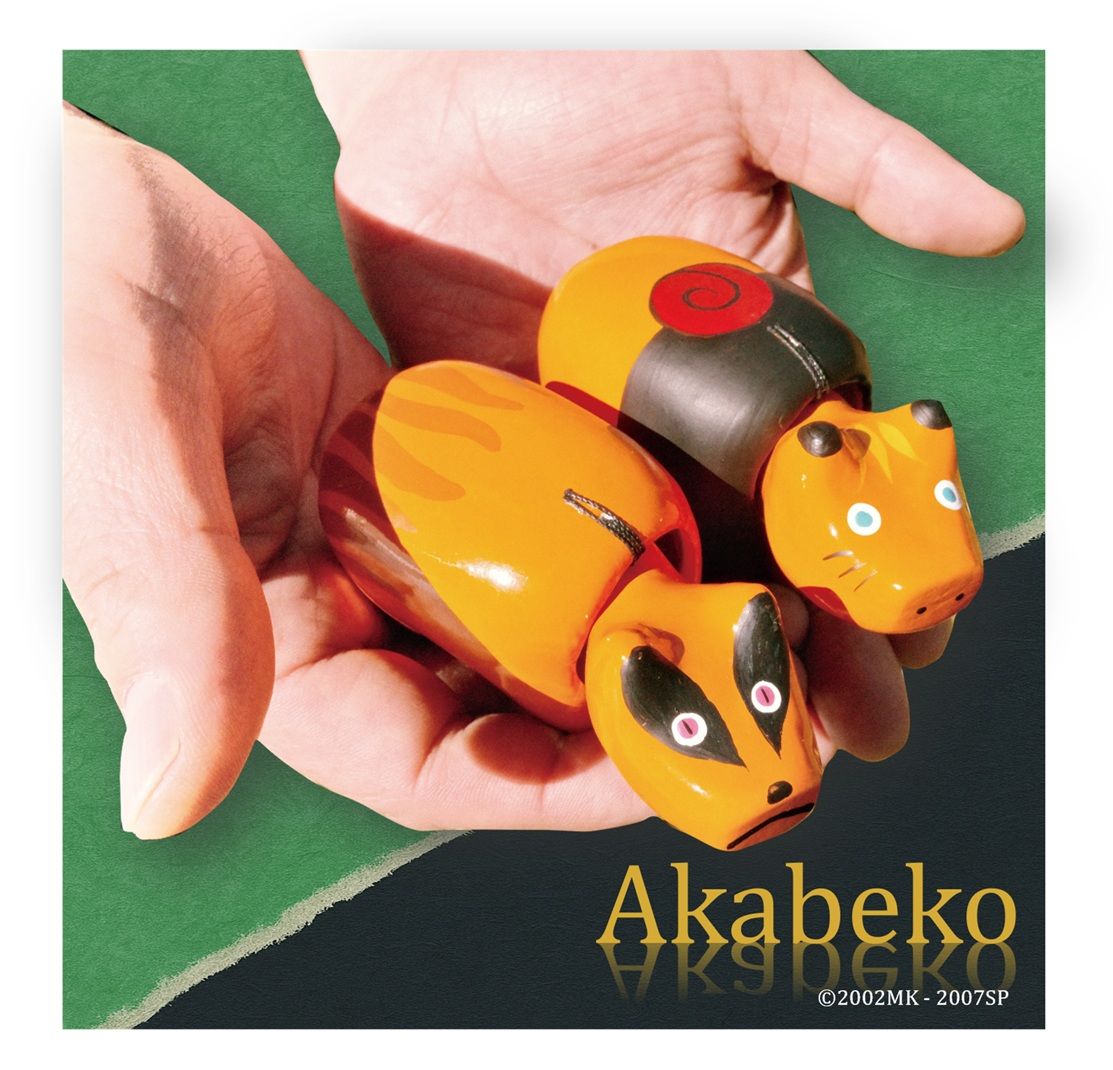
A Naruto collaboration akabeko handcrafted by artisans in Aizu. (Courtesy Dai Nippon Printing)
(Originally published in Japanese. Banner photo: The photo spot before Tsurugajō Castle Park and original merchandise [insets] from Akabeko Land. © Nippon.com.)