Aizu-Wakamatsu’s Tsurugajō Castle: Where the Samurai Era Ended
Guideto Japan
Travel History Architecture- English
- 日本語
- 简体字
- 繁體字
- Français
- Español
- العربية
- Русский
A Stunning Contrast of Red and White
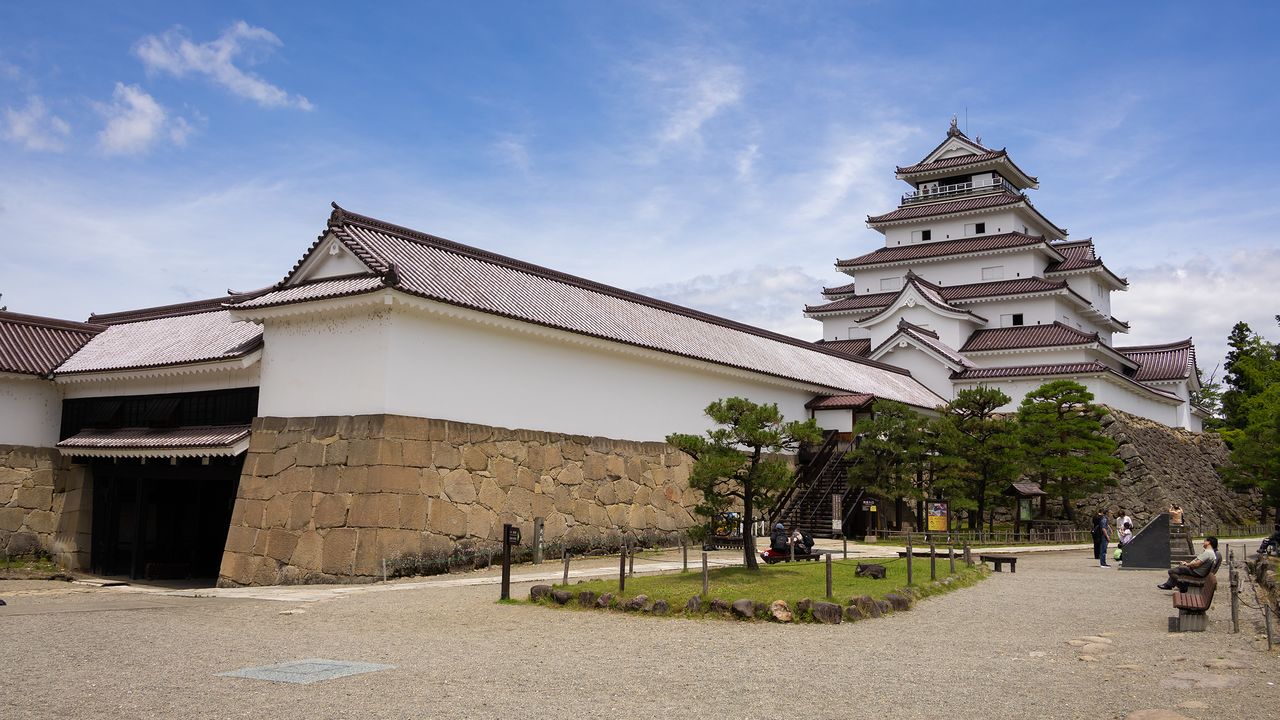
Tsurugajō, the pride of Aizu-Wakamatsu, is the only castle in the country with red roof tiles, which contrast beautifully with its white plaster walls. Originally built as a fortification during the Middle Ages, it was expanded into a full-fledged castle, complete with a keep, during the rule of Toyotomi Hideyoshi in the sixteenth century. The castle was renamed Tsurugajō and the castle town was given the name Wakamatsu. The keep originally had black walls and black roof tiles, and the castle’s name, evoking white cranes (tsuru), apparently has no connection with its original appearance.
The castle’s red roof was adopted in 1648, after tiles coated with an iron-rich glaze were introduced to deal with cracking caused by freezing due to the region’s snowy winters. This was done for both esthetic and practical reasons and helped make the castle one of the most prominent in Tōhoku, the northern region of the main island of Honshū.
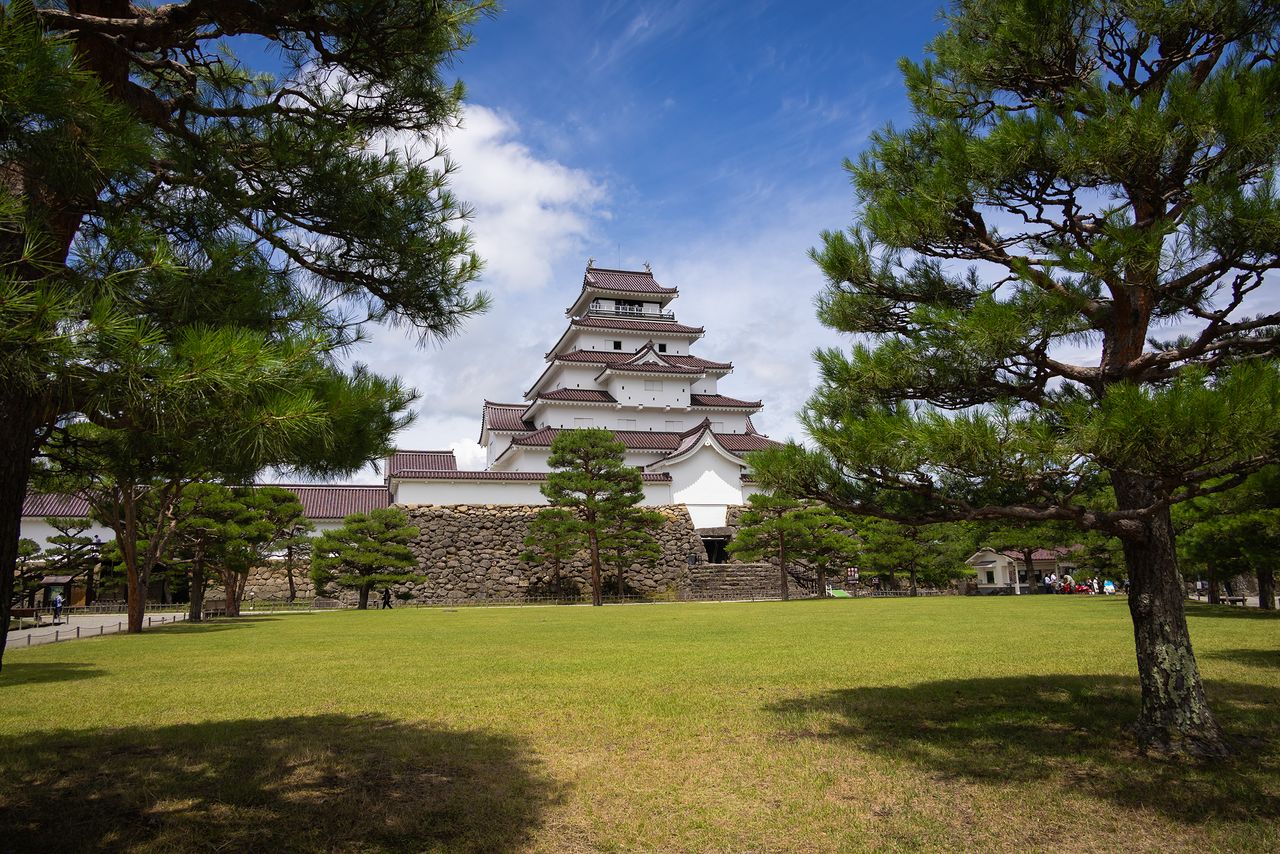
Sweeping views of green lawns and pine trees in the park on the castle grounds. (© Nippon.com)
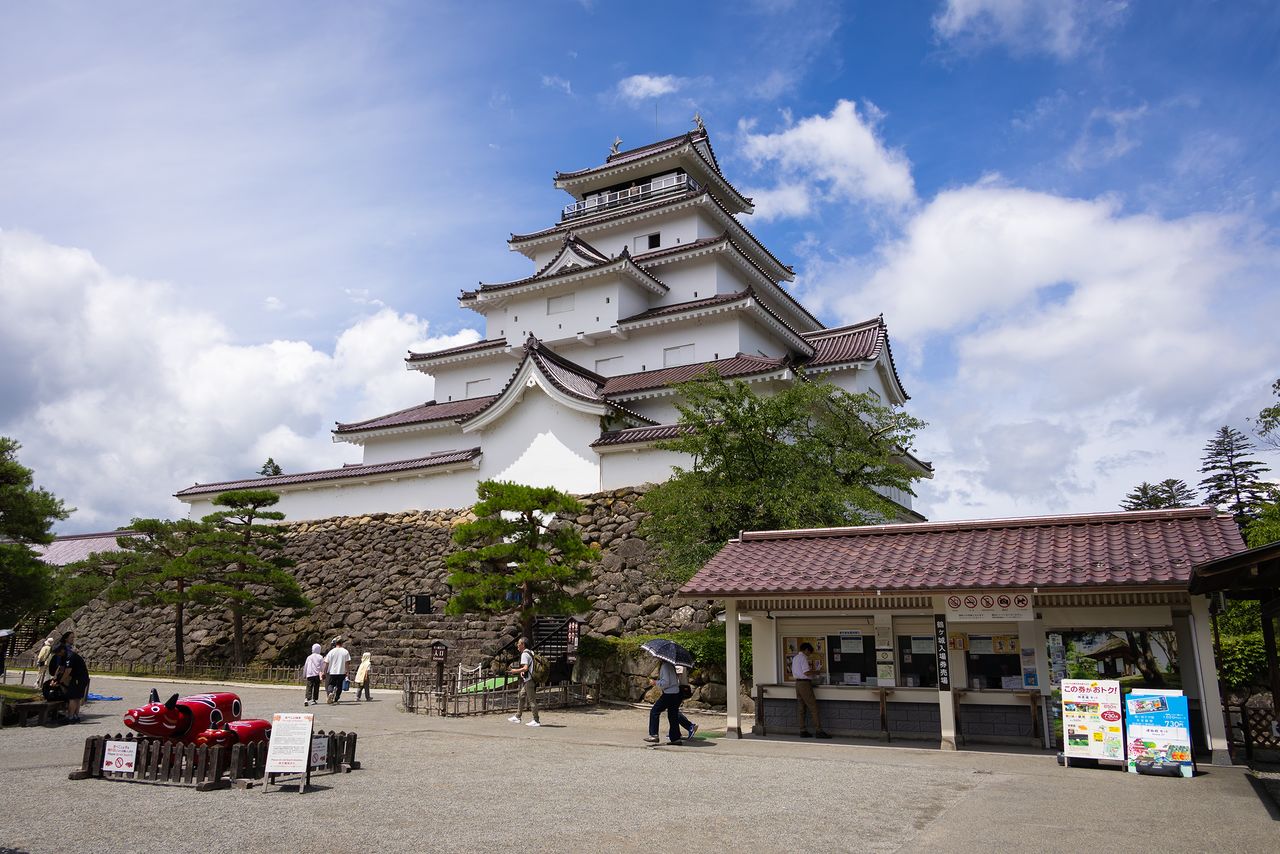
Visitors can be photographed with a pair of akabeko (bright red cows with bobbing heads), a popular Aizu folk craft item, at the entrance to the keep. (© Nippon.com)
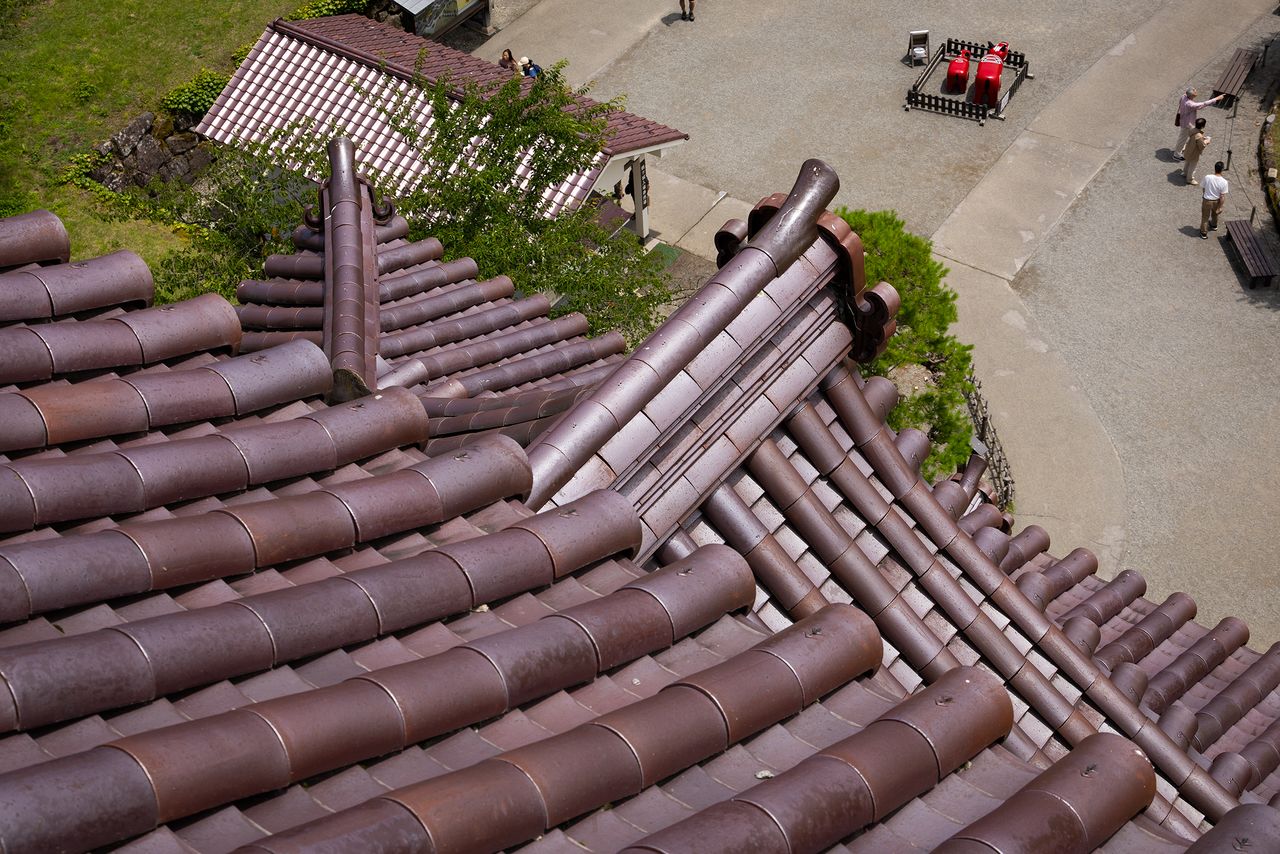
The view from the topmost floor of the keep. The reddish-brown roof tiles were developed to withstand Aizu’s severe winter weather. (© Nippon.com)
The castle structures were demolished in 1874 by order of the new Meiji government. The castle was rebuilt in 1965 as a five-level, six-story ferroconcrete structure, funded by donations from citizens who wished to see it rise again. The roof was refurbished in 2011, with its former red tiles replacing the black ones installed when the castle was rebuilt.
The 22.8-hectare Tsurugajō Castle Park provides recreation for citizens and is a go-to spot for sightseers. The main keep houses a local history museum tracing the castle’s history and documenting, in video and in print, the lives of local notables, including bacteriological researcher Noguchi Hideyo. The castle’s uppermost floor offers panoramic views of the city below.
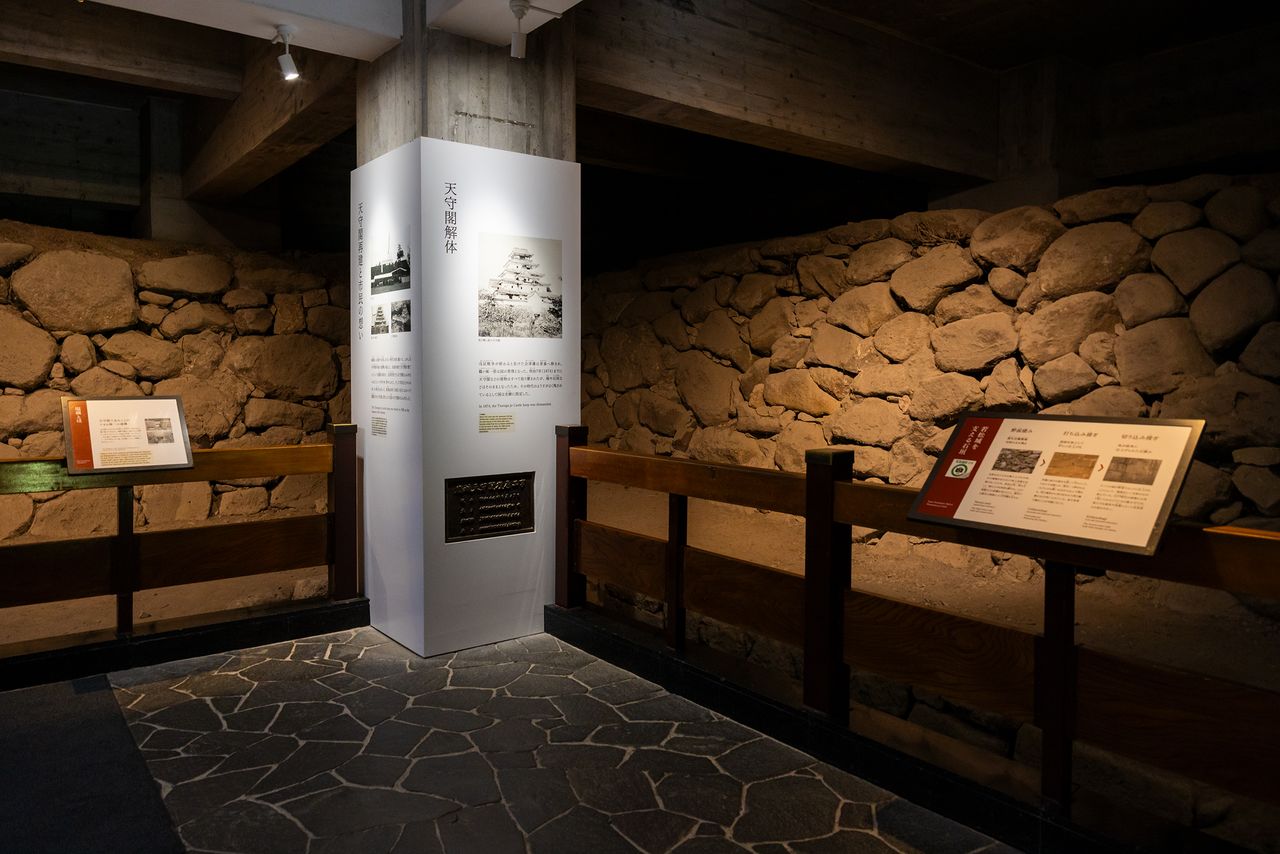
Stone walls surround a storage area under the keep. Aizu being far from the sea, large amounts of salt were stockpiled here. (© Nippon.com)
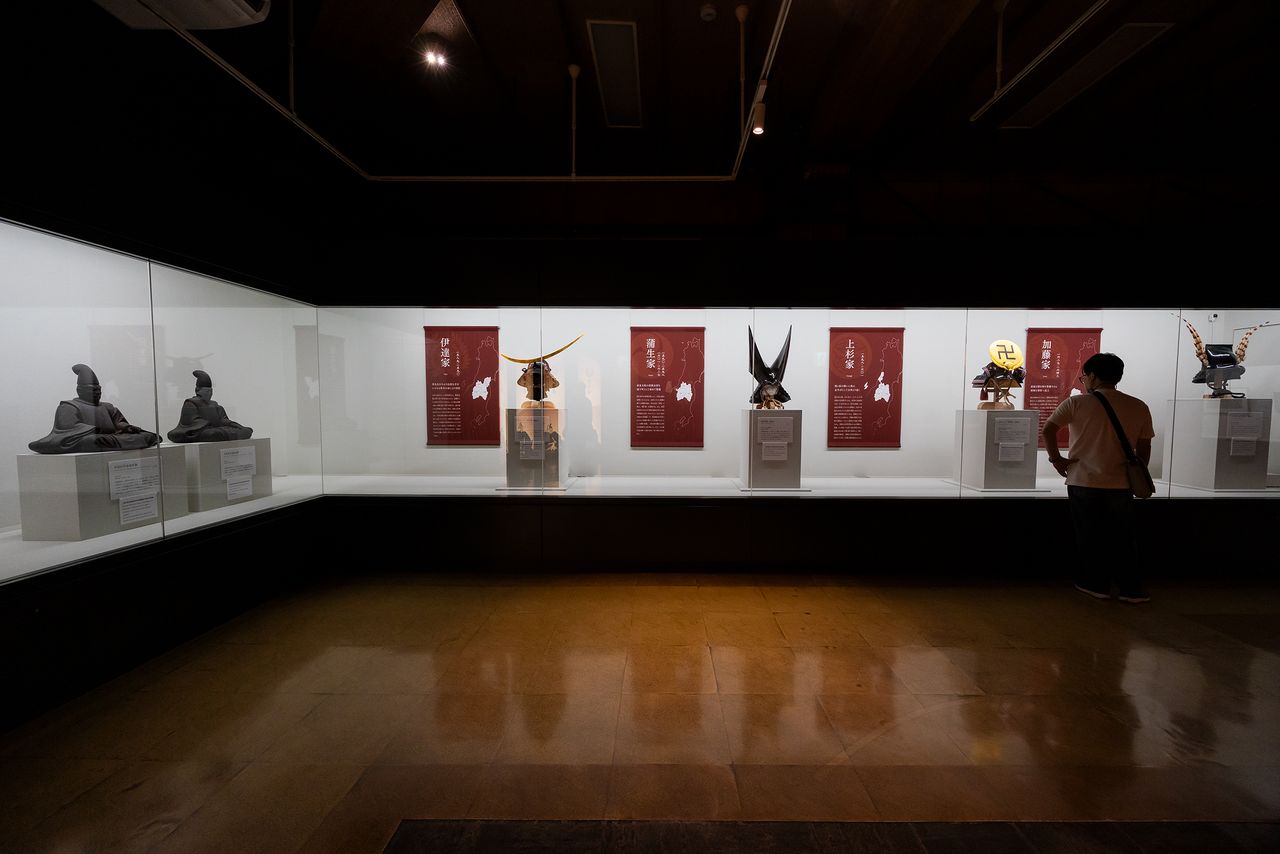
An exhibit of sculptures, reproductions of samurai helmets, and a timeline of the lords of the castle. (© Nippon.com)
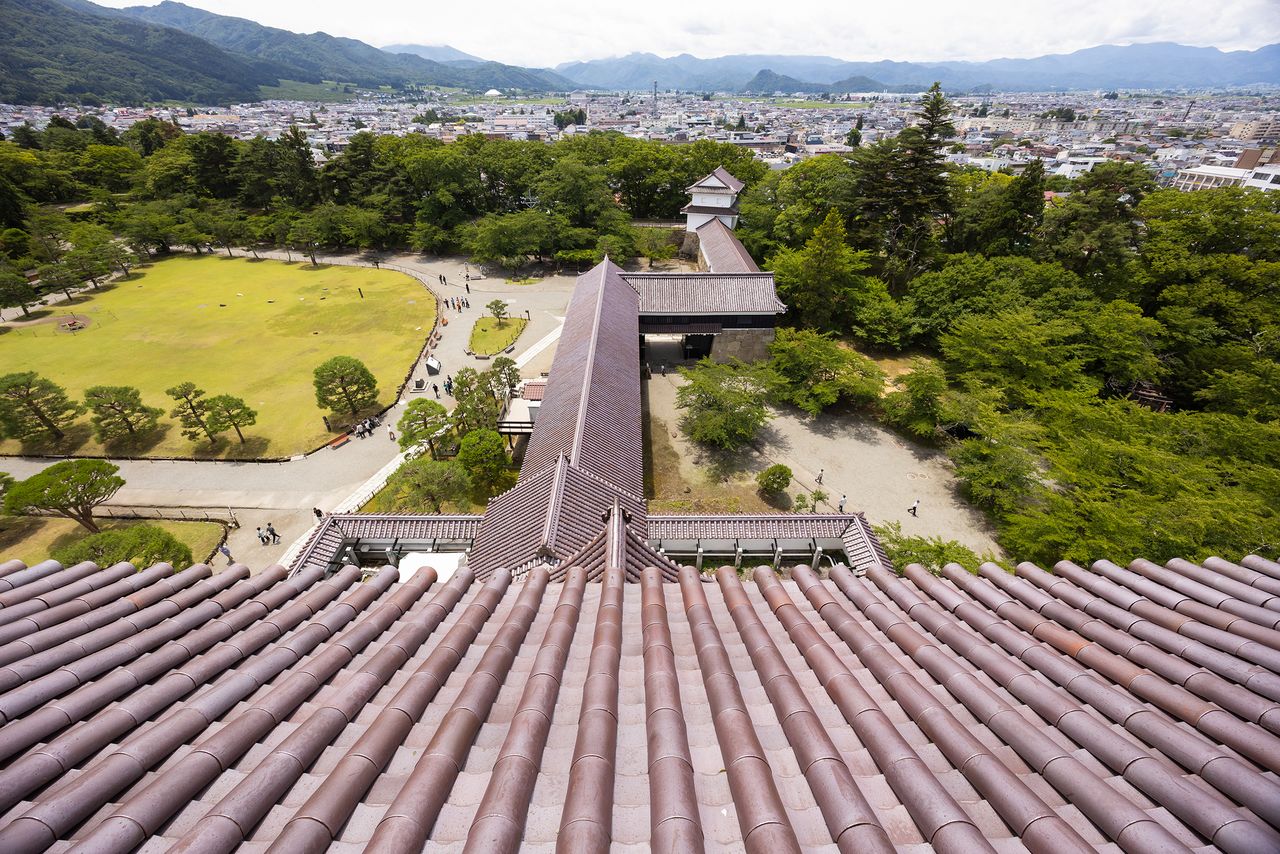
The castle’s barracks, Kurogane Gate, and Hoshii Turret are also roofed in red tiles. (© Nippon.com)
Other sights not to be missed include Kurogane Gate, Hoshii Turret, and the south barracks, which were faithfully reconstructed using wood joinery techniques, based on Edo-period architectural drawings and photos taken in the 1870s, early during the Meiji era. The buildings contain reproductions of military equipment, and digital displays explain the castle’s history.
After seeing the castle, visitors should not miss the Rinkaku teahouse in the park. This teahouse, erected by the son of renowned tea master Sen no Rikyū (1522–91), was reassembled here after having been transferred to another location to save it from destruction when the castle was torn down. Enjoying matcha green tea in the atmospheric Japanese garden is a popular activity among foreign visitors.
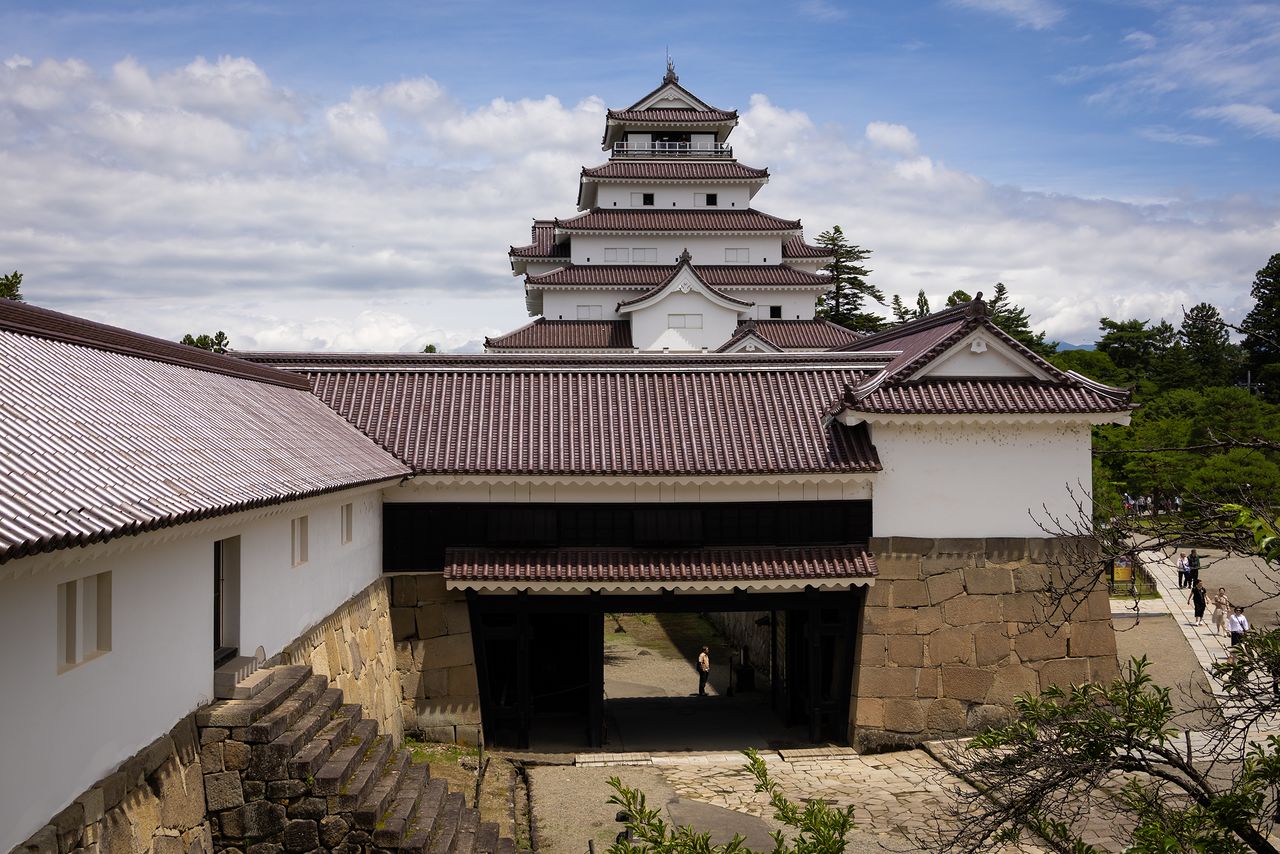
The upper level of the Kurogane Gate is a corridor. (© Nippon.com)
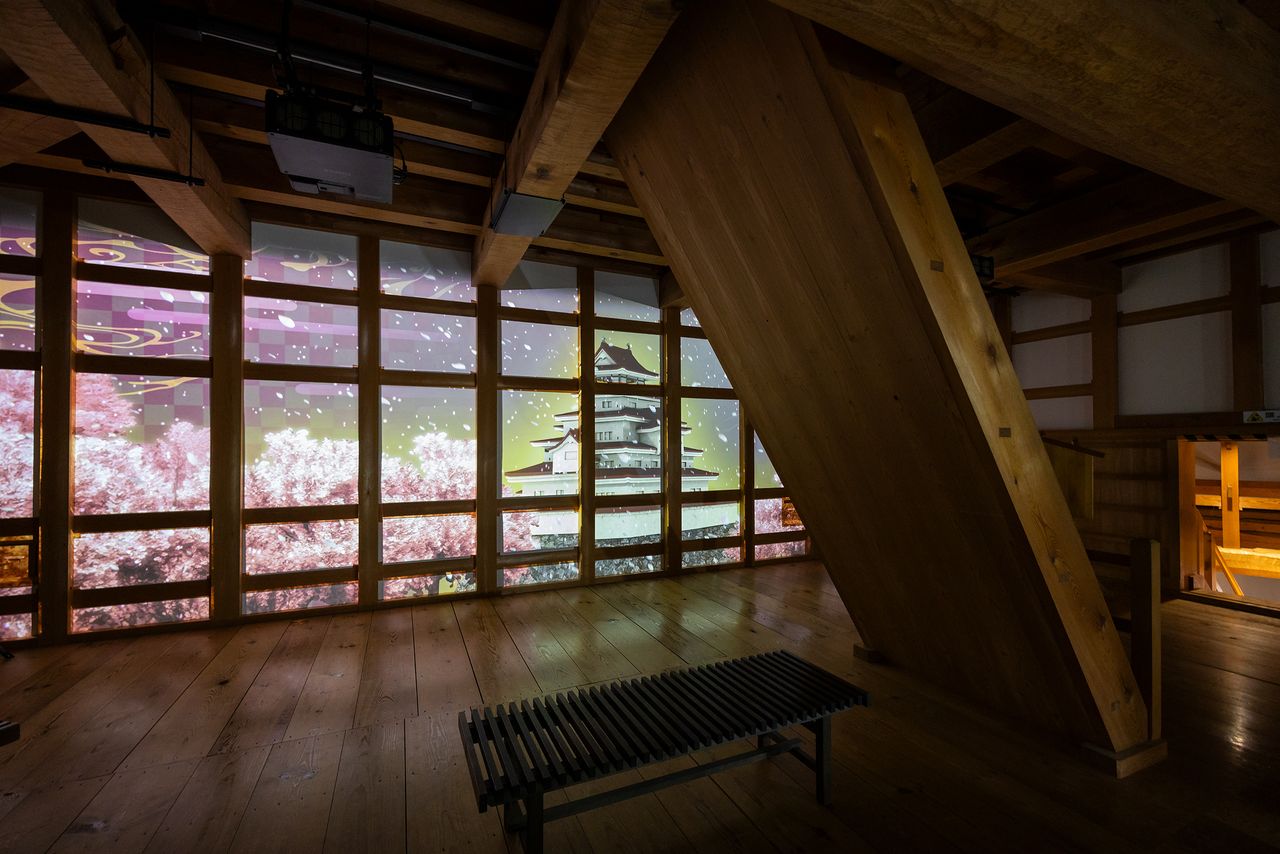
Digital art inside the Hoshii Turret depicts the castle’s history (this installation is on hold until the end of September 2026). (© Nippon.com)
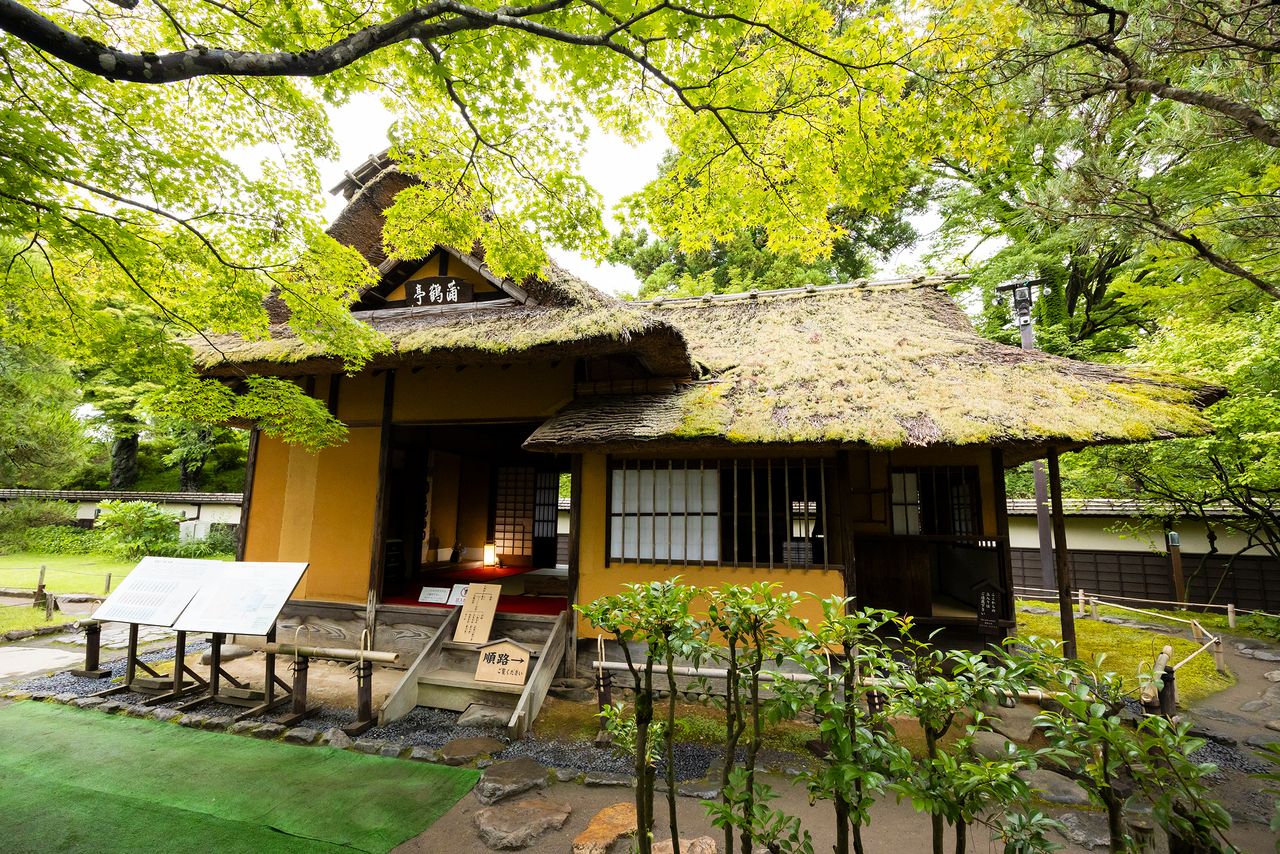
Tea gatherings still take place in this thatched-roof teahouse. (© Nippon.com)
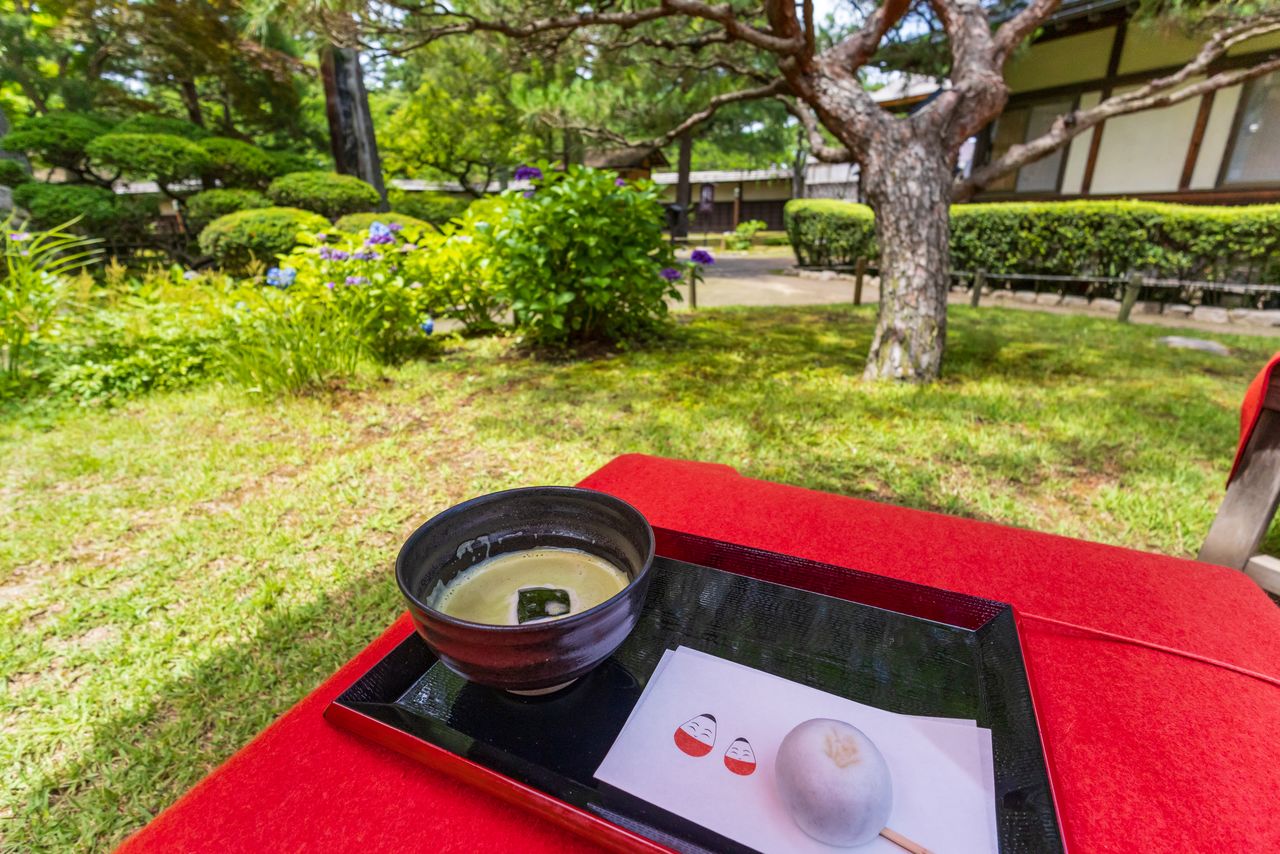
The entrance fee to the teahouse is ¥210, plus ¥600 for matcha and confectionery. (© Nippon.com)
Symbol of the Indomitable Aizu Samurai Spirit
Lords of the castle prior to the Edo period (1608–1868) included powerful samurai Date Masamune (1567–1636), Gamō Ujisato (1556–95), and Uesugi Kagekatsu (1556–1623). In 1643, Hoshina Masayuki (1611–73), the fourth son of the shōgun Tokugawa Hidetada (1579–1632) was appointed lord of the castle. He took the surname Matsudaira and his descendants continued to rule the domain until the shogunate ended in 1868. The family is indelibly linked with the Battle of Aizu, the last major clash in the civil war between shōgun loyalists and imperial forces.
In early 1868, soon after the last shōgun, Tokugawa Yoshinobu (1837–1913), had transferred power back to the emperor, dissatisfaction with this transition among former vassals and clans supporting the shōgun led to civil war with the new government. Matsudaira Katamori (1836–93), ninth daimyō of the Aizu domain and loyal to the shogunate, was reviled as an enemy of the imperial court, and the domain was invaded by the imperial forces. Nearly 5,000 samurai and their families barricaded themselves in the castle, which was mercilessly bombarded by the attackers. During the month-long siege, allies of the Aizu domain capitulated one after the other, and in the end, to save the inhabitants of his domain from being annihilated, Katamori also surrendered unconditionally.
Today’s castle park occupies the former castle grounds, which are bounded by a water moat and high stone walls. Those stone walls, pockmarked with bullets from the attacks, bear silent witness to the stronghold’s tenacity.
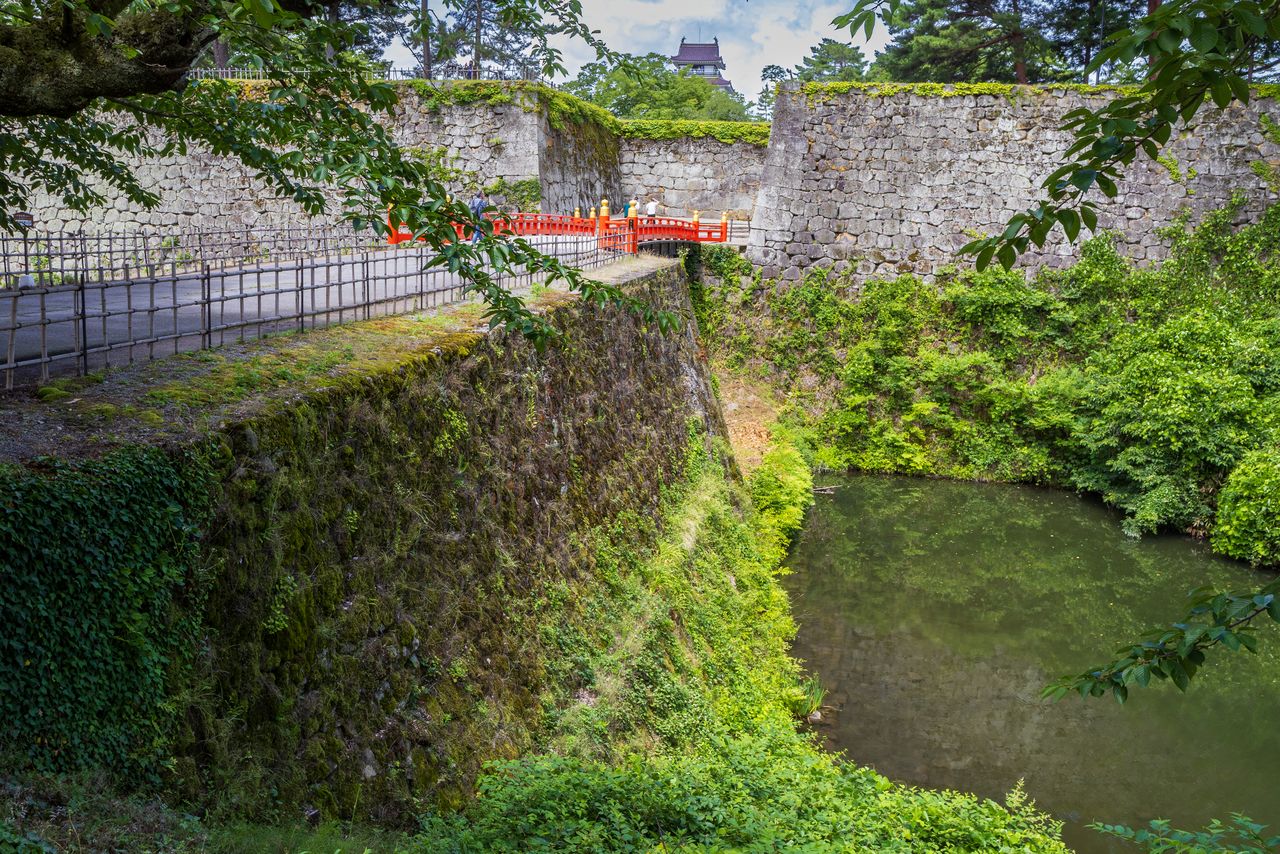
The castle’s entrance is guarded by 19-meter-high stone walls. (© Nippon.com)
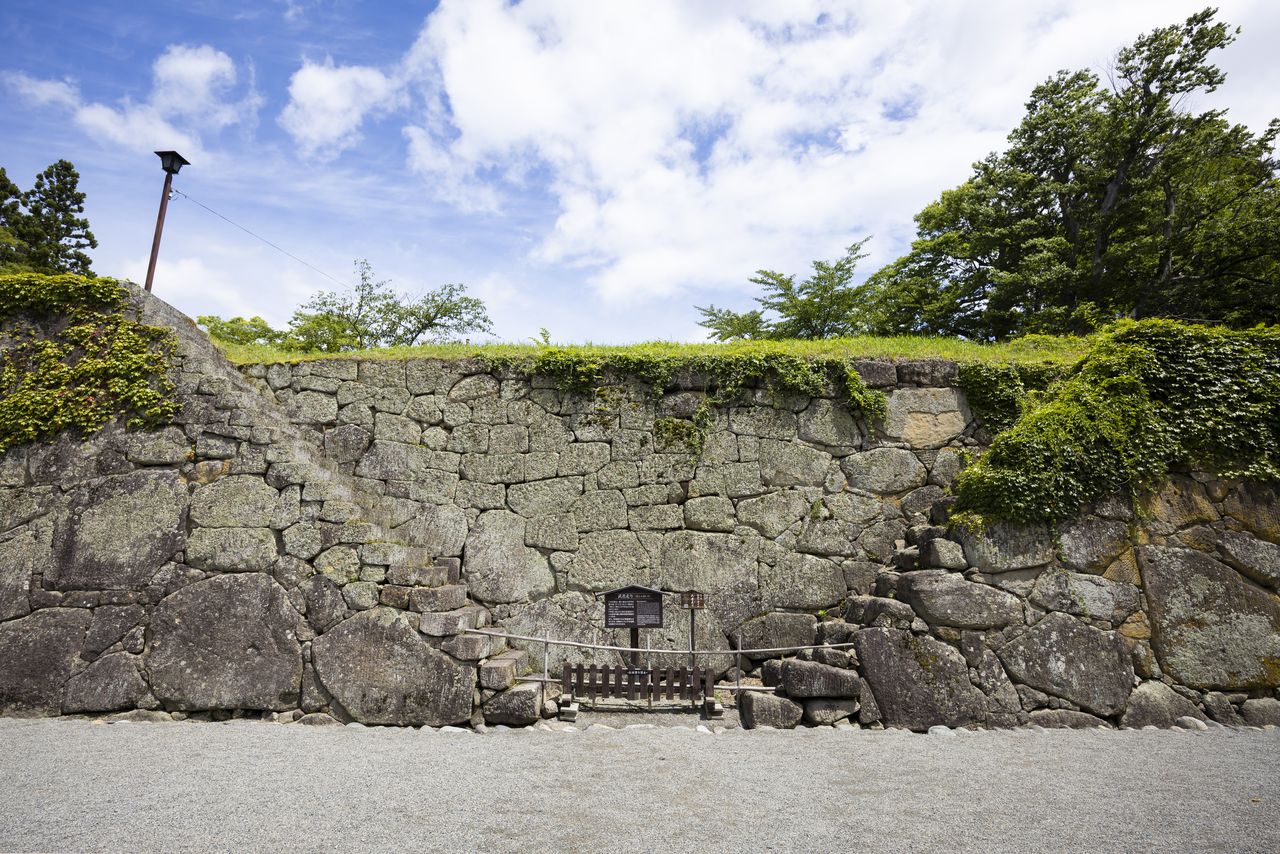
Pockmarks from ammunition fired are still visible here and there in the stone walls. (© Nippon.com)
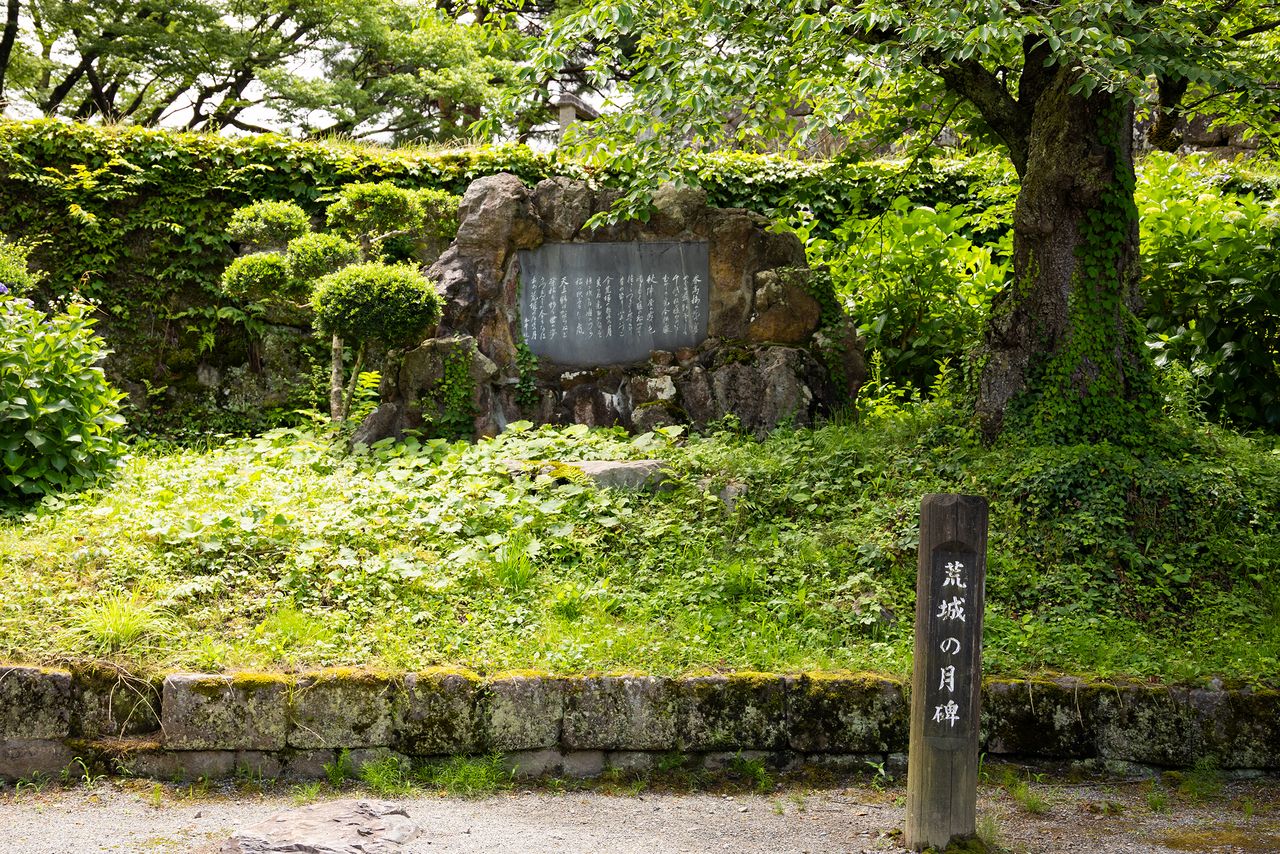
A stone monument to “Kōjō no tsuki” (The Moon over the Ruined Castle), a song composed during the Meiji era whose poignant lyrics were inspired by the ruins of Tsurugajō. (© Nippon.com)
When visiting the Sazaedō, an unusual structure that is a popular attraction on Mount Iimori, tourists should also take time to stop by the site of the Byakkotai White Tiger Brigade’s last stand on the same promontory. Escaping from the castle under siege at the height of the civil conflict, this group of 20 young samurai warriors fled to the top of the mountain. Observing the town going up in flames, they assumed that the castle had fallen and gave up trying to return. Rather than be taken prisoner, they committed ritual suicide. This tragedy has been immortalized in countless novels and films, and the spot remains a place of pilgrimage even today.
Conveying the unquenchable Aizu spirit, Tsurugajō’s scenery is always stunning: blooming cherry trees in spring, brilliantly colored leaves in autumn, and snowy scenes in winter white. Under the soaring castle keep, the site is a fitting memorial to the proud, loyal warriors of Aizu.
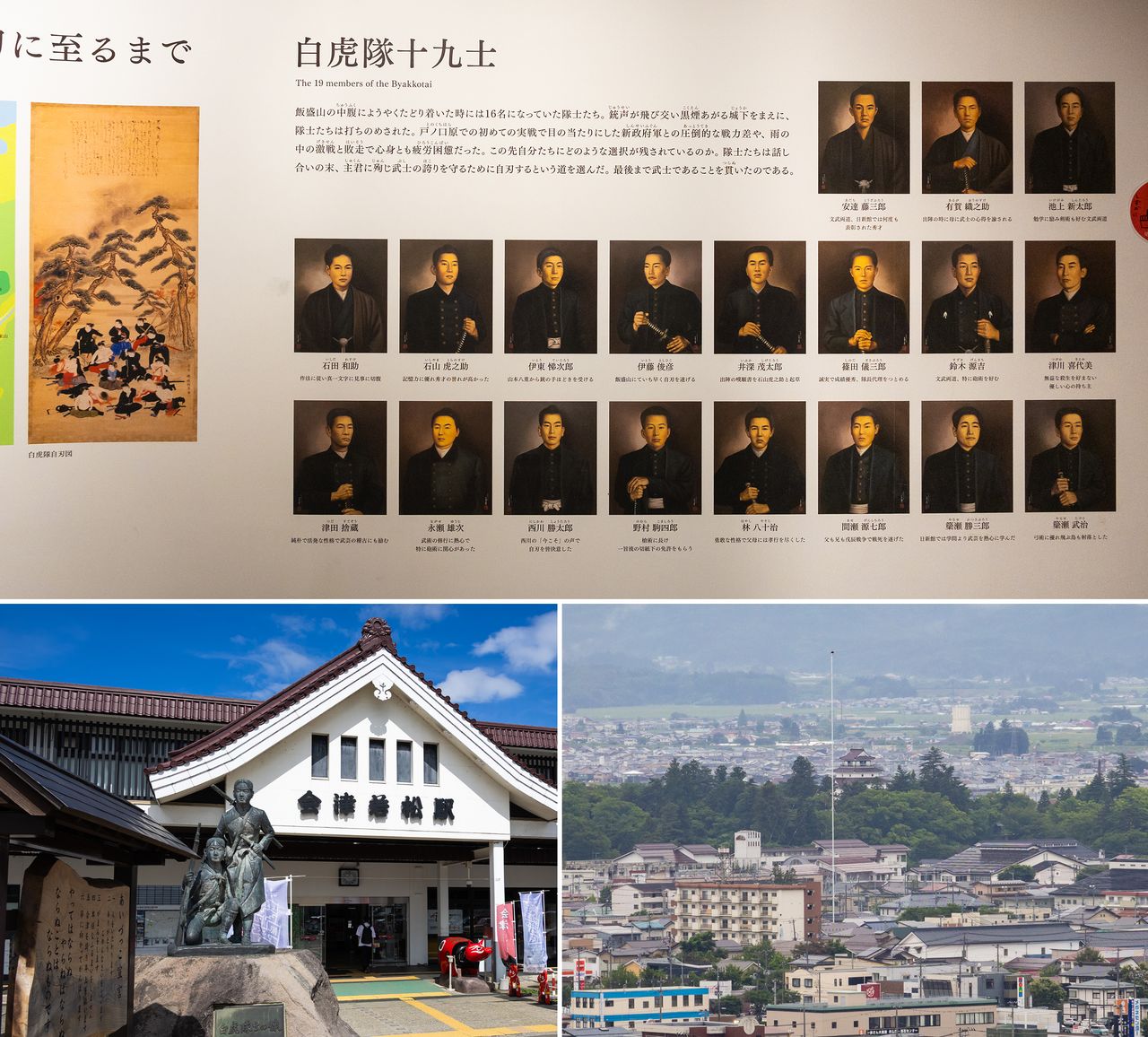
Top: The story of the Byakkotai is recounted in the castle museum. Bottom left: A statue of Byakkotai members stands as a symbol of the city. Bottom right: A view of Tsurugajō from Mount Iimori. (© Nippon.com)
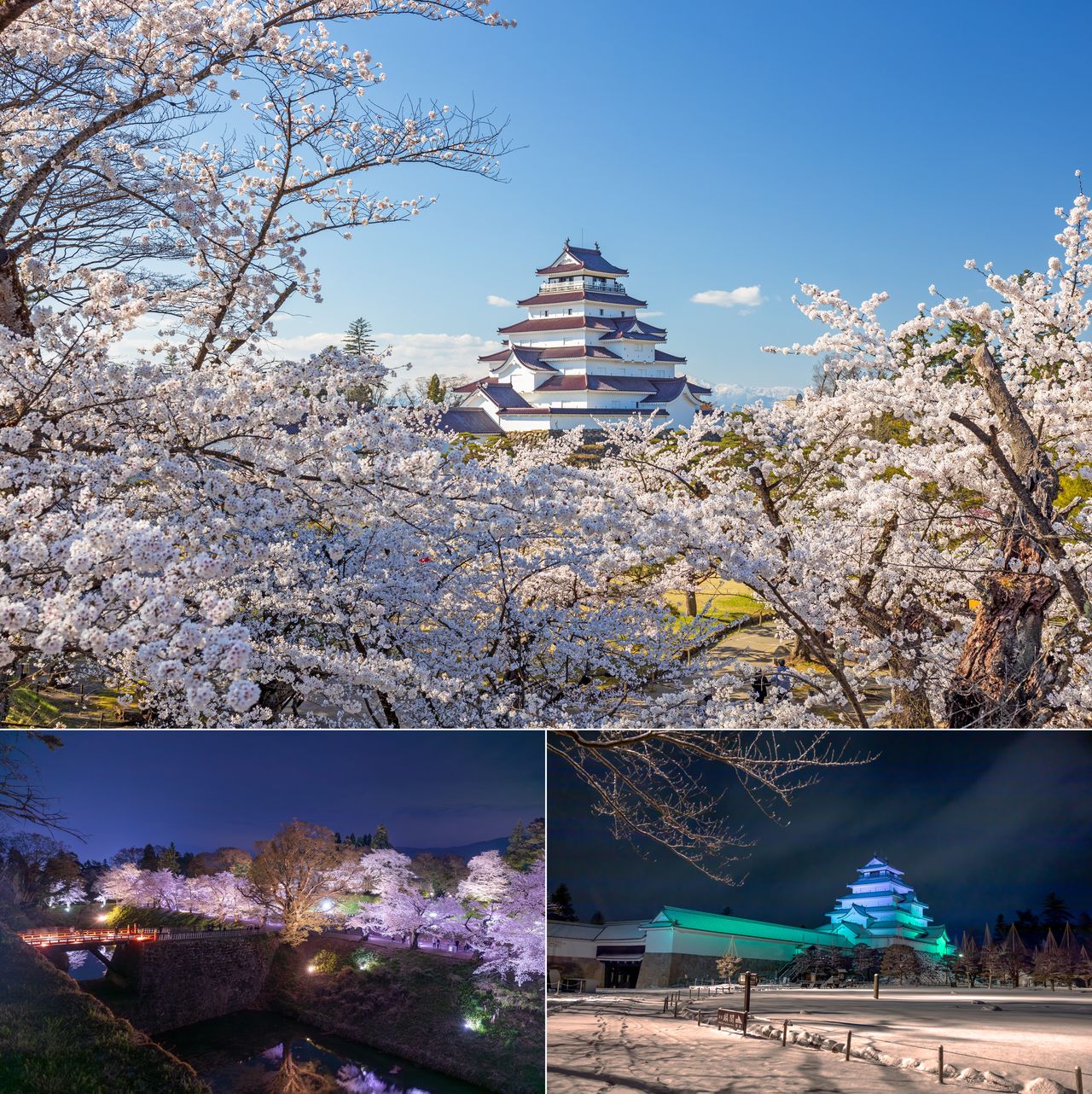
In spring, close to 1,000 cherry trees bloom. The grounds are illuminated in the evenings, and seasonal light shows take place. (© Aizu-Wakamatsu Tourism Bureau)
Tsurugajō (Castle Keep Museum)
- Address: 1-1 Ōtemachi, Aizu-Wakamatsu, Fukushima Prefecture
- Hours: 8:30 am to 5:00 pm (last entry 4:30 pm)
- Open: Year-round
- Entrance fees: Adults, ¥410; children aged 6 through 15, ¥150. Combined ticket including entry to the Rinkaku teahouse ¥520
For details, visit the castle’s official website.
(Originally published in Japanese. Reporting and Text by Nippon.com.)