-
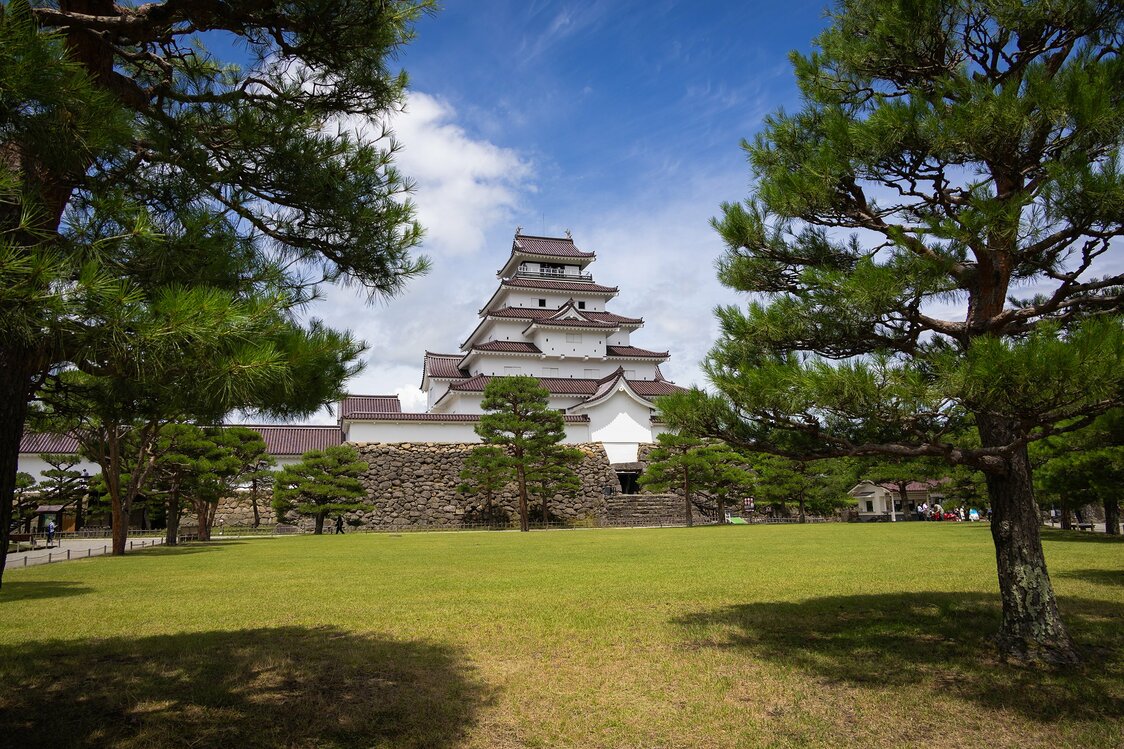
Sweeping views of green lawns and pine trees in the park on the castle grounds. (© Nippon.com)
-
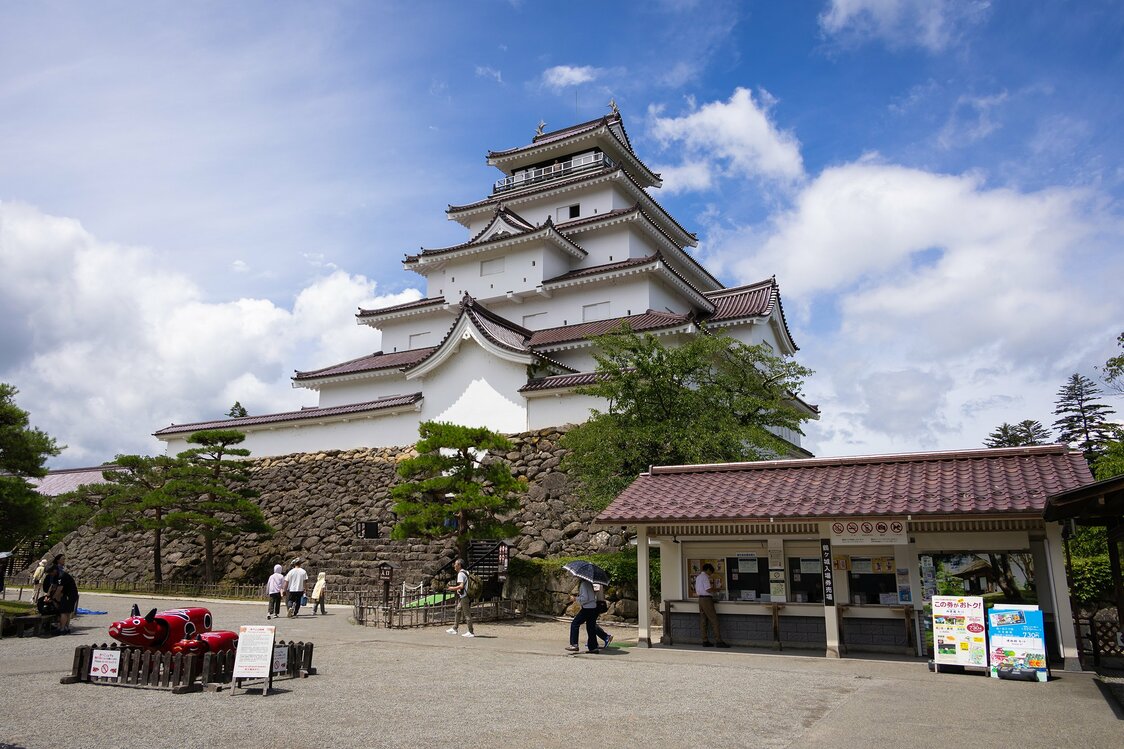
Visitors can be photographed with a pair of akabeko (bright red cows with bobbing heads), a popular Aizu folk craft item, at the entrance to the keep. (© Nippon.com)
-
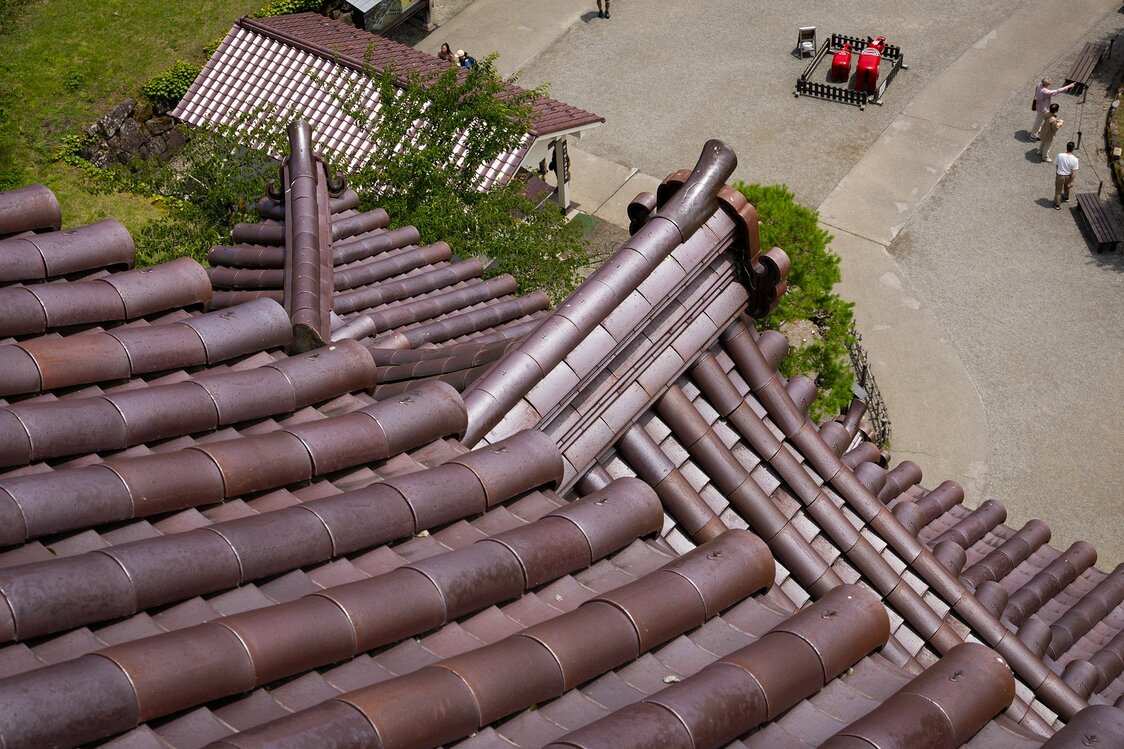
The view from the topmost floor of the keep. The reddish-brown roof tiles were developed to withstand Aizu’s severe winter weather. (© Nippon.com)
-
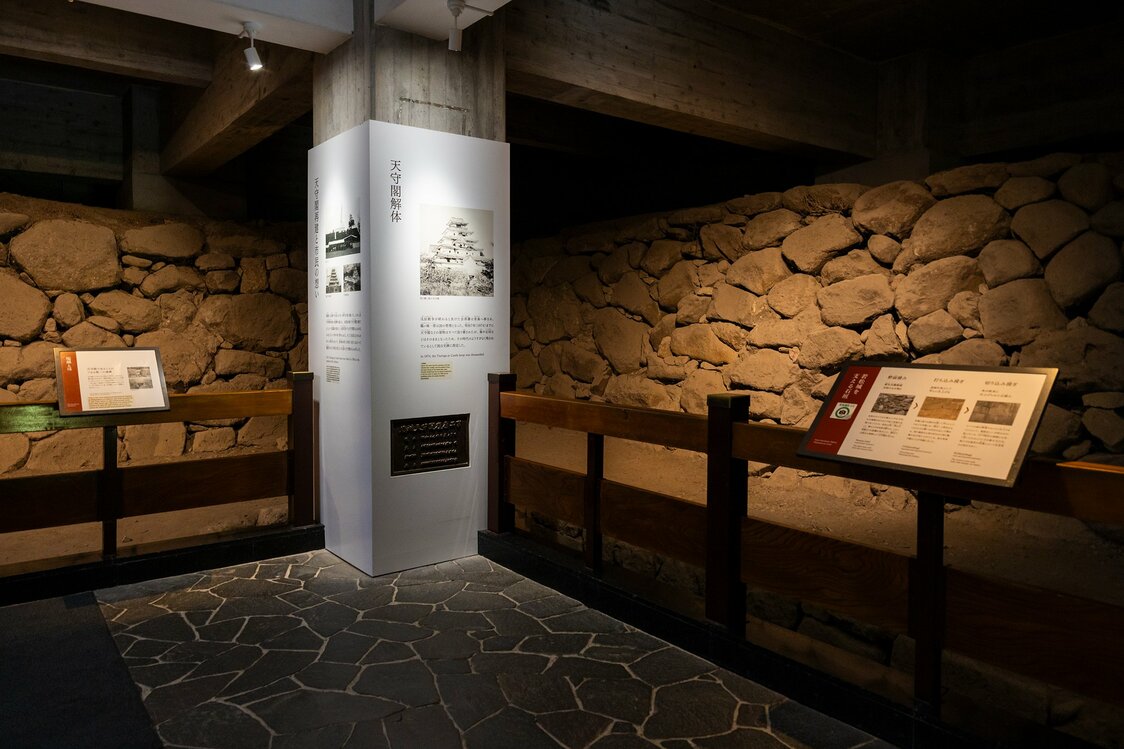
Stone walls surround a storage area under the keep. Aizu being far from the sea, large amounts of salt were stockpiled here. (© Nippon.com)
-
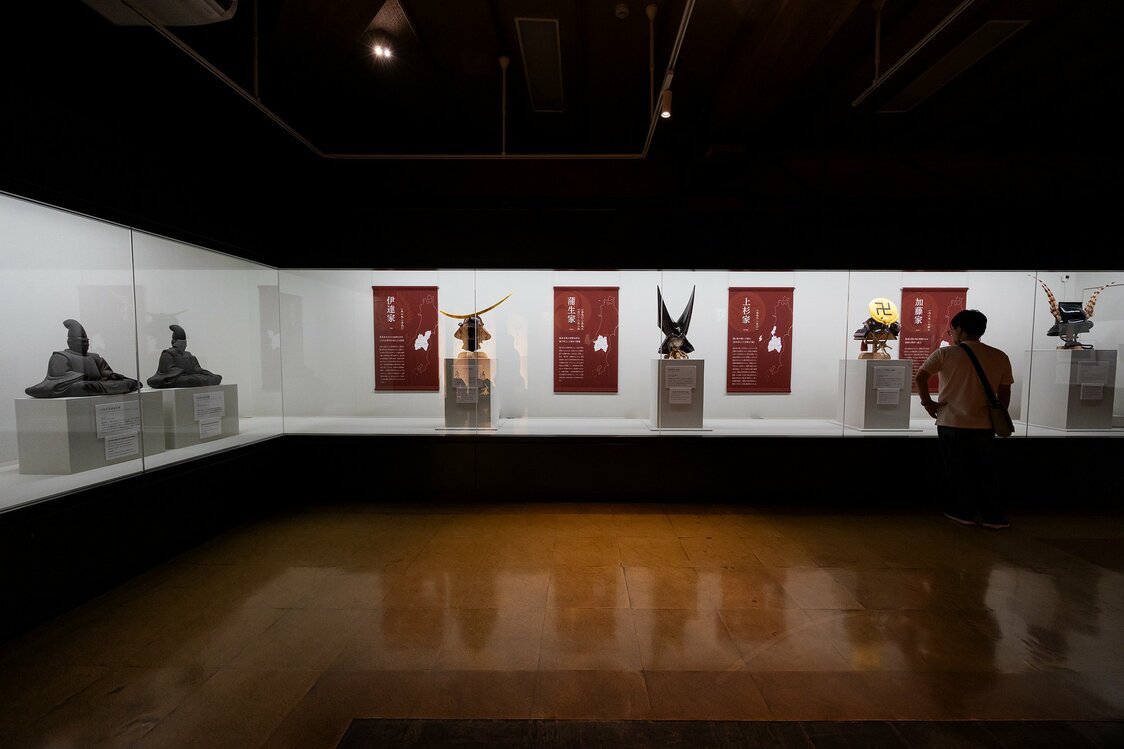
An exhibit of sculptures, reproductions of samurai helmets, and a timeline of the lords of the castle. (© Nippon.com)
-
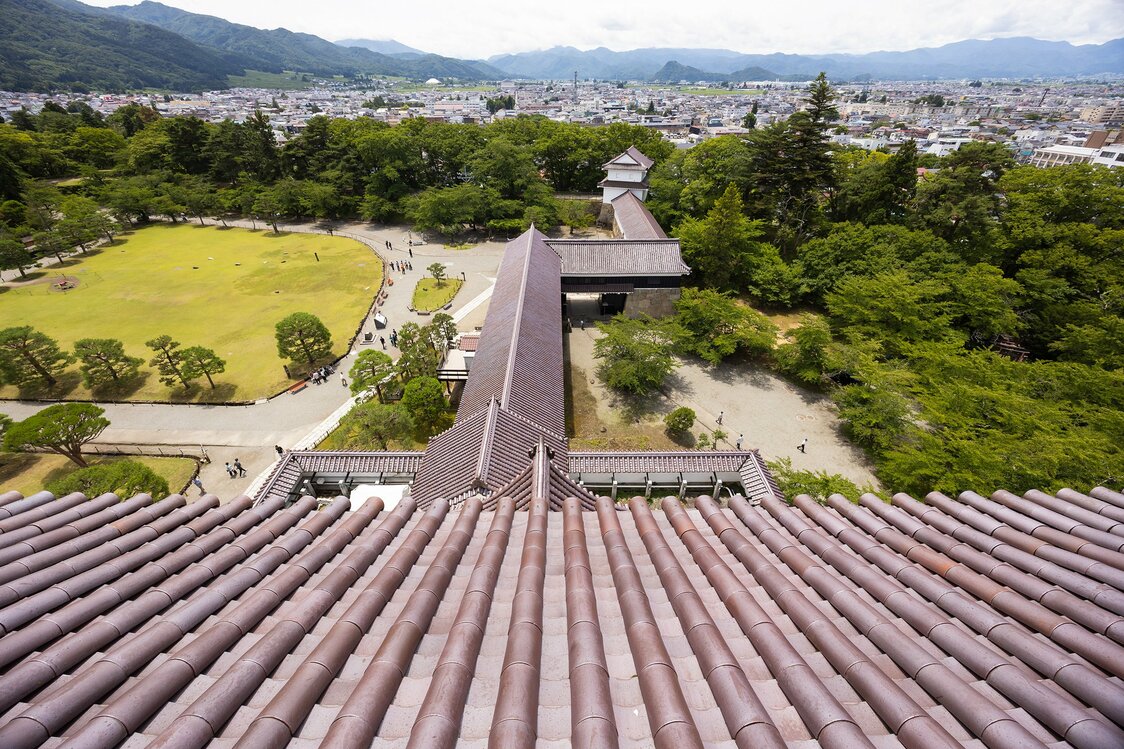
The castle’s barracks, Kurogane Gate, and Hoshii Turret are also roofed in red tiles. (© Nippon.com)
-
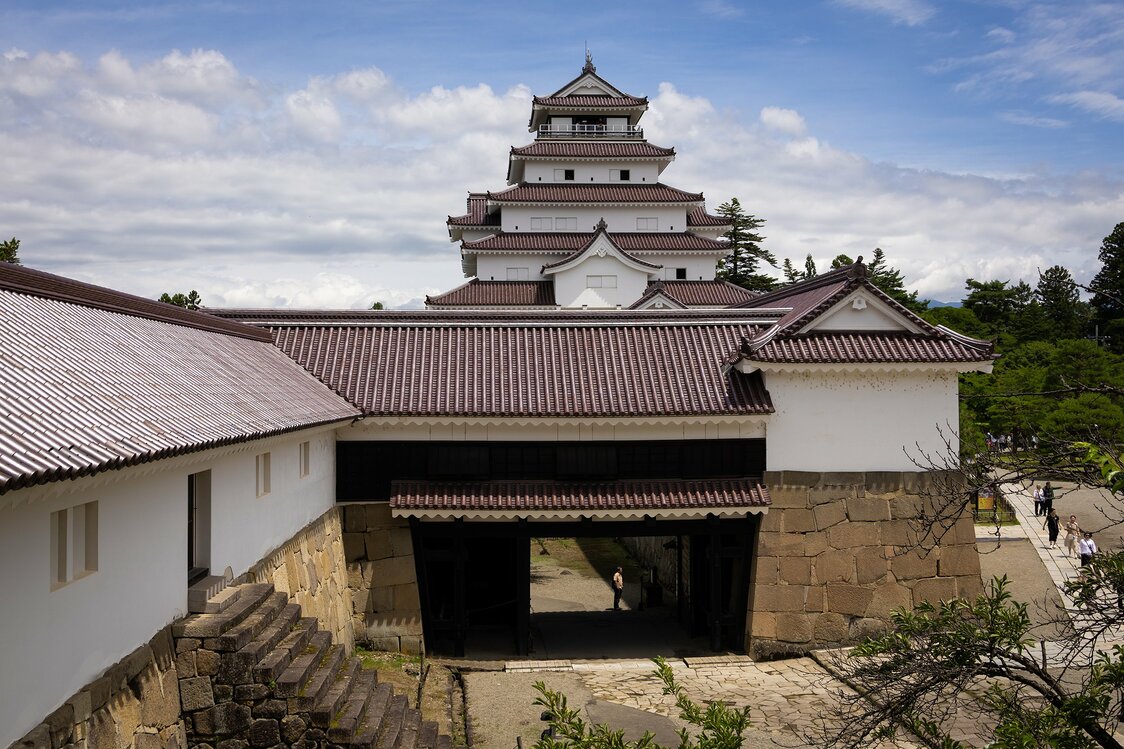
The upper level of the Kurogane Gate is a corridor. (© Nippon.com)
-
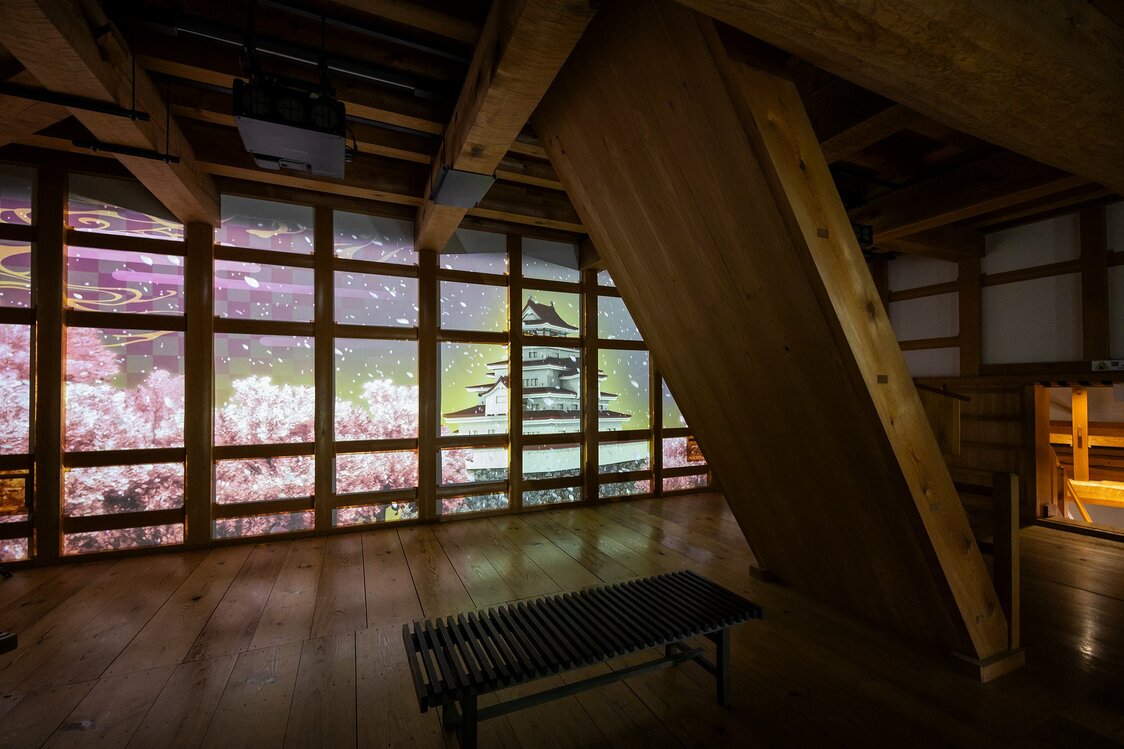
Digital art inside the Hoshii Turret depicts the castle’s history (this installation is on hold until the end of September 2026). (© Nippon.com)
-
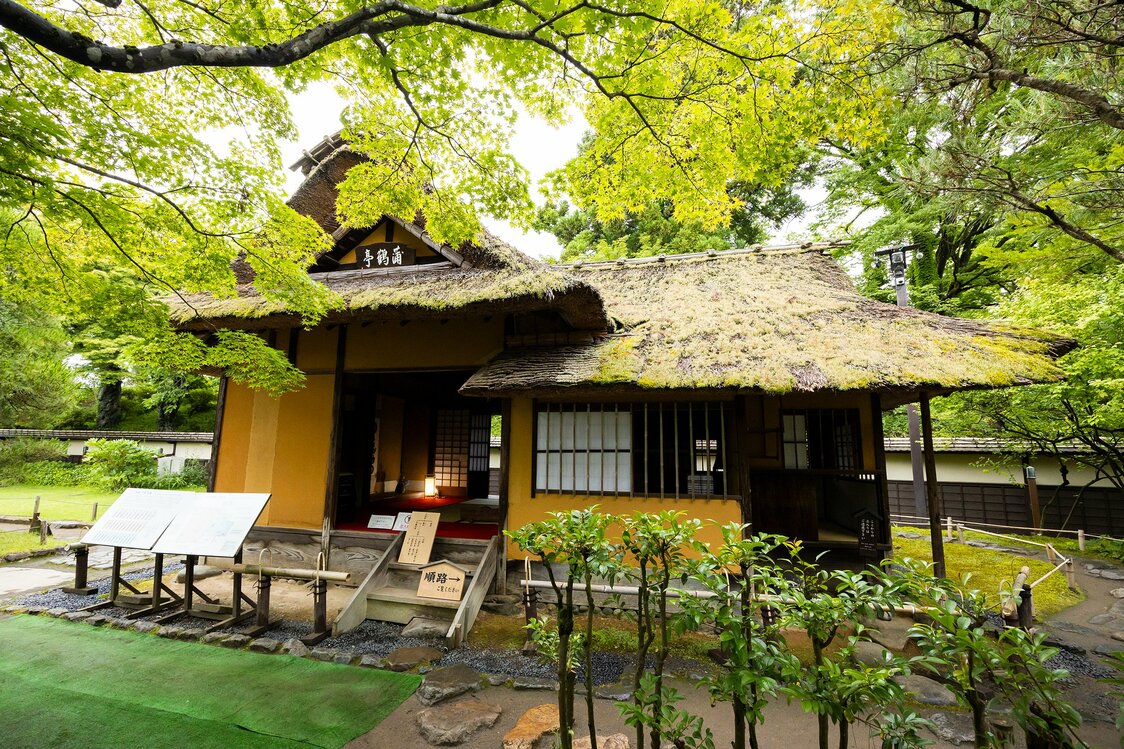
Tea gatherings still take place in this thatched-roof teahouse. (© Nippon.com)
-
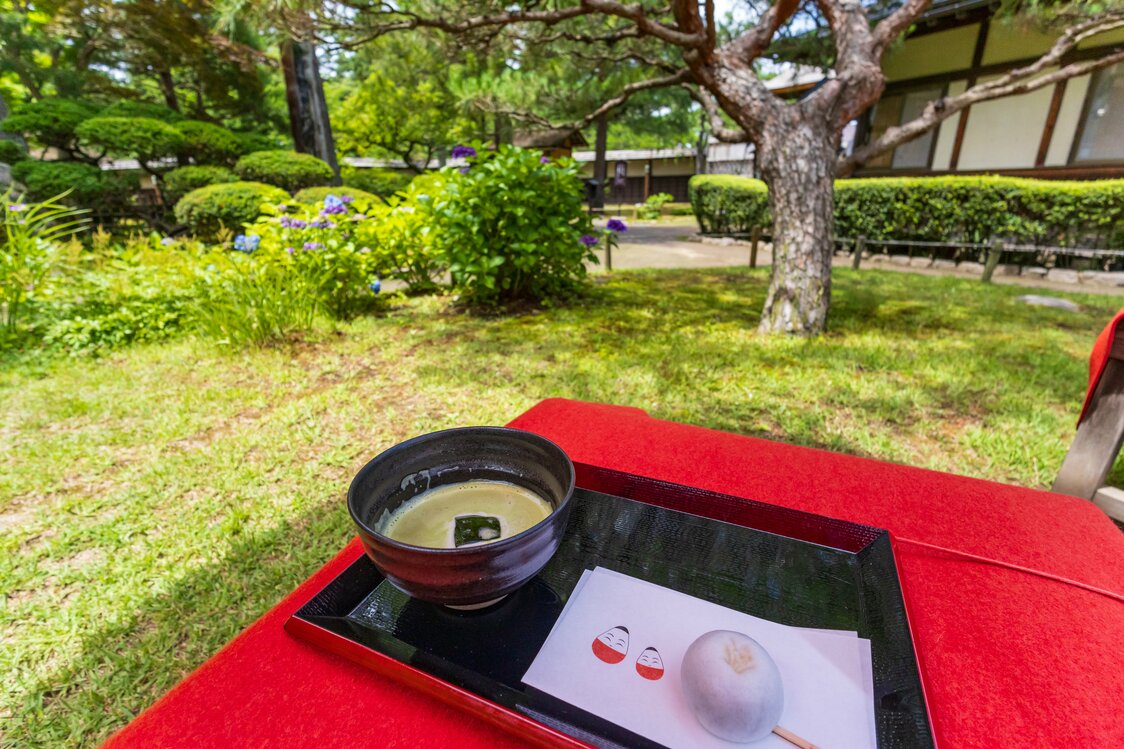
The entrance fee to the teahouse is ¥210, plus ¥600 for matcha and confectionery. (© Nippon.com)
-
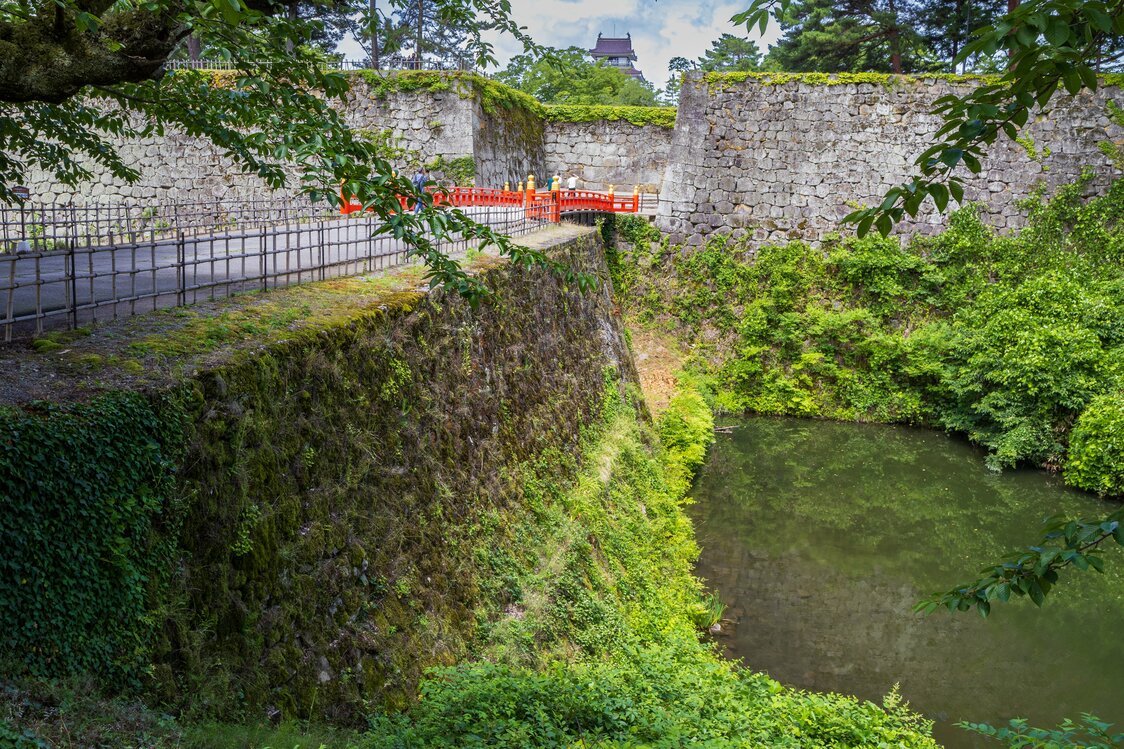
The castle’s entrance is guarded by 19-meter-high stone walls. (© Nippon.com)
-
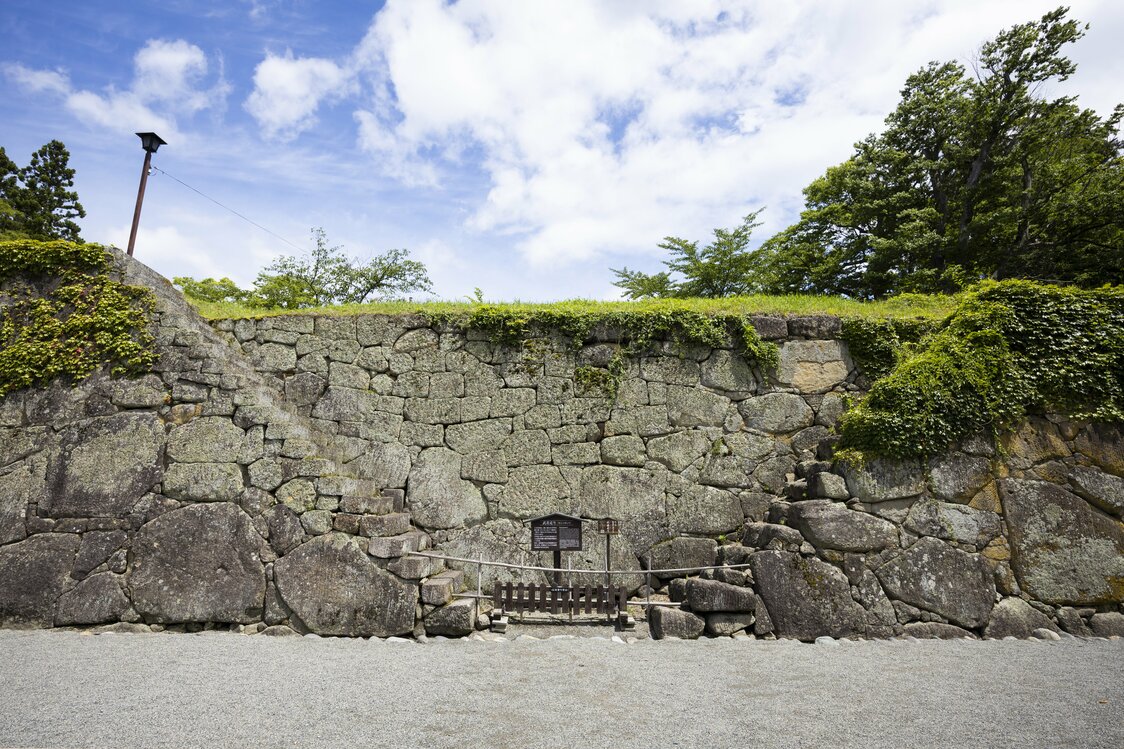
Pockmarks from ammunition fired are still visible here and there in the stone walls. (© Nippon.com)
-
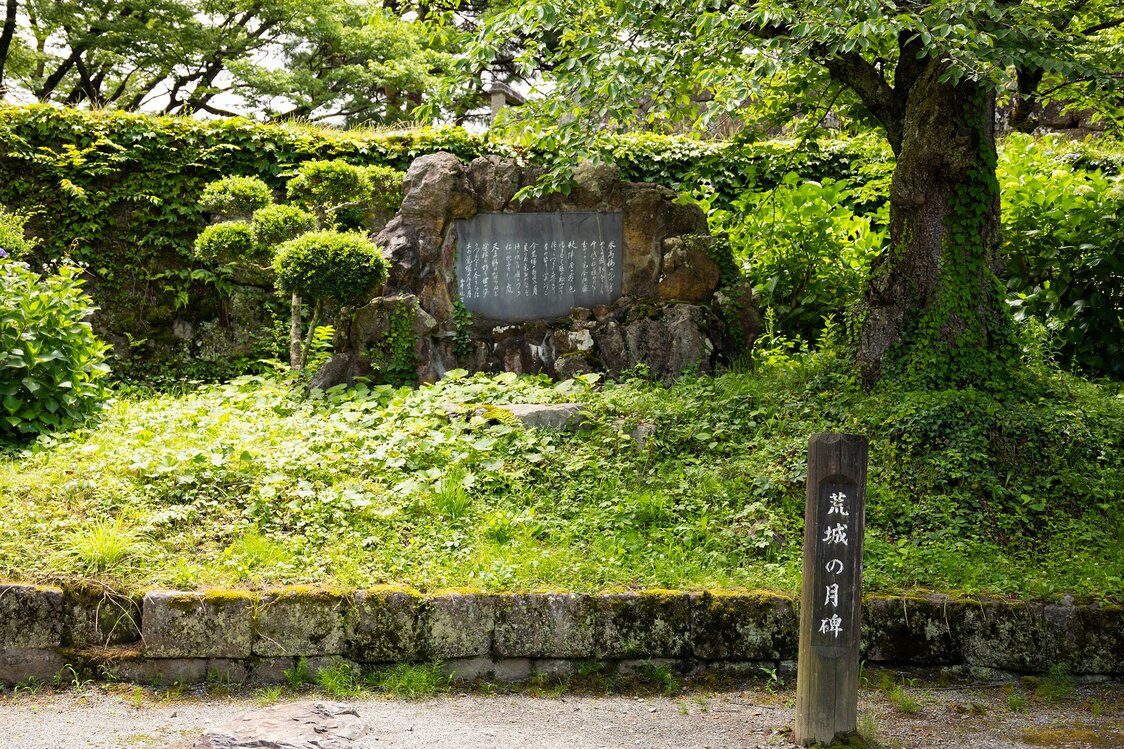
A stone monument to “Kōjō no tsuki” (The Moon over the Ruined Castle), a song composed during the Meiji era whose poignant lyrics were inspired by the ruins of Tsurugajō. (© Nippon.com)
-

Top: The story of the Byakkotai is recounted in the castle museum. Bottom left: A statue of Byakkotai members stands as a symbol of the city. Bottom right: A view of Tsurugajō from Mount Iimori. (© Nippon.com)
-
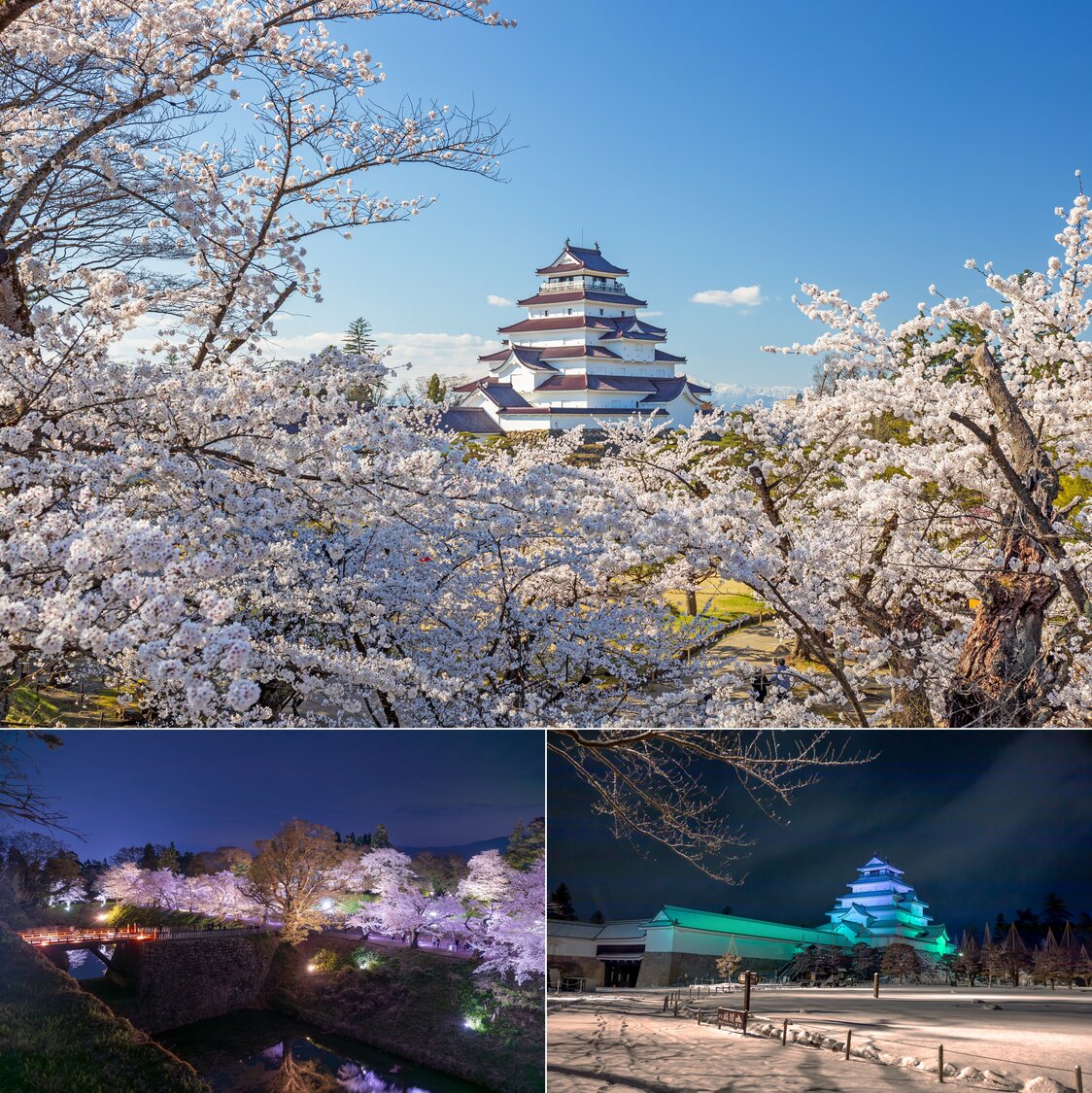
In spring, close to 1,000 cherry trees bloom. The grounds are illuminated in the evenings, and seasonal light shows take place. (© Aizu-Wakamatsu Tourism Bureau)


 Read in other languages