


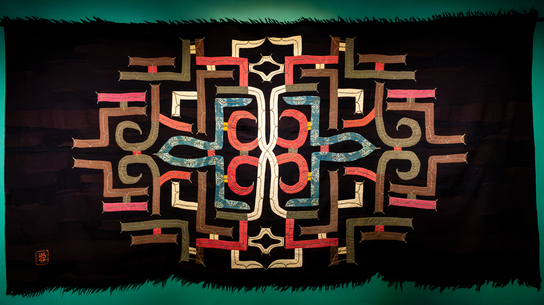
A new exhibition offers a sweeping overview of Ainu culture, from nineteenth-century crafts to dance performances at last year’s Expo in Osaka.
Showcasing Their Culture
The Ainu people are indigenous to the northern part of Japan, especially Hokkaidō. Based on a deep spirituality that maintains that spirits (kamuy) reside in all things, they developed distinctive arts and crafts traditions. Their culture, rooted in coexistence with nature, has been spotlighted in modern times in exhibitions at home and abroad. A new exhibition, The Ainu and the Expositions: 150 Years of Experience, explores how the Ainu have represented themselves at international and domestic exhibitions over the past 150 years. It is sponsored jointly by the National Ainu Museum, located within Upopoy in Shiraoi, Hokkaidō, and the National Museum of Japanese History, in Sakura, Chiba Prefecture.
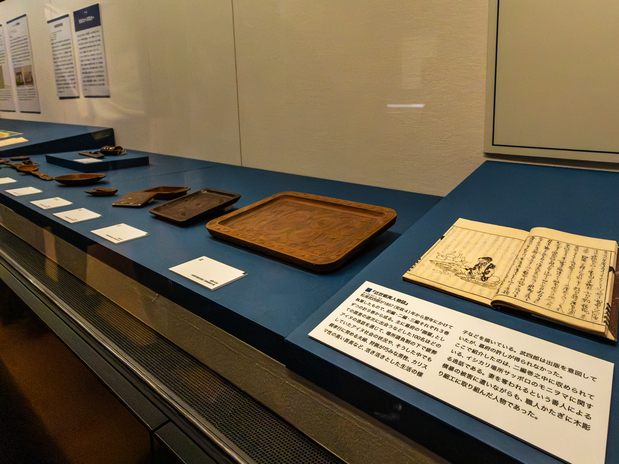
 Ainu crafts from the nineteenth century. (© Matsuura Takeshirō Memorial Museum)
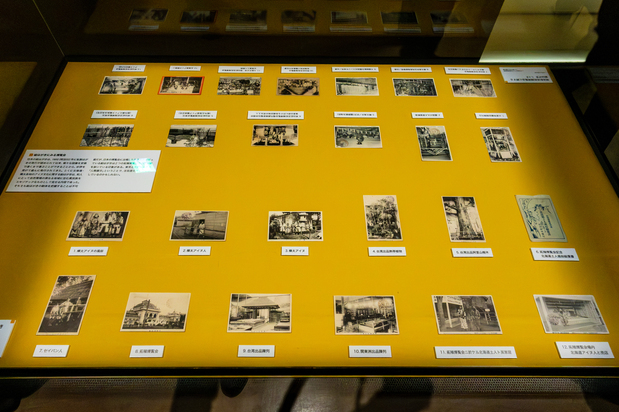 Postcards from the 1912 colonial development exposition. (© National Ainu Museum)
Among the eye-catching exhibits are traditional attire woven from bark fibers, covered in intricately embroidered designs intended to ward off evil. Traditional woodworking crafts are also on display, including some articles over 150 years old that are designated important cultural properties. These fine Ainu handcrafts have been shown at exhibitions in modern times, showcasing their exquisite workmanship and beauty.
In the first decades of the twentieth century, the Ainu also had opportunities to introduce their way of life in exhibitions at home and abroad. Documents from those times detail the pain of being viewed as curiosities, as well as friendships with local residents blossoming across borders and cultures.
After World War II, efforts on the part of the Ainu to proactively communicate their culture sped up. They have staged performances beginning with the Japan World Exposition, Osaka, 1970 through to the Expo 2025 Osaka Kansai. This exhibition includes videos of Ainu dancing and commentary from participants, spotlighting the practitioners preserving traditional culture for the future.
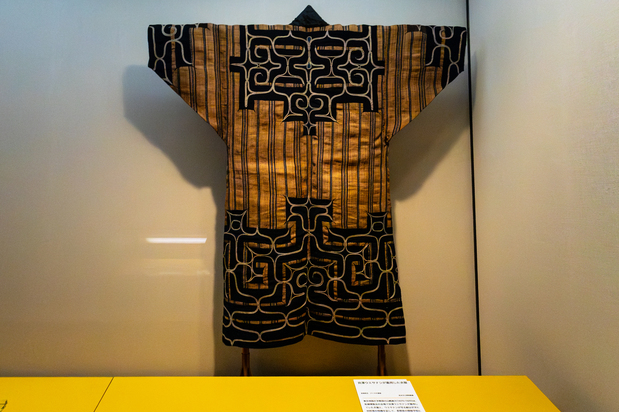 Clothing worn by a participant in the 1912 colonial development exposition. (© Matsumoto City Museum)
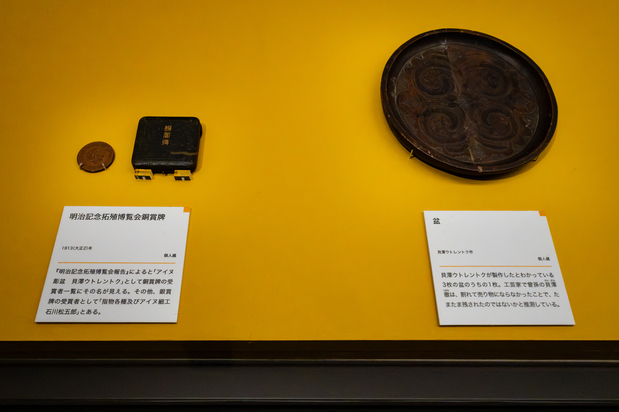 A tray crafted by master artisan Kaizawa Utorentoku that won a bronze prize at the 1913 Meiji commemorative colonial development exposition. From a private collection. (© Nippon.com)
 A diorama displayed at the 1950 Hokkaidō grand development exposition. (© National Ainu Museum)
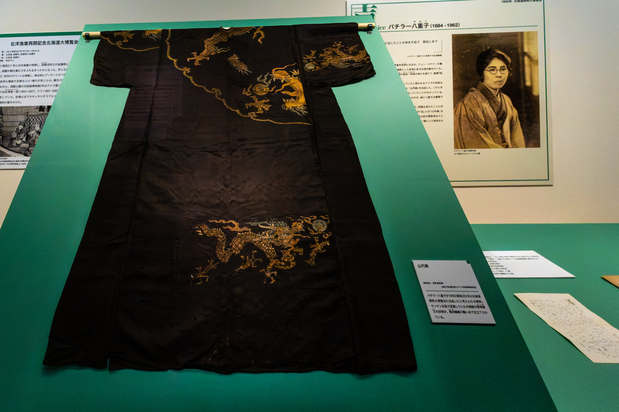 “Santan nishiki,” a work by Batchelor Yaeko believed to have been exhibited at the 1950 Hokkaidō grand development exposition (Collection of Rikkyō Primary School, on deposit at the National Ainu Museum). (© Nippon.com)
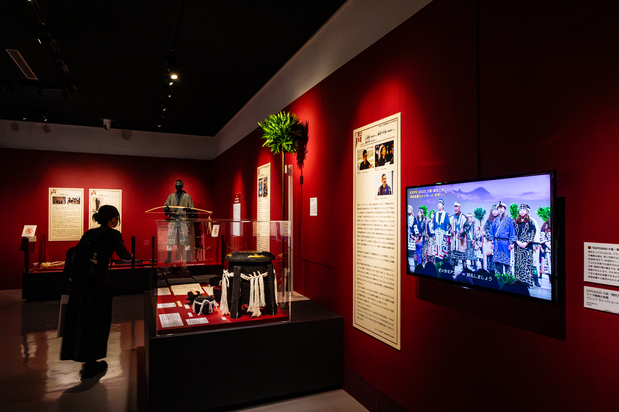 A display featuring videos of performances at Expo 2025 Osaka Kansai, along with stage props and other items. (© Nippon.com)
The Ainu and the Expositions: 150 Years of Experience
- Dates: October 6–November 29, 2026
- Venue: Special Exhibition Rooms A and B, National Museum of Japanese History (117 Jōnai-chō, Sakura, Chiba Prefecture)
- Hours: 9:30 am–4:30 pm (last admission at 4:00 pm)
- Closed: Mondays (or the following weekday if Monday is a national holiday)
- Admission: ¥1,500 for adults; ¥800 for university students; free for high school students and younger
For further details, visit the official website.
(Translated from Japanese. Reporting and text by Nippon.com. Banner photo: Mintar [The Garden], a tapestry created by Kawamura Noriko and exhibited at the 1988 World Food Festival. © Ainu Association of Hokkaidō.)










 Read in other languages