


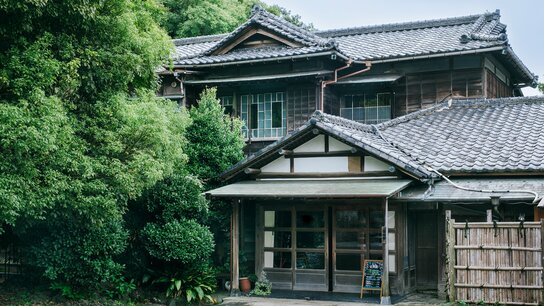
Once an exclusive seaside retreat favored by literary icons almost a century ago, Yokohama’s Kanazawa-en has found new life as a tranquil café.
Memories of a Vintage Seaside Resort
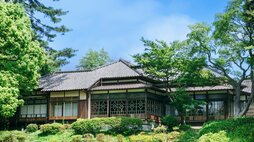
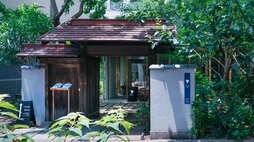
Not far from the beach at Hakkeijima, Yokohama, stands a building with a long and storied history: Kanazawa-en, opened in 1930. At that time, the building was the ryokan and ryōtei (traditional Japanese inn and restaurant) within a sprawling beach resort, with observation decks, gardens, fishing pools, and sightseeing boats, regularly visited by literati such as Yosano Akiko and Takahama Kyoshi.
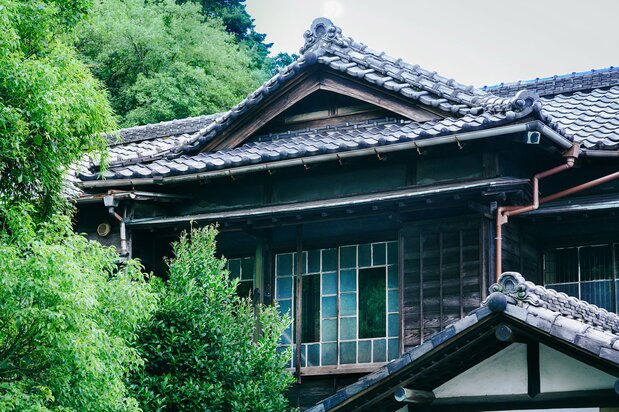
 The tiled roof adds gravity to the structure. (© Kawaguchi Yōko)
A century later, the seas that once glittered nearby have been reclaimed, pushing the shore further out, and the surrounding area is a quiet residential zone. The restaurant remained in operation until 2016, and the structure remains a nationally registered tangible cultural property.
Today, the ground floor of the building has reopened as a café, with the hall upstairs open as a display area. I set out in search of lingering memories of this scenic resort beloved of former literary giants.
Tarts and Coffee
The Keikyū Main Line runs from the heart of Tokyo to Yokohama and then down to the Miura peninsula. I ride the train to Kanazawa-bunko Station, then take the bus to my destination. The moment I step off onto the curb, I am surrounded by the aroma of orange osmanthus.
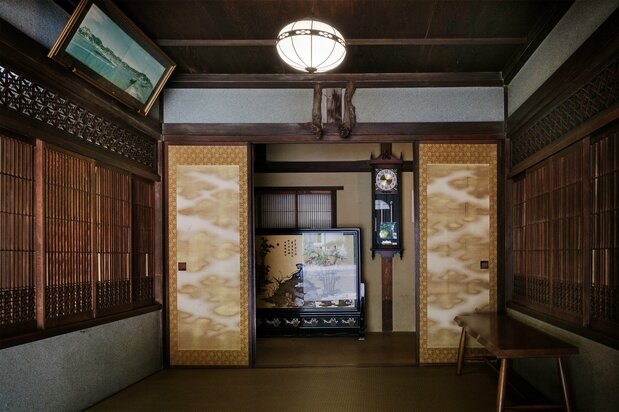 The elegant entryway. (© Kawaguchi Yōko)
I remove my shoes in the entranceway, which has the traditional morijio amulet for spiritual protection. Examining the delicate beauty of the furnishings, I notice one corner on a piece of furniture recently repaired with new timber. How many times have these pieces been mended over the past century or so?
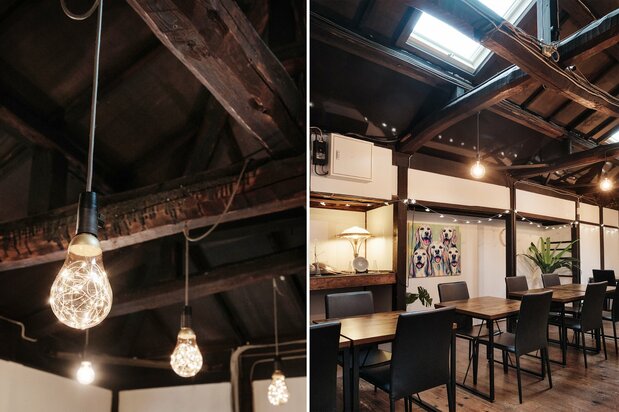 The roof, supported for a century by the same columns and beams, has a skylight. (© Kawaguchi Yōko)
The café space is actually the original restaurant’s sizable kitchen, renovated for comfort.
I order a homemade tart set with a drink. A variety of tarts are on offer, from blueberry to walnut, but I choose banana. The fragrance of very lightly caramelized banana blends with the deep sweetness of sugar from Amami. The coffee beans are Kaigun-san no Kōhī, ordered from Kure in Hiroshima. The blend is a recreation of the coffee said to have been secretly drunk aboard the battleship Yamato during World War II.
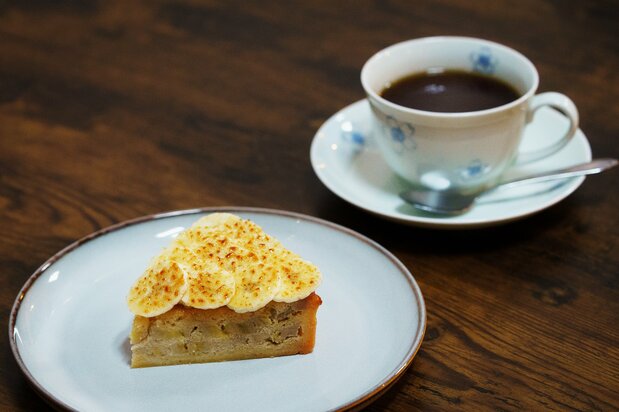 Banana tart and coffee. The cup and saucer are custom-made, in use since the building’s time as a restaurant. (© Kawaguchi Yōko)
“This was one of the inns used by the Yokosuka Naval Air Technical Arsenal, a research and development institute in Yokosuka, during the war. We chose the coffee beans as a nod to that history,” says Kanazawa-en’s fourth generation proprietor.
This proprietor is the one who had the building remade into a café after inheriting the building from her father in 2020. She says that her father never once asked her to take over the property, perhaps because he knew how difficult it would be to maintain.
“When I was studying in Europe, I found it moving to see old stone buildings renovated and put to new uses. It’s easy to tear down an old building, but you can never make the same structure again. I decided that I wanted to preserve as much as I could.”
The Kanazawa-en’s ageing timber building will be restored while in use. Unlike some other buildings, it was not preserved with care like a work of art. It is still inscribed with the scars of destruction during its time as a specified navy inn, and the smokey, oily history of its kitchen is still present, too.
“When we were a restaurant, we were reservation-only,” says the proprietor. “Being a café makes it easier for people to drop by. I’d like them to enjoy the kind of mellow atmosphere and slow flow of time that only vintage buildings can offer.”
A Literary World Upstairs
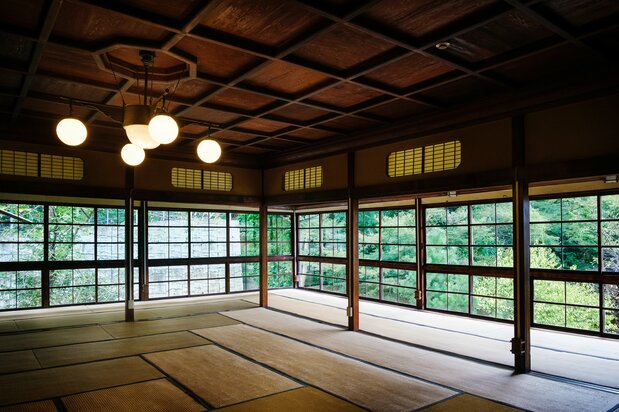 The great hall upstairs is surrounded by the green of the garden. (© Kawaguchi Yōko)
Upstairs is the great hall and the room where Yosano Akiko stayed with her husband Tekkan. In the past, the view from these windows extended to the horizon. Akiko even wrote a tanka about the view here on an autumn evening: “The evening light / at Kanazawa is gone— / forlorn, I count / the autumn lights / on the cape.”
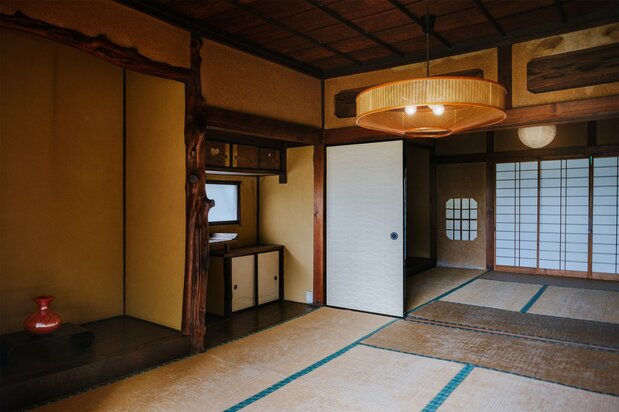 Yosano Akiko and Tekkan often stayed in this room. (© Kawaguchi Yōko)
Each of the guest rooms has a different design. Presumably this reflects an application to accommodation of the aesthetic ideal in Japanese cuisine of enjoying different foods from a variety of different dishes.
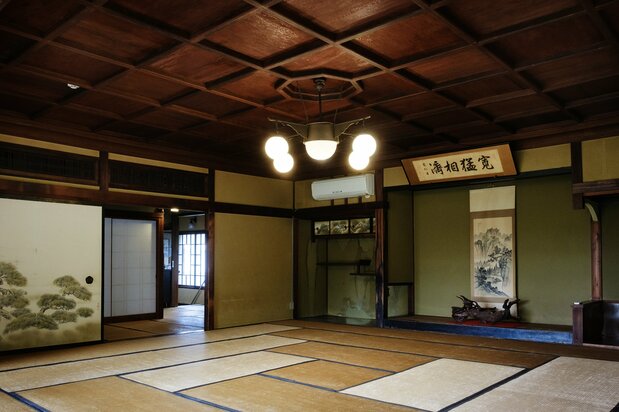 The calligraphy above the tokonoma was gifted to the current proprietor’s great-grandfather by Prince Kan’in Kotohito, who was also an army general. (© Kawaguchi Yōko)
A Survivor of Two Tragedies
The history of Kanazawa-en begins with the restaurant Mangetsu, opened in 1916 in Sakuragichō, a different neighborhood in Yokohama. A commemorative photo of that three-story wooden building with its noren curtains unfurled still hangs in the hall at the Kanazawa-en Café.
In 1923, however, the Great Kantō Earthquake left the Mangetsu so damaged that it was forced to cease operations. Six years later, a Meiji-era (1868–1912) wooden house in Shinagawa that had escaped destruction in the disaster was dismantled and shipped to Yokohama, where temple carpenters put their skills to work and rebuilt and extended it into the heart of Kanazawa-en.
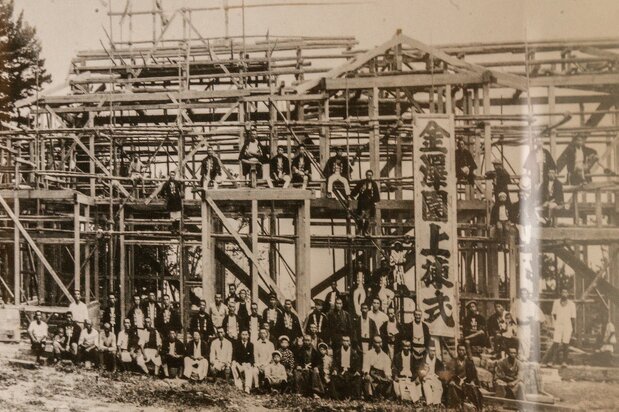 Celebrating the completion of the framework of the new Kanazawa-en. (© Kawaguchi Yōko)
“We had significant shaking here during the Great East Japan Earthquake of 2011, but not a plate was broken,” says the current proprietor.
Are the building’s solid construction and the solid work of the temple carpenters to be thanked for this? In any case, within the Kanazawa-en, timbers that have survived two tragedies remain in use.
Baths and Banquets
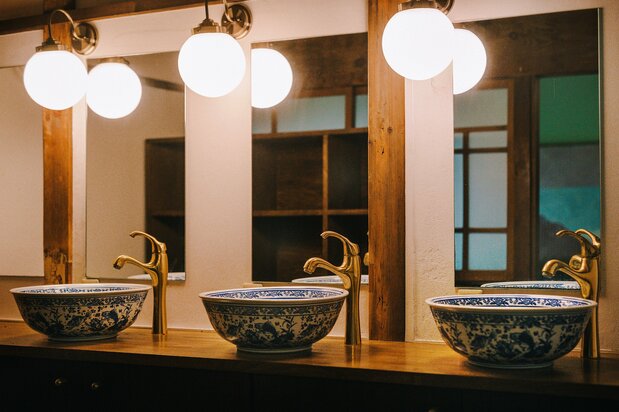 The changing room for the bathing facilities. Note the beautiful handbasins. (© Kawaguchi Yōko)
The communal bathing facilities on the first floor are adorned with the very French stained glass and mosaic tiles originally installed in them. An inn’s bathing facilities develop a unique atmosphere over the years, and this is certainly evident here.
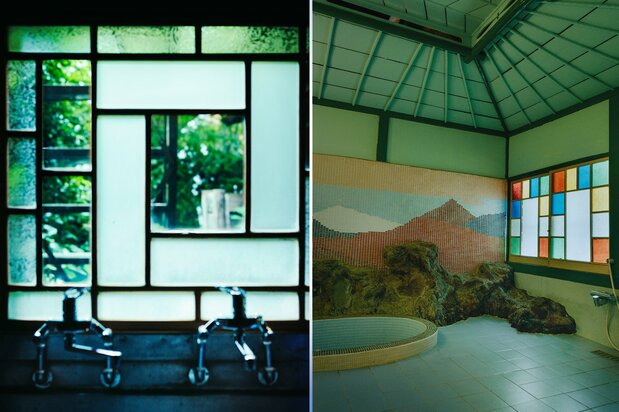 Left: Sinks on the left in the hall. Right: Communal bathing facilities with stained glass and wall mosaic intact. (© Kawaguchi Yōko)
The current proprietor still remembers the upstairs hall prepared for banquets with rows of dining trays on legs. Kimono-clad waitresses would rush back and forth between the first-floor kitchen and the guest rooms upstairs, carrying kaiseki ryōri meal courses or heavy bottles of beer.
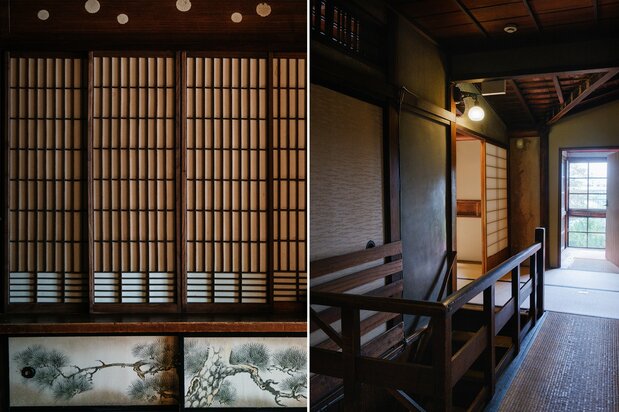 The second floor, where the main hall and guest rooms were. (© Kawaguchi Yōko)
“Some people come to the café to reminisce about those days, saying that they held their betrothal ceremonies here, or their Shichi-Go-San parties.”
From a special space for special days to a more approachable, everyday café—this is the path that has led to the Kanazawa-en to what it is today.
Canine Portraiture
In one corner of the café hangs a painting of five dogs. These, the proprietor explains, are the family’s beloved beagles, who were a key source of emotional support during the café’s difficult first months after opening at the height of the COVID-19 pandemic.
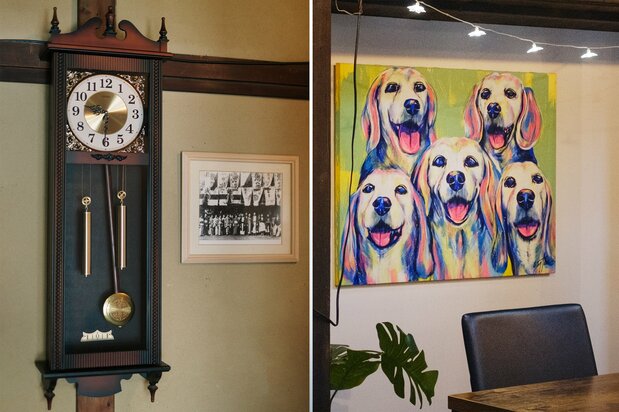 Left: A wall clock and a photograph of the Mangetsu on opening day. Right: These five dogs watch over the café. (© Kawaguchi Yōko)
Café Kanazawa-en’s proprietor states her hopes simply: “If people realize that a building like this can still be found here, I’d be delighted.”
From the moment I paused outside the entrance to the building and looked up at the half-hipped roof and second-story windows, my journey into this resort’s vintage heyday began. Inside, with naval-inspired coffee in hand, I surrendered myself to the century of history in the air. I urge everyone reading this to savor the same experience. The dogs in the portrait are sure to welcome you.
Café Kanazawa-en
- Address: 46 Shibachō, Kanazawa-ku, Yokohama
- Tel.: +81-045-701-8664
- Hours: Thursday–Friday, 10:30 am–3:00 pm (last order 2:30 pm); Saturday–Sunday, 8:30 am–4:00 pm (last order 3:30 pm)
- Payment: Cash only
- Closed: Monday–Wednesday
- Access: Take a Keikyū Bus from Kanazawa-bunko Station on the Keikyū Main Line and get off at Kanazawaen bus stop, immediately nearby; or a 5-minute walk from Uminokōen-Shibaguchi Station on the Kanazawa Seaside Line.
- Official website: https://www.instagram.com/kanazawaen1916/
(Originally published in Japanese on October 2, 2026. Banner photo: The exterior of Kanazawa-en. © Kawaguchi Yōko.)


 Read in other languages