


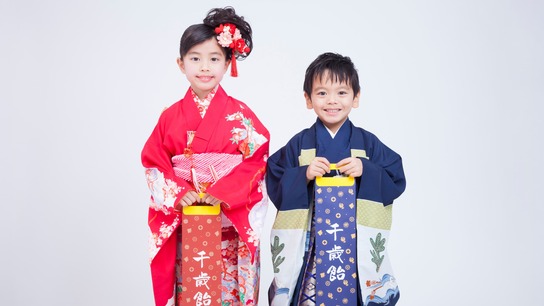
Shichi-Go-San is a traditional Japanese event to express gratitude for the growth of children reaching the ages of three, five, and seven, and to pray for their continued healthy development. Every November, smartly dressed children and their families pack shrines and temples across the country.
Kimono and Candy
Japan’s Shichi-Go-San custom, literally “seven-five-three,” takes its name from the ages of the children traditionally celebrated. Most typically, the occasion is for praying for the health of three-year-old boys and girls, five-year-old boys, and seven-year-old girls, although in some regions only girls participate at age three. Traditionally observed on November 15, Shichi-Go-San is now often celebrated on weekends and public holidays throughout November to better fit families’ schedules.
 (© Adobestock)
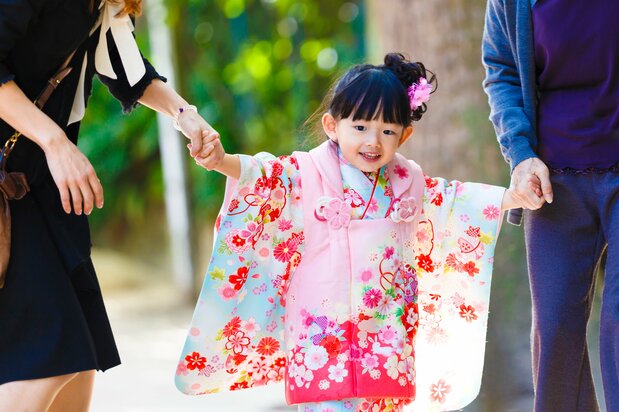
Today, families commonly mark Shichi-Go-San by visiting a local shrine or temple to have prayers offered for their child’s health and well-being, as well as by taking commemorative photographs. The children usually dress in traditional Japanese kimono. Three-year-olds wear a sleeveless vest called a hifu over their kimono. Five-year-old boys wear haori jackets and hakama trousers, which is traditional formal wear for men. Seven-year-old girls wear more elaborate kimono with a full obi sash, much like those worn by adult women. Many photography studios offer kimono rentals as part of packages that also include dressing, hairstyling, and makeup. However, how families celebrate can vary widely. For example, some skip the shrine or temple visit and simply have commemorative photos taken, while others visit in suits and dresses rather than kimono.
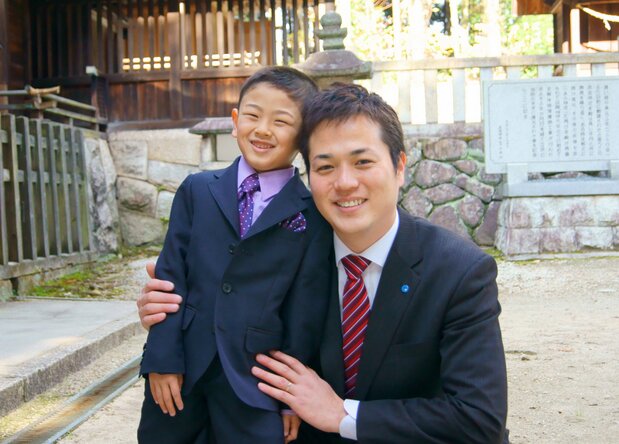 A father and son visit a shrine in suits. (© Pixta)
Also essential for Shichi-Go-San are chitose ame, which are long, thin sticks of candy, usually red and white, that children traditionally carry. Chitose ame means “thousand-year candy,” and the candy’s stretched shape symbolizes the wish that children will enjoy long and healthy lives. The paper bags used to hold the sweet treats are often decorated with cranes, turtles, pine, bamboo, and plum blossoms, which are all traditional symbols of longevity and good fortune. The candy can be purchased at traditional confectionery shops and supermarkets, but some shrines also give it to children as a commemorative gift after their visit.
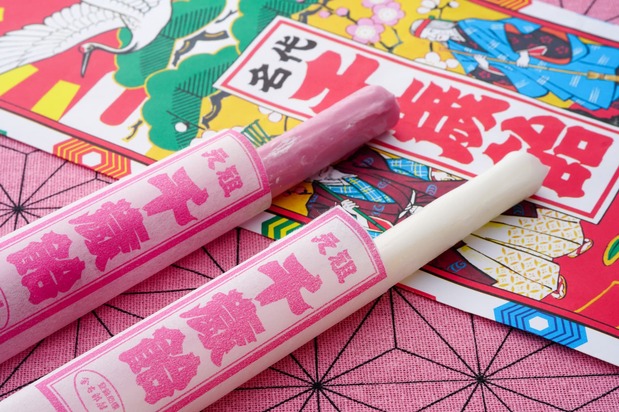 Chitose ame (© Pixta)
Elite Origins
Shichi-Go-San has its roots in three ceremonies practiced among the elite during the ancient and medieval periods. These were kamioki, when children began growing their hair at age three; hakamagi, when five-year-old boys wore hakama trousers for the first time; and obitoki, when seven-year-old girls first wore a traditional obi sash. The hakamagi ceremony survives today in the imperial family as the chakko-no-gi, a ceremony held around the age of five.
In an era when medical care was limited and child mortality rates were high, reaching the ages marked by Shichi-Go-San in good health was a cause for great joy, and led to customs of giving thanks to the gods and ancestors. The traditions later spread from the aristocracy and samurai families to wealthy merchants in Edo (now Tokyo). The custom of celebrating on November 15 is said to date back to the seventeenth century, when Shōgun Tokugawa Tsunayoshi held a grand celebration for his son's growth. From the Meiji era (1868–1912), Shichi-Go-San became popular among ordinary families, eventually developing into today’s nationwide tradition.
(Translated from Japanese. Banner photo: Children celebrate Shichi-Go-San in kimono holding chitose ame. © Adobestock.)



 Read in other languages