Glimpses of a Glittering North: Mizukoshi Takeshi’s Hokkaidō Photography
Color in the North: Hokkaidō’s Seasonal Flora in Photos
Environment- English
- 日本語
- 简体字
- 繁體字
- Français
- Español
- العربية
- Русский
Plants that Cross the North-South Line
The Tsugaru Strait, which separates Hokkaidō from the main island of Honshū, forms a zoogeographical boundary called Blakiston’s Line. It is named after Thomas Blakiston (1832–91), an English naturalist who lived in Hakodate, Hokkaidō, from the early 1860s to 1884. Blakiston noticed that certain species can only be found north of this line, while others only live south of it. But while this finding applies to animal species, like bears and owls, that is not the case for plants.
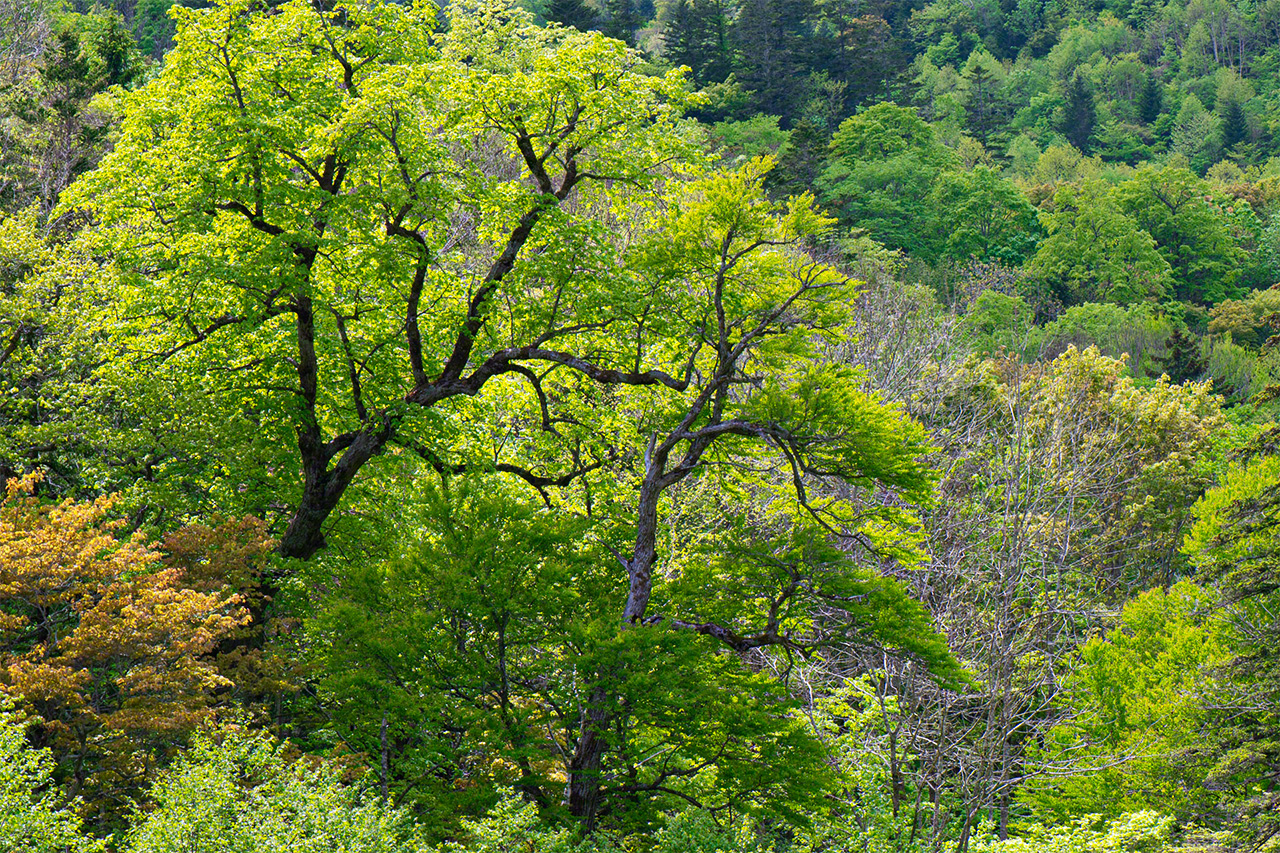
Fresh, vibrant green comes to life in June. (© Mizukoshi Takeshi)
Forests of Japanese beech, abundant in the Tōhoku region of northeastern Japan, are representative of cool-temperate deciduous broadleaf species there; these are also found in southern Hokkaidō, across the Tsugaru Strait. The Utasai beech forest in Kuromatsunai, a town midway between Hakodate and Sapporo, was recognized by the national government in 1928 as a natural monument as the northernmost distribution point for beech. Later, another fine beech forest was discovered growing some 8 kilometers farther north, in the upper reaches of the Shirai River.
Other vegetation, including komakusa, a perennial related to the bleeding heart called “the queen of alpine plants,” is found from Honshū’s Northern Alps to Daisetsuzan and Shiretoko in Hokkaidō. A variety of factors, from average monthly temperature and soil composition to rainfall, influence plant distribution; geological history also plays an important role.
The Diversity of the Northern Forests
Hokkaidō’s forests have undergone many changes over millennia, affected by geological history and repeated waves of climate change. The land was even covered in subtropical forests in the far distant past, a finding supported by research into fossils and pollen found in the area. After recurrent ice ages, the climate warmed up rapidly after the last Ice Age 20,000 years ago, and the mixed conifer and broadleaf forests we know today appeared about 6,000 years ago.
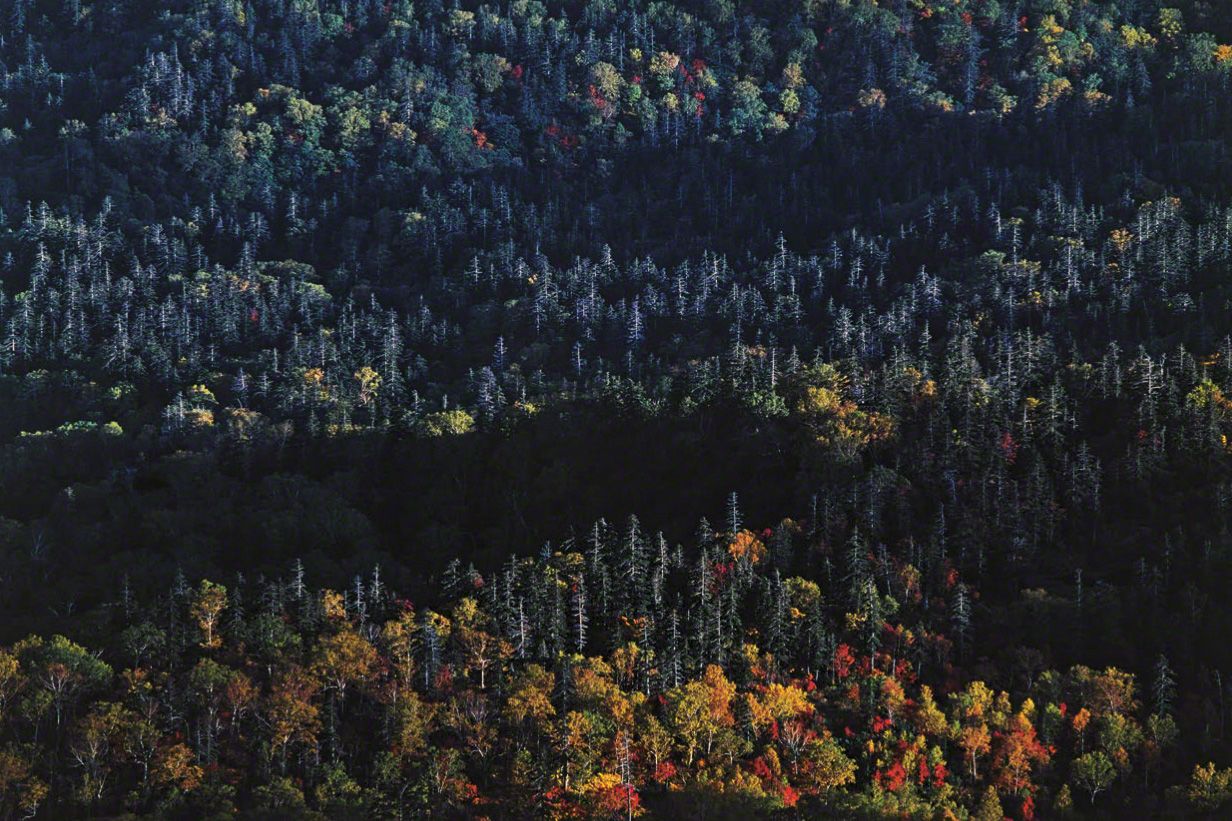
Mixed conifer and broadleaf forests consist of alternating zones of Siberian taiga and broadleaf forests, like those seen in Honshū and points further south. Broadleaf species such as Mongolian oak, katsura (East Asian trees in the genus Cercidiphyllum), linden, Japanese elm, and Manchurian ash intermingle with conifer species including those known in Japanese as todomatsu, ezomatsu, and akaezomatsu. This is typical of forests all over Hokkaidō.
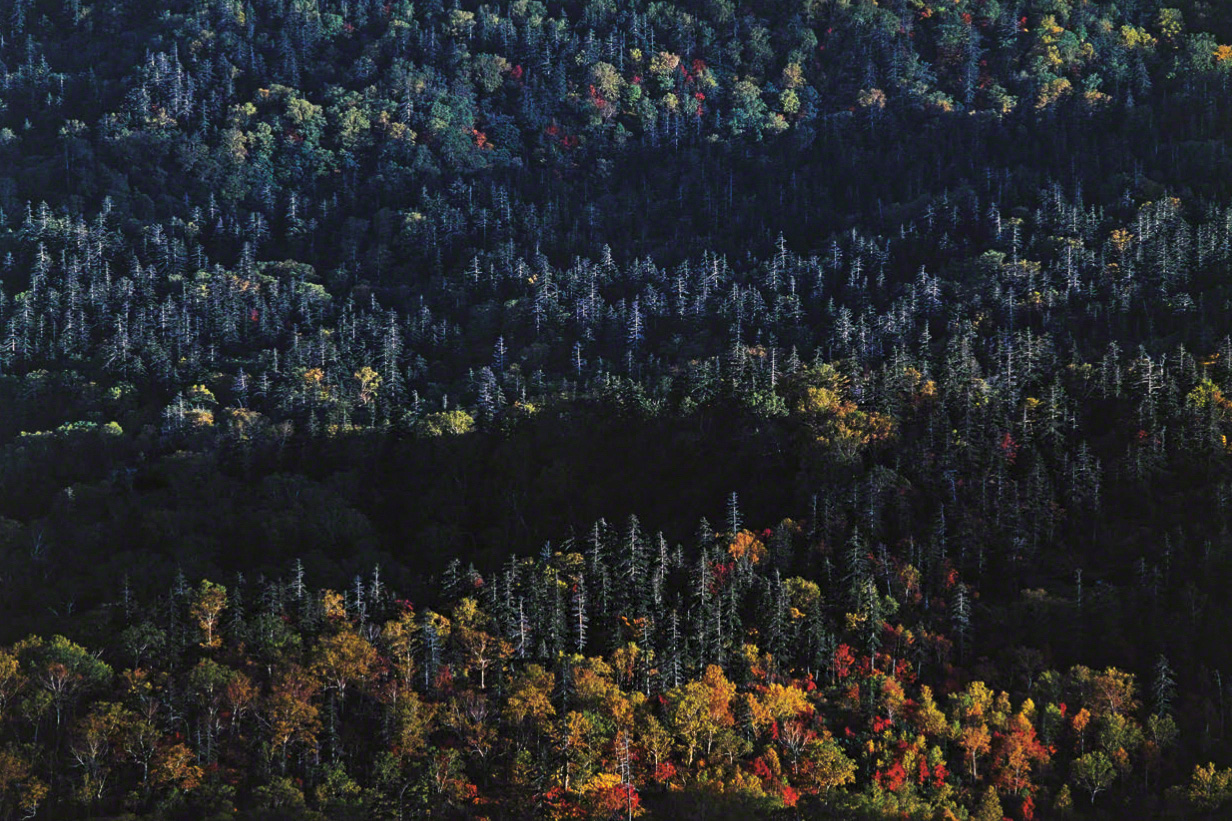
A mixed conifer and broadleaf forest in Higashi Daisetsu. (© Mizukoshi Takeshi)
Another notable feature of Hokkaidō forests is dense cover of Kuril dwarf bamboo, which thrives on dim forest floors where sunlight rarely reaches through the thick tree canopy. For this reason, no new trees can emerge to replace forests depleted of ezomatsu and other aged conifers unless seedlings regenerate on fallen “nurse logs” rising above the underbrush. Factors such as these give rise to the great variety of the forests here.
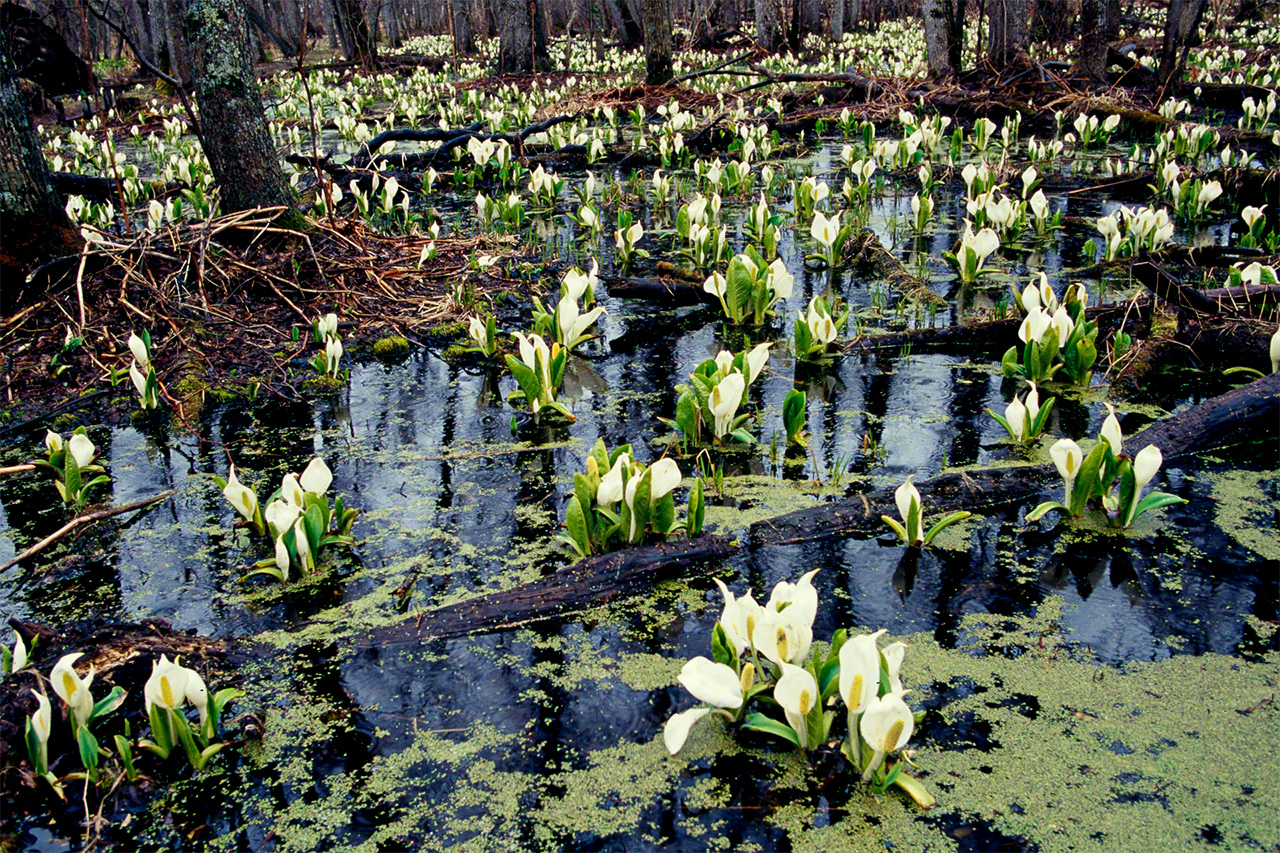
As winter snows melt, Asian skunk cabbage begins blooming. (© Mizukoshi Takeshi)
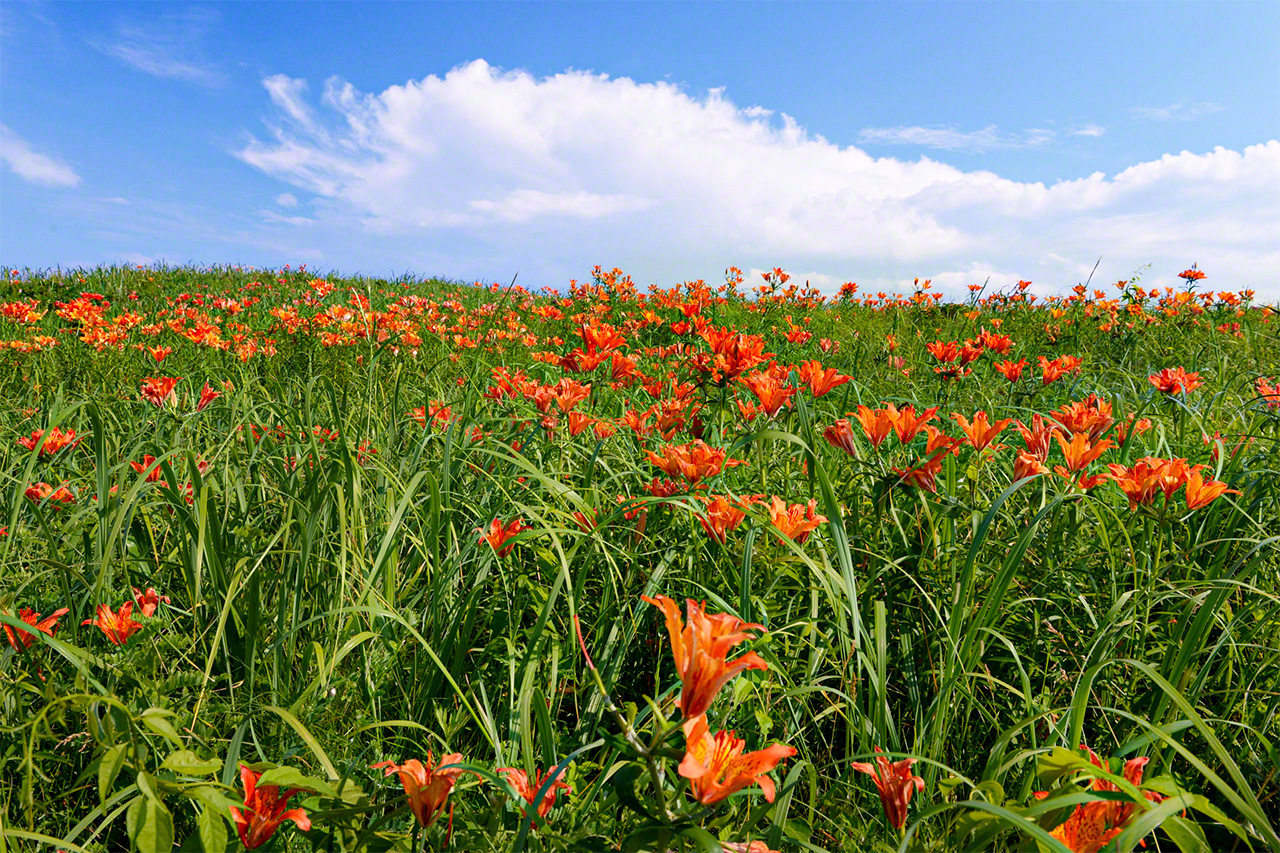
Orange daylilies bloom in Koshimizu Wildflower Park in Abashiri Quasi-National Park. In Hokkaidō, wildflowers burst into bloom from mid-June onward. (© Mizukoshi Takeshi)
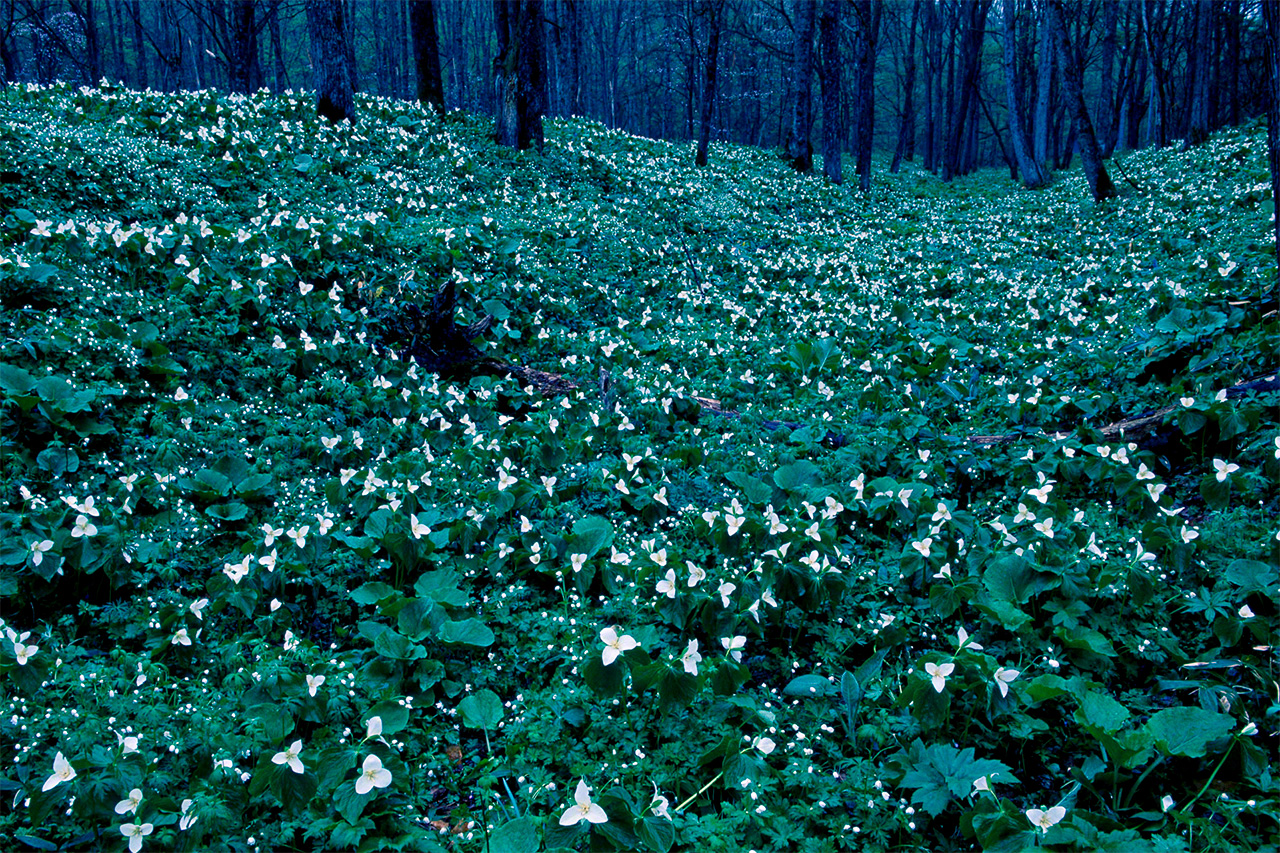
Trillium and soft windflower cover the floor of this deciduous broadleaf forest. (© Mizukoshi Takeshi)
Wetlands near rivers and marshes provide a home for clusters of alder and willow trees. At higher elevations, forests along mountain streams consist of katsura, Manchurian ash, and Japanese elm. Oaks thrive in the volcanic soil produced by Hokkaidō’s numerous volcanoes, their large yellow leaves providing splashes of color in winter. These oaks abound along coastlines, especially in Tokachi and Tomakomai, where stands of the trees are useful for muting the crash of ocean waves. White birch, meanwhile, is the first species to appear in the denuded soil left after slope collapses or wildfires. Prized for its white bark, birch is popular in the highlands and northern regions.
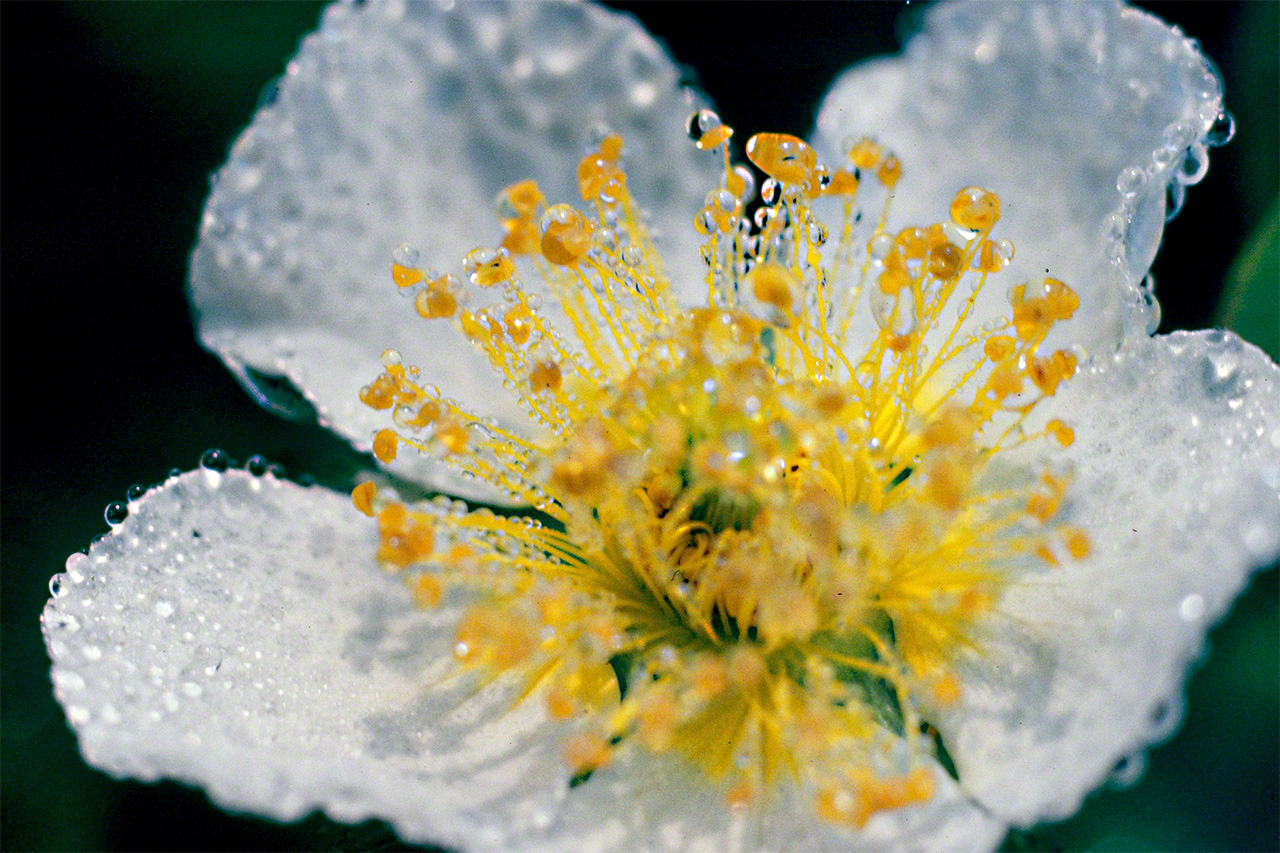
A five-petaled chinguruma. (© Mizukoshi Takeshi)
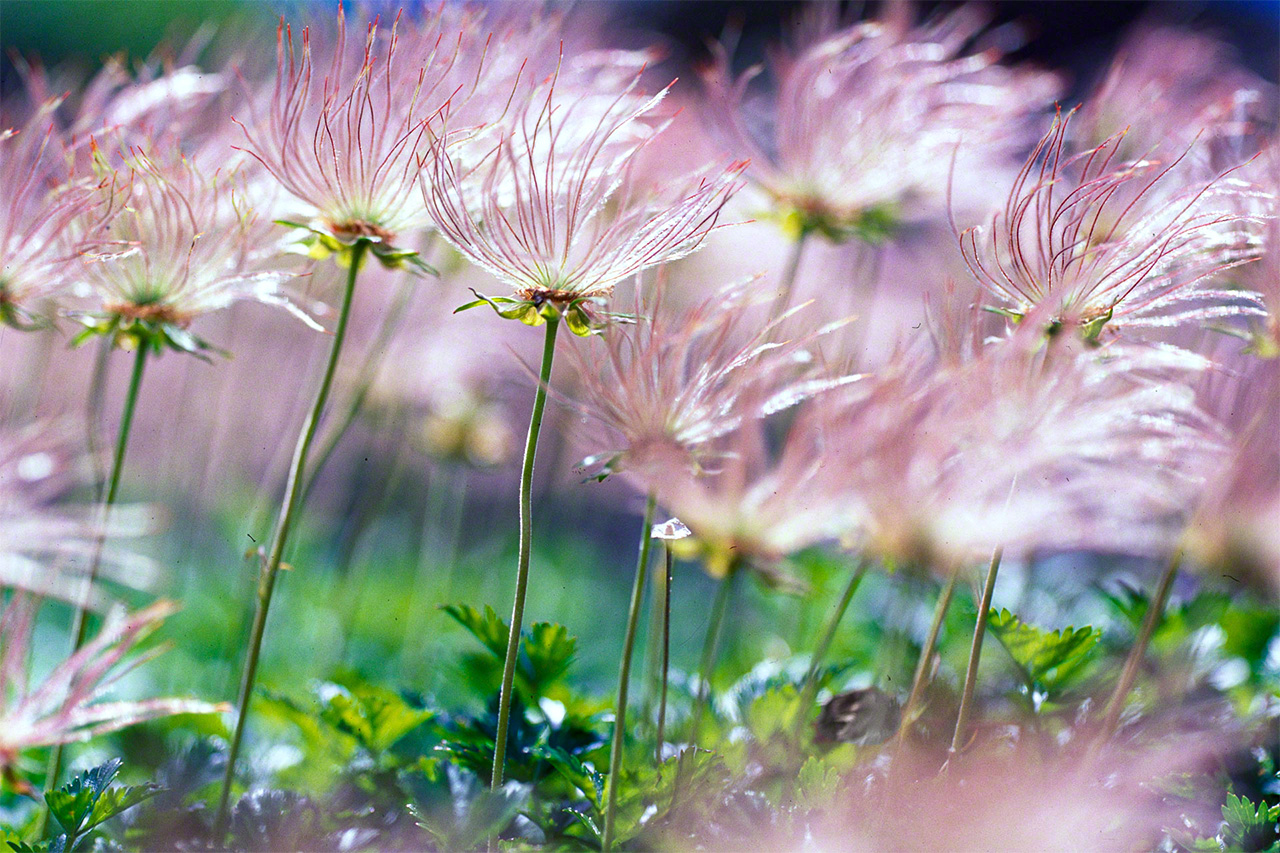
Chinguruma fluff. (© Mizukoshi Takeshi)
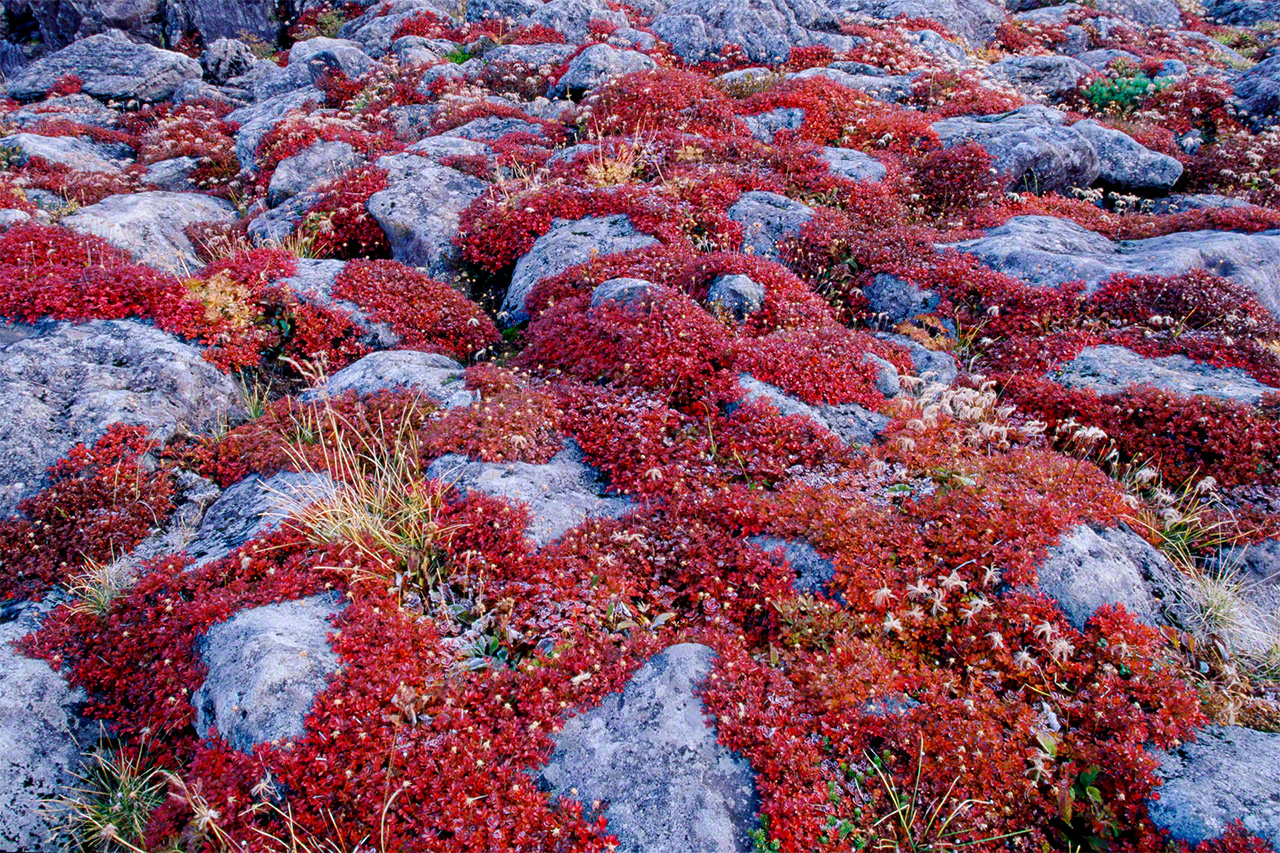
Chinguruma turn red in autumn. (© Mizukoshi Takeshi)
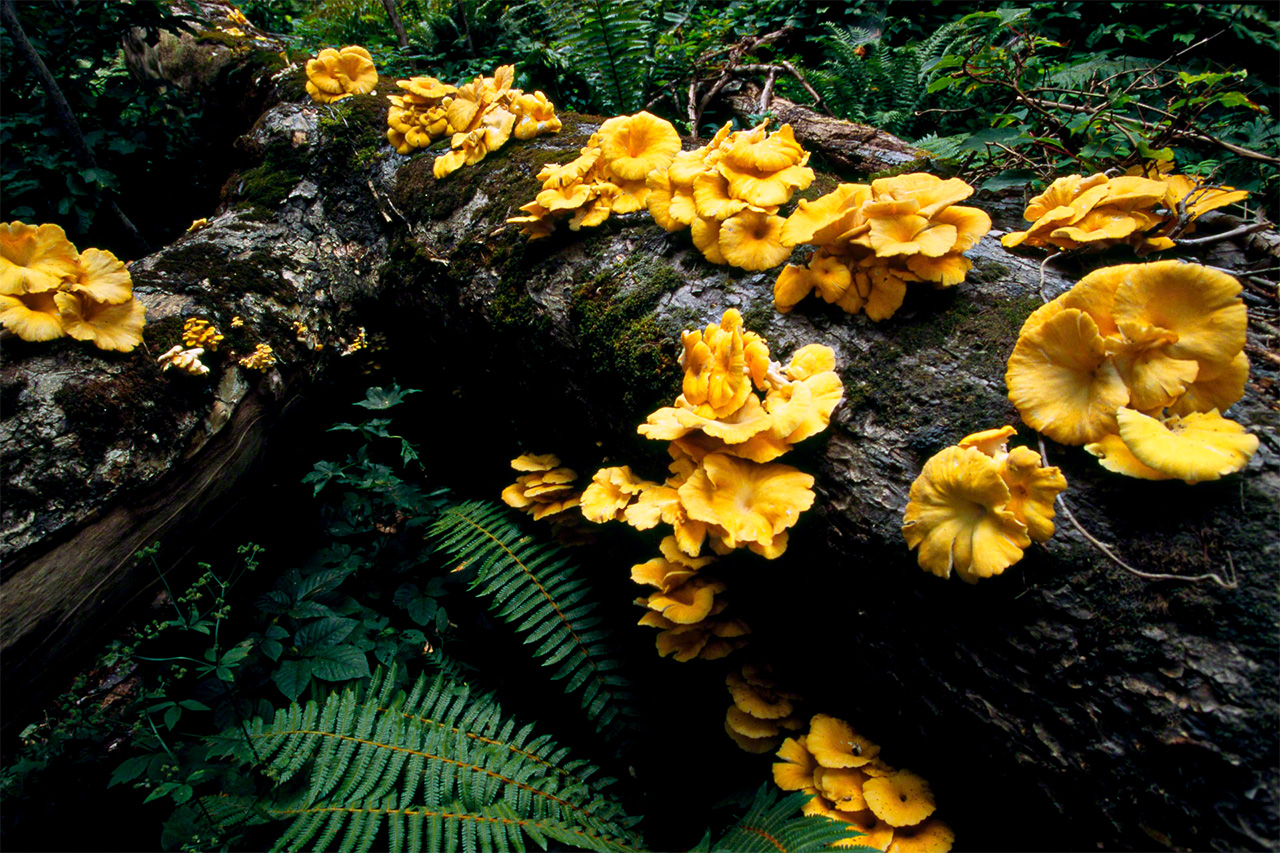
Fungi flourish come September. Here, golden oyster mushrooms grow on a fallen tree. (© Mizukoshi Takeshi)
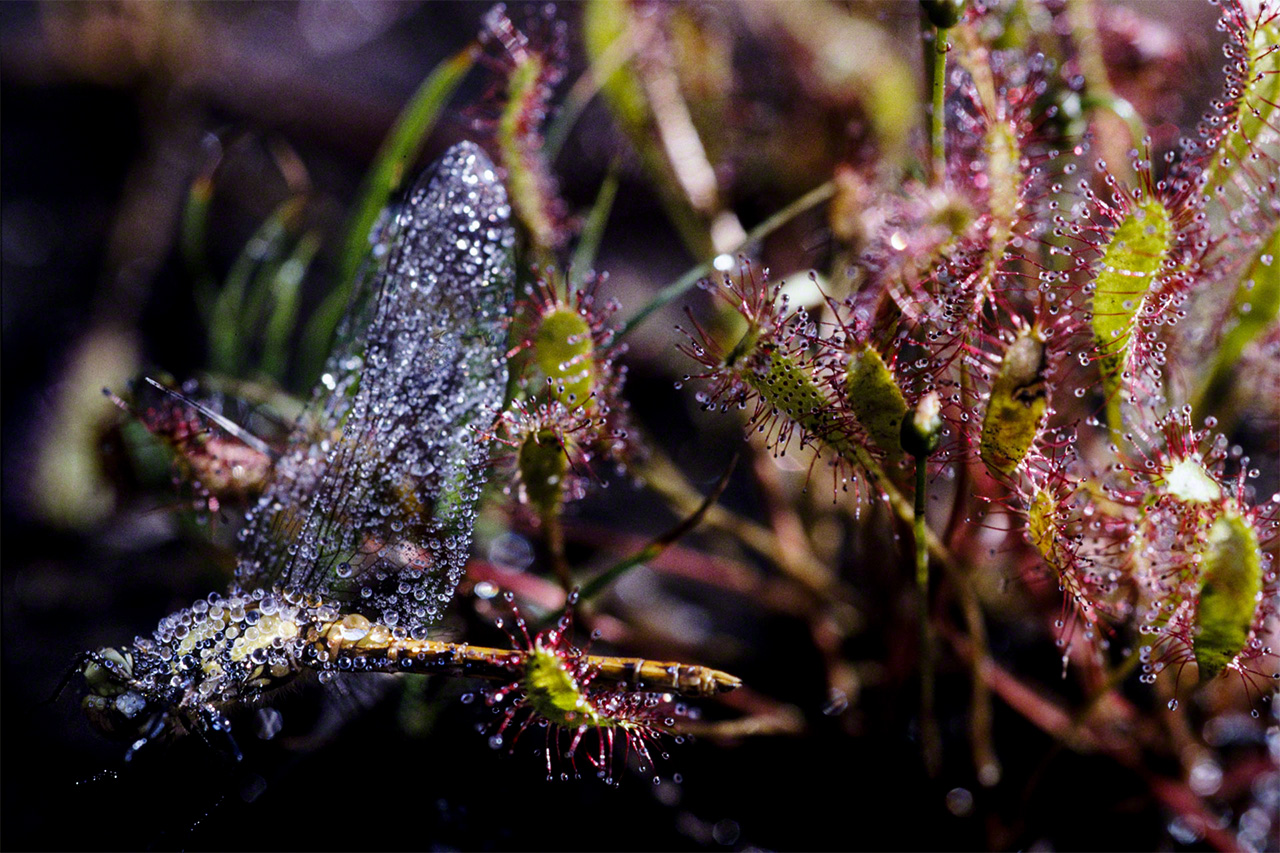
A dragonfly captured by an English sundew, a carnivorous flowering plant species. (© Mizukoshi Takeshi)
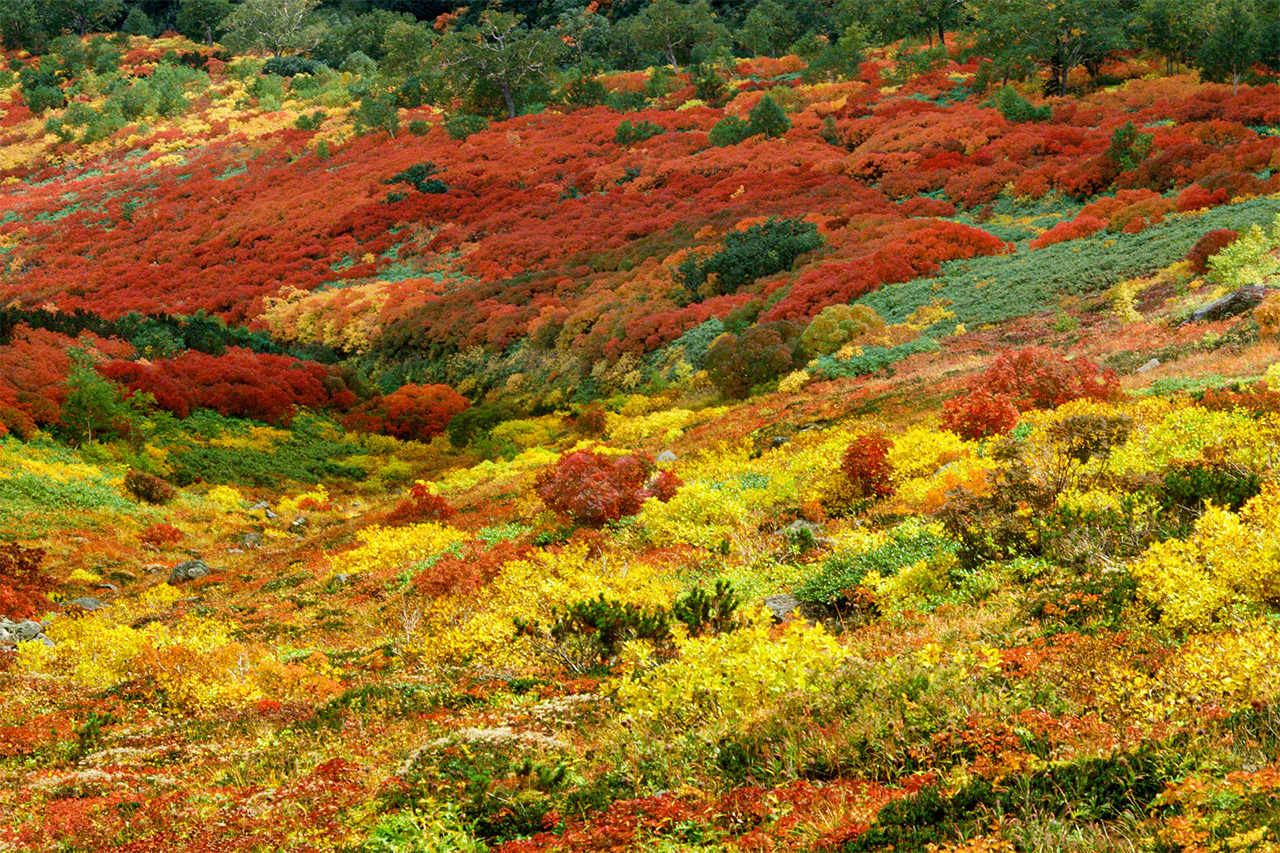
A brilliant autumn brocade of red Japanese rowan, yellow stone birch and willow, and green Siberian dwarf pine trees stretches across Daisetsuzan. (© Mizukoshi Takeshi)
Summer Paradise, Winter Wasteland
Out of all of Hokkaidō’s flora, alpine vegetation has enthralled me most of all. At higher elevations, stone birch and Japanese rowan catch my eye.
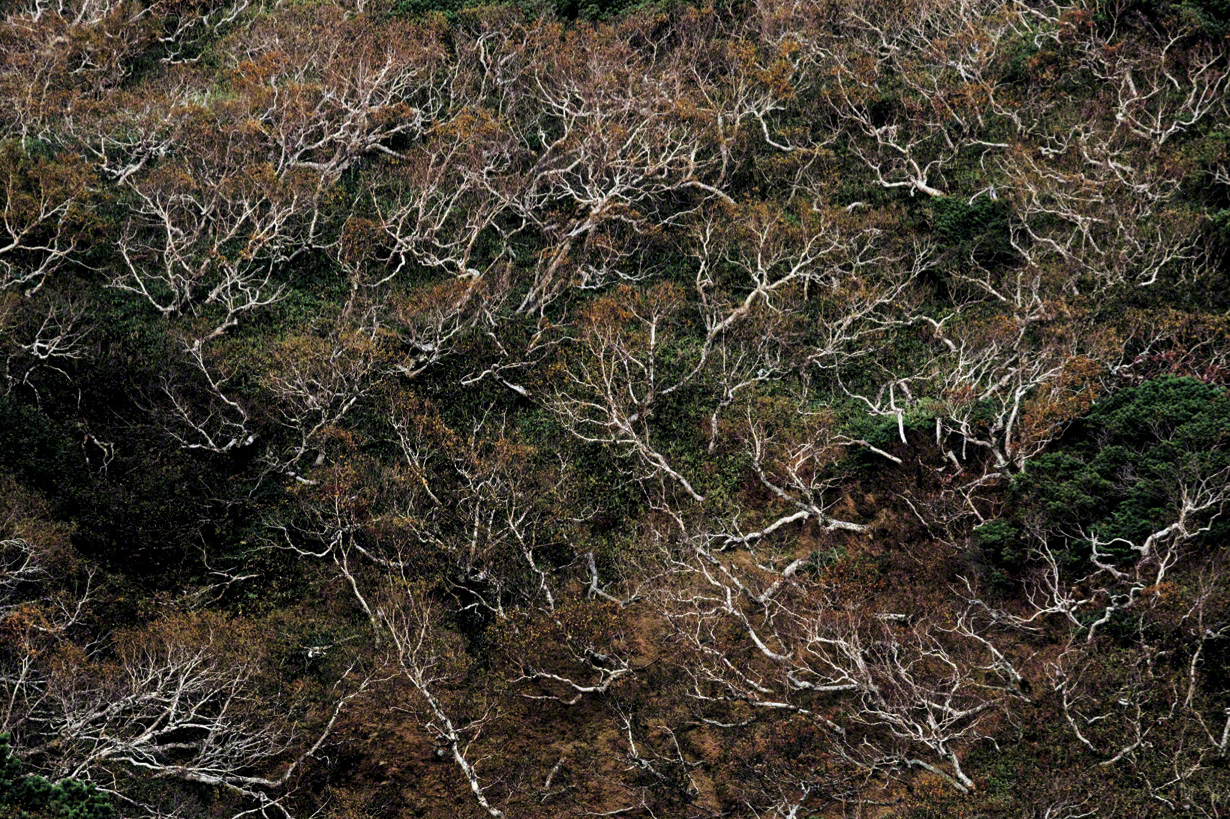
Stone birch at the tree line. (© Mizukoshi Takeshi)
Higher up in the mountains, past the tree line, no tall trees can grow. Green stone pines barely a meter high hug the ground. Areas like this experience severe cold in winter, but during the short summers, with snow still clinging to the ridges along mountain streams, alpine vegetation emerges, exploding into a multicolored carpet of flowers. On Daisetsuzan, it is possible to encounter mountain avens, an arctic-alpine flowering plant widely distributed in northern regions and the Arctic, whose presence is proof that glaciers once covered this part of Hokkaidō. High-altitude tundra, with its mosses, lichens, and shrubs, transforms into a paradise during the fleeting summer but becomes a barren white wasteland in winter.
I will continue exploring the forests in search of the brilliant contrasts and the near-miraculous vistas that the vegetation of Hokkaidō offers for our awe and enjoyment.
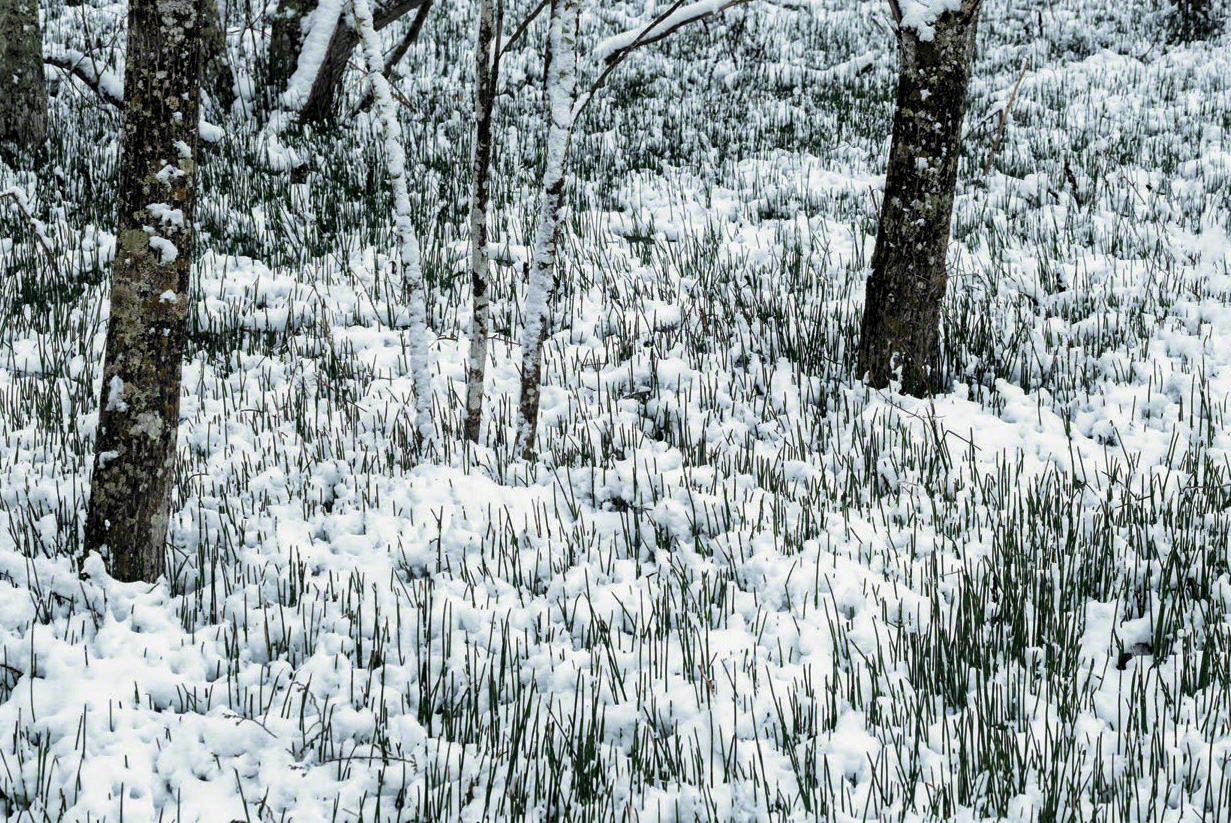
Green horsetails add a dash of color to this study in monotone. (© Mizukoshi Takeshi)
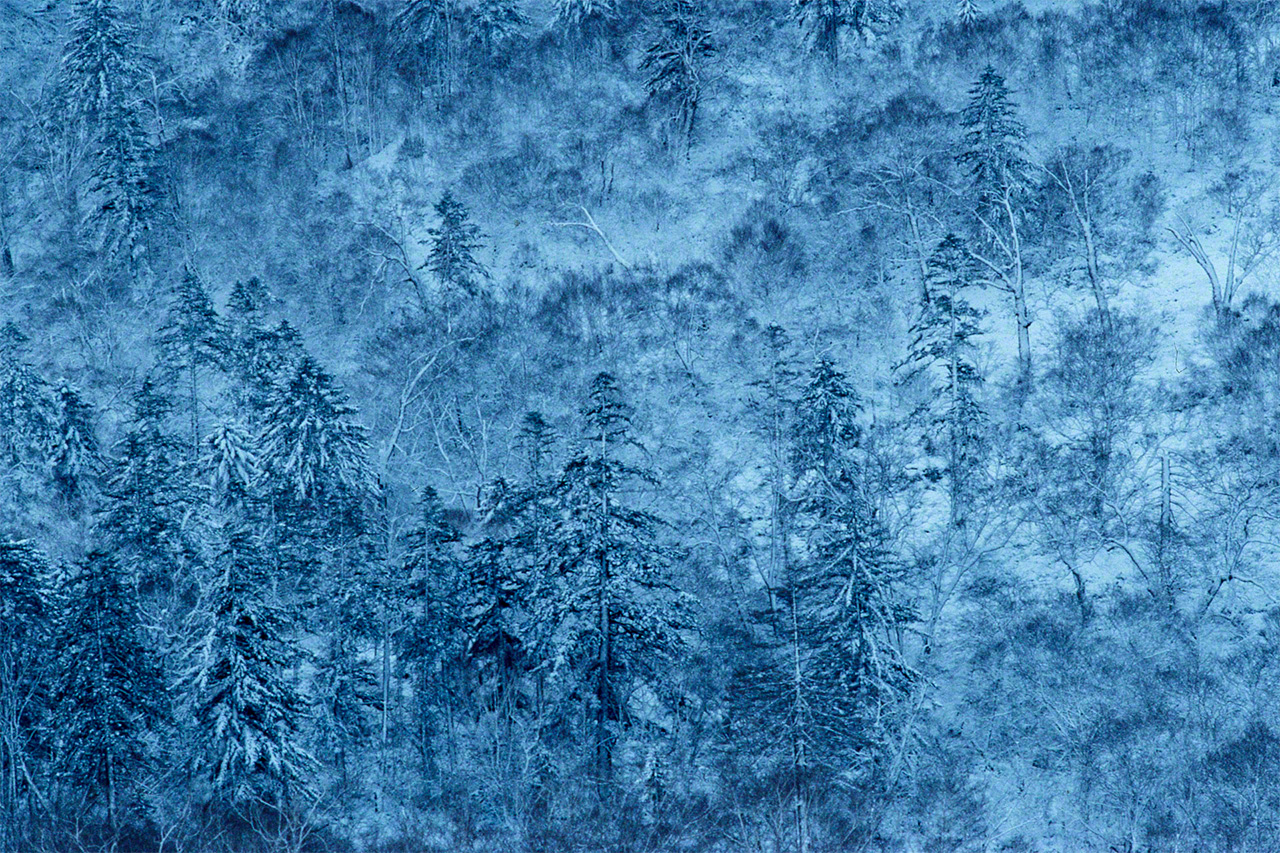
The mountains of eastern Hokkaidō are usually snow-covered by mid-November. (© Mizukoshi Takeshi)
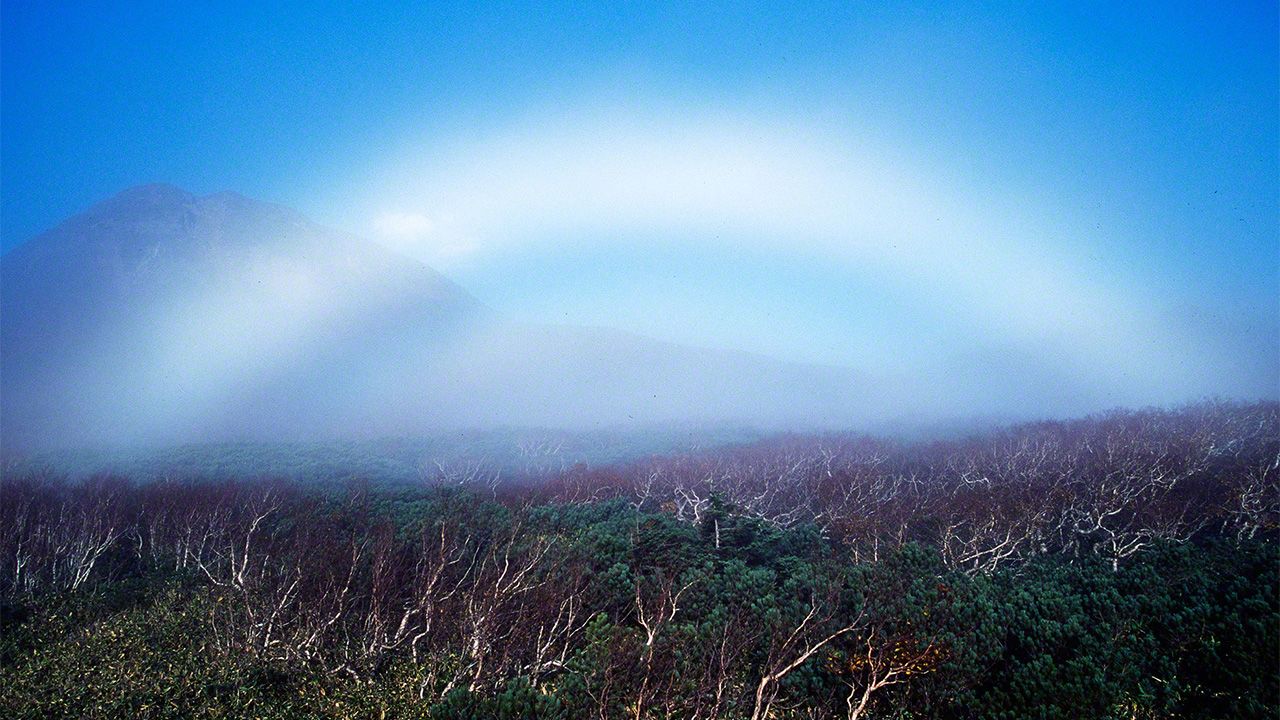
(Originally published in Japanese on May 4, 2026. Banner photo: Double frost rainbows arching over the stone pine zone stretching up to the tree line. © Mizukoshi Takeshi.)