JFL Today: Considering Japanese-Language Education for Foreign Residents
Japan’s Governors Speak Out on Need for a Better Foreign Resident Policy
World Society Economy- English
- 日本語
- 简体字
- 繁體字
- Français
- Español
- العربية
- Русский
Calling for a Basic Law
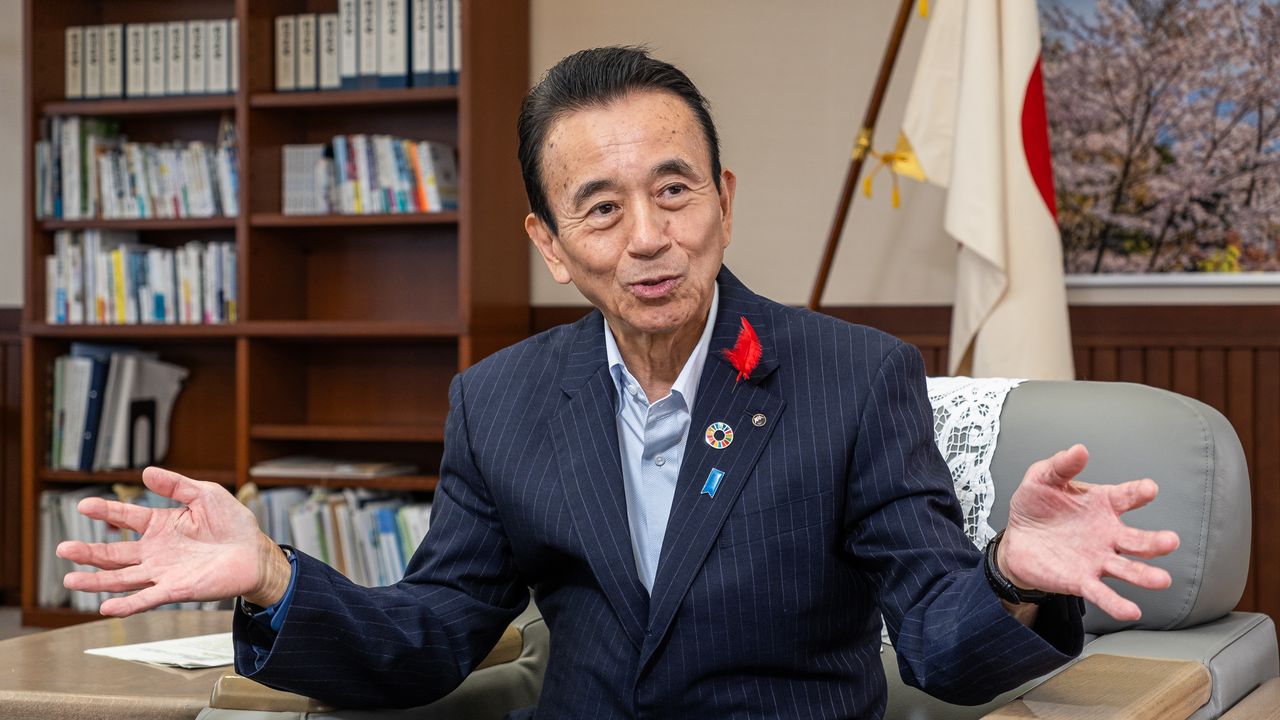
In July 2025, the National Governors’ Association of Japan issued a formal proposal calling on the national government in Tokyo to craft an enhanced set of policies concerning foreign nationals residing in the country. Suzuki Yasutomo, the governor of Shizuoka Prefecture who spearheaded the NGA project to craft this proposal, explains its basic points:
“The proposal asks the government to define foreign nationals living in Japan as ‘residents and members of local communities,’ and to develop a systematic policy framework addressing their recruitment, settlement, and social integration as workers in those communities. It also recommends creating a basic law clarifying the government’s principles regarding foreign nationals, along with a command center organization to coordinate measures across ministries. We envision this command center as an agency that centrally manages areas like Japanese language education, labor issues, and living environments.”
The proposal also suggests that the government take an active role in establishing these systems, says Governor Suzuki. “For the upcoming Employment for Skill Development Program, it requests discussions on adding new fields based on regional needs. With the workforce shrinking due to population decline, coexistence with foreigners is now a nationwide issue, which is why the National Governors’ Association submitted this proposal to the national government.”
Suzuki stresses the need to position foreigners in Japan as residents of local communities, rather than just imported labor. “Government discussions focus too much on foreigners as little more than workers. It’s true that Japan is accepting foreigners for the purpose of labor, but just like Japanese residents, they are people who live here and face many day-to-day issues. Local government staff are engaged with them every day. National Diet debates and government discussions tend to lose sight of this reality.”
Key Points in the NGA Proposal
- Foreigners positioned as residents of Japan
- Responsibility taken by national government, instead of leaving matters to local governments
- Long-term financial provisions for measures to accommodate foreigners, such as Japanese language education
- Expansion of training and employment fields to match regional needs
- Establishment of basic law and command center organization
Double Standard Causing Dissonance
Suzuki, whose political resume also includes a stint in the House of Representatives, points to problems in official approaches to foreign resident issues. “I think there’s an underlying double standard. On the surface, the government says it will not formally adopt a policy boosting immigration, while at the same time it brings in foreign workers to make up for labor shortages.” The result, he says, is that the relevant policies and the question of funding for them remain vague; the consequences of this dissonance are being borne by local governments.
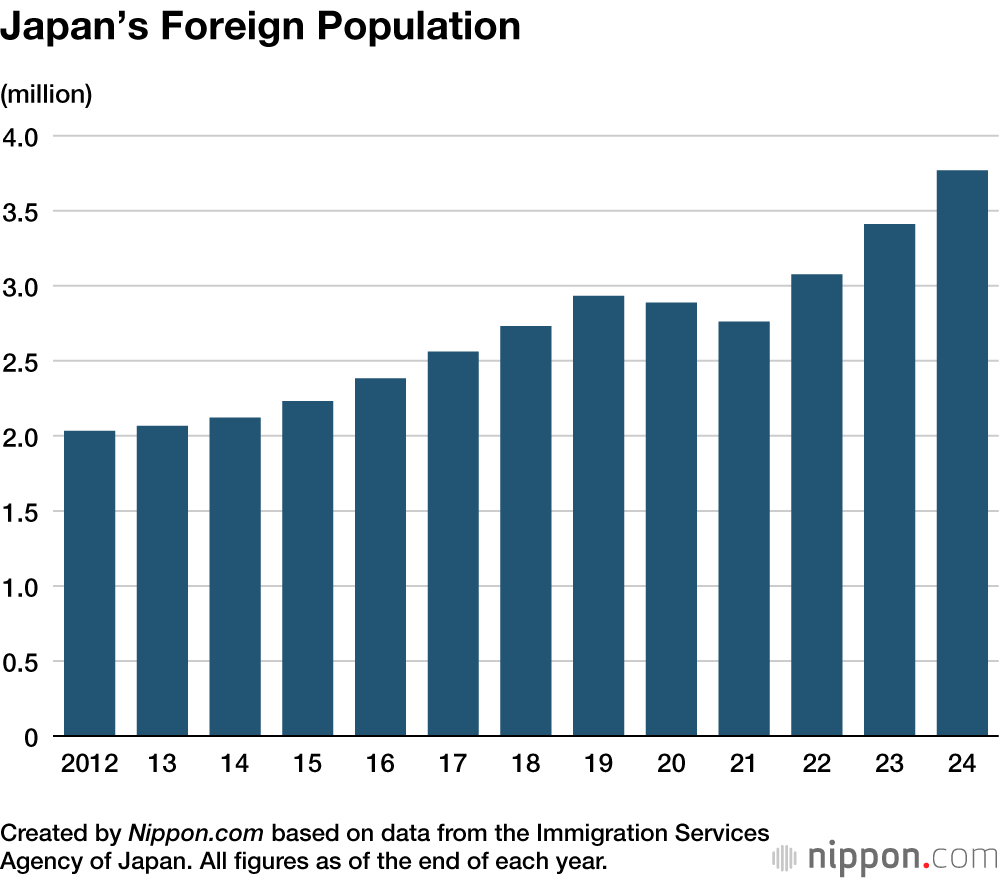
“For example, the burden of Japanese language instruction and daily life consultation services for foreign residents is heavier for smaller municipalities. The number of foreign workers will continue to increase in Japan with the expansion of fields under the Specified Skilled Worker visa program and the introduction of the Employment for Skill Development Program.” Suzuki notes that more flexible rules now make it easier for these foreign workers to change jobs, leading to the risk that too many foreigners will cluster in larger cities and that non-urban areas will experience a shortage of personnel. “The government needs to face this reality and take responsibility by establishing a command center organization and basic law, as well as by ensuring continuous financial assistance.”
Governor Suzuki indicates a number of specific initiatives that are needed at the municipal level. “In less populated areas throughout Japan, support for foreign residents is needed in fields including education, healthcare, consultation, taxes, and social security. In Shizuoka Prefecture, we’ve been establishing multilingual consultation services for foreigners. In Japanese-language education, we have launched initiatives such as the ‘zero non-enrollment’ campaign to keep foreign national children in school, support for higher education and career paths, development of special curricula in schools, and coordination of Japanese language instructors.”
Language Instruction a Heavy Burden
Japanese-language education for foreign residents, stresses Suzuki, is a vital policy target. “Language is the foundation for both work and daily life. We’ve seen cases where foreign workers lose their jobs and can’t find new employment due to limited Japanese ability. Some also don’t understand the tax system and fall behind in payment. Lack of information can create instability in their lives. While it’s best if they learn Japanese before coming, there are countries like Germany that provide instruction on the local language and customs for a set period after arrival. Teaching foreigners Japanese is important for the sake of Japanese society as well.”
Children in particular need robust support in the language-education field, Suzuki says, to prevent them from straying from society. “If children are left to their own devices with no support, it can lead to social problems; if they have adequate support it can contribute to their becoming productive community members . The national authorities need to clearly define the respective roles of the central government, local governments, and the private sector, and to create stable financial and policy foundations.”
Despite this, says the governor, the national budget for support related to foreign residents is insufficient, and the assistance for municipalities has been reduced. “In the NGA’s proposal, we call for the permanent establishment of an expanded national subsidy system. Since foreign workers are being brought in at a national level, the government should be responsible for clarifying both policy and financial resources.”
Time for Tokyo to Take Responsibility
The NGA proposal was announced in July 2025, just after the House of Councillors elections. A hot topic at the time was policies on foreign nationals. “Our association began discussing the proposal in November 2024,” explains Suzuki, “and it was adopted at an NGA meeting toward the end of the following July. This happened to coincide with the attention being focused on policies on foreign residents due to the election that month.”
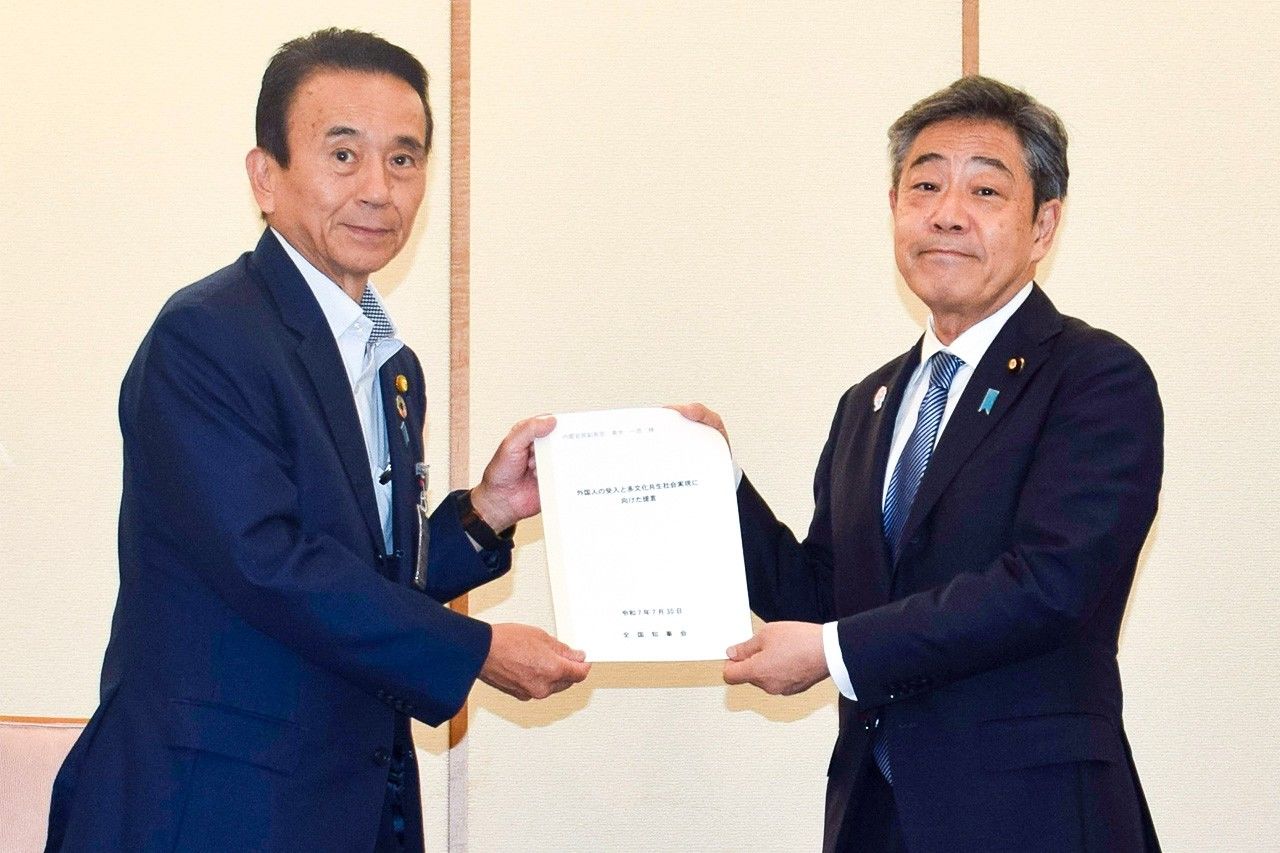
Shizuoka Governor Suzuki Yasutomo (left) handing the NGA’s proposal to Deputy Chief Cabinet Secretary Aoki Kazuhiko in Tokyo in July 2025. (© Jiji)
Suzuki admits that the governors received many critical comments, including some accusing them of crafting a policy of preferential treatment of foreigners. “I would say, though, that the proposal’s aim was to urge the national government to take action instead of leaving policies on foreign residents solely to municipalities. Personally, I believe strict rules should be applied when accepting foreigners and their numbers should be regulated. What our proposal says is that if we are going to bring these people in, the government must take responsibility and ensure they can coexist with Japanese members of local communities.”
Japan also needs level-headed discussions based on the data, says Suzuki. “Japan is among the stricter countries when it comes to accepting foreigners. If there is a claim that they are being ‘prioritized,’ we need to examine how exactly this might be happening, based on the evidence. From a longer-term perspective, crimes committed by foreigners have declined significantly. Isolated incidents in certain areas should not be used to conclude that public safety as a whole is worsening.”
The October 2025 Liberal Democratic Party presidential election saw debate on the question of tighter restrictions on immigration and foreign residents. Strict enforcement of the law is necessary, Suzuki admits. “However, if the first demand is simply to ‘crack down,’ that amounts to a type of exclusionism. We should first clarify our basic approach and then establish a centralized organization. After that, enforcement action needs to be taken against foreigners who don’t follow the rules.”
Those who took a hard line on foreign nationals in the LDP presidential contest will need to adopt realistic policies once they are in government. At the July NGA meeting, says Suzuki, the governors resolved to oppose exclusionism, spurred by concerns that, after having actively brought in foreign workers, Japan now seems to be seeing a sudden shift in that direction.
A Consideration of International Norms
During the administration of Prime Minister Ishiba Shigeru, notes Suzuki, discussions began on integration policies and entry quotas for foreigners. He warns, though: “The shortage of personnel in industries like nursing care, tourism, and manufacturing is serious. Closing the door on foreign workers would impact regional economies and people’s livelihoods. Of course, it is necessary to manage the number of incoming workers and provide support for integration, including language and cultural guidance. Steady, ongoing measures are what reduce friction and lead to community stability.”
Now that Takaichi Sanae’s new administration is in place, Suzuki sets forth his hopes on the policy front. “I would like to see an end to the double standard. The International Organization for Migration defines immigrants as foreigners permitted to stay for 12 months or longer. By this definition, many of the foreign workers in Japan are immigrants. With Japanese society increasingly reliant on foreign workers, maintaining the pretense that the nation does not accept migrants, leaving these policy needs unaddressed, will lead to social confusion. I strongly urge the national government to build a system in which it takes full responsibility.”
Data Sources
- Proposal on the acceptance of foreign residents and realizing a society of cultural coexistence (Japanese only) from National Governors’ Association.
(Originally published in Japanese. Text by Matsumoto Sōichi of Nippon.com. Banner photo: Shizuoka Governor Suzuki Yasutomo, who led the compilation of the NGA proposal for the government regarding policies for foreign nationals. © Nippon.com.)