JFL Today: Considering Japanese-Language Education for Foreign Residents
School Readiness Programs a Welcome Step for Young Foreign Learners
Politics Society- English
- 日本語
- 简体字
- 繁體字
- Français
- Español
- العربية
- Русский
The New Approach to Integration
The Japanese government’s new foreign resident policy, released as the “Comprehensive Measures for Acceptance and Orderly Coexistence of Foreign Nationals,” includes stricter rules to be applied across a wide range of fields to foreign residents of Japan, who now number close to 4 million. However, assessing the new policy only in terms of this “tightening” aspect would be one-sided.
Key Points in the Government’s New Policy Toward Foreign Nationals
- Raise the residency requirement for acquiring Japanese nationality to 10 years or more as a general rule
- Require Japanese language ability, etc. for granting permanent residency
- Deliberate on the creation of education programs covering the Japanese language and Japan’s social systems
- Strengthen measures against unpaid medical expenses and nonpayment of taxes and social security
- Address overtourism issues
- Require notification of nationality in real estate registration
- Tighten screening for residency qualifications
- Strengthen measures against illegal employment
Main Policies on Language Education for Foreign Children
- Consider school readiness programs
- Present guidelines for IT and AI usage in learning
- Enhance support for municipalities
- Enhance support for Japanese language instruction assistants
What deserves attention is that the policy includes an approach of integration in which foreigners as a whole, including their children, are to be incorporated into Japanese society. The document states that the government will “deliberate on the creation of programs for foreign residents in Japan (including accompanying family members) to learn Japanese and Japan’s systems, rules, and so forth.”
This is an “integration program” aimed at helping foreigners adapt to Japanese society. Through systematic instruction before and after arrival, foreigners will learn basic Japanese language skills and social norms, helping prevent conflicts with neighbors caused by unfamiliarity with the local language, rules, and customs. Many countries with large numbers of immigrants or refugees have introduced such programs. In Germany, a similar approach has existed for more than 20 years.
For Japan, this is the first time such an initiative has been set forth. It can be said that some vital points have been put forward for the future.
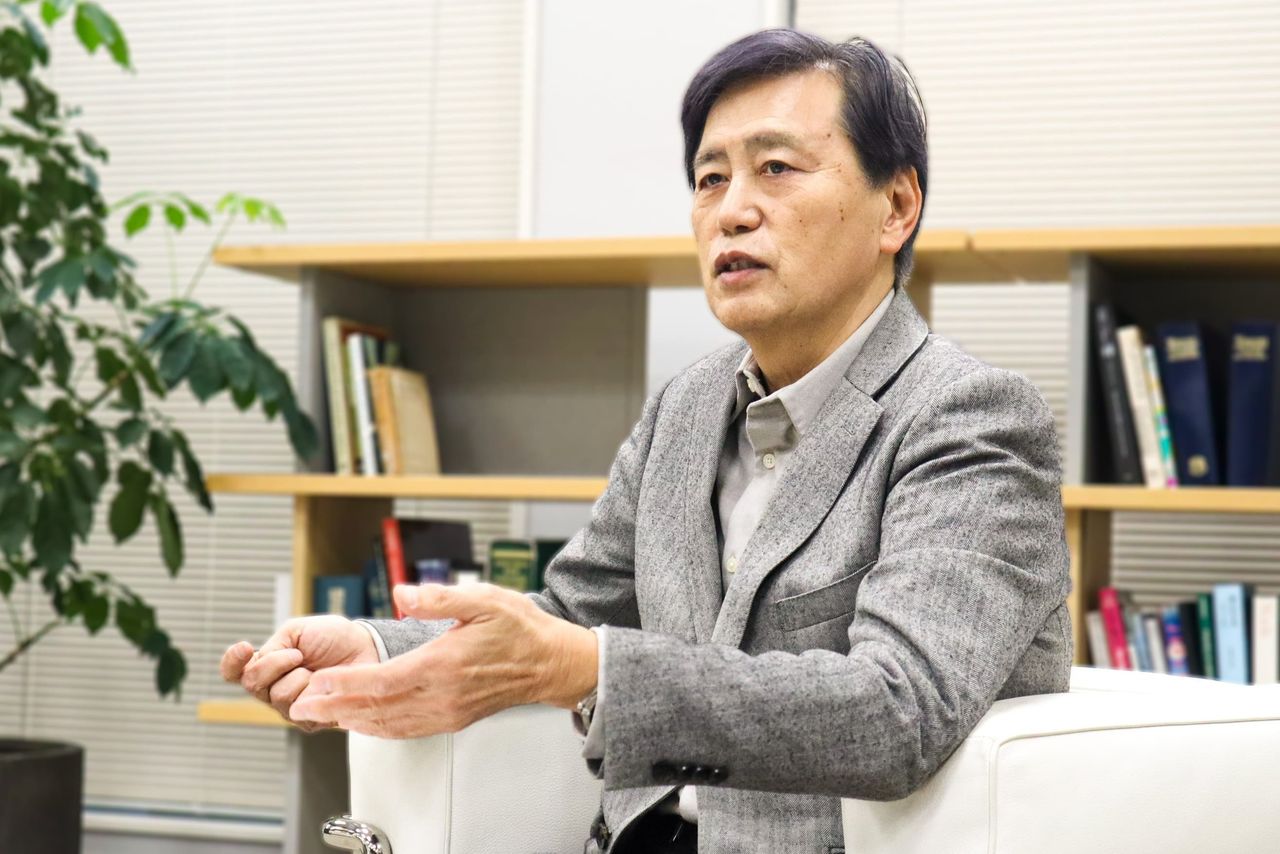
Menju Toshihiro commenting on preschool education for foreign children. (© Nippon.com)
School Readiness Programs: Integration for Children
Regarding the education of foreign children, the policy mentions the introduction of school readiness programs that teach basic Japanese and rules of school life before enrollment. The need for nationwide expansion of these programs in the future has also been pointed out.
School readiness programs play an important role in helping children who need Japanese language instruction at an early stage so they can transition smoothly into school life. If foreign children can start elementary school in a less stressful state, it will reduce the burden on their teachers and other students. Such programs have already been launched in some areas home to many foreign children.
The new policy has included school readiness programs as an immediate policy measure and can be seen as an advance implementation of an integration process for adults. It can be commended as an initiative that benefits foreigners and Japanese people alike.
The administration of Takaichi Sanae, which aimed for stricter control of foreigners, likely did not initially intend to pursue these kinds of integration programs. The priority was more about reducing the inflow of foreigners as much as possible. However, with experts noting that a comprehensive policy for the integration of foreigners is crucial—since foreign workers remain economically necessary—the government took steps to consider such programs from a longer-term perspective as a result.
Widening Regional Disparities
The school readiness programs and other initiatives incorporated into the government’s new comprehensive measures will not, on their own, solve all of the problems relating to the education of foreign children. In particular, resolving the disparities among different regions and schools is no easy matter, especially with the increase in the number of foreign children nationwide.
The document states that support to schools through education advisors for foreign children and Japanese language instruction assistants will be strengthened. However, the teacher allocation of one per 18 students will not be increased. The population of foreign nationals is growing at a rate of about 10% per year, and the systems for Japanese language education for foreign children are not keeping up with that growth.
Furthermore, unlike in urban areas, it is difficult for schools in places where foreigners are scarce to have specialist teachers on permanent assignment. Foreign children in these schools will have to continue to be looked after by ordinary homeroom teachers or educators who divide their time across multiple schools.
The use of online teaching materials and videos has been suggested for schools in areas with few foreign residents. However, using these materials requires teacher proficiency in the IT involved and considerable effort; it will be difficult to make them effective without an appropriate understanding of the need for them among schools.
To date, the government has supported municipalities that undertake model initiatives in Japanese language education for foreign children. In the new comprehensive measures, a policy for enhancing this support for municipalities has also been laid out.
Since there are many municipalities that are currently not being selected for support due to insufficient government budgets, this policy of enhancing support can be seen as a positive step. However, if support continues to be limited to model initiatives, the disparity between municipalities that are able to implement them and those that cannot will only grow wider. Amid ongoing reductions in municipal staff and increasing workloads, many local governments are unable to devote sufficient resources to foreigner issues. Broader support will be needed.
Schools serve as places where foreign children and local Japanese children can interact naturally. Foreign children who receive a Japanese education tend to absorb the language, customs, and ways of thinking of Japan, potentially becoming future bridge-builders who can connect cultures. Establishing a robust and ready educational infrastructure will also serve as an incentive for top-tier global talent to work in Japan, and the abilities of the children who grow up here can be harnessed to drive the nation’s future growth.
Conversely, if Japanese language education is neglected, the risk of foreign children becoming isolated will increase. The number of foreign children who stopped attending school reached 8,000 in 2024, and the academic advancement and postgraduation employment rates of those who do attend school remain below the average. These children often retreat into their own linguistic and cultural communities, potentially leading to fractures within Japanese society down the road.
A Call for National Minimum Standards
All children, irrespective of their location or domestic circumstances, have the right to a baseline standard of education. As a signatory to the Convention on the Rights of the Child, Japan guarantees all children the right to education regardless of their nationality. It is essential that the government establish a national minimum standard of education for foreign children with a view to rectifying disparities.
Many nations, such as Canada and Australia, have seen their societies revitalized by the active participation of second- and third-generation immigrants. Japan should also recognize the long-term value that integrated foreign residents bring to its future and proceed with a fundamental revision of its educational policies for foreign children.
For foreign children to truly contribute to Japanese society in the future, they must go beyond simply learning Japanese. Their academic proficiency must be brought closer to that of Japanese students. In the current school system, foreign children often cannot keep up with their classes. Stronger learning support and career guidance are required, especially from the perspective of a national minimum standard of education.
A Policy That Will Shape Japan’s Future
The new comprehensive measures announced by the Takaichi administration included a wide range of tightening measures with regard to foreign nationals, including the areas of naturalization, welfare benefits, and requirements for residence visas. It appears that the Takaichi government is trying to deflect criticism from Sanseitō and other parties that take a strong stance against foreigners.
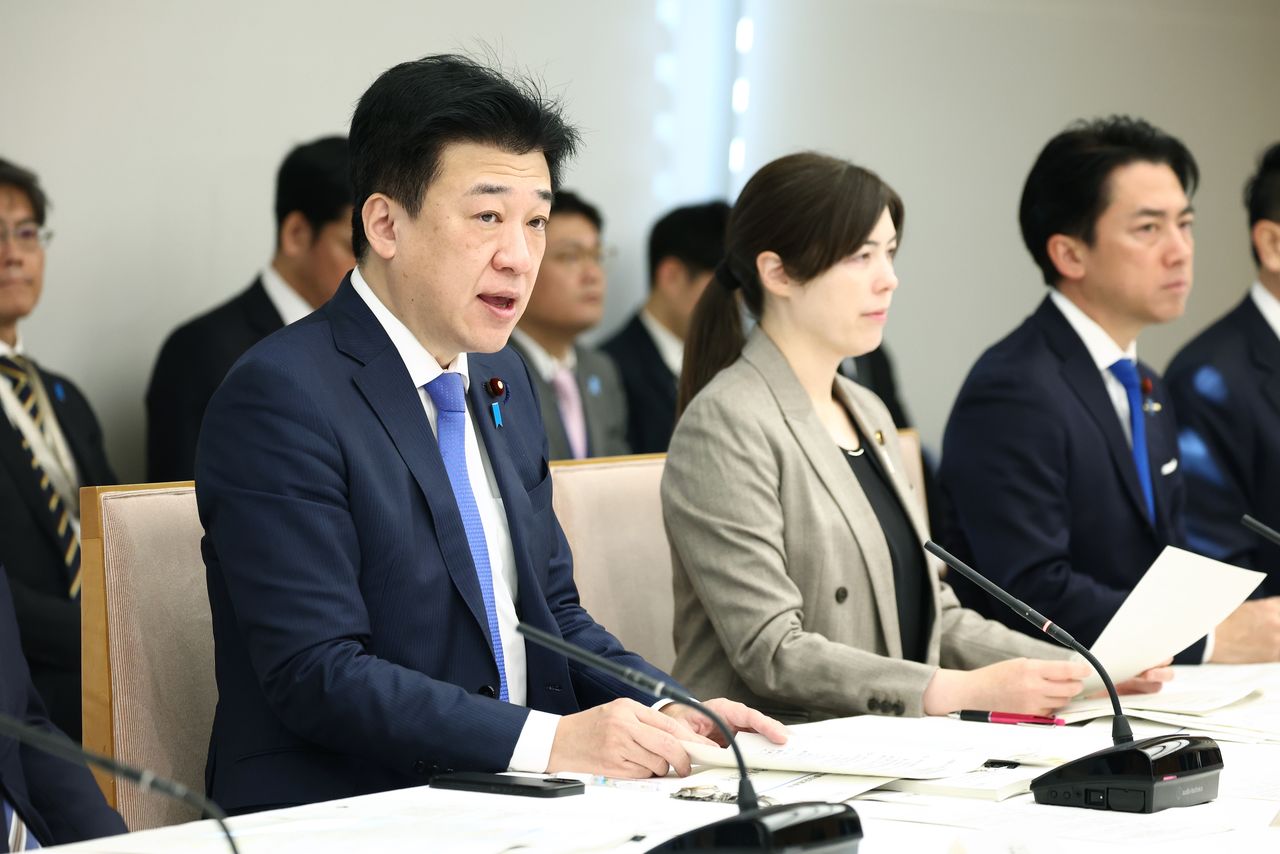
Chief Cabinet Secretary Kihara Minoru (left) speaks at a ministerial council on the review of the government’s policy toward foreigners. Taken at the Kantei on January 23, 2026. (© Jiji)
Some foreigners residing in Japan have expressed support for the tightening measures, as they are seen as a way to rein in the behavior of certain individuals who have gone too far. However, there are concerns that Japan may acquire a negative international reputation or be criticized as xenophobic. Also, some individuals considering studying or working in Japan may become reluctant to do so.
The new policy includes a plan to collect objective data on the situation surrounding foreign nationals. This is a welcome development, since a data-driven, multifaceted understanding is essential for evaluating foreigners’ economic and social contributions alongside concerns such as crime rates and public friction. It is an important initiative for eliminating misinformation and rumors, and for making evidence-based policy judgments.
The decline in the population of Japanese nationals is expected to continue at a pace of 900,000 people per year. The social structure in which foreign labor is needed can be expected to continue long into the future. Japan’s path forward depends on its ability to integrate foreign nationals and build mutually beneficial relationships. And when it comes to the education of children, an approach that goes beyond temporary solutions to take a long-term view of the situation will be critical.
(Originally published in Japanese. Reporting and text by Matsumoto Sōichi of Nippon.com. Banner photo © Pixta.)