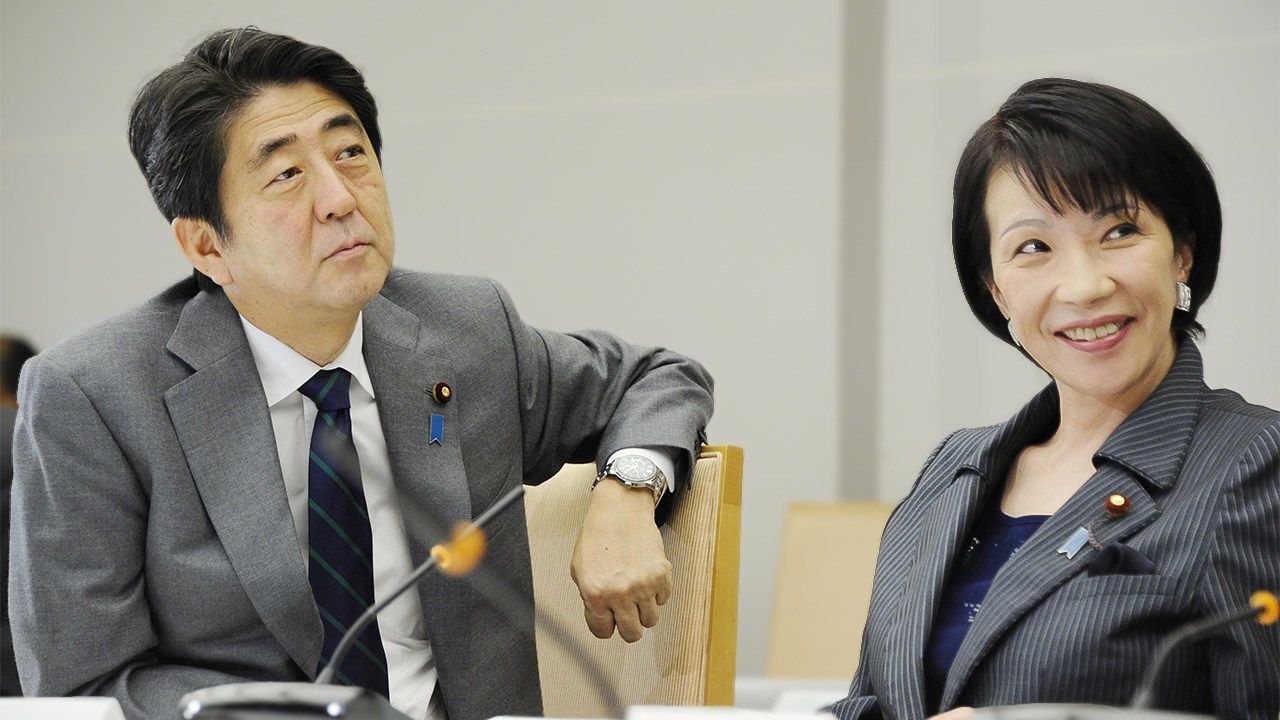
Takaichi Sanae: The LDP’s Last Hope to Avoid Further Decline?
Politics- English
- 日本語
- 简体字
- 繁體字
- Français
- Español
- العربية
- Русский
The LDP’s First Female Standard Bearer
The third time was the charm for Takaichi Sanae, who finally came out on top in the Liberal Democratic Party’s presidential election on October 4, 2025. She had previously run in 2021 and 2024; last year, she came in first in the initial round of voting, but lost the runoff to Ishiba Shigeru. This time around, she was first in both rounds of voting, besting Koizumi Shinjirō in the second round to take the seat at last.
LDP presidential contests involve voting by all party members seated in the National Diet and votes representing the general membership nationwide. It was in this latter group where Takaichi’s strength was most apparent. In the first round of five candidates she took just over 250,000 of the nearly 630,000 votes cast by rank-and-file members, around 40% of the total, and won 31 of 47 prefectural chapter votes in the second-round runoff. Koizumi had been assumed to hold the stronger hand among the Diet members, whose votes hold more weight in the decisive runoff round, but Takaichi’s robust support among the general membership seemed to decide matters for the representatives and councillors, and she handily took first place among them in both rounds of the voting.
History provides a similar example. In 1978, the first year that general party members and supporters were able to take part in the voting, Fukuda Takeo, the sitting prime minister, was expected to win comfortably, but lost to Ōhira Masayoshi in the first round of general membership votes. With the memorable phrase “the voice of heaven can sometimes say entirely unexpected things,” Fukuda bowed out before the Diet members’ voting, indicating his understanding of the impact of the public will.
Later, in the 2001 LDP presidential contest, Hashimoto Ryūtarō was expected to come out on top, but fell to Koizumi Jun’ichirō, who won convincingly among the party’s prefectural chapters in the regional voting round and built that into momentum in the Diet selection phase. It was clear in this contest that the party organization needed to heed local members’ votes as an expression of the popular will—a lesson that came into play again in the 2025 contest.
The reasons for the broad support Takaichi had in this year’s presidential election lie in the positions she has put forward: robust government spending programs, bold monetary easing, a stronger stance on the defense and foreign policy fronts, and patriotic love for the nation. In all these respects she is following in the footsteps of the late Abe Shinzō; it is clear that her passion lies along the same lines that he set down as prime minister.
Japan appears to be at a crossroads today in many ways. Yet to fully extract itself from the “lost decades” of economic malaise following the bursting of the bubble economy, it is seeing prices rise while wages fail to keep up the pace, placing mounting pressure on the working generations. Foreign tourists are arriving in Japan in ever-increasing numbers, and foreign long-term residents are also on the rise, leading in some cases to friction with the Japanese nationals living and working alongside them. Social dissatisfaction is more evident each day.
Skillfully exploiting these conditions in the political sphere are parties like the DPFP, or Democratic Party for the People, with its calls to hike Japan’s take-home pay levels, and Sanseitō, with its “Japanese first” cries. The LDP has seen an erosion of its formerly reliable support among conservative voters, and this has evidently led many members to seek a return to the more conservative course charted by Abe during his time in power. And it is Takaichi Sanae who has been tapped as the standard bearer to bring the LDP back to its former glory.
A Changing of the Guard in Name Only?
Of course, the political trajectory of the LDP makes it clear that the emergence of Takaichi as its leader is the same sort of “pseudo regime change” we have frequently seen in the party’s history.
When Abe Shinzō stepped down as prime minister in 2020, it was to hand the reins to Suga Yoshihide. The baton then passed to Kishida Fumio, and the Abe influence faded gradually with each new premier—a trend that grew more pronounced once Ishiba Shigeru took office in 2024.
Ishiba has long maintained close ties with Noda Yoshihiko of the Constitutional Democratic Party of Japan, the main opposition force. The two are the same age, and Ishiba freely notes that they “get along quite well”—yet another factor that often led to talk of a grand coalition between the LDP and CDPJ. Ishiba was clearly less at home in the conservative centrist camp, leaning more strongly to the liberal side of centrist territory.
Takaichi has now wrenched the wheel back toward the conservative side of things. This is a classic example of the LDP appearing to implement a dramatic changing of the guard while actually stepping back to the previous status quo.
When the LDP took shape in 1955, it was as the merger of the Liberal Party headed by Yoshida Shigeru and the Japan Democratic Party with Hatoyama Ichirō as its chief. From its inception it was home to two major political threads, intertwined like the fibers of a single rope, and this has continued to this day.
The thread representative of the former Liberal Party ran down from Yoshida Shigeru to leaders like Ikeda Hayato, Satō Eisaku, and Tanaka Kakuei. It was Ikeda who founded the Kōchikai faction in the party, which would later be taken over by Kishida Fumio, and Ishiba Shigeru received considerable guidance from Tanaka early on in his political career. This Liberal Party thread can be characterized as carrying forward the Yoshida doctrine, pursuing a lightly armed Japan with its focus firmly on economic matters—something that was once termed “mainstream conservatism” in Japan.
The Japan Democratic Party thread, meanwhile, came down from Kishi Nobusuke to politicians like Fukuda Takeo, Abe Shintarō, Koizumi Jun’ichirō, and Abe Shinzō, embodied in the faction called the Seiwakai. These figures all had different ideas about how to approach economic policy, but their conservatism was consistent in their ideas on the need to strengthen Japan’s defense capabilities and amend the Constitution to permit this.
In the light of these two threads, it becomes easier to understand the dynamics at work when Kishi passed the baton of LDP leadership to Ikeda, or in more recent years, the passing of the mantle from Abe to Suga, Kishida, and Ishiba. And now we see the same dynamics once again as power passes from Ishiba to Takaichi. The LDP’s newest president was once part of the Seiwakai predecessor to the Abe faction, and is generally viewed as a radical conservative within the party, although she describes herself as more moderate.
It must be recognized that one factor behind Takaichi’s rise at this time is the major shifts in the international conditions impacting Japan. China continues to grow stronger, showing clear evidence of its superpower ambitions. North Korea remains as great a threat as ever, and Russia shows no sign of abandoning its war on Ukraine. And the United States under President Donald Trump seems intent on wrecking the postwar international order, while far-right forces are making electoral gains in many countries of the West.
Japan, meanwhile, continues to decline as a presence on the international stage. As its sense of gloom deepens and concerns mount over a military contingency in Taiwan, the winds are turning favorable for politicians of a nationalist bent. For a leader like Takaichi, with her calls for making Japan strong once again, the time is right.
Gauging LDP Chances for Coalition-Building
As Takaichi looks toward the next phase of her LDP leadership, securing selection as prime minister and creating a new administration, her primary concern is how to expand her party’s coalition ties with other players in the Diet. The LDP and its current junior partner, Kōmeitō, are a minority government in both chambers, making it impossible to pass budgets or other legislation without the cooperation of opposition forces. The Ishiba administration formed partial political unions with various other parties on a case-by-case basis to implement policies, but this is no easy task. For the sake of political stability, the LDP-Kōmeitō coalition will be looking to add another party to the mix.
Takaichi spoke clearly about this need while campaigning for the party presidency. At her press conference after winning the post on October 4, too, she stated: “I will be most pleased if we can hold meaningful discussions and come to a mutually acceptable agreement,” signaling her willingness to bring an additional portion of the opposition into the ruling coalition.
The potential partners here appear to be Nippon Ishin no Kai and the DPFP. Ishin has shown a welcoming stance to talks along these lines if the LDP initiates them, while the DPFP is adopting a wait-and-see position instead.
An additional wrench has been thrown into the equation, though. On October 4, Saitō Tetsuo, who heads junior coalition partner Kōmeitō, told Takaichi when she came to Kōmeitō headquarters after her win: “Unless we can do away with our concerns about issues like your potential visits to Yasukuni Shrine, we will not be able to take part in the coalition.” Kōmeitō is also opposed to the idea of working together with Ishin, a party that has been a fierce competitor in electoral districts in Osaka, and here was presenting strong demands for Takaichi to respect the needs of the LDP’s partner.
Taking a step back, we might describe this entire development as another chapter in the decline of the Liberal Democratic Party, which marks the seventieth anniversary of its founding in November this year.
The LDP remained in power from 1955 all the way through 1993, its thirty-eighth year of existence, when it was pressed into the opposition by a coalition of parties. It came back to power in the following year, joining forces with the Japan Socialist Party and New Party Sakigake and placing the JSP’s head, Murayama Tomiichi, in the prime minister’s office. In 1999 the LDP forged a stable coalition with Kōmeitō and, with the exception of just over three years out of power while the Democratic Party of Japan controlled the government starting in 2009, has held the reins ever since.
An Aged LDP Losing Vigor?
If we think of it as a person, the LDP suffered a setback at age 38, learned it was hard to go it alone, and came together with its partner Kōmeitō at age 44. At age 54 it had to take a break for health reasons, but regained its vitality at 57. It is now turning 70, though, and its weakness is becoming clearer—it needs yet another partner to help it through these years. Is old age sapping the party of its vigor?
The LDP is a big-tent party, with members both on the right and left, conservative and liberal. Over time, though, it has seen right-leaning entities like Sanseitō and the Conservative Party of Japan peel off some of its most conservative members, while more centrist groupings like Ishin and the DPFP have taken their share of politicians who once would have found their home in the LDP. The Liberal Democrats have been dwindling as a result.
The challenge before Takaichi Sanae, therefore, is no small one. She must retake the territory on the right of the political spectrum while also bringing centrist conservatives back into the fold, strengthening her administration with new coalition partners and extending the LDP’s hold on power.
In all of this, she will find herself looking once again to Abe Shinzō as a model. A conservative at heart, Abe also had a strongly realist streak, implementing numerous policies from the moderate liberal playbook, such as wage hikes, filling positions with women, and reforming working styles in Japan. He maintained a firm grip on the conservative wing of the party while also appealing to centrists without party affiliation, the greatest portion of the electorate, thereby achieving the longest-lasting administration in Japanese history. If Takaichi is to follow through with her claim to “moderate conservatism,” she too will have to cater to both the bedrock conservatives in her party’s right flank and the moderates in its left.
The LDP’s new president has already declared that she will achieve unity within the party, such as by tapping all the other four candidates who stood against her in the leadership contest for key posts as she decides who will run the LDP organization and hold cabinet portfolios. The question is now whether she will be able to carry out personnel choices that include a broad spectrum of the party’s membership, of all generations, from both within and outside its mainstream.
In the past Takaichi has come under fire for attempting to do everything on her own. She will need to surround herself with a strong team of talented members, delegating tasks to them as she runs her administration. Will she have what it takes to put a declining LDP back on its feet and bring strength and prosperity back to a fading Japan? If she fails in these tasks, there may be no coming back from it.
(Originally written in Japanese. Banner photo: Prime Minister Abe Shinzō and Takaichi Sanae attend a meeting at the Kantei in Tokyo in October 2014. © Jiji.)