Takaichi Sanae Takes the Helm: Charting a Conservative Course Along Abe Lines
Politics- English
- 日本語
- 简体字
- 繁體字
- Français
- Español
- العربية
- Русский
Crafting a Coalition on Conservative Appeal
The past month or so has been a time of dramatic change in the Japanese political scene. Prime Minister Ishiba Shigeru announced his resignation from the post, and as president of the Liberal Democratic Party, on September 7. This triggered a reshuffling of politics as the LDP chose a new leader and ruling and opposition parties alike thrashed out their allegiances to achieve a potentially workable coalition government in the National Diet.
Takaichi Sanae, who came out on top in the LDP leadership contest, will fundamentally aim to create a conservative government carrying forward the policies of Abe Shinzō, prime minister in 2006–7 and 2012–20. Now that her LDP’s longtime junior coalition partner Kōmeitō has jumped ship, though, its moderating presence is no longer a part of the mix, making her government a more purely right-leaning entity than that in place in the Abe days. Having painted herself as the hardline conservative option, she now risks losing the support of her core supporters if she fails to pursue this course moving forward—a factor that aligns her more strongly to Ishin, which also needs to continue marketing itself as a force for conservatism.
The upshot of all of this is that Takaichi’s moves to bolster Japan’s security policy on the international front and to revise the Constitution domestically will face little friction from the new junior coalition partner. This new administration now sees stronger incentives than previous ones to hew to the conservative course. Even with a prime minister as powerful as Abe was, the LDP found itself prevented by its partner Kōmeitō from embarking on ambitious plans to revise Japan’s Constitution. And while the endgame remains similar today—there being no two-thirds majority in both chambers of the Diet of politicians willing to vote for a change to the nation’s basic law, as required—the new government will nevertheless be emboldened even more than Abe’s government ever was to begin the process of crafting amendments that define Japanese responses to potential crisis situations in the international arena.
In the longer term, the LDP under Takaichi will need to face another election before it can truly gauge how much the loss of Kōmeitō as a partner will harm it at the polls. For the time being, it appears as though managing the policy course of the coalition will be an easier task with a more closely aligned partner in place.
And Ishin, of course, is a party that has its origin in a splintering of the LDP in the first place. Following the reformist Koizumi Jun’ichirō’s term in office (2001–6), as the party trended back away from the reform course once again, the Ishin party took shape in Osaka, where it appeared as a local political group in 2010, eager to continue bearing that banner. Now, 15 years later, this group has returned to the LDP’s side, in a sense, on the national stage. This development follows a pattern seen earlier in Japanese political history—the members of the New Liberal Club parted ways with the Liberal Democrats in the mid-1970s, only to come back to join forces once again a decade later, first in the form of a coalition and then as a complete return to the party rolls. One might predict something similar for the Ishin members today, should their own party find itself on shaky footing in the future political scene.
A Step Forward in Gender Terms—Or Not?
Takaichi Sanae is the first woman to take the office of prime minister in Japan. Despite this, though, she has not sought to build on this unique position in her political strategy, a factor that has weakened support for her among those who seek to do away with the gender bias in Japanese politics.
Personally, I still view her arrival in the nation’s top office as a significant step for Japan. I believe that Japan’s dismal rankings in international comparisons of gender gaps depend largely on superficial, numerical indices, rather than on the underlying beliefs that inform the political reality. From this angle, though, it may be an important move to get a female face into the Kantei as something to build on.
In more fundamental terms, Japan still lacks a political environment that can accept and advance feminist-leaning women leaders, at least compared to its peers around the world. This is something borne out by international opinion polls, as well as by results on the ground in elections here—in the 2024 race for the Tokyo governor’s office, Renhō, who would generally be viewed as a woman candidate with the backing of feminists, fared dismally against her opponents.
If we set the value for the Japan of the past, which has never had a woman leader, at 0, and a nation with a fully feminist woman in charge at 1, then even under Prime Minister Takaichi, I feel that Japan only ranks as a 0.1 or 0.15 in terms of gender equality. Whether we see her selection as truly groundbreaking depends on if we see this gradual progress as positive or not.
To a large extent, Takaichi’s selection as party head rested on the impact she had as a symbol that the LDP was carving out a new position for itself, separate from its past as a mainstream conservative force in Japanese politics. This is something that would not have been possible under her main challenger, Koizumi Shinjirō, who would have signified a continuation of the main policies of the preceding administration of Ishiba Shigeru.
We must recognize that the LDP sees its losses in the July 2025 House of Councillors election as due in large part to the success of Sanseitō in peeling off votes among the party’s bedrock conservative supporters. This leads logically to the conclusion that the LDP needs to cater to the right-leaning viewpoint in order to shore up its electoral support here. Given the party’s opposition to issues like allowing married couples to use separate surnames, it is difficult in terms of political correctness for a male candidate to step forward and champion the conservative causes at the party’s heart; this leaves room for female figures like Takaichi to step into the foreground as a safer choice to press the case on these issues.
Clashing Ideologies
What we call the “political party system” is a description of the patterns that party rivalries take in a given space. It includes such factors as the number of parties in play, the ideologies they bring to bear, and how those ideologies position each of them against the others.
In Japan in the 1980s, when the LDP controlled the government through its single-party hold on a majority of Diet seats, there was a framework in place for its cooperation with centrist groups like the Kōmeitō and Democratic Socialist Party; this was further hedged on the left by parties like the Japan Socialist Party and Japanese Communist Party. This makes the present situation one that may end up quite similar to those days, with the right-leaning LDP and Ishin in the coalition, a grouping strongly opposed to that coalition in the form of the Constitutional Democratic Party of Japan and the Communists on the left, and the centrist forces of the Kōmeitō and Democratic Party for the People arrayed between them.
During the administration of Abe Shinzō in power from 2012 to 2020, we had what was often termed the “neo-1955 setup,” with a dominant LDP and vast ideological gaps between that ruling party and the main opposition forces. The ruling parties saw their seats in parliament dwindle significantly in the elections that took place during Ishiba Shigeru’s 2024–25 administration, though, and both the dominant ruling party and the leading opposition party moved toward the center, blurring differences between them. Takaichi’s rise to power signals a return to a more clearly demarcated ideological position for the LDP, but it can no longer depend on a clearly superior position in terms of numbers in the Diet, which means that this can no longer be described as something akin to the 1955-style arrangements of the past. While the LDP is a minority ruling party in the Diet, it still holds a significantly stronger position than its opponents in terms of the numbers in play, meaning that we have not arrived at a truly multipolar situation with several parties of similar standing.
Both the “1955 system” that held sway for much of the postwar era and the “neo-1955 setup” of the 2010s were built on a common foundation: the standoff between a conservative camp, which made constitutional and defense issues its main redoubt, on one side and a more progressive camp on the other. This basic framework remains in place to this day, making it a diehard feature of the Japanese political story.
And in the end, the process that placed Takaichi Sanae in the prime minister’s office this year has been yet another way to confirm the lasting nature of this dynamic. One potential pairing that could numerically have produced a different coalition in power, involving the DPFP and CDPJ, never got off the ground because, as clearly noted by DPFP leader Tamaki Yūichirō, the two parties did not see eye to eye on issues including constitutional revision, defense, and nuclear power. The conservative/progressive split has once again made itself felt in a very real way.
Immigrant Policy as a Fresh Battleground
As part of her deal with Ishin to get its new cooperative relationship with the LDP off the ground, Takaichi Sanae agreed to its proposal to reduce the number of Diet members. There are several layers of significance to unpack here.
First, the real issue—the need to tackle the connections between money and politics—is being swept under the rug for the time being. Amending the Political Funds Control Act in a meaningful way represents a tall challenge for the LDP, so tinkering with the makeup of the parliamentary system is a way to appear to be doing something while leaving that off of the table. As a bonus, if the seats to be reduced come in the proportional representation segment of the Diet’s seating, it makes it easier for the LDP to reduce electoral pressure from that angle, a pressing concern given the success of minor and new political parties in securing seats through widespread voting rather than in individual districts. From this perspective, the deal is clearly a wise one for the Liberal Democrats to sign.
At the same time, though, a smaller number of seats across the board will make it more difficult to correct imbalances in the value of votes between districts with low and high voter numbers. What is more, a simple reduction in the Diet membership will do little to tackle overspending on the fiscal front. The opposition parties may find it difficult to oppose such reform proposals for fear of opening themselves to accusations that they are merely seeking to hold on to the seats they have already, but frankly I do not see much value in self-sacrificing sorts of reform efforts, which only provide a momentary sense of satisfaction to voters.
Among those whose goal is to achieve a lasting two-party political system in Japan, reducing proportional representation in the Diet in favor of a purer focus on single-seat districts is an attractive idea. Any argument for political system reform, one way or another, can easily be identified in terms of who will benefit from the changes being proposed. There is no objectively correct form to pursue when it comes to an electoral system, meaning that all ideas brought into the debate are tied directly to partisan calculations by the parties mouthing them.
The electoral reforms that Japan undertook in the 1990s were relatively drastic. Nevertheless, they resulted in a system where the LDP remained as powerful as always, and changes of power as rare as ever. I believe that one fundamental reason for this unchanging nature of the system lies not in issues related to the electoral system, but rather in the unyielding format of the standoff between conservative and progressive ideologies, primarily in the area of constitutional reform issues.
Takaichi Sanae’s new administration is the first overtly right-wing government in Japan since five years ago, when Abe Shinzō left office in 2020. Given the openness of coalition partner Ishin to the question of constitutional amendment, along with the DPFP outside of the government, Takaichi has little to lose by making this a key theme of her political dealings moving forward. Another issue that could similarly serve as a touchstone clearly demarcating the conservative and progressive sides of the debate will be stronger regulation of foreign residents in Japan.
Indeed, the rising numbers of foreigners coming to Japan to live and work have long been a point of concern among society at large, leading to a gap between the perceptions of voters and of the elite politicians who have chosen not to focus on the issue to date. This has created room for new political forces to bloom by wielding social media as a tool to gain mindshare in connection with this. Today, unlike when Abe was in power, social media is an even more potent channel for shaping and directing political movements like this one.
Generally speaking, a more marked split between conservative and progressive stances in the political arena ends up fragmenting the opposition and strengthening the hand of the conservative LDP. It will be well worth watching how the CDPJ responds from here on out to provocations on the policy front in the form of hawkish proposals by the Takaichi administration. If those responses involve shifting still further to the left, we may see the CDPJ becoming as ineffective as the Socialists once did, making it even less likely that they will be able to wrest power back from the LDP at some point.
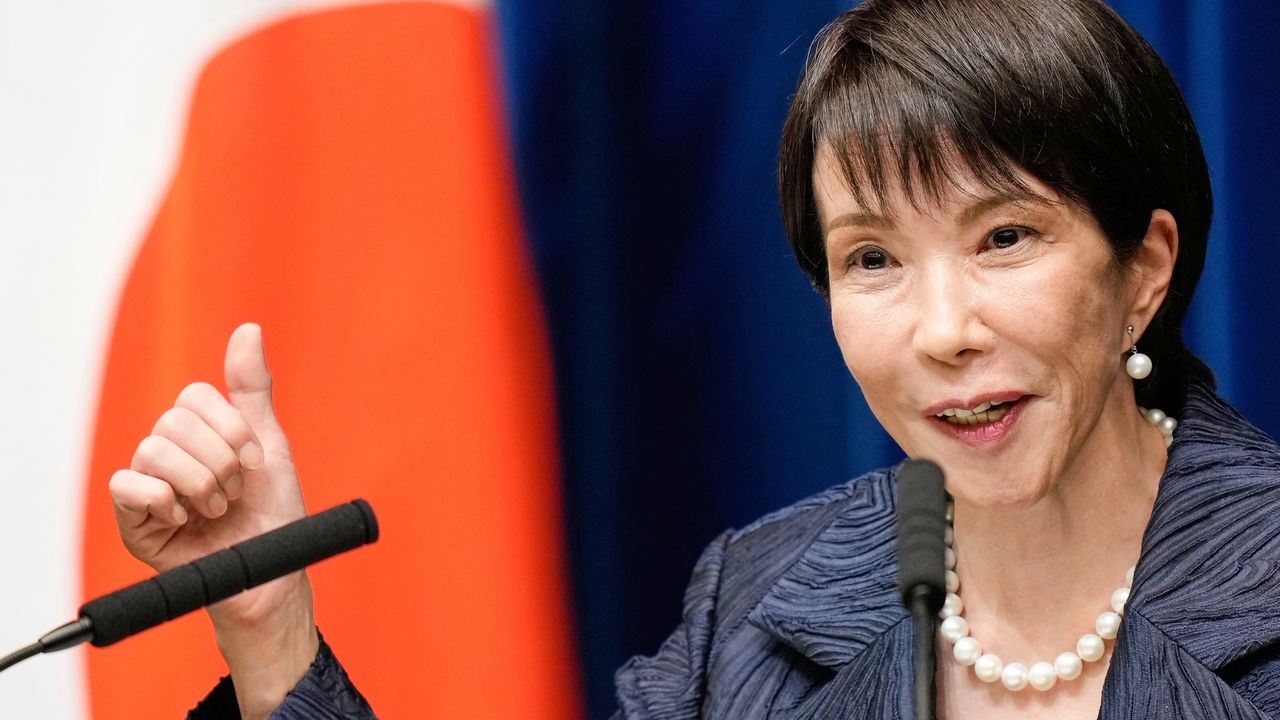
(Originally written in Japanese based on an interview by Koga Kō of Nippon.com. Banner photo: Prime Minister Takaichi Sanae speaks to the press at the Kantei in Tokyo after taking office on October 21, 2025. © AFP/Jiji.)