Legends: Japan’s Most Notable Names
Umezu Kazuo: The Horror Manga Master and His Complex Relationship with Tezuka Osamu
Society Entertainment Art Manga- English
- 日本語
- 简体字
- 繁體字
- Français
- Español
- العربية
- Русский
No “Bright Future”
Manga creator Umezu Kazuo passed away on October 28, 2024, at the hospice where he was receiving end-of-life care. He was 88 years old. At that time, I still had a vivid memory of his workplace in Kichijōji, Tokyo, which I had recently visited while Umezu was away. Seeing five or six volumes of early works by Tezuka Osamu piled up on the floor left a strong impression on me.
Umezu was well-known for his criticism of Tezuka. In a 2022 interview concerning his celebrated The Drifting Classroom (1972), he commented, “Looking back now, there might have been some negative reaction against the ‘bright future’ depicted in Tezuka Osamu’s works. I felt like I should go in the opposite direction from him.”
The Drifting Classroom is the story of elementary school students transported forward in time to a post-apocalyptic wasteland, who find themselves in a harsh battle for survival. Meanwhile, the Tezuka-style bright future Umezu describes is assumed to be the kind of world seen in Astro Boy, where science is all-powerful.
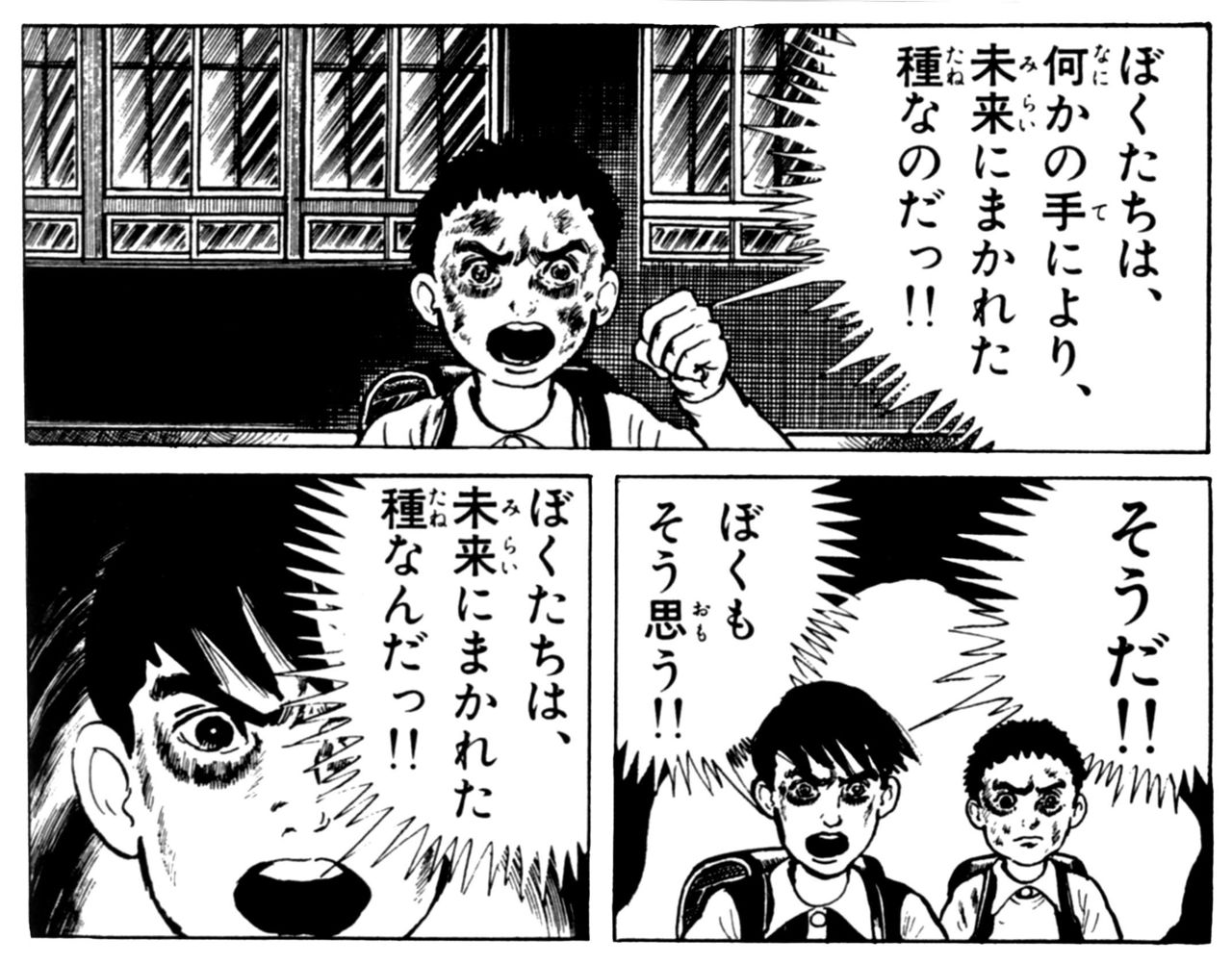
Scenes from The Drifting Classroom. (© Umezu Kazuo)
The Dark Route
Umezu was born in the town of Kōya, Wakayama, and grew up in the Yoshino region of Nara Prefecture. Both are mountainous and well forested. By contrast, Tezuka was raised in an upscale residential neighborhood in Takarazuka, Hyōgo.
In a 1997 Yomiuri Shimbun interview, Umezu said, “The sun shines and the future’s bright in the positive world of Tezuka manga. So, I take the dark route. . . . The black forests of Yoshino shaped everything about me.” At the base of Umezu’s horror is the “forest terror” that was a familiar presence from his childhood on. This terror seeps into the streets and houses. For Umezu, fear is a life force that is not necessarily negative.
Reading Tezuka’s New Treasure Island (1947) , his debut work in tankōbon (book form), inspired the 10-year-old Umezu to become a mangaka himself. He was stunned after buying a copy of it at a shrine summer festival: “It was a new form of expression for a new era, and there was nothing like it.” He became an avid collector of tankōbon volumes of Tezuka’s comics.
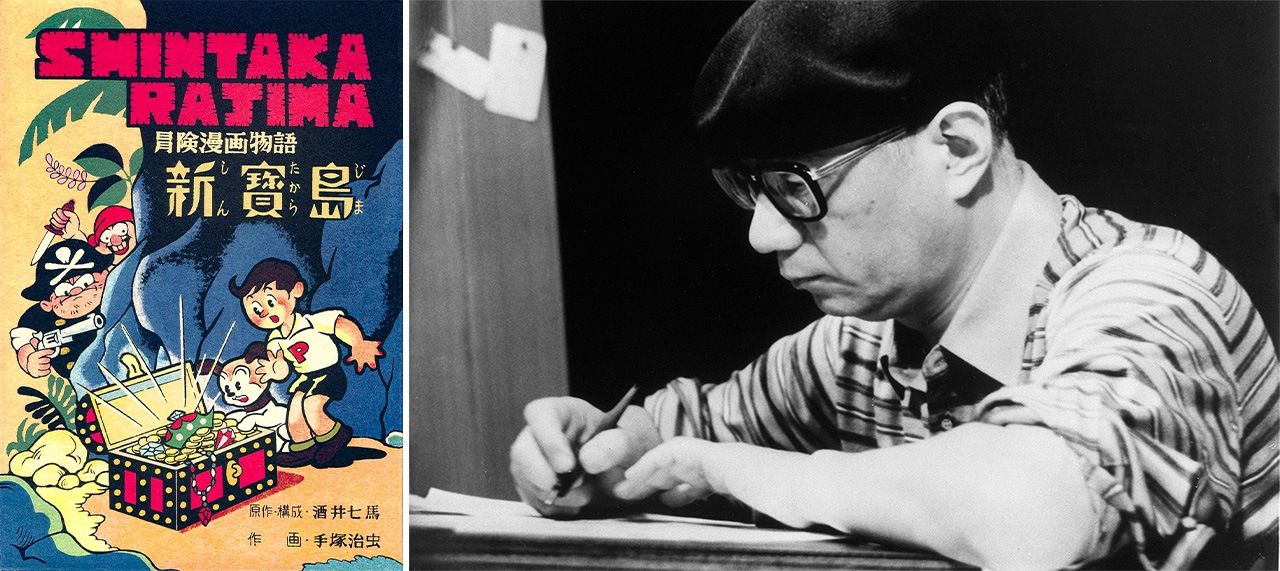
A Japanese edition of Shin Takarajima (New Treasure Island), at left, with art by Tezuka Osamu and story and composition by Sakai Shichima (© Nippon.com); at right, Tezuka Osamu at work. (© Jiji).
New Treasure Island overlays elements from Tarzan films on the outline from Robert Louis Stevenson’s novel Treasure Island. The story is simple, but Fujiko A. Fujio lauded it as a “movie drawn on paper” due to the smooth flow of the panels. This feeling of energy captured the hearts of the many children who read the historic work, setting a new course for postwar manga.
Tezuka was responsible for the art, while older mangaka and animator Sakai Shichima handled the story and composition. It is unclear who provided the filmlike techniques, but Umezu seems to have felt this was Sakai’s contribution. In his autobiographical 1988 work Invitation to Fear, Umezu says that he was influenced by Sakai’s panel transitions.
Unsparing Coldness
Then what did he learn from Tezuka?
“There was a certain emotional detachment in the way his stories unfolded,” Umezu said of Tezuka in 2022. “Like when a character you thought had survived suddenly dies. I remember thinking that I needed to learn from that dramatic quality.” Here, Umezu is probably talking about early Tezuka science-fiction works that followed New Treasure Island, such as Lost World. Even more than his artistic style, Umezu seemed to have learned from Tezuka’s aloof dramatic quality.
This influence can be seen straight away in Umezu’s second work, a sci-fi story called Another World (1955). His stories have a characteristic, unsparing coldness—even toward main characters that attract the emotional involvement of readers—as is apparent from works like The Drifting Classroom and My Name Is Shingo. Tezuka’s dramas show the distinctive quality of looking down on human destiny from above, and Umezu learned a great deal from the older mangaka in the construction of his own unpredictable stories.
Umezu’s early drawings looked just like Tezuka’s. Then, around the time he became a junior high school student, he thought that if he wanted to become a professional, he would need to do more than imitate. He set about fundamentally reworking his style, influenced by children’s book artists like Takei Takeo and Hatsuyama Shigeru. His first works, which appeared in 1955—Forest Siblings, written with Mizutani Takeko, and Another World—demonstrated this newly developed style.
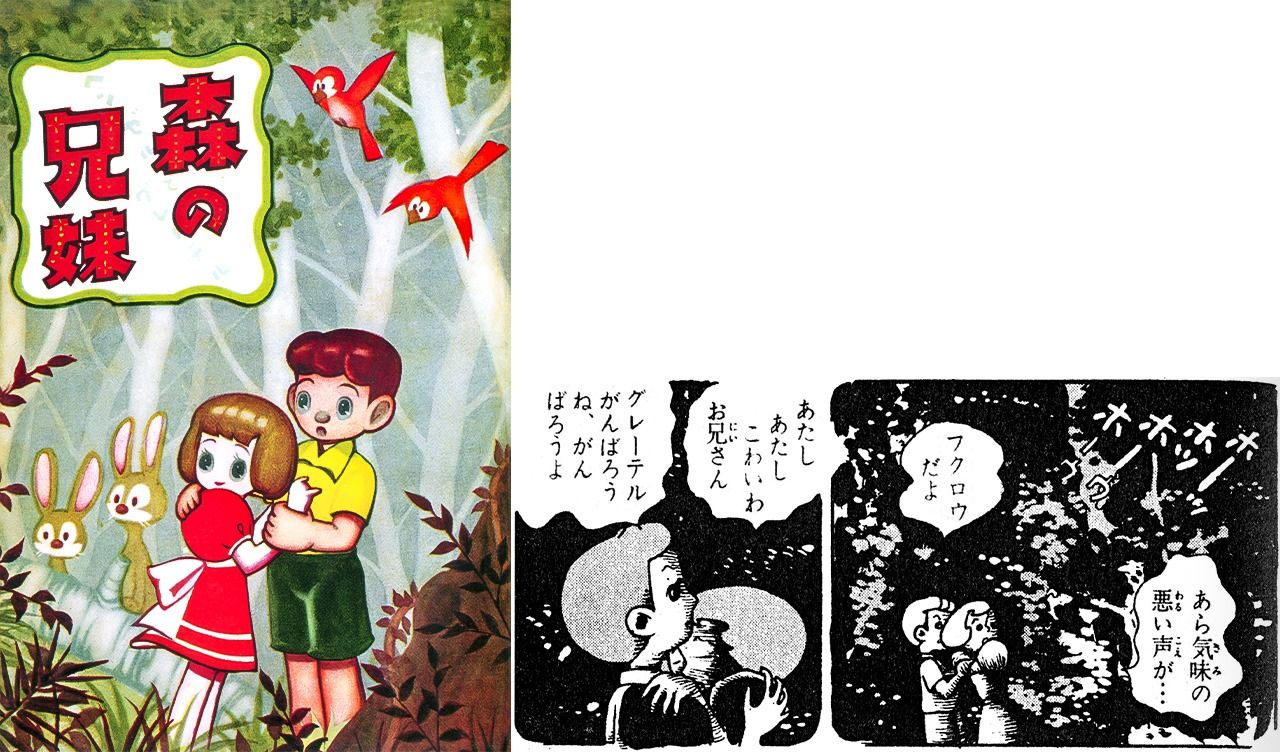
The artist’s debut work Forest Siblings. (© Umezu Kazuo)
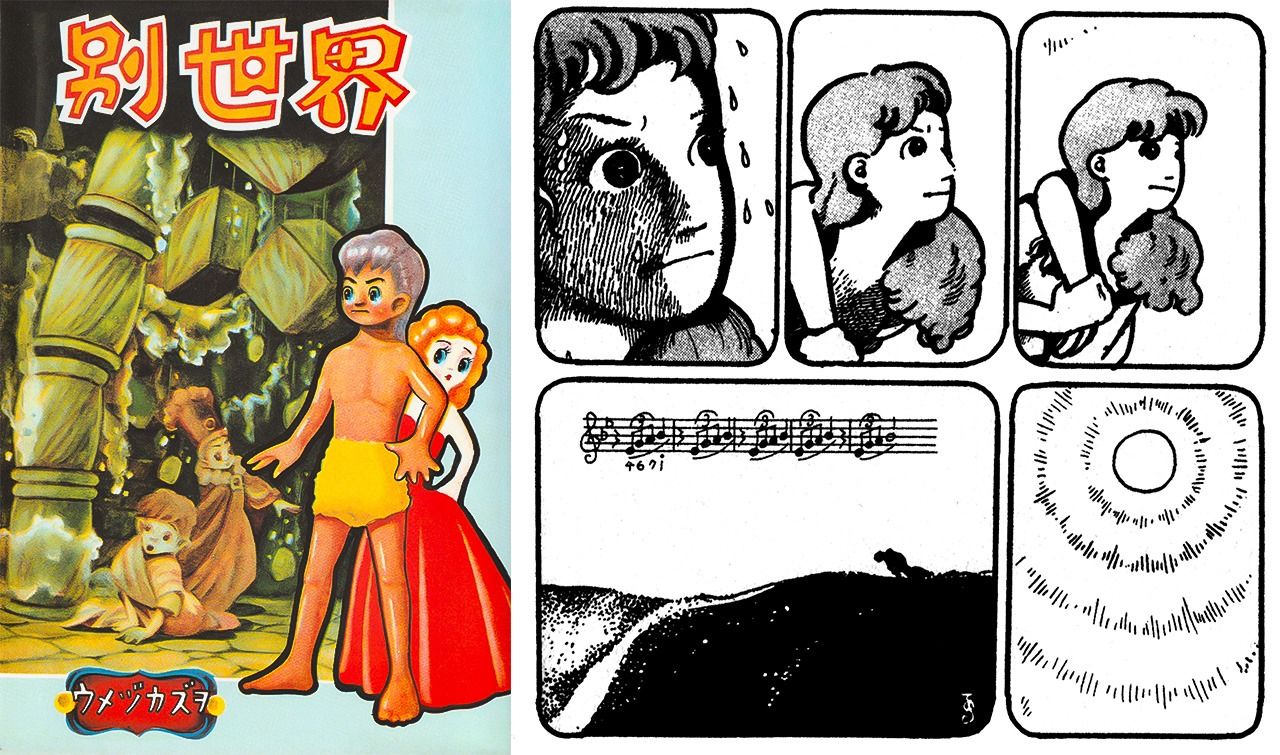
The follow-up from the same year, Another World. (© Umezu Kazuo)
Despite his efforts to achieve his own distinctive style, it proved unpopular with publishers, and he was forced to return to the Tezuka-style approach, which he felt to be damaging to his art. This bitter experience, part of a continued struggle since childhood to free himself from Tezuka’s influence, may have been an underlying cause of his aversion to the other mangaka.
Chasing or Being Chased
It was only in the 1960s that Umezu won popularity for his individual style, after he became active producing manga for the kashihon (book rental) market and girls’ magazines. The short piece “The Moment Mouth Rips Open to Ears” was published as a kashihon in 1961. It was his first work featuring a snake woman, which would become an iconic aspect of his manga. Umezu coined the phrase kyōfu manga (horror manga) to describe it, and this marked the start of horror manga’s dominance of girls’ magazines through the 1960s.
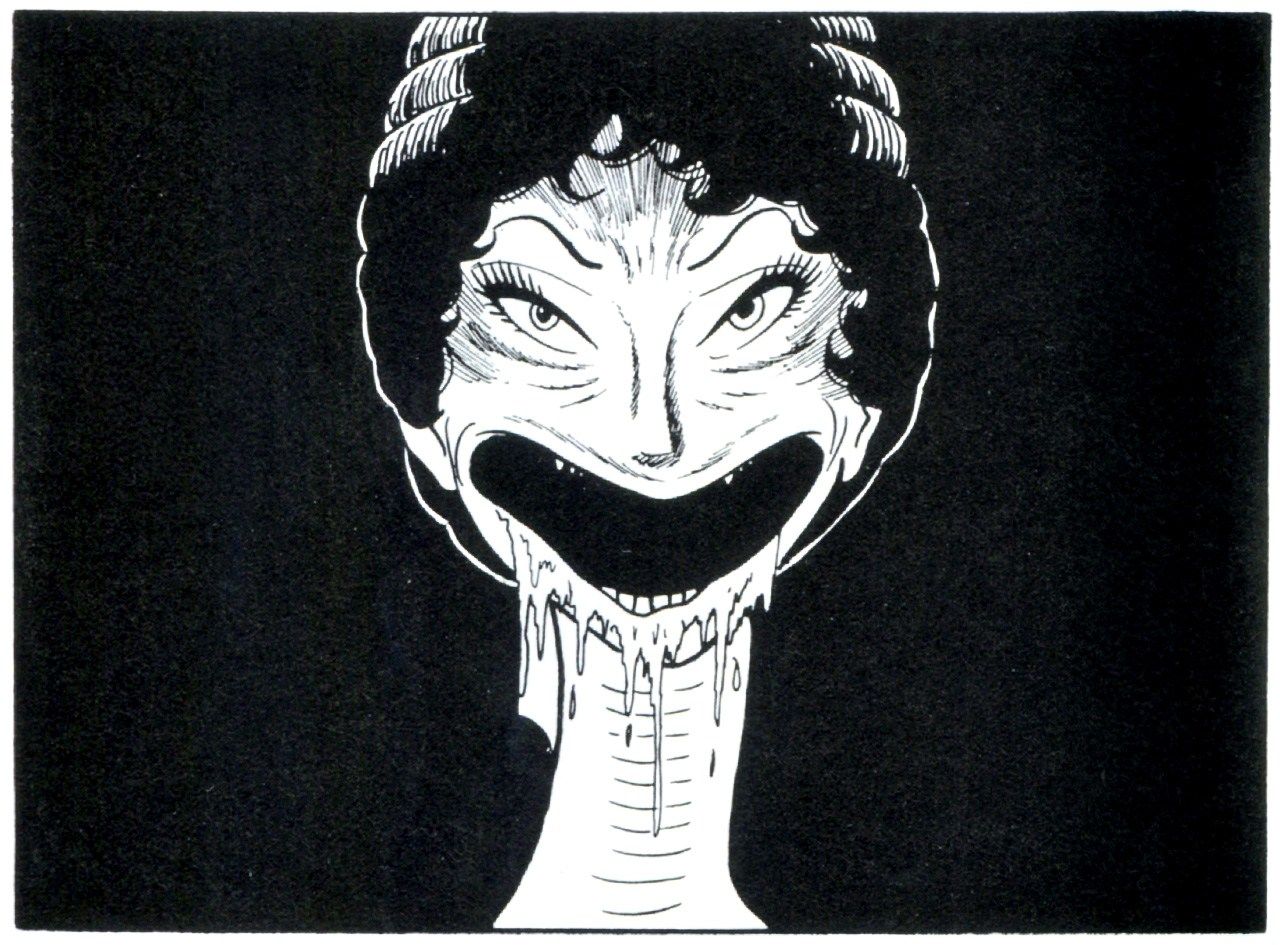
“The Moment Mouth Rips Open to Ears,” 1961. (© Umezu Kazuo)
This was only the beginning. At the end of the 1960s, he enjoyed major hits in boys’ magazines with the sci-fi work The Drifting Classroom and the gag manga Makoto-chan, while his psychological horror masterpiece Baptism appeared in a girls’ magazine.
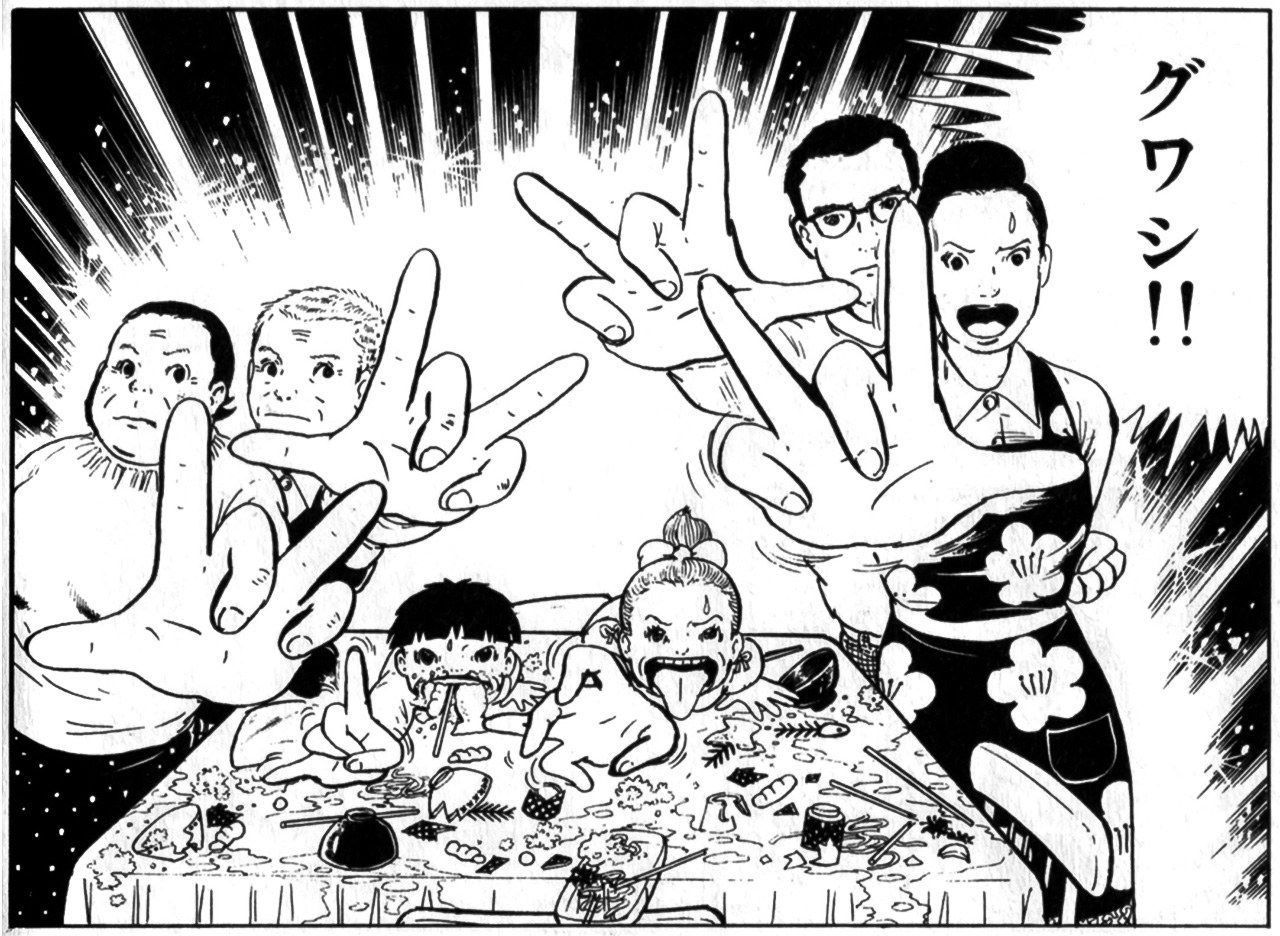
A panel from Makoto-chan shows characters performing Umezu’s signature Gwashi hand gesture. (© Umezu Kazuo)
“If you’re chasing, it’s a gag, but being chased becomes a horror” is a famous quotation from Umezu, but it is rare for one author to write in such a wide range of genres. If any another manga creator ever did so, it was likely Tezuka. Here is another point of similarity.
The two barely had any contact in their lives, and I sometimes felt that Umezu’s dislike of Tezuka was one-sided. This seems to have come in part from Umezu’s disappointment that he did not receive any kind of reply when he sent Tezuka samples of his work while still in junior high.
Tezuka died in February 1989, and Umezu later heard an unexpected story from Fujiko F. Fujio, who explained that when he had gone to visit Tezuka with his writing partner Fujiko A. Fujio when they were in junior high school , a drawing by Umezu was on the master’s wall, and Tezuka said of it: “A genius has emerged.” It was striking how pleased Umezu was by hearing about the episode. In 2023, he received the Tezuka Osamu Cultural Prize (Special Prize), which may also have eased his ill feelings.
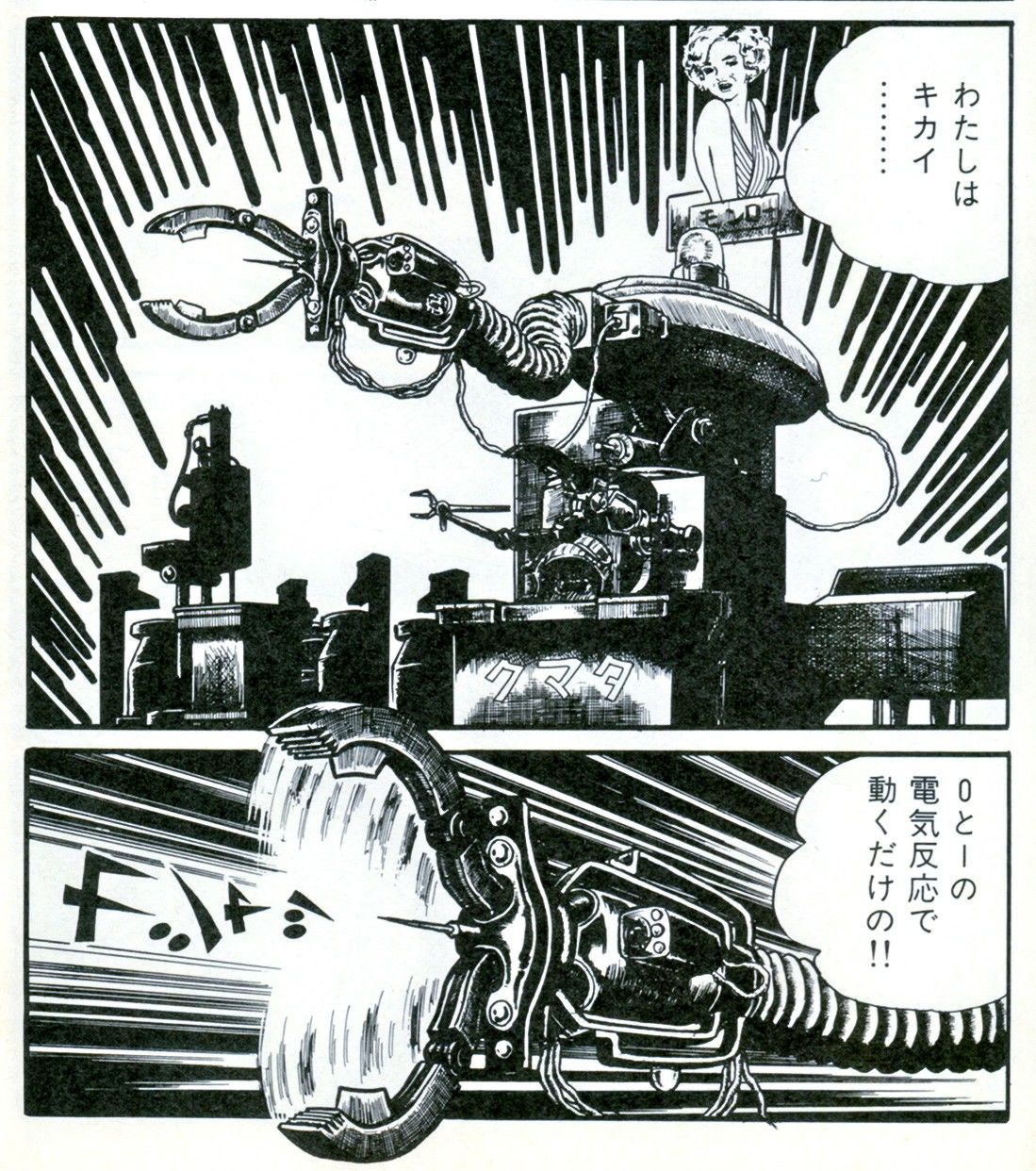
My Name Is Shingo. (© Umezu Kazuo)
Criticism and Affection
Amid Umezu’s cutting criticism of Tezuka, I have felt there to be strong affection, and admiration for his unbridled creativity in stories based on “lies.” This was apparent in the 2022 interview in which he said, “I think manga has made great progress, but I feel that its ‘world of lies’ is in retreat. In the old days, manga was just stories full of lies, and that was what was interesting about the genre. Tezuka Osamu was the prime mover there. But gradually people stopped writing about the ‘world of lies,’ including Tezuka himself.”
The creative universes of the two manga masters were opposites, like positive and negative poles. However, it seems that Umezu never lost that sense of the primeval enjoyment of manga he learned at 10 from Tezuka’s works. Among Umezu’s creations, his last major work Fourteen (1990) is his most chaotic venture into a “world of lies,” and it is thought-provoking that its serialization began the year after Tezuka’s death. His 2022 series of paintings Zoku-Shingo, a kind of sequel to his earlier Shingo work that raised it to a highly artistic level, became another fantastic story of lies.
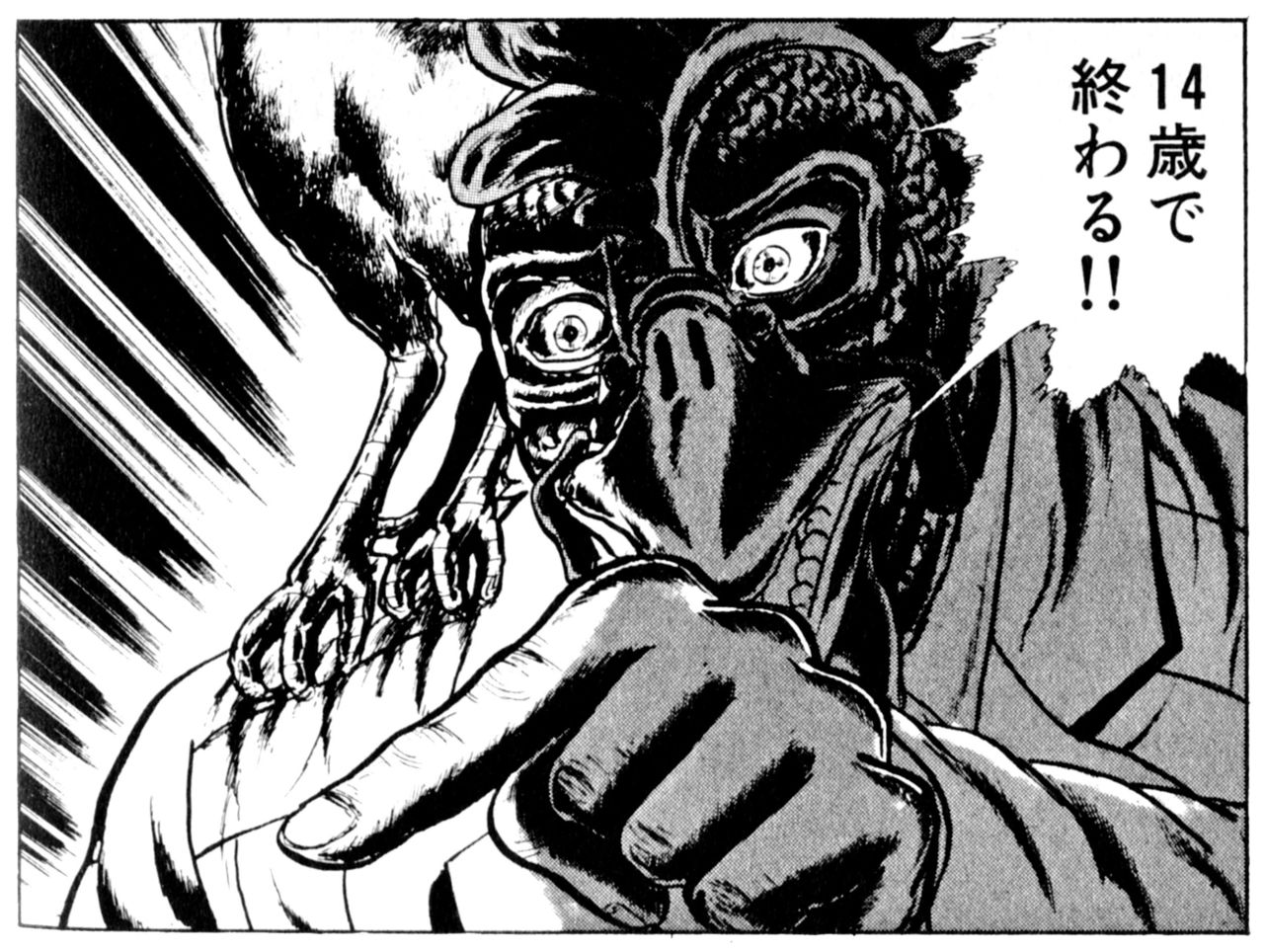
Fourteen. (© Umezu Kazuo)
Naturally, it is not appropriate to talk of all Umezu’s work in terms of Tezuka’s influence. Tezuka showed that it was possible to create high-level drama with violence and eroticism, even within the framework of children’s manga. but Umezu expanded manga further with the new element of horror. His relentless exploration of the contrasts between beauty and ugliness was another distinctive aspect of his work, and even from a contemporary perspective, he reached heights unmatched by other writers of manga.
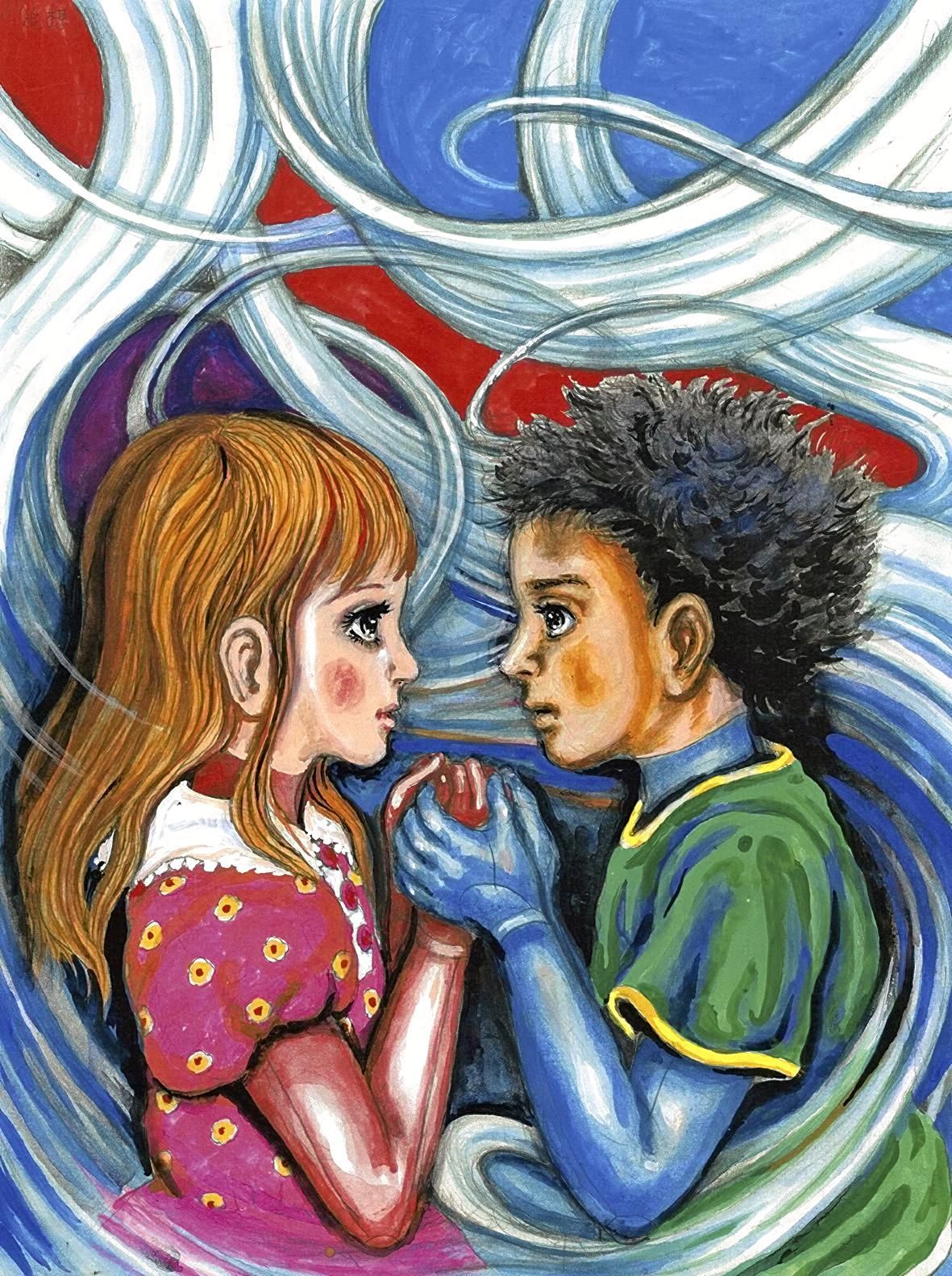
Zoku-Shingo. (© Umezu Kazuo)
Even so, I want to emphasize the remarkable natural storytelling talent that Tezuka and Umezu shared in terms of their versatility, their ability to write in different genres, and their keen eye for human nature.
Tezuka’s art has influenced many mangaka, but few have tried to take on his skill in telling stories. Umezu seems to be one of them. In this sense, we should reconsider Umezu’s horror.
I was moved to find Tezuka’s book in Umezu’s Kichijōji studio. It seemed to confirm that Umezu, until his very end, had cherished what he had learned from Tezuka.
Information on Works Mentioned
Note that details of English translations are based on readily available information and may be incomplete. Translators mentioned only when known.
Umezu Kazuo
- The Drifting Classroom is translated by Sheldon Drzka from Hyōryū kyōshitsu.
- My Name Is Shingo is translated by Jocelyne Allen from Watashi wa Shingo.
- Cat-Eyed Boy is translated from Nekome kozō.
- Orochi is translated by Jocelyne Allen.
- Kyōfu e no shōtai (Invitation to Fear), Betsu sekai (Another World), Mori no kyōdai (Forest Siblings), “Kuchi ga mimi made sakeru toki” (The Moment the Mouth Tears to Ears), Makoto-chan, Senrei (Baptism), Fōtīn (Fourteen), and Zoku-Shingo are untranslated.
Tezuka Osamu
- Astro Boy is translated by Frederik L. Schodt from Tetsuwan Atomu.
- New Treasure Island is translated from Shin Takarajima.
- Lost World is translated by Kumar Sivasubramanian from Rosuto wārudo.
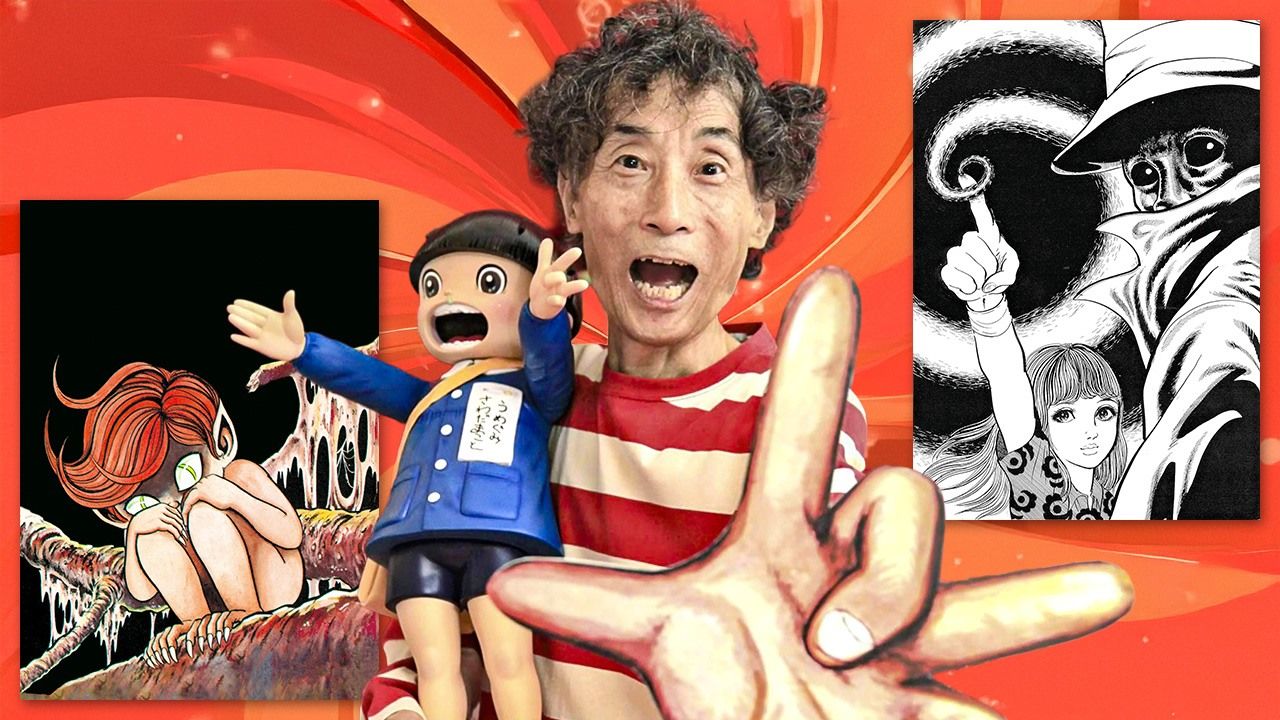
(Originally published in Japanese. Banner image: At center, mangaka Umezu Kazuo holding a Makoto-chan doll and performing the Gwashi hand gesture from the series, between panels from Cat-Eyed Boy, at left, and Orochi, at right. © Umezu Kazuo/Nippon.com.)