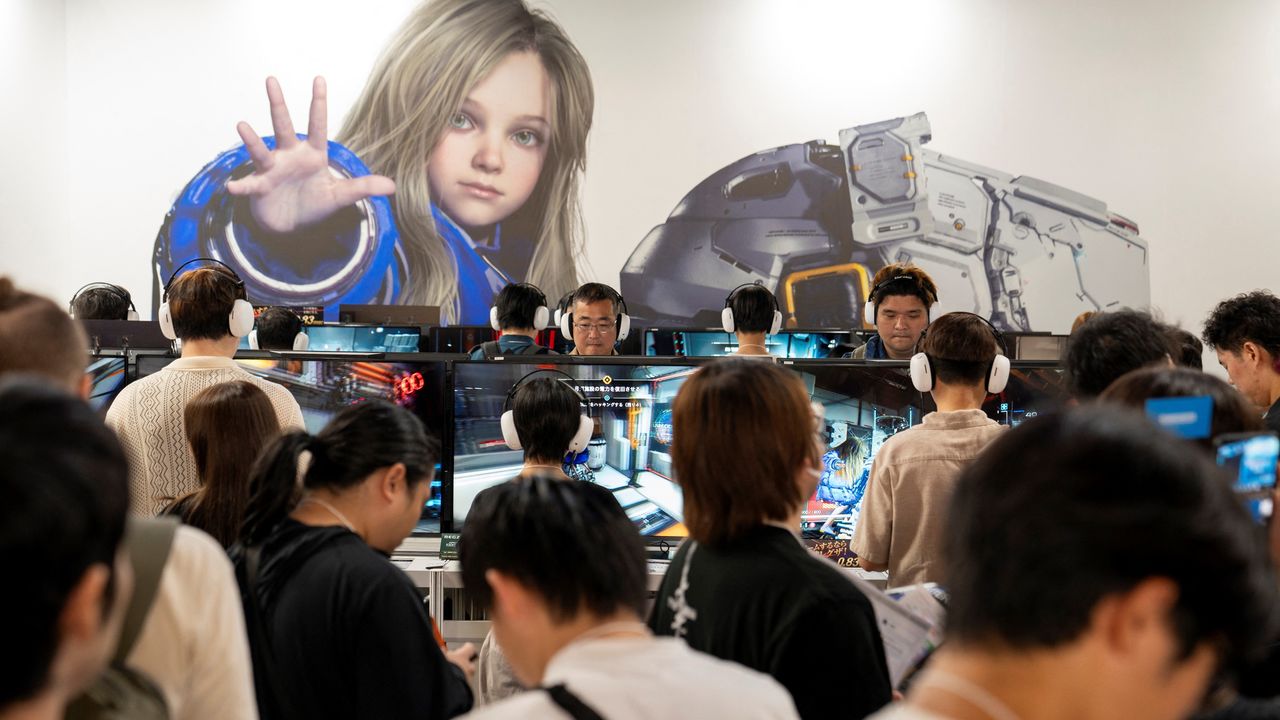
From Nintendo to “The Exit 8”: The Enduring Identity of Japanese Games
Society Culture Technology Entertainment- English
- 日本語
- 简体字
- 繁體字
- Français
- Español
- العربية
- Русский
Growth and Volatility
From the 1980s through the 1990s, Japanese games, led by the Nintendo Entertainment System, commanded an overwhelming presence in the global market. From the 2000s onward, however, that momentum faded. While Japan still has a domestic market worth around ¥3 trillion today, it no longer holds a strong position overseas. Even so, the distinctive qualities of games originating in Japan have once again begun to attract attention in recent years, with signs of renewed international recognition. Let us take a closer look.
Globally, the game industry can be described as a massive growth sector. According to the research firm Newzoo, the worldwide games market is projected to reach $197 billion (¥31 trillion) in 2025. Games are no longer a subculture. They are steadily becoming part of mainstream culture.
At the same time, over the past several years, there have been repeated layoffs and workforce realignments, particularly among major companies in Europe and North America. One reason is that many firms expanded their staffing during the surge in stay-at-home demand brought on by the COVID-19 pandemic, only to see demand return to more normal levels after the crisis subsided, making structural reform unavoidable. In addition, the soaring production costs of big-budget AAA titles, combined with ever longer development cycles, have widened the gap between successes and failures. While some titles attract global attention, such as Grand Theft Auto VI, which is said to have a development budget of as much as ¥60 billion, others shut down their services after only a short period. In other words, the industry has entered a turning point in which maturation and instability are advancing at the same time.
Europe, North America, and China Drive Global Market
Roughly half of the ¥30 trillion global games market consists of mobile games, with home console games accounting for about 30% and PC games for the remaining 20%. Within the mobile segment, Chinese companies such as Tencent and NetEase have established a strong presence. Armed with anime-style visual expression and development structures backed by large scale investment in capital and personnel, they are releasing titles designed from the outset for simultaneous global launches. A prime example is Genshin Impact, developed by Shanghai based miHoYo. In the casual game sector as well, Western companies exert considerable influence, led by franchises such as the Candy Crush series.
Europe and North America dominate in PC games and live service titles, which deliver content on an ongoing basis. Esports focused titles represented by Apex Legends and Valorant have fostered new forms of game culture built around continuous operation and competitive play. Sandbox style games such as Minecraft, which allow users to freely play and explore vast worlds, are also broadening the base of game creators. This trend is supported by the spread of STEAM education, an interdisciplinary approach that transcends the traditional divide between the humanities and sciences, as games adapt to the age of AI.
Meanwhile in Japan, esports is steadily taking root, but overseas titles have become its main drivers. Programming schools for children are dominated almost entirely by Minecraft.
Structural changes are also reshaping the home console market. PlayStation grew as hardware originating in Japan, but around the launch of the PlayStation 5, development leadership shifted to the United States. It is therefore difficult to call it a domestically produced console shaped by ideas formed within Japan. What was once a hallmark of Japan’s strengths, the homegrown console business, has become concentrated in a single player, Nintendo.
Kojima Hideo’s Vision
Amid these shifts in market structure, the distinctive qualities of games originating in Japan are once again drawing attention. An iconic example is Death Stranding (2019). Created by Kojima Hideo, the title centers on a story in which a solitary courier travels through a devastated world, delivering supplies and gradually restoring connections between people. Rather than focusing on combat with enemies, players spend much of their time on the experience of movement itself, carrying cargo across mountains and rivers. What becomes crucial in this process are the structures and items left behind in the world by other players connected online. Even without directly exchanging words, the game is designed so that players support one another, quietly and indirectly, through their actions.
In this way, Kojima Hideo presents the themes of division and connection, both deeply etched into contemporary society, through the experience of play itself. The work’s message gained particular resonance during the COVID-19 pandemic, when people simultaneously experienced physical distance and psychological isolation. In Death Stranding 2, released in 2025, he poses a further question: is it truly a good thing for people to be too connected? Taken as a whole, the series demonstrates that games can be more than mere entertainment. They can function as cultural media that reflect the anxieties and hopes of their time, giving form to questions that society itself is struggling to answer.
In the mobile and live service games that form the main pillars of the global market, an excess of authorial expression is not required. From the perspective of cultural influence, however, the presence of works imbued with strong ideas and distinctive individuality carries considerable weight. This can be seen as one sign that games as a medium are steadily advancing toward a stage of cultural maturity.
The Rise of Innovative Indie Games
The emergence of indie games developed by small teams with limited capital is also indispensable to any discussion of games originating in Japan. The Exit 8, which has been adapted into a film and is set for a North American release, is built on an extremely simple premise. Players repeatedly walk through the same underground passage while searching for subtle anomalies hidden within it. Yet what the game portrays is a sense of unease that arises when the world becomes ever so slightly distorted. It carries a sensibility that resonates with Japanese horror culture as seen in works such as Ring and Spiral. Rather than relying on excessive staging, its quiet aesthetic of fear draws on an otherworldliness that exists as an extension of everyday life. This restrained approach to horror is beginning to be shared and appreciated across cultural boundaries.
Behind these developments lies a broader shift in how games circulate. With the spread of streamer culture and social media, games are no longer only something to play. They have also become something watch and talk about. Even works created by small teams can now spread across borders through the sharpness of their concepts and the strength of their sensibilities. It is precisely for this reason that the unique qualities of games originating in Japan have begun to attract renewed attention. Beyond this, there are wider social changes at play, including the increase in inbound tourism to Japan and the growing interest in Japanese culture fueled by social media.
Contributing to the Diversity of Game Culture
What, then, are the defining characteristics of Japanese games? First are characters deeply intertwined with manga and anime culture. Characters are not treated as mere lines of code or placeholders, but as beings who carry distinct personalities and stories. Players experience relationships with these characters and share in their emotions. Second is a craftsman-like ethos that relentlessly refines a work’s level of completion. These qualities are not simply techniques aimed at commercial success. Rather, they reflect creative attitudes that have been cultivated over many years as part of a broader cultural tradition.
In addition, one element that symbolizes the culture of games originating in Japan is the branding of creators themselves. Alongside Kojima Hideo, figures such as Miyamoto Shigeru of Super Mario, Miyazaki Hidetaka of Dark Souls, and Sakurai Masahiro of Super Smash Bros. are often discussed alongside the titles they created. Of course, not all Japanese games are built on an auteur driven approach. Even so, the cultural image that a work carries a discernible set of ideas or a creator’s personality behind it has become one factor supporting the high regard for Japanese games.
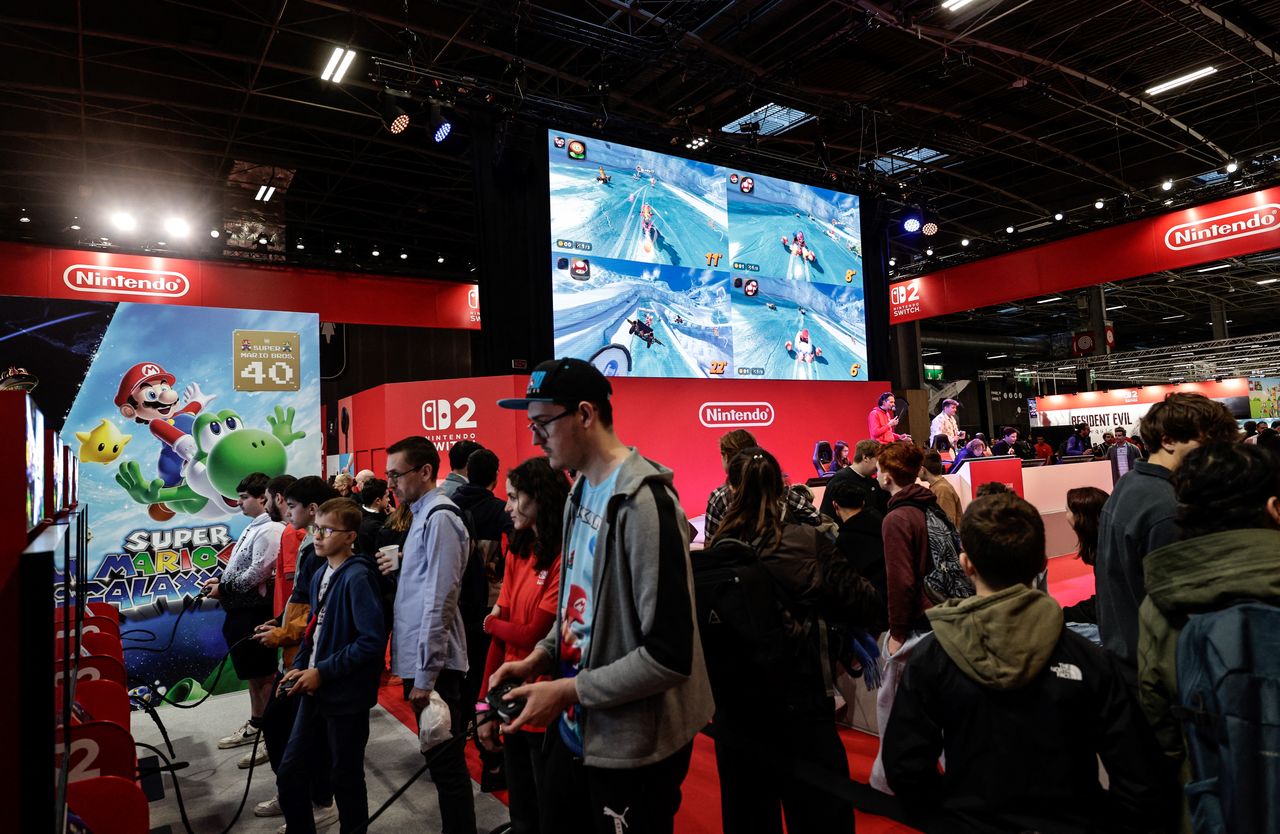
Visitors play Nintendo’s Mario Kart at Paris Games Week, France’s biggest video game show, on October 30, 2025. (© AFP/Jiji)
The presence of Nintendo is also significant. From the spread of home consoles in the 1980s to the present day, the company has consistently centered its game development on the experience of play itself. Rather than relying solely on the latest technology or racing for higher performance, Nintendo has emphasized sensory elements such as the joy of touching a controller, moments of surprise, and intuitive operation. This approach has become one of the wellsprings of Japanese game culture. As noted earlier, Nintendo alone now carries forward this line of cultural continuity with the only domestically produced game consoles.
By contrast, Western companies, backed by massive capital, have developed live service games and esports-ready titles. China and South Korea play major roles through their online game cultures and sustained investment in technology. In recent years, Saudi Arabia has also begun making large-scale investments fueled by oil wealth and is emerging as a new and powerful force in the game industry. At the same time, developers around the world are now competing intensely in game development using generative AI.
Against this backdrop, Japan is gaining recognition in areas such as narrative depth, character expression, overall polish, and creative authorship. In other words, global game culture maintains a rich diversity, sustained by multiple regions, each contributing its own distinct strengths.
How AI is Reshaping Game Culture
Finally, let us look ahead to the game industry from 2026 onward. The current structure, with its heavy emphasis on blockbuster titles, will likely be forced to undergo review. Live service games, too, will face pressure to present new forms of value as the market matures. In the gaps between these trends, the importance of mid-sized titles and indie works is expected to grow even further. At the same time, generative AI will accelerate the expansion of game development by individuals. As more works emerge that resemble self-published comics or autobiographical fiction, games will strengthen their significance not merely as consumer products, but as media that reflect culture and ideas.
Within this landscape, games originating in Japan will likely continue to play a vital role in sustaining the diversity of international game culture by presenting games as a form of culture, even if they remain at a disadvantage in terms of market scale. Elements such as character-driven culture, creative authorship, craftsmanship, and the inheritance of home console traditions are assets that cannot be easily replaced by other countries. As games become firmly established in society as a mature cultural form, games from Japan will continue to maintain a low-key but enduring presence.
(Originally published in Japanese on January 30, 2026. Banner photo: A booth promoting upcoming Capcom game Pragmata, set for release in April 2026, at Tokyo Game Show at Makuhari Messe in Chiba in September 2025. © AFP/Jiji.)