Sumō Gone Global: Japan’s Traditional Sport in an International Age
Sports Culture- English
- 日本語
- 简体字
- 繁體字
- Français
- Español
- العربية
- Русский
Great Popularity in Europe
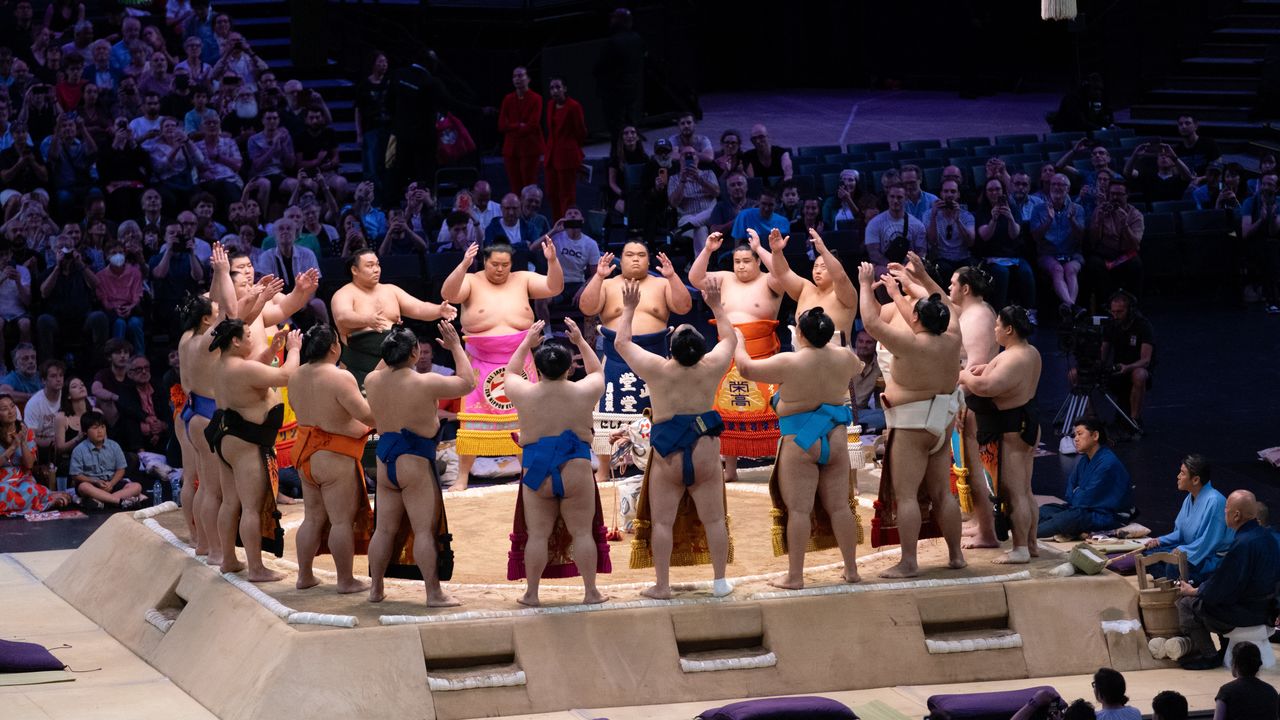
In 2026, Japan’s top professional sumō wrestlers traveled to France for a two-day tournament, which took place on June 13 and 14. The two yokozuna grand champions, Ōnosato and Hōshōryū, enjoyed a visit to the Eiffel Tower, and the sound of Japanese taiko drumming reverberated under the French capital’s skies. Spectators gathered at Accor Arena Bercy, the country’s largest indoor venue, for two days of matches.
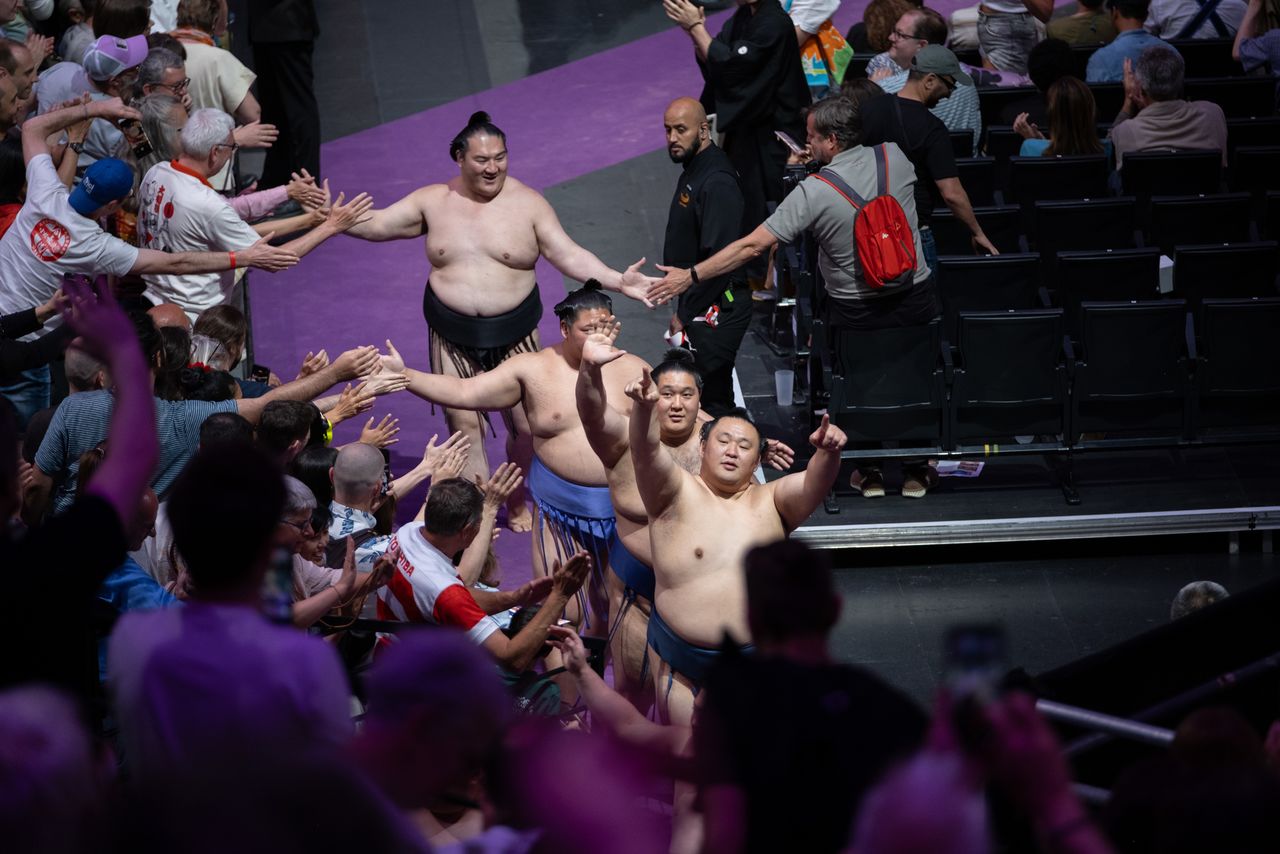
Wrestlers respond to the audience after the closing ceremony of the Paris Sumō Tournament, June 14, 2026. (© Mael Ghazi/Hans Lucas via Reuters Connect)
Sumō is increasingly popular in Europe, where a tournament in London took place in October 2025 after a 25-year absence. During my visit to Italy in 2023 and 2024, lunchtime conversation with Italian researchers was given over to discussing the sumō drama Sanctuary, then streaming on Netflix. In France, where the late President Jacques Chirac was a prominent aficionado, sumō is respected as a living cultural artifact.
Foreign Wrestlers Join the Sport
From the latter half of the 1990s through the 2010s, we saw an explosion of globalization, with the spread of the internet and later smartphones connecting us all. It is interesting that no overseas tournaments took place in the last several decades. This was, however, a time when many foreign-born wrestlers joined the ranks of sumō.
Until the 1990s, non-Japanese wrestlers came primarily from the United States, particularly Hawaii. Takamiyama began his sumō career in 1964, followed later by Konishiki, Akebono, and Musashimaru, who had honed their powerful style playing American football. However, by the time of a more numerous influx of non-Japanese, no more wrestlers from Hawaii had joined the ranks.
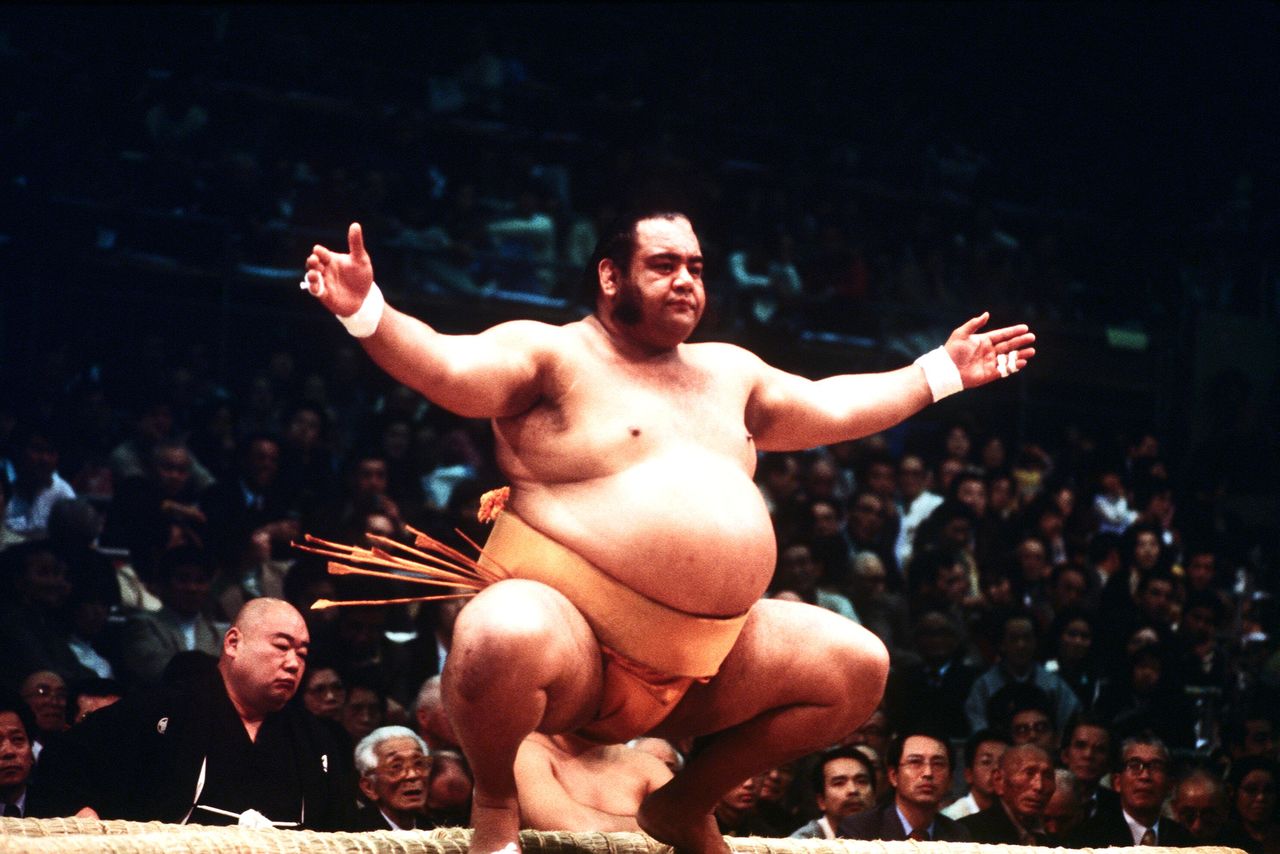
The Hawaii-born Takamiyama, who rose as high as sekiwake rank, in November 1980. (© Jiji)
From the 1990s onward, new crops of recruits came increasingly from former socialist countries including Mongolia, Bulgaria, and Ukraine, after the fall of communism earlier in that decade. Six young Mongolians arrived in Japan in 1992, a first for wrestlers from that country, immediately after the end of communist rule there. This group included Kyokushūzan, who made it into the top makuuchi division, and future sumō legend Kyokutenhō. Their performances were widely covered by the press in Mongolia, encouraging a steady stream of young hopefuls from their homeland.
It is interesting that changes in the political systems of faraway countries had such an impact on sumō in Japan. Even though no overseas tournaments took place in that period, the sport was becoming increasingly international in nature. At the November 2010 Kyūshū basho, 20 of the 42 wrestlers in the makuuchi division were from abroad, as were four of the five competitors at the top yokozuna and second-highest ōzeki ranks. The quintessentially Japanese world of sumō, which one would think would be least affected by globalization, actually felt the effects of the influx of foreign workers early on.
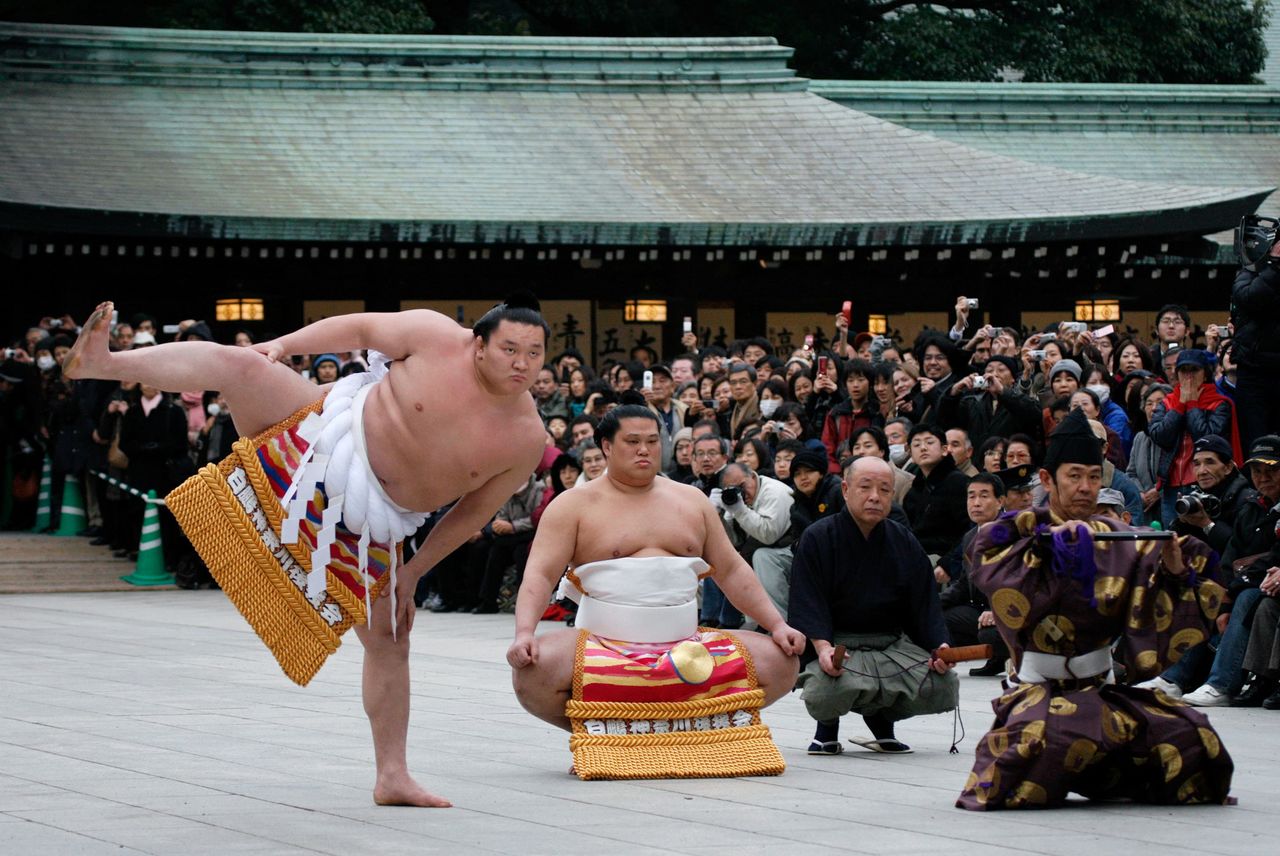
Mongolia-born yokozuna Hakuhō performing the ring-entering ritual at Meiji Shrine in Tokyo on January 7, 2008. (© Reuters)
The insular, tradition-bound world of sumō has now effectively globalized. Under normal market mechanisms, sumō as a cultural artifact would have met its demise. To ward off that fate, the sport’s governing body instituted new rules, including stricter criteria concerning the admission of foreign recruits, whose numbers peaked around 2010.
I have studied sumō for many years, observing the trend of foreign wrestlers being much heavier and taller than their Japanese counterparts, which has led to bigger, heftier Japanese joining the sport. The bigger athletes won more frequently, but they also missed tournaments more often, mostly likely because their weight made them more susceptible to injury. A strict return to having only home-grown rikishi might have corrected this, but completely shutting foreign wrestlers out of sumō would have negated the revitalization the sport is enjoying today. A more judicious selection of promising foreign youths has led to more balanced sumō, adding excitement while maintaining the sport’s cultural value.
Faceless No More
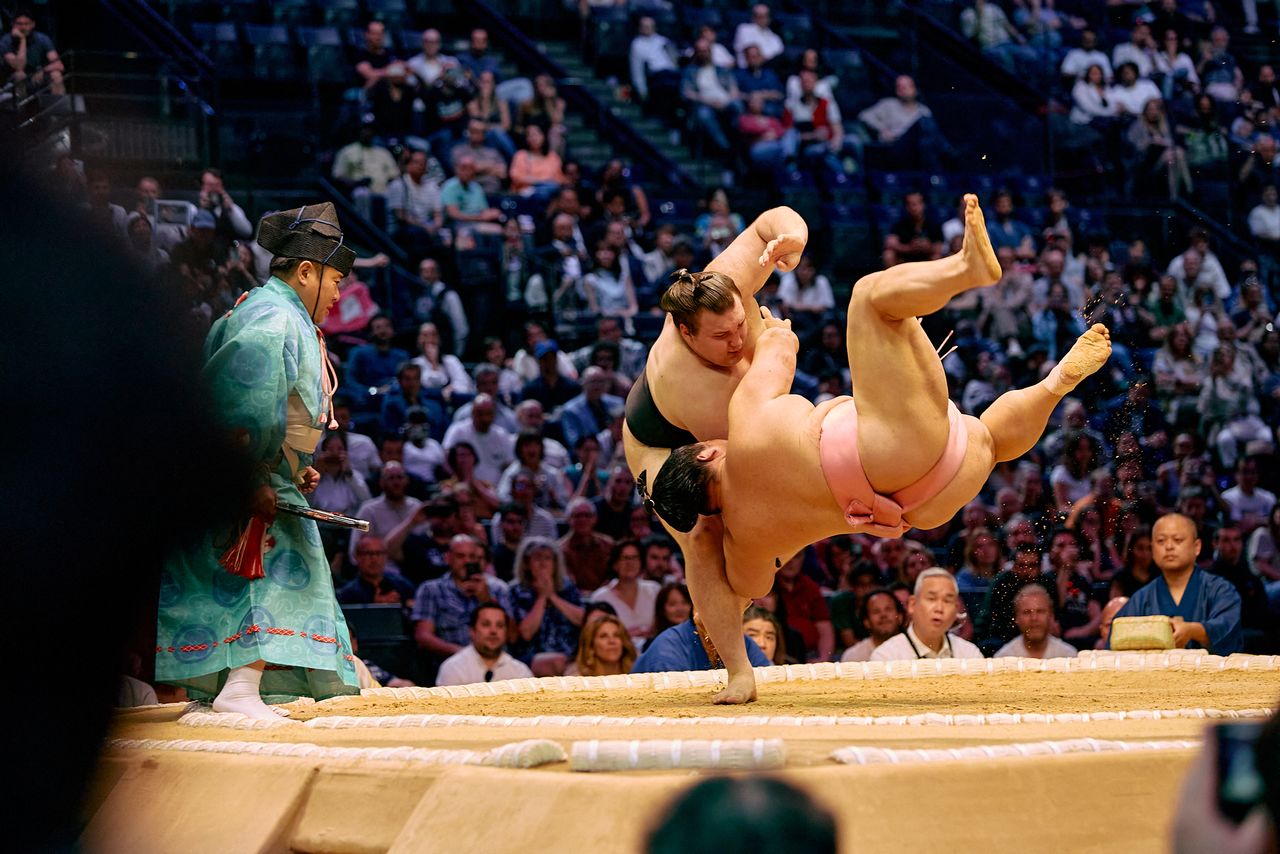
Aonishiki, a native of Ukraine, upends his opponent on June 13, 2026, the first day of the Paris tournament. (© Abaca via Reuters Connect)
After a long period when self-effacement was the norm, today’s wrestlers, a varied lot, have much more distinctive personalities. Many are instantly recognizable for their physical appearance, character, or background story. One such person is Aonishiki, who came to Japan as a young teen when Ukraine was attacked in 2022: A documentary about him is currently being made in France. Although he was demoted from ōzeki after being absent from the May 2026 tournament, he was in fine form for the Paris event.
This phenomenon is not limited to Aonishiki and others at the top. The Osaka-born Ura, currently a maegashira, is known for his acrobatic style of sumō and is always entertaining to watch, regardless of his win/loss record. Chiba’s Kotoeihō, another maegashira, who adopts a lengthy pause during the shiko stomping ritual before launching into a bout, is a study in graceful elegance.
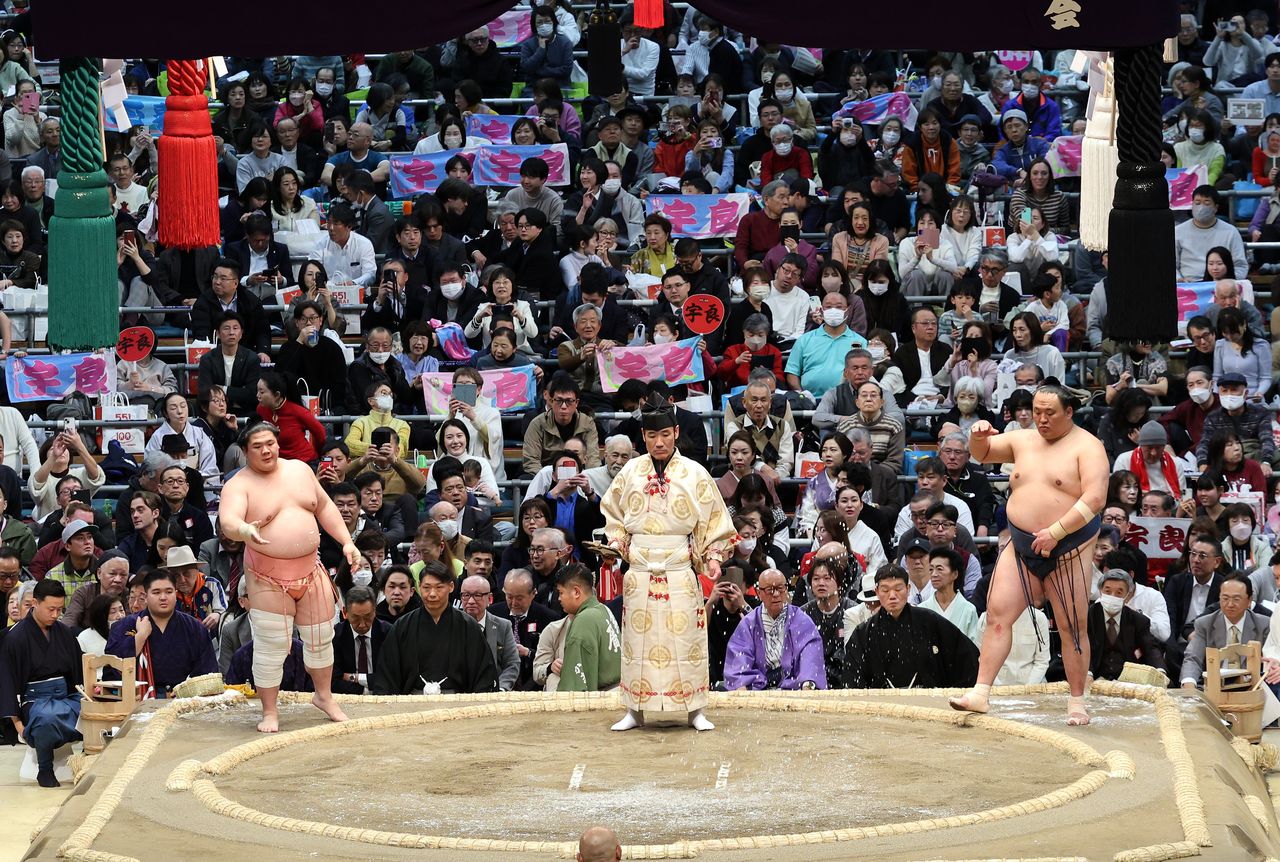
Fans of Ura (at left in the ring) hold towels printed with his name during the spring tournament, March 12, 2026, at Edion Arena Osaka. (© Jiji)
In a nod to modern practices, during tournaments, fans who are avid supporters of specific wrestlers can be seen displaying long, narrow towels carrying their idols’ names. This does not mean that the ancient ways are falling by the wayside, though. To mark the one-hundredth anniversary of the Japan Sumō Association in 2025, traditional sumō was staged, accompanied by the splendid spectacle of ceremonial dances as performed at the Heian period (794–1185) imperial court.
During a decade of turmoil in the early 2000s involving fixed matches and a fatal bullying incident, sumō’s popularity suffered. Today, it has come roaring back, and spectators fill the venues at the six main tournaments in Japan.
AI No Substitute for Live Viewing
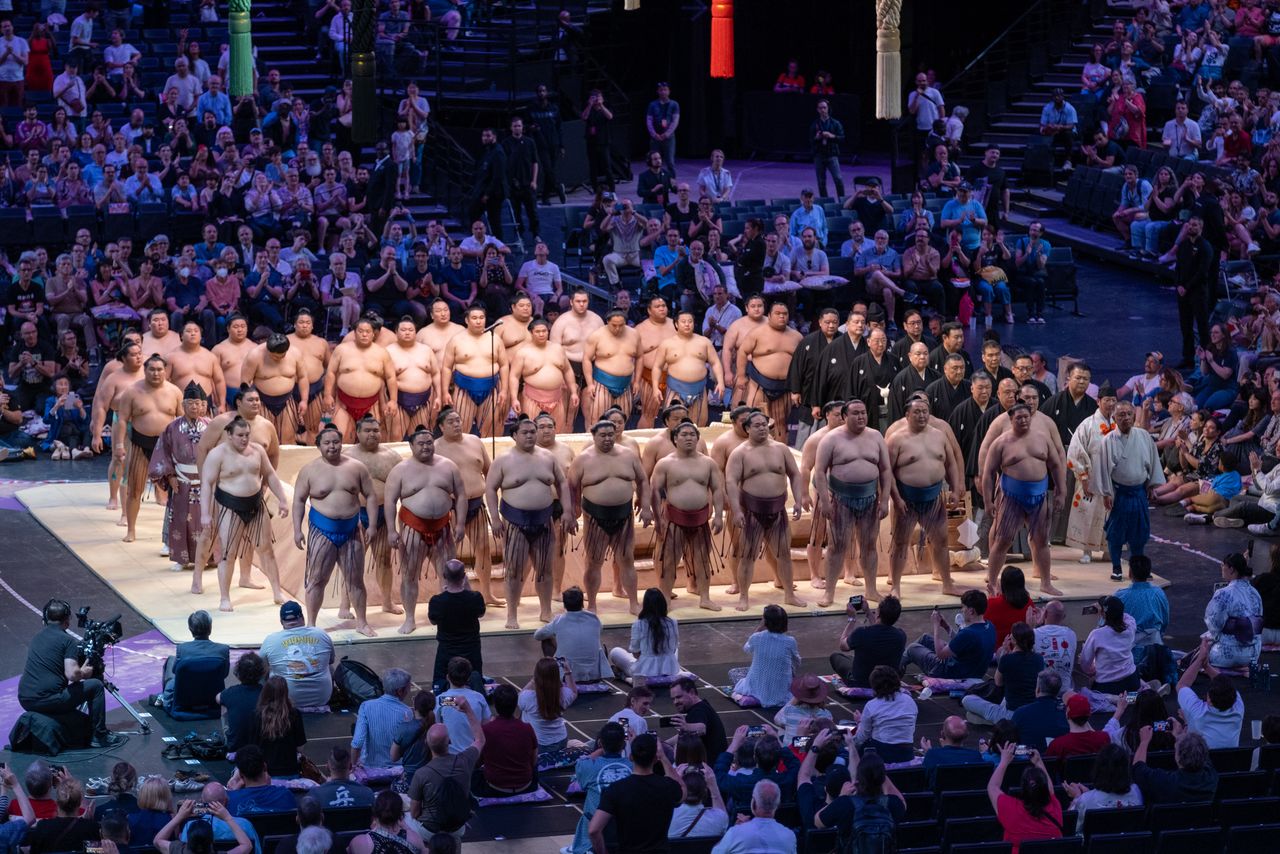
Tournament wrestlers and officials gather in the ring to take part in the Paris closing ceremony on June 14, 2026. (© Mael Ghazi/Hans Lucas via Reuters Connect)
Given this background, and now that sumō’s globalization has come full circle, its popularity in Europe is especially noteworthy. Many of the yokozuna and ōzeki, the symbols of sumō as Japan’s national sport, are not of Japanese nationality. In the face of rising economic and geopolitical tensions, sumō as living cultural heritage plays a strong role in fostering international goodwill.
The Edo period Hokusai manga (Hokusai’s Sketches) by the famed ukiyoe artist began circulating in the West after the mid-nineteenth century, initiating the Japonisme trend in Europe. Hokusai’s jottings included sketches of sumō wrestlers, which no doubt stimulated the European imagination. A century later, noted aficionado Jacques Chirac, then mayor of Paris, organized a sumō tournament in that city and invited wrestlers to the Elysée Palace, where he unabashedly delighted in their presence. As it did then, fervent interest in sumō in Europe will continue to help build friendships between Japan and foreign nations.
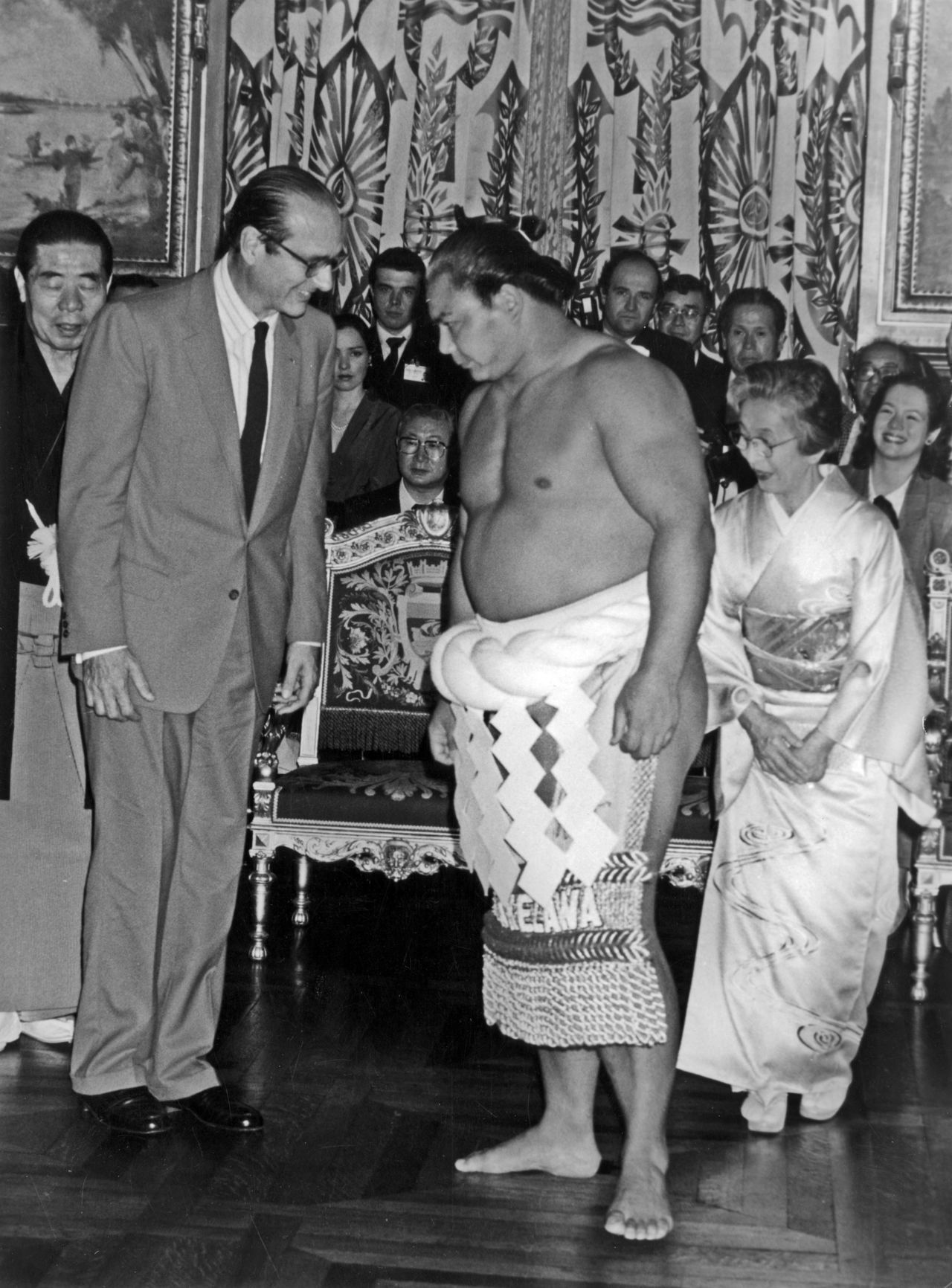
Jacques Chirac greets yokozuna Chiyonofuji in Paris on October 9, 1986. (© Bridgeman Images via Reuters Connect)
Sumō has always had significance, both before its globalization and now. It retains distinctive elements—the drumming and the fluttering banners outside the venues, the wrestlers’ ceremonial entrance into the ring, the stomping before launching into a grapple—and the raw physical power of two huge bodies colliding, vying for advantage through both strength and technique. Sumō combines beauty of form with dynamic movement.
In both London and Paris, the leadup to the bouts made it clear that sumō is no mere sport or wrestling match. Seeing live matches communicated to European spectators a living cultural heritage. Notwithstanding the rapid development of artificial intelligence, live sumō offers the physical embodiment of an experience that AI can never hope to equal.
(Originally published in Japanese on June 30, 2026. Banner photo: Wearing colorful ceremonial aprons, rikishi participate in the second day of the Paris tournament on June 14, 2026. © Mael Ghazi/Hans Lucas via Reuters Connect.)