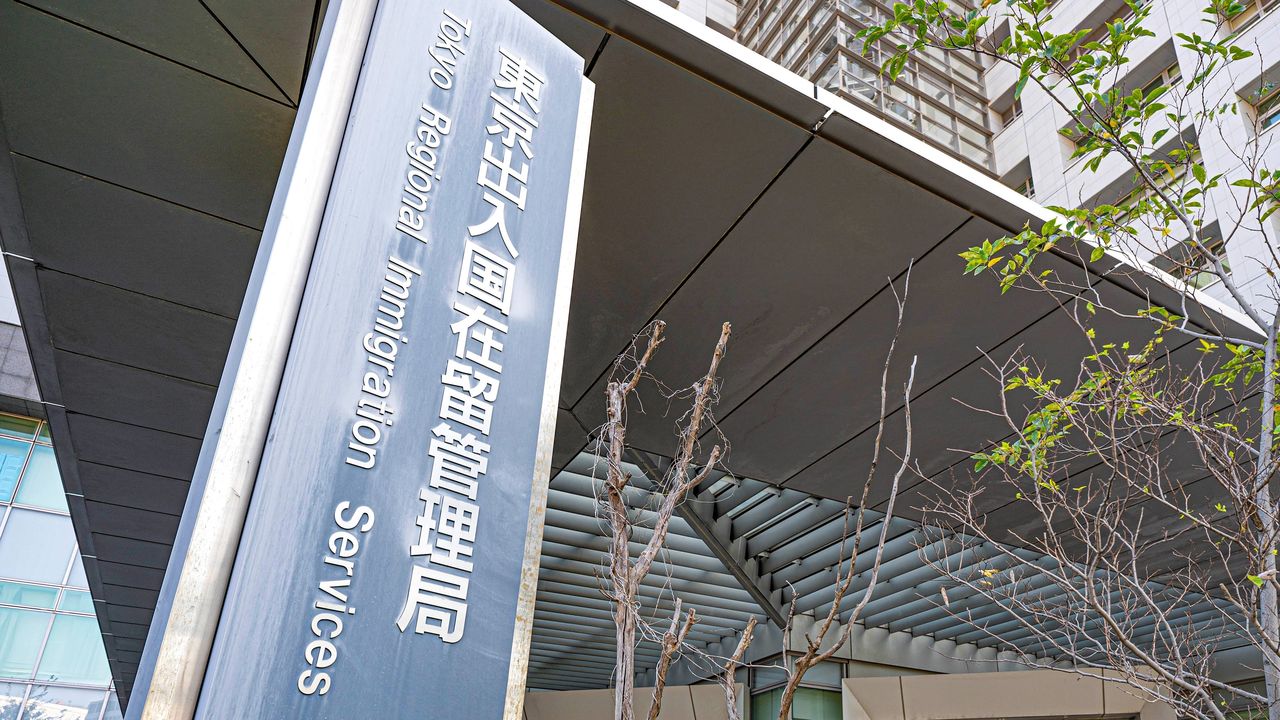
Foreign Residents in Japan Facing Tighter Immigration Screening, Selective Acceptance
Politics Economy Society- English
- 日本語
- 简体字
- 繁體字
- Français
- Español
- العربية
- Русский
Greater Convenience but Higher Hurdles
Several policy changes affecting foreign residents in Japan are advancing at the same time, many of them raising the bar for maintaining legal status. As a result, a growing number of residents may feel that staying long‑term in Japan is becoming more challenging.
One example is the new criteria for the Business Manager status, which took effect in October 2025. Requirements for capital, staffing, and Japanese‑language ability have all become stricter. In March 2026, the government also introduced a system for investigating workplaces receiving dispatch workers under the Engineer/Specialist in Humanities/International Services (Gijinkoku) status to prevent assignments to nonspecialized work. Screening for extensions of stay and permanent residency is also tightening, and fees are rising.
New Criteria for Business Manager Status
| Item | Before Oct. 2025 | After Oct. 2025 |
|---|---|---|
| Capital | ¥5 million or more | ¥30 million or more |
| Career, education | None | Three-plus years’ management experience or relevant master’s, doctoral, or professional degree |
| Employment obligations | None (or two full‑time employees as substitute for capital) | At least one full‑time employee |
| Japanese‑ |
None | Applicant or full‑time employee must have at least B2‑level (upper intermediate) Japanese proficiency |
| Expert review | None | Expert review required for new business plans |
Notes: The capital requirement is for corporations. When an individual is the business entity, the applicant is required to demonstrate a similar level of financial resources to fund the business premises, pay the employee salary for one year, and cover other costs. The new criteria took effect on October 16, 2025. Transitional measures apply for renewals until October 16, 2028.
On January 23, 2026, the government adopted a comprehensive policy package outlining stricter standards for the admission of foreign nationals. On the same day, it finalized operational guidelines for the new Employment for Skill Development (Ikusei Shūrō) Program that will replace the Technical Intern Training (Ginō Jisshū) system in April 2027, as well as the Specified Skilled Worker (Tokutei Ginō) framework.
Under the training-based Employment for Skill Development Program, workers who meet certain conditions will be able to change employers within the same occupational field. Specified Skilled Workers who advance from Category 1 to Category 2, moreover, will face no limit on extensions, be free to bring family members, and have their period of stay counted toward permanent residency. These changes significantly improve convenience for foreign workers.
In short, the government is advancing two policies in parallel: preserving and upgrading admission pathways in industries that depend on foreign labor, while simultaneously tightening oversight after entry and making screening stricter and more selective.
Addressing Public Concerns
One rationale for the stricter rules is to address public concerns. The comprehensive policy package approved in January 2026 acknowledges violations and misuse of rules by some foreign nationals, which require action to address public anxieties and perceptions of unfairness. It calls for better fact finding, information sharing, and policy improvements in not only immigration but also social security, healthcare, education, and land acquisition.
Highlights of Japan’s New Foreign‑Resident Policy
Order (strengthening regulation)
- Strongly promote the “zero overstayers plan”
- Consider tightening screening for residence status and naturalization
- Rigorously administer foreign driver’s‑license conversion
Coexistence (advancing social integration)
- Consider programs to teach Japanese language and social norms
- Consider early support programs for preschool children
- Enhance training and professional standing of Japanese‑language teachers
The Immigration Services Agency noted in its June 2026 updated guidelines that information from relevant government agencies—such as tax payment records—may be used when assessing applications to change or extend residence status. This makes it clearer that screening will draw on administrative data in addition to considering the documents submitted by applicants as in the past.
Clearer Criteria, Higher Expectations
The clearest changes can be seen in permanent residency applications. Permanent residency, the most stable status available for immigrants to Japan, places no limits on occupation or duration of stay and has traditionally been granted through case-by-case assessments. Previous guidelines listed only broad requirements—time spent in Japan, good conduct, financial independence, and payment of taxes and social insurance—and gave little indication of how those factors were weighed. As a result, practical information—such as what level of income might be considered sufficient—was shared mainly through expert commentary and the experiences of past applicants.
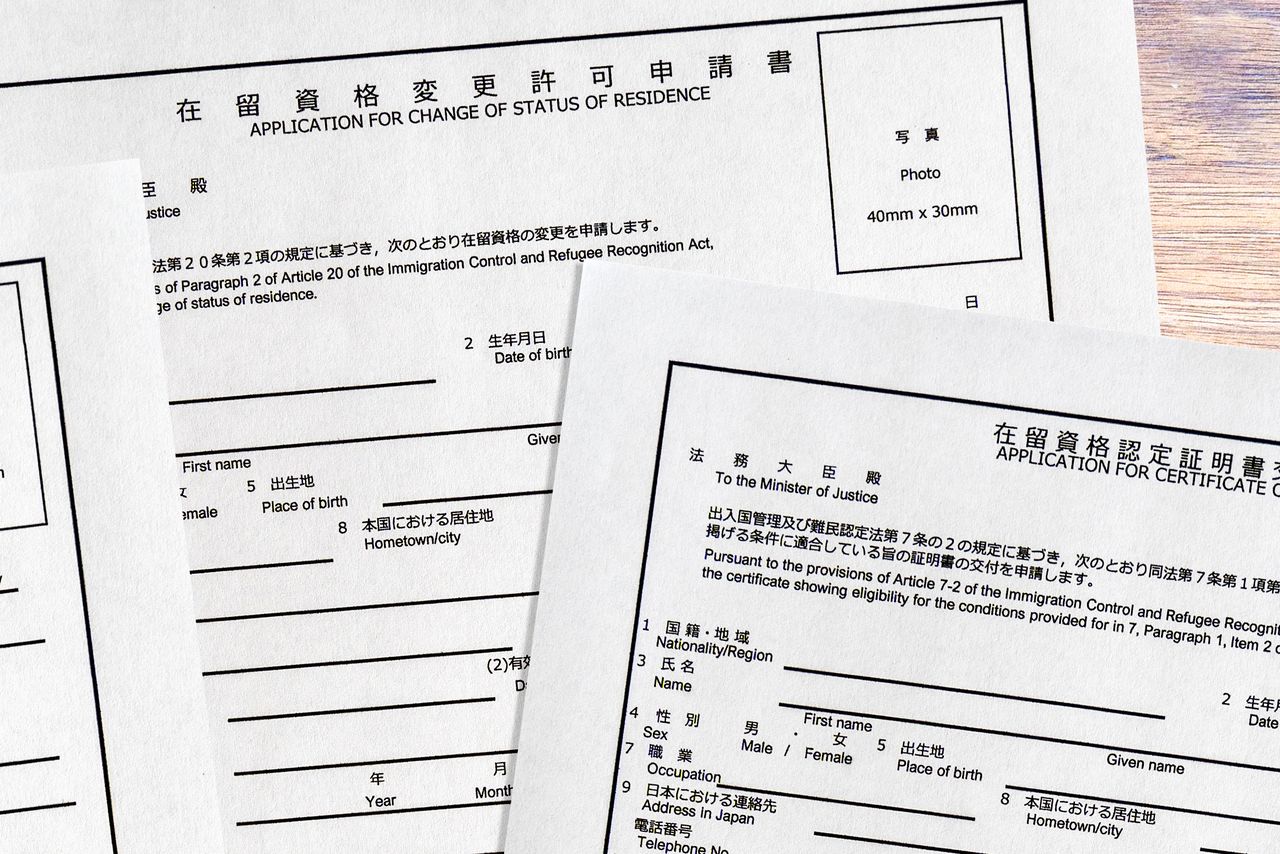
Application documents for residence status. (© Pixta)
In August 2026, the Immigration Services Agency published a draft of new guidelines that lay out much more specific criteria for permanent residency screening. The draft expands the range of items checked to include income, pension outlook, Japanese language skills, and understanding of Japanese systems and rules. The agency says that clarifying these factors will help make the outcome of permanent residency applications more predictable.
Stricter Permanent Residency Requirements (from April 2027)
- Stable annual income exceeding the average for Japanese households (implemented from Oct. 2026)
- Pension prospects equivalent to 30 years of Employees’ Pension Insurance (Kōsei Nenkin) contributions (shortfalls may be covered by assets)
- B1 level Japanese-language proficiency, sufficient for everyday communication
- Understanding of Japanese systems and rules
- Review of children’s school attendance
- Checks of compliance with tax and pension payments (as before)
- Spousal requirement revised from three years of marriage and one year of residence to five years of marriage and three years of residence
Essentially, Japan is demanding higher benchmarks from foreign residents regarding income and Japanese language skills, while spelling out the screening criteria more clearly and making them easier to understand. But the core approach remains the same: Decisions are still being made through an overall assessment of each applicant’s circumstances, and the underlying standards and logic behind those decisions are no more transparent than before.
Speaking at a press conference on August 4, 2026, then Justice Minister Hiraguchi Hiroshi said that the government had revised the way self-sufficiency and national-interest requirements are applied, with the aim of more reliably ensuring that permanent residents do not become a burden on public finances.
Rising Fees and Payment by Beneficiaries
The cost burden is set to rise as well. The May 2026 revisions to the Immigration Control and Refugee Recognition Act revise fees for residence status changes, renewals, and permanent residency starting October 1. The former flat rate of ¥6,000 for in-person filings will be replaced with a tiered schedule based on the length of the approved stay—up to ¥75,000 for a five-year permit. The fee for permanent residency will also rise sharply, from ¥10,000 to ¥200,000. Discounts will be available for online applications and for those who qualify under both hardship and humanitarian criteria.
Residence‑Status Fees (In‑Person Applications)
| Previous Fee | Revised Fee (by Duration) |
|---|---|
| Change, extension ¥6,000 | Up to 3 months: ¥10,000 |
| More than 3 months–6 months: ¥18,000 | |
| More than 6 months–less than 1 year: ¥25,000 | |
| 1 year: ¥33,000 | |
| More than 1 year –less than 3 years: ¥48,000 | |
| 3 years–less than 5 years: ¥64,000 | |
| 5 years or more: ¥75,000 | |
| Permanent residency ¥10,000 | ¥200,000 |
At a press conference on July 3, then Justice Minister Hiraguchi said the growing numbers of foreign residents are pushing immigration- and residence-related administrative costs higher, making it necessary to ask foreign residents to shoulder an appropriate share. He noted that the higher fees reflect both the actual cost of screening and broader administrative expenses—a comment seen as underscoring the principle of payment by beneficiaries.
Permanent Residency Fees Approaching US Levels
Many countries require applicants to meet various conditions for permanent residency, including years of residence, income, and language skills. Britain calls for five years of residence and sets standards for English‑language ability and income; applicants must also pass a test covering domestic rules and history. Current reforms aim to extend the required period of residence and raise the English-language threshold. Germany likewise requires five years of residence in principle, along with stable income, 60 months of pension contributions, B1-level German proficiency, and basic knowledge of the legal system. South Korea requires five years of residence, an income level benchmarked against the per‑capita gross national income, and either completion of a social-integration program or passing its examination.
Fees vary by country. Germany and South Korea charge an equivalent of around ¥20,000, US applicants adjusting to permanent residency pay about ¥210,000–¥220,000, and Britain charges over ¥600,000. Japan’s fee had been ¥10,000—lower than those in the other four countries—but from October 2026, it will jump to ¥200,000, well above Germany and South Korea and roughly on a par with US levels, though still lower than Britain.
Because countries differ in both the criteria for permanent residency and what their fees actually cover, straightforward comparisons are not necessarily appropriate.
Seeing the Bigger Picture
These developments point to a fairly clear overall trend. Japan is not shutting the door to foreign nationals; given its ongoing labor shortages, it will likely continue to develop and maintain its systems for admitting foreign workers.
But once people arrive, the government is checking a wider range of factors—employment, daily life, length of stay, and long-term settlement—and raising the required standards. The costs associated with maintaining legal status are also increasing.
Although these policies are under the jurisdiction of different ministries and have different legal rationales, foreign residents will experience them as a continuous increase in burdens: in employment, during status renewals, in tax and social-insurance compliance, and in permanent residency procedures.
Understanding the broader landscape is essential for grasping Japan’s shifting approach to foreign residents.
Based on information published as of September 1, 2026. Because some items remain under review, applicants should confirm the latest details on the Immigration Services Agency website and other official sources when completing residence-status procedures.
Data Sources
- Japan: Immigration Services Agency, “Regarding the Revision of the Amount of Residence Permit Fees Effective October 1, 2026” and related Questions and Answers.
- Germany: Federal Office of Justice, Federal Ministry of Justice and Consumer Protection, “Aufenthaltsgesetz 2.11 and 9.2”; “Aufenthaltsverordnung 44.3.”
- South Korea: Korean Law Information Center, “Enforcement Regulations of the Immigration Control Act 18.4.1 and 72.5”; Ministry of Government Legislation, “Permanent Residency,” and “Permanent Residency (PDF)”.
- United States: US Citizenship and Immigration Services, “Form G‑1055, Fee Schedule, Edition 09/09/26, Form I-485,” p. 15.
- Britain: UK Visas and Immigration, Home Office, “Immigration and Nationality Fees, 8 April 2026, Section 9”; “Indefinite Leave to Remain: Main Applicant and Dependants.”
(Originally published in Japanese on September 28, 2026. Banner photo: The Tokyo Regional Immigration Services Bureau. © Pixta.)