
Births in Japan Fall Below 700,000 for the First Time in 2024
Society- English
- 日本語
- 简体字
- 繁體字
- Français
- Español
- العربية
- Русский
A New Low
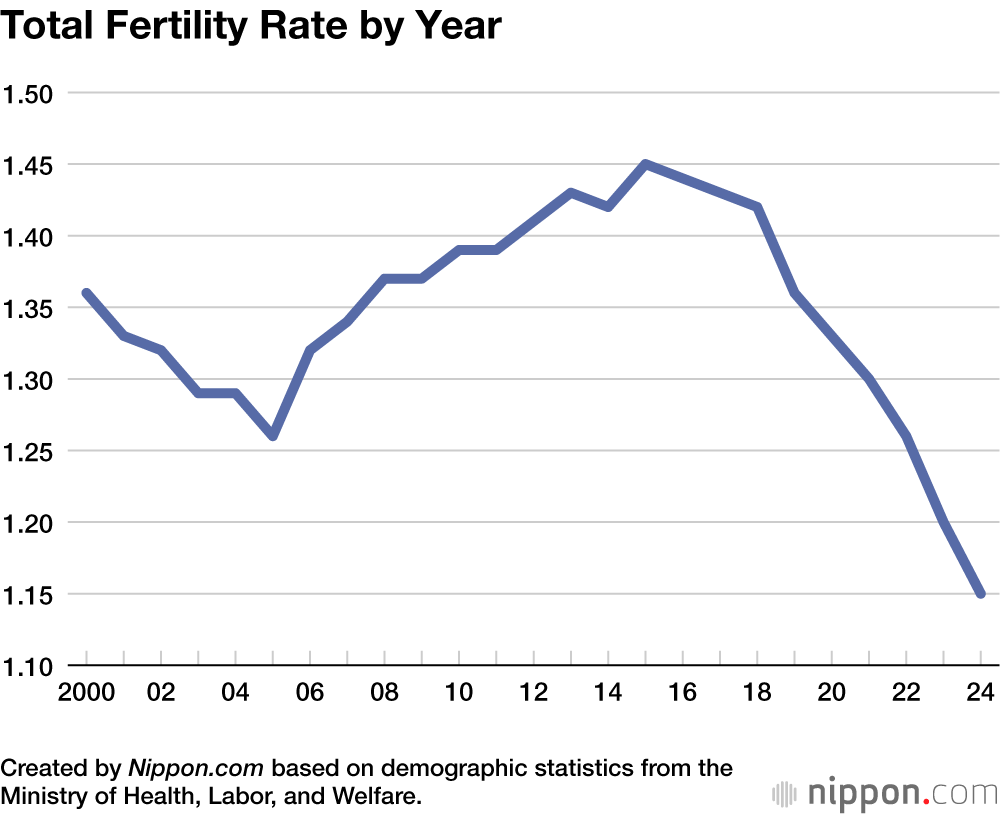
The number of births in Japan fell below 700,000 for the first time in 2024. Demographic statistics published by the Ministry of Health, Labor, and Welfare show that there were 686,061 births, down 41,227 year on year, marking a record low for the ninth year running. The total fertility rate, indicating the number of children a woman has in her lifetime, fell by 0.05 points to a new low of 1.15.
The fertility rate tended to be lower in eastern prefectures than in the west, with Tokyo dipping below 1 for the second year, at 0.96, followed by Miyagi at 1.00 and Hokkaidō at 1.01. The highest fertility rates were seen in the prefectures of Okinawa (1.54) and Fukui (1.46), ahead of Tottori, Shimane, and Miyazaki, all at 1.43.
While the number of marriages increased by 10,322 to 485,063, it is still very low. Cultural factors including the general aversion to having children outside of marriage in Japan and trends toward marrying late or not at all present major challenges to efforts to lift the number of births.
Japan’s Demographics
| 2024 estimate | 2023 | |
|---|---|---|
| Births | 686,061 | 727,288 |
| Total fertility rate | 1.15 | 1.20 |
| Deaths | 1,605,298 | 1,576,016 |
| Natural population change | –919,237 | –840,728 |
| Marriages | 485,063 | 474,741 |
| Divorces | 185,895 | 183,814 |
Created by Nippon.com based on demographic statistics from the Ministry of Health, Labor, and Welfare.
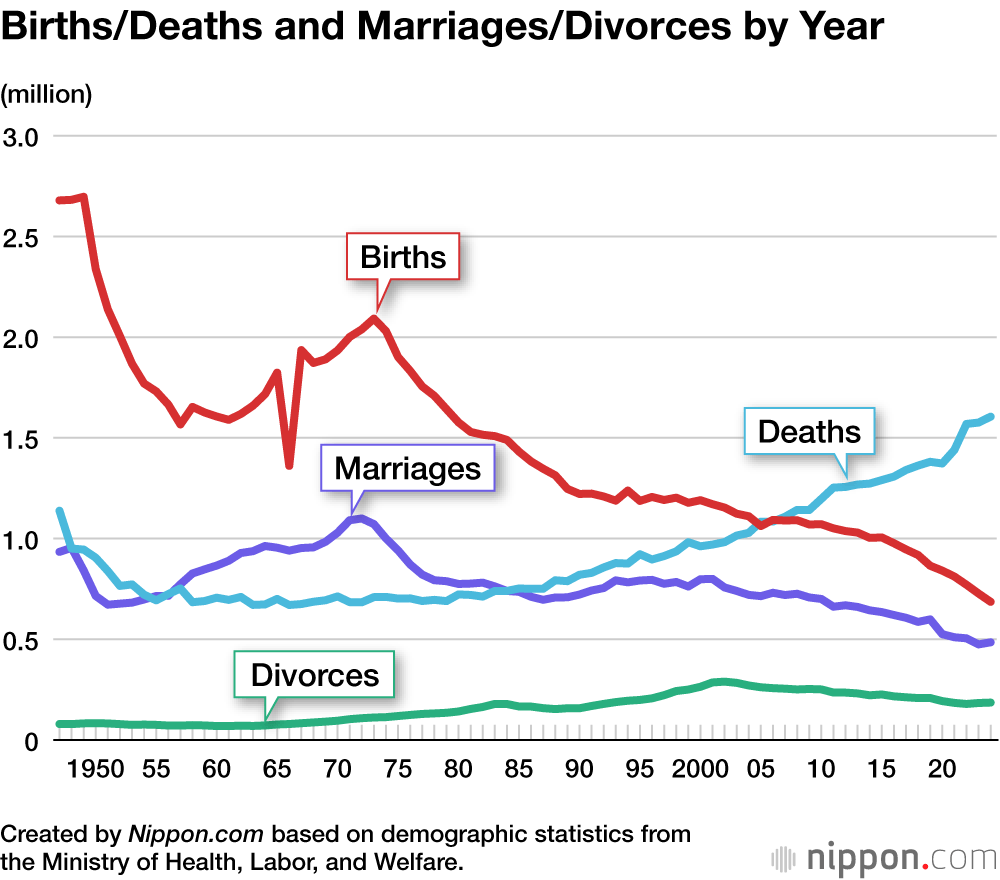
The number of deaths in 2024 increased by 29,282 to reach a postwar high of 1,605,298. Since the natural decrease in population, which is the difference between the number of births and deaths, surpassed 600,000 for the first time in 2021, it has risen sharply to a record high 919,237 in 2024.
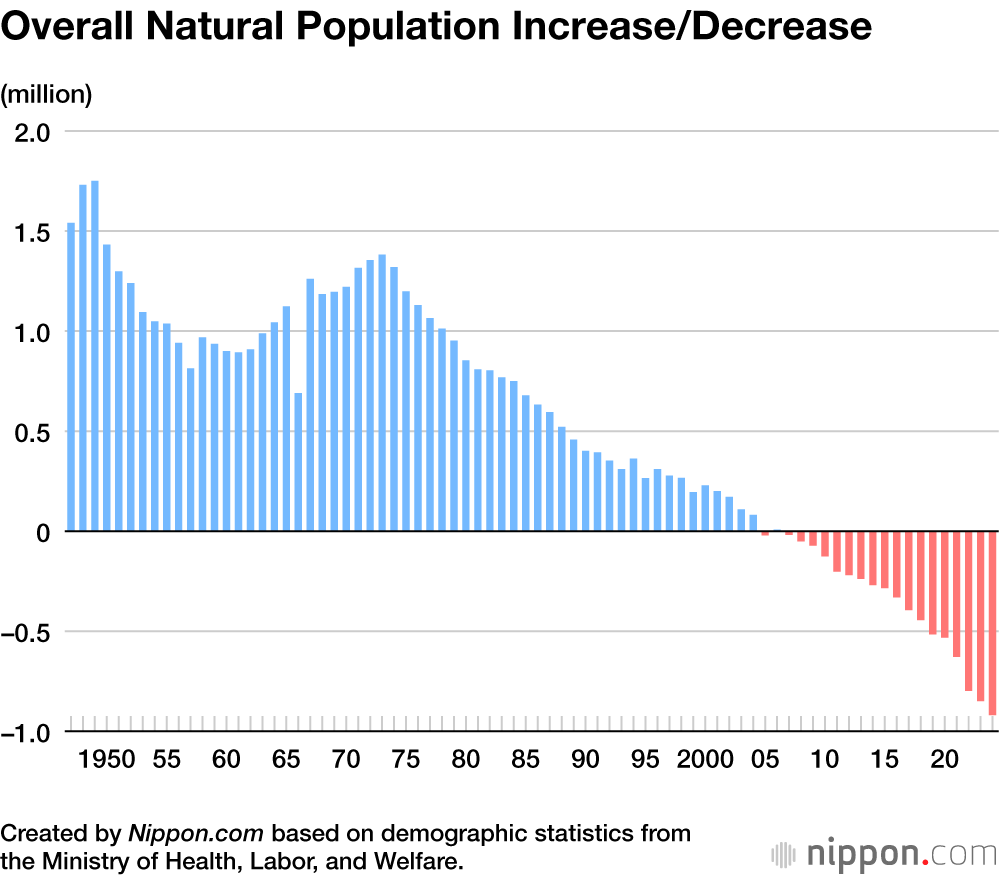
During the first baby boom (1947–49) immediately after the end of World War II, the number of annual births in Japan reached 2.5 million, and births per year exceeded 2 million during the second baby boom (1971–74). Since then, the number has consistently declined, without a spike in births when the second baby-boom generation reached the age to have their own children. The number of births dropped below the number of deaths for the first time in 2007.
Data Sources
- Public demographic statistics (Japanese) from the Ministry of Health, Labor, and Welfare, 2024.
(Translated from Japanese. Banner photo © Pixta.)