Rising Prices Mean More Japanese Children Face Food Insecurity
Society Economy- English
- 日本語
- 简体字
- 繁體字
- Français
- Español
- العربية
- Русский
Increasing Reliance on School Lunch
In June 2025, the International NGO Save the Children Japan conducted a survey of 7,856 low-income households with children that had a history of receiving support from the organization. The survey asked whether children in these households were getting enough to eat at breakfast, lunch (both when school lunch is available and when it is not, such as during vacation), and dinner, and found that the percentage of families reporting that the meal quantity was “not quite sufficient” or “not sufficient” had risen from the previous year in each category.
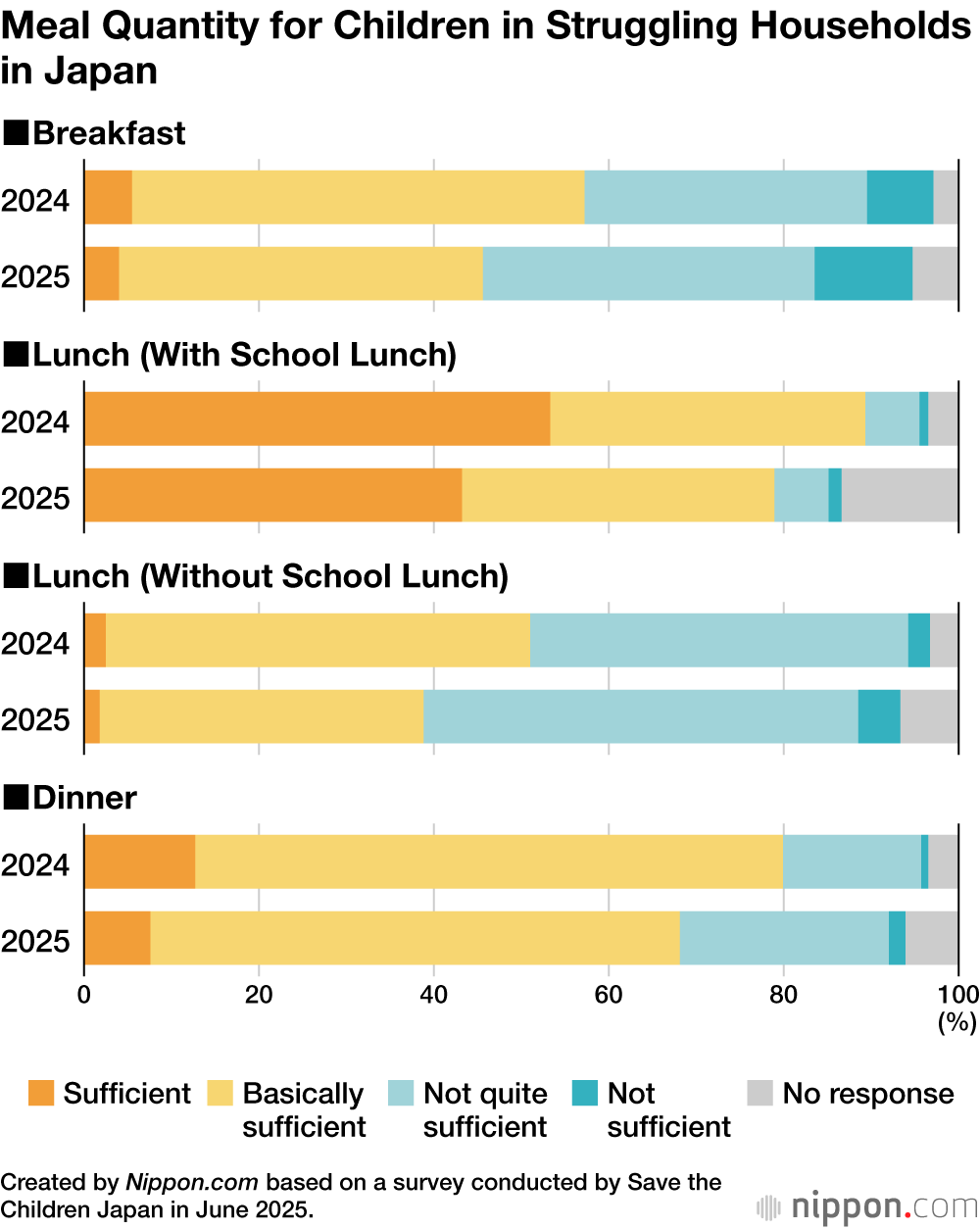
Due to their nutritional balance, school lunches are considered a vital source of nourishment for children. The percentage of households that said lunch portions were “not quite sufficient” or “not sufficient” when school lunch is not available rose by 8.8 percentage points from the previous year to reach 54.5% (seven times higher than the 7.7% for when school lunch is provided). The percentage of households that said the lunches were “sufficient” or “fairly sufficient” fell to 38.8%, a drop of 12.3 points from the year before.
For breakfast, those who reported “sufficient” or “fairly sufficient” meal quantities dropped by 11.6 points, and for dinner, by 11.8 points.
Low-income households are especially vulnerable to decline in dietary quality as food prices rise. A total of 88.9% of respondents said that their children’s meals and overall food situation were “significantly impacted” or “somewhat impacted” by rising prices compared to a year ago.
Consuming Less Rice, Fish, and Meat
In addition to meal quantity, the types of food consumed are being affected by price increases. When asked about the consumption of rice, whose price has sharply increased since last year, 76.2% of respondents said that they eat rice less frequently or somewhat less frequently.
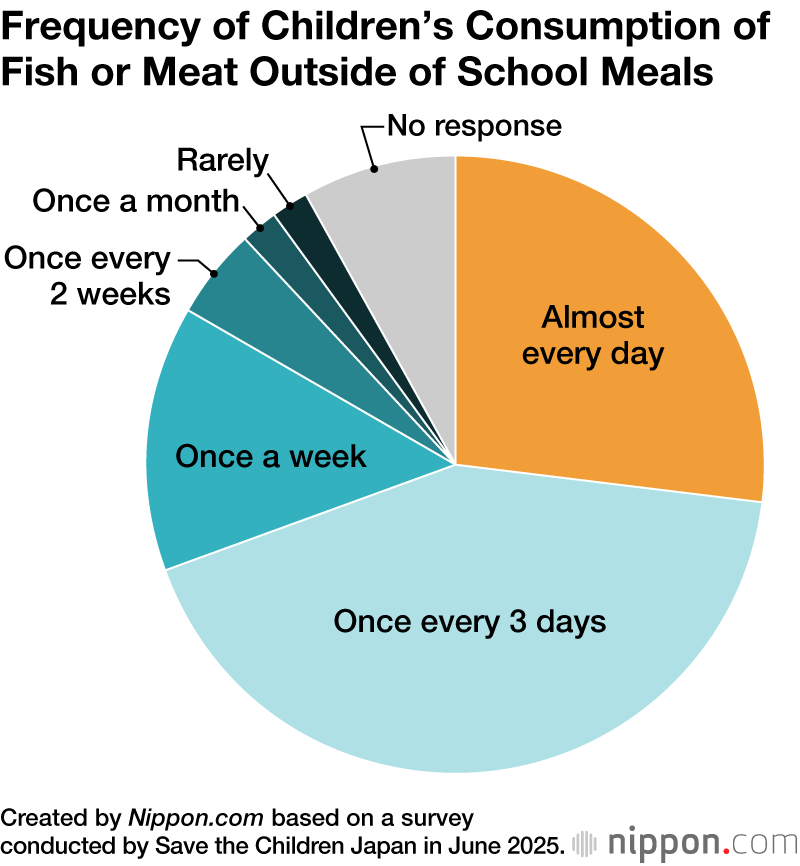
The decline in protein intake, which is essential for children’s growth, is also notable. A total of 65.4% of respondents reported less frequent or somewhat less frequent consumption of fish or meat outside school meals. Just 27.3% reported their children consume fish or meat “almost every day.”
When respondents were asked how they were impacted (multiple answers possible), the most common answer was a reduction or elimination of eating out at 68.5%. This was followed by reduced purchases of snacks, fruit and vegetables, meat and fish, and staple foods such as rice, in that order.
Asked what types of support they would like to receive, over 70% of respondents selected “regular food provision, food banks, and community meal programs for children.” Nearly 70% also chose “subsidies for lunch and distribution of food items during school vacation” and “reduction of consumption tax on foods and daily necessities.”
Data Sources
- Report on food and children in low-income households (Japanese) from Save the Children Japan.
(Translated from Japanese. Banner photo © Pixta.)