Television Regarded in Japan as the Most Reliable Real-Time Information Source for Disasters
Society Disaster- English
- 日本語
- 简体字
- 繁體字
- Français
- Español
- العربية
- Русский
Young People Lean Toward Social Media
A survey related to disaster preparation conducted online in July 2025 by the research company Cross Marketing, and targeting people aged 20 to 79 in Japan, received 3,000 valid responses in total (1,500 men and 1,500 women).
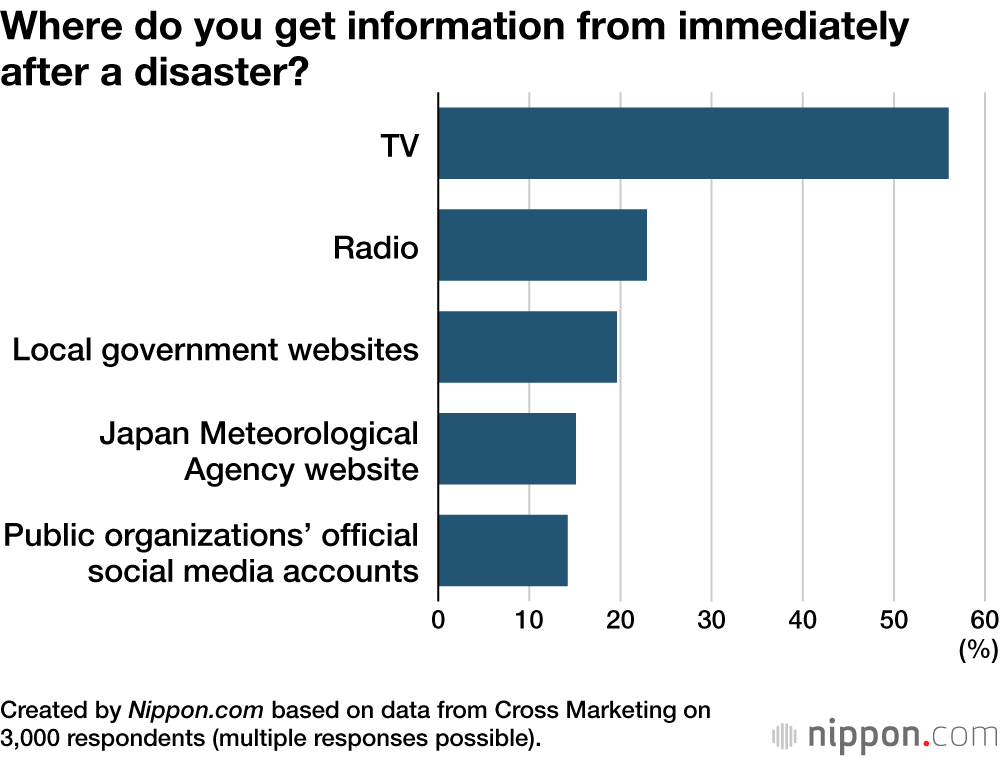
As part of the survey, respondents were asked to select which sources they used to get information, depending on the amount of time that had passed since a disaster. In the immediate aftermath of a disaster, 56.0% used television, followed by 22.9% who used the radio, 19.6% who looked at local government websites, 15.1% who used the Japan Meteorological Agency website, and 14.2% who went to public organizations’ official social media accounts.
These top five choices remained the same whether it was hours or even several days after a disaster, with television still accounting for just under 50%. Newspapers were not an option for the questions concerning the sources respondents turned to immediately after or within several hours of a disaster, due to the fact that delivery might not be possible. Several days after a disaster, only 8.7% cited newspapers as a source of information they used. When it came to getting general information about disasters, television was also cited as the top source.
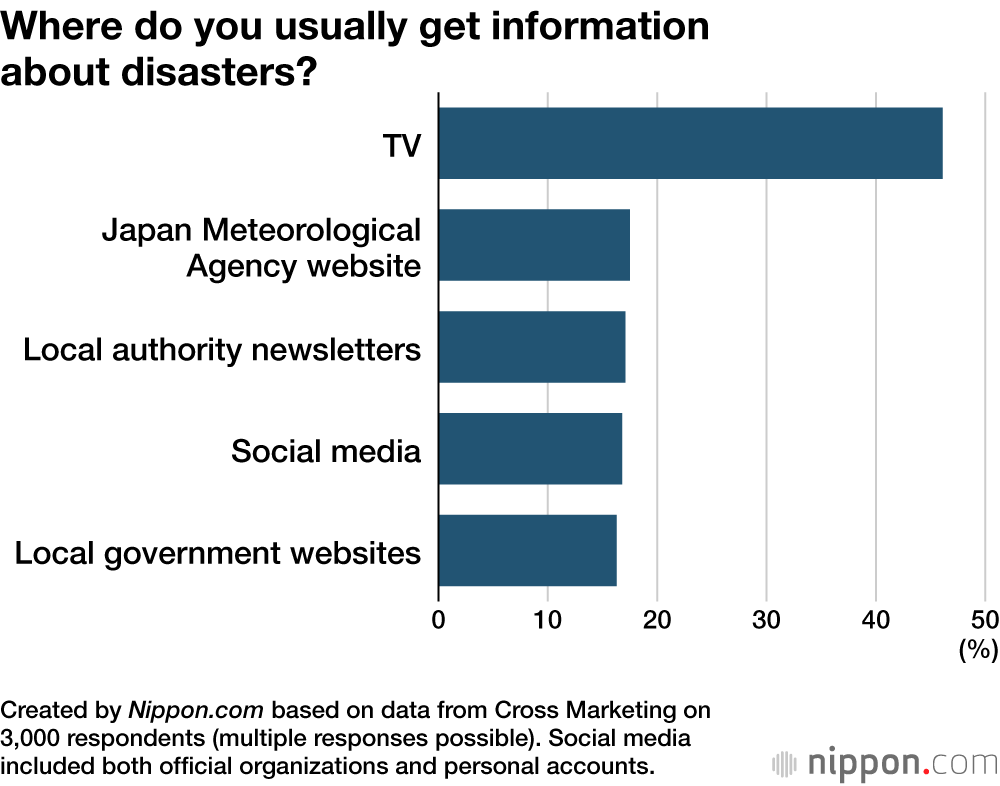
While people in their sixties and seventies most frequently turned to television, younger people in their twenties and thirties more often referred to the official social media accounts of public organizations. A survey representative pointed out that “although there are differences in the sources people used to get information depending on their age, there is a visible tendency to choose reliable sources.”
Data Sources
- 2025 Survey on Disaster Preparedness and Practice (Japanese) from Cross Marketing.
(Translated from Japanese. Banner photo © Pixta.)