Japanese Boys and Girls Much Taller than a Century Ago
Society Health- English
- 日本語
- 简体字
- 繁體字
- Français
- Español
- العربية
- Русский
Statistics from Japan’s Ministry of Education, Culture, Sports, Science, and Technology (MEXT) show the average height of 17-year-old boys in Japan rose from 160.6 centimeters in 1926 to 170.8 centimeters in 2024, an increase of 10.2 centimeters. The average height of 17-year-old girls climbed 7.7 centimeters from 150.3 to 158.0 centimeters over the same period. MEXT has annual records of the average height and weight of schoolchildren and students since they were first kept in 1900, with the exception of the years 1940 to 1947.
The average weight of 17-year-old boys rose 9.7 kilograms from 52.5 to 62.2 kilograms between 1926 and 2024, while the average weight of girls of the same age increased 4.5 kilograms from 48.0 to 52.5 kilograms. Incidentally, in the 1900 academic year, 17-year-old boys were 157.9 centimeters and 50.0 kilograms on average, while girls were 147.0 centimeters and 47.0 kilograms.
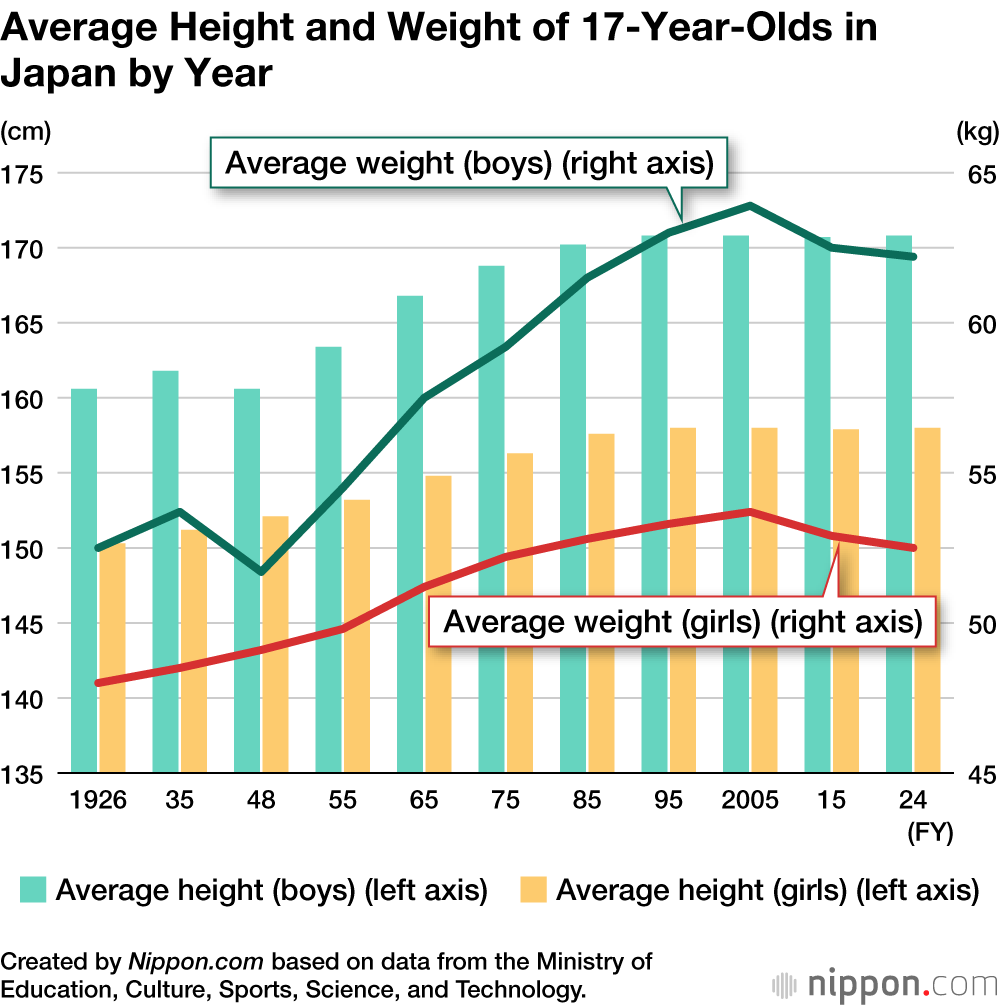
The same statistical records highlight the food shortages that afflicted Japan after World War II. In 1948, the average height and weight of 17-year-old boys were 160.6 centimeters and 51.7 kilograms, which was a decline of 1.9 centimeters and 2.2 kilograms compared to the averages for 1939.
The postwar physical increases in height and weight continued until around 1995, but over the three decades since then there has been no significant change.
Less Obesity Compared to Other Countries
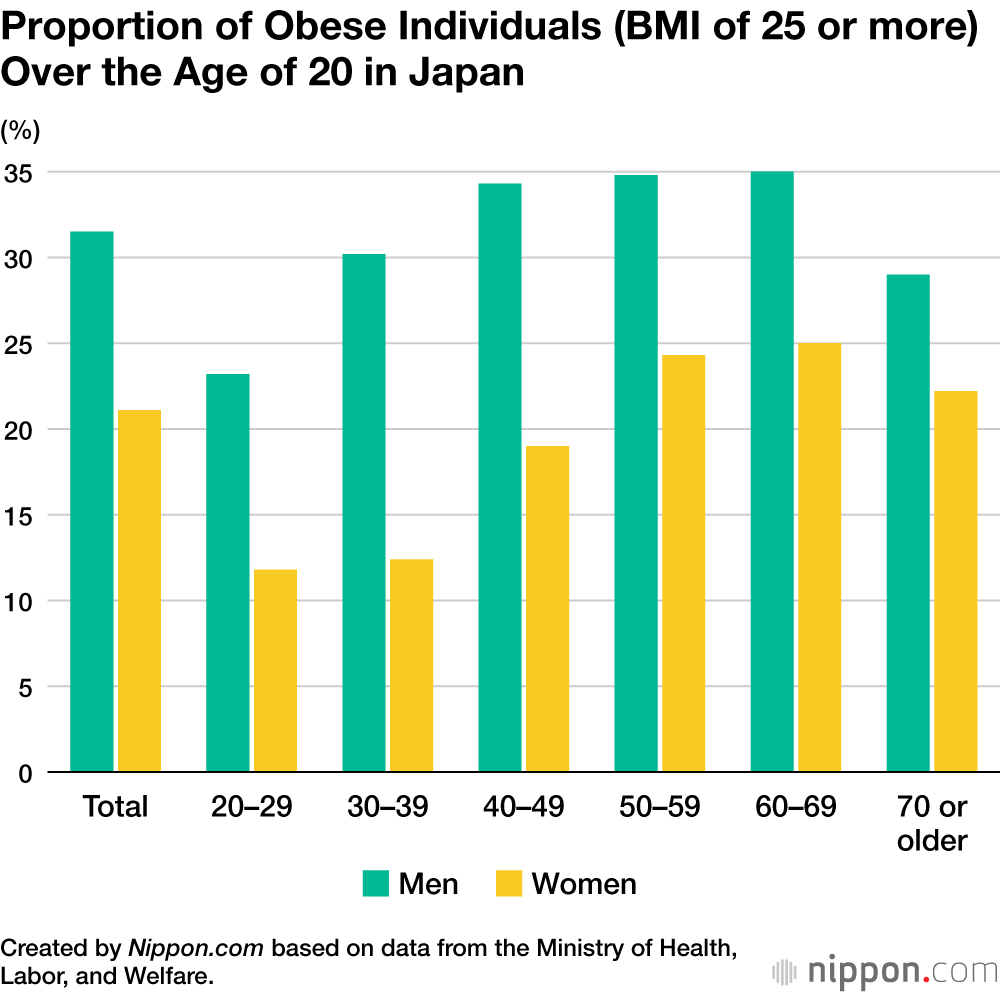
According to the 2023 National Health and Nutrition Survey, conducted by the Ministry of Health, Labor, and Welfare, the proportion of obese individuals (with a BMI of 25 or higher) among those 20 or older was 31.5% for men and 21.1% for women. The proportion increases with age, with 35% of men and 25% of women in their sixties classified as obese.
From an international perspective, Japan is a country with relatively few obese people. According to a study published in a British medical journal in 2017, the United States, Mexico, Russia, Brazil, and Egypt have the highest obesity rates among countries with populations of over 100 million, whereas Japan ranks in the middle for men and in the lower stratum for women, and its proportion of obese individuals is lower than that of China for both men and women.
Data Sources
- Fiscal 2024 School Health Statistics Survey (Japanese) from the Ministry of Education, Culture, Sports, Science, and Technology.
- Results of the 2023 National Health and Nutrition Survey (Japanese) from the Ministry of Health, Labor, and Welfare.
(Translated from Japanese. Banner photo © Pixta.)