
Japanese Companies Employing Foreign Workers Struggle to Understand Their Residence Statuses
Economy Society Work World- English
- 日本語
- 简体字
- 繁體字
- Français
- Español
- العربية
- Русский
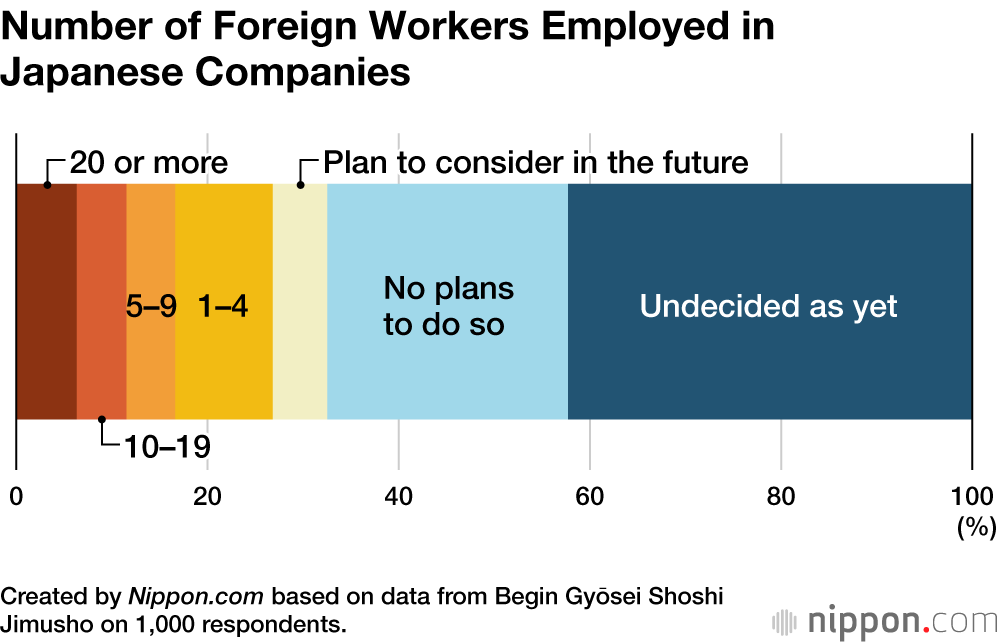
In a survey of 1,000 company managers and executives in Japan, 26.8% stated that they currently employ foreign workers, but even when those who “plan to consider in the future” were included, it only reached 32.5%. Meanwhile, around two thirds responded that they either had “no plans to do so” or were “undecided as yet.”
The nationwide survey was conducted by Begin Gyōsei Shoshi Jimusho, a provider of administrative procedures legal specialists.
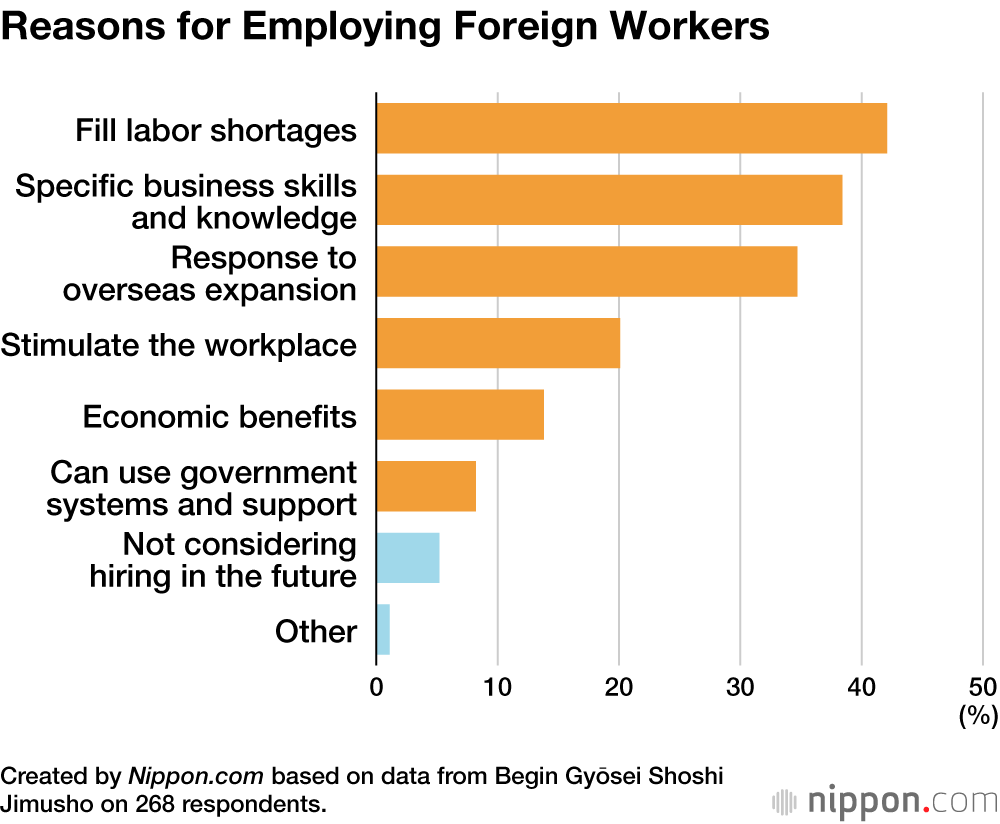
Out of the 268 companies that employ foreign workers, the majority, with 42.1%, stated it was to “fill labor shortages.” This was followed by 38.4% who were seeking to benefit from “specific business skills and knowledge” and 36.5% who were doing so as a “response to overseas expansion.” It indicated that, in addition to labor shortages, there was a growing emphasis on acquiring skills and specializations.
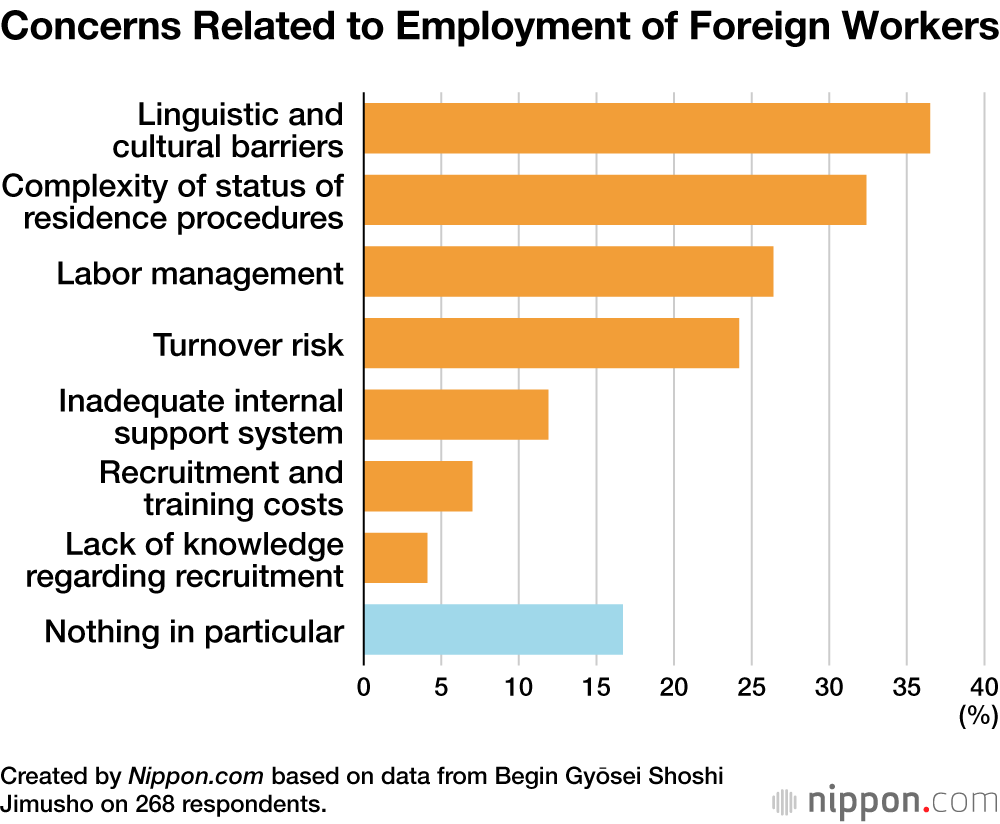
However, more than 80% of those companies employing foreign workers stated that they had concerns. With more than 30% specifying “linguistic and cultural barriers” and “complexity of status of residence procedures,” the survey indicated that there were issues from the perspective of both communication and operations.
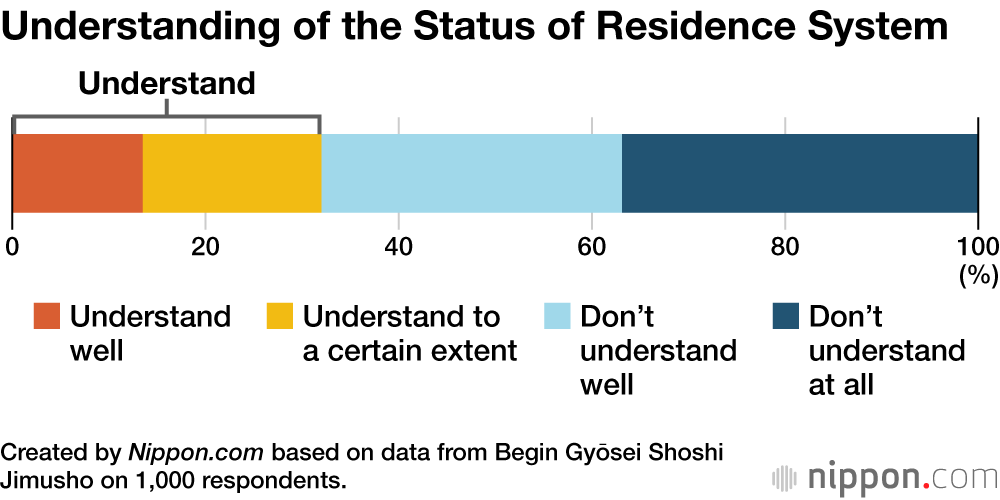
Only 32% of companies, including those who understood “to a certain extent,” said they comprehended the status of residence system, while 23.8% of companies who already employed foreign workers stated that they had “inadequate understanding.” It would appear that companies are struggling with the difficulties around the types of residence status, the requirements, and renewal procedures.
Asked what measures they were taking to avoid issues such as forgetting to renew residence statuses or prevent illegal employment, companies were most commonly “setting internal regulations and rules,” “working with external experts, such as immigration lawyers,” and “checking residence status when employees join or leave the company.” On the other hand, 17.1% stated they were taking “no measures in particular,” revealing issues over ensuring compliance.
Data Sources
- Survey on employment of foreign workers (Japanese) from Begin Gyōsei Shoshi Jimusho.
(Translated from Japanese. Banner photo © Pixta.)