
Incivility Drains Employee Motivation in Japan
Society Work- English
- 日本語
- 简体字
- 繁體字
- Français
- Español
- العربية
- Русский
Negative Impact of Rude Attitudes
Negative behavior that falls short of harassment may be increasing employee turnover in Japan. Corner, a Tokyo-based company that provides solutions to human-resource problems, carried out a survey on rude behavior or language in the workplace. The survey was conducted in September and targeted office workers in their twenties to fifties nationwide, with a total of 312 responses each from male and female regular employees.
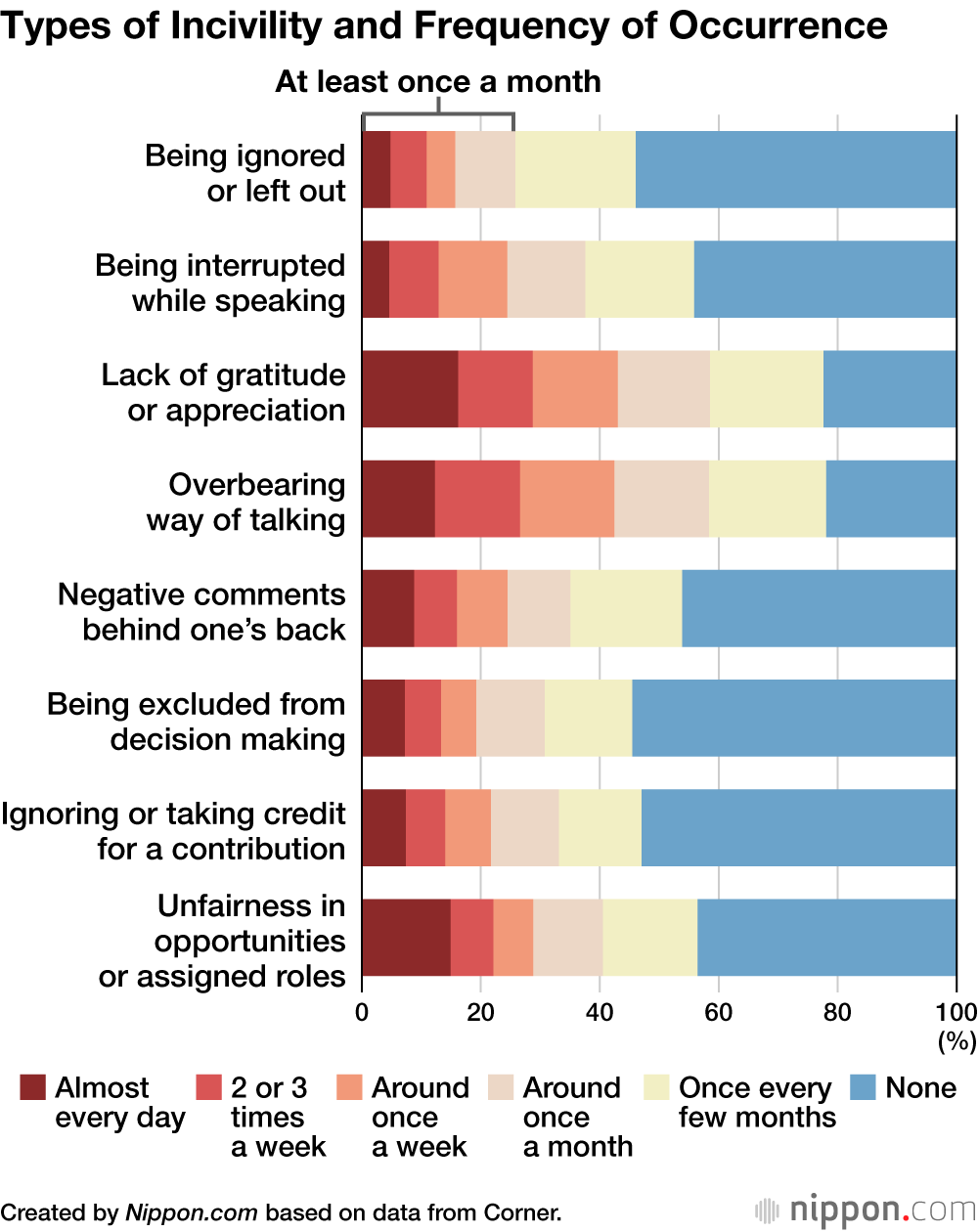
Survey respondents were asked about the type and frequency of incivility suffered over the past six months. The most commonly mentioned cases involved “blunt or overbearing ways of speaking” (78.0%) and a “lack of gratitude or appreciation” (77.6%). More than 40% of the respondents said they had experienced either form of incivility at least once a week.
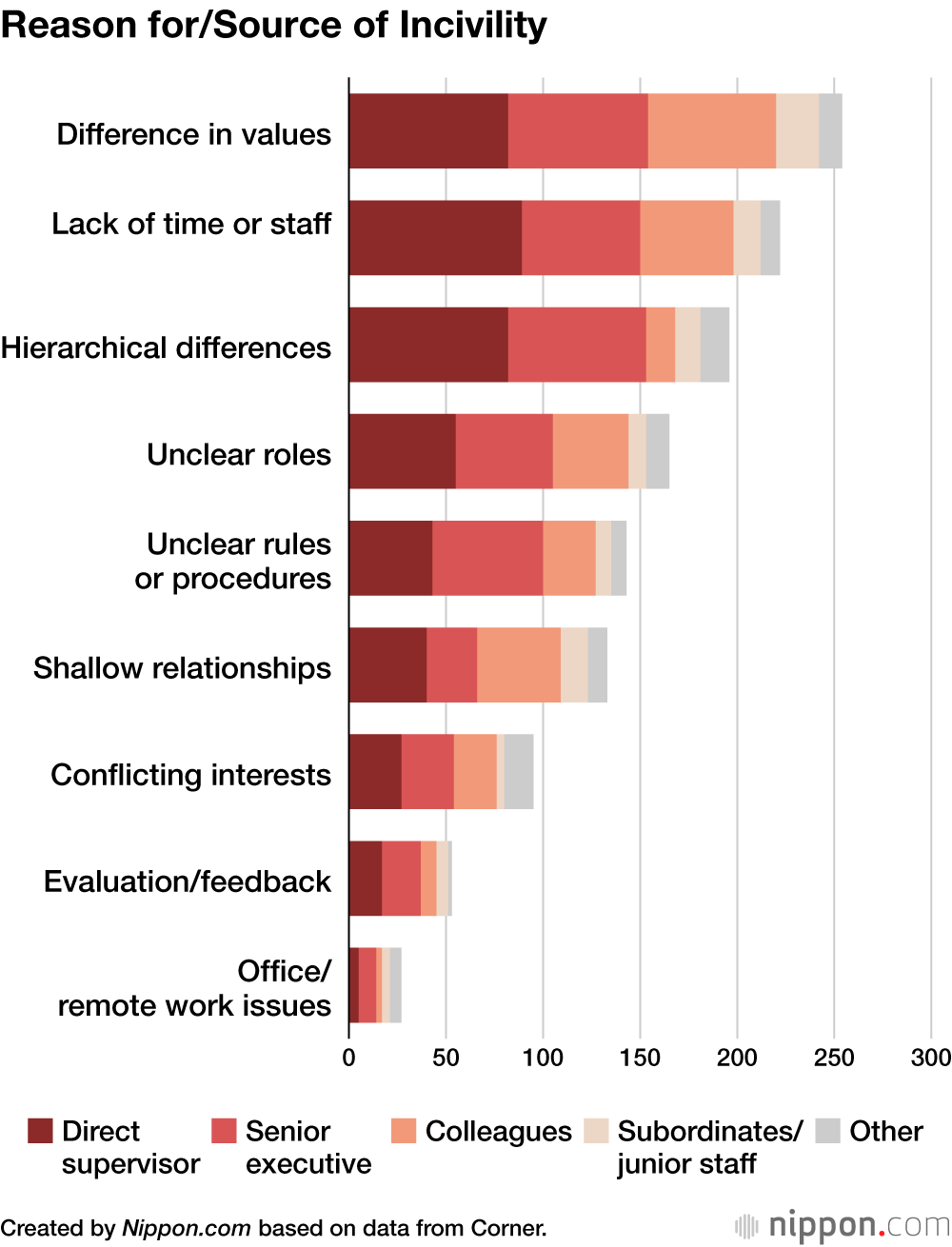
Many cases of incivility reflected a difference in values, a lack of time or staff, and hierarchical differences, and most often the comment or behavior came from a direct supervisor or senior executive.
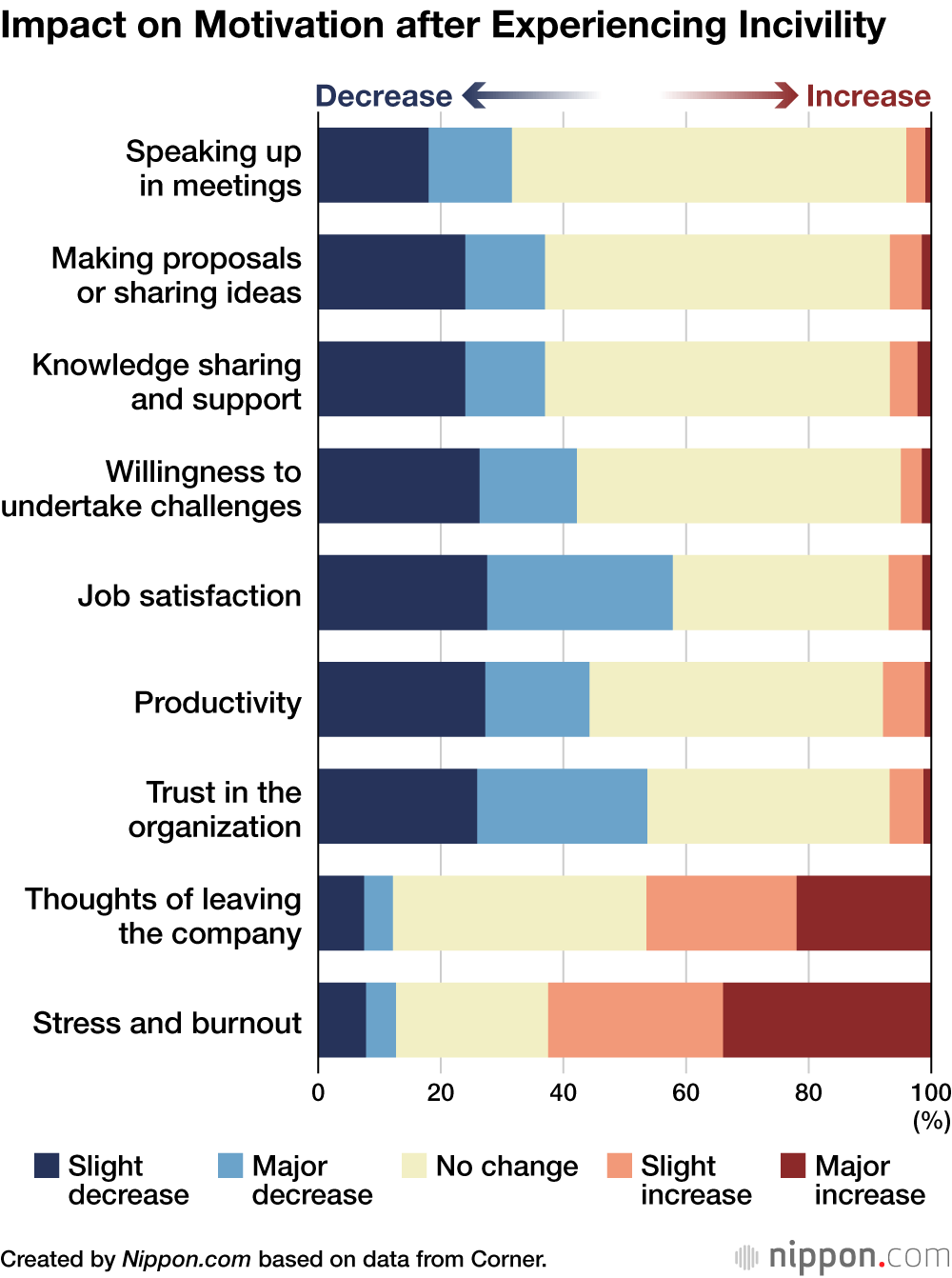
Incivility in the workplace has an impact on motivation, as seen in a 25% to 30% decline in job satisfaction, productivity, and trust in the organization. This also led to a noticeable increase among employees in psychological stress and the desire to leave the company.
Data Sources
- Survey on rude behavior or language in the workplace (Japanese) by Corner.
(Translated from Japanese. Banner photo © Pixta.)