Japan Study Shows Nabe Consumption Heats Up on Cold Days
Society Economy Food and Drink- English
- 日本語
- 简体字
- 繁體字
- Français
- Español
- العربية
- Русский
A Clear Relationship
The Economic Analysis Office of the Ministry of Economy, Trade, and Industry, on January 2026, released the results of an analysis of consumption of nabe (hot pot) dishes in Japan, based on publicly available statistics and information. The study considered purchases on tsuyu (soup base) and tare (dipping sauce) to indicate consumer spending on hot pot dishes. That information was then compared to minimum temperatures in Tokyo recorded by the Japan Meteorological Agency.
The study covered the period from October 1, 2024, to March 31, 2025. New Year’s holiday from late December to early January was excluded due to the bulk purchases often made during this period. The analysis was conducted by dividing the remaining period into two segments: the beginning of October to late December, and early January to the end of March.
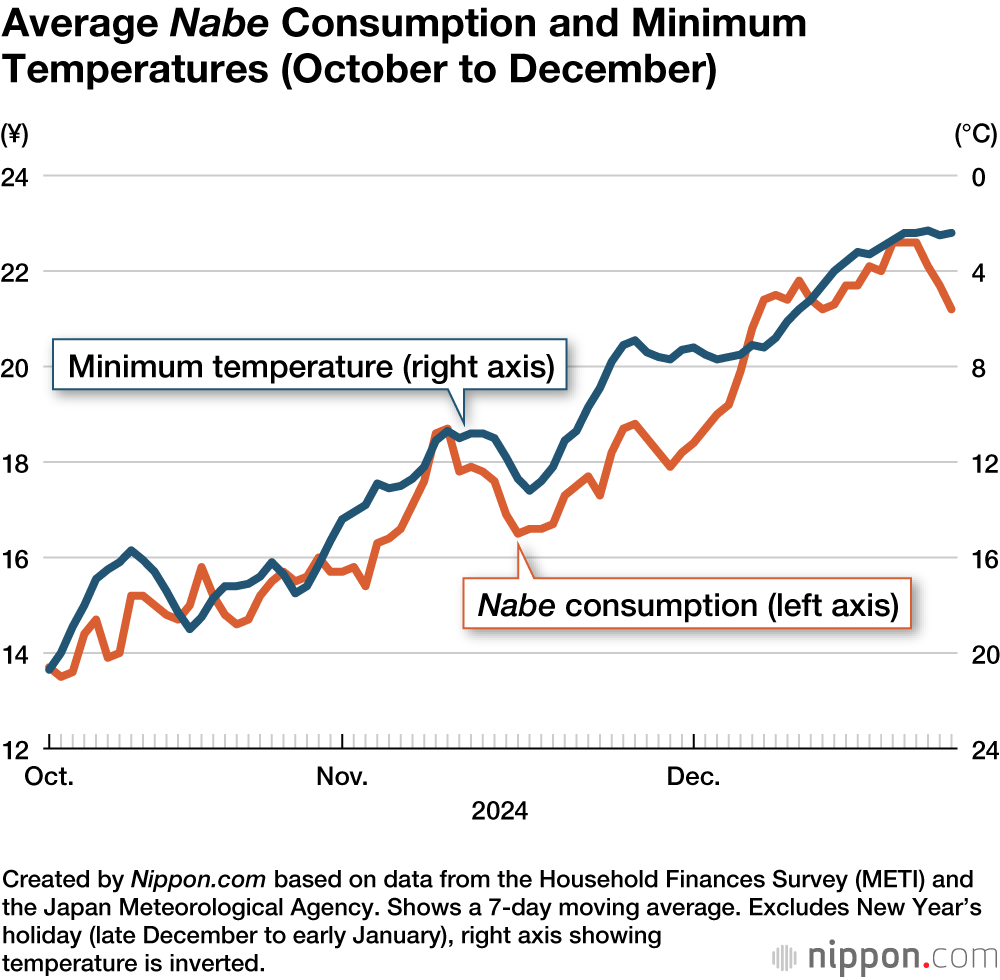
After the sets of data were processed into a 7-day moving average and the trends were graphed, a clear tendency emerged for both periods in terms of consumption of hot pot dishes increasing when temperatures fall.
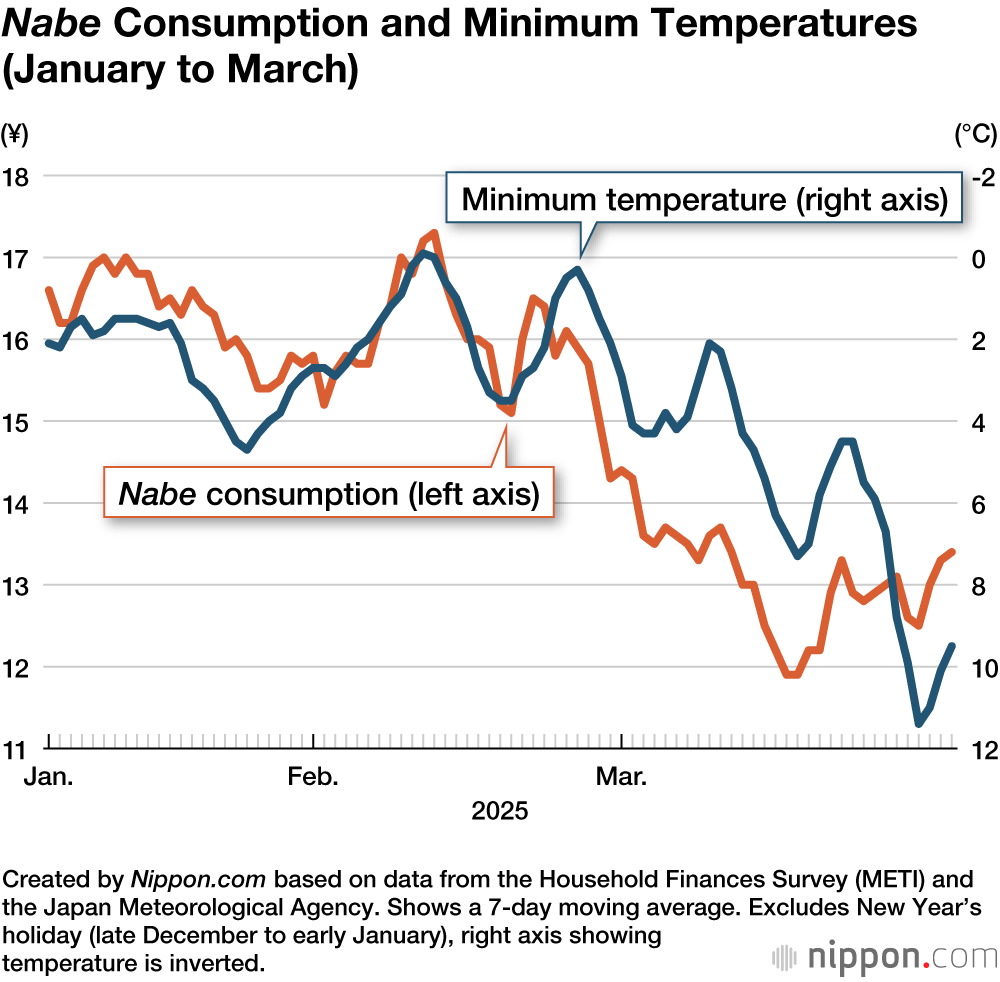
The correlation coefficient, which indicates the strength of the relationship between the two variables, was minus 0.96 for the period from October to late December, and minus 0.77 from early January to the end of March. Since any absolute value of 0.7 or higher is thought to indicate a strong correlation, the results statistically demonstrate a strong relationship between temperature and the consumption of nabe dishes.
Data Sources
- Report on nabe consumption (Japanese) from the Office of Statistical Analysis, Ministry of Economy, Trade, and Industry.
(Translated from Japanese. Banner photo © Pixta.)