
Tokyo Still a Population Magnet: Internal Migration to Japan’s Capital Remains High
Society- English
- 日本語
- 简体字
- 繁體字
- Français
- Español
- العربية
- Русский
Tokyo Retains Attraction
In 2025, more people moved to Tokyo from other parts of Japan than left the capital. Tokyo saw a net influx of 65,219 people, according to a report on internal migration issued by the Ministry of Internal Affairs and Communications based on information from the Basic Resident Register. This was 14,000 less than the previous year, marking the first decrease in four years. The internal migration of foreign residents switched from an inflow of 8,722 in 2024 to an outflow of 378 in 2025.
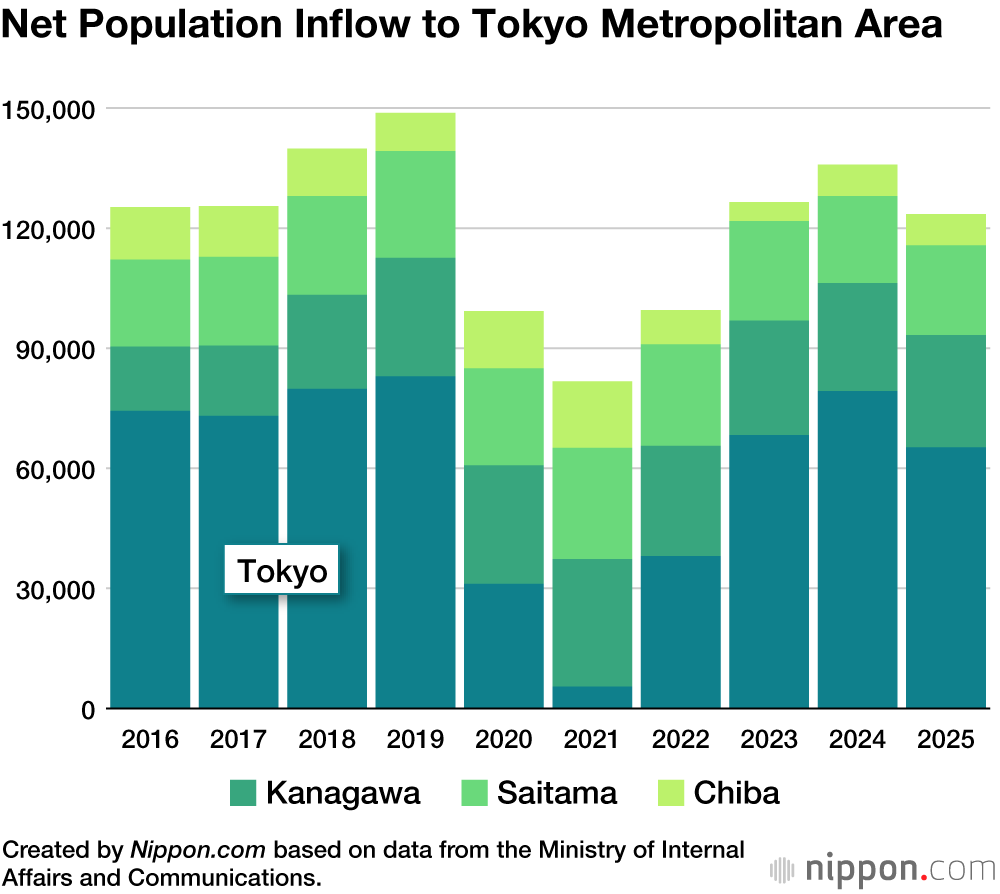
Only six other prefectures in Japan had net inflows of population last year: Kanagawa (28,052), Saitama (22,427), Osaka (15,667), Chiba (7,836), Fukuoka (5,136), and Shiga (353). By contrast, the largest net outflows were in Hiroshima (9,921), Fukushima (7,197), and Shizuoka (6,711).
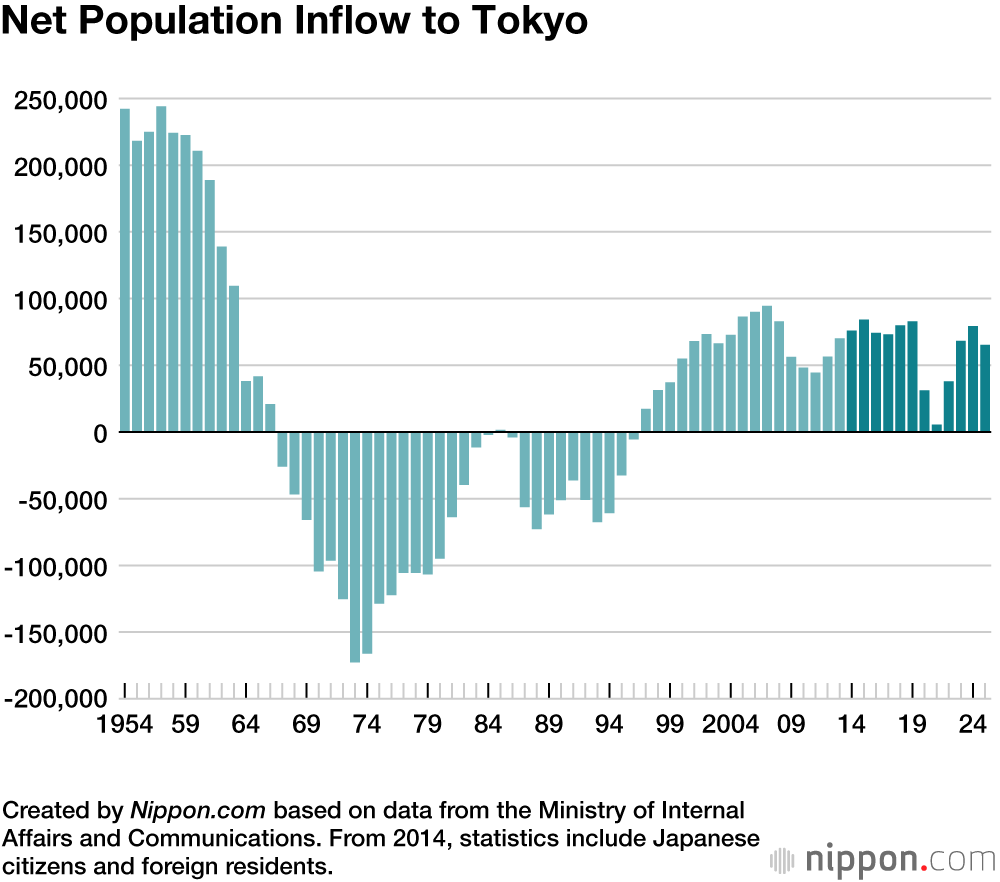
The Tokyo metropolitan area (Tokyo, Saitama, Chiba, and Kanagawa) had a net inflow of 123,534 people in 2025, down 12,309 year on year. As the capital retains a powerful attraction for young people from less populated areas, overconcentration in the Tokyo area remains a pressing problem. The Osaka metropolitan area (Osaka, Kyoto, Hyōgo, and Nara) also had a net inflow of 8,742, but the Nagoya metropolitan area (Aichi, Gifu, and Mie) had a net outflow of 12,695.
Data Sources
- Report on internal migration (Japanese) from the Ministry of Internal Affairs and Communications.
(Translated from Japanese. Banner photo © Pixta.)