A Landslide for Takaichi’s LDP: House of Representatives Election Results
Politics Society- English
- 日本語
- 简体字
- 繁體字
- Français
- Español
- العربية
- Русский
Historic Victory for the LDP
The election held on February 8, 2026, for Japan’s House of Representatives produced a dramatic reversal in fortunes for the ruling Liberal Democratic Party. Coming from a weakened position where it lacked a simple majority in the powerful lower house even with the added seats from its junior coalition partner, Nippon Ishin no Kai, the LDP ended election day with 316 out of the 465 in the chamber—more than two thirds of the total. The addition of Ishin’s 36 seats brings the coalition total to 352, a massive majority that allows the parties to override rejections of legislation in the House of Councillors, effectively allowing full control of the lawmaking process.
On the opposition side of the aisle, meanwhile, the Centrist Reform Alliance—formed in January by the Constitutional Democratic Party of Japan and former coalition member Kōmeitō, which walked away from the LDP after Takaichi Sanae was tapped as the party’s new president in October last year—saw its seats dwindle from a pre-election 172 to just 49. Elsewhere in the opposition, the Democratic Party for the People, or DPFP, went from 26 to 28 seats; also seeing gains were Sanseitō, jumping from 2 to 15, and Team Mirai, going from 0 to 11. Losing out in the voting were the Japanese Communist Party (falling from 8 to 4 seats), the Reiwa Shinsengumi (from 8 to 1), and the Conservative Party of Japan (losing its 1 seat); the Tax Cuts Japan–Patriotic Alliance won 1 seat, and 4 seats went to independent candidates.
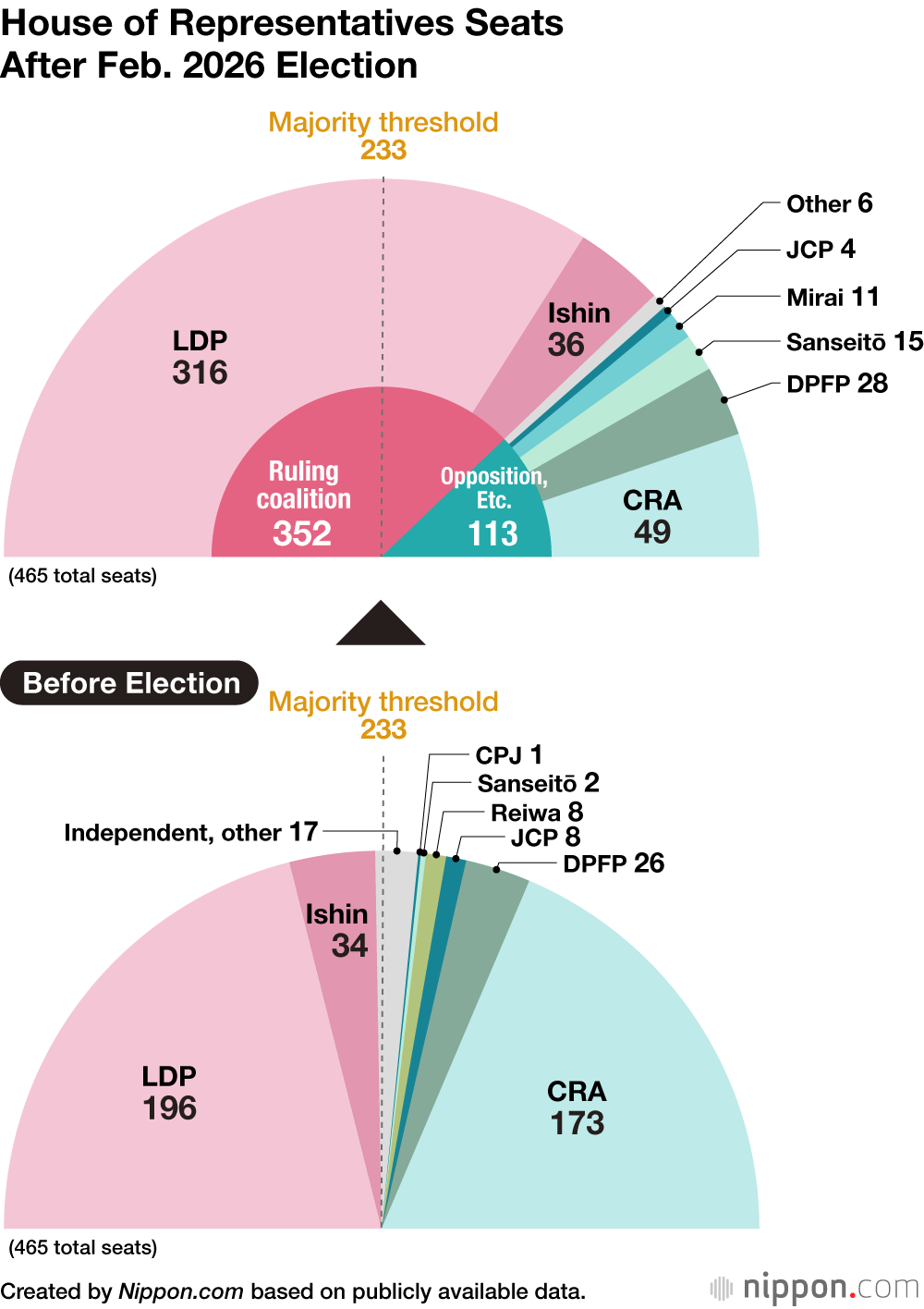
Prior to this election, the most seats ever won by the LDP in a lower house contest was the 304 (including candidates gaining party endorsement after voting) in the 1986 general election for both houses of the Diet held under Prime Minister Nakasone Yasuhiro. This year’s 316 seats for the Liberal Democrats even outstripped the 308 won by the Democratic Party of Japan in 2009, when that party wrested power away from the LDP, making it the largest single-party win in postwar Japanese politics.
With a majority clearing the two-thirds mark in the House of Representatives, the ruling coalition is able to overturn rejections of legislation in the House of Councillors, where it remains a minority, reapproving bills as it wishes. The two-thirds mark is also the requirement for proposals of revisions to the Constitution.
With her supermajority in the lower house, Prime Minister Takaichi Sanae will seek to advance her agenda of a “responsible but aggressive” stance on fiscal outlays and enhanced spending on defense and security issues. Her campaign pledge of a two-year suspension of the 8% consumption tax on food items will also likely move forward with the creation of a suprapartisan “national council” to discuss the measure.
When the Diet reconvenes, its first order of business will be to confirm Takaichi as prime minister, upon which she will announce the makeup of her cabinet. There are expected to be few changes among the ministers, though, or in the key offices in the LDP, which are often filled when a new administration is formed.
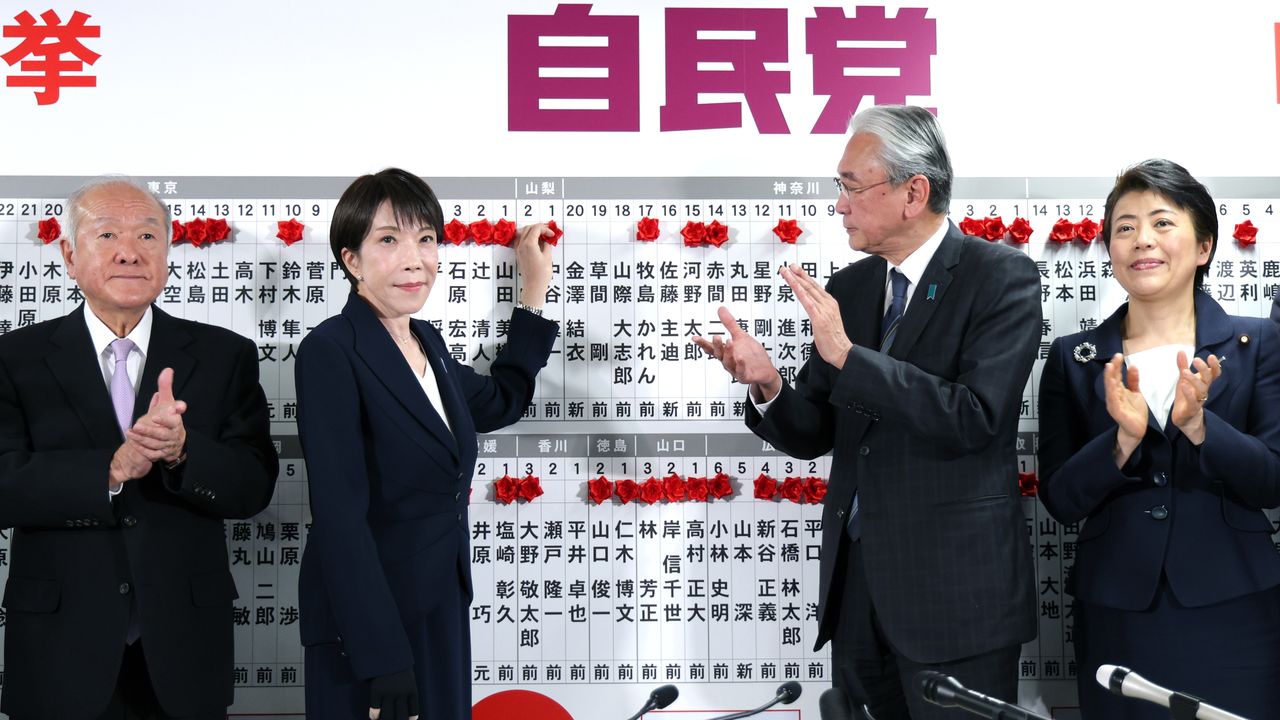
(Originally published in Japanese. Banner photo: Prime Minister Takaichi Sanae, second from left, affixes flowers to the names of winning candidates from her party at LDP headquarters in Chiyoda, Tokyo, on the night of February 8, 2026. © Jiji.)