The State of Recovery in Tōhoku 15 Years after 3/11
Society Disaster- English
- 日本語
- 简体字
- 繁體字
- Français
- Español
- العربية
- Русский
Former TEPCO Executives Cleared of Liability
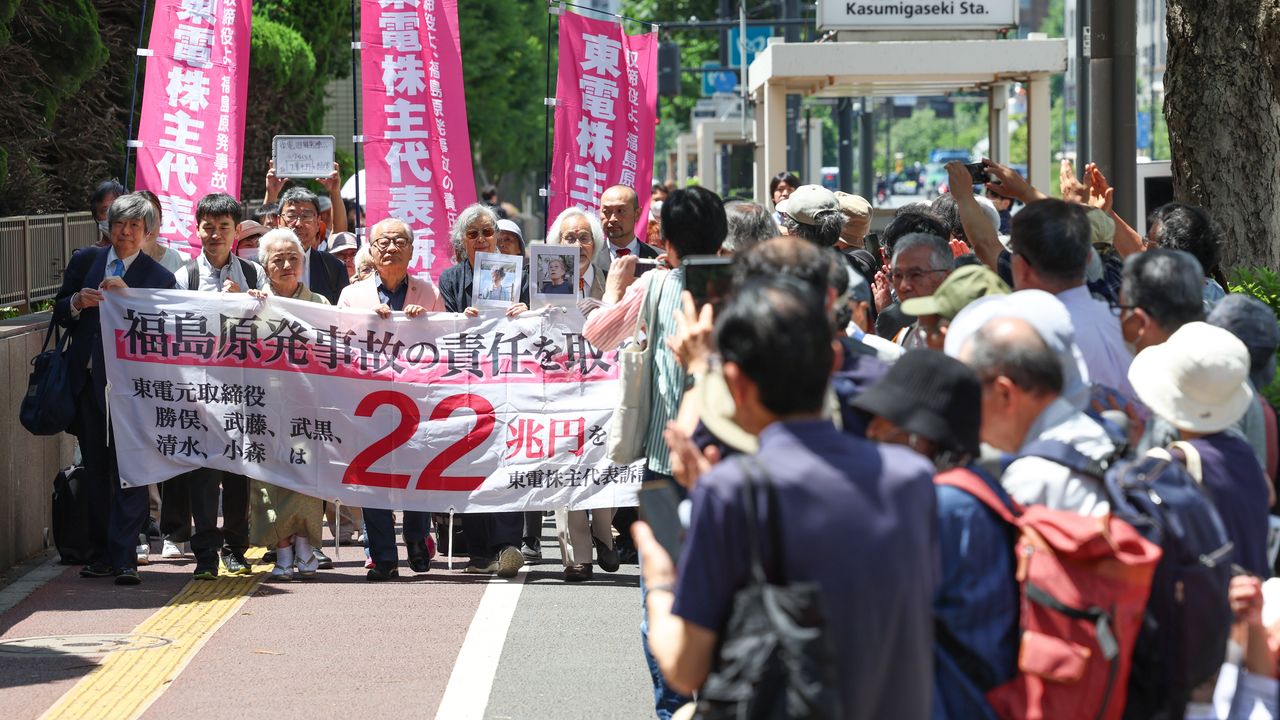
On June 6, 2025, the Tokyo High Court overturned a landmark 2022 ruling in a civil case ordering four former executives of Tokyo Electric Power Company to pay ¥13 trillion in damages for failing to prevent the crisis at the Fukushima Daiichi Nuclear Power Station. The case, brought by TEPCO shareholders, argued that negligence by Katsumata Tsunehisa, the former chairman who died in October 2024, and three other executives led to the disaster. However, the high court threw out the earlier ruling, determining that the executives could not have reasonably predicted the massive tsunami that caused the triple meltdown at the plant.
In another legal development, the Supreme Court’s First Petty Bench on January 22, 2026, dismissed the appeals in nine class-action lawsuits by groups of Fukushima evacuees seeking compensation from the Japanese government and TEPCO for forced evacuation caused by the nuclear disaster. Earlier high court rulings had ordered TEPCO to pay damages while rejecting the government’s liability.
Delays Cloud Decommissioning Timetable
In July 2025, TEPCO announced that the full-fledged removal of melted fuel debris from Fukushima Daiichi’s no. 3 reactor, originally scheduled to begin in the early 2030s, would be pushed back to fiscal 2037 at the earliest. The delay makes achieving the goal stated in the government’s roadmap of completing decommissioning by 2051 all but impossible.
Units 1, 2, and 3 at the stricken plant are estimated to contain some 880 tons of highly radioactive fuel debris. The removal of the debris presents the most formidable challenge of the decommissioning process as the extreme levels of radiation prevent workers from entering the reactors. In 2024, TEPCO began trials using a robotic arm lowered into Unit 2. Roughly 0.9 grams of debris were recovered in the first attempt, with a second attempt in April 2025 yielding multiple pieces weighing less than 3 grams in total.
Ongoing Release of Treated Water
The release into the Pacific Ocean of treated water containing radioactive tritium continued through fiscal 2025. The accumulation of water used to cool radioactive debris and groundwater at damaged reactors had become a major issue as storage space at the site dwindled. The first batch of Advanced Liquid Processing System treated water, which is purified to legal standards by removing nuclides, except for tritium, was released in August 2023. Of the seven releases of water (approximately 7,800 cubic meters each) planned for fiscal 2025, six had been carried out as of December. According to TEPCO, the discharge of treated water has decreased the volume stored at Fukushima Daiichi by 6% compared to pre-release levels.
In November 2025, China partially lifted its blanket ban on Japanese seafood imports imposed in response to the discharge of treated water, allowing exports of scallops and sea cucumbers to resume. However, it reinstated the suspension later the same month in response to remarks Prime Minister Takaichi Sanae made in the Diet regarding a potential Taiwan contingency.
Final Site for Contaminated Soil
Decontamination work in communities near Fukushima Daiichi has progressed, although the Fukushima prefectural government says that as of December 2025, approximately 309 square kilometers across seven municipalities remain closed to habitation. In 2025, evacuation orders were lifted on 26 hectares, including land for a new composting facility and farmland in Iitate and land for a windfarm in Katsurao.
The government has prioritized decontamination in special districts inside zones closed to habitation indefinitely to facilitate the return of residents. However, only a handful of former residents have moved back.
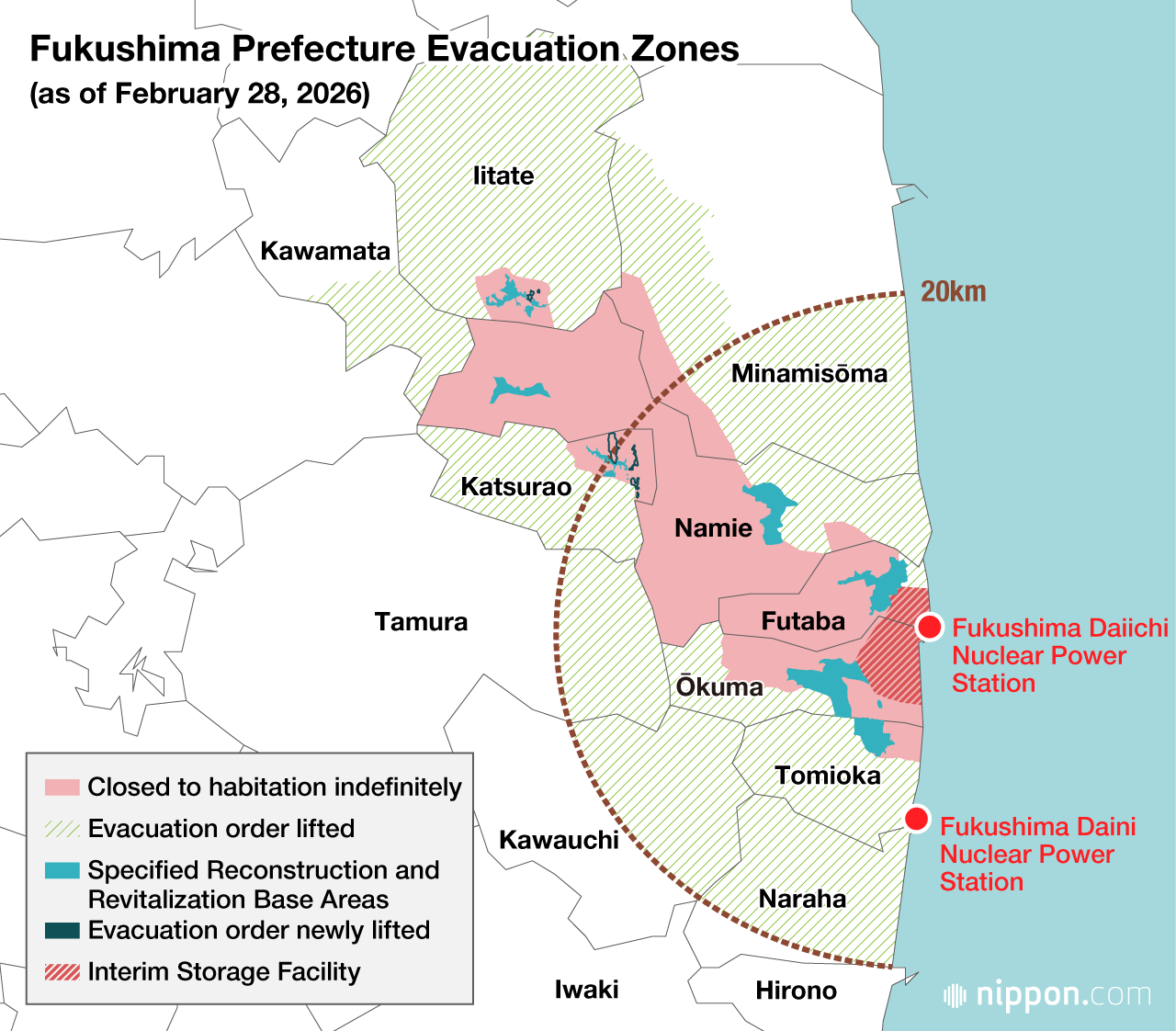
In August 2025, the government released a roadmap for the reuse and disposal of soil resulting from the decontamination process after the Fukushima Daiichi accident. Under the plan, a final disposal facility outside of Fukushima will be decided by around 2035 with the transportation from temporary storage facilities within the prefecture to be completed by March 2045.
Overview of the Great East Japan Earthquake
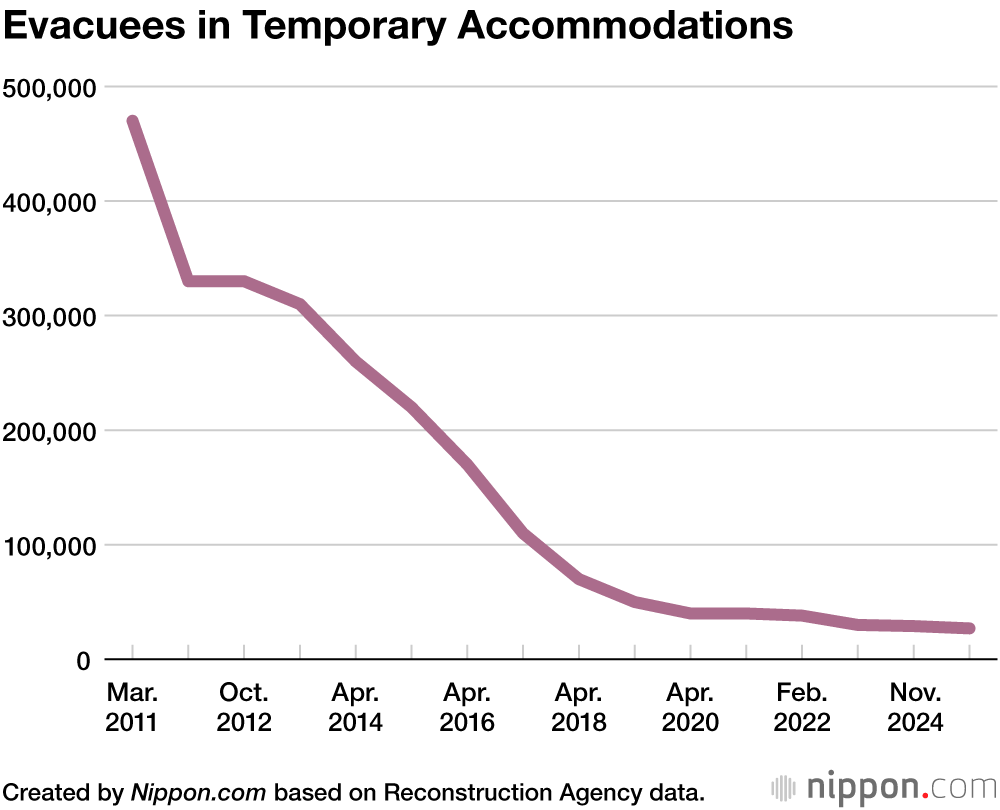
The magnitude 9.0 quake struck on March 11, 2011, at 2:46 pm, triggering a devastating triple disaster. The epicenter was off Tōhoku’s Sanriku coast. Strong tremors were felt across a wide area, registering 7 on the Japanese seismic intensity scale in Kurihara in norther Miyagi Prefecture and lower to upper 6 in areas spanning eight prefectures. The massive tsunami triggered by the quake slammed into communities along Japan’s northeast Pacific coast, topping 9.3 meters in Sōma in Fukushima Prefecture, 8.6 meters in Ishinomaki in Miyagi, and 8.5 meters in Miyako in Iwate Prefecture. It also touched off a triple meltdown at the Fukushima Daiichi Nuclear Power Station. On June 20, three months after the disaster, the government estimated that 15,000 people had died, 7,500 were missing, and 5,440 had been injured. About 470,000 people were forced to evacuate in the first few days, with the number of temporary housing units eventually reaching some 124,000.
According to Reconstruction Agency data, the death count from the catastrophe stands at 19,782, including disaster-related fatalities from suicide and illness, with 2,550 individuals still unaccounted for. Over 120,000 homes were also destroyed. As of November 2025, almost 30,000 people remain in temporary accommodations.
Data Sources
- Report on the current status of reconstruction and future efforts (Japanese) from the Reconstruction Agency.
- Report on reconstruction efforts (Japanese) from the Fukushima prefectural government.
- TEPCO decommissioning progress information portal site.
(Translated from Japanese. Banner photo: Plaintiffs march outside the Tokyo High Court in Chiyoda prior to the appeal ruling in the civil suit against former TEPCO executives on June 6, 2025. © Jiji.)