Japan’s Red-Crowned Crane No Longer a Threatened Species after Years of Conservation Efforts
Environment- English
- 日本語
- 简体字
- 繁體字
- Français
- Español
- العربية
- Русский
Low Risk of Extinction
On March 17, Japan’s Ministry of the Environment released the latest update of its threatened species list. Having sufficiently recovered in numbers, the tanchō, or red-crowned crane (Grus japonensis) was downgraded from “threatened” to “near-threatened.”
This means that there is now a low risk of the species becoming extinct.
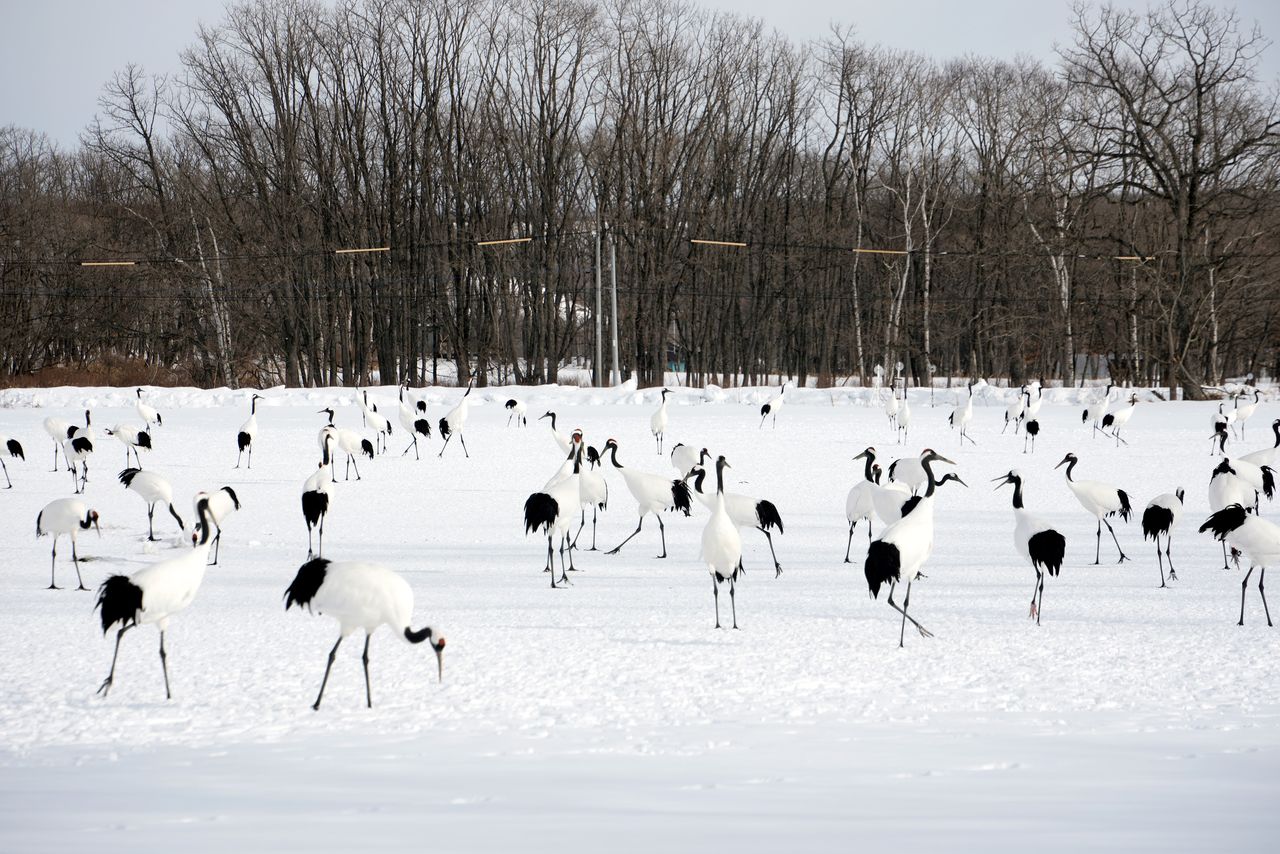
Red-crowned cranes gather at an observation spot in the north of the Kushiro Wetland National Park. Photograph taken on January 30, 2026, in Tsurui, Akan, Hokkaidō. (© Jiji)
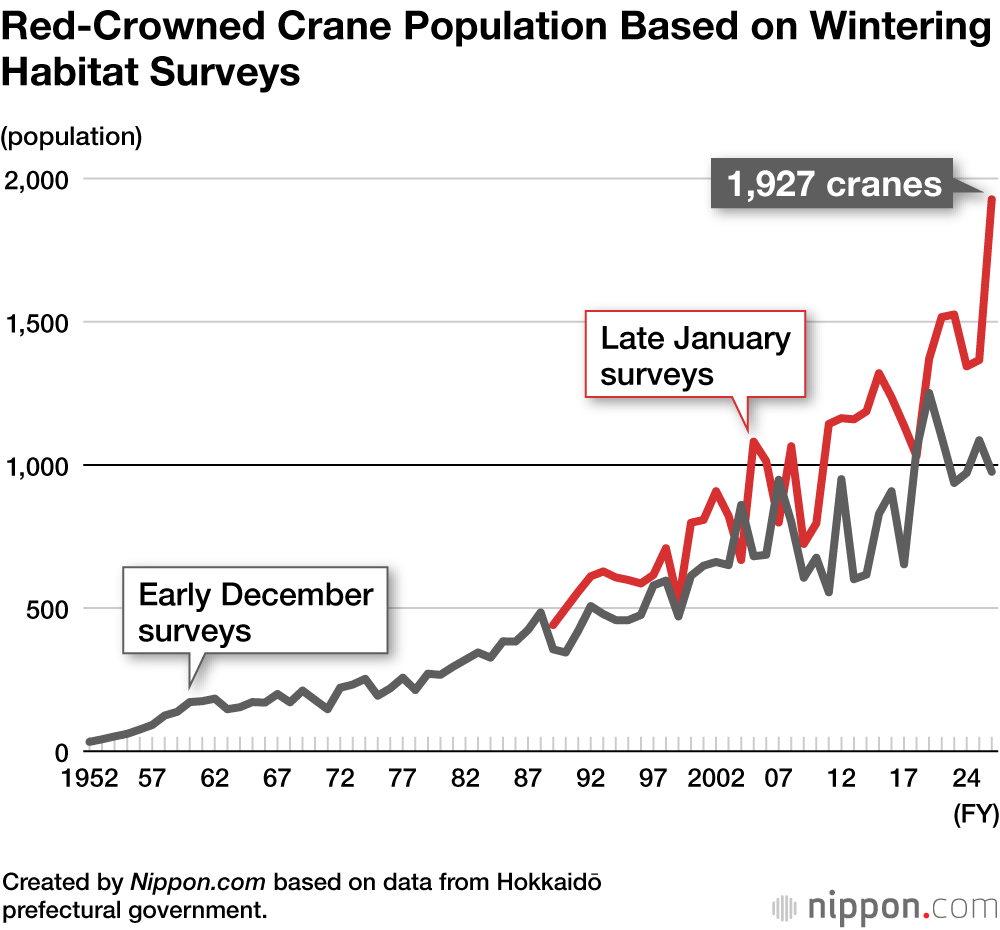
Although the species was thought to have died out due to overhunting during the Meiji era (1868-1912), several dozen red-crowned cranes were discovered in 1924 inhabiting the remote areas of the Kushiro Wetland in Hokkaidō. Only 33 birds were recorded in a wintering habitat survey conducted in 1952, the year Kushiro tanchō were designated as a Special Natural Monument of Japan. Since then, there have been active conservation and feeding initiatives carried out by volunteers, mainly in the village of Tsurui and the surrounding Akan district, and it was confirmed in the 2024 wintering habitat survey (conducted in late January 2025) that there is now a population of 1,927 red-crowned cranes. This led to the assessment of a low risk of extinction.

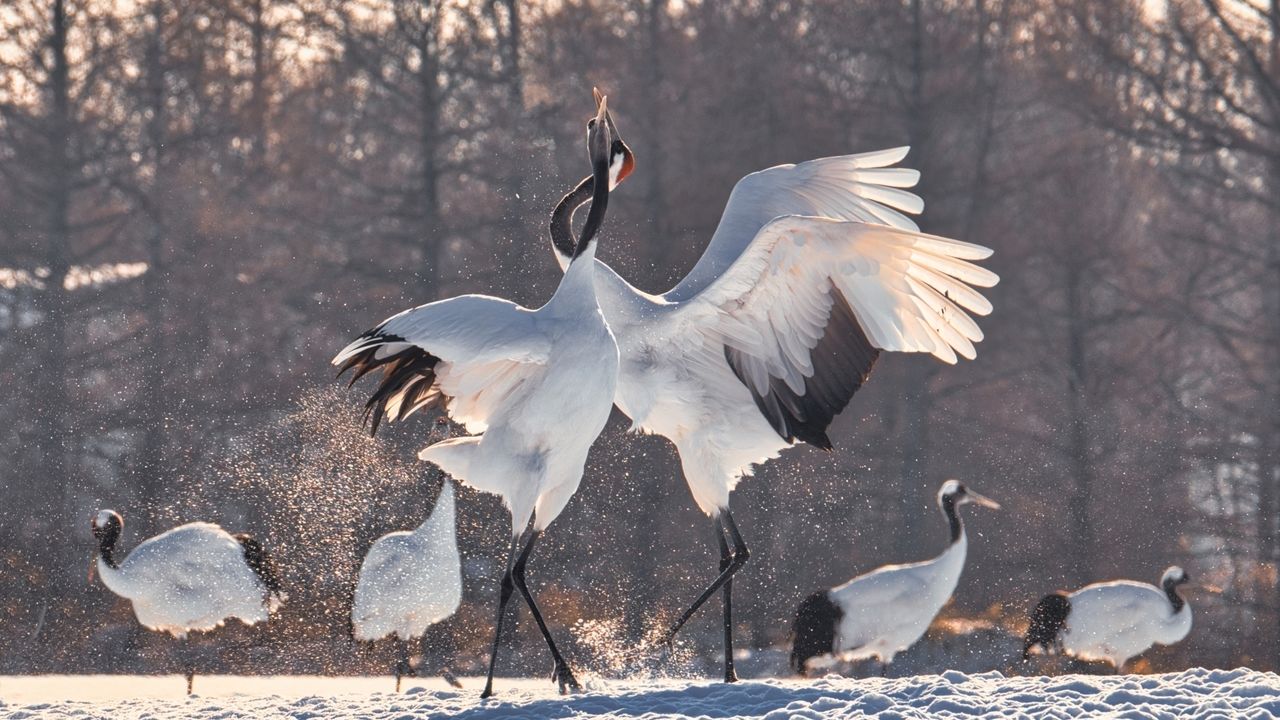
The tanchō is a large species of crane found in East Asia and southeastern Russia. Cranes hold deep cultural meaning for Japanese people. The proverb tsuru wa sennen, kame wa mannen (cranes live for a thousand years, turtles for ten thousand) signifies longevity and the bird is often used as a symbol of good fortune on family crests, gift wrapping, and decorative cords. The ukiyo-e artist Utagawa Hiroshige (1797–1858) included scenes of red-crowned cranes that had migrated south in One Hundred Famous Views of Edo, a series of pictures of the city now known as Tokyo, which indicates that the birds were once found on the island of Honshū as well as Hokkaidō. Incidentally, tanchōzuru, the full name in Japanese for red-crowned cranes, is formed using the kanji 丹 tan (red), 頂 chō (head), and 鶴 tsuru (crane).
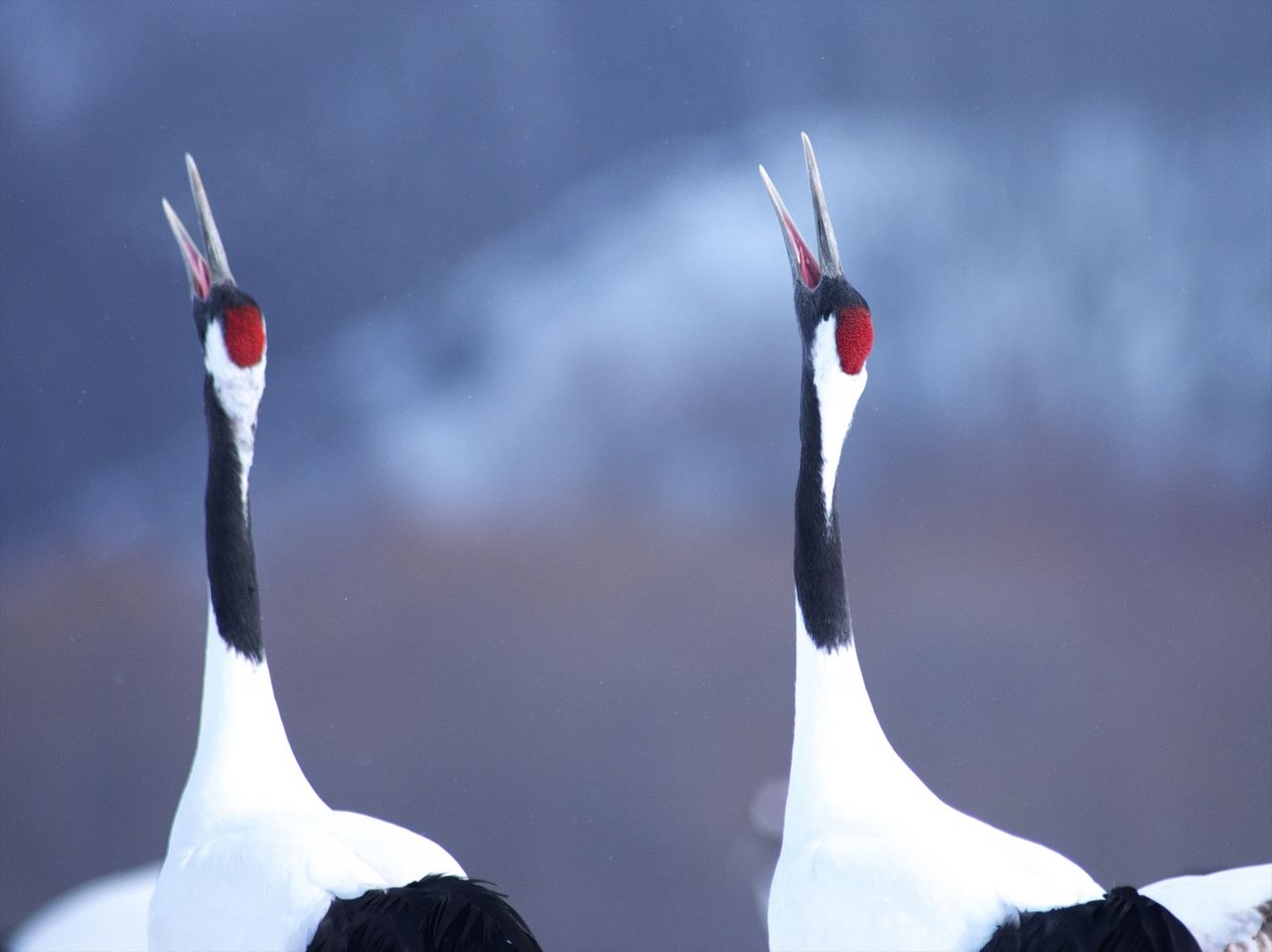
(© PhotoAC)
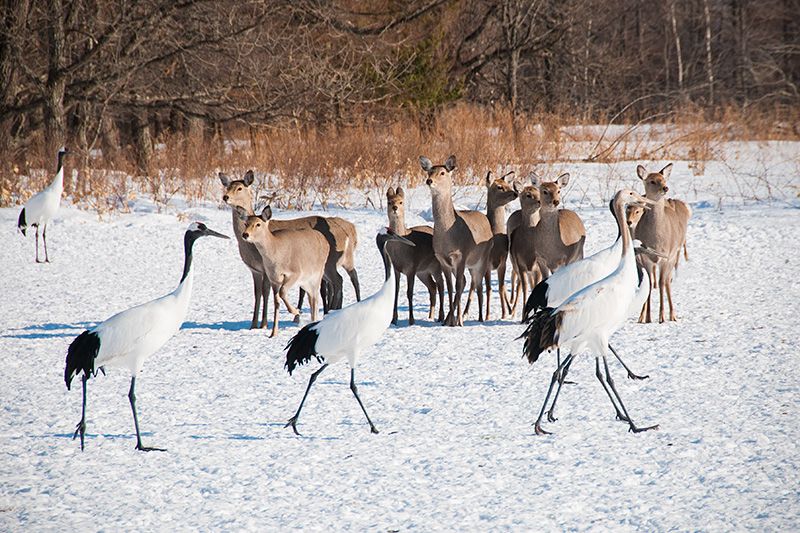
Japanese deer join the cranes in their feeding grounds. Photograph taken in 2017. (© Nippon.com)

Data Sources
- Report on red-crowned cranes (Japanese) by Hokkaidō prefectural government.
- Revision of extinct and endangered species listed in the red data book (Japanese) by the Ministry of the Environment.
(Translated from Japanese. Banner photo © PhotoAC.)