A Look at Moriyasu Hajime
Sports Society- English
- 日本語
- 简体字
- 繁體字
- Français
- Español
- العربية
- Русский
A Playing Career Capped by “Agony”
Moriyasu Hajime, manager of Japan’s men’s national soccer team, is making waves worldwide thanks to Samurai Blue’s strong performances in this year’s FIFA World Cup tournament. Born in Nagasaki Prefecture in 1968, he played soccer from his youth, but was a player of little renown through his high school days.
One team that did take note of his broad vision on the field and ability to place passes where they would be needed was the Mazda Soccer Club, the forerunner of today’s J. League side Sanfrecce Hiroshima. He took a spot on the team and, under the leadership of Dutch skipper Hans Ooft, polished his repertoire over time. When Ooft left the Mazda club behind and took the helm as manager of the Japanese national squad, he called up Moriyasu, who soon firmed up his position as a defensive midfielder and ended up with 35 caps for the national side.
In 1994 Moriyasu was on the field when Samurai Blue suffered the “agony of Doha,” the game held in Qatar where Iraq scored an equalizer in stoppage time to hold Japan to a draw in the final match of the Asian World Cup qualifiers, preventing the team from going on to the big tournament.
Moving On to Managing Roles
After retiring from active play at the end of the 2003 season, Moriyasu took up coaching, serving on various J. League clubs as well as for the U-19 and U-20 Japan sides. After polishing his coaching credentials for nearly a decade, he took the helm at his old club Sanfrecce in 2012, leading the team to its first league championship since its foundation 20 years earlier in his first year as manager. In 2018 he was tapped to manage the men’s national team. At the Qatar World Cup in 2022, he led a giant-killing Japan through the “group of death,” securing a first-place finish in the group stage with wins over powerhouses Germany and Spain, thanks to his tenacious tactics and nimble substitutions.
Today, in an era when more and more of his team’s members play for top overseas clubs, he spends considerable time observing matches in Europe to check out the performance of Japan’s players in action. He is known for his active communication with the players as a key part of his selection process. For this year’s tournament, he has called up former national squad legends like Nanami Hiroshi, Nakamura Shunsuke, and Hasebe Makoto to join his coaching team, leaving much of the day-to-day instruction of his players in their hands. By focusing his own management energies on the big picture, he aims to give the younger coaches room to grow into the roles they will fill in years to come.
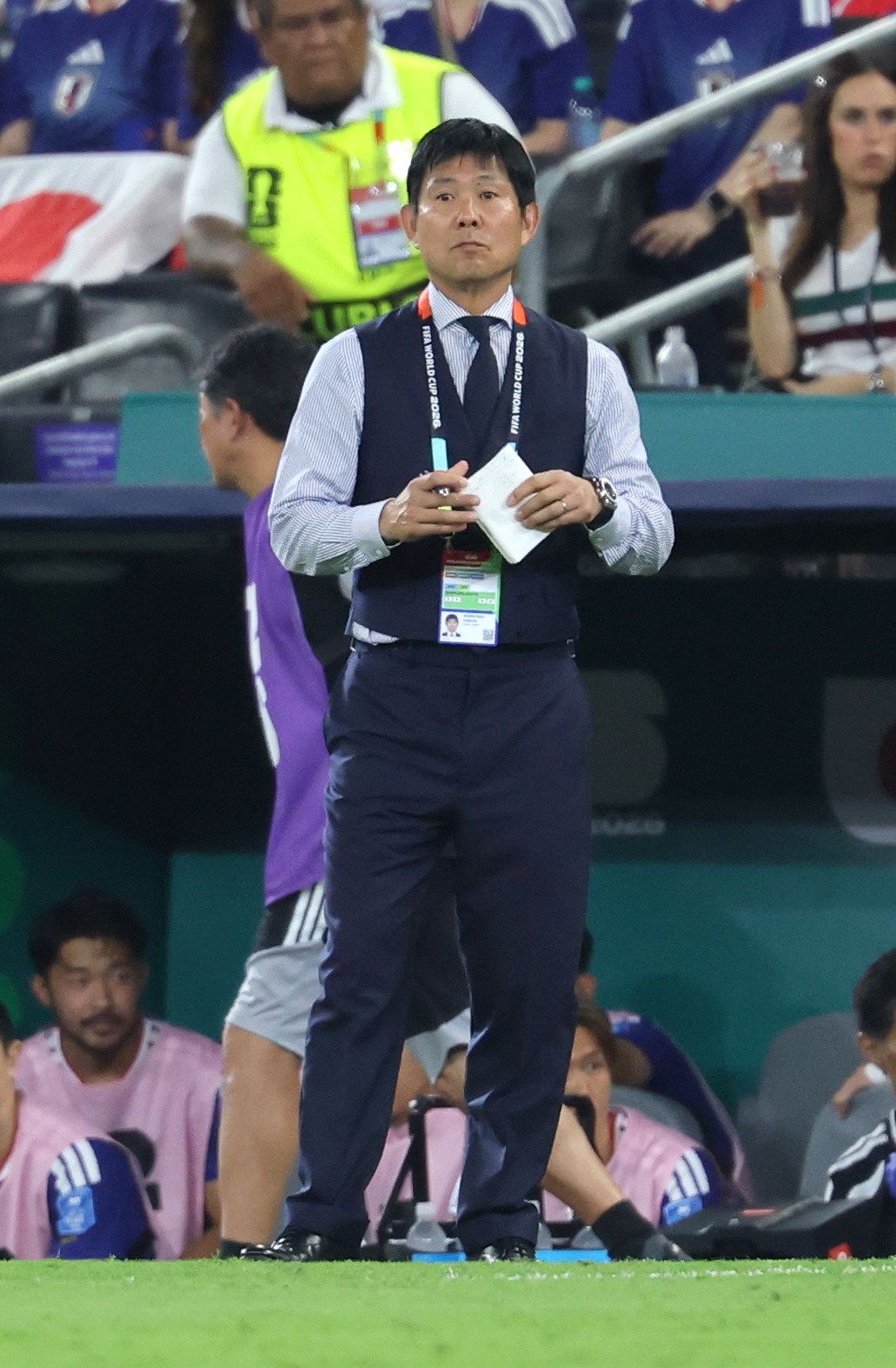
Japan manager Moriyasu Hajime on the sidelines in the first half of the World Cup group round match against Tunisia in Monterrey, Mexico, on June 20, 2026. His ever-present notebook has prompted some to refer to it as his “death note,” after the popular manga and anime in which writing enemies’ names in the notebook seals their fate. (© Jiji)
On June 15, Japan kicked off its World Cup tournament play with a draw against a powerful Netherlands side. At the press conference after the match, Moriyasu attracted global attention—and praise—for his sincere expression of gratitude toward Hans Ooft, who helped to build the Japanese soccer scene over the years. Another figure he mentioned by name was Wim Jansen, the Dutch star who managed Sanfrecce and was on the coaching staff at the Urawa Reds in the J. League. Jansen passed away in 2022; Moriyasu recounted how, during a scouting trip to observe Ueda Ayase playing for Feyenoord, he paid his respects at Jansen’s grave.
Data Sources
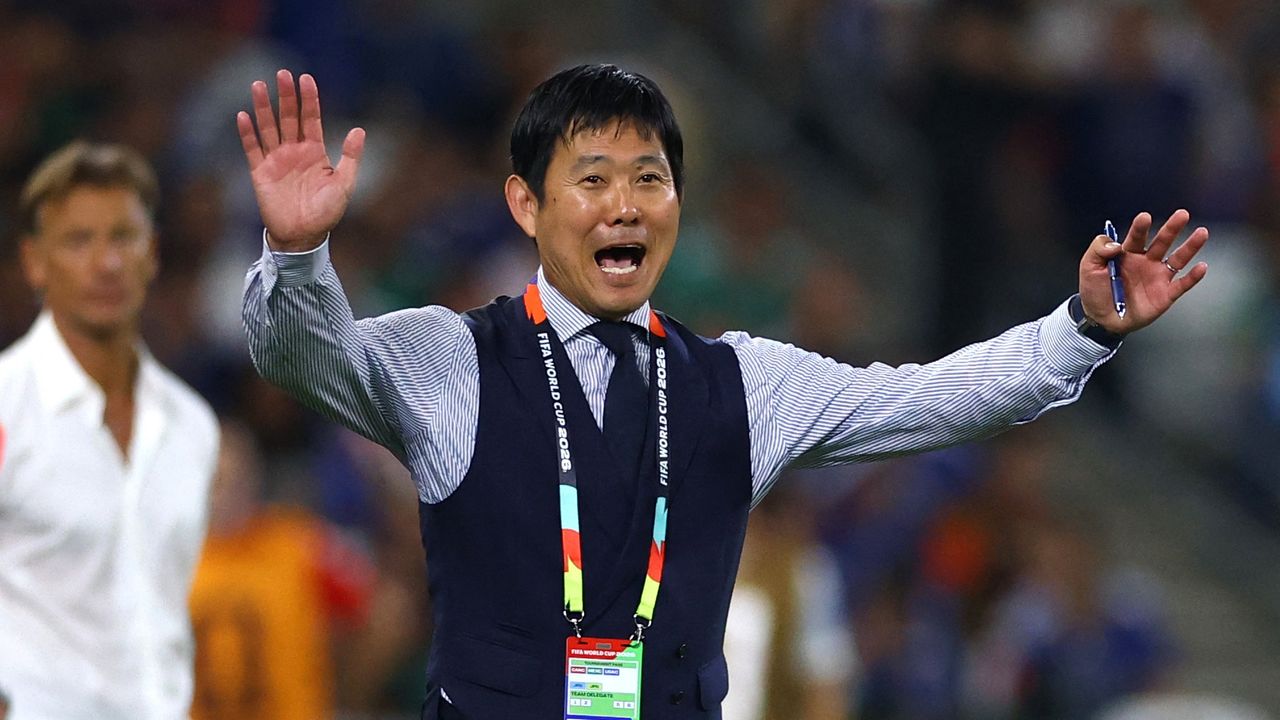
(Originally published in English. Banner photo: Manager Moriyasu Hajime on the sidelines of the Japan-Tunisia match in the 2026 FIFA World Cup in Monterrey, Mexico, on June 20, 2026. © Reuters/Daniel Becerril.)