Baby Decline: Births in Japan Drop for the Tenth Successive Year
Society- English
- 日本語
- 简体字
- 繁體字
- Français
- Español
- العربية
- Русский
Falling Fertility Rates
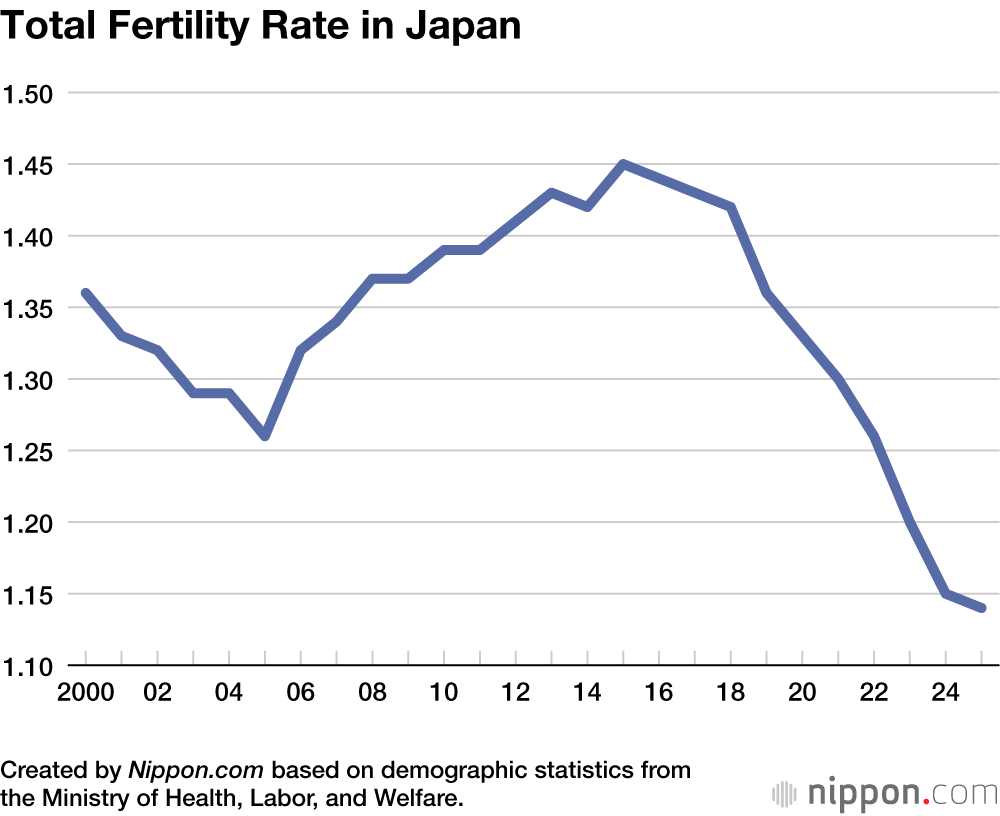
The number of births in Japan dropped to 671,236 in 2025, down 14,937 year on year. Demographic statistics published by the Ministry of Health, Labor, and Welfare confirmed that there were less than 700,000 births for the second successive year, and a record low for the tenth year running, based on comparable statistics available since 1899. The total fertility rate, indicating the number of children a woman has in her lifetime, fell by 0.01 points to a new low of 1.14.
Eastern prefectures tended to have lower fertility rates than those in the west, with Tokyo remaining below 1 for the third year, at 0.96, followed by Miyagi and Hokkaidō at 1.00. The highest fertility rates were Okinawa at 1.52, Miyazaki at 1.46, Fukui at 1.45, Nagasaki at 1.42, Shimane at 1.41, and Kagawa and Kumamoto at 1.40.
The number of marriages increased for a second successive year, climbing by 4,027 to 489,119, but the figure remains low. Cultural factors including the general aversion to having children outside of marriage in Japan and trends toward marrying late or not at all present major challenges to efforts to lift the number of births.
Japan’s Demographics
| 2025 estimate | 2024 | |
|---|---|---|
| Births | 671,236 | 686,173 |
| Total fertility rate | 1.14 | 1.15 |
| Deaths | 1,589,489 | 1,605,378 |
| Natural population change | -918,253 | -919,205 |
| Marriages | 489,119 | 485,092 |
| Divorces | 179,068 | 185,904 |
Created by Nippon.com based on demographic statistics from the Ministry of Health, Labor, and Welfare.
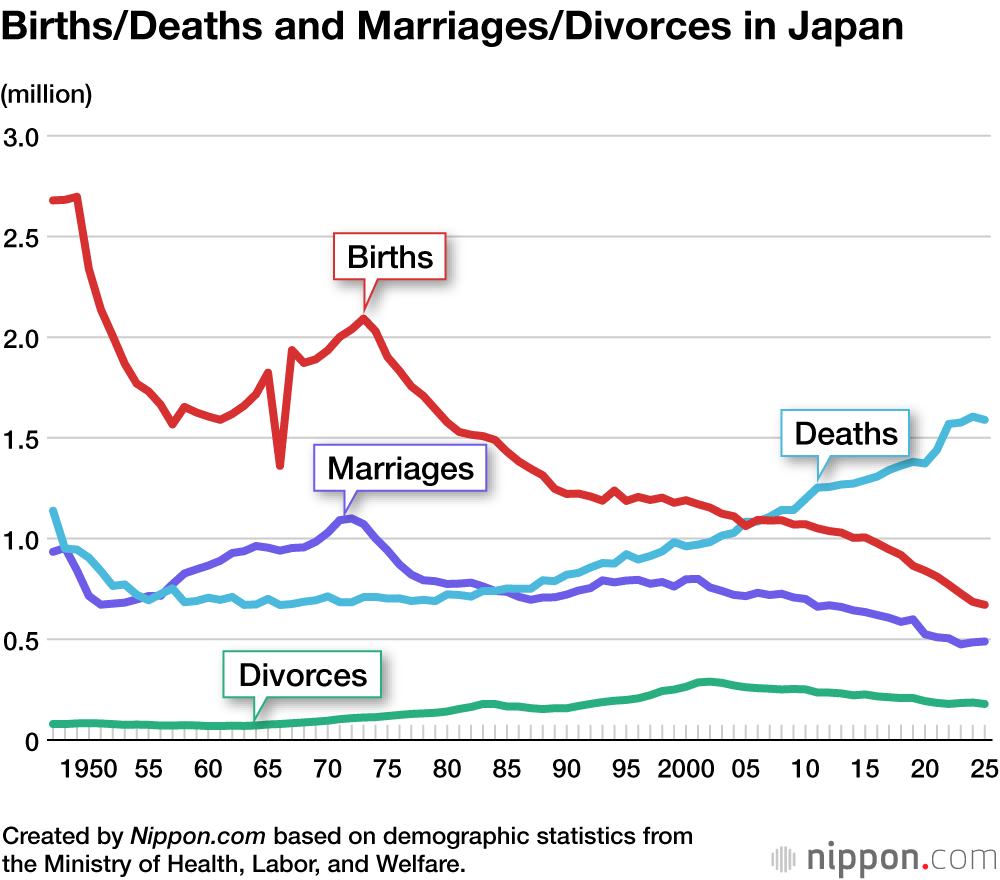
There were 1,589,489 deaths in 2025, marking the first decline in five years, but this had no real impact on natural population decline (the difference between the number of births and deaths), which remained over 900,000 for the second successive year. There have been more deaths than births in Japan for 19 successive years.
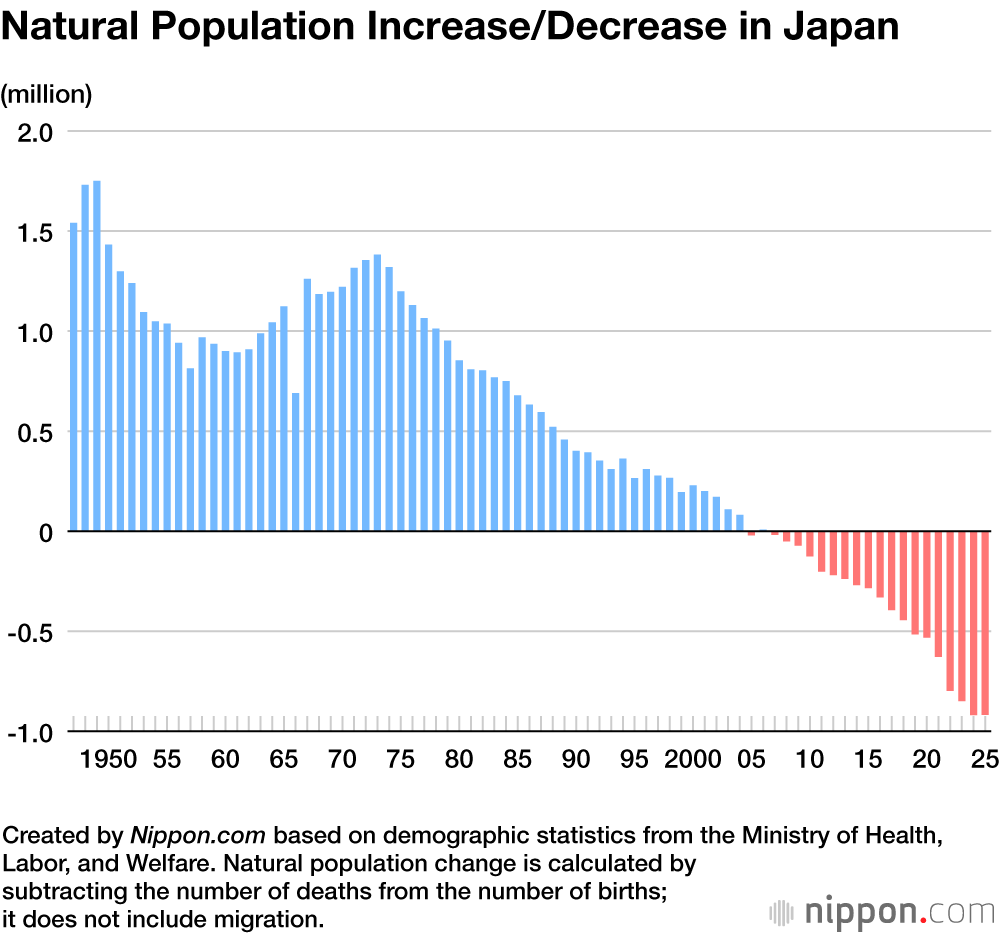
During Japan’s first baby boom (1947–49), the number of annual births reached 2.5 million, and births per year exceeded 2 million during the second baby boom (1971–74). Since then, the number has consistently declined, without a spike in births when the second baby-boom generation reached the age to have their own children. The gap between the number of births and the number of deaths has been growing wider since 2007.
Data Sources
- Public demographic statistics (Japanese) from the Ministry of Health, Labor, and Welfare.
(Translated from Japanese. Banner photo © PhotoAC.)