
“Old Age” Increasingly Cited as Cause of Death in Japan
Health Society- English
- 日本語
- 简体字
- 繁體字
- Français
- Español
- العربية
- Русский
Cancer the Leading Cause
In 2025, there were 1,589,489 deaths in Japan, according to a report from the Ministry of Health, Labor, and Welfare. Although this was a slight decrease from the 1,605,378 deaths in 2024, the total remains high.
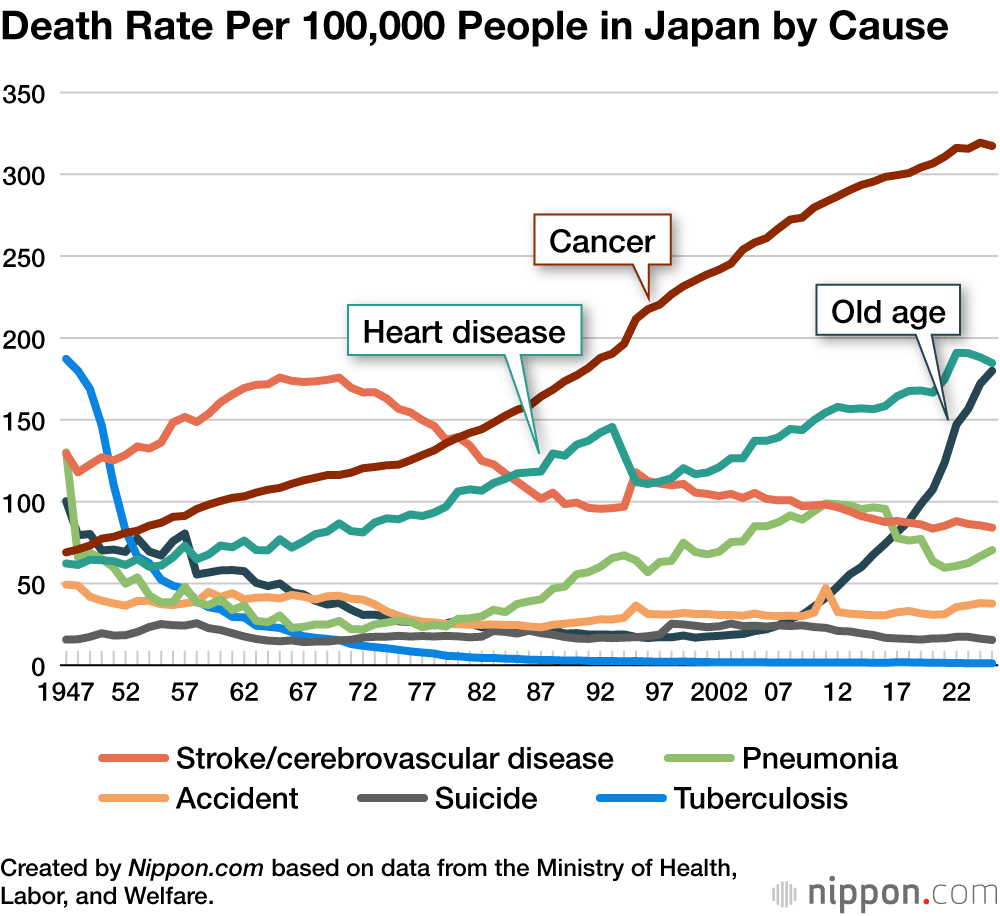
Cancer was the leading cause of death, at 378,812, or a total of 317.3 fatalities per 100,000 population. This was followed by heart disease (excluding hypertension) at 220,447 (184.7), old age at 214,711 (179.9), and strokes and other cerebrovascular disease at 100,355 (84.1).
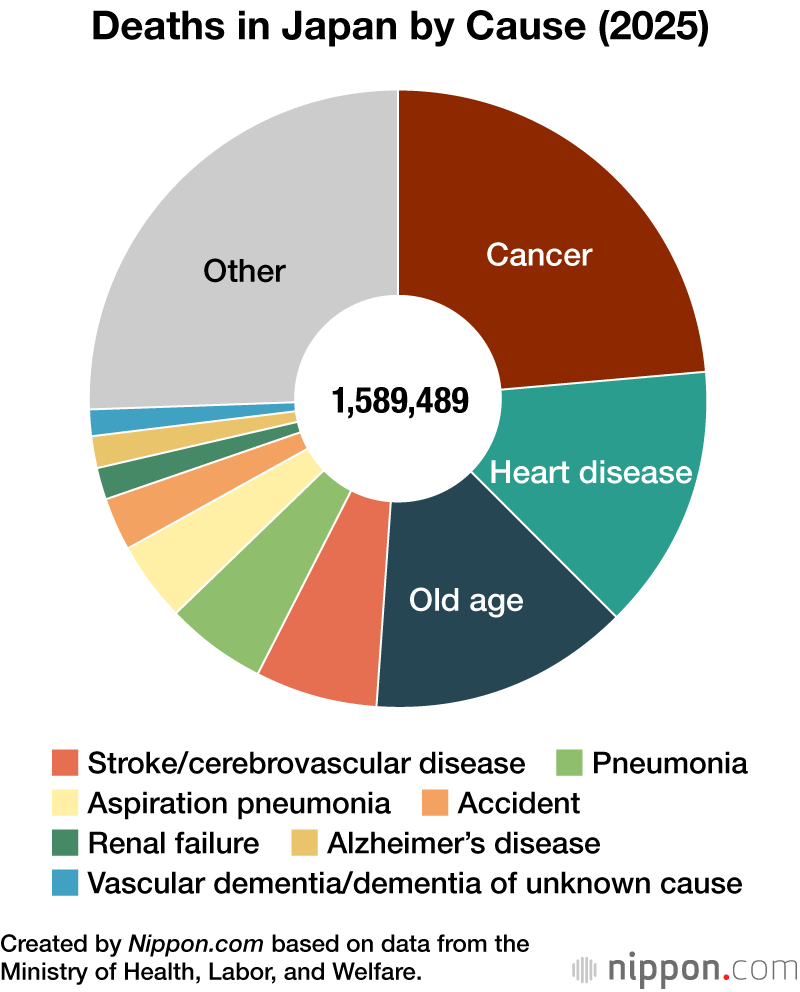
Cancer has remained the leading cause of death since 1981. In 2025, it accounted for around a quarter of all deaths, at 23.8%.
Heart disease (excluding hypertension) rose to second position in 1985, overtaking strokes and other cerebrovascular disease, and it accounted for 13.9% of deaths in 2025. Old age was becoming less common as a cause of death in the postwar era, but started rising again in 2001, moving into third place in 2018. It was stated as the cause of 13.5% of deaths in 2025. MHLW guidance states that old age should be recorded as the cause when there is no other clear cause of death.
One of the reasons for the increase in deaths attributed to old age is the graying of Japan’s population, with 10% of people now over 80. Since the introduction of the nursing care insurance system, it has also become more common to provide end-of-life care at home or in nursing facilities, with a growing preference for passing away peacefully rather than receiving life-prolonging treatments in hospitals.
Data Sources
- Public demographic statistics (Japanese) from the Ministry of Health, Labor, and Welfare
(Translated from Japanese. Banner photo © Pixta.)