Many Japanese Seniors See Higher Healthcare Costs as Inevitable
Society Health- English
- 日本語
- 简体字
- 繁體字
- Français
- Español
- العربية
- Русский
Should Seniors Pay More?
As Japan’s population ages, the costs of medical and nursing care continue to rise, placing an increasingly heavy burden on the working-age population that supports these systems.
A survey regarding the insurance systems for medical and nursing care conducted in January by the National Federation of Health Insurance Societies found that 37.1% of the 3,000 respondents thought that the current distribution of healthcare payments between seniors and working-age segments of the population would have to be revised so that older people would shoulder more of the burden. This percentage is more than double the 18.1% who thought an increase in the burden on the working-age generation is unavoidable. By age group, 38.8% of respondents in their seventies and 41.9% of those in their eighties thought that the burden on older people would have to be increased, which suggests that many have accepted, at least to some degree, that they will have to bear a greater portion of the costs.
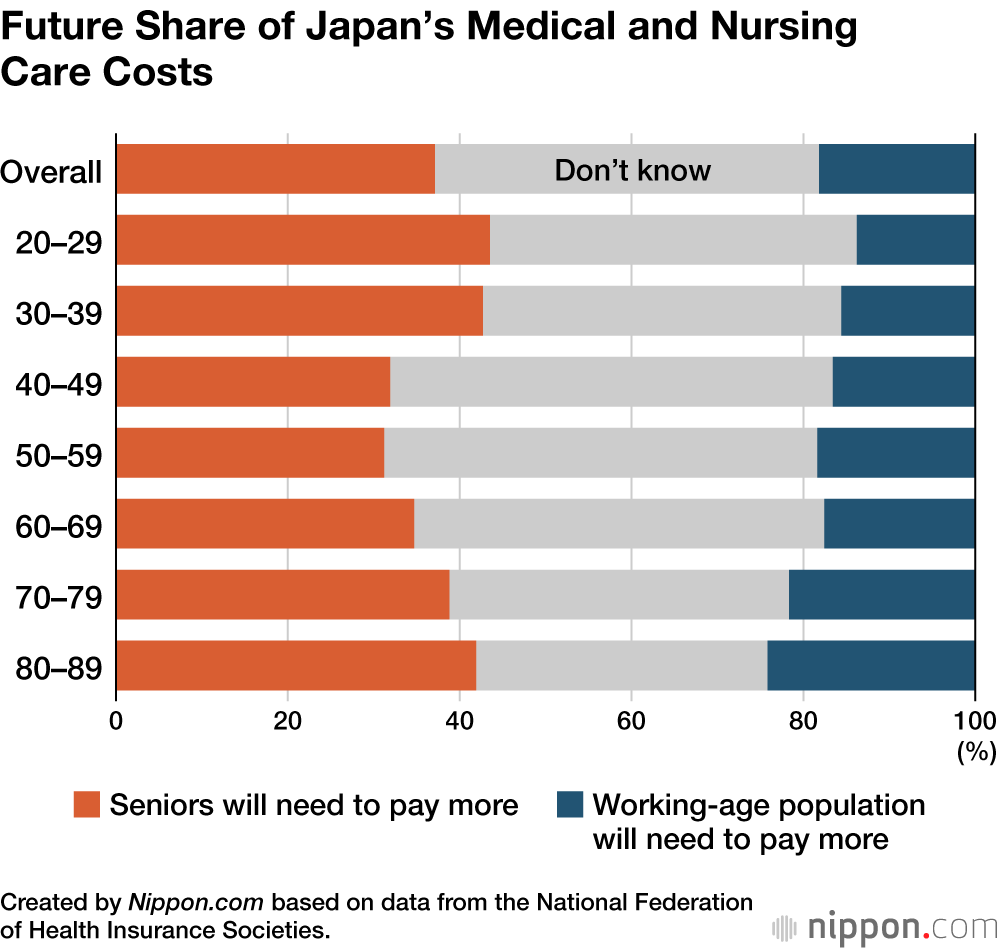
At present, the standard out-of-pocket share of medical expenses for older people is 20% for those aged 70 to 74 and 10% for those aged 75 and over.
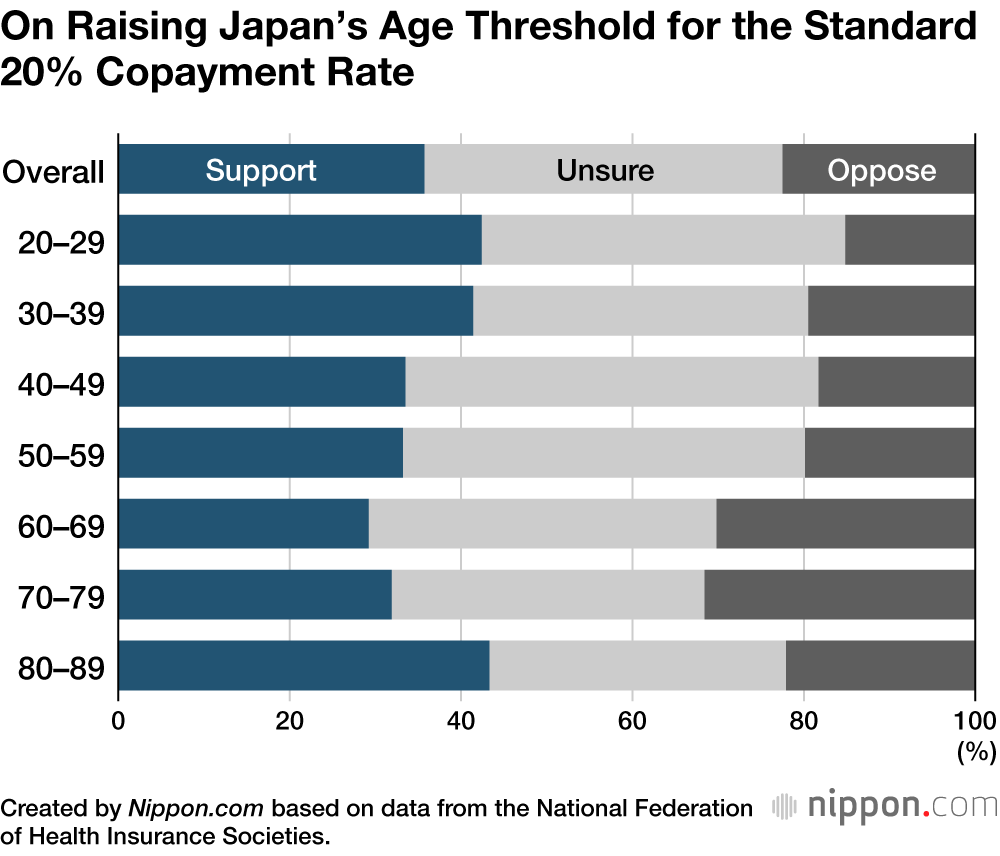
From the standpoint of fairness between generations, a proposal has been put forward to raise by five years the age at which a person is eligible for the 20% copayment rate. When asked about this proposal, 35.7% of respondents overall said they supported it, while 22.5% were opposed. However, among people in their sixties and seventies, who would be most directly affected by the change if implemented, opinion was evenly divided, with around 30% expressing support or opposition.
Children Often Have Low-Cost Medical Consultations
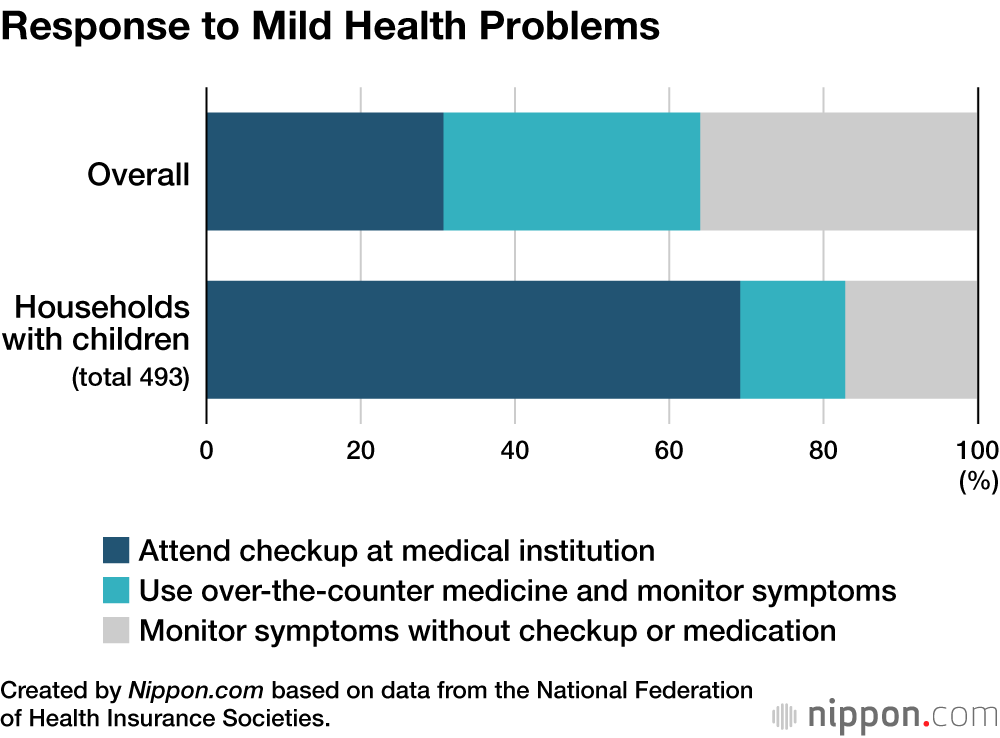
When experiencing mild symptoms or minor health problems, 30.6% of the respondents said they would visit a medical institution, while the majority adopted a wait-and-see attitude through such measures as using over-the-counter medication. However, among the 493 households with children under the age of 18, 69.2% said they would take their child to a medical institution in such cases.
Under the current system, the out-of-pocket medical costs are generally 20% for children below school age, as compared to 30% for school children. However, many local governments subsidize these copayments as part of their policies to support families, so that the actual payment is often only a few hundred yen or nothing at all. As a result, many parents choose medical consultation, reasoning that it can be cheaper than buying over-the-counter medicine.
Even when out-of-pocket costs are waived or kept very low, the medical expenses themselves are covered through mechanisms such as the insurance premiums paid by members of the public health insurance system. According to the survey results, 54.4% of households with children were unaware of this fact.
Data Source
- Data on medical and nursing care survey (Japanese) from the National Federation of Health Insurance Societies
(Translated from Japanese. Banner image © IllustAC.)