Soaring Rice Prices in Japan Led to Massive Spike in Private Imports in 2025
Economy Society Food and Drink- English
- 日本語
- 简体字
- 繁體字
- Français
- Español
- العربية
- Русский
A Japanese government white paper on food and agriculture found that rice imports from private companies rose to 96,834 tons in 2025, or around 95 times the 1,015 tons in 2024, due to soaring prices of the staple grain.
There are two types of rice imports in Japan: a government-managed tariff-free “minimum access” quota (approximately 770,000 tons per year) and imports conducted by private companies. Private imports are subject to a tariff of ¥341 per kilogram. Before 2025, these imports generally stayed in the range of 600 to 1,000 tons per year.
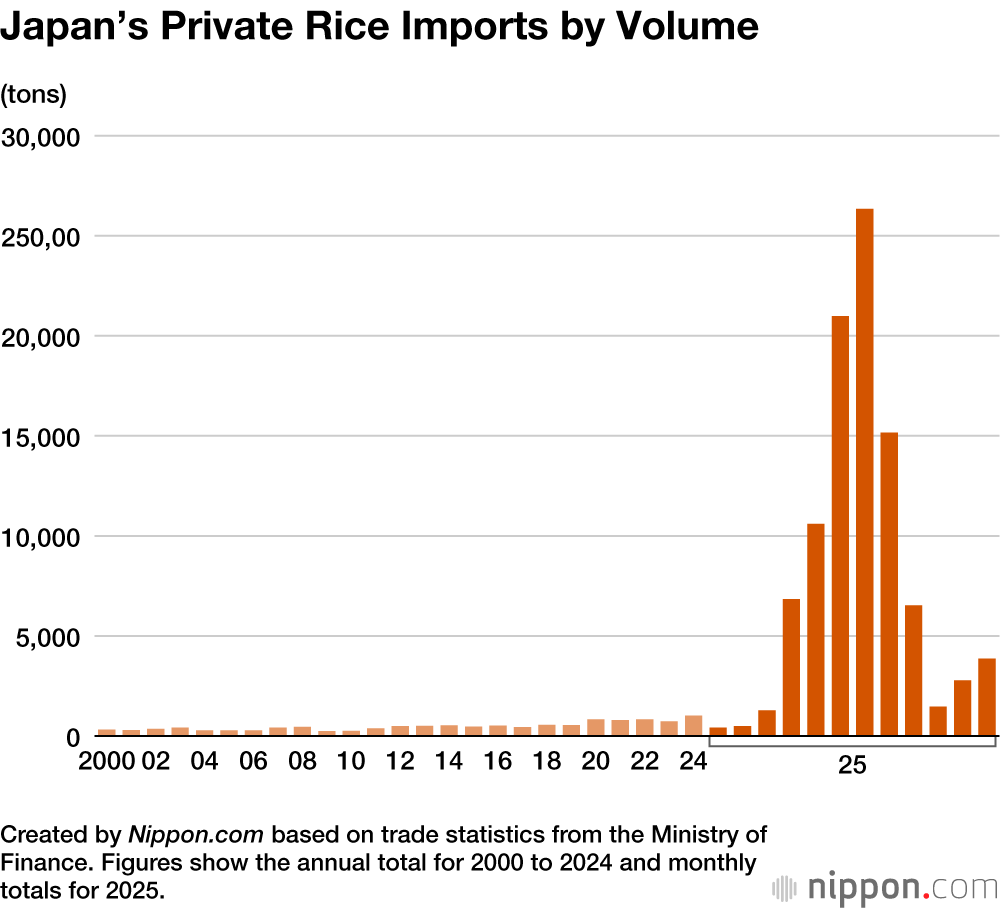
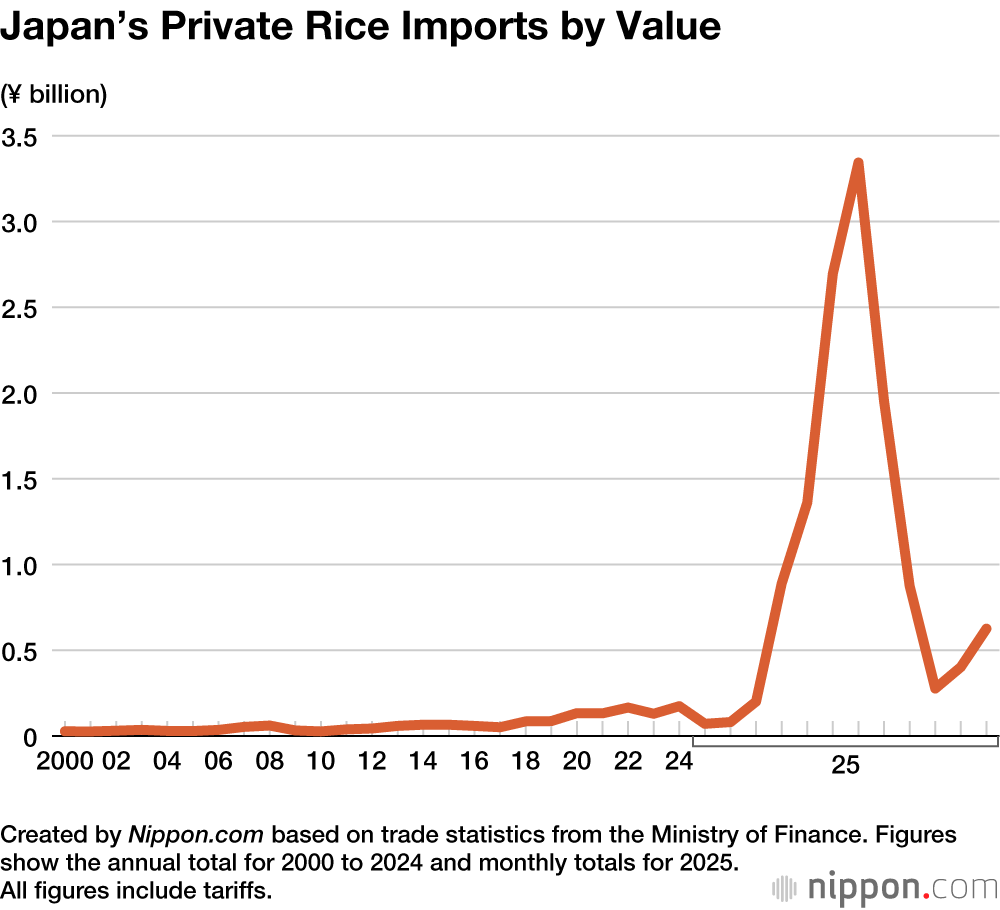
Concerns were expressed in the white paper about the sharp increase in private imports, and the potential impact on demand and production of domestic rice.
Rice Retail Prices Double
The white paper focused on the rice shortages that occurred from summer 2024 onward, examining the factors and circumstances behind the price surge and the government’s response. Among these, a warning of a possible major Nankai Trough earthquake in August 2024 prompted many people to add rice to their household stockpiles.
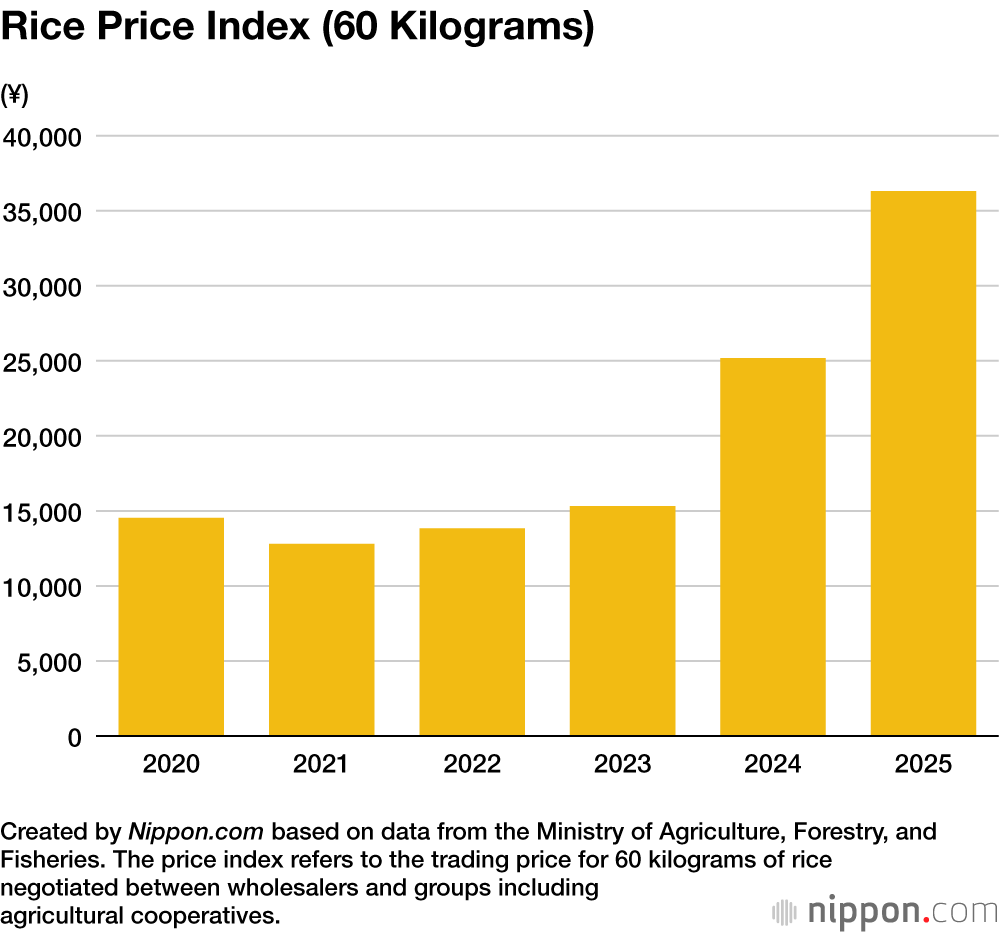
In May 2025, the retail price for a 5-kilogram bag of rice was ¥4,260, or around double the price of ¥2,127 in the same period the previous year. Following that, prices remained at that higher plateau, coming in at just under ¥4,000 in May 2026.
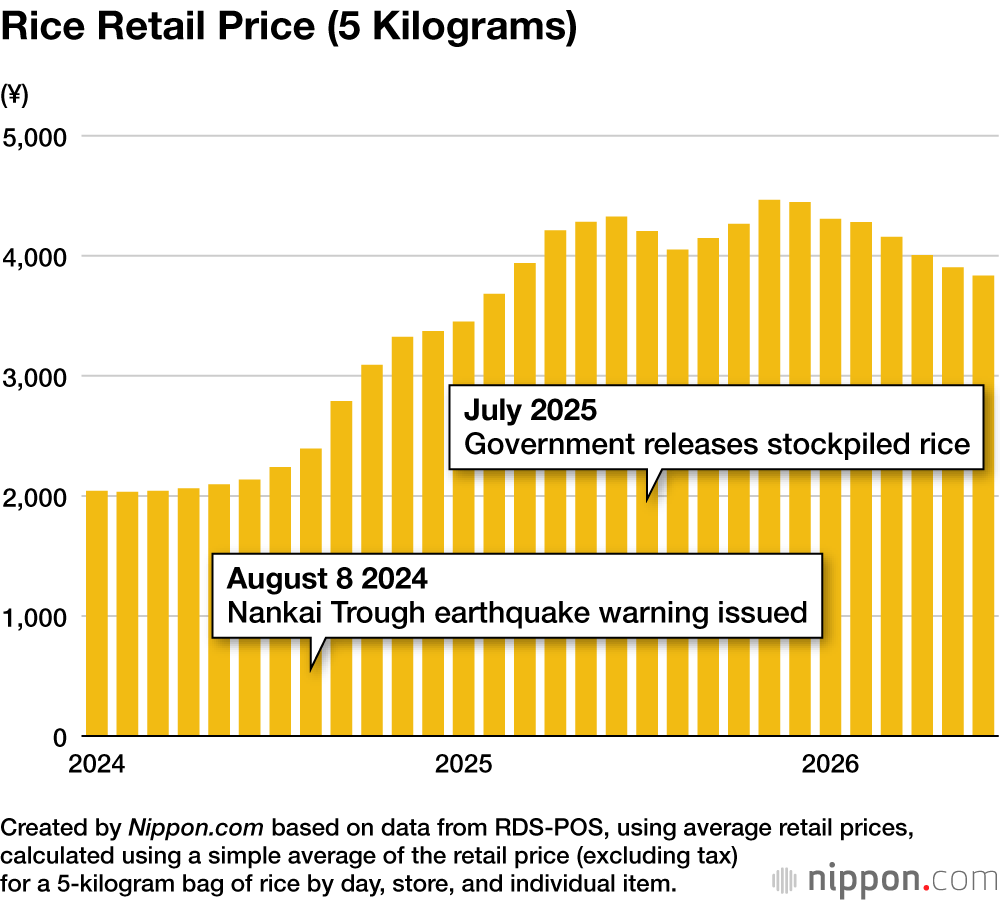
The price negotiated between wholesalers and groups that buy up rice from farmers for distribution, such as agricultural cooperatives, for the crops produced in 2024 rose by 64.4% year on year. As of February 2026, the 2025 price had risen 44.2% from the previous year.
The Gap Between Perception and Reality
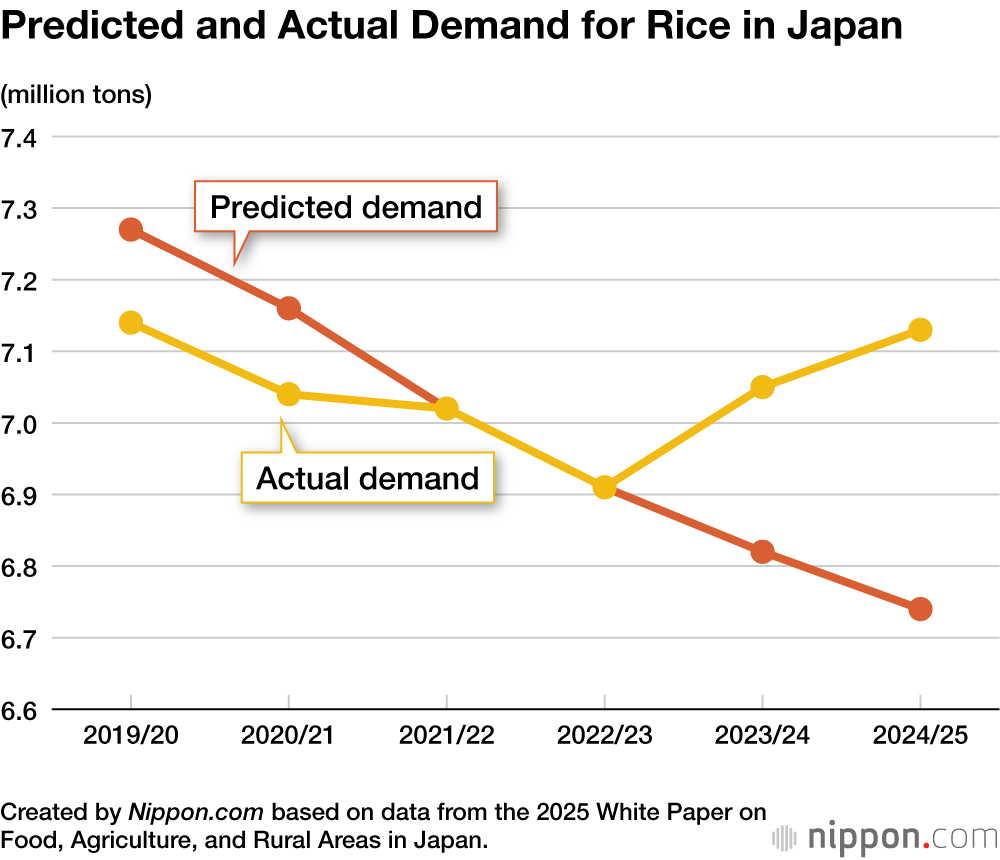
According to the white paper, based on the declining population, the Ministry of Agriculture, Forestry, and Fisheries has been predicting falling demand for rice as a staple food source in recent years. However, it was suggested that a combination of factors—including increased consumption by the rise of foreign visitors to Japan, the reduced supply of rice due to a poor milling yield caused by extreme heat in fiscal 2023, and increased household purchases of rice—has led to a gap between predicted and actual demand.
Assessing the government’s response after the rice shortages began in summer 2024, the report concluded that “based on the perception that production levels were sufficient, there was little motivation to assess the actual state of distribution, and communication and engagement with the market was inadequate.” The report also acknowledged the slow response in releasing stockpiled rice, stating that “the delayed timing did not allay wholesalers’ concerns .”
Data Sources
- Fiscal 2025 White Paper on Food, Agriculture and Rural Areas in Japan (Japanese) from the Ministry of Agriculture, Forestry, and Fisheries
(Translated from Japanese. Banner photo © Pixta.)