
Who Gives Blood in Japan? Generational Divide Seen Among Donors
Society Health- English
- 日本語
- 简体字
- 繁體字
- Français
- Español
- العربية
- Русский
Falling Population Impacts Blood Donations
Giving blood is a critical, life-saving act. Donations in Japan have remained steady over the last several years, with data compiled by the Japanese Red Cross Society showing that 2.24 million liters were donated in fiscal 2025. The total number of donors rose slightly year on year, increasing by 0.3%, to 5,001,234.
Blood Donors in Japan by Age
- 16–19: 215,063 donors
- 20–29: 651,483 donors
- 30–39: 692,506 donors
- 40–49: 1,041,107 donors
- 50–59: 1,589,829 donors
- 60–69: 811,246 donors
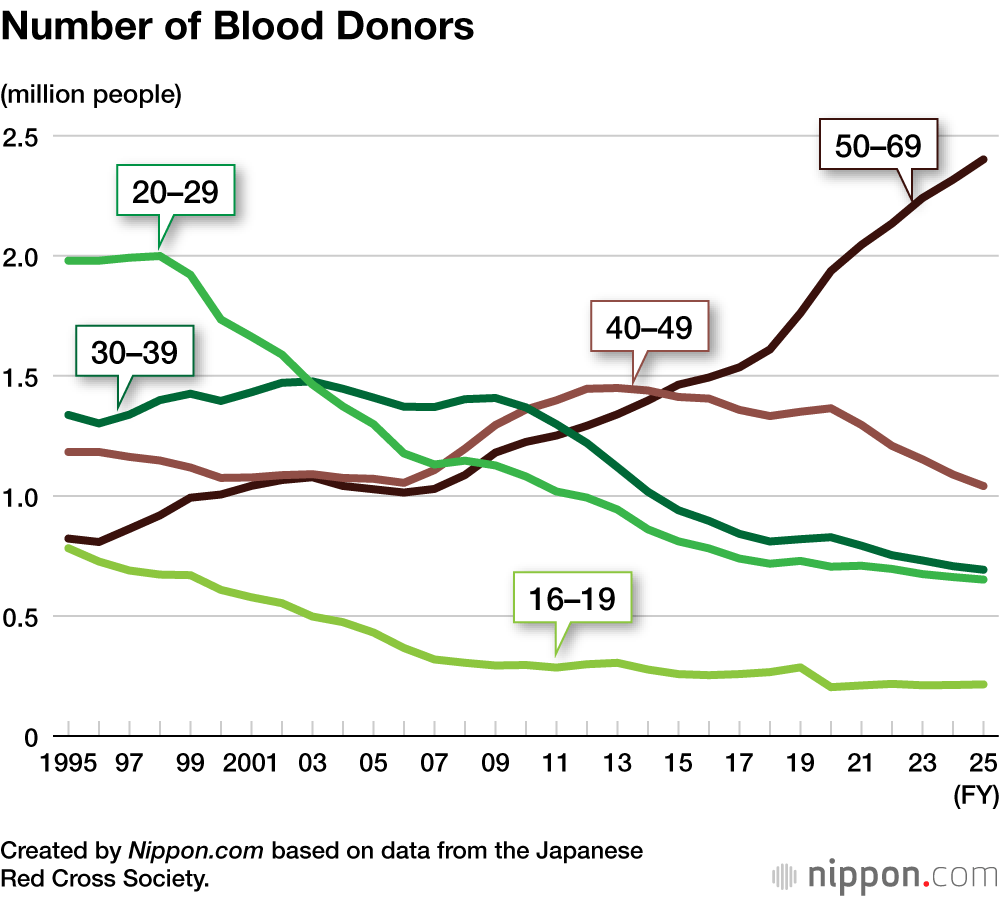
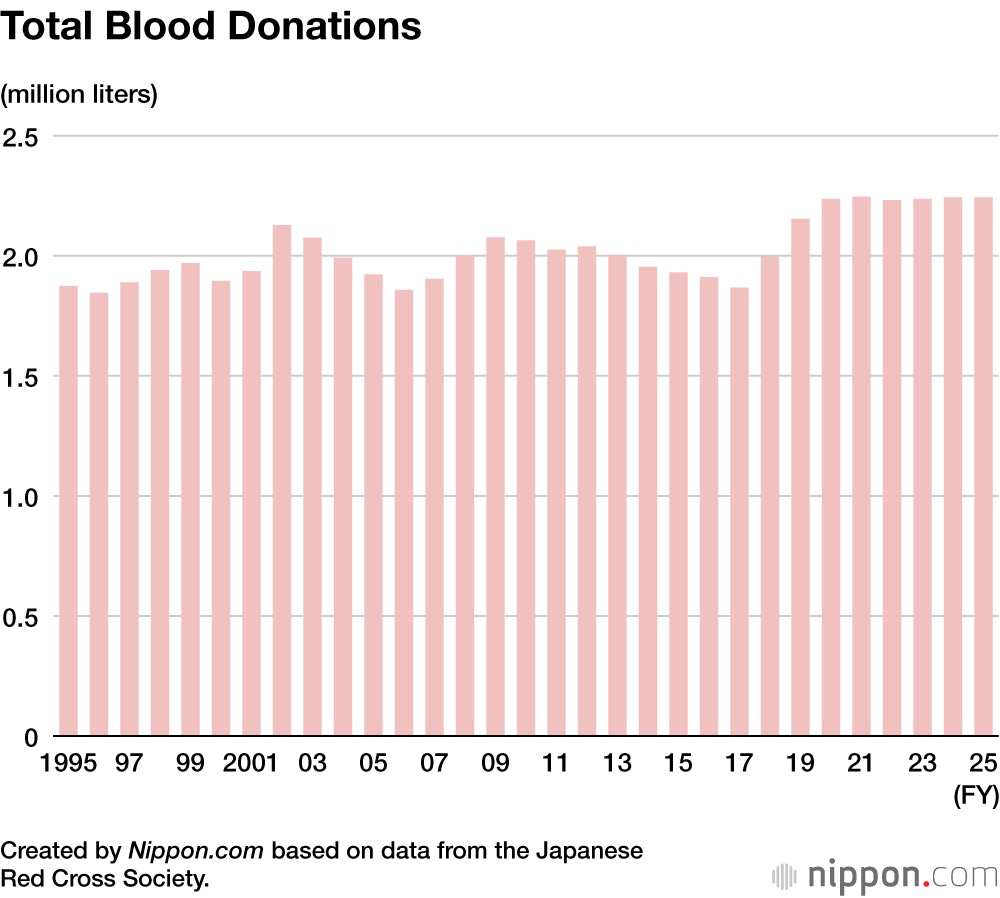
Since fiscal 1995, the number of people in their fifties and sixties donating blood has steadily increased, whereas donations have gradually decreased among those in their twenties, who had been the main contributors in the 1990s. Blood donations have been falling among people in their thirties since the 2010s, and continuously declining among those in their forties since around 2020.
Factors behind the changes in donations include Japan’s aging population and declining birthrate, as well as the reduction in the dispatching of blood donation buses, with buses now making fewer visits to companies and shopping malls than before the pandemic. Additionally, the increase in remote work has made it more difficult to attract donors at blood drives held at companies or large office buildings.
Much of the blood used for transfusions and plasma-derived medicines—made by extracting specific proteins from donated plasma—goes toward treating the elderly. As Japan’s population ages, securing more young blood donors has become urgent to sustain elderly healthcare.
Data Sources
- Report of blood issues of FY 2025 (Japanese) by the Japanese Red Cross Society.
(Translated from Japanese. Banner image © IllustAC.)