Japan’s New Restroom Guidelines Aim to Reduce Waiting Times for Women
Society Economy World- English
- 日本語
- 简体字
- 繁體字
- Français
- Español
- العربية
- Русский
Targeting Restroom Waiting Time Equality
On June 12, following consultations with an expert panel and feedback from the public, Japan’s Ministry of Land, Infrastructure, Transport, and Tourism finalized a set of guidelines on toilet fixtures (including both urinals and toilets in stalls). The guidelines call on those who determine the number of fixtures, including academic or governmental institutions and facility managers, to ensure that there are at least as many in women’s restrooms as in men’s restrooms in cases where the total number of male and female users are roughly equal.
Fewer Toilets for Women than Men
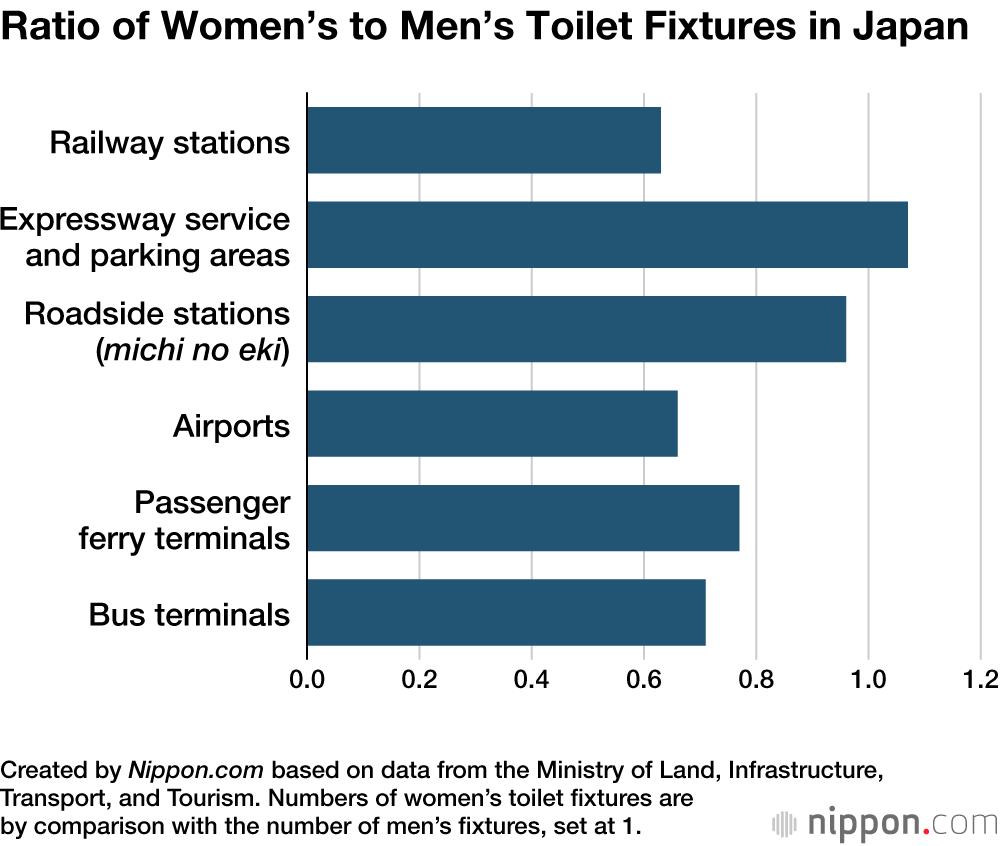
A 2025 survey was conducted by MLIT on the number of toilet fixtures in men’s and women’s restrooms. When the total number of men’s fixtures is set to 1.0, the ratio of women’s toilet fixtures is below that level at locations including railway stations, airports, and passenger ferry terminals. The ministry attributes this to the fact that, when these facilities were originally built, there was an assumption that there would be more male than female users. It concludes that, with the increase in women’s participation in the workforce, the current distribution of toilet fixtures no longer reflects the actual gender balance of users, contributing to longer lines.
Adoption of Western-Style Toilets Increases Use Time
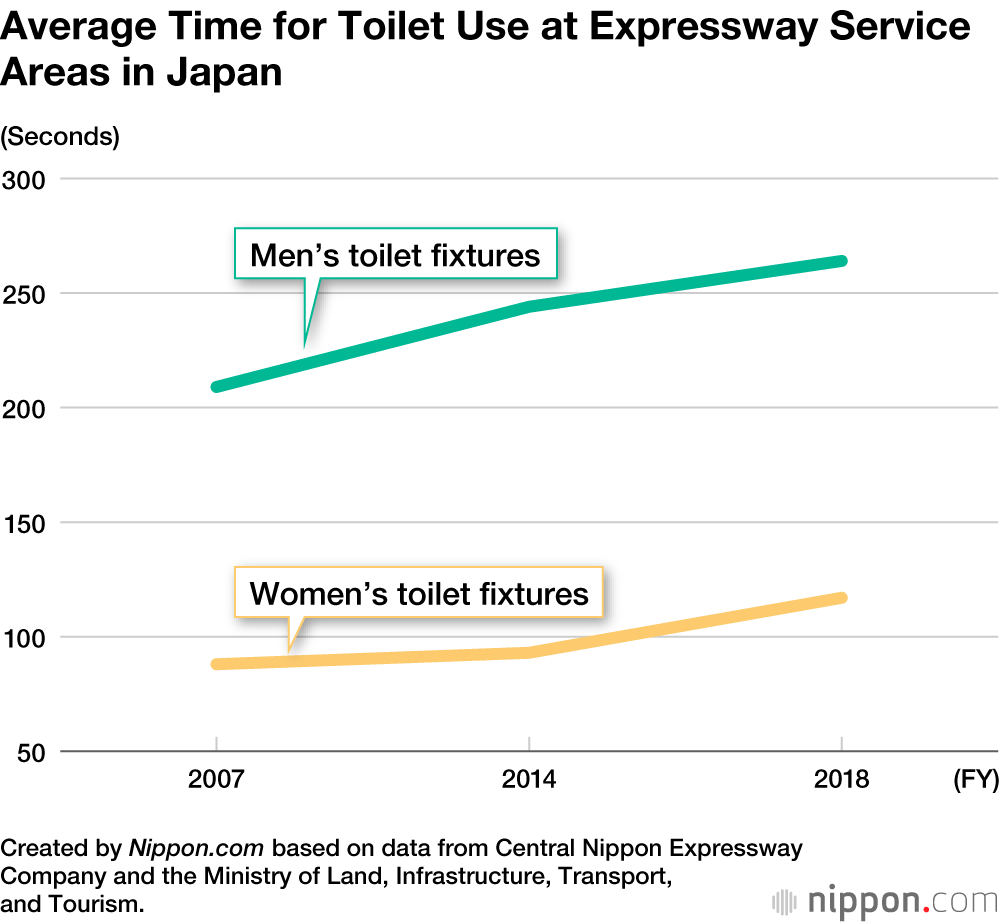
The amount of time people spend in restrooms has been increasing for both men and women. According to a survey by Central Nippon Expressway Company, the average occupancy time of restroom facilities at expressway service and parking areas has increased by about 60 seconds for men and about 30 seconds for women compared to 11 years ago. MLIT points out that one contributing factor is the widespread replacement of traditional Japanese-style squat toilets with Western-style toilets, making individual stalls cleaner and more comfortable.
Stalls Occupied for Non-Toilet Purposes
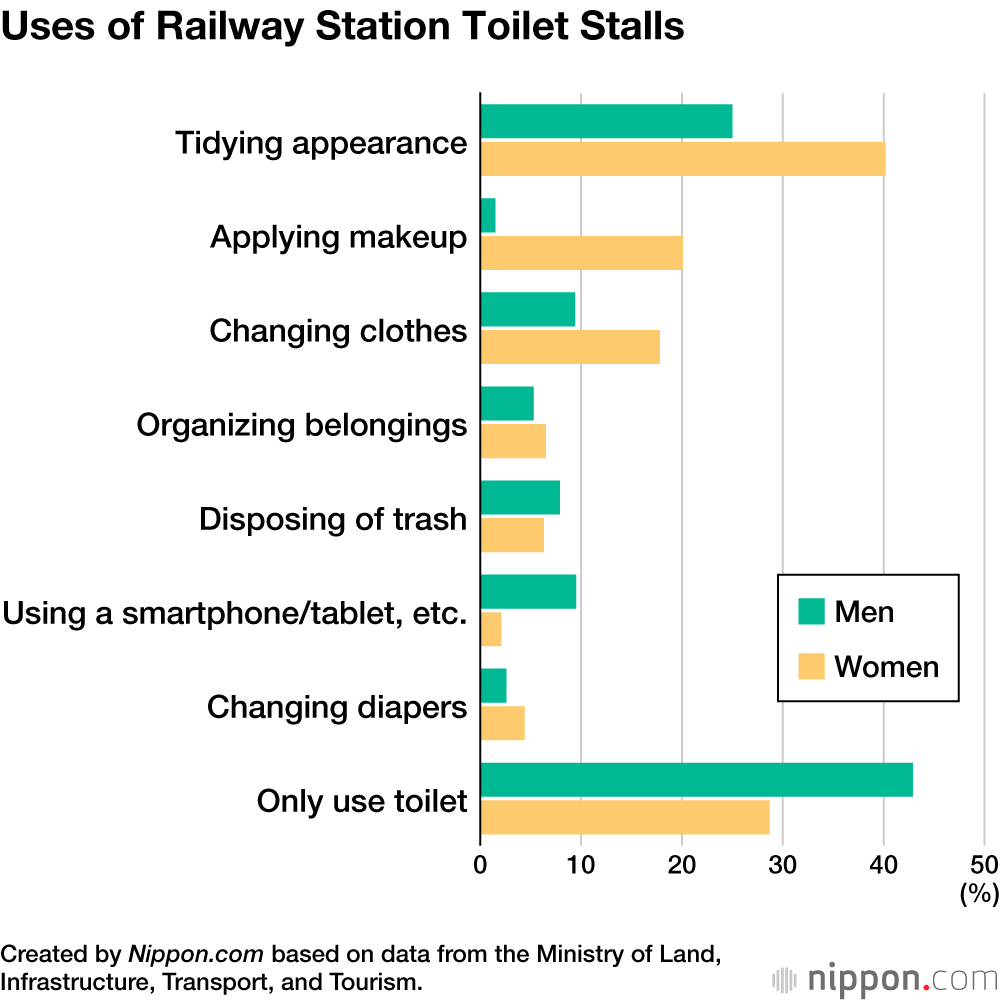
According to the ministry’s 2025 survey, only about 30% of women and 40% of men said they have not made use of a restroom stall for purposes other than using the toilet. Among women, the most common reasons for remaining in a stall were tidying their appearance, applying makeup, and changing clothes. Among men, the most common reason was using a smartphone, mobile phone, or tablet. The new guidelines also call for measures such as promoting proper restroom etiquette among users and providing facilities outside restroom stalls, including powder rooms and benches, to reduce unnecessary stall occupancy.
Data Sources
- Toilet fixture guidelines (Japanese) from the Ministry of Land, Infrastructure, Transport, and Tourism.
(Translated from Japanese. Banner photo © Pixta.)