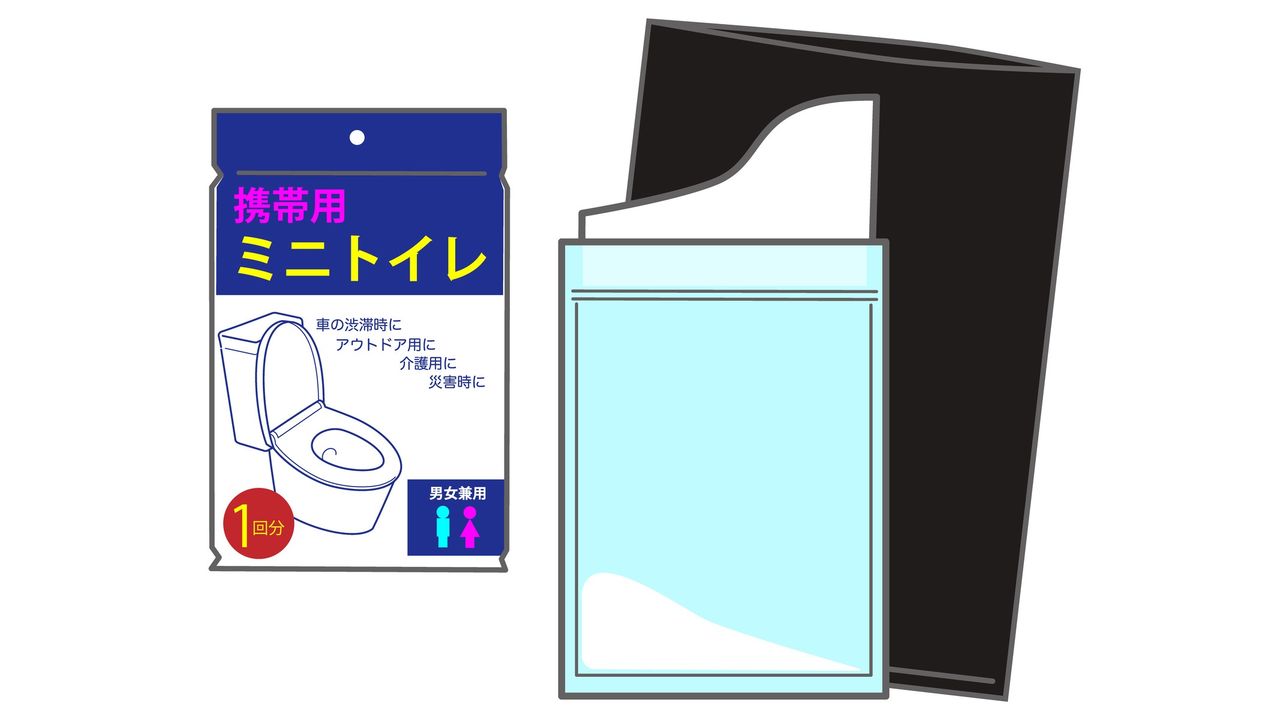
Toilets a Top Concern When Disaster Strikes in Japan
Society Disaster- English
- 日本語
- 简体字
- 繁體字
- Français
- Español
- العربية
- Русский
What We Worry About
Japan is a highly disaster-prone nation, sitting atop numerous active seismic faults and volcanic vents and in the path of typhoons, torrential rainstorms, and other severe weather events. How are its residents preparing for these potential disasters, and what do they worry about when one takes place?
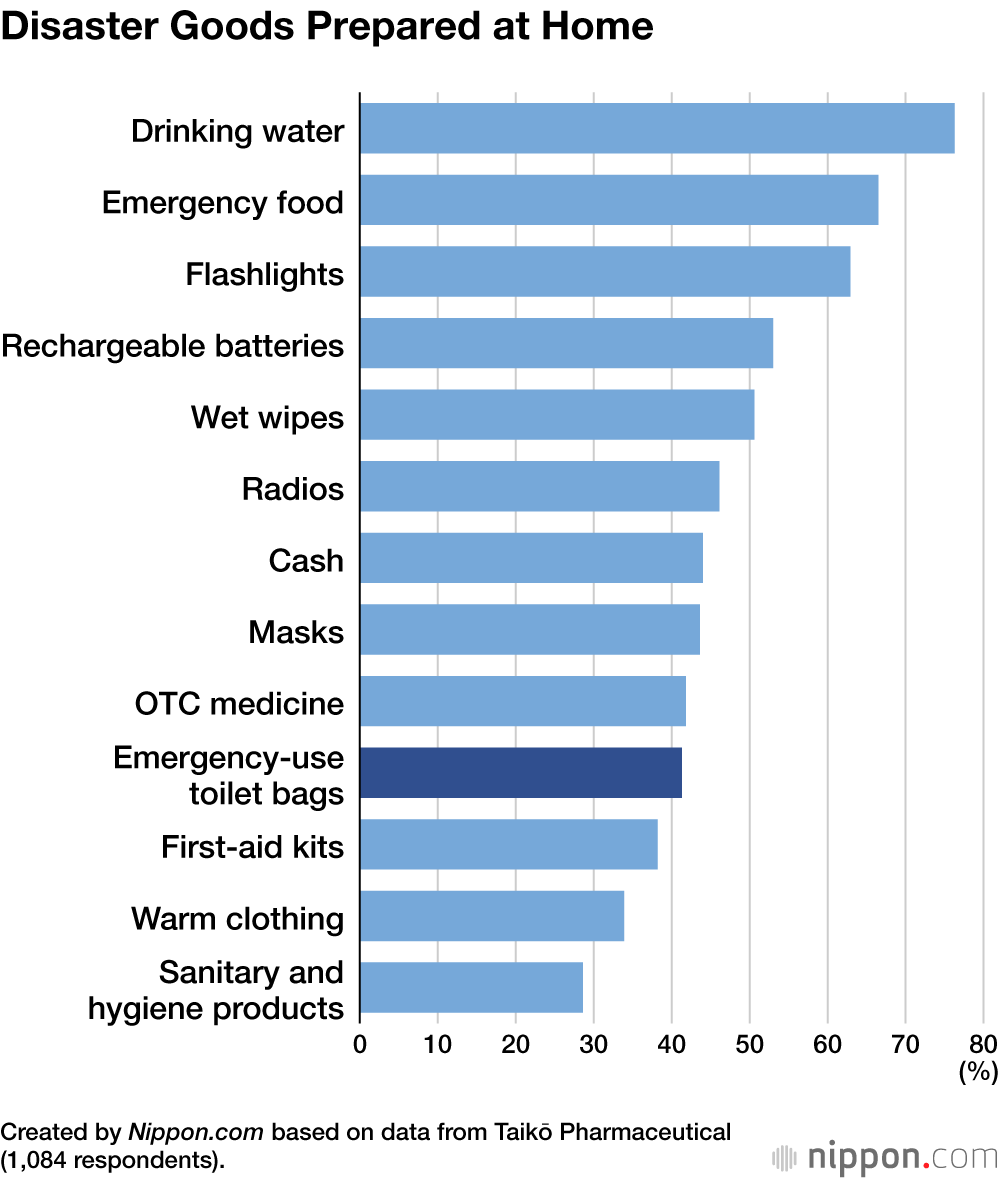
In a nationwide survey conducted by Osaka-based Taikō Pharmaceutical in July 2026, aimed at 1,095 people aged in their twenties to sixties, the results showed that, at 66.1%, the top postdisaster concern for the majority of respondents was “not being able to use the toilet.” This was an even greater worry than not having enough drinking water or food.
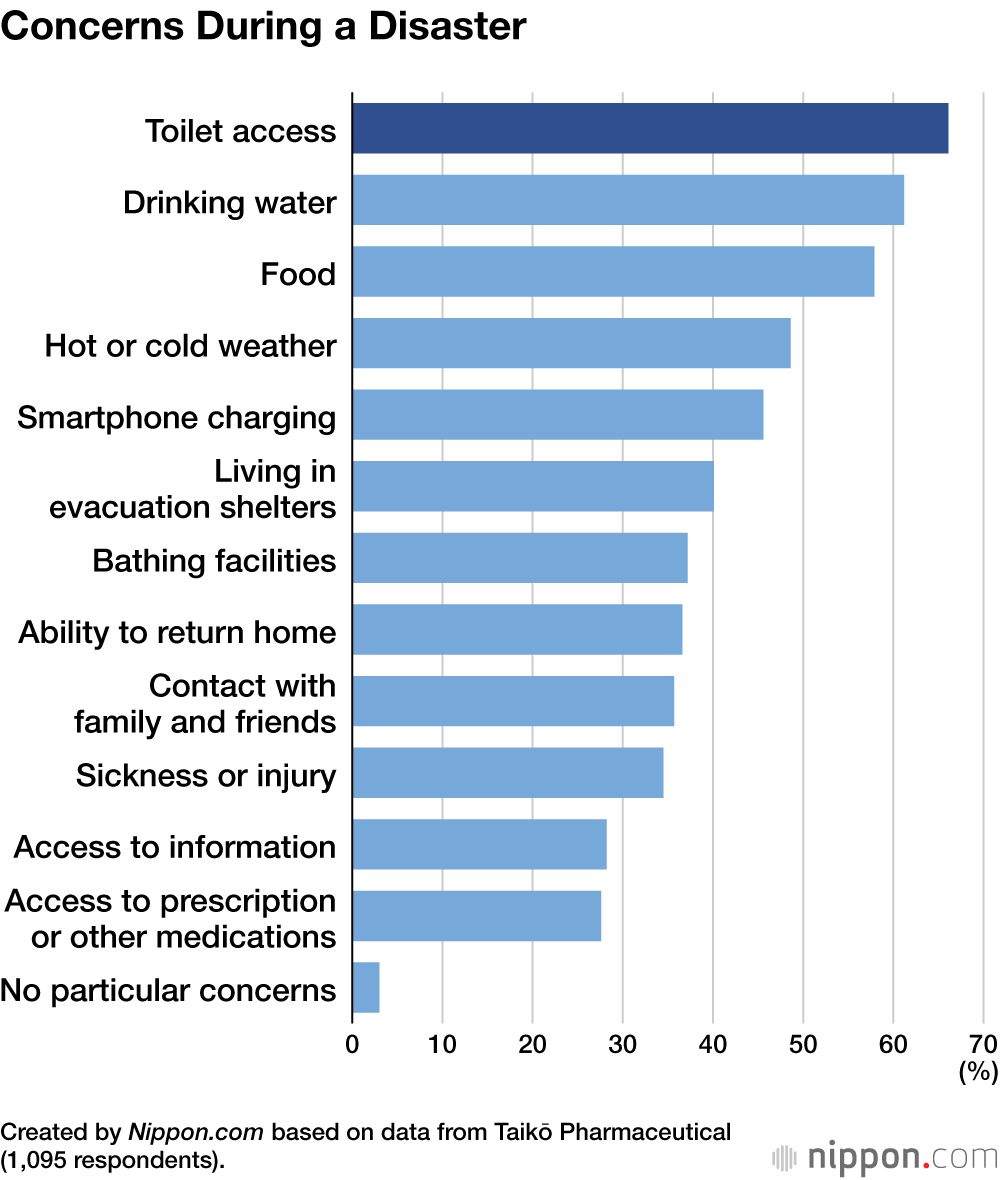
Looking at the most common type of items people had prepared at home in case of a disaster, the top three were “drinking water” (76.3%), “emergency food” (66.5%), and “flashlights” (62.9%). Only 41.3% had “emergency-use toilet bags,” making it strikingly obvious that, despite being concerned about being able to use the toilet, people were not properly prepared.
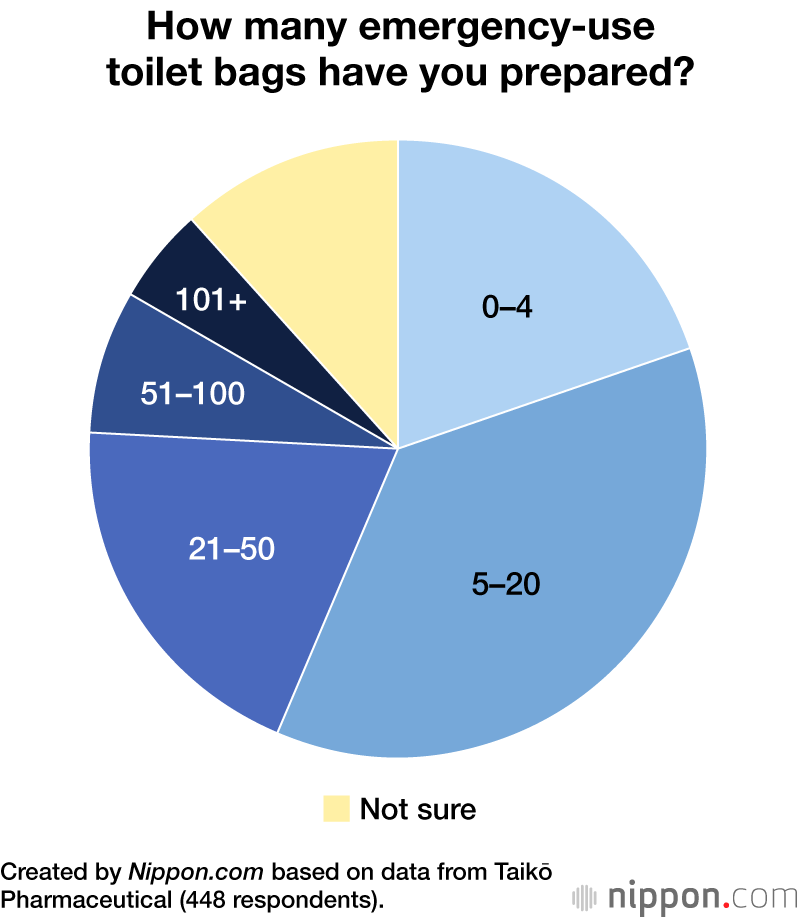
The guidance for emergency-use toilet bags is to stock at least one week’s supply, which when calculated as approximately five uses (bags) per day, means 35 bags per week, an amount that needs to be prepared for each member of a household.
Asked how many bags they had prepared, at 36.6%, the most common response was “around 5–20,” followed by 19.9% who said “less than 5.” This revealed that more than half had not even prepared enough for a single person, let alone more.
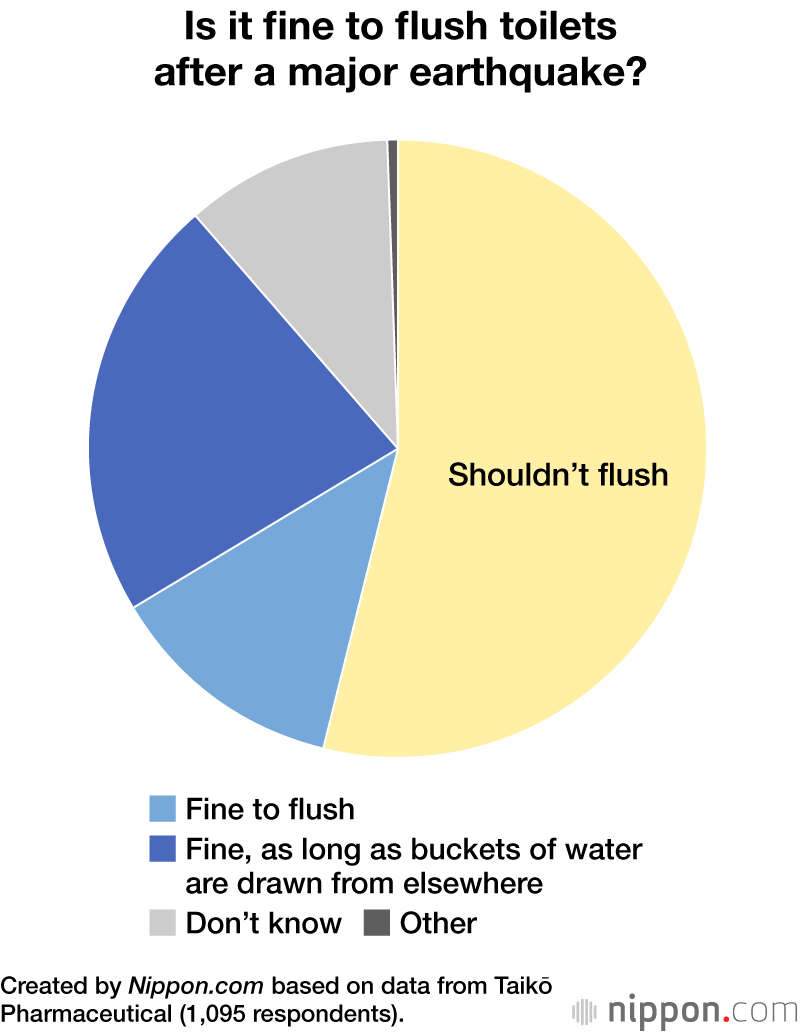
People tend to assume that as long as the water is not cut off, it is fine to not have emergency-use toilet bags directly after a major earthquake. The problem is that if the drainage pipes are damaged, sewage can back up or leak down into the lower floors of buildings. This is why, after such a disaster, the correct thing to do is to avoid using toilets until the pipes can be checked. Despite this though, only 54.1% of people were aware that they “shouldn’t flush.”
Incidentally, even if you have prepared emergency-use toilet bags, if you do not dispose of them properly after use, they can begin to smell and cause infectious diseases to spread.
It is therefore recommended that you familiarize yourself with them before a disaster occurs by opening one and checking how to use the bag, as well as thinking about how you will dispose of it.
Data Sources
- Public awareness survey on emergency toilet preparedness (Japanese) by Taikō Pharmaceutical.
- Information about emergency toilet preparedness (Japanese) by Ministry of Economy, Trade, and Industry.
(Translated from Japanese. Banner image © Pixta.)