
Confronting the Years: A Photographer’s Tour of Japan’s Hyper-Aging Society
Burial Under the Cherry Trees: A New Approach to Death for an Aging Society
Society Images- English
- 日本語
- 简体字
- 繁體字
- Français
- Español
- العربية
- Русский
The Cherry Blossoms Will Never Forget
Surrounded by the natural forest of the Tama Hills, with distant views on a clear day of the sea and the Minatomirai district of Yokohama, Machida Izumi Jōen is a park-style cemetery in Machida, a municipality in metropolitan Tokyo about 40 minutes from Shinjuku. In a corner of the grounds is the Sakura Cemetery, a “tree burial” site run by the NPO Ending Center.
I visited in late March, when the cherry blossoms were in full bloom. A mother and daughter were placing flowers and praying over a patch of earth. “Somewhere around here,” the mother said, gently touching the ground. Rows of traditional gravestones stood behind them, but in front stretched an open, peaceful green space used for tree burials.
Suzuki Kazuko, now 80, kept her husband’s ashes at home for 10 years after he died of cancer—wanting him nearby, even after death.
“He worked in sales for a publishing company—he was passionate about his job, always flying around the country. He passed away at 64, a year before retirement. We never talked about what kind of funeral he wanted. I think he was basically telling me he was leaving it to me to decide. But after a while, I realized it wasn’t just about the two of us. I had to think about the next generation, our children, and how they would continue to care for the grave. That’s when I found out about this Sakura Cemetery.”
Visiting the grave with her that day was the couple’s eldest daughter.
“When we buried him here, these trees were still just saplings. Now they’ve grown into these stately, beautiful trees. It really brings home to me what sakura burial is all about,” she says, her eyes settling on a nearby plaque bearing the inscription: The cherry trees will never forget that you lived.
Inoue Haruyo, director of the Ending Center, recalls the early days of the project.
“It was here, in Section En-21, that we planned the first tree burial site in Tokyo back in 2005: the Sakura Cemetery. We asked ourselves what kind of tree would be best. And for Japanese people, the answer had to be cherry blossoms. They have a special place in our hearts. When someone is told they don’t have long to live, it’s not uncommon for them to ask: I wonder if I’ll live to see the blossoms next spring.
“Once people have chosen a grave and know where they’ll rest, they feel at peace. Thinking that, after death, you’ll become one with the cherry trees here—that lessens the fear of dying. Each year, when spring comes and the cherry trees bloom, you’ll be among them. Isn’t that a lovely thought?”
The Border Between Life and Death
Just beyond the En-21 section lies the cemetery created by the Ending Center, along the slope of a gentle hillside. It’s a place where visitors can remember their loved ones as the wind sighs through the trees.
Esashi Kimiko (78) travels up from Hiroshima about once a month, staying at her daughter’s house in Tokyo to visit her husband’s grave.
“I spend the day here,” she says, “sweeping around the grave, pulling up weeds. My husband was good at drawing, so sometimes I sit here and sketch too. I bring a bentō and make a day of it.”
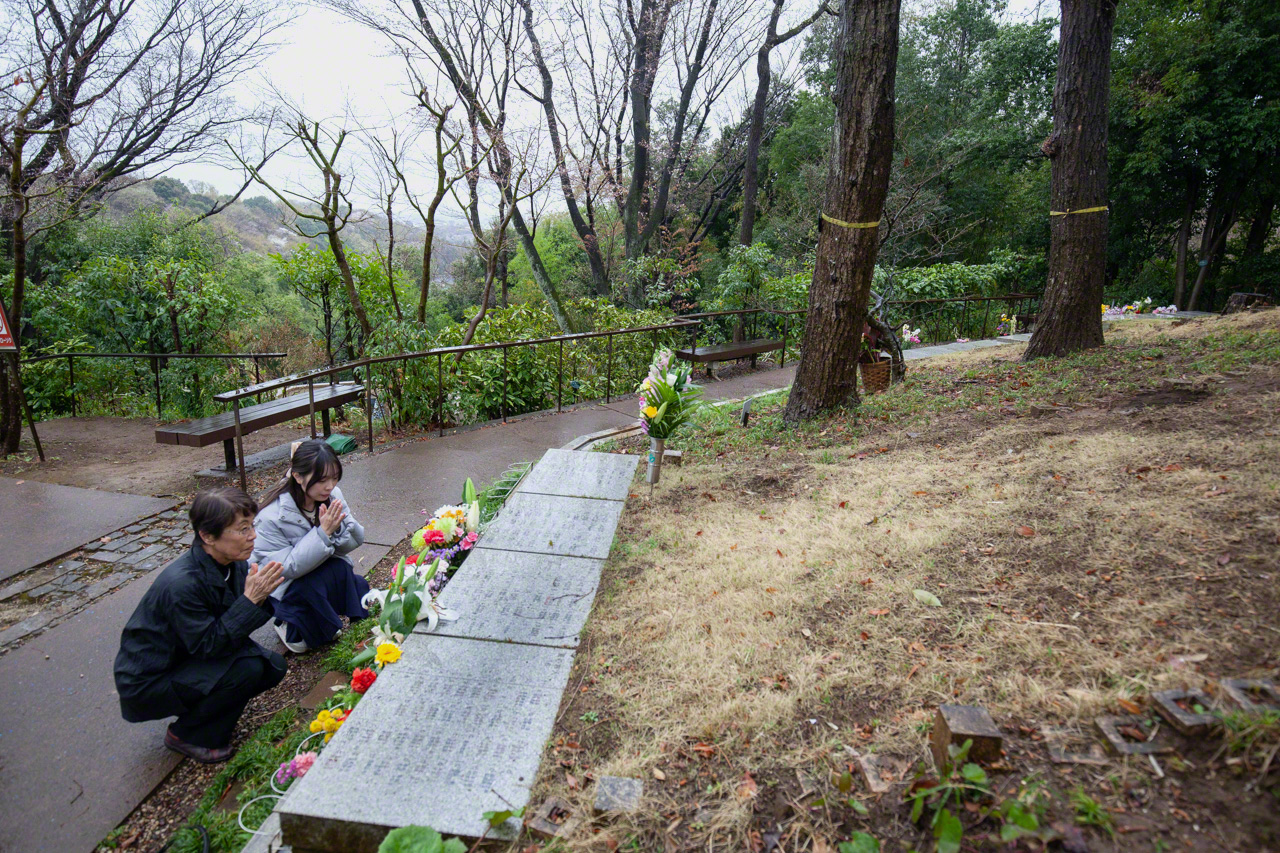
The setting is in harmony with nature, an ideal place to feel the shifting of the seasons. (© Ōnishi Naruaki)
On the day we met, she was with her granddaughter Yūka.
“I’d never really thought about my own grave,” she says. “I didn’t even know the customs—like how a woman can’t be buried in the family grave after marrying into another family. I think there’s something nice and comforting about being laid to rest like this in nature.”
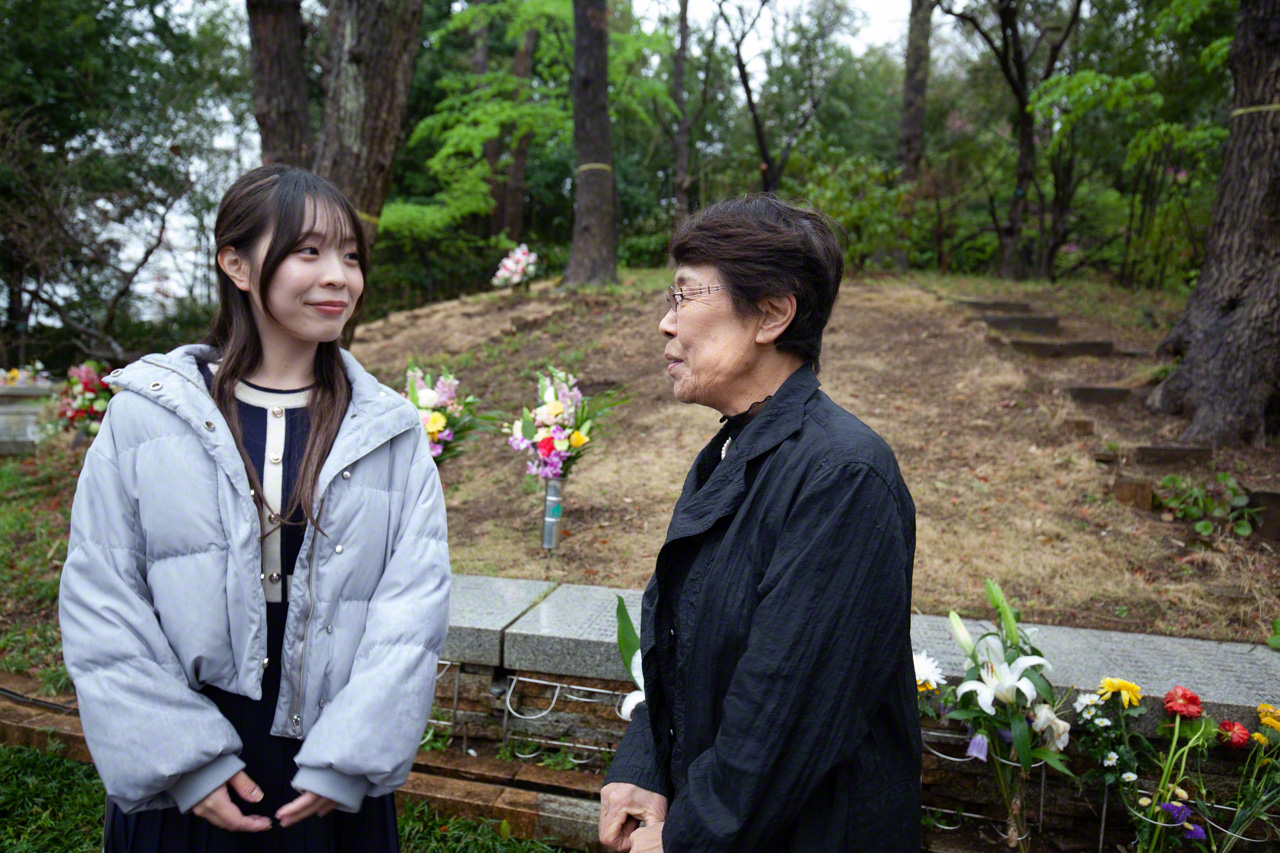
“I’m sure Grandpa’s glad we came to visit today,” Esashi smiles. (© Ōnishi Naruaki)
In 2007, Okamoto Kazue (83) lost the cat she’d lived with for 19 years. A newspaper article about tree burials caught her eye when she learned there was a section where you could be buried with your pet. She made up her mind to visit the cemetery and was immediately taken with the view, which reminded her of where she used to live in Higashi-Kurume.
“I signed the contract right away and even had the names carved onto the memorial stone. But I want us to go into the grave together, so for now I’m still keeping the urn at home,” she says with a smile.
The burial plot is in harmony with nature and the changing seasons.
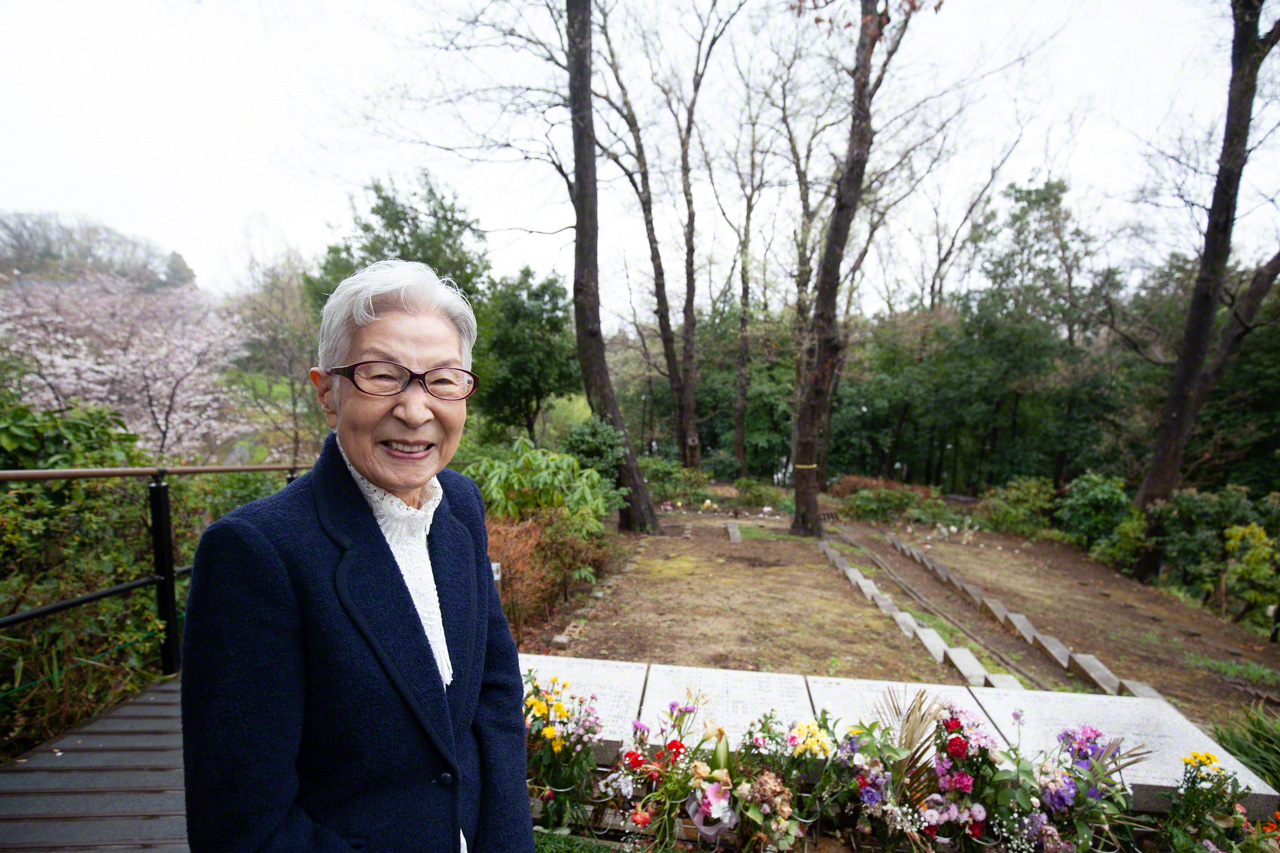
Okamoto by the plot where she and her beloved cat will one day rest in peace together. (© Ōnishi Naruaki)
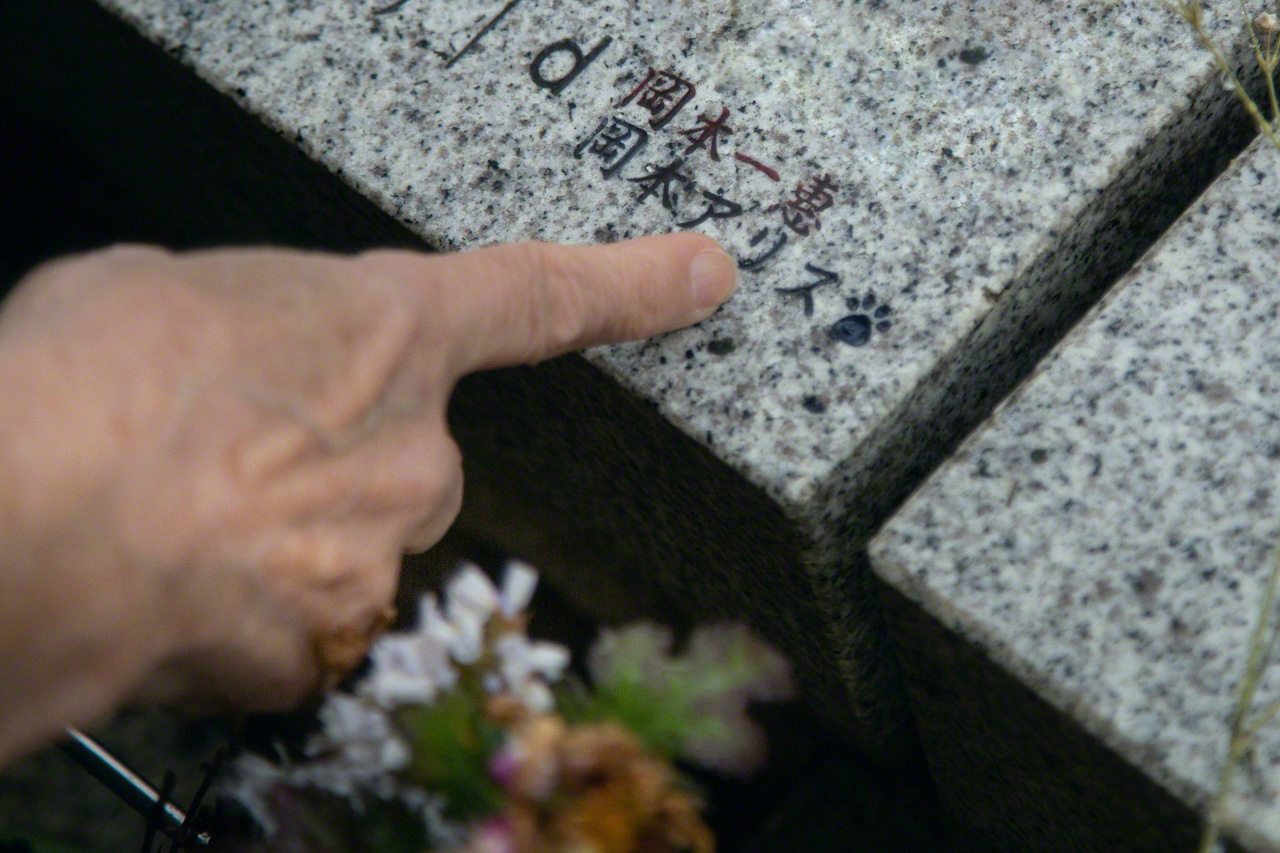
Okamoto points to her cat’s name Alice, which is next to her name. (© Ōnishi Naruaki)
Mutual Support Before and After Death
Inoue, the director of Ending Center, says she first confronted the issue of burial when her mother died. “My sisters and I were already married. They told us that even if we inherited the grave and took care of it, eventually it would be left without anyone to look after it, since we had married and there would be no one left to carry on the family name. That’s when I came up against the contradictions of the Japanese family system.”
In 1990, she founded a group to think about ways of providing mutual support and different styles of funerals and graves in the twenty-first century. In 2000, the group changed its name to Ending Center. It was Inoue who coined the term “ending,” which has become widely used in recent years, often in the context of “ending notes” where people outline their preferences for end-of-life arrangements.
“Death is not just a single moment. It’s an ongoing process. I believed that we should view death as a process, from end-of-life preparations to care after death. That’s why we used the continuous present form of the verb in the name, to emphasize the continuous nature of the process. Then some members began to express a wish to be buried in a grave they would help to plan out themselves. We shifted from being a group that simply thought about these issues to a more hands-on organization that put them into practice.”
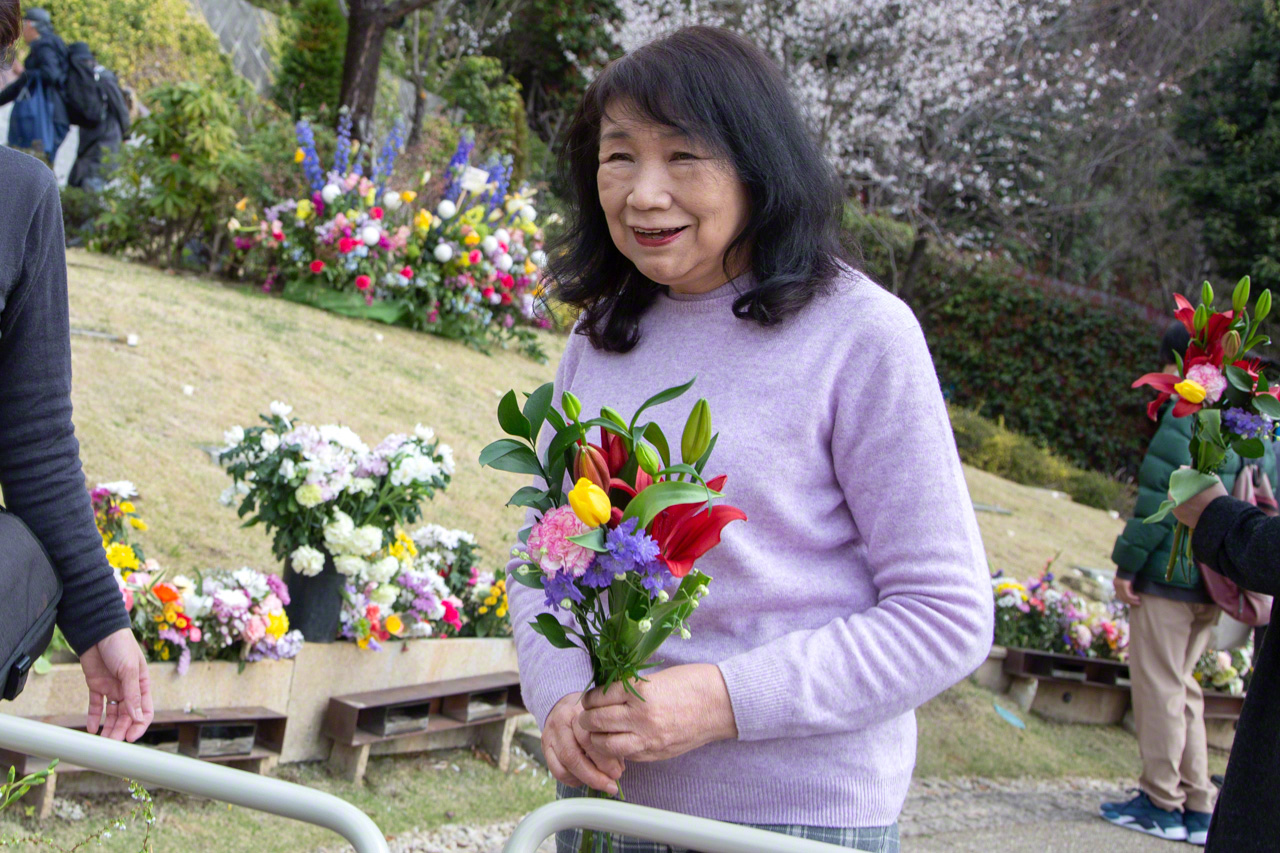
As director, Inoue is responsible for laying flowers on each plot in the burial ground, so that even graves that family members cannot visit are not neglected. (© Ōnishi Naruaki)
Since then, Ending Center has organized an annual memorial service, held every spring during cherry blossom season, with the idea of “Bringing the living and the dead together to talk under the blossoms.”
At this year’s gathering, Inoue read out a poem she had written. I found myself quite moved by the final lines.
A balmy spring day: a good day to be alive
A good day to die
A perfect day for the living and the dead to come together and talk
Life is fleeting: Let’s live it to the full
Death is not something special. It is part of life, an extension of life itself.
I was reminded of lines from the preface to Haru to Shura (Spring and Asura), the famous poem by Miyazawa Kenji.
The phenomenon called “I”
is a blue illumination
of the hypothesized, organic alternating current lamp
(trans. Satō Hiroaki)
I sensed a resonance between what Inoue is doing and the perspective of Miyazawa Kenji’s view of life and death as phenomena within the vast universe, part of the continuous flow of all things.
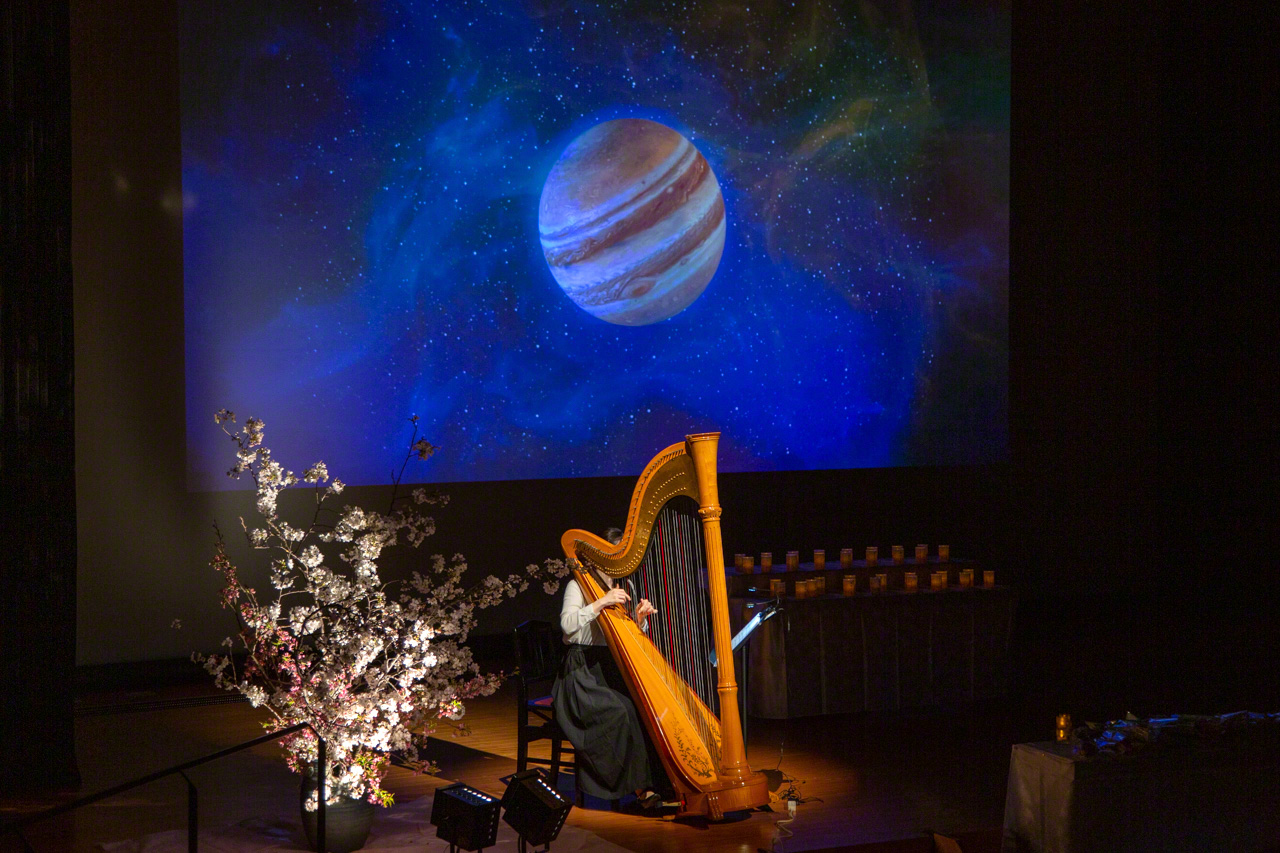
This year’s Sakura memorial featured a performance of Jupiter, from Holst’s The Planets. (© Ōnishi Naruaki)
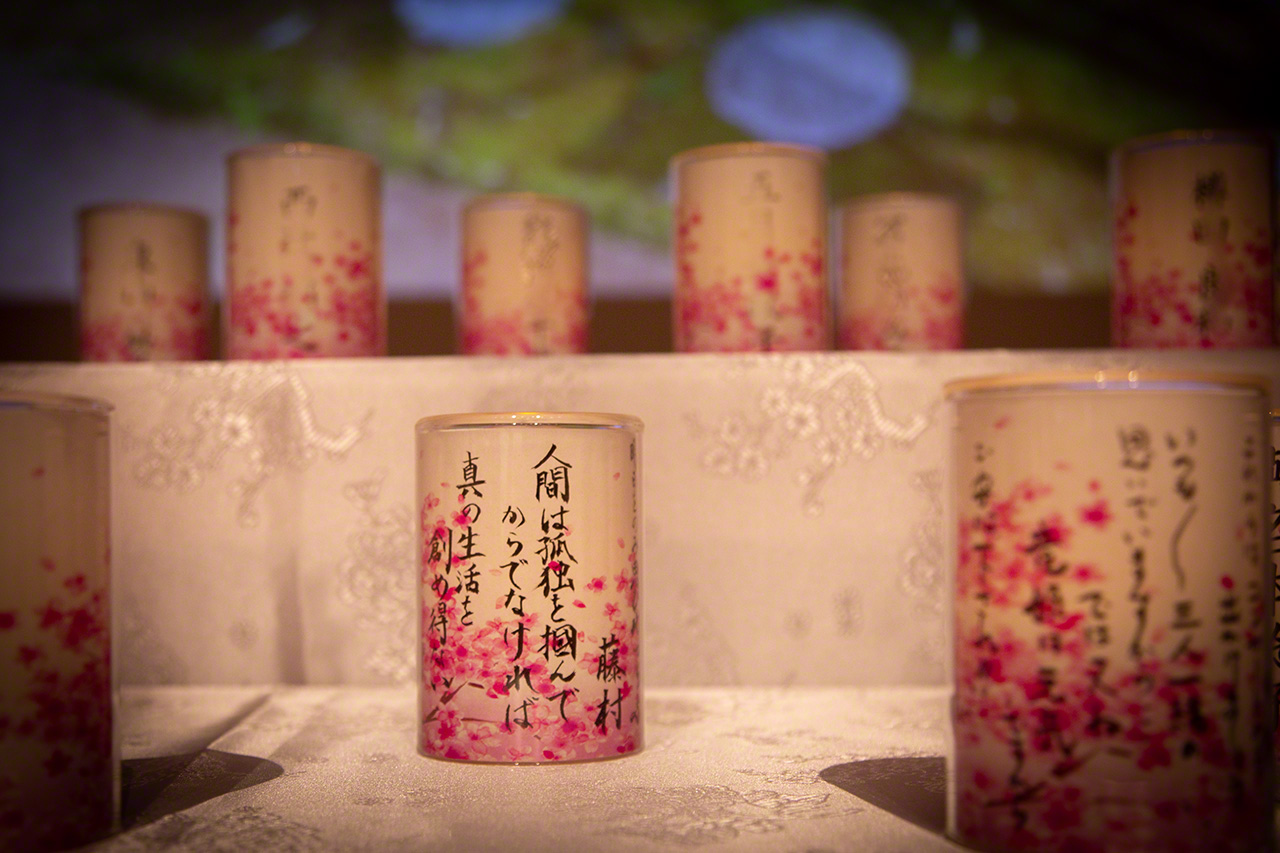
Messages left by members of the Ending Center. (© Ōnishi Naruaki)
“Grave Friends” and a Second Home for Mutual Support
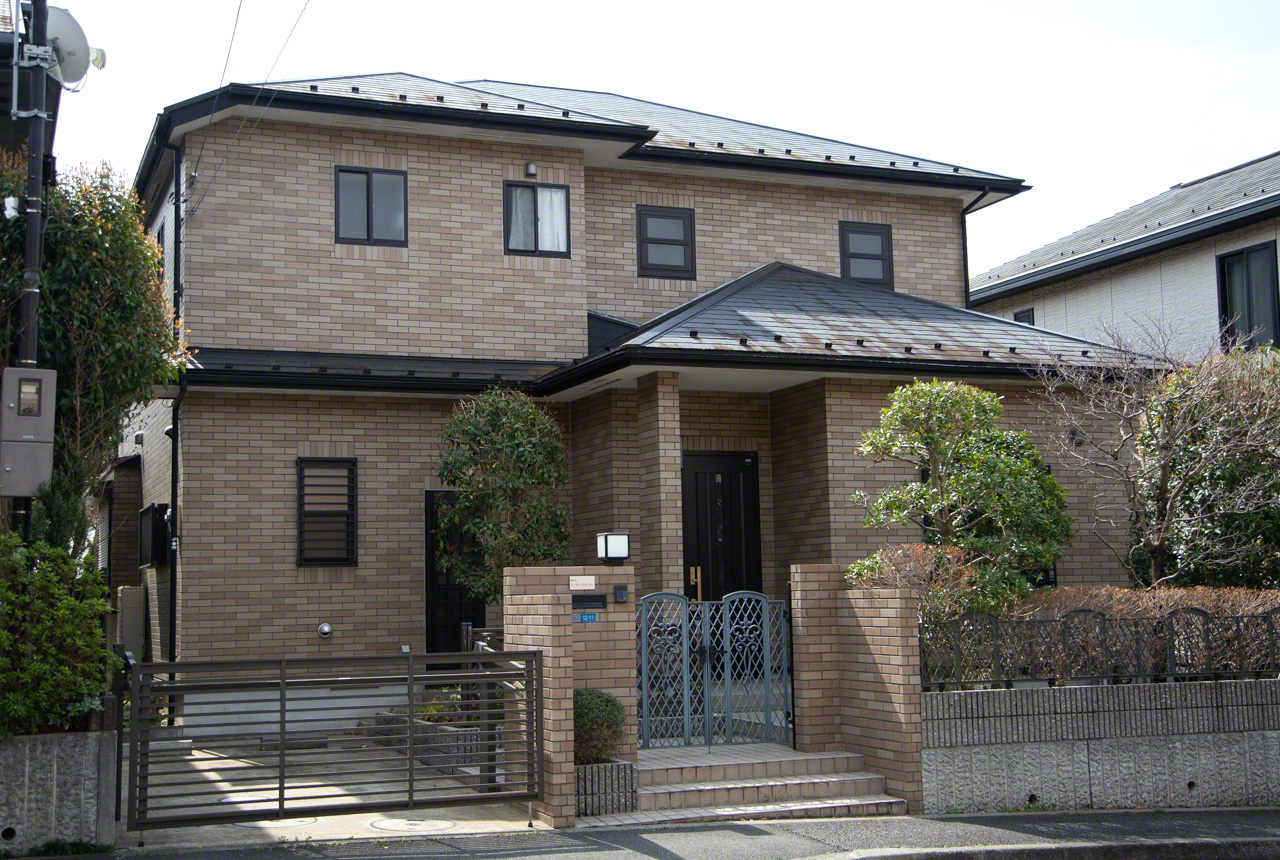
This “second home” owned by the Ending Center is the meeting place for members of a mutual support society who call themselves “grave friends.” The center organizes various events and club activities. (© Ōnishi Naruaki)
The first time I heard the word hakatomo (grave friends), I was taken aback by what struck me as an incongruous combination of words: another of Inoue’s neologisms. The strange pairing highlights some of the issues surrounding funeral traditions in this country, which are increasingly struggling to keep up with changes in society.
It was once taken for granted that a grave would be passed down in a family as a matter of course. But society has changed, and it is increasingly difficult for many families to shoulder the burdens of caregiving, end-of-life care, and funerals. In this context, it is only natural for people to club together for mutual assistance. For these people who choose cherry blossoms as grave markers, forging connections that transcend the family is an important form of support as the end of life approaches. This shift from blood ties to connections formed by choice is at the heart of the “grave friends” concept. The idea is that people should be able to look forward to meeting each other under the cherry trees after death, forming bonds that go beyond the traditional family structure.
I stopped by the Dokusho Café, a volunteer-run book club that has held enthusiastic meetings for several years. Ten “grave friends” gathered around a table, happily engaged in a discussion about the book they were reading.
Hoshino Yoshiaki (79), the group’s facilitator, said, “We started the group seven years ago with the idea of creating a salon-like environment where we could meet casually and discuss books. At first, the books we discussed were mostly on heavy topics, like life and death, and end-of-life care. But as we got to know each other better, we decided to broaden our range. Now we share and recommend books on all kinds of subjects that interest us.
“Is there life after death? When you reach my age, the living and the dead start to seem much the same. It gives me a sense of peace to know that even after I’m gone, the people at the Ending Center will still be there, taking care of things. It’s reassuring.”
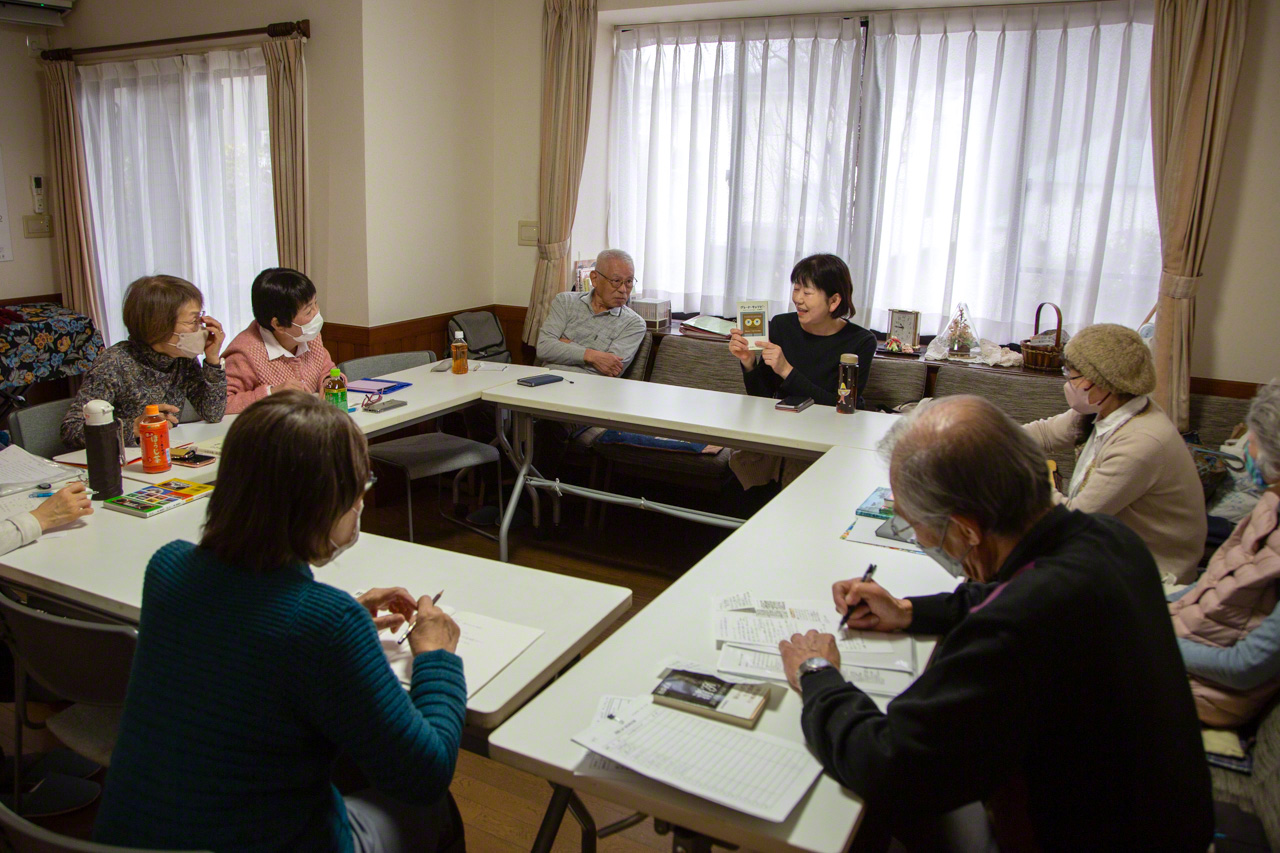
Members are free to attend as many or as few meetings as they like. A strong sense of solidarity and trust has grown up between people who share a similar view on life and death. (© Ōnishi Naruaki)
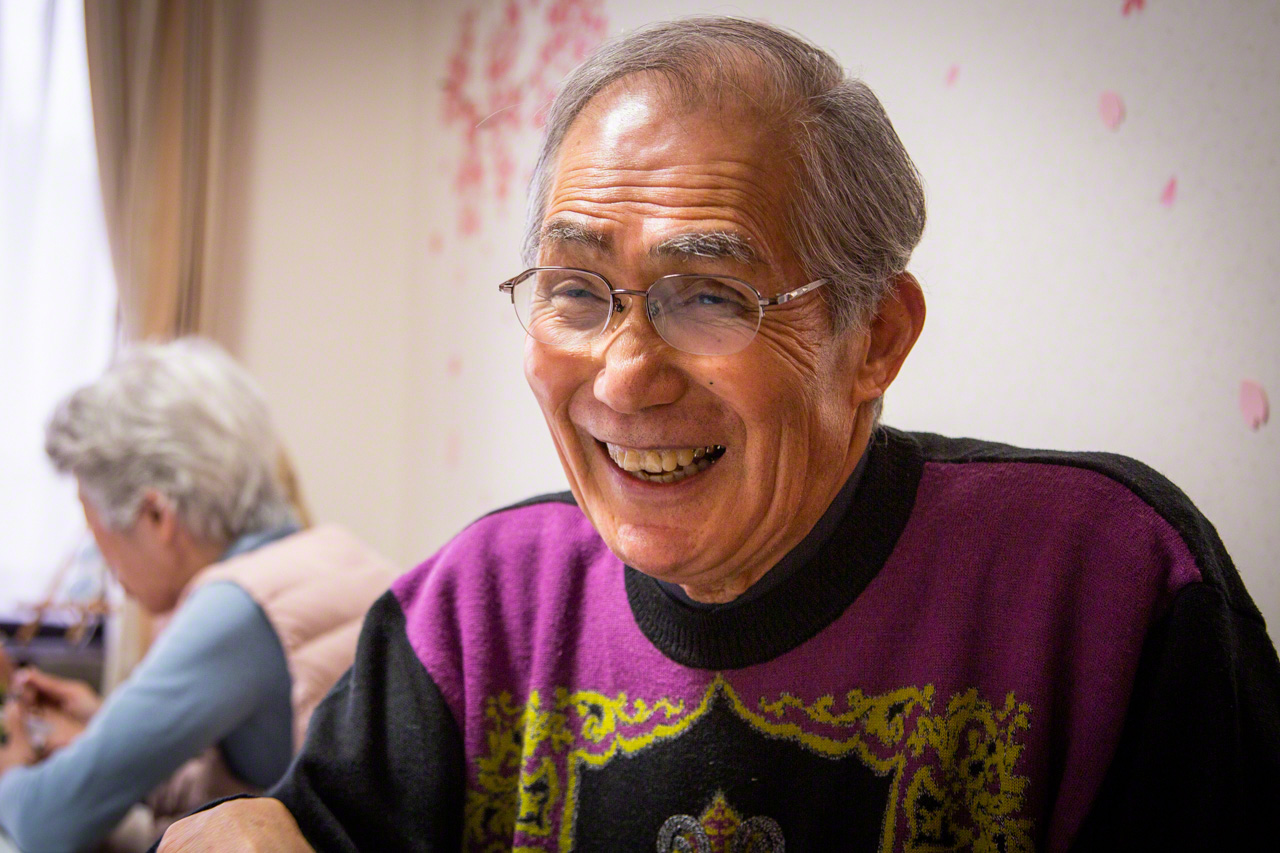
Hoshino runs the Dokusho Café reading group. The book under discussion was a biography of the poet Ibaragi Noriko written by Gotō Masaharu. Three poems were movingly read out loud by Hoshino. (© Ōnishi Naruaki)
End-of-Life Support with Human Warmth
Members offer each other support as the end of life approaches, acting as guarantors when a member needs to be hospitalized and assisting in drawing up a will.
They also offer post-death support, helping to arrange funerals and burials, handling the deceased’s belongings and clearing out their living space, and dealing with paperwork.
In today’s society, where many people live alone without close family, the demand for alternative support systems has been increasing. Inoue, the director, often says, “You can’t walk to the grave and deposit your own ashes.” It’s hard to argue with that.
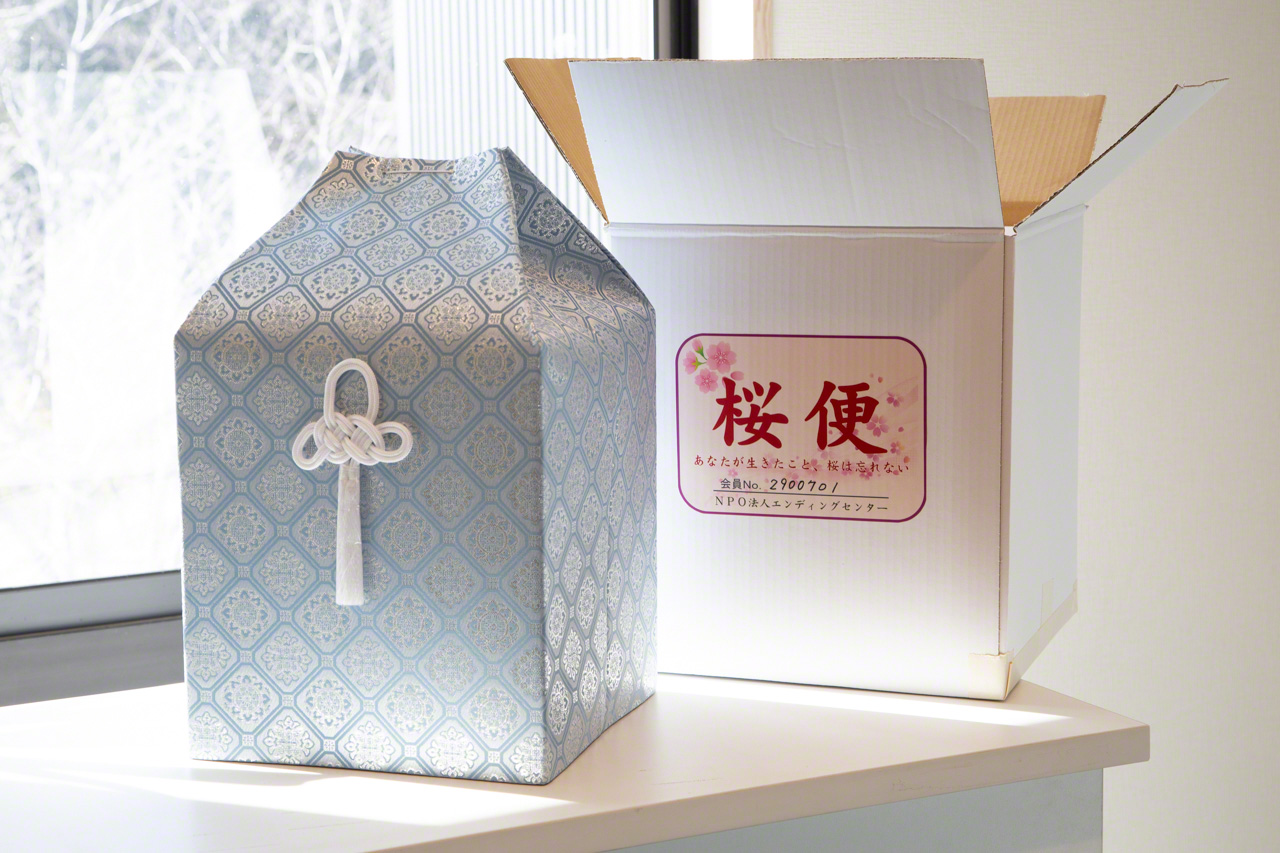
These thoughtfully put together “Sakura packages” are offered for elderly people who struggle to carry a heavy urn or for funerals that family members are unable to attend. (© Ōnishi Naruaki)
I attended the burial of an 81-year-old woman who, having lived alone, had entrusted the Ending Center with her end-of-life arrangements. When she had to be hospitalized urgently, the staff responded immediately, rushing to her side in the intensive care unit after receiving a call from the hospital. This type of care is included in the support services outlined in the contract Ending Center members sign.
The group asked her about how she wished to end her life based on the end-of-life notebook she had kept for ten years. In accordance with those wishes, a peaceful and intimate burial ceremony was held with her nephew leading the mourners.
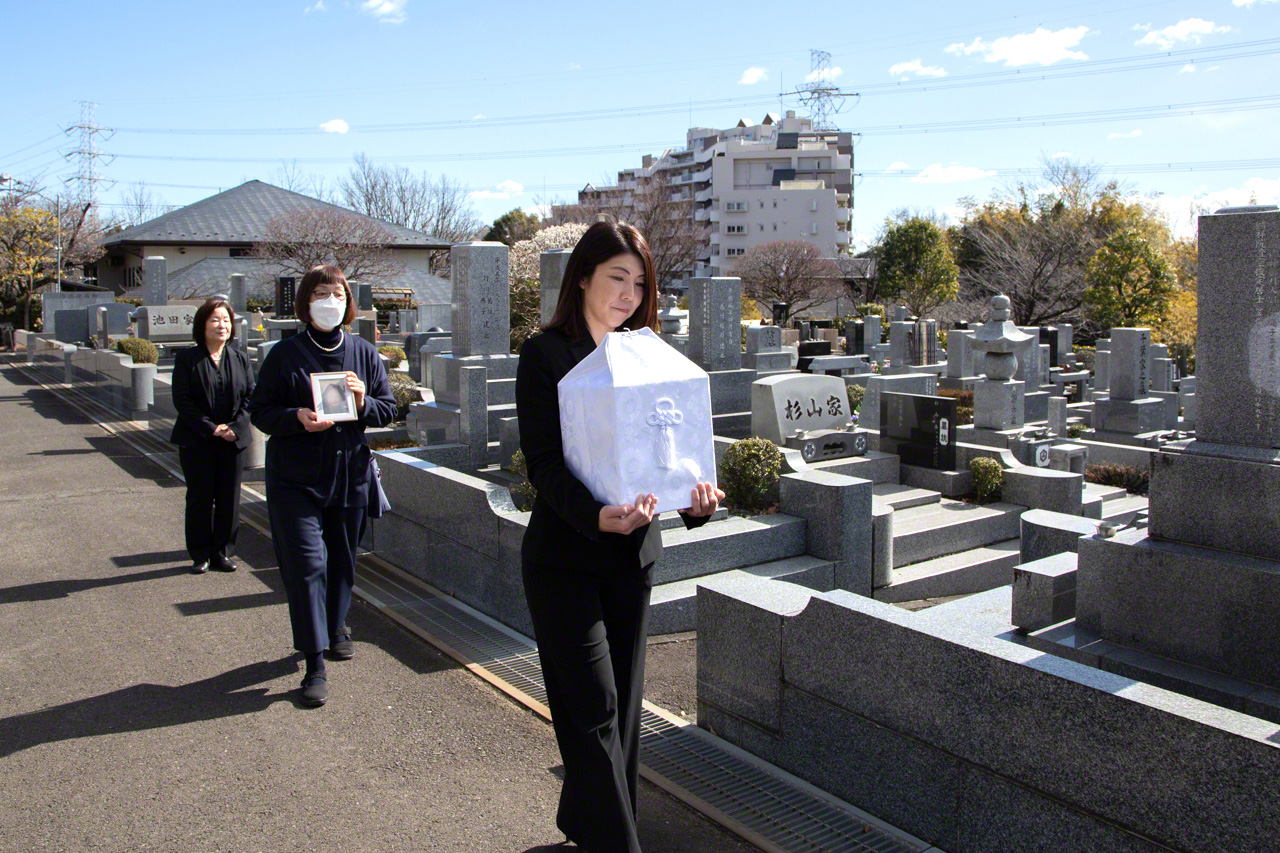
A member of Ending Center staff carefully carries an urn containing a member’s ashes for burial. (© Ōnishi Naruaki)
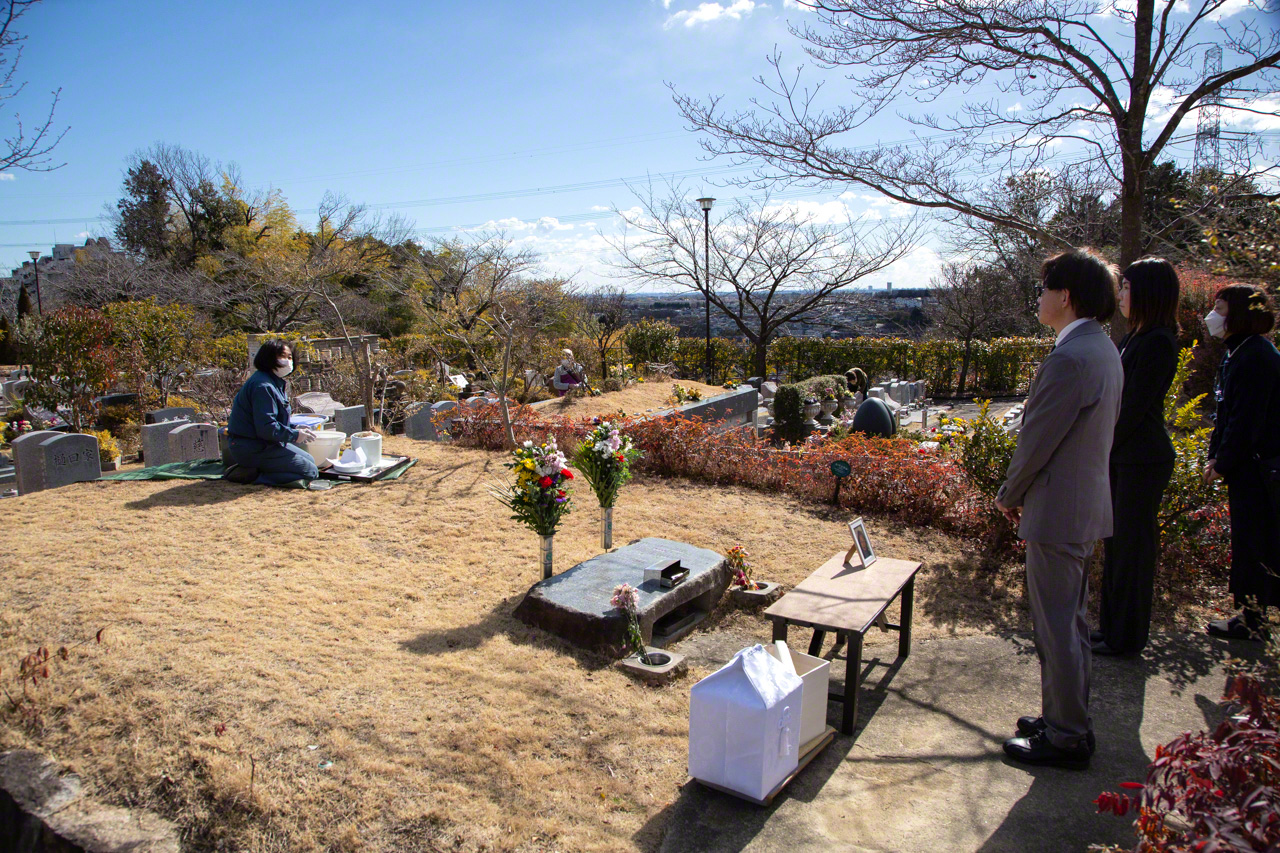
The urn is placed in the plot chosen by the deceased before her death. (© Ōnishi Naruaki)
Changing Attitudes toward Death and the Family Grave
Inoue says, “Twenty years ago, most people had never even heard the term tree burial. Now, nearly half of those who purchase a grave plot are choosing this style. And growing numbers of people are closing their traditional family graves and switching to tree burials.”
It has been 35 years since Inoue established the Ending Center, and 20 years since the completion of the Cherry Blossom cemetery. Her group’s efforts to provide warm, human-centered end-of-life support continue to go from strength to strength.
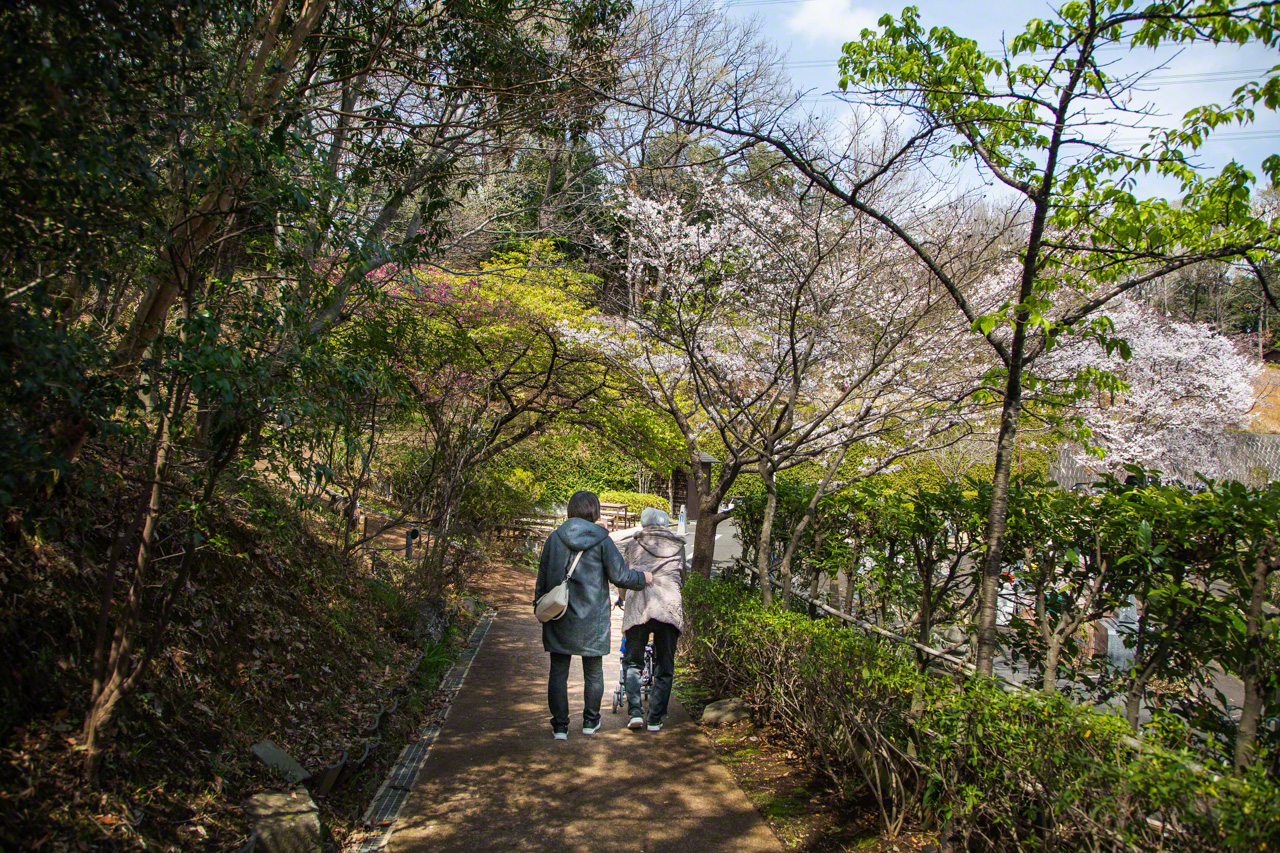
“How many things they bring to mind: these cherry blossoms!” Matsuo Bashō once wrote. (© Ōnishi Naruaki)
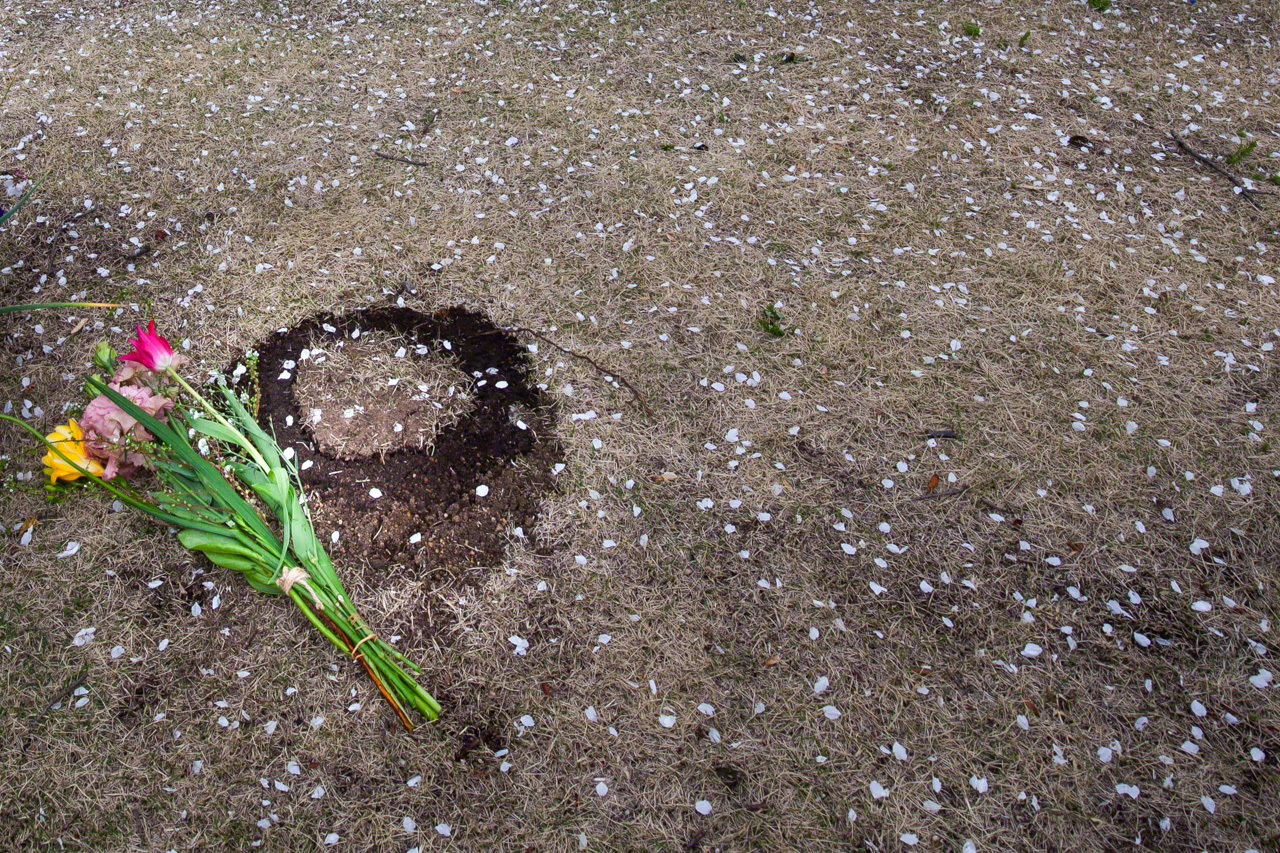
Probably everyone carries their own “cherry blossom story” in their heart. Here, petals fall over the freshly turned earth where a person had been buried just the day before. (© Ōnishi Naruaki)
(Originally published in Japanese. Banner photo: A mother and daughter visiting a grave at the Sakura cemetery. © Ōnishi Naruaki.)