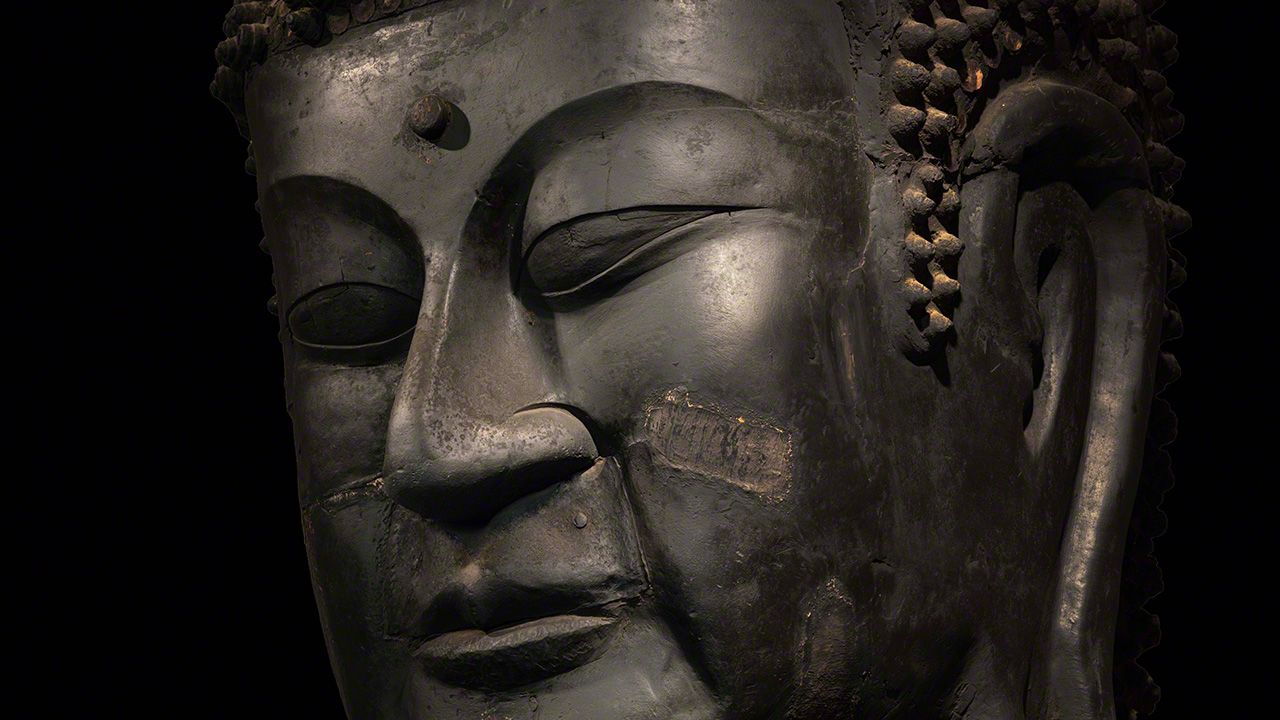
The Asuka Great Buddha: Asukadera, Nara Prefecture
Images Culture History Art- English
- 日本語
- 简体字
- 繁體字
- Français
- Español
- العربية
- Русский
This image of Shakyamuni, the historical Buddha, has presided as the main image at Asukadera temple in Nara Prefecture since the sixth century. Famous as the oldest Buddhist statue in Japan, it is affectionately known as the Asuka Great Buddha, or Asuka Daibutsu. Now a village of around 5,000 people in a rural area of the prefecture an hour south of Nara itself by train, in the sixth century Asuka was the center of political and cultural power in Japan as the Yamato court extended its control over other parts of the archipelago. The area is dotted with ancient tombs and other relics of this early period of Japanese history.
Work began on a temple at Asuka in 588, not long after the arrival of Buddhism in Japan, to fulfill a vow made by Soga no Umako, a powerful political figure and promoter of Buddhism who aimed to use the newly imported religion to establish a system of unified control. The precincts were home to the first complete set of temple buildings in Japan, and were originally around 20 times their current size, even larger than those at the famous Hōryūji to the north.
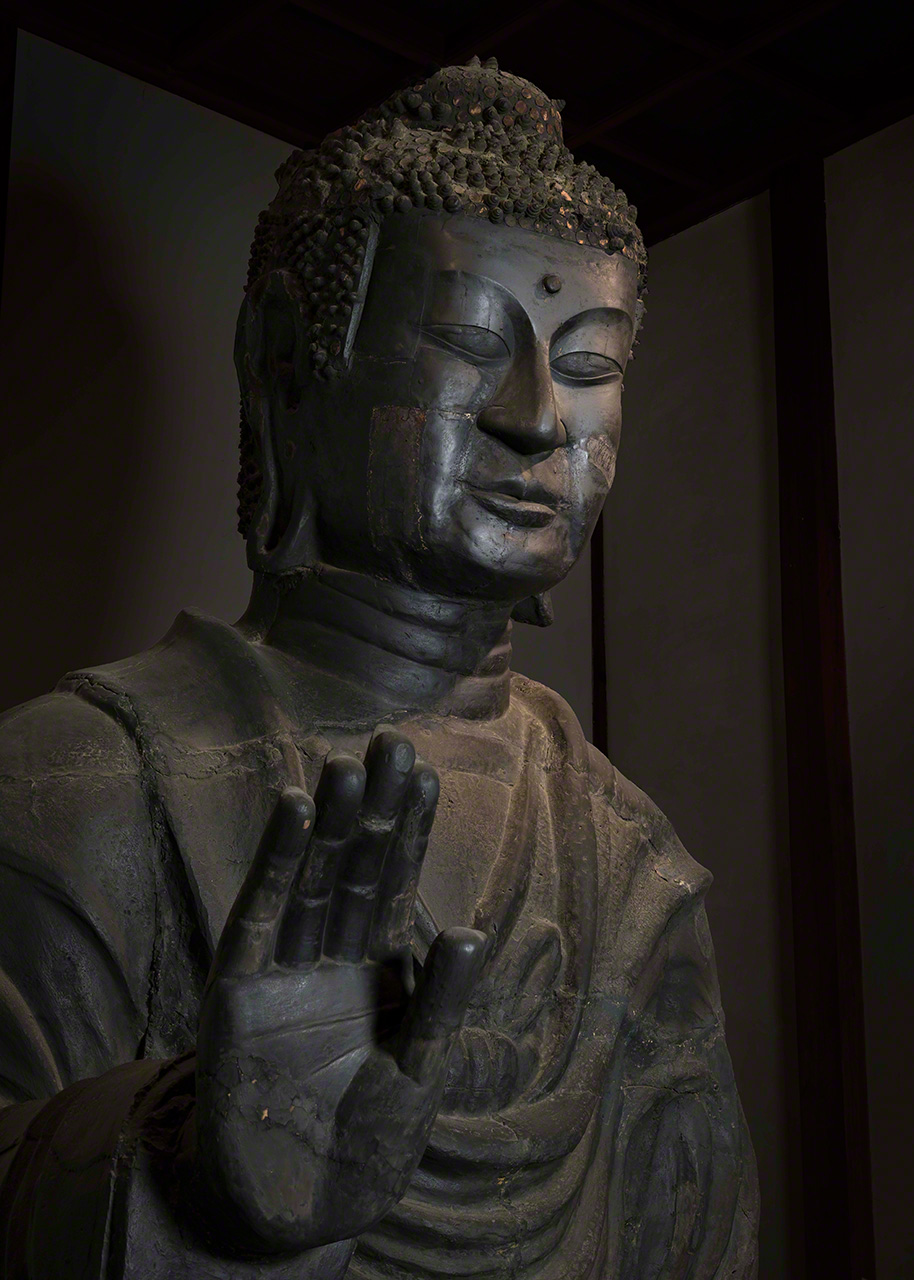
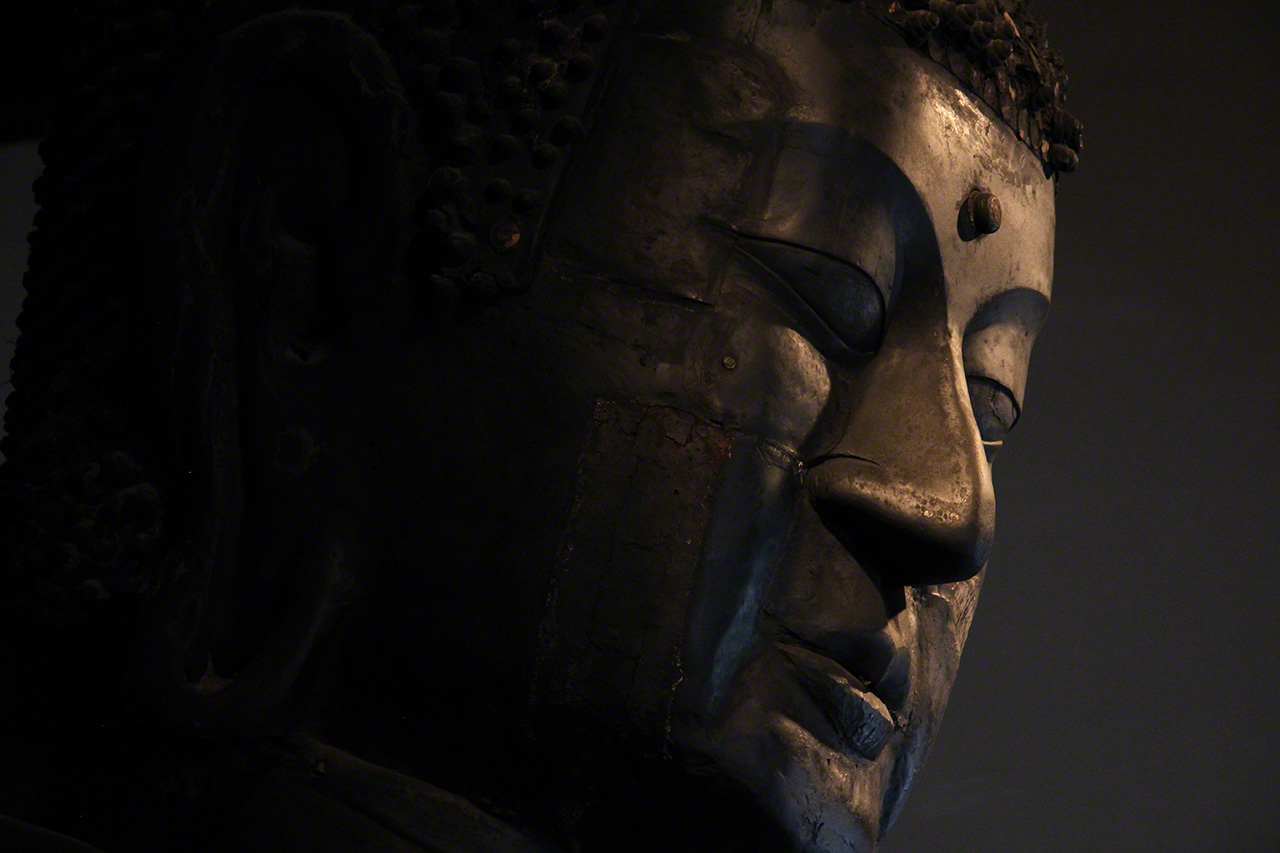
Work on this statue of the Shakyamuni Buddha (Shaka Nyorai), which was the chief image revered in the temple, began in 605 and was completed in 609. The bronze image is an example of what is known as a jō-roku-Butsu, depicting the Enlightened One with a height of one jō and six shaku (approximately 4.8 meters), the height in traditional East Asian units ascribed to the Buddha in the scriptures. Since the image is depicted in a seated position, the statue itself is around half of the Buddha’s full height, at around 2.75 meters. Fifteen tons of bronze were used to make the image, which was plated with around 30 kilograms of gold. Perhaps the most impressive aspect of the statue are the continental facial features, marked by a thin, somewhat elongated face and large, almond-shaped eyes, with an “archaic smile” playing around the lips.
(© Muda Tomohiro)
The statue was made by the great early Buddhist sculptor Kuratsukuri no Tori, who came to Japan from Korea. Like his masterpiece, the Shakyamuni triad at Hōryūji (a national treasure), the image of Shakyamuni at Asukadera is believed to have originally formed part of a triad, with the main image flanked on both sides by bodhisattvas and backed by an enormous halo. In the Kamakura period (1185–1333), however, the temple suffered a lightning strike and fire that destroyed many of the precinct buildings. The image of Shakyamuni was also seriously damaged.
For many years, the statue was left exposed to the elements. In the early Edo period (1603–1868), a simple temple known as the Angoin was constructed and repairs carried out on the image of Shakyamuni, which was installed as the chief object of veneration in the new hermitage. The rather diminutive main hall that stands on the site today was completed in 1825.
Why has this image not been recognized as a national treasure, despite its status as the oldest surviving Buddhist image in Japan? The main reason has to do with the statue’s difficult past. For a long time, it was thought that the only original parts left after major repairs were areas around the eyes and parts of the fingers of the right hand. The rest was assumed to date from the later reconstruction. However, analysis based on X-rays taken in the last decade or so has revealed that in fact most of the face and the right hand date from the original time of construction. Some scholars also argue that the torso of the reconstructed figure also reused bronze from the original image, which had melted during the natural disaster. It may be that the statue will finally be recognized as a national treasure in the not-too-distant future.
But regardless of its official status, the nobility and dignity of the Great Buddha of Asuka are beyond question. Despite suffering serious damage in a natural disaster and having lost its escort of bodhisattvas, the image has never moved from its original site, and has continued to sit peacefully on the same dais since the temple was built 1,400 years ago. It is moving to reflect that important figures from those early days of Japanese history like Prince Shōtoku and the Empress Suiko would once have stood in the same spot, looking up at the image and joining their hands in prayer just as visitors to the temple do today.
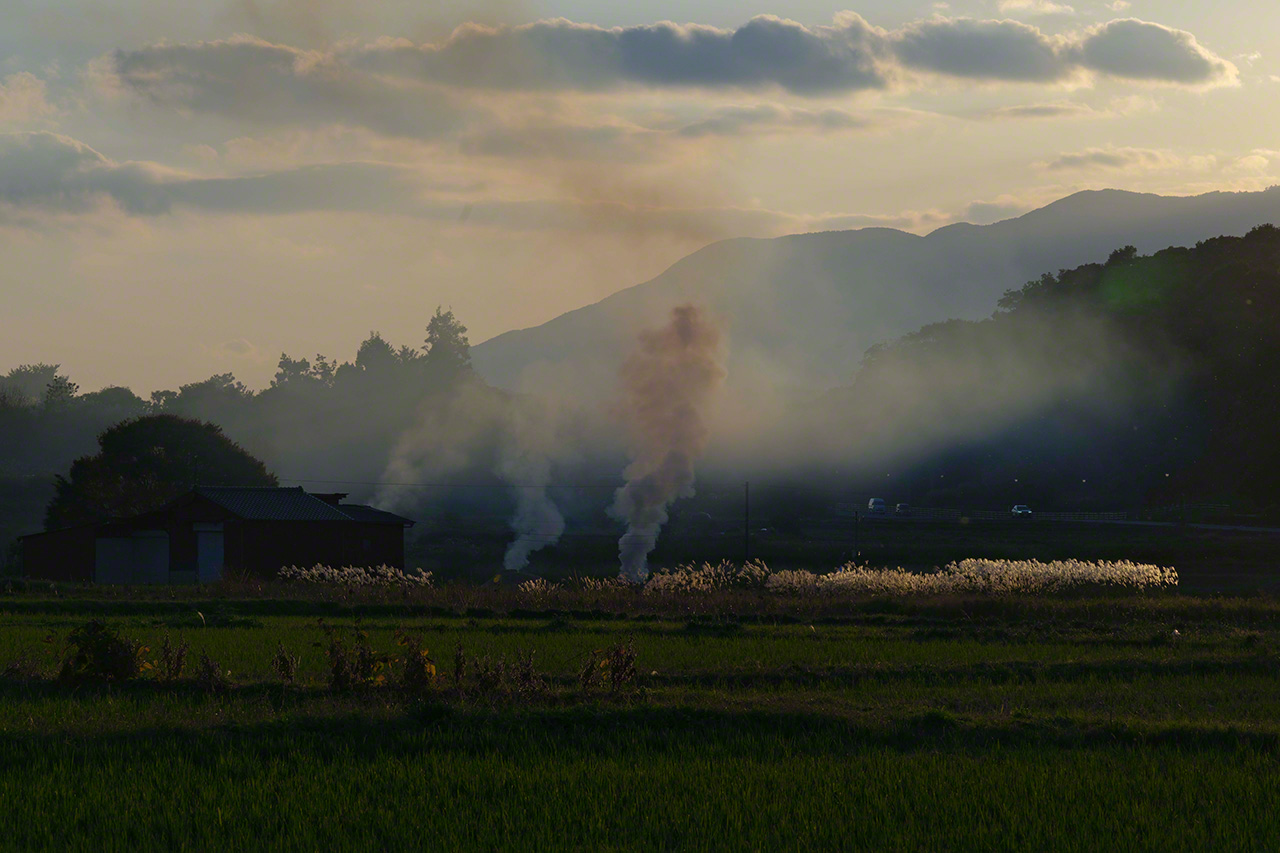
Today, fields and mountains surround Asukadera, in an area redolent with history. (© Muda Tomohiro)
Photographer Muda Tomohiro says: “When I look at the almond-shaped eyes of the Great Buddha at Asuka, which miraculously survived the conflagration all those centuries ago, I am reminded of the eyes of the stone Buddhas excavated from the site of the Longzingsi temple in Qingzhou in Shandong, China. Photographing the images at these two important Buddhist sites, one in China and the other in Japan, made a few decades apart, reminded me of the close connections that existed back then between the Shandong peninsula and the nascent Japanese state in and around Asuka.”
Across the seas, the archaic smile continues to bring light to all living beings, across vast stretches of space and time.
(© Muda Tomohiro)
Seated image of the Buddha Shakyamuni
- Height: 2.75 meters
- Date: Asuka period (ca. 593–710)
- Angoin (Asukadera)
- Important cultural asset
(Originally published in Japanese. Banner photo: The Great Buddha of Asuka, the oldest Buddhist statue in Japan. © Muda Tomohiro.)