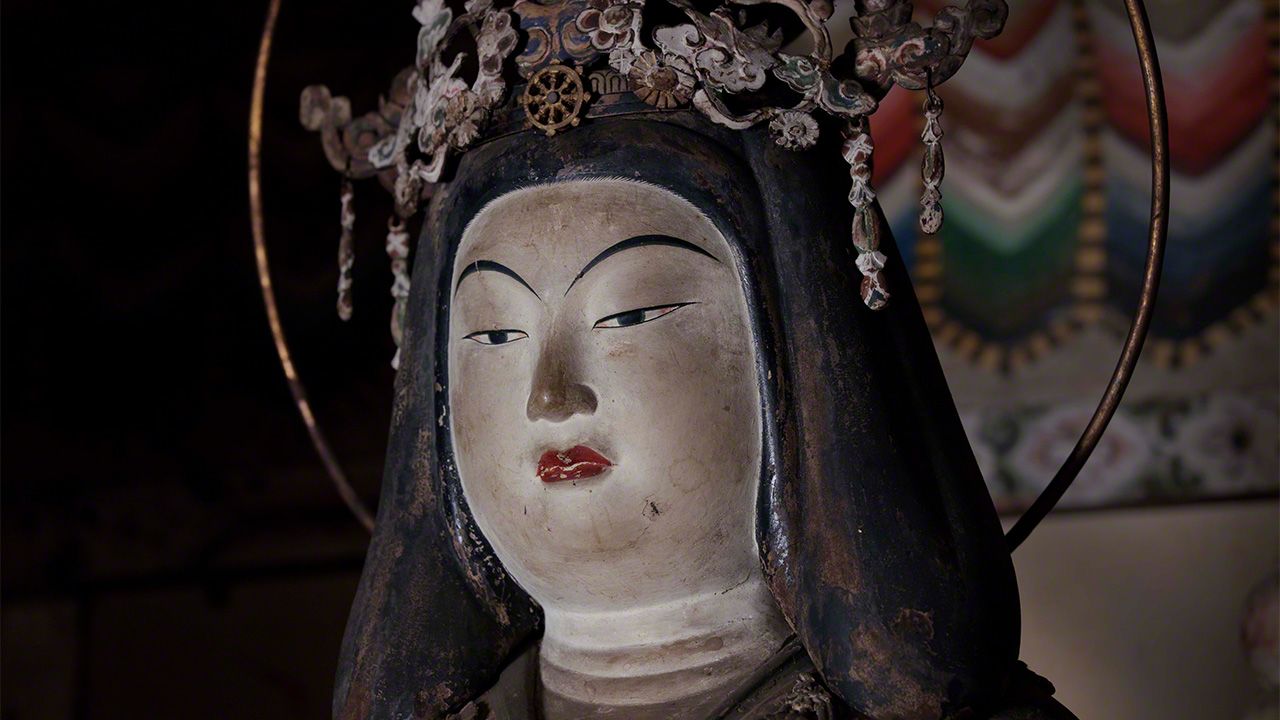
Standing Image of Kisshōten, Jōruriji, Kyoto
Culture History Images- English
- 日本語
- 简体字
- 繁體字
- Français
- Español
- العربية
- Русский
With her plump cheeks, elongated almond eyes, and pert mouth, this image of a goddess exerts an irresistible charm.
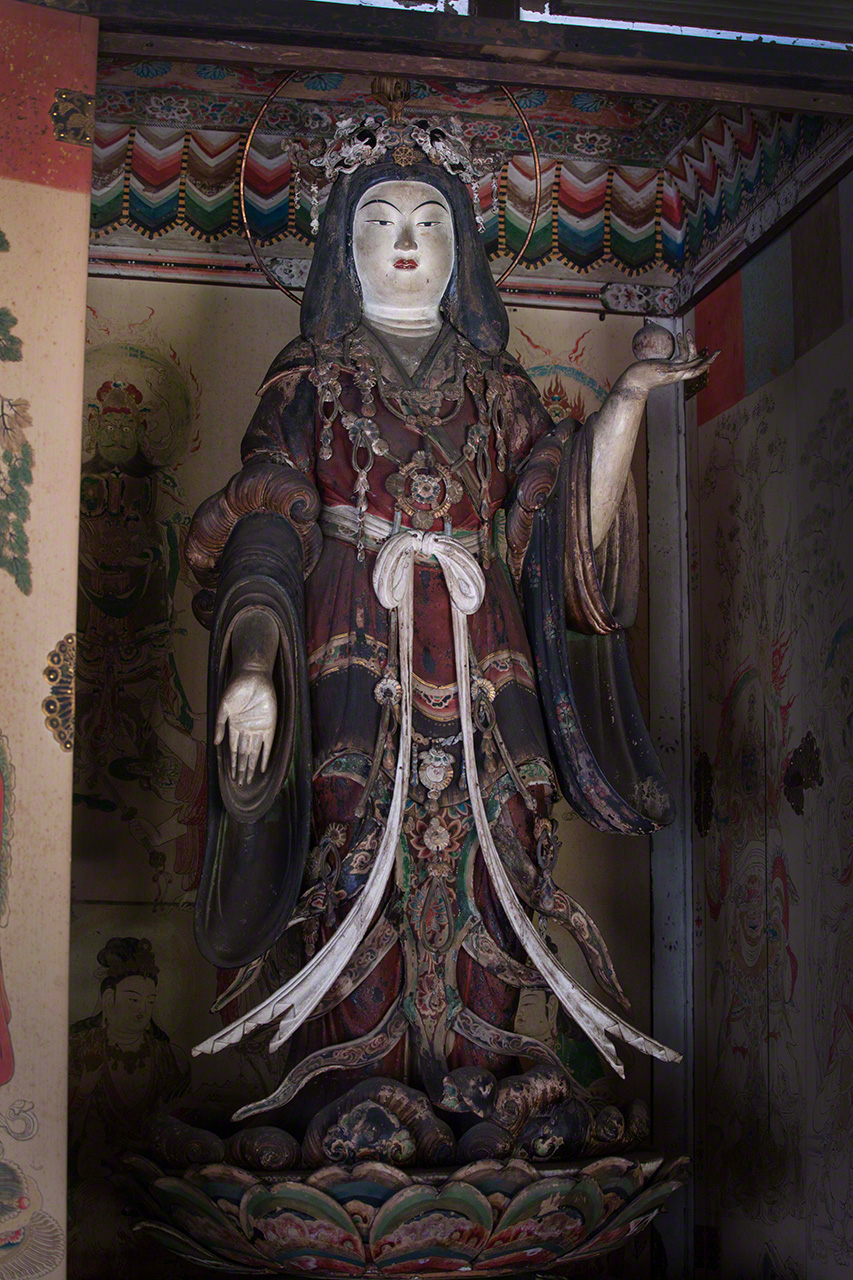
The image of Kisshōten at the temple of Jōruriji outside Kizugawa in Kyoto Prefecture derives from the goddess Lakshmi, who appears in ancient Indian mythology and in Japan is revered as the goddess of beauty and fertile harvests. The temple’s appearance today is marked by the traditions of Pure Land Buddhism, which became influential in the later years of the Heian period (794–1185). The temple’s main hall (a national treasure) enshrines a row of nine images of the Amida Buddha (also national treasures), believed to preside over the Western Pure Land paradise. Made from hinoki cypress wood using the yosegi technique, the image of Kisshōten is kept in a cabinet-like miniature shrine known as a zushi beside the large central image of Amida. Even after more than 800 years, the image shows no obvious damage and still retains its original vivid colors, thanks to its status as a hibutsu or “secret Buddha,” viewable only on certain designated days.
The zushi features seven painted panels, designated as an important cultural property. These were removed from the temple during the wave of anti-Buddhist violence (haibutsu kishaku) that spread in the years following the Meiji Restoration in 1868. They were acquired in 1889 by the Tokyo Fine Arts School, the predecessor of the current Tokyo University of the Arts, and remain in the university’s collection today. The panels at Jōruriji are faithful replicas produced by artists at the university, and they continue to protect the goddess as she has been revered for centuries.
(© Muda Tomohiro)
The image of Lakshmi wears three layered robes with a shawl draped over her shoulders. White cords tied at the front form gentle curves that fall gracefully to either side. Her right hand is elegantly lowered in the varada mudra, symbolizing the granting of wishes, while her raised left hand holds a hōju (wish-fulfilling jewel) believed to dispel worries and other obstacles to enlightenment. Thought to be modeled on the figure and dress of a Chinese noblewoman, the figure exudes an elegant grace and intelligence.
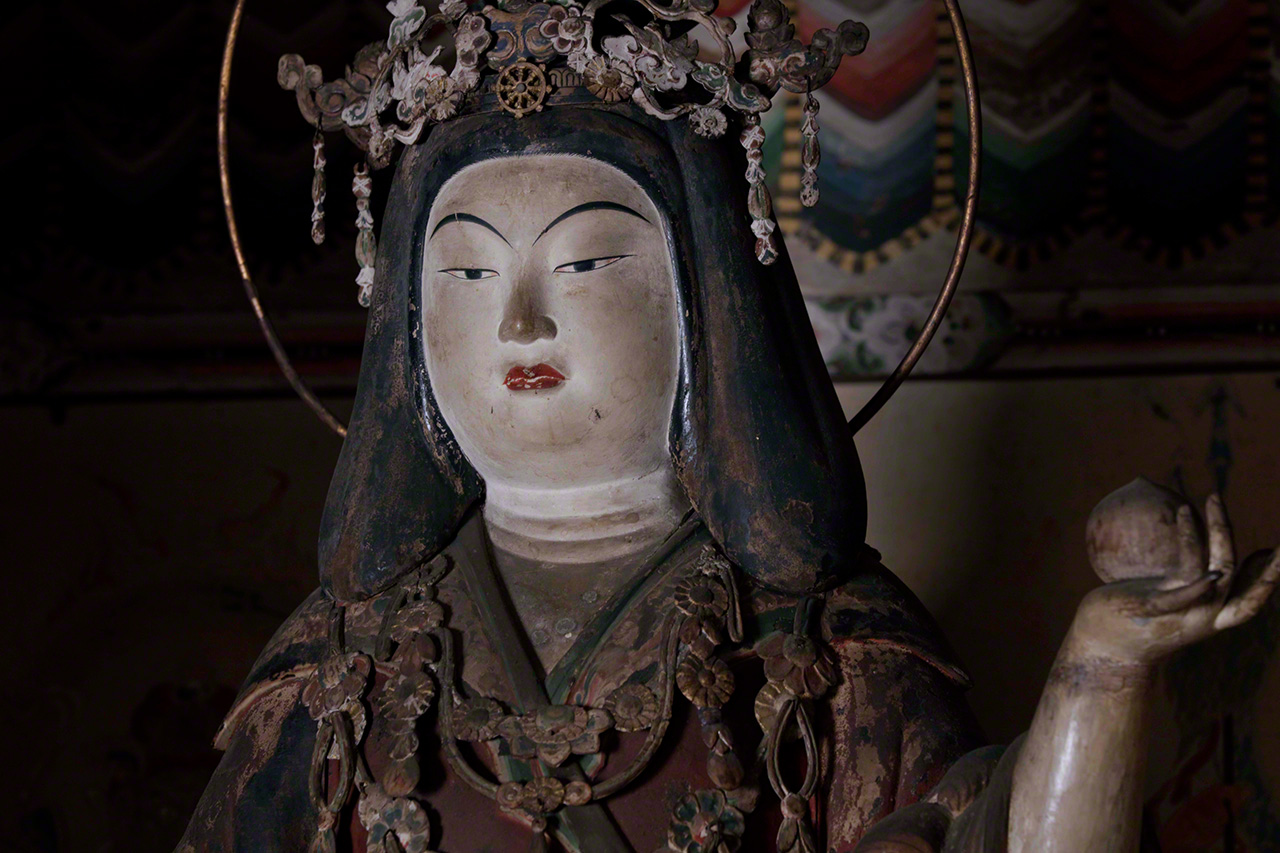
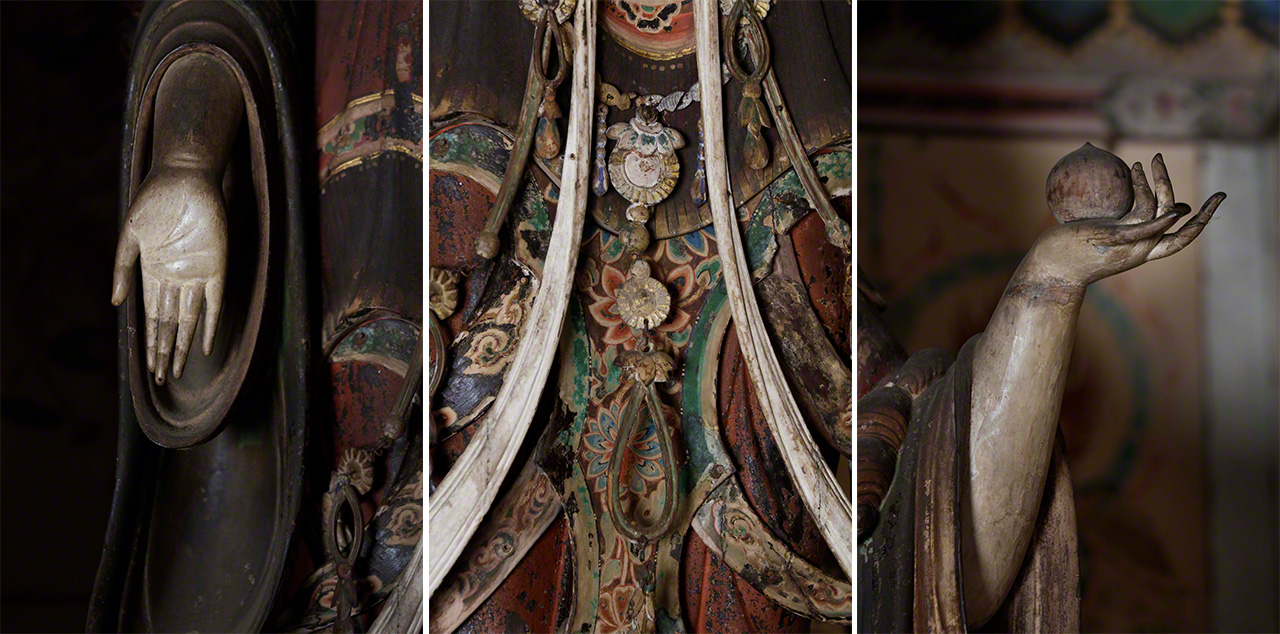
Some of the striking and beautifully rendered details of the sculpture. (© Muda Tomohiro)
The official history of the temple records that the image of Kisshōten was installed in the main hall in 1212. This date is supported by several features typical of Buddhist sculpture of the period, including the figure’s somewhat plump body and the sharply defined carving of the eyes, nose, and other facial features.
Kisshōten’s mother, Kishimojin (Hārītī) was originally a fearful demon who would capture and eat human children. Later, enlightened by Shakyamuni, she repented and became the goddess of safe childbirth, the guardian deity of mothers and their children. Photographer Muda Tomohiro says: “The gentle smile that emerges from inside the zushi as it catches the soft morning light through the shōji screens evokes the selfless love and compassion of a mother for her children. The impact is strengthened by the associations with Kishimojin, the demon mother who repented after attaining enlightenment through the Buddha’s teachings.”
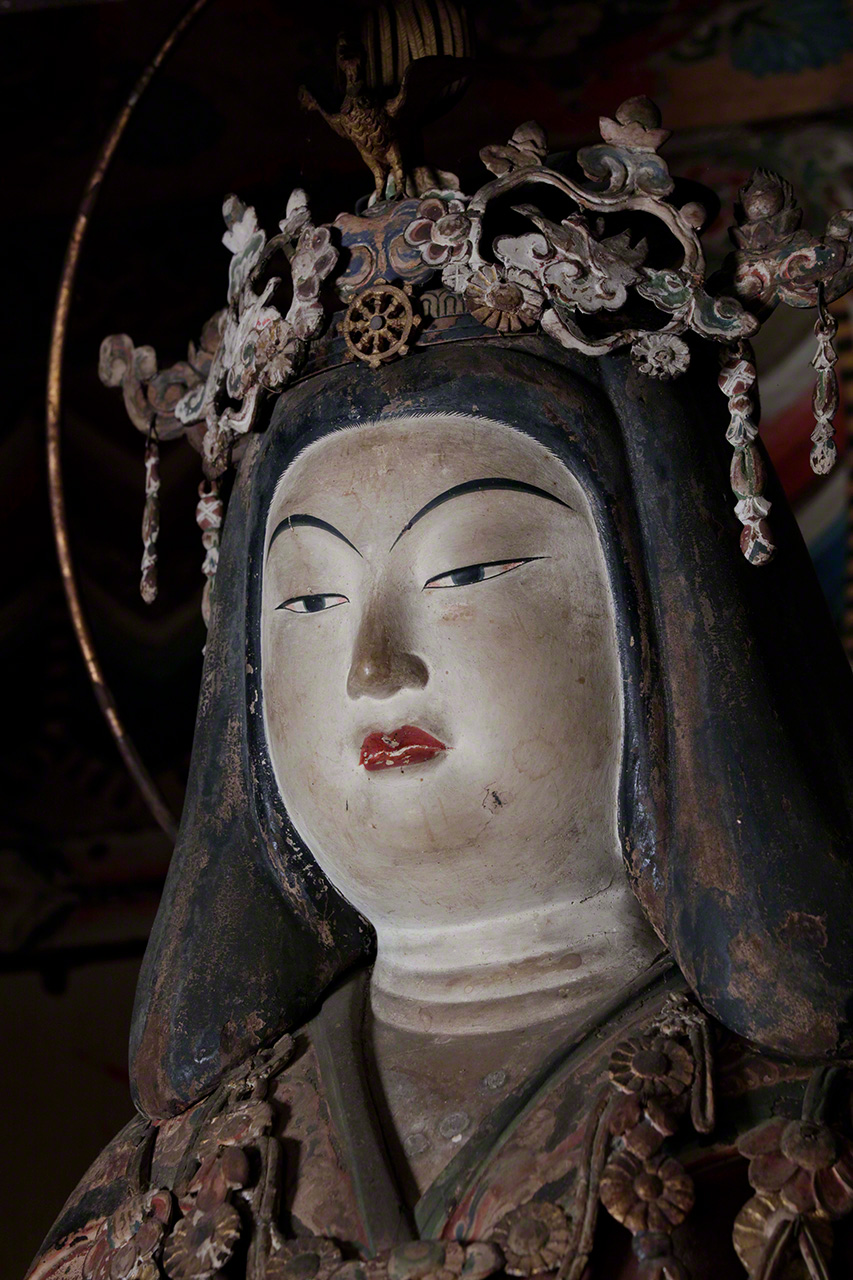
(© Muda Tomohiro)
The photographer Domon Ken, who took countless pictures of Buddhist sculptures throughout his illustrious career, was particularly fond of this image of Kisshōten: “This is perhaps the most perfect depiction of feminine beauty among all the Buddhist images in Japan. The relatively small image has a charm and impact that, once seen, are never forgotten.” With good reason, this remarkable sculpture occupies a special position, and is revered as the “peerless beauty” of Japanese religious art.
Standing Figure of Kisshōten
- Height: 0.9 meters
- Date: Kamakura period (1185–1333)
- Jōruriji (Kyoto Prefecture)
- Important cultural asset
- This image is a hibutsu (hidden image), and is open to public viewing during the following periods: January 1–15, March 21–May 20, and October 1–November 30.
(Originally published in Japanese. Banner photo: Standing figure of Kisshōten at Jōruriji temple. © Muda Tomohiro.)