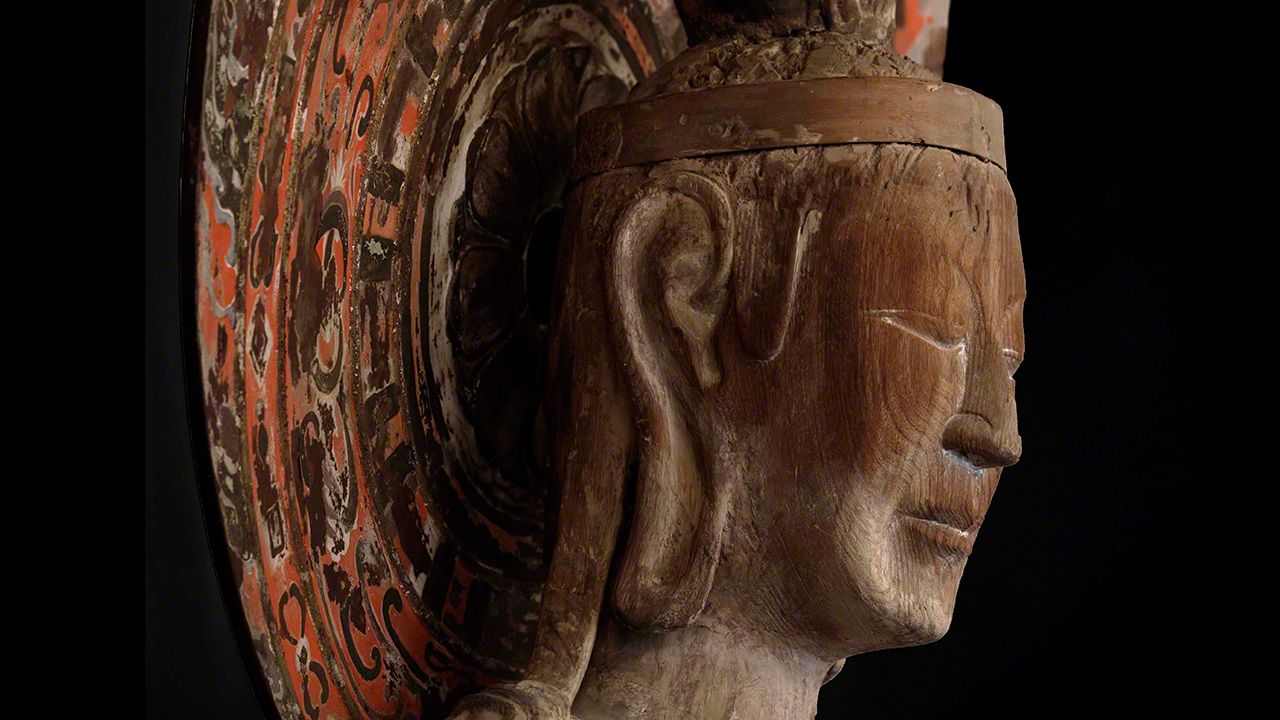
Standing Image of the Bodhisattva Kokūzō at Hōrinji, Nara
History Images Culture- English
- 日本語
- 简体字
- 繁體字
- Français
- Español
- العربية
- Русский
Hōrinji is a temple cloaked in legend, located in the Ikaruga area of Nara Prefecture—a center of early Japanese Buddhism. According to tradition, it was founded in 622 by Prince Yamashiro no Ōe to pray for the recovery of his father—legendary statesman and patron of early Japanese Buddhism, Prince Shōtoku. Nearby are three wells believed to have been dug by Shōtoku himself, which lend the temple its alternate name of Miidera, or Temple of the Three Wells. It lies just a 15-minute walk from Hōryūji, renowned as one of the oldest temples in Japan and for its deep association with Shōtoku.
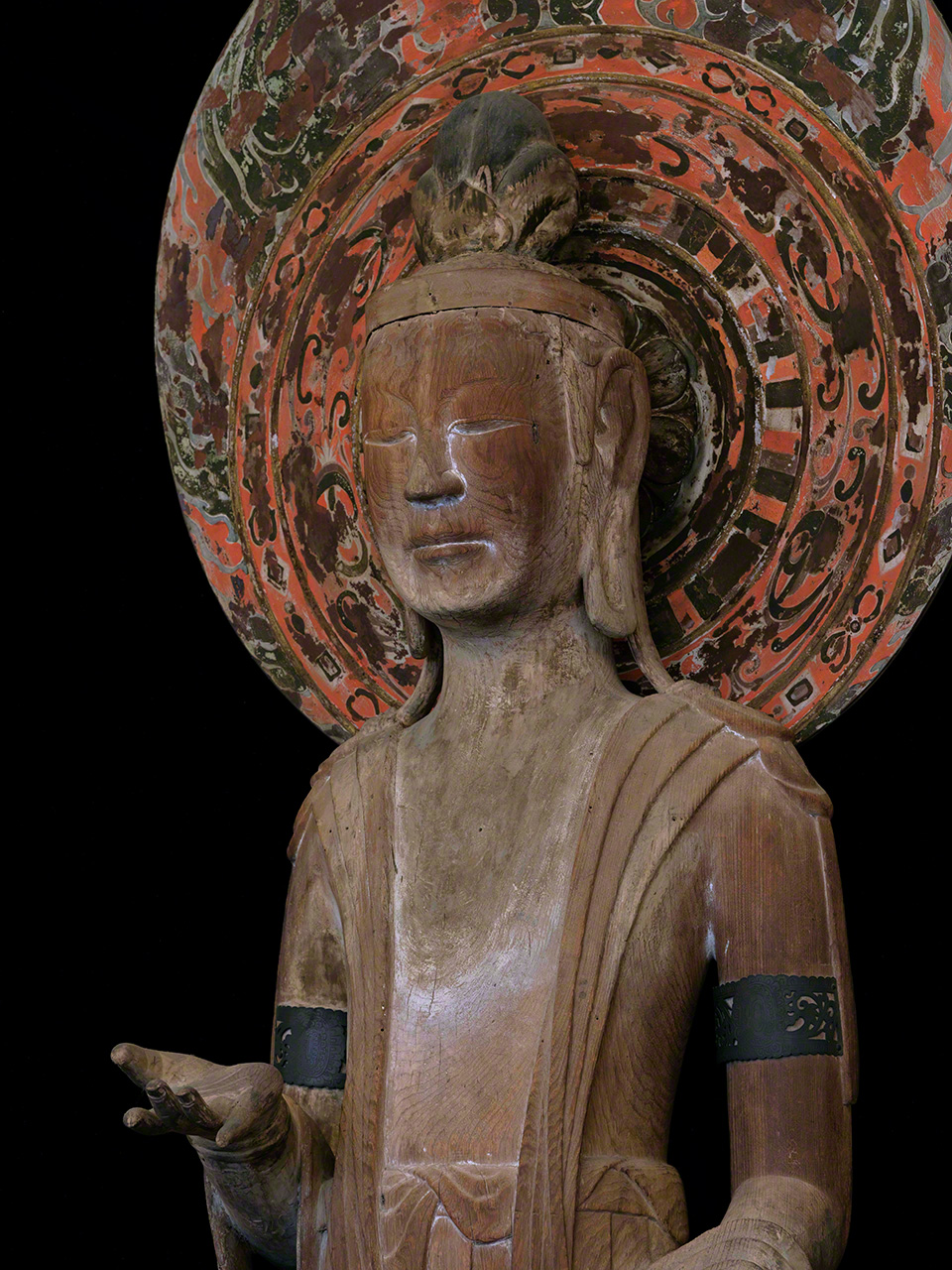
Among Hōrinji’s treasured wooden statues is one traditionally identified as the bodhisattva Kokūzō (Akasagarbha). But given its striking similarity to the famed Kudara Kannon, a national treasure housed at Hōryūji—with its left hand holding a small water vessel and its right arm bent, the palm facing the sky—scholars now believe it was originally created as a representation of Kannon (Avalokitesvara), the bodhisattva of compassion.
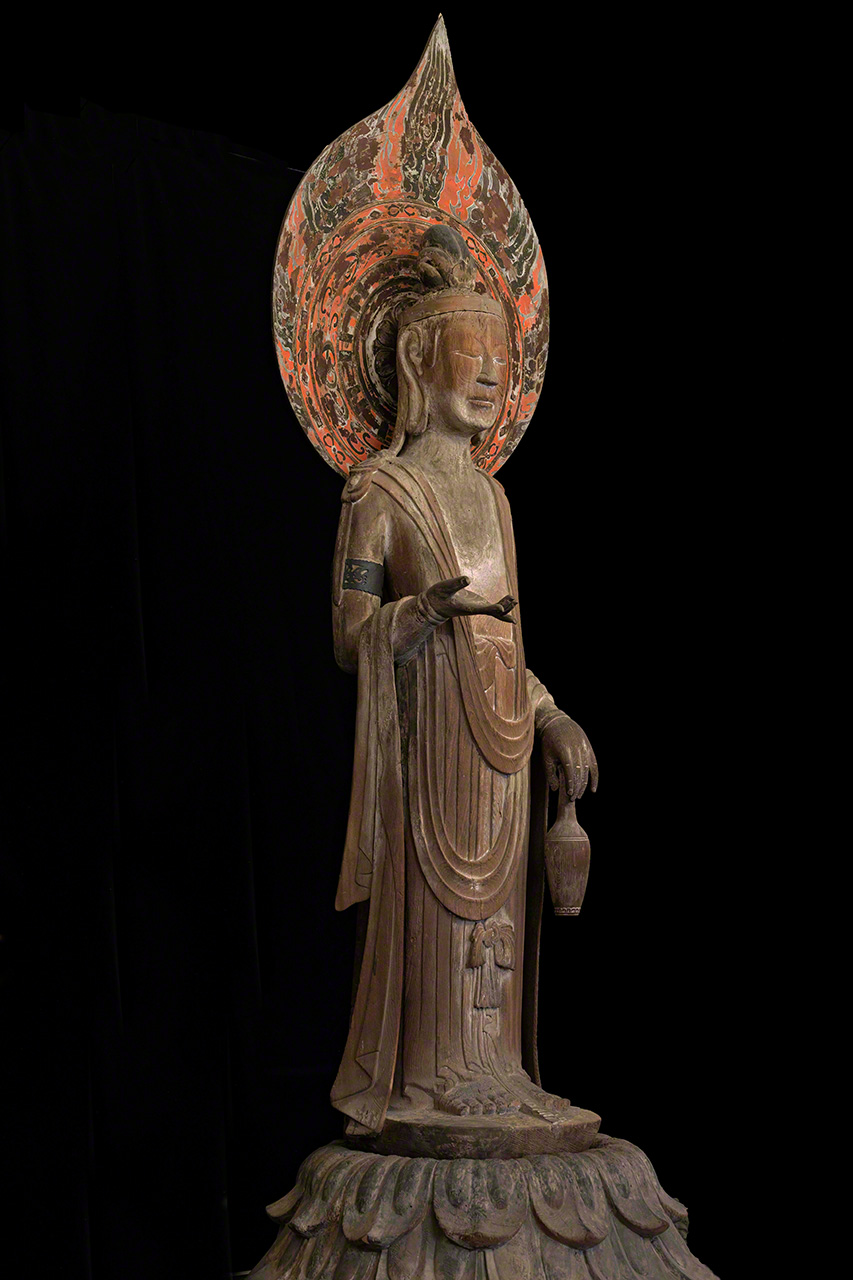
(© Muda Tomohiro)
Both the Hōrinji and Hōryūji statues are carved from a single block of camphor wood from head to pedestal and feature slender, planar silhouettes with subtle fullness around the waist. But the proportions of the Hōrinji figure differ subtly, with a slightly larger face, ears, and hands than its counterpart.
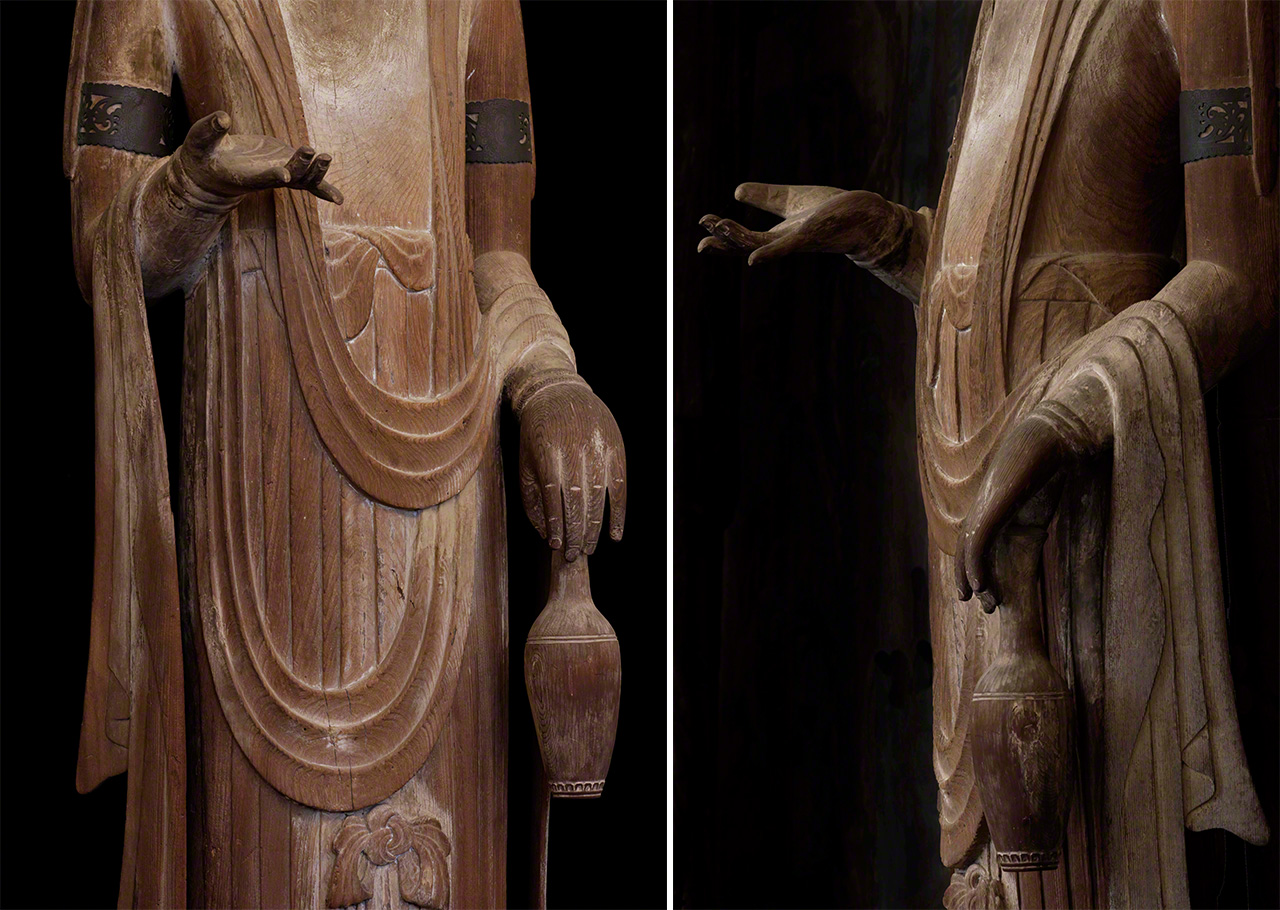
(© Muda Tomohiro)
And unlike the graceful smile of the Kudara Kannon, the lips of the Hōrinji image are drawn in a straight line. The Kokūzō figure has a more rustic appearance, with its surface worn and eyes half-closed in quiet introspection.
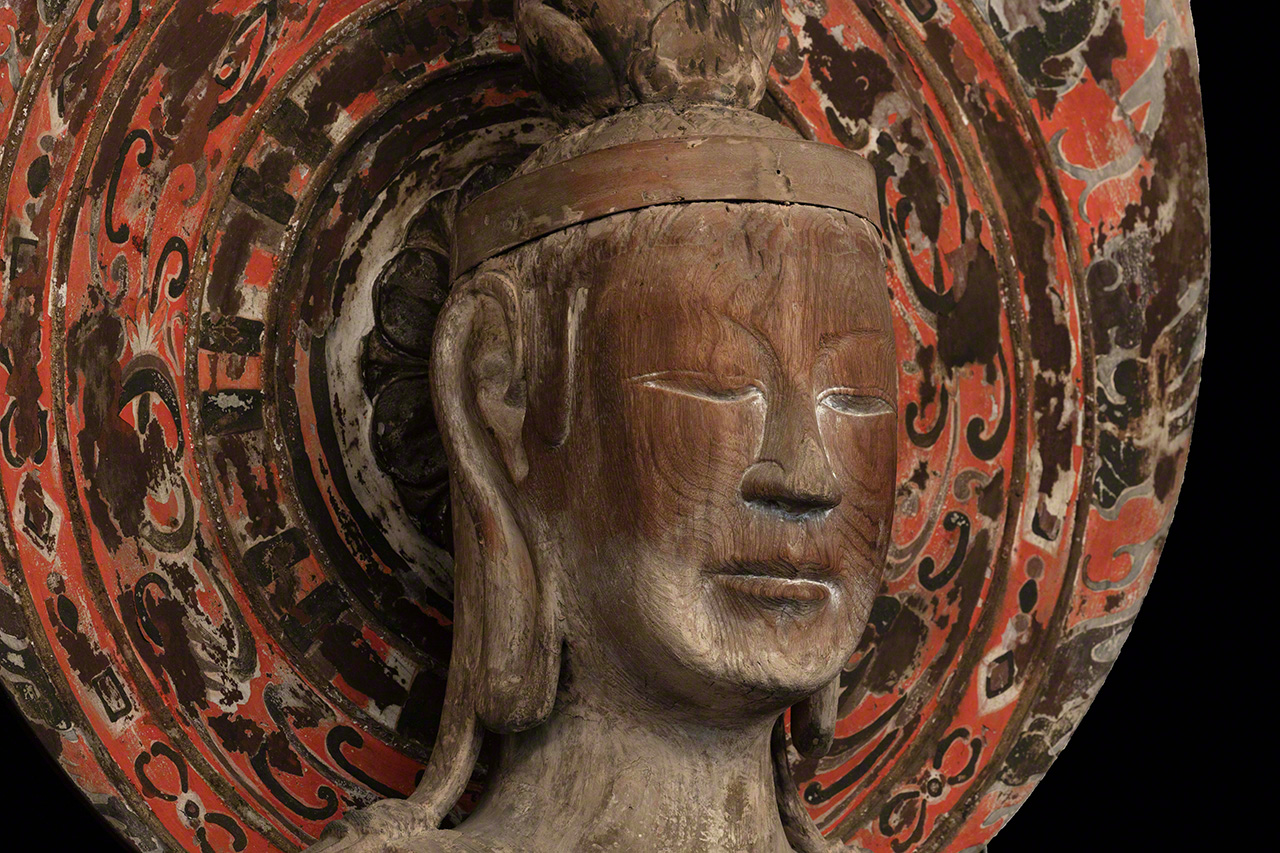
(© Muda Tomohiro)
Interestingly, the Kudara Kannon, too, was thought to be a Kokūzō through the Edo period (1603–1868). It was only in the Meiji era (1868–1912), when a crown symbolizing the bodhisattva Kannon was discovered in a temple storehouse, that the statue was renamed.
Given that Hōrinji is situated in the heart of a faith that venerates Prince Shōtoku as an incarnation of Kannon, it is not difficult to imagine that the Hōrinji figure was modeled after the statue at Hōryūji. Yet while the Kudara Kannon reclaimed its identity with the discovery of the crown, the Hōrinji statue is still known as Kokūzō.
(© Muda Tomohiro)
“I’ve never come across any other Buddhist statue with such a serene presence,” Muda Tomohiro exclaims. “The soft light from the skylight highlights its breathtaking beauty. What makes it so unique is that you can almost feel its quiet breath as it gently envelops you, even when you’re peering at it through a lens some distance away.”
Standing Image of the Bodhisattva Kokūzō
- Height: 1.75 meters
- Date: Asuka period (ca. 593–710)
- Hōrinji (Nara Prefecture)
- Important cultural asset
(Originally published in Japanese. Banner photo: The standing image of the bodhisattva Kokūzō. © Muda Tomohiro.)