Ten Exceptional Utensils from Kappabashi, Japan’s Kitchen
Iidaya: Quintessential Japanese Kitchen Products On Offer in Tokyo’s Kappabashi
Culture Guide to Japan Food and Drink- English
- 日本語
- 简体字
- 繁體字
- Français
- Español
- العربية
- Русский
Visitors Flock to Japan’s Leading Kitchenware Town
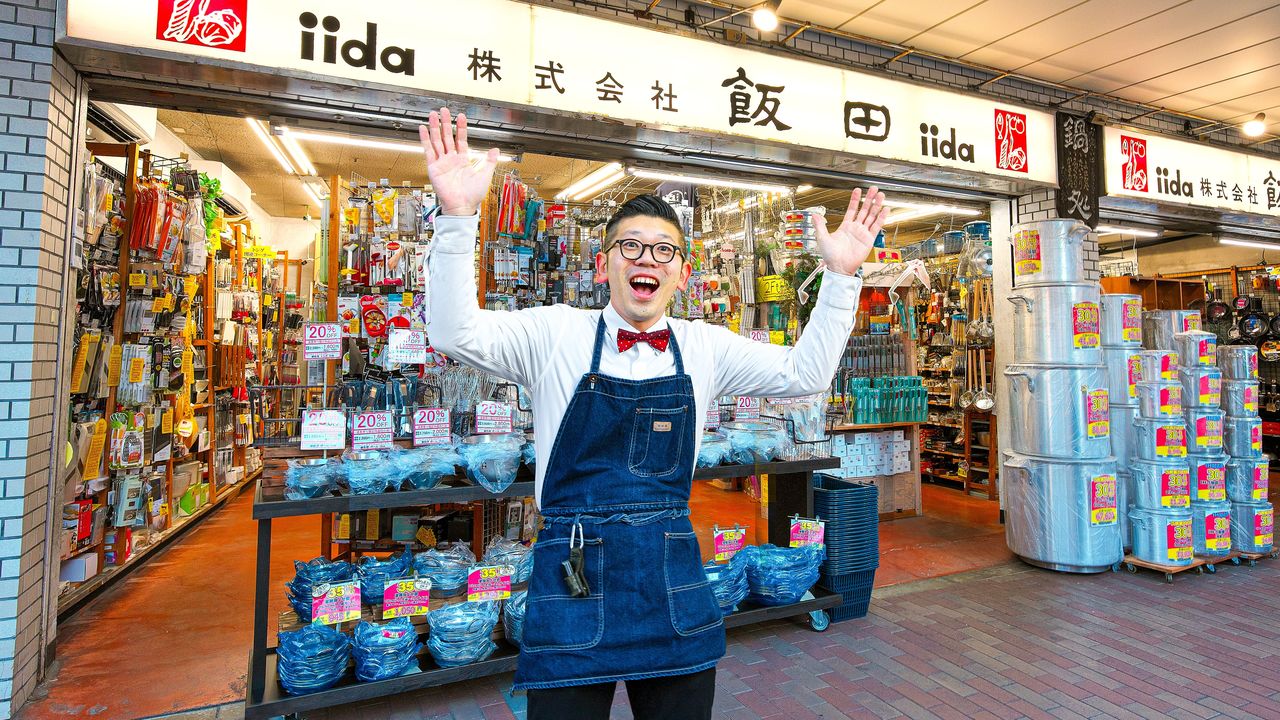
Located between Asakusa and Ueno, two of northeastern Tokyo’s top tourist destinations, is Kappabashi Dōgugai, a large shopping area dedicated to kitchenware. The main lane here stretches 900 meters, with nearly 170 food- and cooking-related specialist shops lined up along both sides. Standing on a corner around midway down is the cooking utensil specialist shop Iidaya, founded in 1912.
Iida Yūta, the sixth-generation owner of Iidaya, takes a very unconventional approach to the store’s design. He actively visits exhibitions and trade shows so he can test out new products. If he can envision the delight on the faces of customers discovering them on his shelves, he purchases them on the spot. Iidaya is packed from floor to ceiling with more than 8,500 types of kitchen goods. The grater section alone features 250 sort of tool. But Iida says, “That still isn’t enough.”
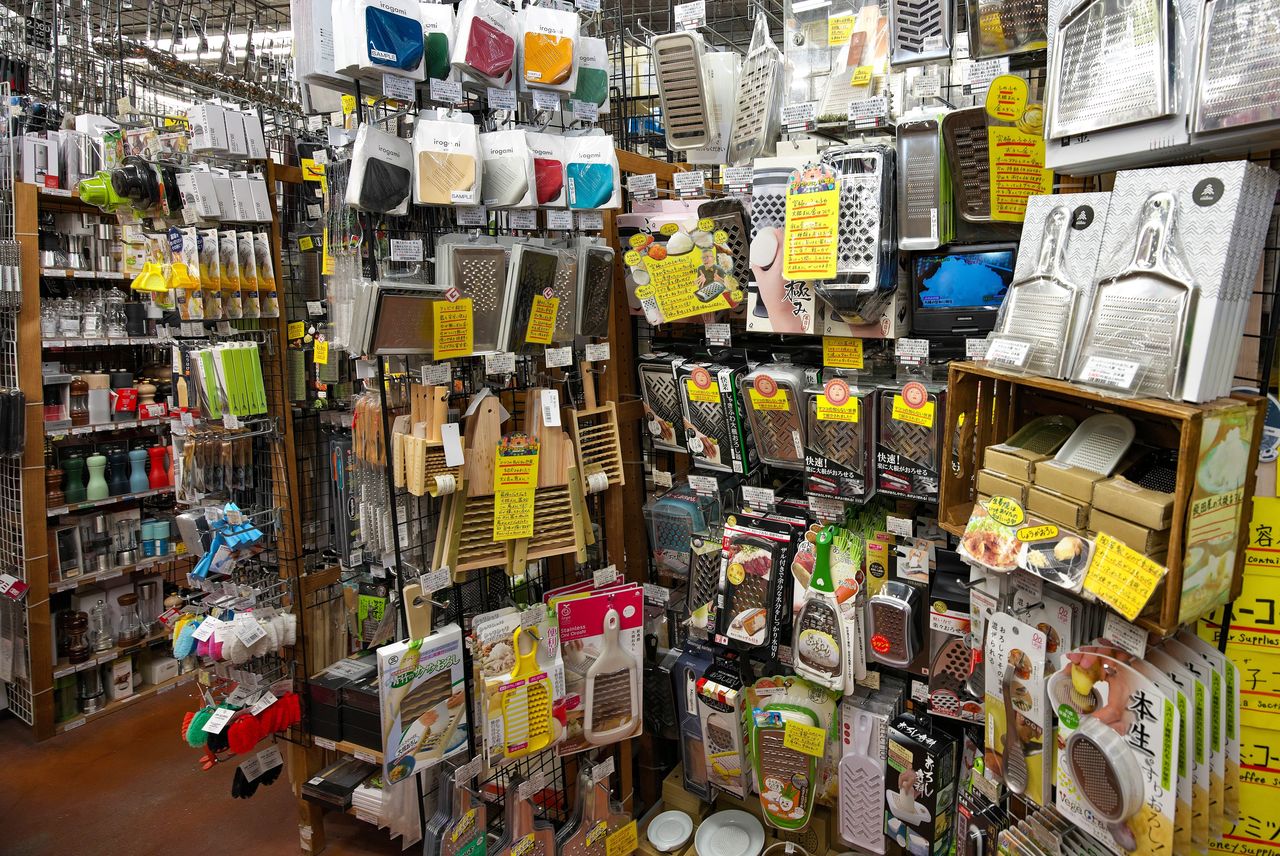
The grater section. Each product has its own yellow sign describing its features. (© Nomura Kazuyuki)
The staff carefully write down every customer request in their notebooks, no matter how niche, right down to the slightest mention of a product a shopper hoped to see on the shelves. The items stocked based on customer feedback invariably sell well. In this way, the product lineup has expanded, with the focus on meeting any demand a potential customer might have. If a product is not available on the market, Iida works with manufacturers to have it developed. Such originally designed products, based on users’ concepts, are now the store’s signature items.
Visitors to Japan are flocking to Kappabashi, where Iidaya is located. According to Iida, the area used to be aimed “entirely at professionals.” Around 15 years ago, though, Kappabashi began being featured in the media as a “mecca for kitchenware,” and ordinary people who love cooking started visiting too. But it was still rare to see overseas tourists at this point.
”Even ten years ago, I’d only be asked maybe once a year to arrange a tax-free purchase,” recalls Iida. “At the time, most of my overseas customers were from nearby countries like China, South Korea, and Taiwan.”
There was a period when the food replicas that appear in restaurant display cases in particular were sought after by inbound tourists. Today, though, the entire area has become a tourist destination, with tableware stores, confectionery tool shops, and knife shops all doing a roaring trade.
According to Iida, “The number of visitors to Japan seems to have skyrocketed after the end of the COVID-19 pandemic. Many come from Western countries like France, Spain, and the United States, as well as from Australia and Brazil. More recently, we’ve also seen an increase in visitors from the Middle East and Southeast Asia.”

Iida Yūta, speaking at a cookware research session. (© Nomura Kazuyuki)
What Makes Japanese Cookware Exceptional?
Originally, most people would stop by Kappabashi as an extension to sightseeing in Asakusa, but more recently there has been a visible increase in customers coming into Iidaya to buy specific items by name. This is because photography is allowed in the store. Overseas visitors share images of the product displays and their shopping experiences on social media. Some are well-known online influencers, so when their followers see the posts, they may later visit the store too.
“Social media has a huge impact these days. We even get people coming in asking if we have a cutting board that appears in a particular scene from a Japanese movie or TV series that has been broadcast overseas. It’s surprising for us how well-informed they are.”
Nonetheless, while it may be understandable if people are seeking something specific for making Japanese cuisine, there must be similar kitchen goods available in their own country. Many will most likely already have a utensil that does the same job. So why come all the way to Japan to buy them?
Iida has an answer: “One reason is the high quality that you can only get from ‘Made in Japan.’ As expected, Japanese-produced goods offer excellence and durability.”
Another attraction is the sheer variety available. When customers learn how many different types there are of a single utensil at Iidaya, they are fascinated, and in many cases surprised enough to exclaim: “That’s crazy!”
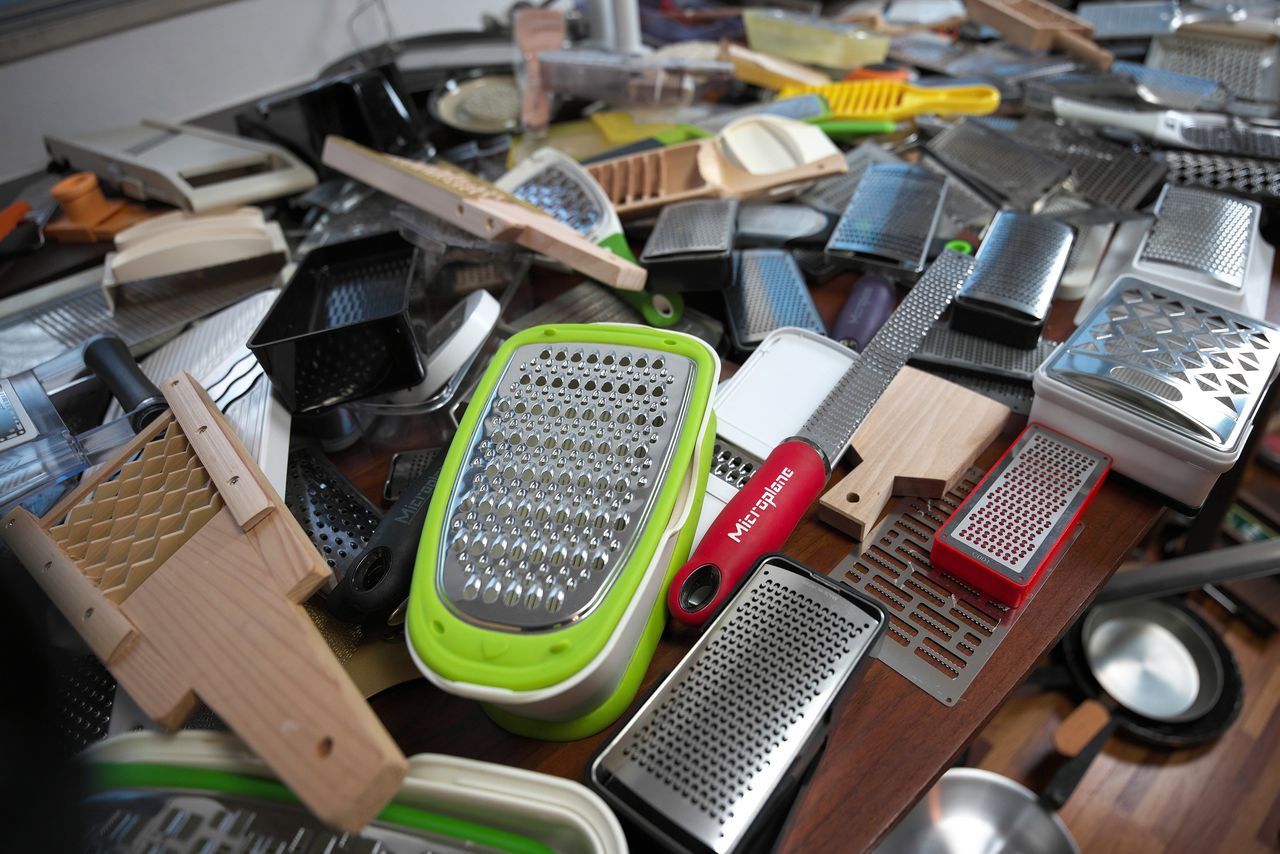
Some of the dozens of graters that Iida ordered for product comparison. (© Nomura Kazuyuki)
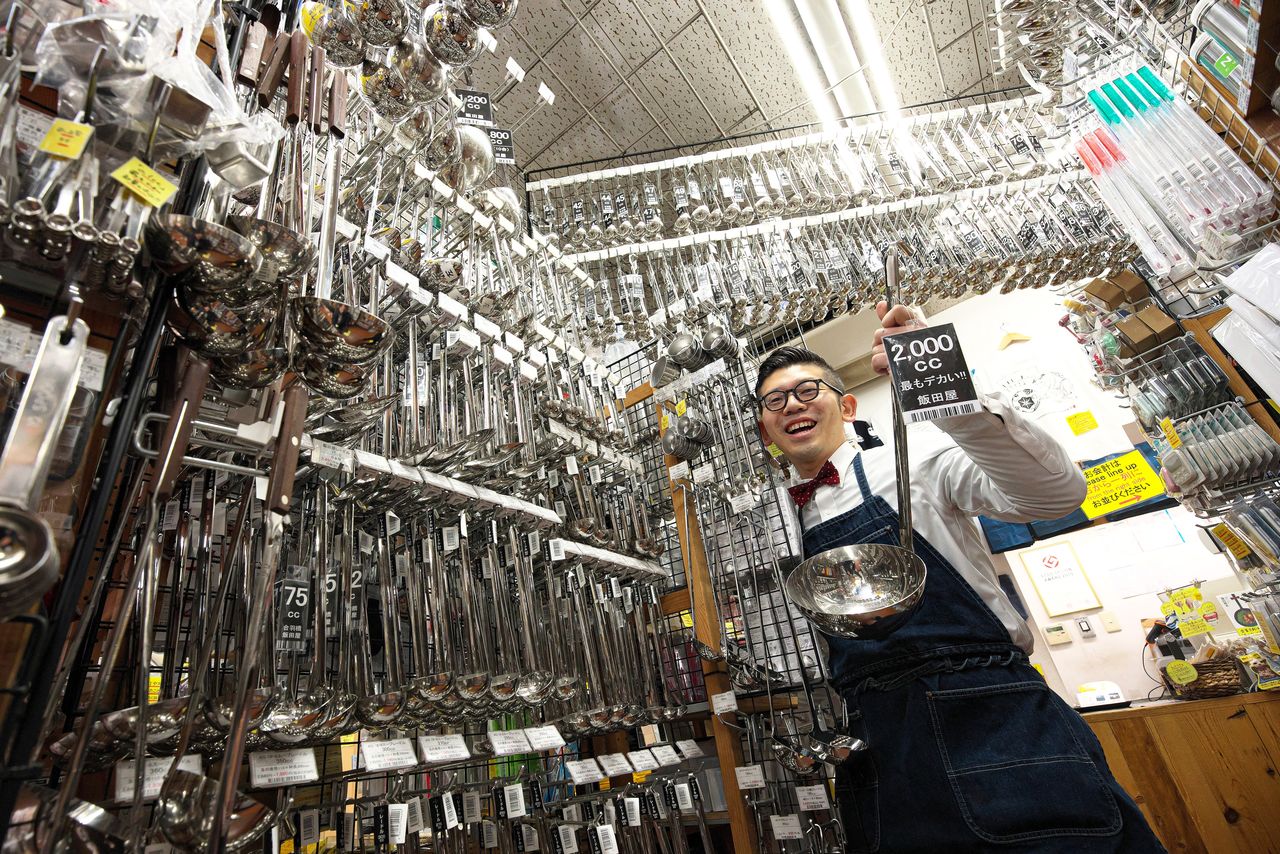
Ladles ranging in size from 1 cc to 2,000 cc are original Iidaya designs. Orders for them stream in from all over the world. (© Nomura Kazuyuki)
Through his research into cooking utensils and overseas info-gathering tours, Iida came to feel that in Europe and the United States, no matter how difficult a tool might be to use, “the consumer ends up adapting to it.” In Japan though, he believes that “tools are adapted more toward the users”—for example, by making them easier to use even with smaller hands, or greppable by left-handers as well. Manufacturers and product orderers bring their ingenuity to bear to improve products so that they can meet even niche demands.
“We create our goods with the user in mind,” says Iida. “We want them to be easier to use. This is why we have such a wide variety of utensils. Another factor is the large number of manufacturers. I believe it’s this unique attention to detail, characteristic of Japan’s expert craftmanship, that attracts interest from overseas.”
Cooking utensils can be found everywhere, from ¥100 shops to home improvement centers and department stores. That’s why Iidaya stocks a large range of items that meet specific needs, rather than just commonplace products. Seeing the delighted faces of customers when they announce “This is just what I wanted!” is a joy for Iidaya too.
Ten Utensils Sought by Overseas Visitors
- Oroshigane: Traditional Japanese Graters for Every Ingredient on Your Plate
- Suribachi and Surikogi Mortars and Pestles
- Onigiri Shapers and Makisu Sushi Rollers
- Peelers and Slicers
- Tetsubin and Chakoshi Teapots and Strainers
- Donabe and Other Cooking Pots
- Frying Pans
- Tamagoyaki Square Pans and Cooking Chopsticks
- Cutting Boards
- Soy Sauce Dispensers and Miso Muddlers
(Originally published in Japanese. Banner photo: Iida Yūta, the sixth-generation president, standing in front of Iidaya. © Nomura Kazuyuki.)