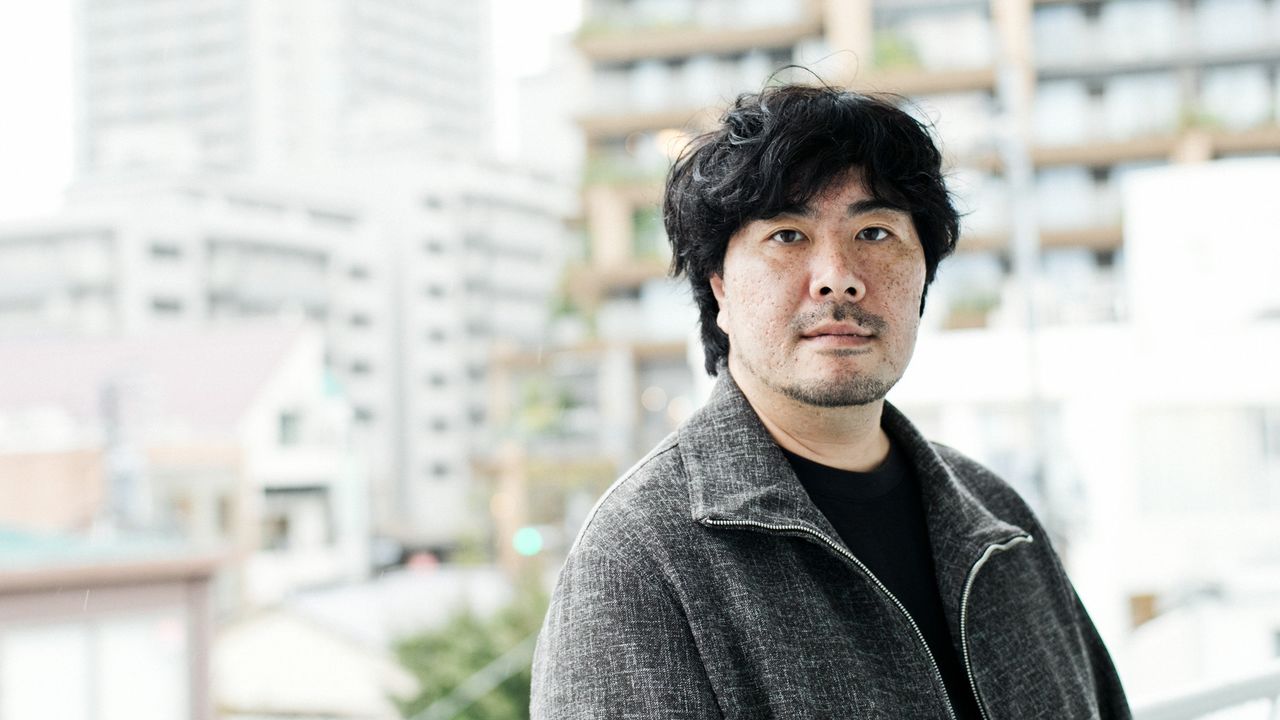
Fujimoto Akio’s “Lost Land”: A Story of Rohingya Child Refugees on a Dangerous Journey
Cinema Society Politics
Fujimoto Akio
Film director. Born in Osaka Prefecture in 1988. His debut Passage of Life (2017), depicting a Burmese family living in Japan, won the Spirit of Asia Award and the Best Asian Future Film Award at the Tokyo International Film Festival. Along the Sea (2021), portraying Vietnamese technical intern trainees in Japan, received the Shindō Kaneto Award (Gold Prize) and the Ōshima Prize at Pia Film Festival.
- English
- 日本語
- 简体字
- 繁體字
- Français
- Español
- العربية
- Русский
The Rohingya: Stateless and Oppressed
The Rohingya people are a Muslim minority who settled in the western Myanmar state of Rakhine. Myanmar’s majority Bamar ethnicity makes up some 70% of country’s population, with the remaining 30% divided between dozens of small minority groups, making it a varied, multiethnic society. However, under Myanmar’s citizenship law, the Rohingya are not counted among the 135 officially recognized groups. Indeed, they are not considered citizens at all, and the majority are completely stateless.
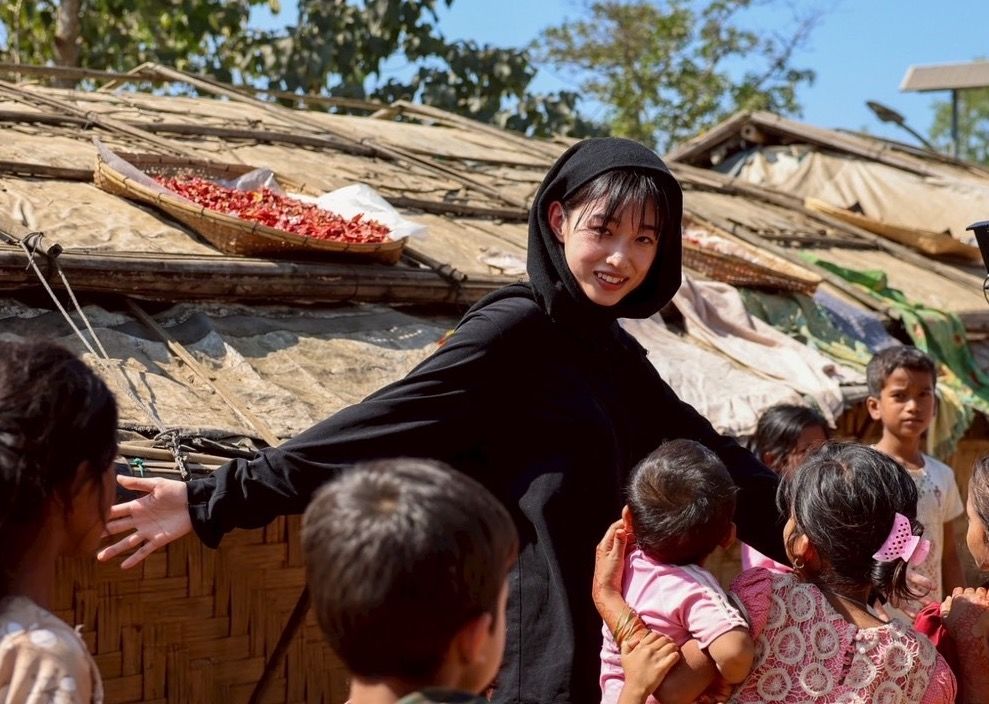
Actress Kawai Yūmi, who narrates the Japanese trailer, visited a Rohingya refugee camp in Bangladesh with director Fujimoto Akio in January 2026. (© 2025 E.x.N K.K.)
Rakhine State has been the site of conflict between Buddhists and Muslims for decades. The fighting has driven thousands of Rohingya from their villages, many crossing the border into Bangladesh. In 2016 and 2017, the Myanmar military launched major offensives there against Rohingya militants, resulting in countless casualties. Estimates say more than 700,000 Rohingya fled to Bangladesh in that period, and as of March 2026, the United Nations High Commissioner for Refugees says that the number in refugee camps has swelled to over 1.2 million. There is a constant stream of those seeking to escape appalling conditions in the camps and make the perilous journey to Malaysia or Indonesia by boat, where many die in accidents at sea.
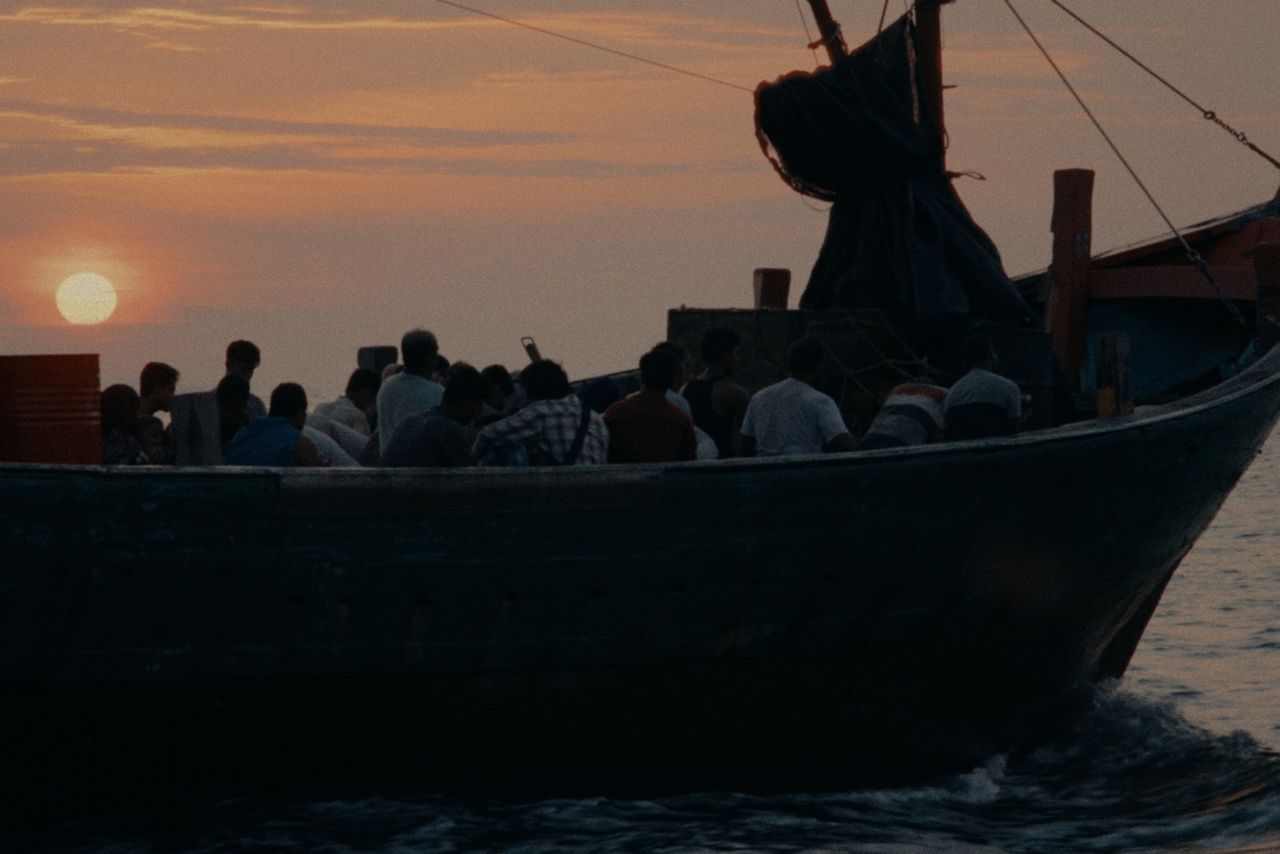
Scene from Lost Land. A boat takes on far more refugees than can safely board and begins the perilous, days-long journey. (© 2025 E.x.N K.K.)
Lost Land, directed by Fujimoto Akio, weaves this real-life background into a story full of drama. The main characters are a brother and sister living in a Rohingya refugee camp: five-year-old Shafi and nine-year-old Somira. Their aunt takes them to a broker to board a ship to join relatives in Malaysia, but the journey is filled with difficulties.
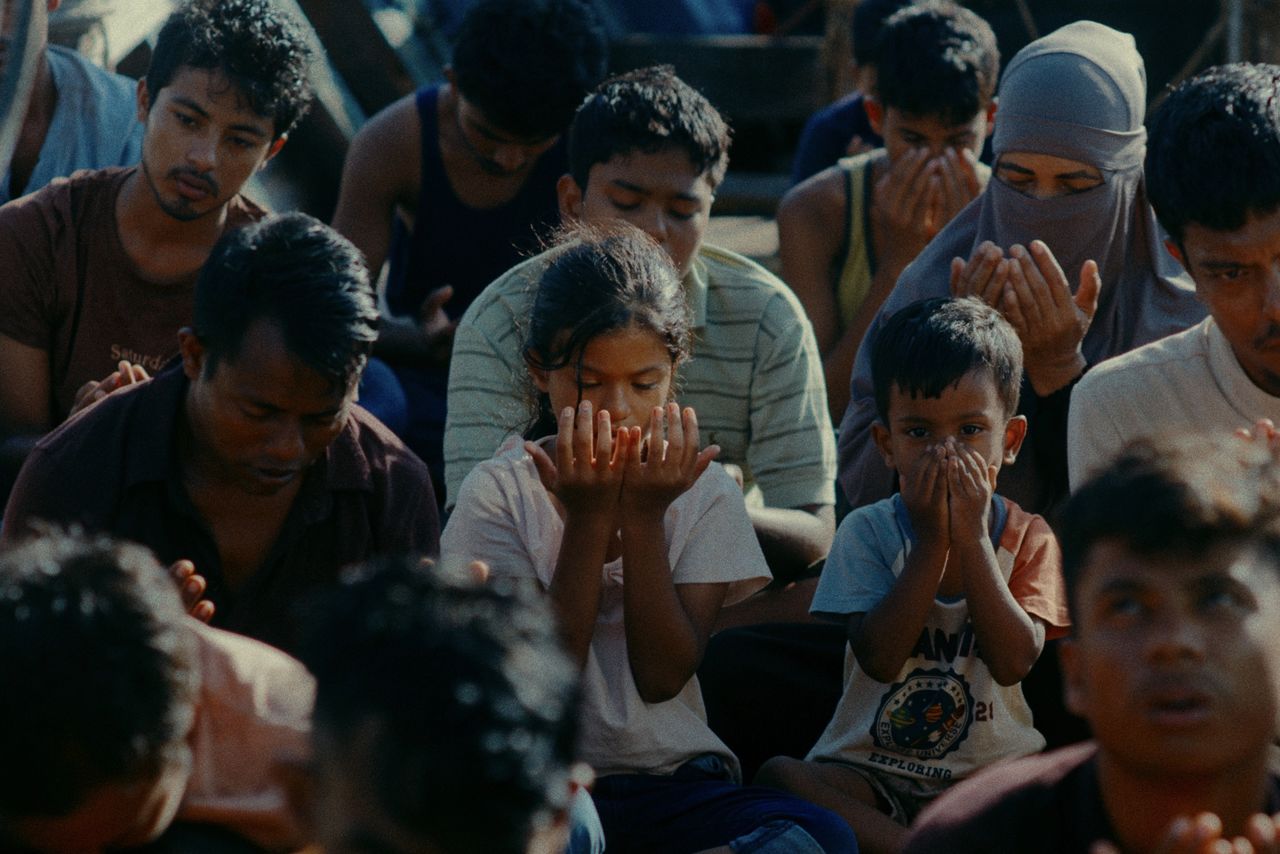
Somira (center) and Shafi, next to her, join the adults for prayer on the deck of the refugee ship. (© 2025 E.x.N K.K.)
Connecting with Myanmar
Fujimoto’s first encounter with Myanmar came over a decade ago. He happened to hear about a project to make a film there and he volunteered to join in. Knowing nothing of the country, he went on his first research trip in 2013. The project ended up falling through, but he used what he learned in making his first feature-length film. The idea of including the story of the Rohingya in his work came early.
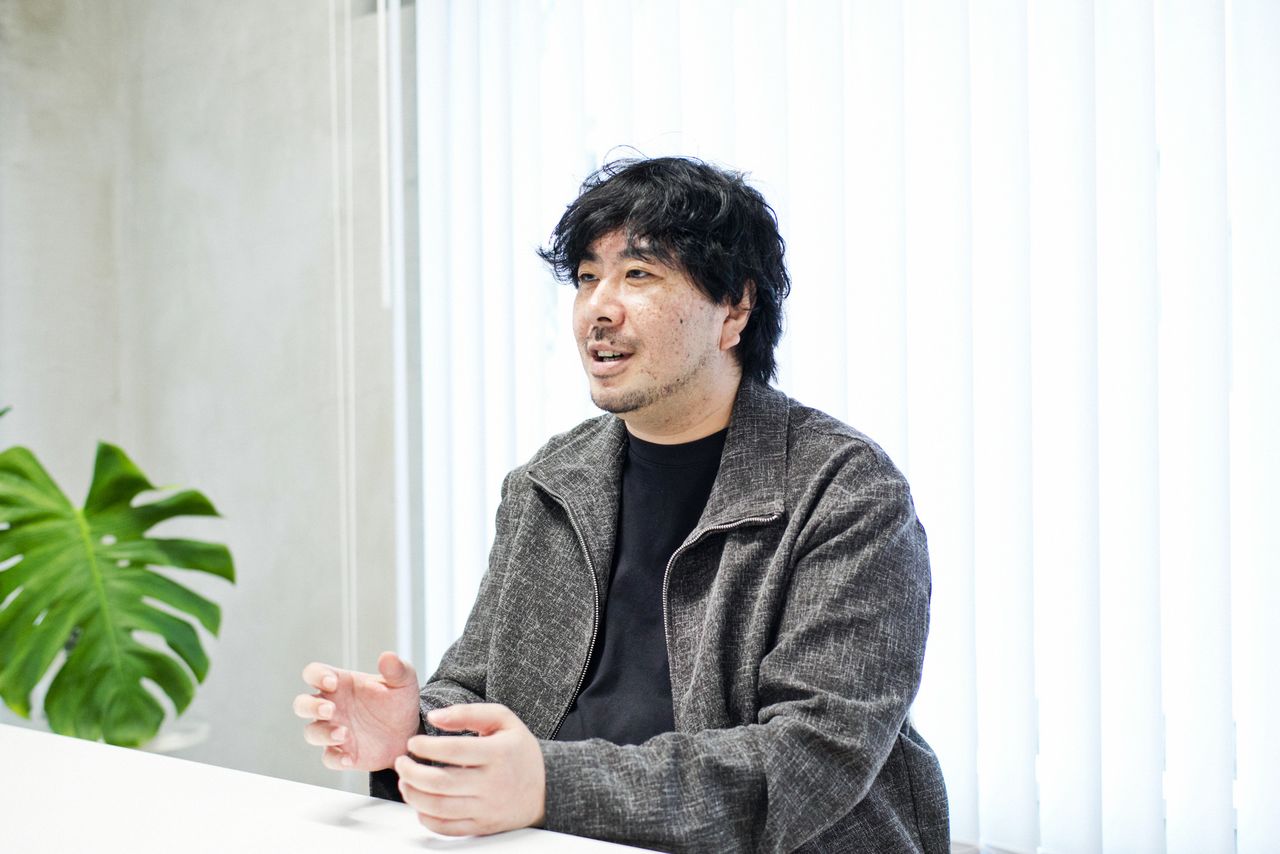
(© Igarashi Kazuharu)
“I interviewed Burmese people living in Japan and many of them had mentioned the Rohingya. All negative things, like ‘Stay away from them’ or ‘If I see one on the street, I’ll take him out.’ But all it did was make me curious about the Rohingya.”
Even so, when he did manage to make his first feature, Passage of Life, the Rohingya played no part. It was a story about a family from Myanmar applying for refugee status to live in Japan.
Right around the time he finished filming his first piece, he met and married a Burmese woman. His connection with Myanmar deepened further, and eventually he began living and working there. That period was also when the National League for Democracy party, led by Aung San Suu Kyi, won control of the government in 2015, and Myanmar began to break free of the military junta that had controlled it for so long.
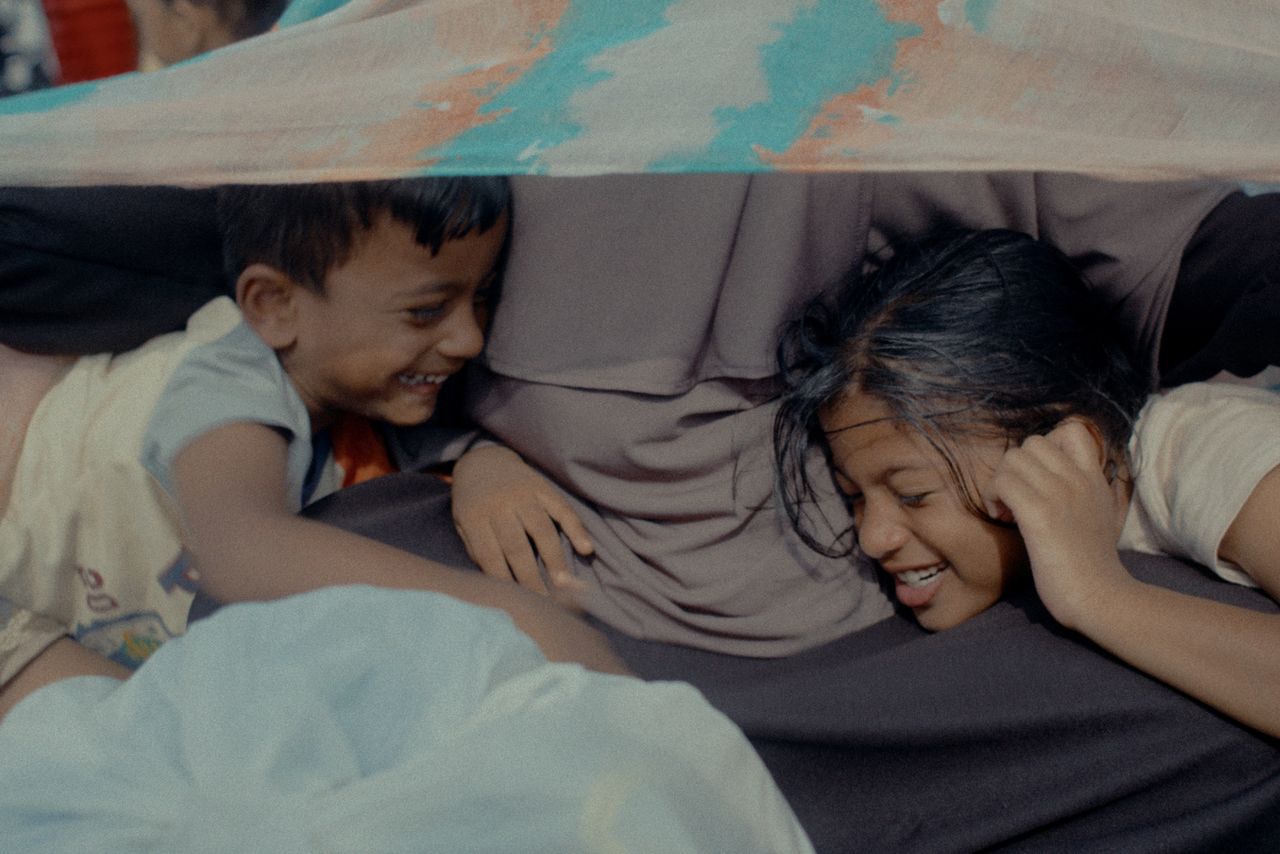
Somira and Shafi are siblings in real life. (© 2025 E.x.N K.K.)
“The nation began to improve, little by little, and it started to thrive as foreign companies began to station more employees there. But even as that change came, there was a massacre of Rohingya in 2017. And no one wanted to talk about the fact that the same country could have both things happen. It was like you couldn’t talk about it. It was so odd.”
Aung San Suu Kyi, who was state counsellor at the time, opposed the military, but even she tolerated its persecution of the Rohingya, at the same time that it earned harsh criticism from the international community.
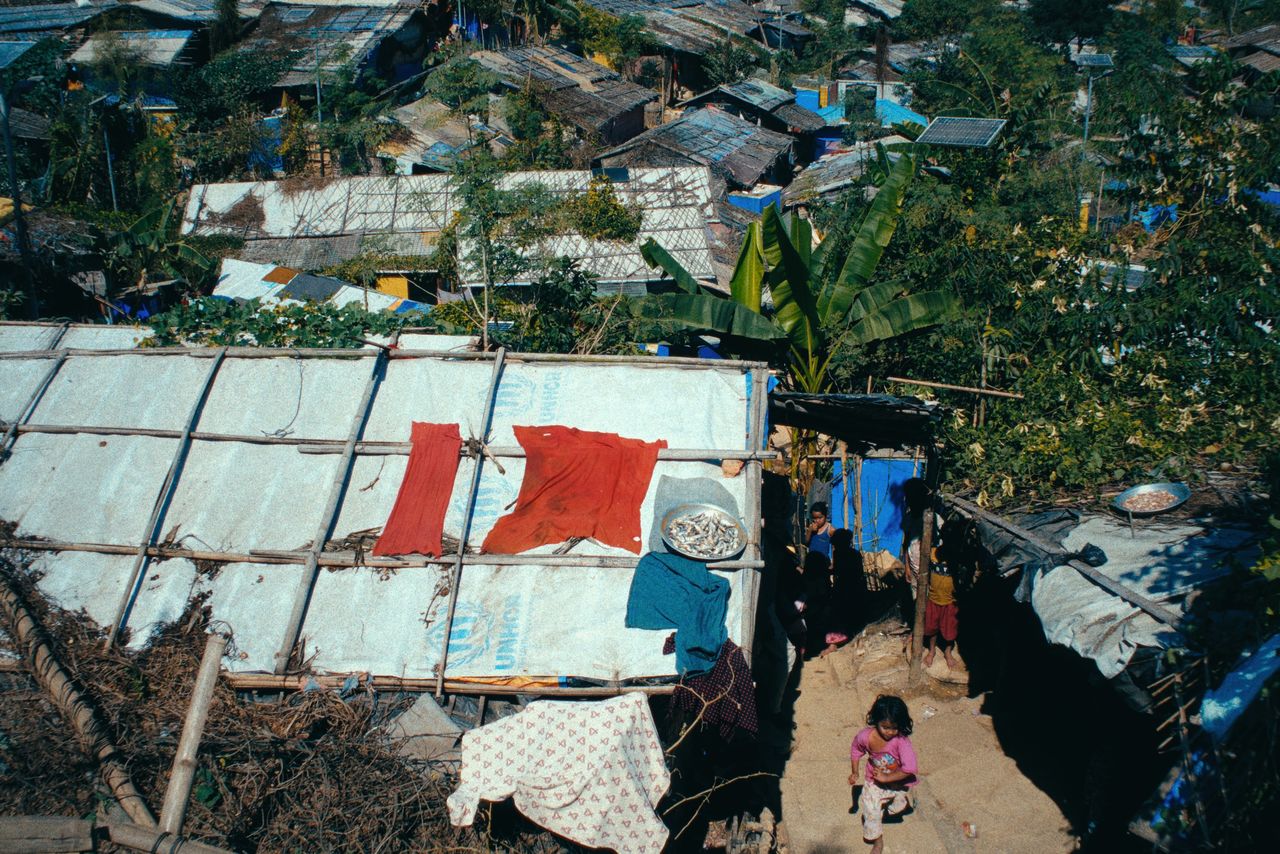
A Rohingya refugee camp in Bangladesh, photographed in January 2026. (© 2025 E.x.N K.K.)
Finding Certainty
And then, in 2021 the military staged a coup d’etat, sending the country into a new state of civil war. Aung San Suu Kyi was taken into detention, but this year was moved again to house arrest. She remains confined.
While the people of Myanmar suffered under the strain of an increasingly fierce civil war, aid work began to expand in Japan. Fujimoto joined in the efforts, hosting charity screenings across the country, but he says that he was conflicted in ways he couldn’t tell people about. It was that conflict which sparked his making Lost Land.
“I felt I had to break out of my own double standards. I was saying I wanted to support the people of Myanmar, but then, why hadn’t I said anything when the Rohingya were being slaughtered in 2017? I carried that guilt for so long.”
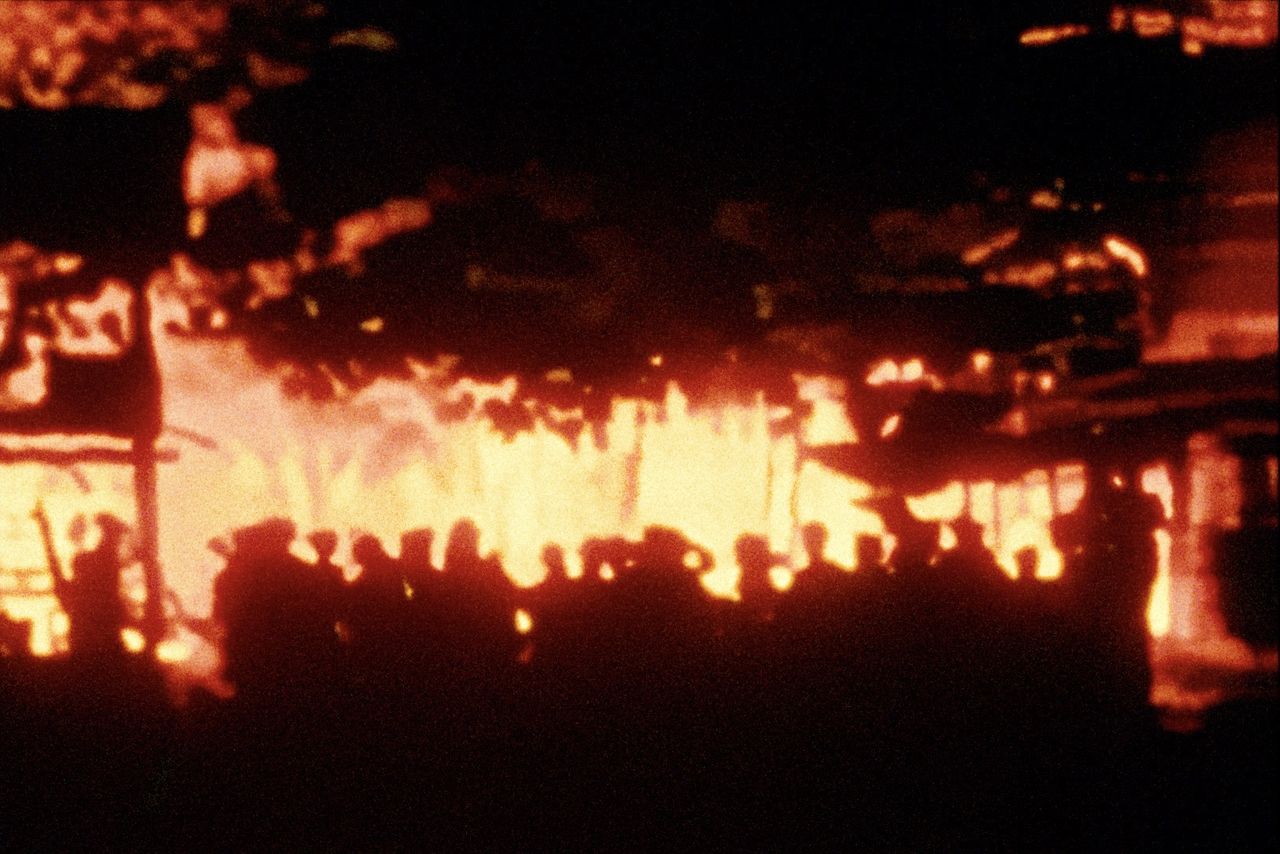
A scene from Lost Land. (© 2025 E.x.N K.K.)
He felt he could no longer avoid the topic in his next work, so he began writing the screenplay alongside his aid work. But, he admits, even at that point he was still deceiving himself.
“I started working on the Lost Land project in 2023. But the truth is, I had spent the previous year writing a completely different screenplay. It was based on an idea of the Rohingya, but in a fictional world full of fictional people. I never even used the name Rohingya. And then I realized it was all a lie. I had never even met the Rohingya and had written a script without any truth, something all in my head. I realized I was running from reality.”
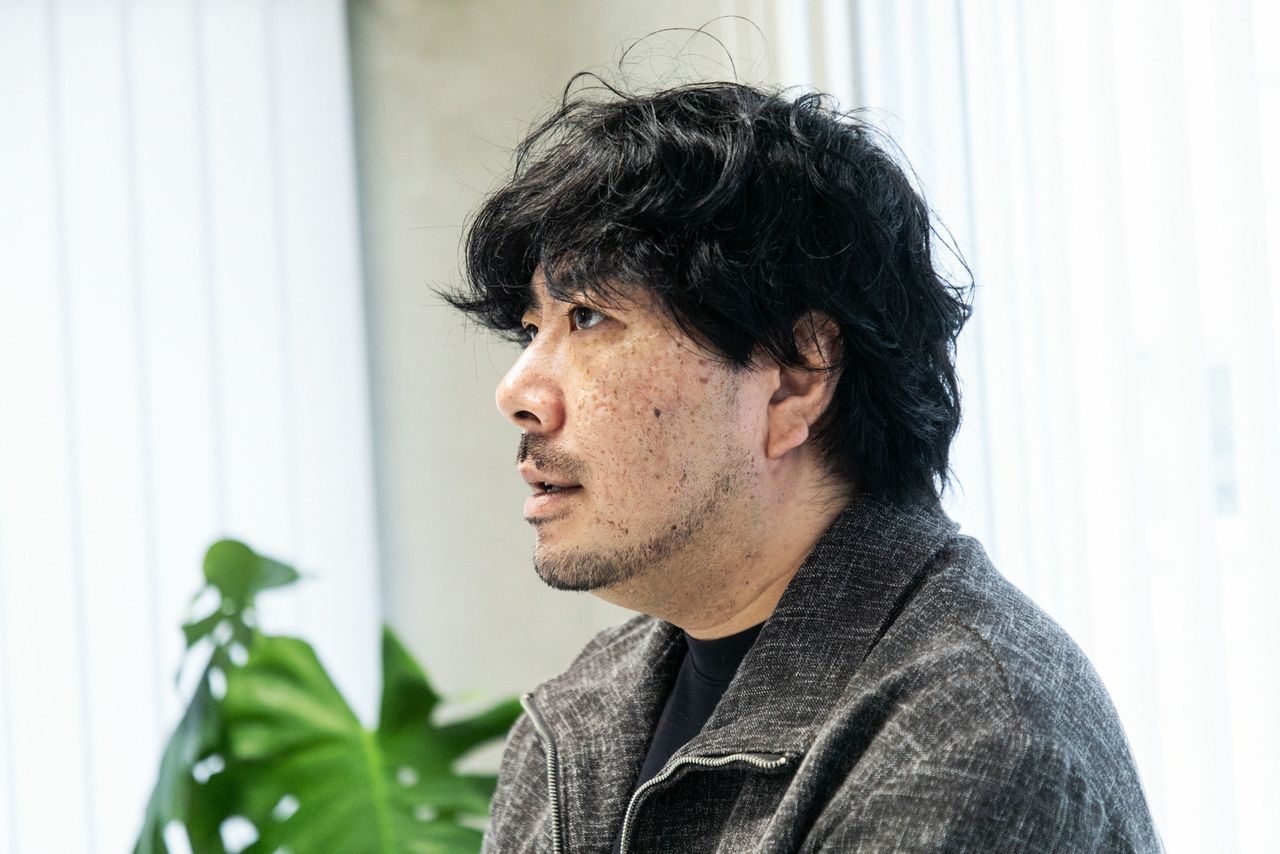
(© Igarashi Kazuharu)
He reconsidered his approach and decided to face the realities of life for the Rohingya head on. And, he says, from that point he cut off all contact with his Burmese friends. All his research for the film took place outside Myanmar.
When we asked if he had had any trouble convincing his Burmese wife of the necessity, he had a surprising answer.
“I didn’t tell her about the film until the day before the press conference in Venice. I’d thought I would tell her once it was finished, but I only had two or so months between finishing and Venice. I never seemed to be able to bring it up. I was worried that in the worst case, it might end in divorce [laughs]. But in the end, all she said was, ‘You should have told me sooner.’ And now she’s cheering me on.”
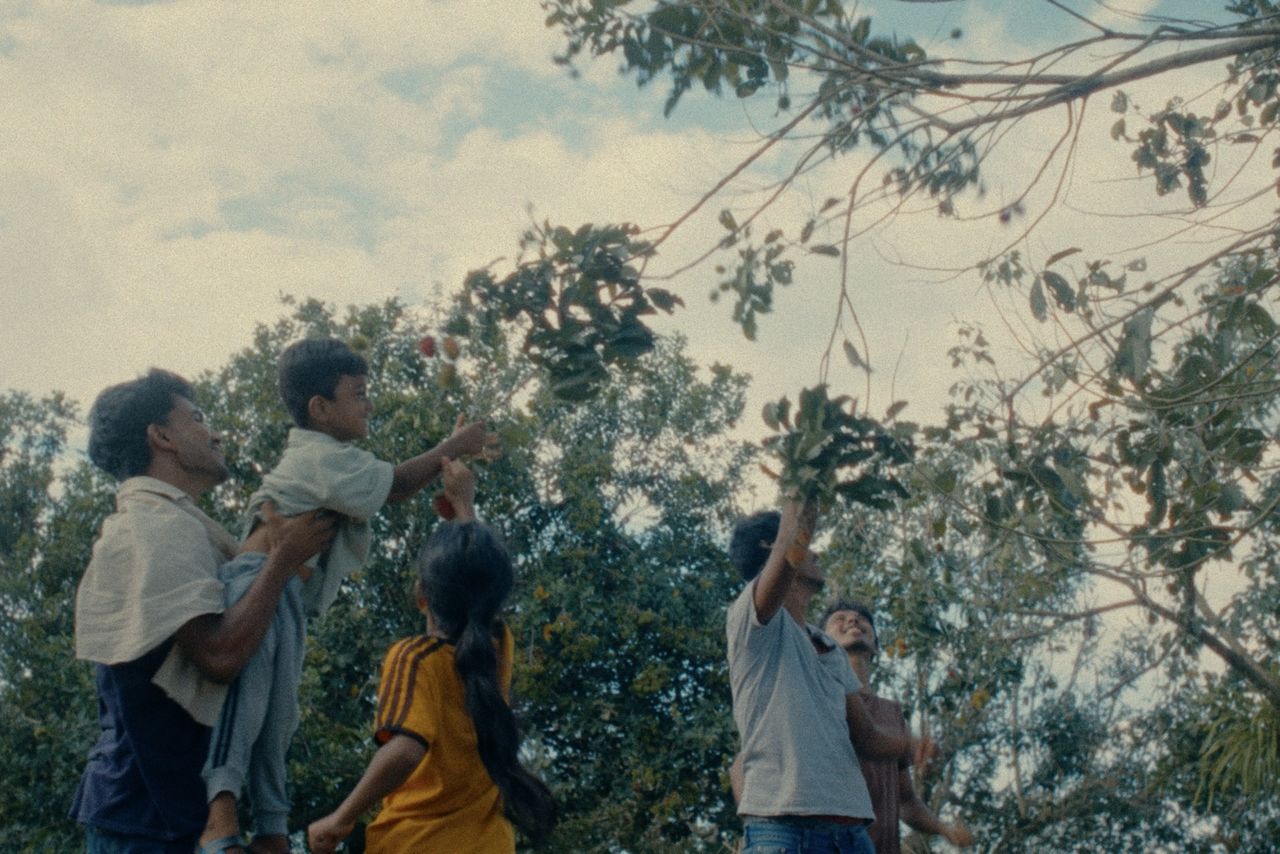
A scene from Lost Land. (© 2025 E.x.N K.K.)
Lost Roots
Even while he dealt with the supremely delicate issue of oppressed minorities, he was determined to portray the issue as one close to home.
“This work feels very personal to me. It was my second chance to work closely with issues that were near to my heart but that I had skirted around for too long. But that’s only true of the initial motivation. Everything after that is different. I think that this is the Rohingya people’s story, and I feel a responsibility in how to share it with the world.”
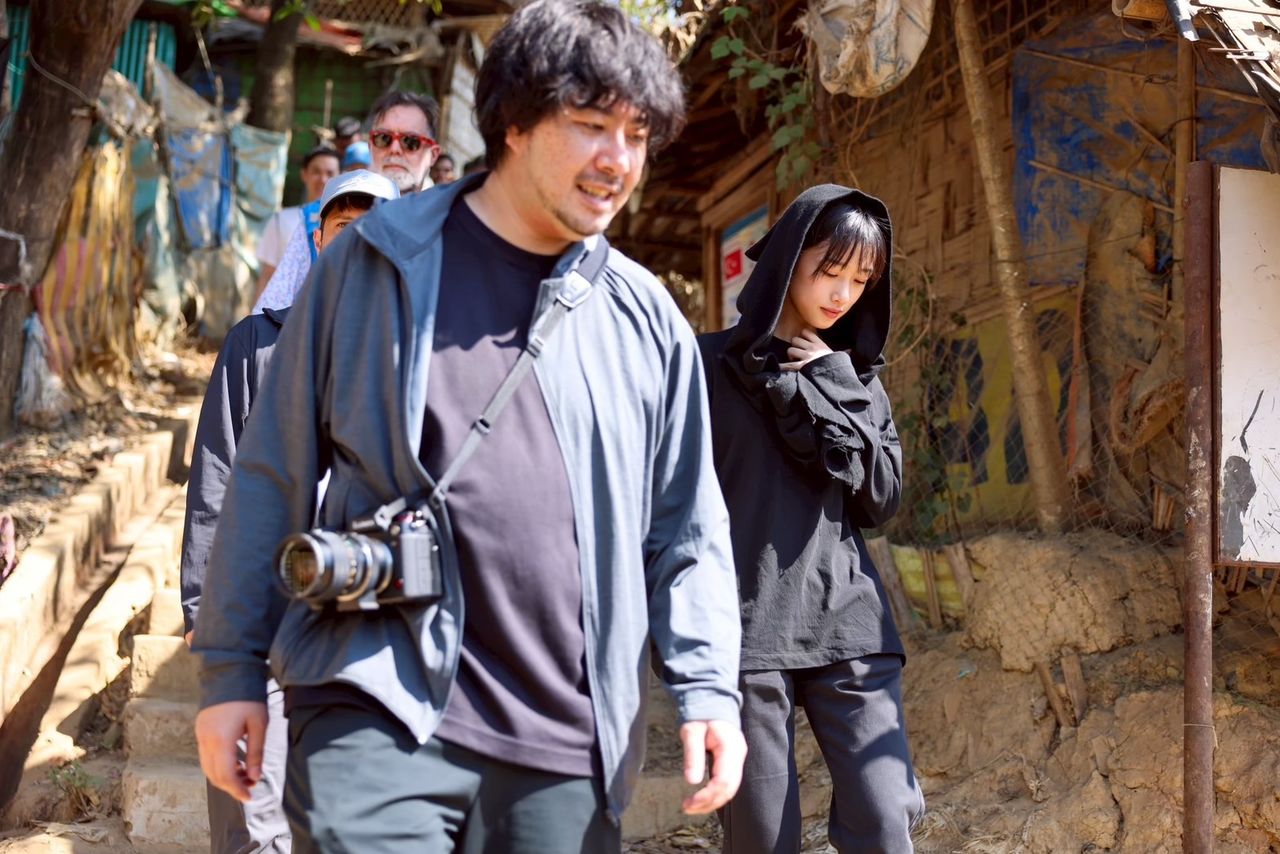
Fujimoto and Kawai Yūmi visiting a Rohingya refugee camp in Bangladesh. (© 2025 E.x.N K.K.)
The scenes of people boarding ships to escape the Rohingya refugee camps for other countries are built from the experiences of real people. Fujimoto spent over a year on research before writing the script. During filming, he incorporated the ideas of Rohingya appearing in the film who had been through similar ordeals to get the details right.
“While I was out on research, I started to grow closer to the Rohingya community and felt our bonds growing. I want the film to have that same effect. I hope the audience can feel a new connection to the lives of the Rohingya through the people in this work.”
His goal was a movie that children could watch as well as adults. He tried to tell the story in a way that needed no previous knowledge of the Rohingya or their backgrounds, so that audiences could have something new to take home with them. And so, even as he strove for authenticity, he still managed to build a story with all the power of fiction.
(© 2025 E.x.N K.K.)
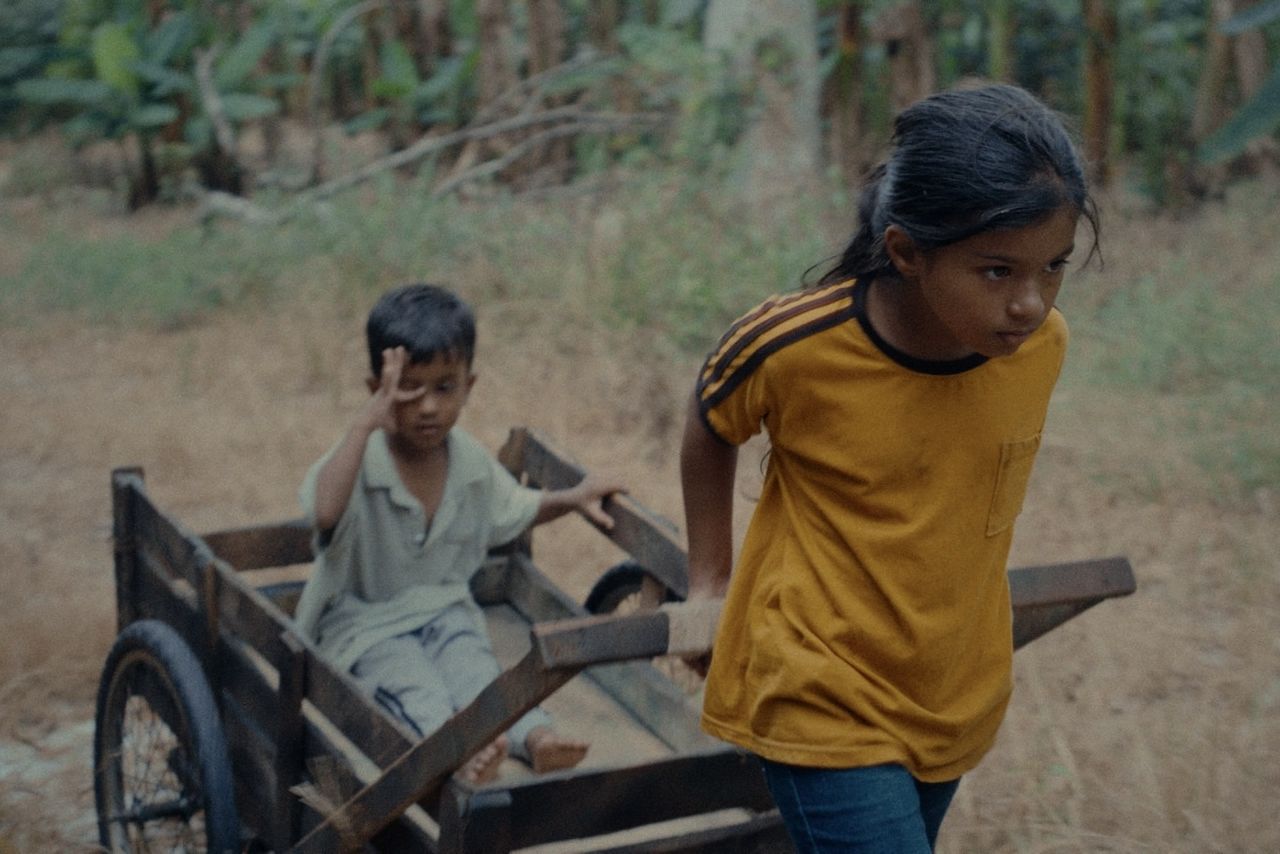
“My first idea was to make it a road movie. I was unable to film in Myanmar or the refugee camps, so through process of elimination, the physical restraints really only left a journey. I wanted to make a movie where we watch with bated breath these two children go on an adventure, one with deep emotional resonance.”
(© 2025 E.x.N K.K.)
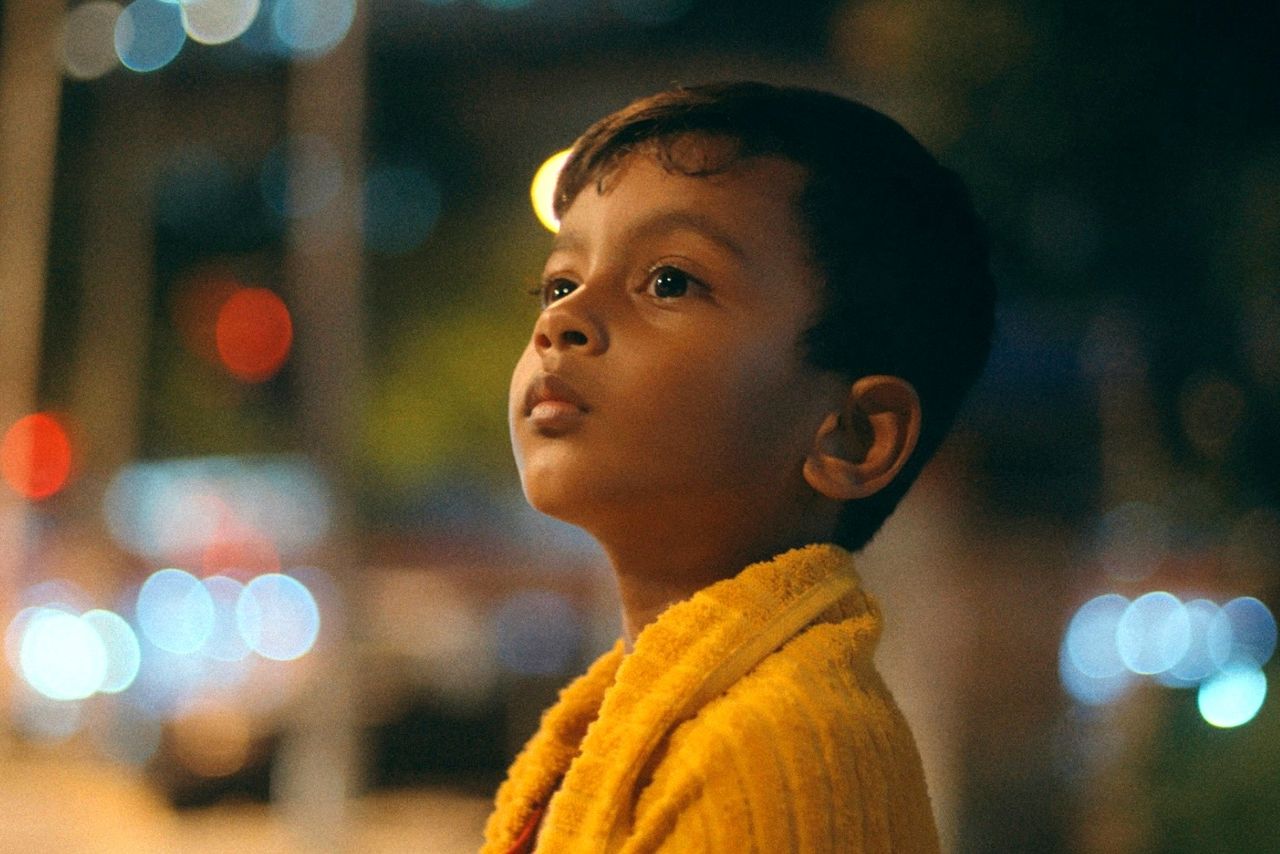
The title, Lost Land, is Harà Watan in the Rohingya language. Fujimoto says that he later learned that watan, meaning here “homeland,” can also signify the “body.”
“The ‘lost homeland’ here is simply an expression of objective fact for the Rohingya. I want the pain of that to be what audiences focus on in this film. I made it in hopes that people can feel the pain of others’ loss as keenly as their own.”
(© Igarashi Kazuharu)
Trailer (Japanese)
(Originally published in Japanese on April 24, 2026. Banner photo: The film director Fujimoto Akio. © Igarashi Kazuharu.)