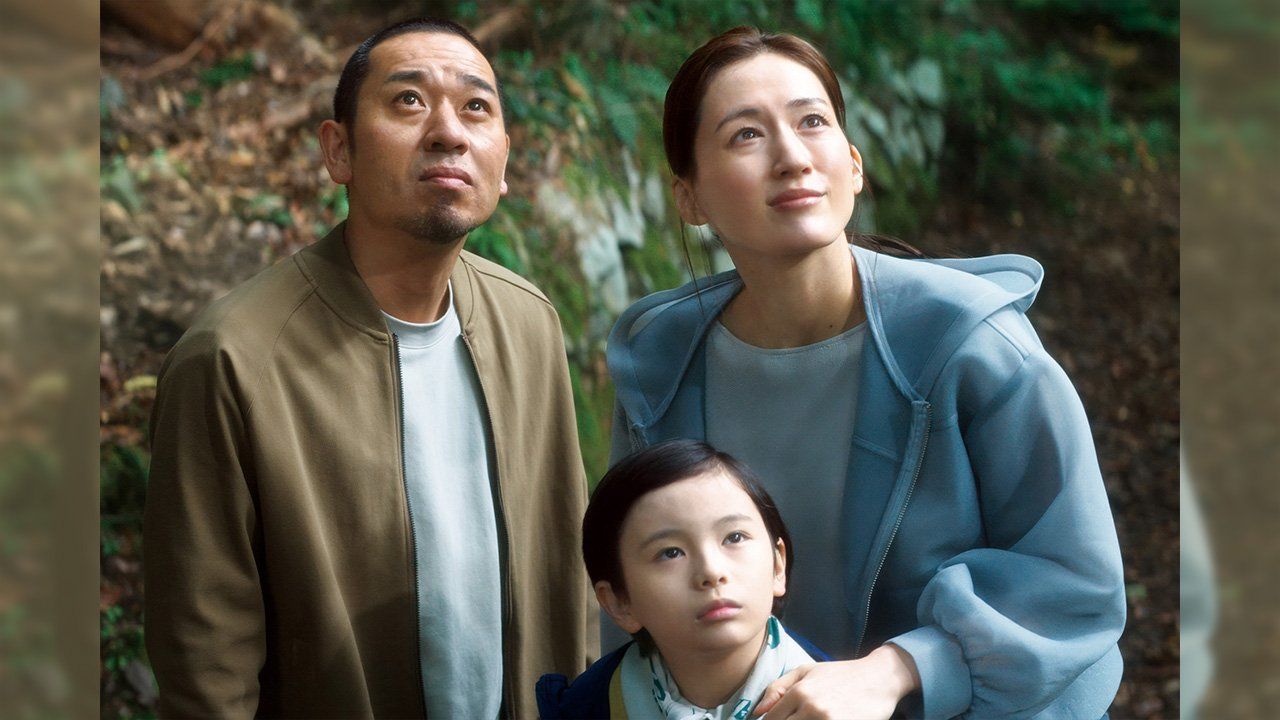
“Sheep in the Box”: Koreeda’s AI Fable About Bringing Back the Dead
Cinema Society- English
- 日本語
- 简体字
- 繁體字
- Français
- Español
- العربية
- Русский
A Robot Resurrection
Koreeda Hirokazu got the idea for his latest work Sheep in the Box, about a dead son’s return as a humanoid robot, after he saw an article reporting on a popular Chinese business that creates AI versions of people who have passed away. However, the heart of this film is not so much about AI technology or its ethical questions, but how people react to the return of a loved one, “resurrected” by cutting-edge technology.
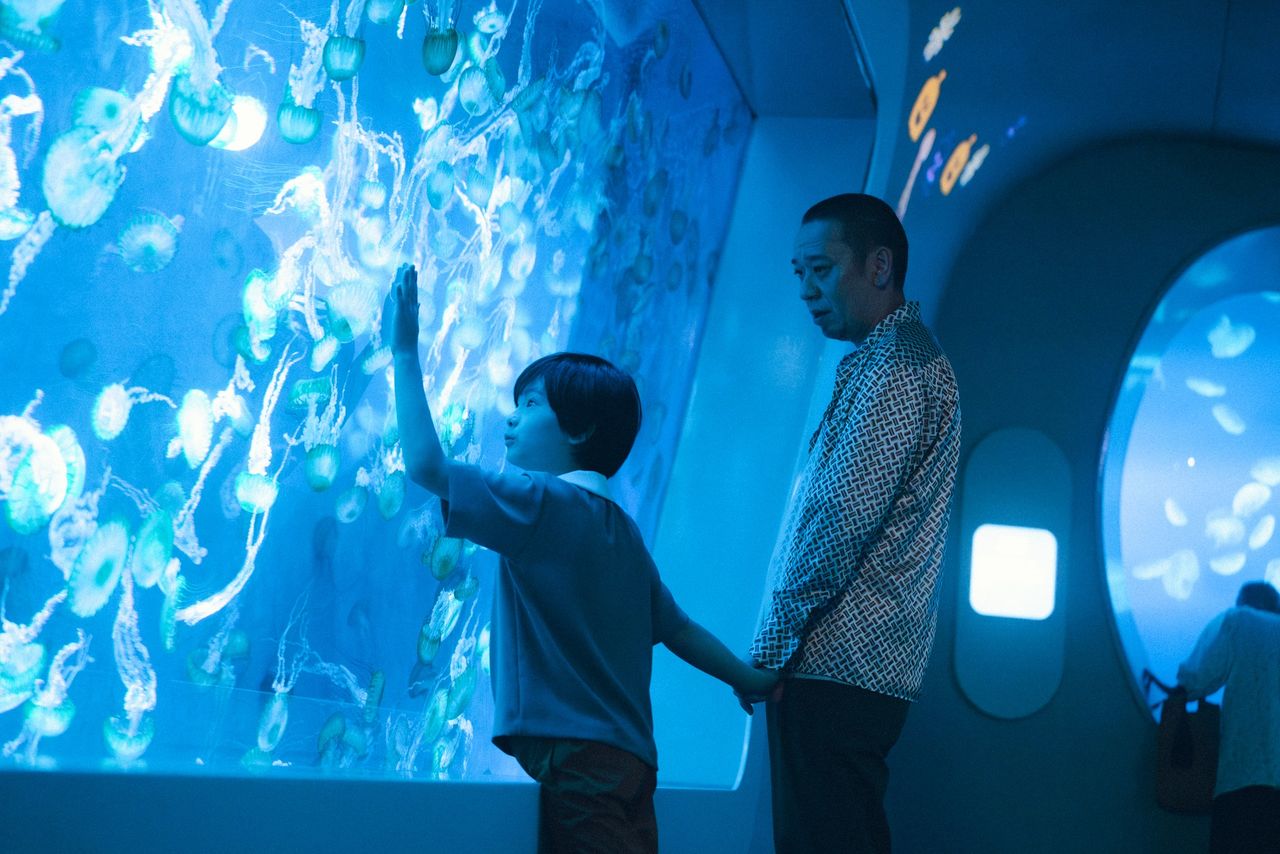
Can the couple accept a robot as their son? (© 2026 Fuji Television/Gaga/Tōhō/Aoi Pro)
Ayase Haruka and Yamamoto Daigo, who goes by his given name, play Otone, an architect, and her husband Kensuke, the head of a small home construction firm. Two years ago, their seven-year-old son Kakeru passed away, and they still feel his absence.
One day, an invitation arrives offering free rental of the latest model of humanoid robot to bereaved family members. Stunned by the sophistication of the “product” at an information session held by the company, the couple decide to welcome the robot Kakeru, customized with the dead boy’s data, into their home.
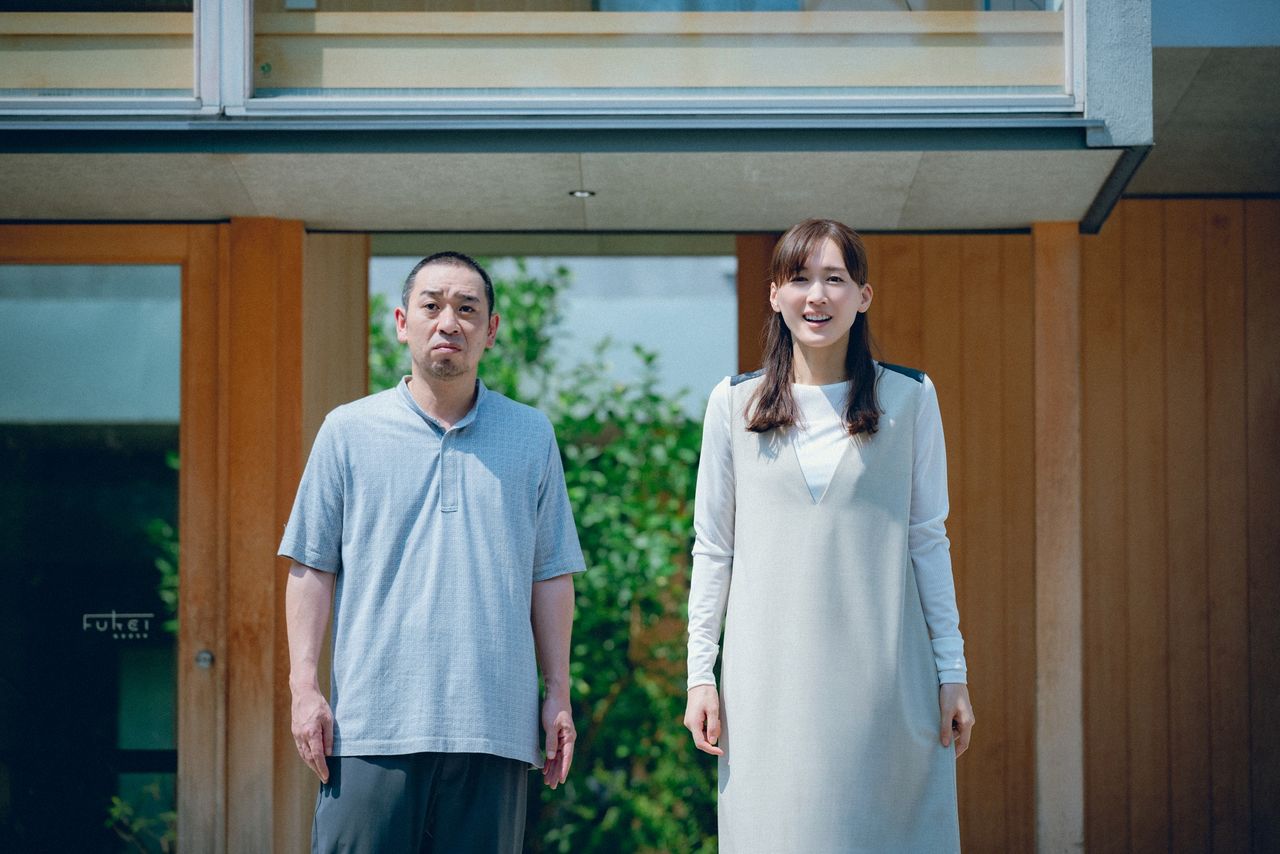
Daigo and Ayase Haruka play the central couple. (© 2026 Fuji Television/Gaga/Tōhō/Aoi Pro)
From the start, the two have different attitudes to the new “Kakeru.” Otone is eager to accept the humanoid, but Kensuke was uncomfortable with the cultlike atmosphere of the information session. While Otone shows her simple joy, Kensuke coldly dismisses the robot as just something like a robotic vacuum. Even when “Kakeru” addresses him as “Dad,” Kensuke rejects him.
Coping with Loss
Otone spends the whole day by the side of the robot, and as he cannot eat, she says she will not take her meals either. As she adjusts her life to fall in step with the humanoid, it feels like she is voluntarily giving up her time as a living being.
Meanwhile, Kensuke keeps telling himself that this Kakeru is only a machine. However, he finds that he laughs despite himself, and is moved, when the boy repeats the names of stations memorized on a train line, as he remembers his son doing the same thing.
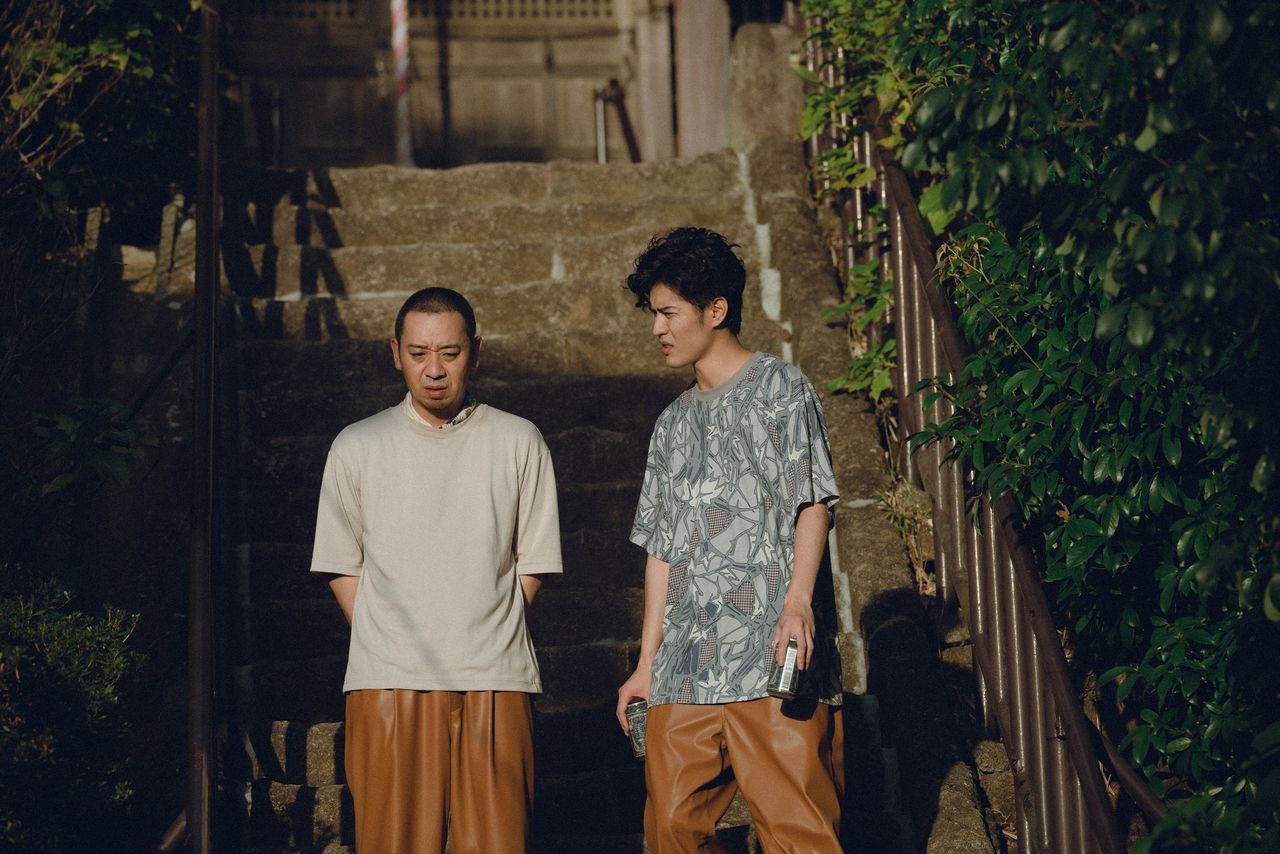
Daigo is a popular comedian making his first appearance in a lead role. (© 2026 Fuji Television/Gaga/Tōhō/Aoi Pro)
Rather than a conflict over whether or not to accept their son as re-created in robotic form, through the couple Koreeda depicts different attitudes to mourning and coming to terms with loss.
Kensuke cannot accept the new Kakeru because he remains true to the reality that his son cannot return. As a father he continues to search for answers to questions such as why his son died and who was at fault. By contrast, Otone cannot accept her son’s absence, and this is why she tries to return to the lost past with the robot boy.
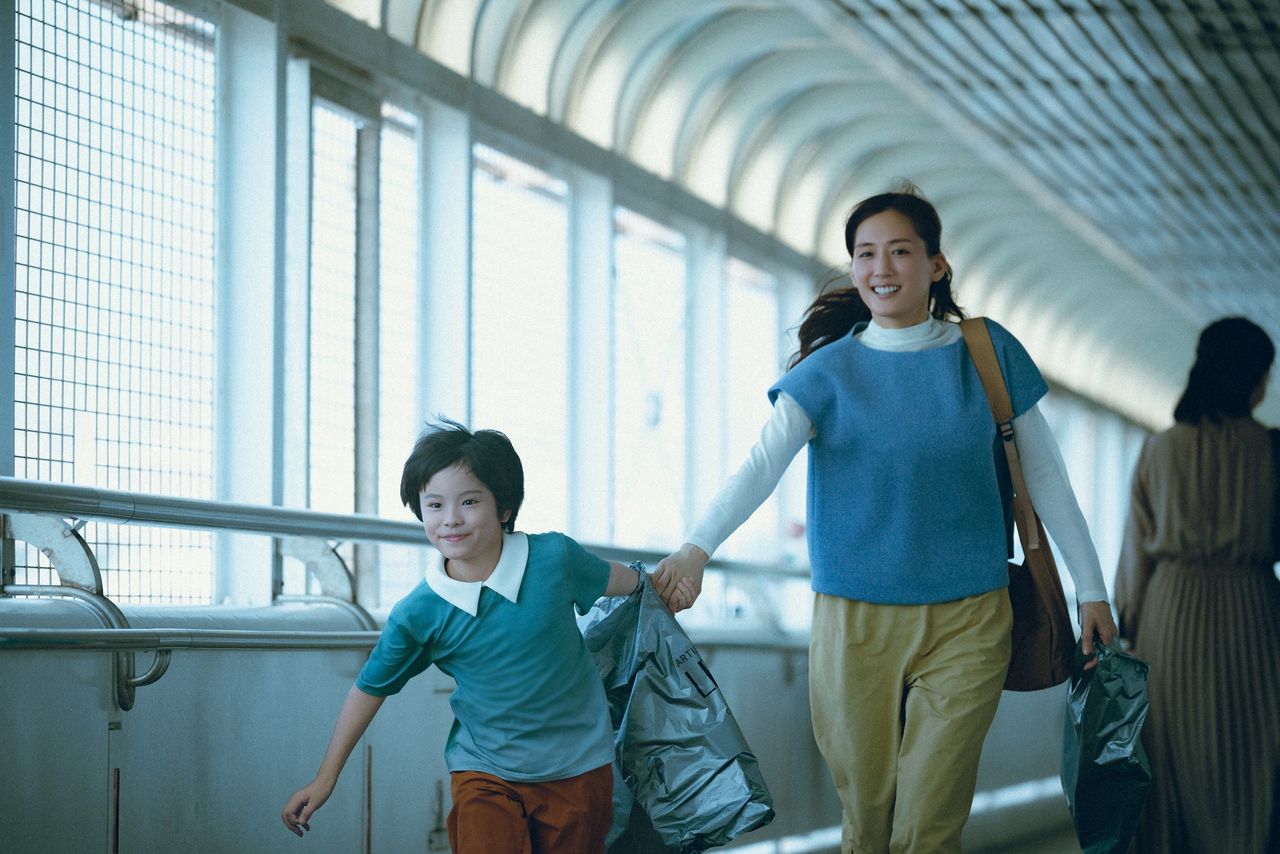
The arrival of “Kakeru” brings changes to the couple’s relationship. (© 2026 Fuji Television/Gaga/Tōhō/Aoi Pro)
Since his 1995 debut Maborosi, Koreeda has regularly taken ways of confronting loss as a major theme. In films like After Life (1998), Still Walking (2008), and Our Little Sister (2015), he depicts the influence of the absent dead on those left behind. Sheep in the Box is part of this tradition.
Empty Inside
The film’s title is a reference to The Little Prince by Antoine de Saint-Exupéry (1900–44). The robot Kakeru is like the prince, who appears suddenly before the story’s narrator, at the same time that he calls to mind the “sheep in the box” that the book’s narrator draws for him.
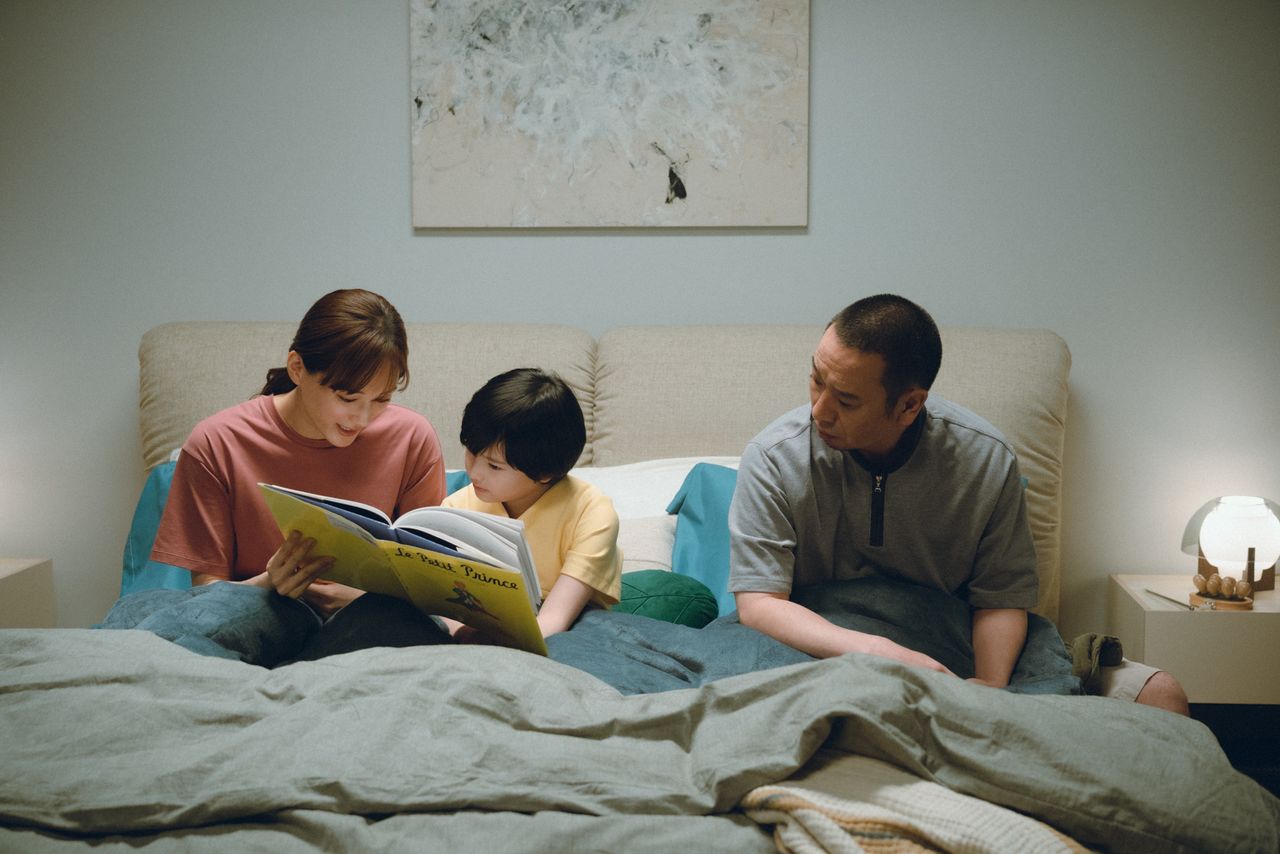
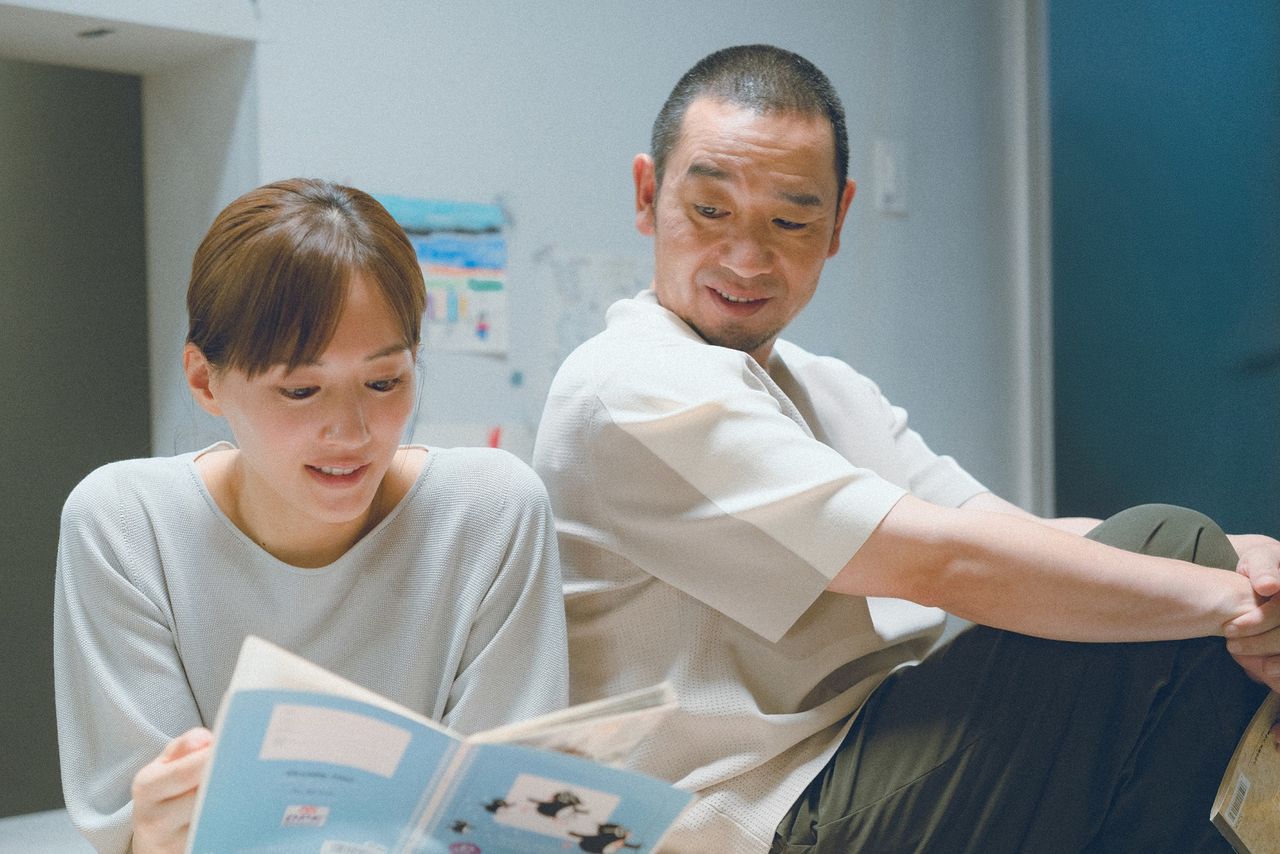
Otone reads The Little Prince to “Kakeru.” (© 2026 Fuji Television/Gaga/Tōhō/Aoi Pro)
At first, the prince asks the narrator to draw a sheep, but rejects a number of his attempts. Then, the narrator draws a box and tells the prince that the animal is inside. Finally, the prince is satisfied, “seeing” the sheep that he had wanted.
The robot boy is similar in that nobody can see inside him. He is simultaneously a ghost, the embodiment of his parents’ wishes, and a newly arrived child, learning about the world. Through his growing interest in the workers using planes to shave wood at his father’s workplace and his mother’s architecture job, as well as encounters with trees and nature, he gradually strays from the memories of the human Kakeru.
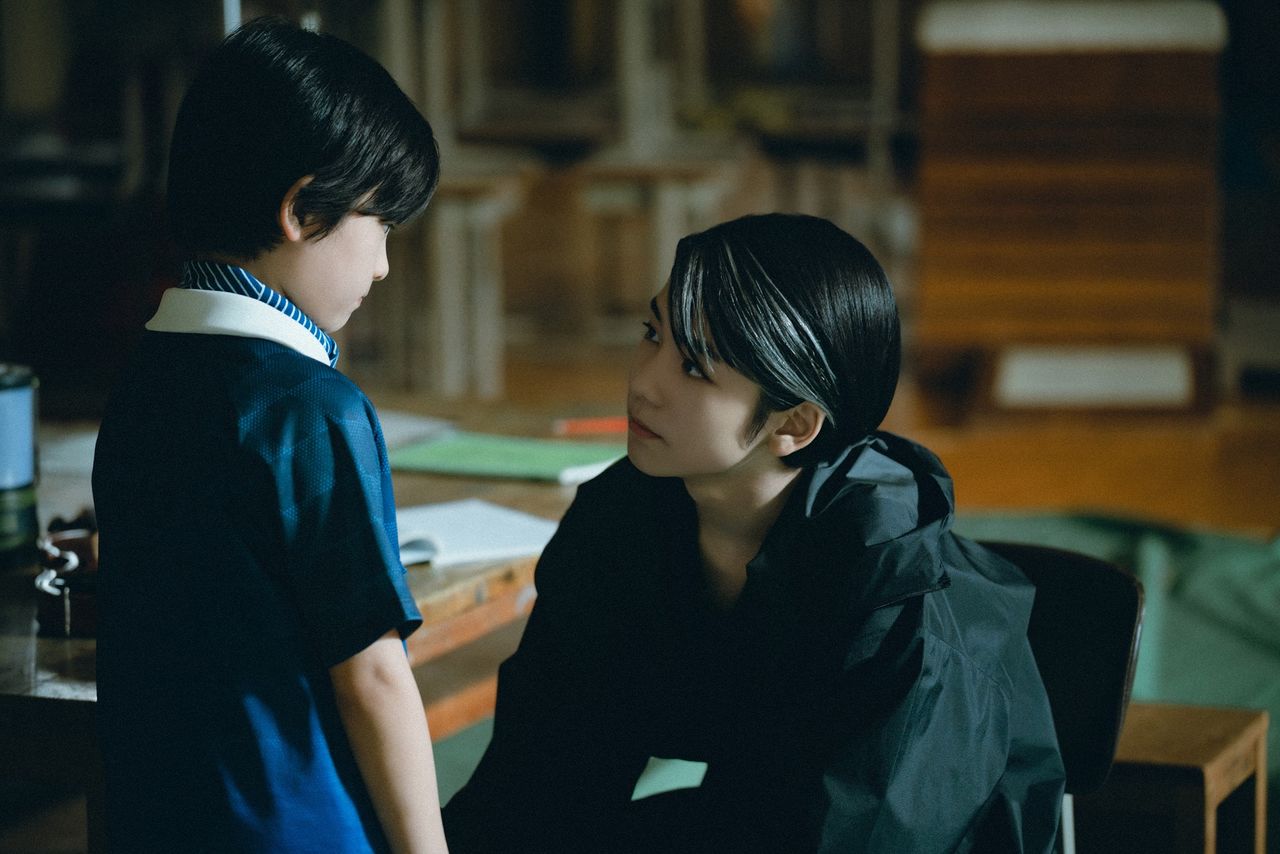
As the film progresses, other humanoid robots play a major role in plot development. (© 2026 Fuji Television/Gaga/Tōhō/Aoi Pro)
While people project their thoughts onto the robot Kakeru, he is “empty” inside. The story is set in the near future, but apart from AI and drone delivery, it looks very much like contemporary Japan, and this ambiguity helps focus the story on the concept of AI as a void.
Unresolved Questions
Through this concept, Koreeda explores various questions. How much can parents accept a robot son as “real”? And can they accept him if his words and actions stray from their memories of the dead boy?
If someone returned from the dead starts to learn about the world again as a new form of intelligence, how will the people who loved him feel? In a world able to bring back the dead, can they come to terms with loss? What are mourning and remembrance when people make use of artificial substitutes for those who are gone?
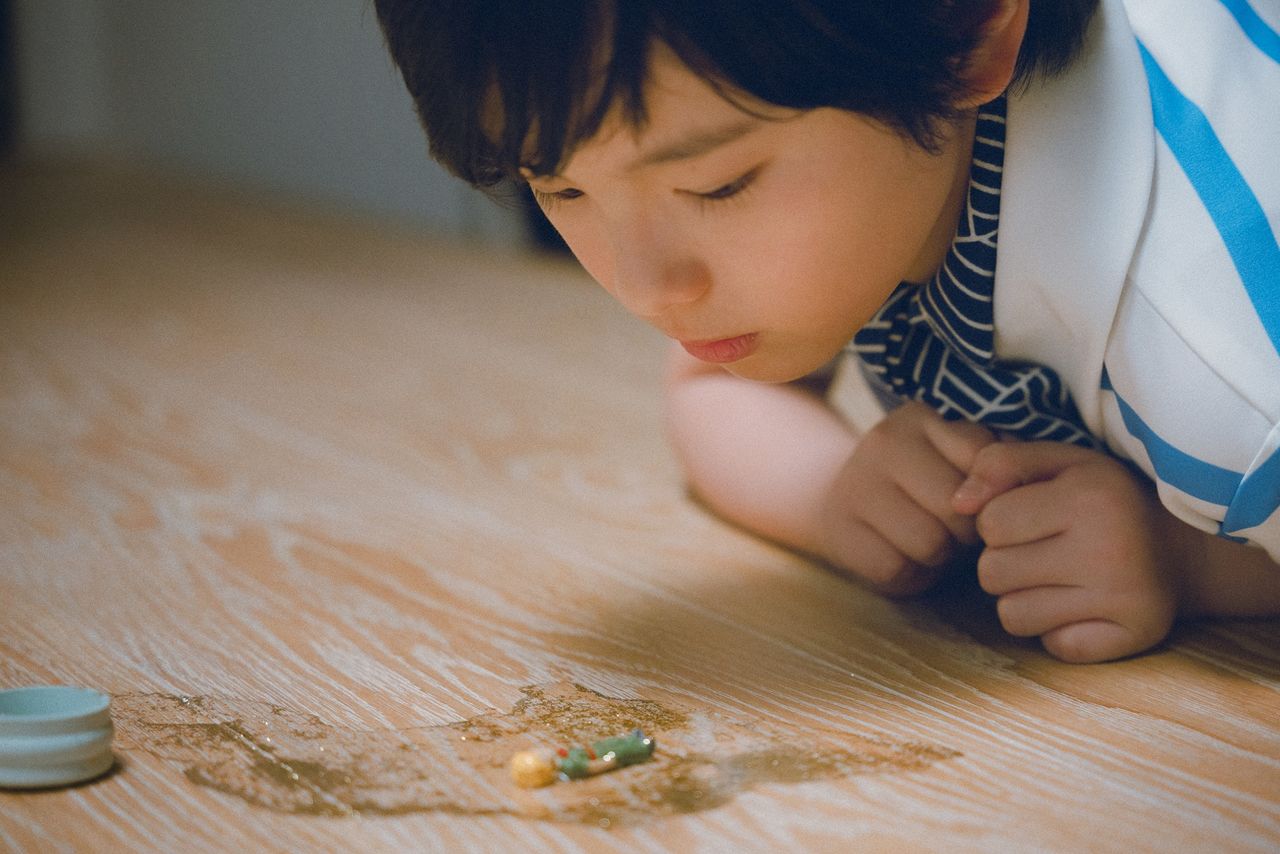
Can AI understand the concept of life and death? (© 2026 Fuji Television/Gaga/Tōhō/Aoi Pro)
Through motifs of architecture and nature, Koreeda also considers spans of time far longer than human lives. The works of architects and artisans remain after their deaths, and trees in the forest live on after we have died.
After the human Kakeru’s time is complete, his parents’ time continues. However, the robot Kakeru has no life in this sense, and may live forever. The film depicts time on a number of different scales.
The questions that arise as we look into the void of “Kakeru” never come together into a single resolution, but this breadth gives the film its richness.
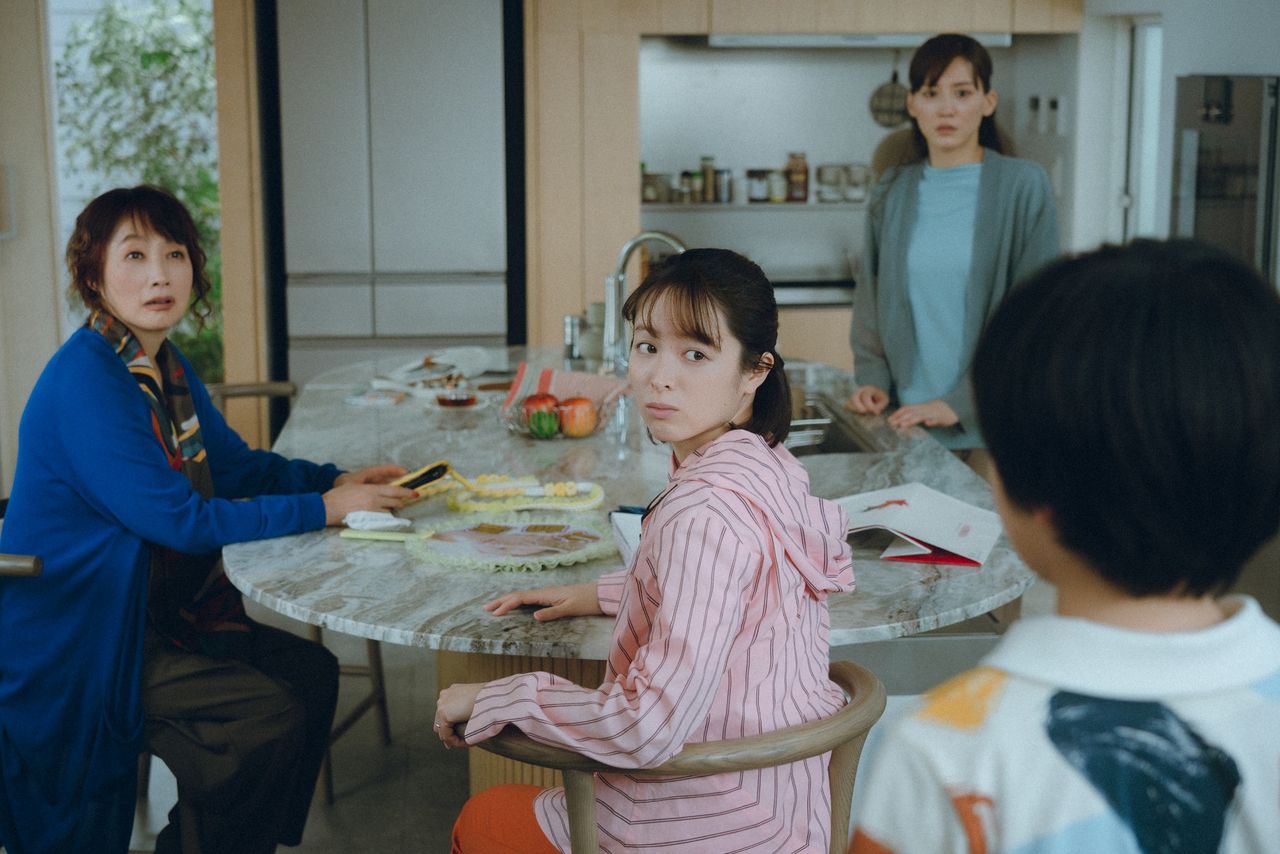
Otone’s mother (Yo Kimiko), at left, and sister (Seino Nana), at center. Otone’s relationship with her mother is a negative influence in her life. (© 2026 Fuji Television/Gaga/Tōhō/Aoi Pro)
Now that AI’s role in society is growing in importance by the day, it is common to expect films that tackle the subject to provide a realistic response to the technologies, systems, and ethics involved. However, that is not necessarily an appropriate role for film to play. Instead, art and stories might be better suited to shedding light on the human heart and provoking thought through an altered reality.
The AI robots in Sheep in the Box bring form to the hitherto impossible fantasy of wishing for the dead to return. Koreeda uses their “rich void” to depict a gentle fable about the pain of losing a loved one and the crisis that arises when love has nowhere to go.
(© 2026 Fuji Television/Gaga/Tōhō/Aoi Pro)
Trailer
(Originally published in Japanese on May 30, 2026. Banner photo: The family at the center of Sheep in the Box. © 2026 Fuji Television/Gaga/Tōhō/Aoi Pro.)