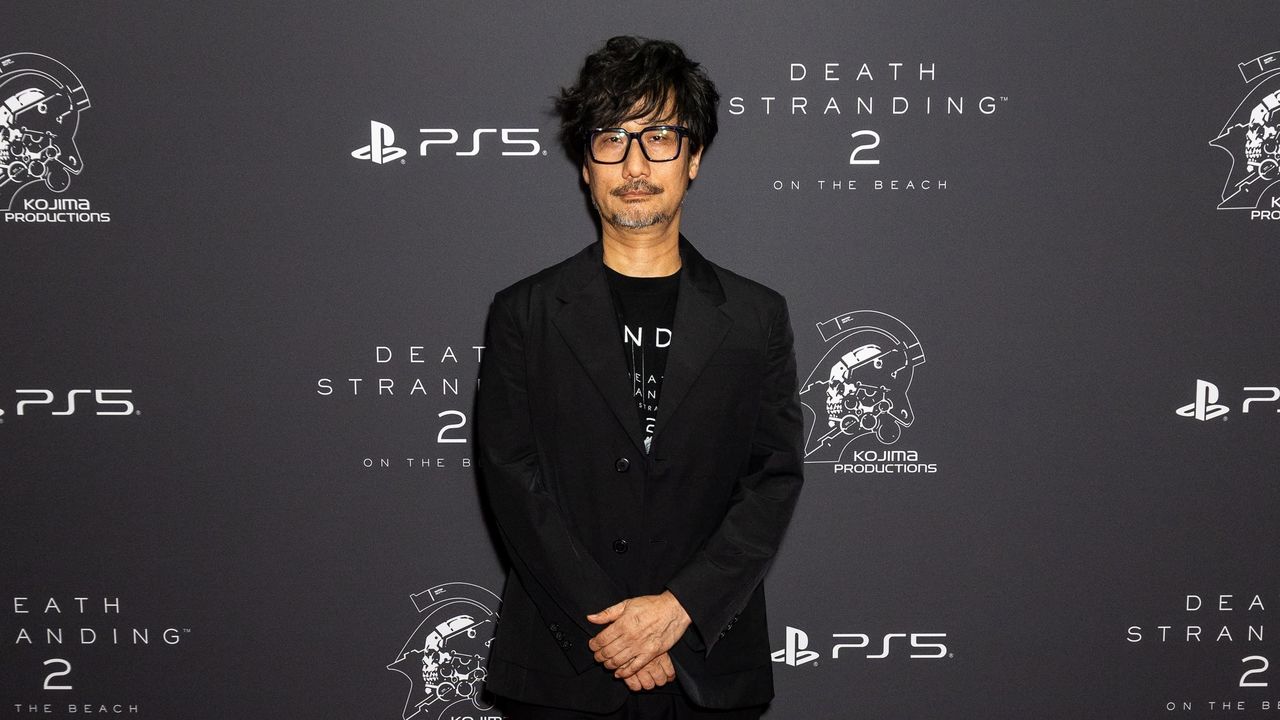
Legends: Japan’s Most Notable Names
Kojima Hideo: Redefining What Games Can Be
People Culture Society Technology Entertainment- English
- 日本語
- 简体字
- 繁體字
- Français
- Español
- العربية
- Русский
Founder of the Stealth Game Genre
From the start of his career, director Kojima Hideo brought cinematic direction, as well as weighty themes such as war, social issues, aging, and death, into the early video game industry, thereby expanding the expressive potential of the medium itself. As an innovator, he inspired creators around the world and pushed video games to evolve.
His signature Metal Gear series, beginning with the first installment in 1987, has sold over 60 million copies worldwide. In 2001, Newsweek named him one of the 10 most influential people to shape the future, and in 2022, he became only the second game creator ever to receive Japan’s Minister of Education, Culture, Sports, Science and Technology Award for Fine Arts, earning widespread acclaim both at home and abroad.
Among some of the innovations he introduced, his directorial debut, Metal Gear, was a game centered not on direct confrontation but on evasion and concealment. In 2008, it was recognized by Guinness World Records as “the first video game to fully utilize stealth as part of the gameplay.”
The third title in the MG series, Metal Gear Solid (1998), thoroughly leveraged the capabilities of Sony’s PlayStation console. Through real-time 3D polygon rendering (technology that renders scenes instantaneously in response to player input and camera movement), it achieved a cinematic presentation that was revolutionary for its time.
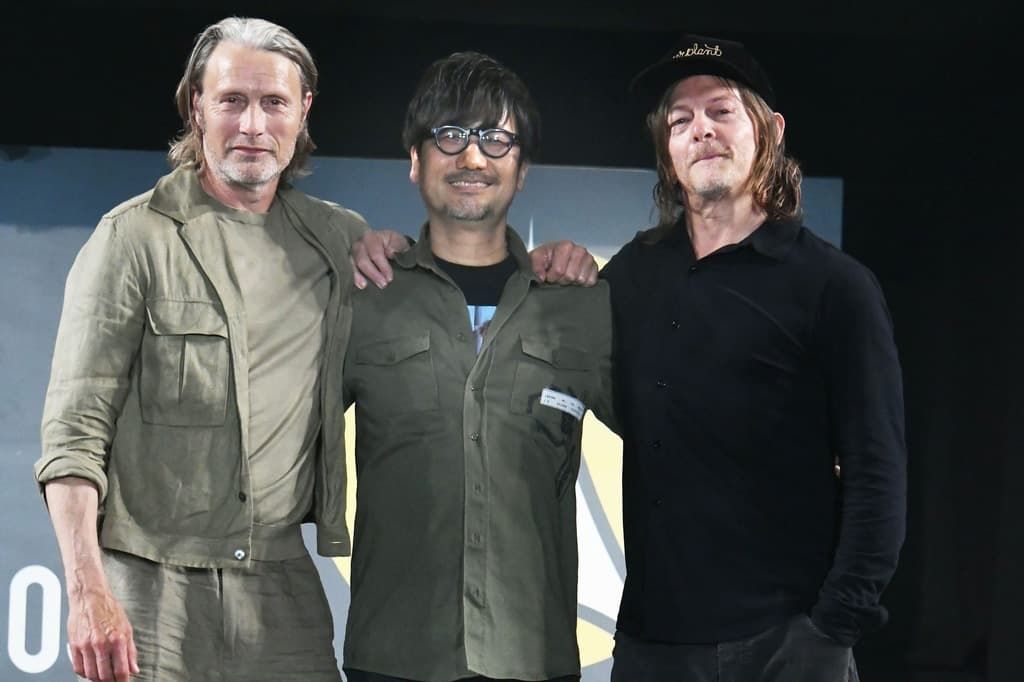
Kojima Hideo (center), stands between Death Stranding stars Mads Mikkelsen (left) and Norman Reedus at an Osaka Comic Con event on May 5, 2024. (© Jun Sato/WireImage/Getty/Kyōdō)
In Death Stranding (2019), Kojima broke further away from convention. While most games revolve around fighting, competition, and domination, this title placed its focus on connection, reconstruction, and preservation of life. The protagonist Sam journeys while carrying an infant known as BB, and soothing the crying baby is not merely a side detail, it is an integral part of the gameplay experience.
Antiwar, Antinuclear, and a Warning Against AI
Kojima infused what is often dismissed as mere entertainment with a deeply critical perspective on modern society and political realities. His greatest hallmark as a game creator lies in how seamlessly he weaves these messages into the very fabric of his game design.
One of his central themes is antiwar and antinuclear. In the MG series, the player is frequently tasked with destroying Metal Gear, a massive weapon capable of launching nuclear strikes. Through the tense, stealth-driven gameplay, players are exposed to the ethical and political dilemmas surrounding nuclear technology and the geopolitical tensions of the Cold War. His second directorial work, Snatcher (1988), set in a cyberpunk world of android conspiracies, explored the paranoia and loss of trust characteristic of that era.
In Metal Gear Solid V: The Phantom Pain (2015), players are given the ability to build their own mercenary forces, and even to possess nuclear weapons for self-defense. This experience allows them to feel the logic of nuclear deterrence, the so-called “balance of terror” grounded in the principle of Mutually Assured Destruction.
The theme of nuclear weapons naturally expands into a critique of the technologies born from that same context: computers designed for ballistic calculations, and the internet itself, which was originally conceived to decentralize information in anticipation of nuclear war. Metal Gear Solid 2: Sons of Liberty (2001) tackled issues of information manipulation via the internet, conspiracy theories, blurred boundaries between truth and fiction, and AI-driven control systems. Many now regard it as a prophetic work that foresaw today’s “post-truth” world.
Emphasizing the Learning Experience
Kojima Hideo’s exceptional gift as a game creator lies in his ability to interlace theme, gameplay system, and narrative into one deeply organic whole. In Metal Gear Solid 2, for example, the theme of human control by computers and AI is conveyed not through exposition, but through the player’s own experience of being subtly guided by the game’s systems and scripted events. In doing so, the player attains a kind of meta-awareness, a reflective understanding of how they themselves engage with information. This metafictional quality, in which the game critiques its own medium, is another hallmark of Kojima’s work.
His storytelling often takes the form of what might be called an “opera.” Not in the sense of a stage production, but as a grand human drama intertwining intimate relationships between parent and child, lovers, or comrades, with global issues such as the Cold War and the threat of nuclear conflict.
For instance, Metal Gear Solid 3: Snake Eater (2004) portrays a tragic tale of two lovers forced to kill each other amid the tensions of the Cold War and looming nuclear crisis, serving as an indictment of a world divided in two.
Metal Gear Solid: Peace Walker (2010), a sequel to MGS3, takes “peace” itself as its central theme. Set in Costa Rica, a nation that has declared permanent neutrality and renounced armed forces, the game design encourages avoidance of conflict while directly referencing Japan’s pacifist constitution and its Three Non-Nuclear Principles. The protagonist, Snake, reflects, “We’re a wrench in the old system of deterrence. As long as the times refuse to change, we’re going to make a hell of a racket.” That racket becomes a metaphor for the friction and contradictions within postwar Japanese society, which developed as a buffer for the West amid geopolitical tensions during the Cold War.
In this way, Kojima’s works function as allegories projecting Japan’s postwar dilemmas and contradictions, allowing players to experience themes of peace and conflict firsthand through play.
Creation as a Means of Overcoming Trauma
Part of what made Kojima Hideo a pioneer and innovator in the world of video games can be traced back to his upbringing.
Born in Tokyo in 1963, he moved to the Kansai region when his father, an employee at a pharmaceutical company, was transferred there. His father, a devoted film enthusiast, exposed young Kojima to a wide range of movies and often explained their themes to him. Among them, the documentary Night and Fog by French director Alain Resnais, which depicts the Auschwitz concentration camp, left an especially powerful impression on him as an elementary school student. The scene showing bulldozers pushing piles of corpses seared into his memory and profoundly shaped his lifelong image of war.
At the same time, the 1970 Osaka Expo, held under the theme Progress and Harmony for Mankind, gave the young Kojima a vision of Japan’s bright postwar future. He began to dream fervently that the progress of science and technology could bring peace to the world, and that humanity could become something better.
When Kojima was in middle school, his father suddenly collapsed and died before his eyes. Financial constraints forced him to abandon his dreams of becoming a novelist or film director, and after graduating from university in 1986, he joined Konami, where he went on to create a series of groundbreaking games.
In an interview, Kojima once admitted that losing his father at an early age left him with what he called a kind of “father complex.” Big Boss, one of the main characters in the Metal Gear series, is in many ways a projection of that father figure. Kojima’s works often explore motifs of parent and child and the dead, featuring recurring scenes of sudden loss or parting with loved ones, likely reflections of his own experience of witnessing his father’s death.
Kojima has said, “Creators are those who lay bare their own trauma.” In his latest work, Death Stranding 2, the line “Death is not the end” is repeated throughout.
He has also spoken of how, as a lonely boy grieving his father’s death, he once even contemplated suicide. During that time, it was films, novels, and music that encouraged and saved him. As for why his own creations carry such serious themes and messages, Kojima explains that movies and books became his surrogate parents. They taught him, guided him, and helped shape who he became. And that is why he now seeks to educate and inspire players through games.
A Message of Hope for Humanity
Kojima’s works consistently carry messages that heal, encourage, and empower those who have suffered trauma. His game design and storytelling invite players to overcome adversity through willpower, creativity, and human connection.
At the end of 2015, he founded Kojima Productions as an independent studio, and four years later released Death Stranding. Both that title and its sequel, Death Stranding 2, share a single overarching goal: to deliver hope to all of humanity.
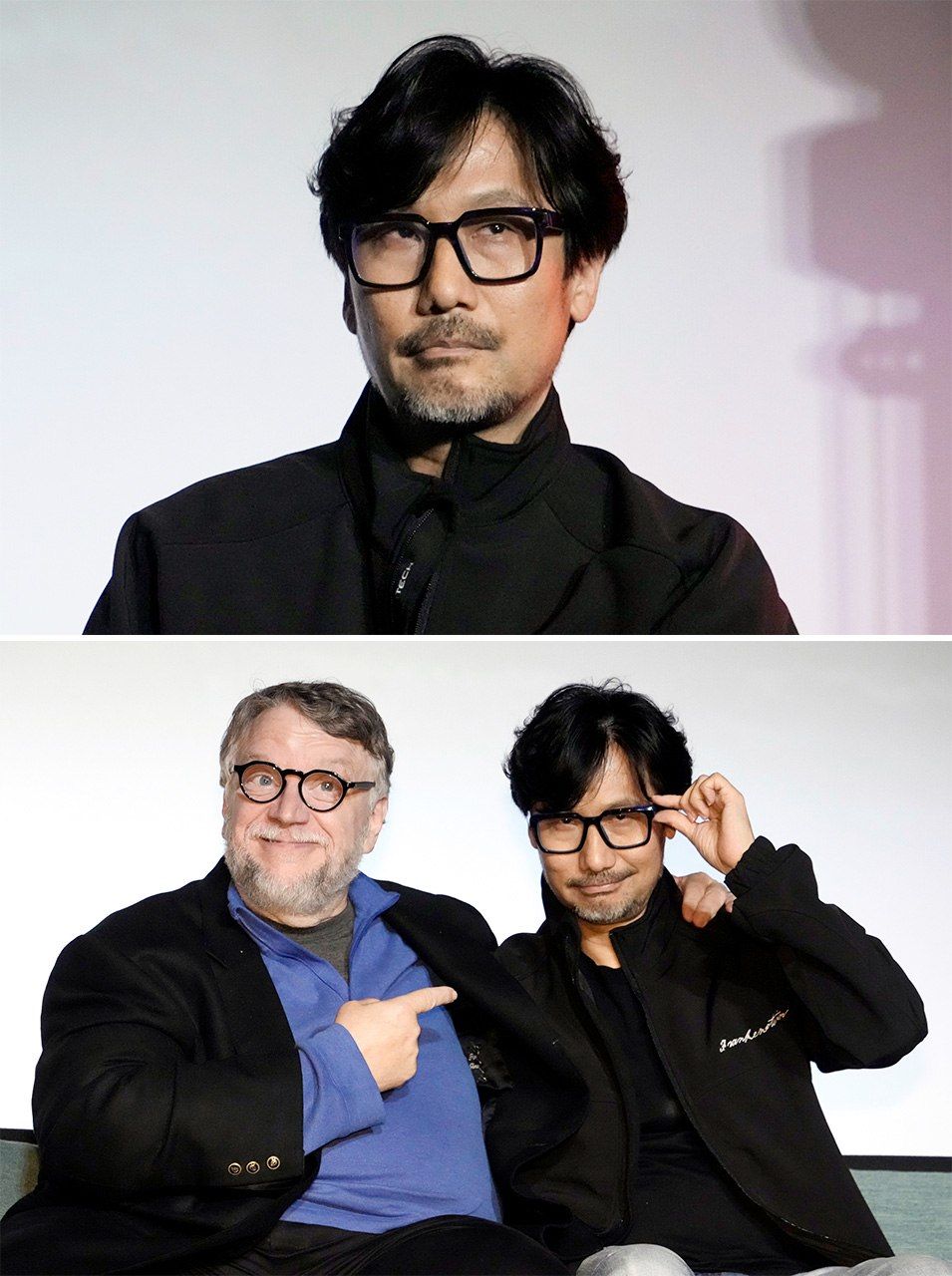
Kojima Hideo (right) with film director Guillermo del Toro at the Japanese premiere of del Toro’s Frankenstein in Tokyo on September 24, 2025. (© Jiji)
The crises threatening humankind, including wars, climate change, and the specter of extinction, are not inescapable “fate.” Kojima’s vision insists that we can overcome them by believing in one another, building connections, nurturing hope for the future, cherishing life, and advancing together. His games urge players to venture into the unknown and create, to take courage through play itself. Embedded within them is a heartfelt wish to build a better world and pass it on to the generations to come.
Kojima’s message carries unmistakable conviction as a pioneer who has never feared uncharted territory by embracing new hardware, adapting to changing digital landscapes, and repeatedly achieving success. It is precisely because of his willingness to explore the frontier that his words resonate so powerfully, inspiring us all to move forward.
Death Stranding 2 official website
(Originally published in Japanese on October 27, 2025. Banner photo: Kojima Hideo attends an event in London on June 30, 2025, celebrating the launch of Death Stranding 2. © Phil Lewis for Kojima Productions/SOPA Images via Reuters Connect.)