Legends: Japan’s Most Notable Names
Mori Hanae’s Butterfly Effect: Lessons in the Power of Japanese Womanhood
People Society Culture Lifestyle- English
- 日本語
- 简体字
- 繁體字
- Français
- Español
- العربية
- Русский
Mori Hanae (1926–2022) was a pioneer who built a cultural bridge between East and West while celebrating the Japanese spirit and aesthetic through the medium of fashion. An international presence in haute couture, film, theater, and publishing, she was also a devoted wife and mother. As such, she remains a role model and beacon for working women.
Relentlessly active until the end, Mori died in 2022 at the age of 96. Here I have compiled a brief account of her remarkable life and career, drawing from interviews I had the privilege of conducting over the decades.
The Butterfly Who Crossed the Sea
Hanae was born in 1926, the daughter of a private practitioner in the town of Yoshika in western Shimane Prefecture. She recalled her hometown as a peaceful, idyllic community surrounded by mountains and rice paddies. “My childhood impressions of the natural landscape, the changing seasons, and the cabbage white butterflies beating their wings laid the foundation for my work,” she once told me. Her observation of flora and fauna informed her rich sense of color and distinctive lyricism and inspired the butterfly motif that came to stand as an emblem for her own journey across the ocean, spanning East and West.
In 1937, Hanae’s family moved to Tokyo. She attended Tokyo Woman’s Christian University in the midst of the allied bombings that devastated the capital near the end of World War II. Later in life, Mori often said that the memory of that struggle for survival and a determination to triumph over the stigma of defeat were driving forces behind her professional achievements.
While still a student engaged in volunteer work, Hanae met Mori Ken, later to become chairman of Hanae Mori International. They married in 1948, when she was 22. As a young homemaker, Mori began sewing her own dresses because, as she put it, “I couldn’t find any clothes that I liked.”
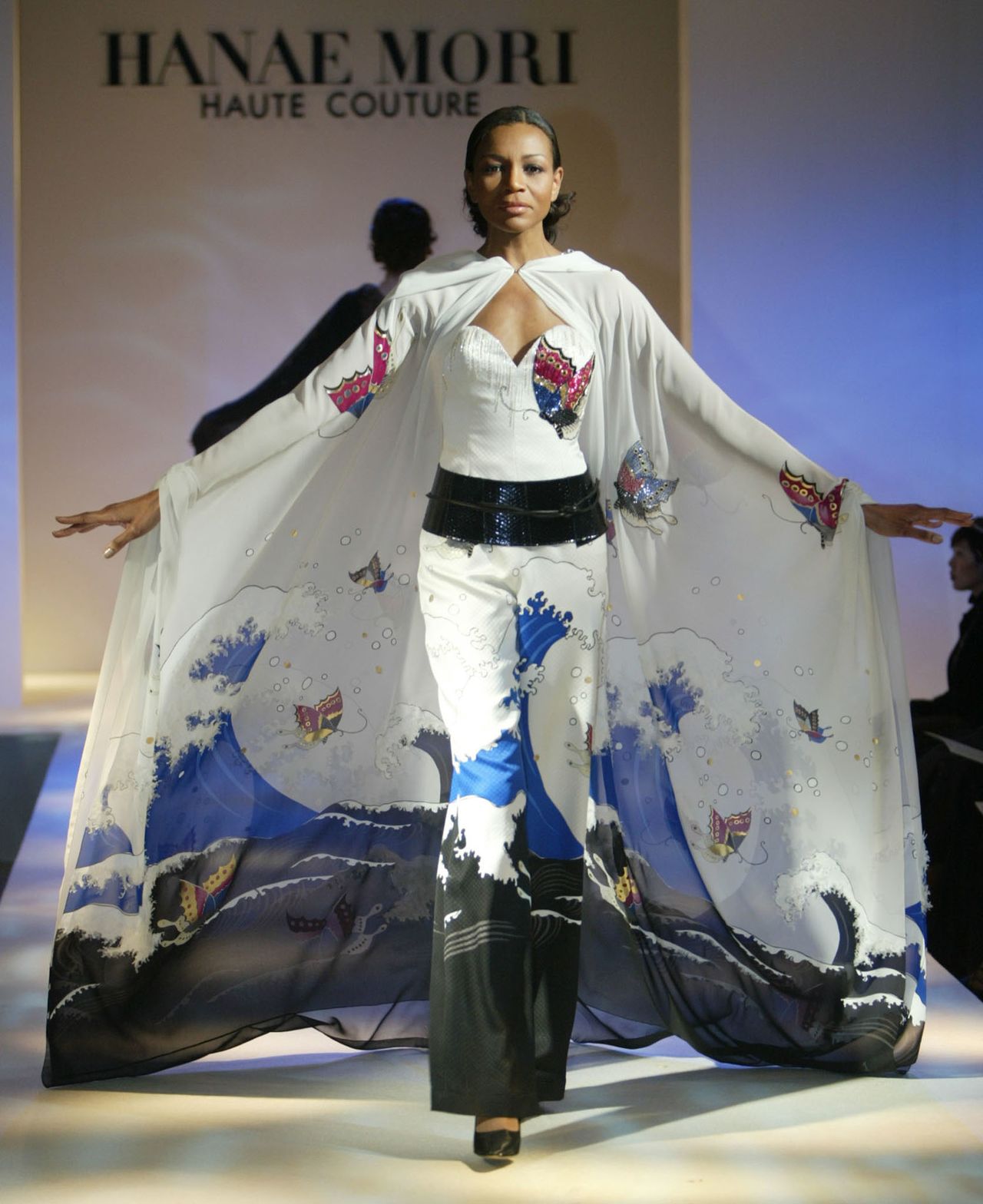
A model wears a jump suit and chiffon cape by Mori Hanae at the Japanese fashion designer’s Spring/Summer 2003 show in Tokyo on February 21, 2003. The waves and butterfly motifs were inspired by renowned artist Katsushika Hokusai. (© Reuters)
A Meteoric Career
Mori’s talents quickly blossomed. In 1951, she opened a dressmaking shop, Hiyoshiya, in Shinjuku, which soon attracted film-studio attention. In that heyday of Japanese cinema, Mori emerged as one of the industry’s most successful costume designers. Modeled by glamorous Japanese movie stars, her chic and varied costumes—from elegant gowns and scrumptious fur-trimmed suits to bold, red-printed men’s aloha shirts—helped inspire a wave of popular fashion known as Cinemode. It was through this work in film, Mori testified, that she began to probe the true meaning of femininity and masculinity, and more broadly what it means to be a man or a woman.
In 1961, during a trip to New York City, she attended the Metropolitan Opera’s production of Giacomo Puccini’s Madama Butterfly and was offended by its stereotyped depiction of Japanese womanhood as something frail and pitiable. “Don’t underestimate us,” she warned. “We’re a lot stronger than you think!” The sight of piles of imported Japanese garments on sale in a department store’s bargain basement made her all the more determined to prove herself to the rest of the world.
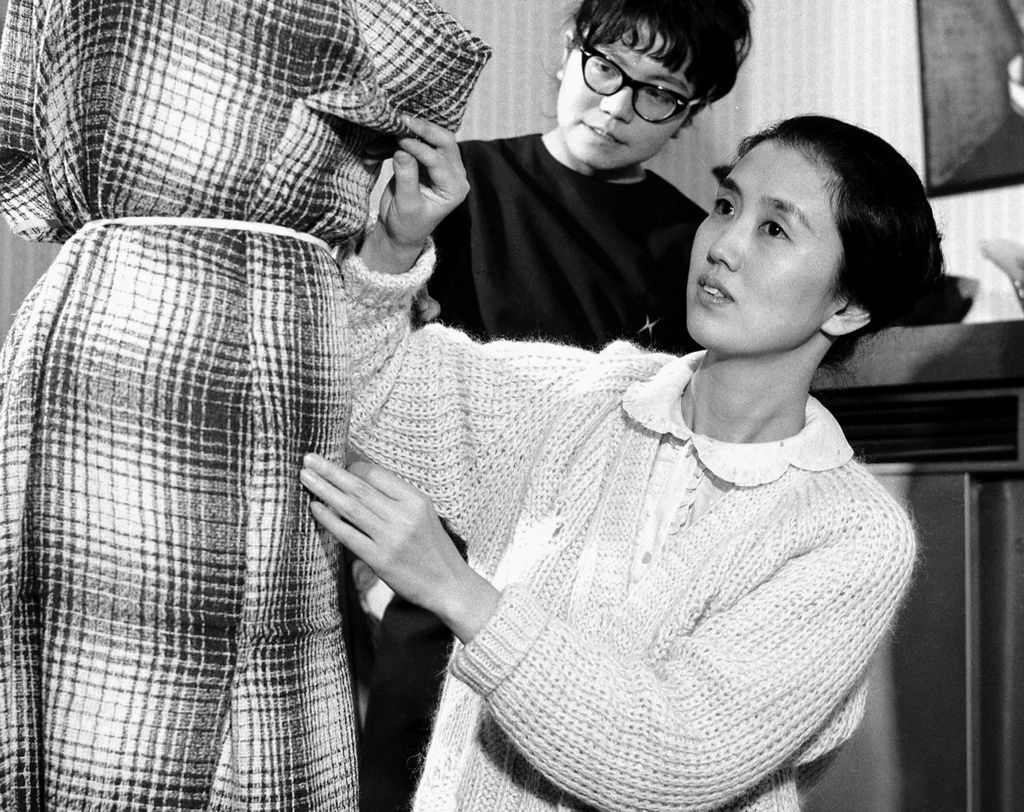
Mori, age 35, in 1961. (© Kyōdō)
Four years later, Mori Hanae returned to New York for her highly successful international fashion debut. Her 1965 haute couture collection was noted for its elegant, flowing dresses in luxurious Japanese fabrics, including a striking chrysanthemum-patterned “pajama dress.” The US edition of Vogue applauded Mori for her successful fusion of East and West. Soon her clothing was on prominent display in top US department stores and sought after by well-heeled, fashionable Americans.
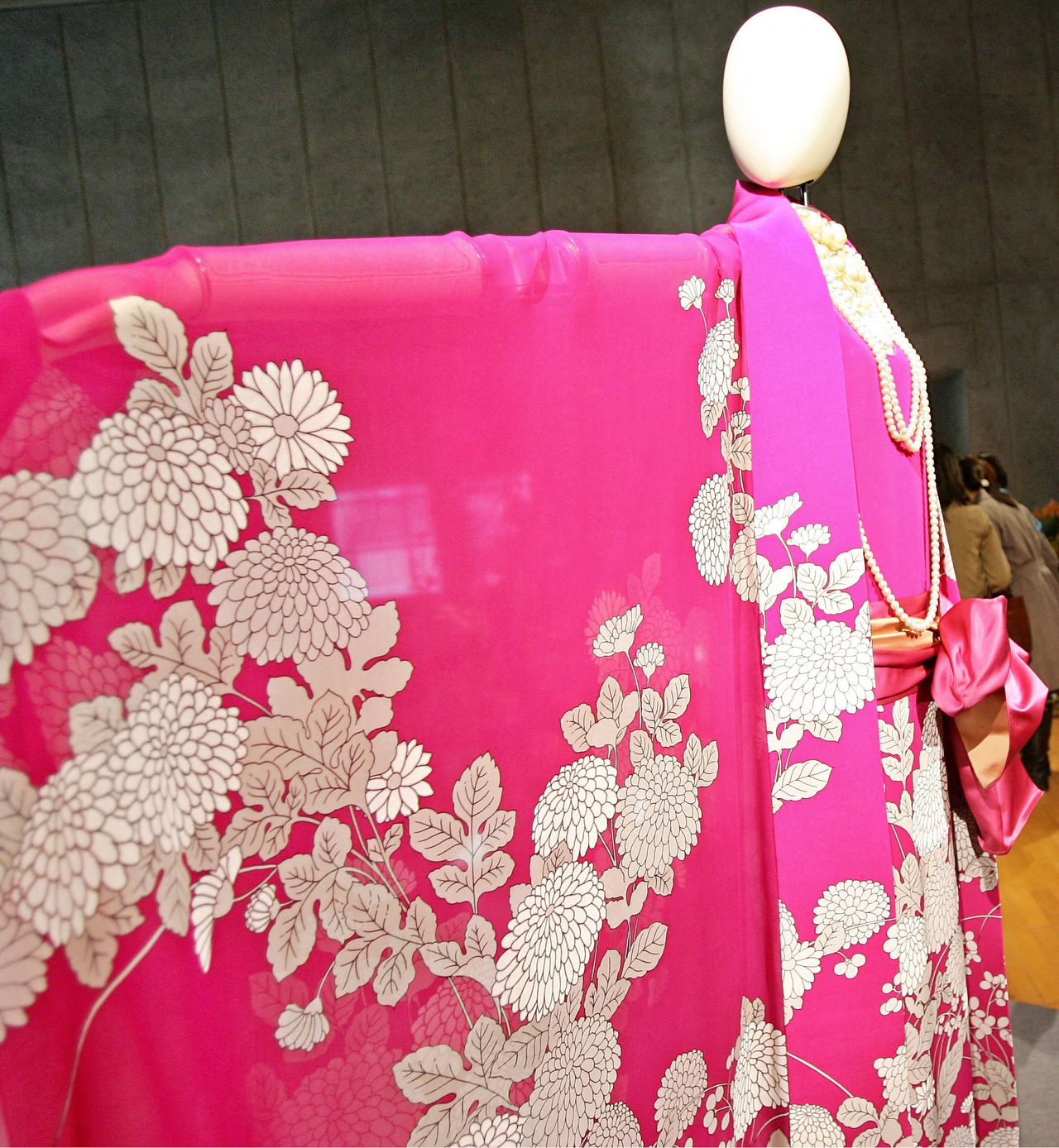
Mori’s chrysanthemum-patterned “pajama dress,” at an exhibition of the designer’s works in Tokyo in March 2006. (© AFP/Jiji)
In 1977, Mori became the first Asian-born member of the Paris Chambre Syndicale de la Haute Couture, a guild of top designers known for its rigorous selection criteria and emphasis on tradition. For more than a quarter century—until her retirement in 2004— she continued to show her collections in Paris twice a year. Though perhaps best known for her long, flowing dresses in beautiful, richly dyed silk, she also won acclaim for her elegant yet functional and easy-fitting suits.
Mori Hanae’s ready-to-wear collections were also well received, especially her lightweight, easy-to-wear kimono-inspired outfits for men and women. In ladies’ fashion, her feminine-looking print dresses in silk-like synthetics were especially popular. She was always refining her sense of femininity and striving for fashions that made women look and feel both graceful and dignified.
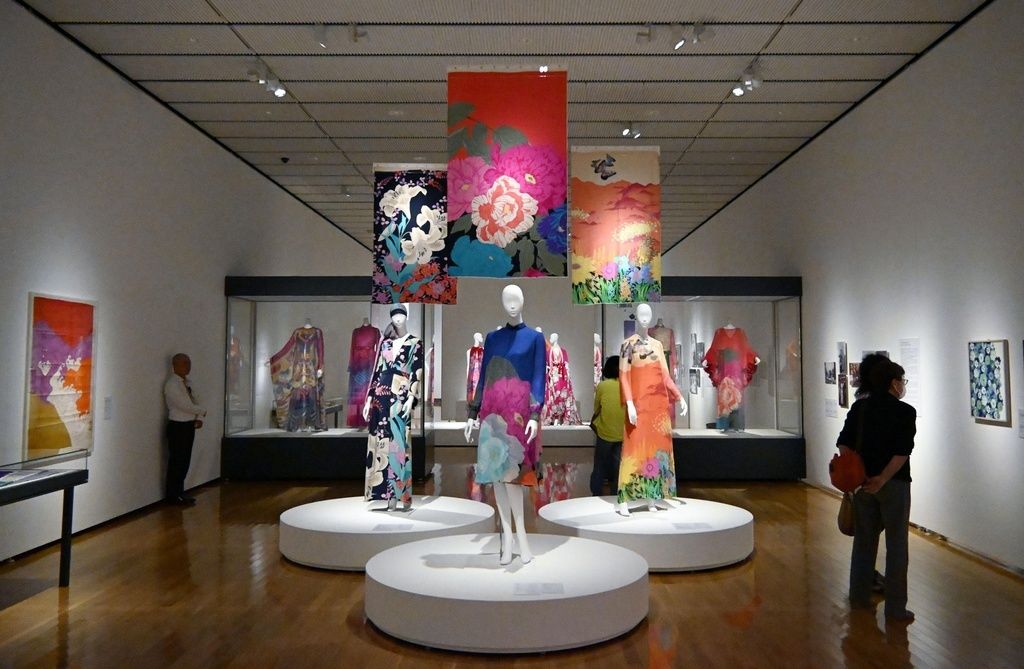
Mori’s creations on display at the Iwami Art Museum as part of the exhibition “Hanae Mori Vital Type: 100th Anniversary of Birth” in October 2025. The exhibition is showing at the National Art Center in Tokyo until July 6, 2026. (© Kyōdō)
Mori also applied her sense of fashion and function to the design of school uniforms, which were adopted in institutions around Japan. As a businesswoman, she helped pioneer the practice of fashion licensing, lending the prestige of her brand to products like handkerchiefs, bath towels, and tableware. Before long, her signature butterflies pervaded the living spaces of consumers nationwide.
Designer to the Stars
Mori Hanae had many ultra-high-profile clients over the years. There was Grace Kelly, Princess of Monaco (remembered even now, 40 years after her death, as a paragon of high fashion), Italian actress Sophia Loren, and American First Lady Nancy Reagan, to name just a few. In 1969, when Japanese Prime Minister Satō Eisaku visited the United States, his wife Hiroko emerged from the plane in a fashionably short suit created for her by Mori Hanae. The one-piece miniskirt uniform Mori designed for Japan Airlines flight attendants in 1970 featured prominently in a popular serialized manga.
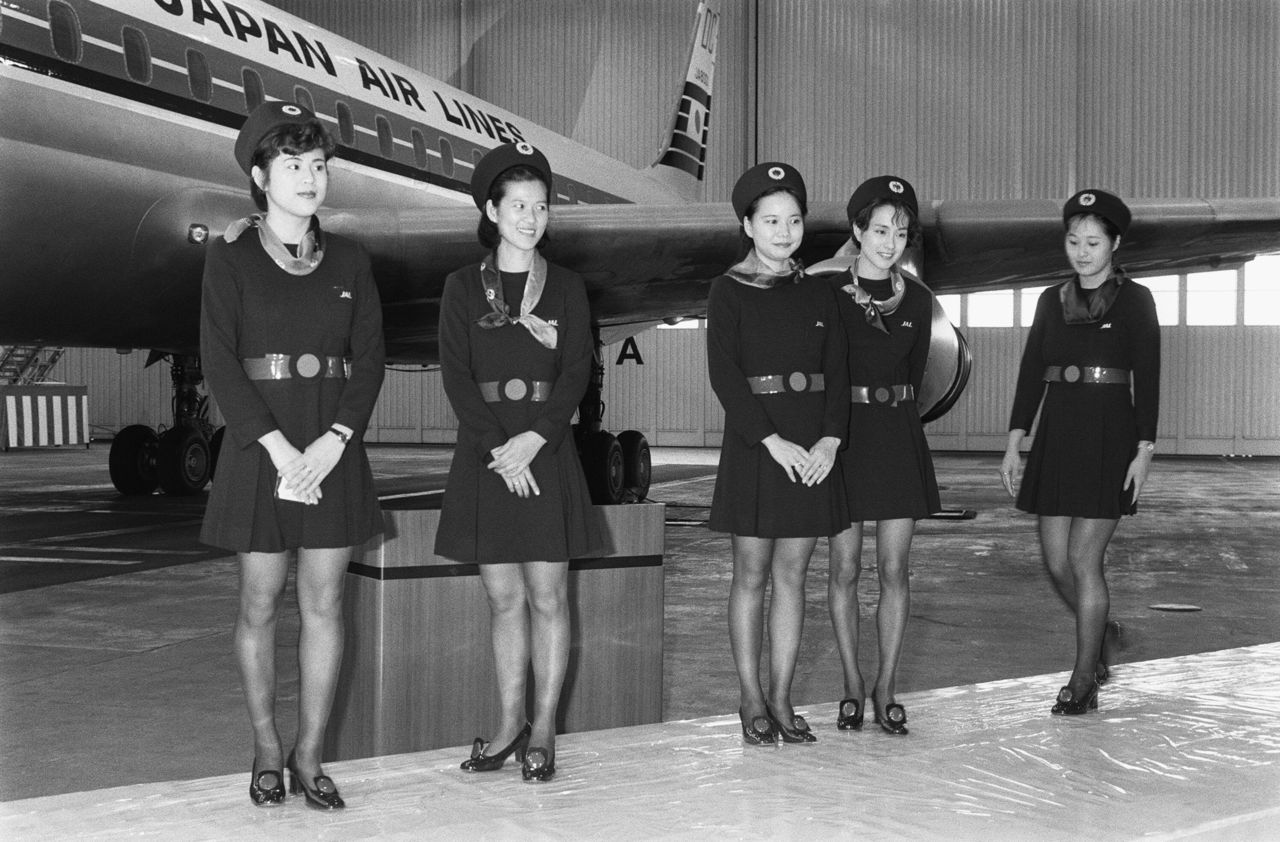
Flight attendants of Japan Airlines model uniforms created by Mori. The outfits were used from 1970 to 1977. (© Jiji)
Many in Japan still cherish memories of such iconic Mori creations as the décolleté wedding dress worn in 1993 by Crown Princess Masako, now empress of Japan, or the dazzling phoenix-inspired gown created for the comeback concert of megastar Misora Hibari in 1988. Mori Hanae had a real genius for designing attire tailored to a particular time, place, and occasion (TPO), as well as to the wearer’s individuality and the mood and fashion of the time.
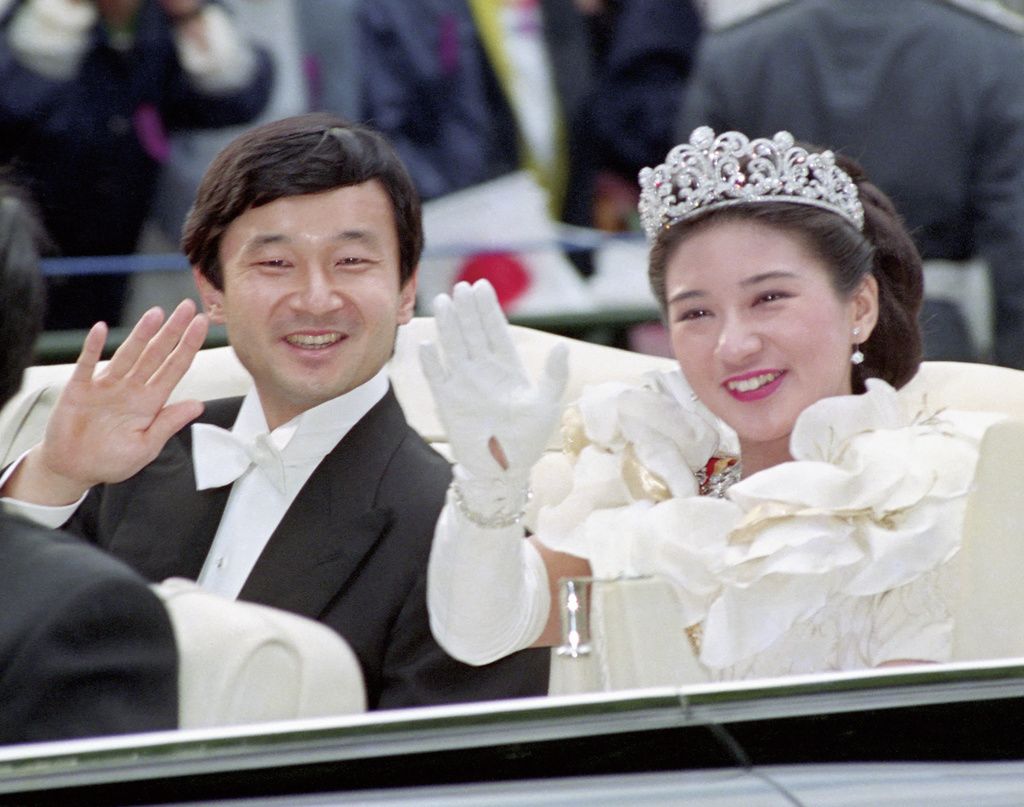
Crown Princess Masako (right) and Crown Prince Naruhito wave to onlookers during their wedding parade in Tokyo in June 1993. (© Kyōdō)
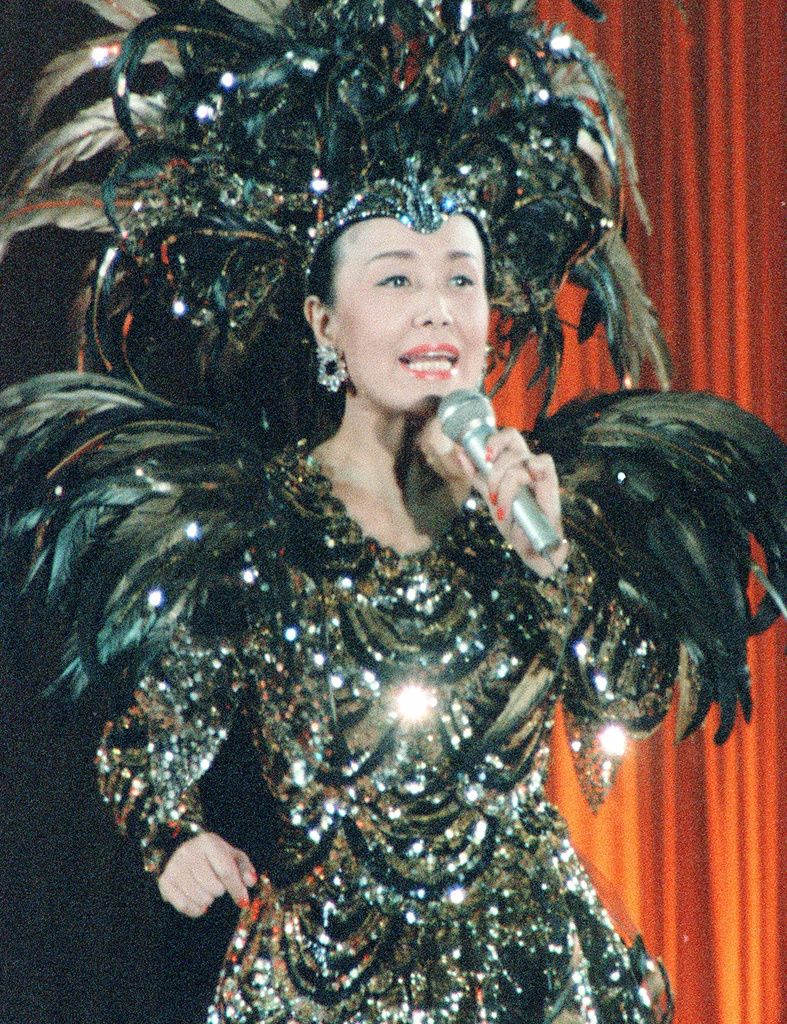
Singer Misora Hibari appears in Mori’s phoenix-inspired gown during her comeback concert at Tokyo Dome in April 1988. (© Kyōdō)
Mori also designed numerous costumes for the stage, collaborating closely with distinguished directors to create the unique theatrical world they envisioned. In 1985, she was asked to design the costumes for Asari Keita’s production of Madama Butterfly at the renowned Teatro alla Scala in Milan. Mori focused on kimono design, using her trademark butterfly and a rich, subtle palette to convey the spirit of a pure yet strong-willed young Japanese woman. The following year, Mori was called on by the great Rudolf Nureyev, then director of the Paris Opera Ballet, to design the costumes for his innovative production of Sergei Prokofiev’s Cendrillon (Cinderella), set in 1930s Hollywood.
Mori Hanae’s work made a deep and lasting impression in Japan and around the world, and she received numerous awards during her lifetime. She was the first fashion designer to be awarded Japan’s Order of Culture. She was also the recipient of France’s National Order of the Legion of Honour, that country’s highest national order of merit.
The Mori Hanae I Knew
Mori came across in interviews as intelligent, wise, and level-headed. She spoke fluently and with considerable speed; in fact, she was the only subject that I was unable to keep up with using pen and pad. As befitted a fashion designer, she wore her own custom-made work attire, often a long, white shirt with a stand-up collar. On non-dressy occasions, she usually eschewed a feminine-looking dress for a smartly tailored outfit consisting of a lightweight jacket over slacks and a high-neck or bow-tie blouse. The style suited her tall, slender frame.
Mori had a surprisingly playful side to her. Once, she had a Chanel suit made for her in Paris by Gabrielle “Coco” Chanel herself. Coco’s iconic suits were almost always cut below the knee because she felt that knees were ugly and should be hidden. But Mori boldly cut off the hem and wore it above the knee in keeping with the style of the time. Years later, a US museum asked to borrow the suit for a Chanel exhibition. “That was something I just couldn’t bring myself to do,” she narrated, laughing heartily.
Mori did not speak a great deal about the challenges of balancing family and career, but she did tell me that she did her best to prepare home-cooked meals for her husband and children, no matter how busy she was. Those were among her happiest hours.
Champion of Japanese Culture
In 2002, under strain from competition and diversification, Hanae Mori International filed for bankruptcy protection in Japan. Two years later, at the age of 78, Mori Hanae retired from the world of Paris haute couture in order to devote herself to theatrical costume design. She also established the nonprofit Hanae Mori Foundation to support and promote the work of budding fashion designers in Japan. “In a resource-poor country like Japan,” she used to say, “we need to make optimum use of our people’s hands and heads.”
Working in the global arena, Mori said, “I always felt like I had the Japanese flag pinned to the middle of my back.” Called on to design the official Japanese uniforms for the 1992 Barcelona Olympics, she decided to play up the theme of the Japanese flag, or hinomaru, with a white suit sporting bright red trim and a large red disc behind the jacket’s right shoulder, making it clearly visible from the stands.
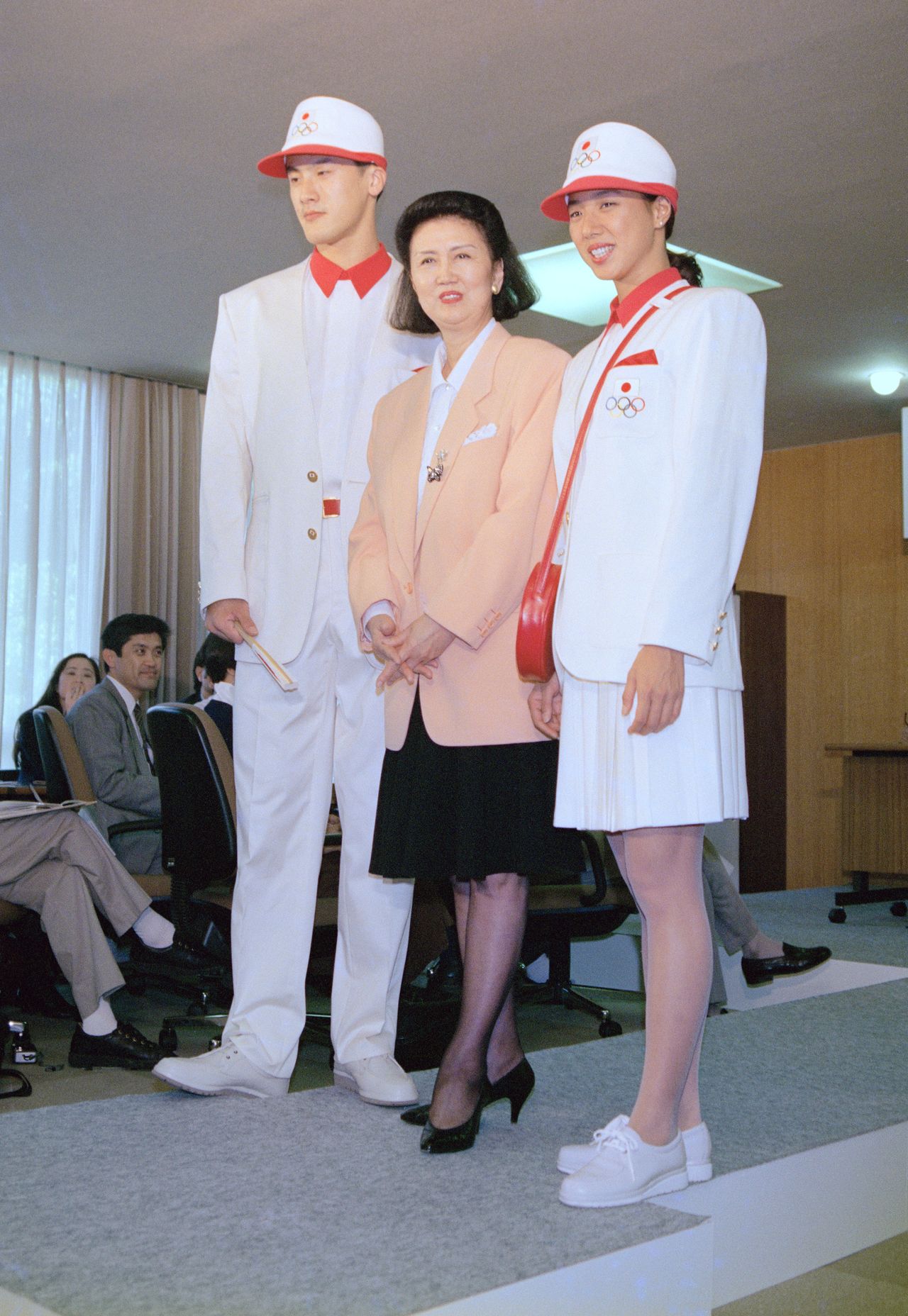
From left: Volleyball player Nakagaichi Yūichi, Mori, and synchronized swimmer Kotani Mikako at the unveiling of the Japanese team’s uniform for the Barcelona Olympics in 1992. (© Jiji)
Back in those days, before the rise of the internet and the spread of global business, the barriers to international and interregional commerce were much higher than now. As a fashion icon and one of the few Japanese women known the world over, Mori must have been acutely aware of her responsibility as a cultural ambassador of Japan. This, I believe, is one reason she dedicated her own “hand and head” to expressing the refinement, grace, and depth of the Japanese spirit in every facet of life.
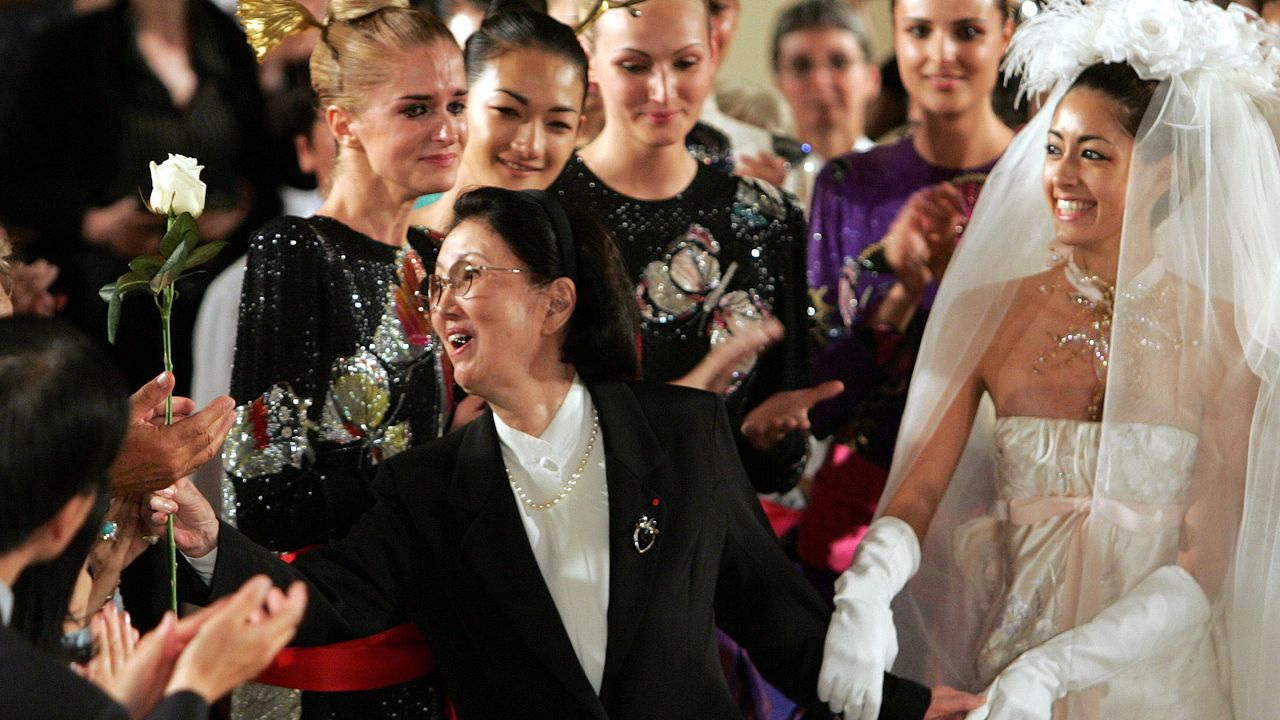
(Originally published in Japanese. Banner photo: Japanese designer Mori Hanae appears on the catwalk after her Autumn/Winter 2004/2005 high fashion collection in Paris on July 7, 2004, her last before retiring from Haute Couture at age 78. © Reuters.)